La Gloria Cubana Artesanos Retro

Team La Gloria is back again with an addition to La Gloria Cubana Artesanos series. This time it’s the Retro Especiale, inspired by an old humidor that they found in the El Credito cigar factory. This is the third entry in the Artesanos line, which also includes the dual-wrapper Artesanos de Tabaqueros and the pyramid-shaped Artesanos de Obelisco.

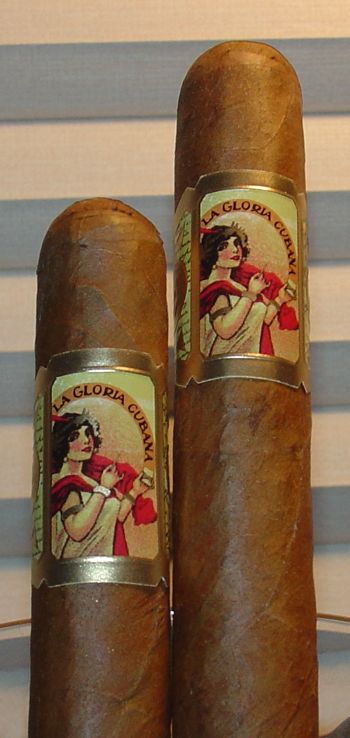
The Retro Especiale looks like a plain old cigar when compared to the eye-catching Tabaqueros and Obelisco, but the band and box design give it plenty of class. Each frontmark has a different box design, and like the band the images harken back to the early days of cigar making in Miami and Cuba.

The centerpiece of the Retro Especiale is a Connecticut seed hybrid wrapper that is grown in Honduras. It reportedly took eight years to develop the blend, which features Nicaraguan and Dominican fillers held in place by two binders: one from Nicaragua, and one from (gulp) Mexico.

Four sizes are in production:

  • Club 5 3/4 x 47
  • Taino 7 x 52
  • Habanero 6 x 52
  • Cubano 6 1/2 x 58

Construction Notes

The wrapper on the LGC Retro Club is an attractive milk chocolate color, a touch darker than is typical of standard Connecticut Shade wrappers. The wrapper is thin, allowing the rough texture of the binder to show through. The head is rounded, which is not unusual for General Cigar products, and the roll is solid. The burn is fairly slow (although one stick canoed a bit) and the ash is surprisingly dark.

Overall good construction, with a little concern about canoeing.

Tasting Notes

The most interesting aspect of this cigar is the Honduran grown Connecticut-seed wrapper, which gives the Retro a nice creamy body from the start. Cedary spice is evident as well, with a touch of vanilla on the nose. The aroma is slightly sweet but quite pungent, and the aftertaste is very dry. The flavors become a little bolder toward the middle of the cigar, but for the most part this is a medium bodied cigar.

The second half serves up an interesting combination of sweet cream, earth, and astringency. The flavors on the palate are dry and earthy, bordering on bitter at times. I’m not sure, but I’m going to guess that’s the Mexican binder in there. The aroma doesn’t have the same floral character that I expect from Connecticut Shade, but it stays creamy and assertive to the end of the cigar. Toward the band the flavors get a little darker and pepper vies with the dryness on the palate.

Conclusion

Despite good construction and considerable inventiveness, I’m afraid this cigar just isn’t for me. Maybe the dryness on the palate could be remedied by a good lambic or witbier, but I would not smoke this cigar straight up or with anything that might add to the bitterness. It needs something sweet to cut the astringency.

But again, there is a market for this style of cigar, and the wrapper on this blend is quite nice. I’ll be interested to see if Team La Gloria uses this Honduran-Connecticut leaf again in a cigar that is more my style. The Club size can be found for around 4 bucks a stick, so there’s definitely no complaining about the price.

Final Score: 82

A special thanks to General Cigar for the review samples, and for so generously engaging the blogging community.  

Morro Castle Robusto

I remember buying a bundle of Morro Castle cigars about a decade ago before the brand was swept out with the tide. I don’t remember who made them, but they were relatively decent yard ‘gars. A good everyday smoke is a necessary commodity in today’s economy, and that’s how I remember the old Morro. It was not a subtle or enlightening experience, but it was a good everyday stogie. And though this Morro Castle is an entirely new incarnation, my sentiment remains the same.

Made by A.J. Fernandez for Cigars International, this Morro Castle has an Ecuadorian Sumatra wrapper that surrounds a blend of Honduran tobacco from Jamastran and Nicaraguan leaf from Esteli and Ometepe. (Ometepe is the volcanic island that sits in the middle of Lake Nicaragua.)

The cigar is offered in five sizes:

Robusto – 4.7 x 52
Toro – 6 x 52
Churchill – 7 x 50
Belicoso – 5 x 52
Torpedo – 6.5 x 52

Construction Notes

One look at the robustos pictured above and you can see there might be some consistency issues here. I bought two sticks for this review, and if they didn’t have bands I would have sworn they were different cigars.  Somebody in Quality Control must have been seriously distracted when the one on the left rolled off the assembly line and into the box. It’s pale and weathered and looks as though it went through the wash.

On the other hand, the golden brown wrapper on the other cigar is far more approachable. Attractive even. The wrap and roll was otherwise pretty solid on both samples. Both burned well and were trouble-free.

Tasting Notes

Obviously there was something wrong with the wrapper on the first cigar. Aside from its anemic appearance it made the cigar taste like tar and black pepper. It started rough and didn’t get much better. When the flavor didn’t improve after twenty minutes I tossed it. As the Stranger says, some days the bar eats you.

The second sample was much better. While still fairly aggressive (in a friendly Nicaraguan way) it calmed down after an inch or two and allowed the woody and slightly creamy aspect of the wrapper have its say. The spice continues through the rest of the smoke, but it mellows considerably and turns out to be an outspoken but still medium-bodied cigar.

Conclusion

I didn’t hold out great hopes for Morro Castle, and I wasn’t hugely surprised by an average showing. Assuming that the washed out robusto was truly a mistake that won’t often be repeated, I got about what I expected. But for 3 to 4 bucks a pop this could be a nice pickup for someone who likes A.J. Fernandez-style Nicaraguans. It’s a tasty medium-bodied smoke that starts out with a dramatic burst of pepper and then mellows into an above average yard ‘gar. It’s not really for me, but there’s definitely a market out there for this style of cigar in this price range.

Final Score: 83

JML 1902 Torpedo

JML 1902, from Miami’s La Tradicion Cubana, is named for José M. Losa, the grandfather of LTC founder Luis Sanchez. The JML was the first cigar from the new factory in the Dominican Republic after the original factory in Miami was destroyed by fire in 2006.

The JML 1902 uses a Pennsylvania wrapper, which is unusual for today but historically well grounded. In the nineteenth century so many cigars were made in Pennsylvania’s Conestoga River Valley that the word “stogie” became common usage throughout the United States. In the past few years the leaf has experienced a resurgence, especially Pennsylvania broadleaf, which has been used by Rocky Patel and A.J. Fernandez in several different blends. Like Connecticut Broadleaf it is often used as binder, but it is less commonly seen as wrapper.

Both Connecticut and Pennsylvania broadleaf are grown from Cuban seed, but apparently there’s something about Lancaster County that adds some fight to the leaf. It is generally acknowledged that Pennsylvania leaf is more robust in flavor than the Connecticut variety, and it takes longer to process and mature. These characteristics may be why Penna leaf is less commonly used.  The resurgence may be due to the fact that cigar smokers have become increasingly curious and more open to new experiences — sometimes it seems that the rarer the leaf, the better. But the cigar, however refined or rare its components, must still perform well. And the JML 1902 does just that.

That said, I don’t think the Pennsylvania wrapper on the JML 1902 is  actually broadleaf. It’s thinner, more attractive, and in my opinion more subtle than broadleaf. In combination with a Honduran binder and Dominican seco and ligero fillers, the wrapper adds a sweet sharpness that balances out the blend very well.

Four sizes are currently available:

  • Petit-Cetro – 5 3/4 x 44
  • Corona – 6 1/2 x 44
  • Churchill – 6 1/2 x 50
  • Torpedo – 6 1/4 x 54

Construction Notes

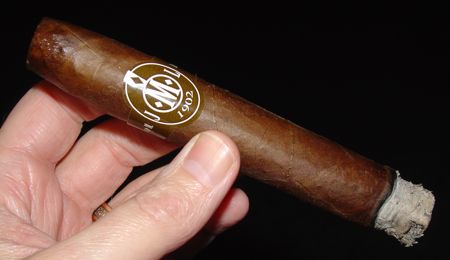
The vintage appeal of the umber-colored band sets the tone for this cigar. It looks like something you might find in your grandfather’s junk drawer, along with a dried out can of Kiwi and a stitching awl for fixing baseball mitts. The band is offset by the dark smooth wrapper, a little darker than colorado maduro but not quite maduro. The veins are pronounced enough to make the wrapper rustic without being rough.

The roll is solid, though the cigar feels light in the hand. The cap is finished nicely and the tip clips cleanly with a guillotine cutter. It draws perfectly, burns evenly, and the ash is only slightly flaky.

Overall excellent construction.

Tasting Notes

The JML 1902 torpedo starts up with a sweet bready aroma, something like freshly baked cookies. (And I know how odd that sounds.) Beneath this fascinating aroma are earthy, mineral-like flavors. The flavor is high-toned, sweet but not creamy, and very well balanced. The smoke texture is medium in body, but it has plenty of strength.

Coffee flavors predominate in the mid-section, with sugary, almost maple syrup-like accents on the nose. Earthy flavors continue to occupy the lower register but they gain in strength, as does the aftertaste.

The peppery aftertaste takes over in the last part of the cigar, becoming quite strong, even though the sweetness of the wrapper is still detectable. I found I had to slow down considerably in the last lap to keep the cigar in balance.

Conclusion

There is a whole lot to like about the JML 1902. It’s complex, flavorful, and for those who like a good kick in the pants, it’s got one in reserve. The balance of subtle sweetness and earthy power is quite impressive. Based on these things alone I’d recommend this cigar to any seasoned smoker, but the best part comes last: the price. The JML is a 3 to 4 dollar stick. $60 to 75 USD per box at LTC’s online shop. That’s a screamin’ deal.

This is one of the best cigars I’ve smoked all year, and without a doubt the best cigar in this price range. I can think of no excuse for anyone not to try this cigar. None. Well, maybe one. Some reviewers have reported that these can be a little heavy-handed when fresh. That wasn’t my experience, but it you prefer a gentler smoke, just put them away for a few months and let them mellow. Like any good investment, patience will pay dividends.

Final Score: 92

Jobon Single Flame Torch Lighter

Cigar and tobacco accessories don’t excite me much. I’m not really a watch guy either, and I don’t mess with cuff links or jewelry. So far I’ve managed not to lose my wedding ring in the compost pile, so I consider myself ahead of the game.

I guess that’s why I’ve ever reviewed any accessories…until now. I used to have a couple torch lighters but their piezos pizzled and I’ve been using kitchen matches ever since. But Butanelighterswholesale.com sent me a Jobon standing lighter to review, and this little gadget might drag me back into the lighter racket.

Jobon lighters are made by a Chinese outfit called Wenzhou Zhongbang Smoking Set Co. in the Zhejiang province of China. (My pinyin is a little rusty, but I’m thinking that Zhongbang probably sounds a lot like “Jobon”.) The company was started in 1990 by a fellow named An Xizhong, and they produce two primary brands of smoking accessories: Jobon and Zobo. The company emphasizes consumer value, which is easily seen in their pricing. The MSRP on this lighter is $21.99, but ButaneLightersWholesale.com shaves six bucks off that price.

In the past I have been disappointed by higher priced lighters that plugged up or fizzled out after less than a month, so I didn’t hold out a lot of hope for a low-priced alternative from Wenzhou. But so far I have been pleasantly surprised. I’ve been using it for a month, which is the exact lifespan of my last Colibri, and so far it’s performing as well as my beloved Prince Blazer (resquiat in pace.)

The Jobon lighter is a strange combination of solid engineering and classic Chinese chicanery. The chrome elements are smooth and seamlessly put together and the lighter has a little heft to it. On the other hand, the plastic parts are a little suspicious. The lighter comes with a hard rubber base on which the lighter perches very precariously — the lighter will fall over unless you jam it down into the base with some force. There is a plastic cap that fits over the nozzle which is connected to the lighter by a thin chain like a biker’s wallet. I guess this is decorative. I can’t fathom a practical purpose for it. And around the fuel barrel is a piece of faux leather parquet which just begs to be peeled off.

But the lighter itself seems sound, and of a much higher quality than I would expect for the price. The ignition has so far been absolutely reliable and the flame is consistent and clean. Even though it’s a torch lighter, the flame seems softer than some I’ve seen. You certainly don’t want to use this to light your pipe, but it works very well on everything else. Creme brulee included.

The true test of torch lighters is time. I’ve been using this lighter for about a month now, and though I’ve been smoking less, due to a crowded schedule, this lighter has not let me down once so far. I will be checking back with updates, but for the price, I don’t think the Jobon can be beat.

Check out Butane Lighters Wholesale for a great deal on a quality torch lighter. Tell ’em cigarfan sent you and you’ll get the same great deal that everyone else gets.