El Suelo & Trocadero from L’Atelier

L'Atelier bundles

With the introduction of the El Suelo and Trocadero cigar lines, Pete Johnson said, “I want to show people that I can make a great inexpensive cigar.” This reflects poorly on the Tatuaje Series P cigar, a mixed-filler econo stick which has been around for years.  I suppose I agree — the Series P is not a great cigar, but it is inexpensive, and evidently people buy it.  But I’m not sure it’s deserving of the Tatuaje brand name. When I think Tatuaje or L’Atelier, I don’t think blue-collar yard ‘gar, but at least it’s a niche they haven’t filled yet.

Both El Suelo and Trocadero fall under the L’Atelier umbrella (rather than Tatuaje) and are made by the Garcia family — not at My Father, but at the “other” factory — the TACUBA factory in Esteli, Nicaragua. These appear to be sister blends, so I’m going to review them together. The bands are similar in design — very simple bands that recall the golden age of cigars, when men were men and cigar bands were not suitable for framing.

El Suelo and Trocadero are distinguished mostly by the wrapper leaf. The former is a swarthy fellow with an Habano Oscuro capa, while Trocadero utilizes a much lighter Habano Rosado. Both are Ecuadorian in origin, and both cigars use Connecticut broadleaf and Nicaraguan tobaccos for binder and filler. Their sizes differ a little bit though:

El Suelo:

Terreno 5 1/4 x 56
Prado 5 3/4 x 58
Campo 6 1/4 x 60

Trocadero:

Cambon: 5 1/4 x 52
Honore: 5 3/4 x 56
Montaigne: 6 1/4 x 60

El Suelo means “the ground” in Spanish, and the sizes are agricultural terms for types of fields (as far as I can tell).  Trocadero, on the other hand, is an area of Paris, and the frontmarks are Parisian street names. I’m not sure what the significance of Paris is, but I suppose it’s congruent with a company called L’Atelier.

Construction Notes

Both cigars are attractive and exhibit excellent construction. The Trocadero is dry with fine veins and a slightly toothy wrapper. El Suelo is also dry in appearance but much darker. The wrapper almost looks like broadleaf.  The cap of the Trocadero Terreno is not picture perfect, but still perfectly functional, and the tip of the Suelo belicoso is finely finished. Both cigars are solidly rolled and burn evenly.

Overal excellent construction, particularly for bundle cigars.

Trocadero

Tasting Notes

Both Trocadero and El Suelo are mild to medium in body and strength, but the Trocadero is a much more earthy and tannic cigar, while El Suelo is sweeter.

Both cigars have an astringent quality, but Trocadero is actually bitter on the palate. (I hesitate to use the word “bitter” but in this case I think it’s warranted.) As the cigar burns the flavors settle in the earthy range with a slightly minty aftertaste. The aroma is nice though — mildly floral with a pleasingly creamy aspect.

El Suelo steers away from earthy flavors and opts for familiar Nicaraguan territory: wood smoke. There is a burnt sugar or cotton candy-like overtone in the first half which is gradually overtaken by spice as the cigar burns to the band.  Notes of coffee and cocoa are prominent on the nose. This cigar reminds me a lot of the Carlos Torano Signature blend, which is of course more expensive than this bundle smoke.

Conclusion

Both of these L’Atelier blends are made exceedingly well, and I think they are better than Tatuaje’s current budget option, the Series P.  In the $3-4 range, they are certainly good value cigars, though the avid Tatuaje or L’Atelier adherent will no doubt be disappointed by a lack of complexity.

I was pleasantly surprised by El Suelo in particular. The Trocadero was a little too dry for me, but I’d be happy to have a few Suelos in the humidor. I know it’s not high praise exactly, but these are above average yard ‘gars.

El Suelo

Final Scores:

El Suelo: 87

Trocadero: 83

DPG Blue Through the Years

Don Pepin Garcia Blue LabelA couple months ago Gordon Mott of Cigar Aficionado penned a blog post about the misleading use of cigar ratings in advertising. This was prompted by one manufacturer in particular who cited a 93 rating to promote a cigarillo line. The problem is that the rating was for a toro-sized cigar made by the same company 20 years ago. Unfair? Misleading? Of course it is. But if anyone should know something about smoke and mirrors, it’s a cigar aficionado.

Even if the advertising were for the same cigar, the use of that rating would still be questionable. Only the largest cigar companies are able to maintain the huge libraries of tobacco necessary to create the same blends, year after year. In many cases this just isn’t possible, especially with smaller boutique brands.

Take one of the great cigar success stories as an example. Ten years ago, Jose “Don Pepin” Garcia was virtually unknown outside the circles of cigar geeks who read blogs like this. El Rey de Los Habanos was just one of the many small shops that populated Miami’s Calle Ocho neighborhood, but they were making cigars like none other, and consumers quickly caught on. The Miami operation couldn’t keep up with demand, and after a change in name and a move to Esteli, Nicaragua,  My Father Cigars now operates a huge facility that rivals that of many long established cigar companies.

While they still make stellar cigars (some better than others) I would hesitate to call My Father “boutique” at this point in time. They are not the same company they were ten years ago, and they aren’t using the same tobacco. And yet… the Don Pepin brand name remains the same, and some fans of the brand still think of it as a boutique label. So the question is this: when I pick up a DPG Blue Label in my local cigar shop and think about that potent blast of black pepper and the cocoa and the caramel of that brilliant Nicaraguan Corojo — am I living in the past?

OLYMPUS DIGITAL CAMERA

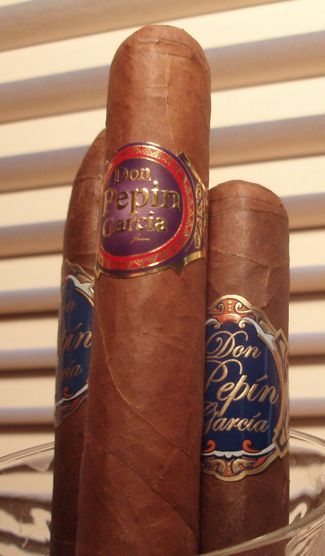
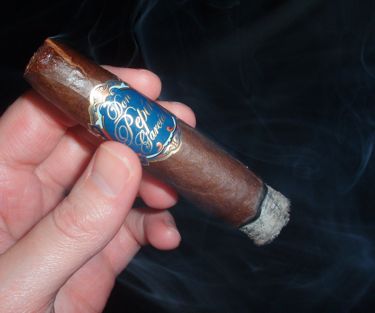
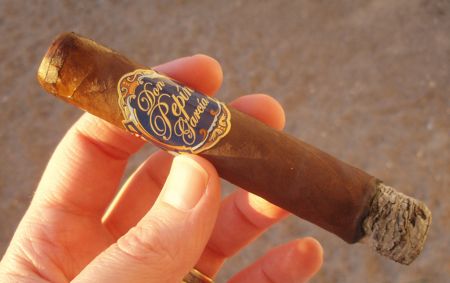
I thought I might try a little experiment to test that hypothesis. Digging into the deepest recesses of my dwindling supply of aging cigars, I found DPG Blue Labels from three different years. Unfortunately they were not all the same size, but at least they represent the DPG Blue over a significant period of time: a robusto from 2006, a torpedo from 2009, and another robusto of recent vintage. All three cigars received the same treatment and were smoked under the same torrid desert conditions.

Construction Notes

There are some minor differences in appearance, but all three are well made cigars. Both the 2006 and 2013 robustos have wrappers that are fairly dry and leathery in appearance, in contrast to the torpedo, which is noticeably more oily and smooth. All three are a little bit bumpy, but solid, and they all exhibit a firm but productive draw.

The biggest surprise was the way the 2013 robusto is finished. Early on, DPG became famous for the way his cigars were perfectly triple wound, and the 2006 robusto is no exception. The cap on this ’06 cigar was precisely applied by a master craftsman. A thing of beauty. On the other hand, the 2013 robusto is not triple wound at all. While still attractive and functional, the straight cap on the newer cigar is a surprise and leaves me with a little bit of nostalgia for the good old days… remember 2006? George W. Bush? Windows XP? Okay, I guess it wasn’t that long ago…

DPG Blue robusto

Tasting Notes

What I remember most about the DPG Blue is its explosive introduction. Ask anyone who smoked the big-bore Pepins back in the day, and you’ll probably hear the same thing. I expected the 2006 robusto to have mellowed, and my expectation was borne out. What I didn’t expect was that the 2013 blend would be almost as mellow as the 2006. Either the blend has been tamed by its designers, or my palate really rose to the challenge when I smoked the ’13.

Assuming the former, it seems that the power of the Blue Label blend has waned in recent years.

The oldest of the group, the 2006 robusto, turned out to be a disappointment. The opening was mildly spicy, but the palate flavors were papery and flat. The mid-section brought some cocoa and pepper finally showed up in the last third. A complex aroma of leather and caramel saved the cigar, though it could never quite overcome the tannic and dry qualities that appeared on the palate. I was expecting more from this elder statesman, but apparently its glory days have passed.

DPG Blue 06

The 2009 torpedo was the most complex of the three: leather, cedar, and roasted nuts with increasing earthiness on the palate as the cigar progressed. In the mid-section there are caramel notes and a rich potent aroma. The cigar ends with a pretty good nicotine thump, even after four years in the box. There is a dash of pepper before the inevitable char at the finish line.

The newest exemplar of the blend, the 2013 robusto, was surprisingly smooth. I expected a major recoil from this Nicaraguan cannon, but I was pleasantly surprised. I’ve never been a fan of overwhelming spice, but I would expect that smokers who pick up a DPG Blue are looking for that very thing, and I have to wonder if by now they’ve moved on to other blends. The smoke is medium in body and flavorful, but not wildly complex either. Some cocoa and cedar with a touch of sweetness round out the palate flavors, which get a little more concentrated as the cigar burns to its conclusion.

Conclusion

Even strong cigars lose their potency over time, but I was still surprised at how much the 2006 DPG Blue had faded. This used to be one of the heaviest sluggers around, but time has mellowed the old blend to a shadow of its former self. In the intervening years the cigar appears to have been reblended and refined, and while I wouldn’t call the 2013 blend a shadow exactly, it’s certainly not as substantial as the 2006 was when it was fresh. In between these two was the 2009 torpedo — the best of the bunch, and the closest to what I remember the original blend tasting like.

All of which is merely to point out what is fairly obvious to serious cigar connoisseurs — cigars in storage change with age, and blends change over time as manufacturers tinker with them or use other tobaccos out of necessity. The DPG Blue simply tastes different today than it did in 2006, and using a rating from years ago to describe a cigar made today is highly questionable at best.

DPG Blue 2013