La Aroma de Cuba Mi Amor Magnifico

Legend has it that La Aroma de Cuba was one of Winston Churchill’s preferred brands. That would be La Aroma de Cuba de Cuba, a brand which exists today only in the protected vaults of highly disciplined cigar collectors. But all is not lost for the rest of us. “Never give in!” as the old man said.  For we still have Don Pepin. And with the able assistance of the Ashton Cigar Company we have La Aroma de Cuba redux.

There are three distinct blends of La Aroma de Cuba: the non-extension LADC with a Connecticut Broadleaf wrapper (and distinguished red foot band), the Edicion Especial with a sun-grown Ecuadorian wrapper (and secondary EE band), and this one, Mi Amor. This incarnation features a Cuban-seed wrapper grown in Mexico. I’m not sure where in Mexico, but I’m guessing it’s not Tijuana. My guess would be somewhere in the San Andres Valley, one of the only regions in the world that produces leaf with the maduro potential of Connecticut’s broadleaf.

More detailed information about the San Andres region is available on the Montecristo Reserva Negra post. Come to think of it, the LADC Mi Amor reminded me a bit of the Monte Reserva — I wouldn’t be surprised if the wrapper is the same leaf, or at least a close relative. They look quite similar and they taste quite similar… so they must be, um, similar.

Mi Amor was reportedly in planning for two years prior to its release at the IPCPR convention last year. Since then it has garnered rave reviews, including the No. 6 spot on Cigar Aficionado’s Best Cigars of 2010. I don’t always agree with CA, but I think they got it right this time.

LADC Mi Amor is made by My Father Cigars in Esteli, Nicaragua. Five sizes are in production:

  • Robusto – 5 x 50
  • Magnifico – 6 x 52
  • Valentino – 5 3/4 x 58
  • Churchill – 7 x 50
  • Belicoso – 5 1/2 x 54

Construction Notes

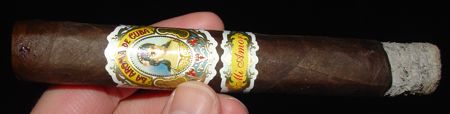
La Aroma de Cuba Mi Amor is not billed as a maduro cigar, but it looks like one, and it tastes like one, so I’m going to say it is one. The wrapper shade is a medium dark maduro, but the wrapper is a little drier and much toothier than what you get with typical maduro processing.

The cigar is box pressed and sports a flat Cuban-style head and My Father Cigars’ impeccable triple-cap. The draw is excellent, and it burns slowly and evenly. The ash is a solid light gray verging on white, though it flakes slightly.

Overall construction: Excellent.

Tasting Notes

The Mi Amor Magnifico (the toro of the family) opens with a combination of earth and chocolate. In the first half-inch there is an old attic-like aroma, somewhat mushroomy, but sweetness soon takes over and the chocolate and coffee flavors prevail. When those somewhat outlandish initial flavors settle down the base flavor of the Nicaraguan filler comes through: a bright acidic tang on the palate. The smoke is rich and smooth.

The chocolate and coffee blend and simmer down to a smooth cocoa in the mid-section of the cigar, but the aroma is still distinctly sweet and the earth tones have almost entirely disappeared.

Some pepper enters the fray in the last third and the smoke is a little sharper on the tongue, though it never becomes harsh. On the nose it’s mostly coffee, but I’m surprised by the floral accents that remind me of another cigar with a romantic reputation — the Cuban Romeo y Julieta.

Conclusion

La Aroma de Cuba Mi Amor is a damn fine smoke. It’s flavorful, smooth, rich, and almost perfectly balanced. The initial earthy flavors quickly mellow into the sweet ones, and the underlying zing keeps the palate popping. The smoke is smooth and the cigar burns beautifully.

After smoking a few of these I immediately went looking for the box price. A heavenly choir did not emerge from a cloud of smoke to sing the under $100 hymn, but I can’t say I was surprised. Around $170 USD is the going rate for the Magnifico. A little outside my range for boxes, but that puts them in the $7-8 range for a single, which I can manage every once in a while. And for a cigar this good, you can bet I will.

Final Score: 93

Camino Real by Route 45 Cigars

Tobacco from Colombia has been used as filler in major brands for years. Big names like CAO, Alec Bradley, and others have used a leaf here and a leaf there to grace their blends with a touch of the exotic and add a nuance that can’t be found in more common varieties of cigar tobacco.

But Colombian puros are another matter. To my knowledge Route 45 Cigars is now the only American company importing cigars made exclusively from Colombian grown leaf, and based on the quality of this tobacco I think they will find their niche in the U.S. cigar market soon enough.

Route 45 produces Colombian puros under the Camino Real and Don Jose Correa brand names. I had a chance to ask the owner, Jon van Bilderbeek, a few questions about the company and about the virtues of Colombian leaf.

Cigarfan: So how did you discover the merits of Colombian tobacco?

Jon Van Bilderbeek: As much as I have been to Colombia I never really paid much attention to the tobacco or the cigars for some reason until I was already very much into the lifestyle of enjoying cigars. I saw that in some of the supermarkets there were smaller cigars in bundles and boxes, maybe two brands at most. But of course these weren’t the premium cigars as until recently premium cigars in Colombia hasn’t quite caught on. So, I decided to try some of these cigars out anyways and sure enough, I liked them. It was something totally different than the usual Dominican, Nicaraguan, or Honduran cigars. They were much smother and mellower but also they just had a very unique flavor profile. This led me to look into the cigars a little more and sure enough just near the city I was living is where the cigars were made.

Cigarfan: Colombia has a long history of tobacco production, but until recently there have been few all-Colombian puros available in the American market? Why not?

JV: I’m not sure really as to why there have been few Colombian puros in the American market or anywhere else aside from Colombia but it might be that most people just look to the more well known cigar producing countries. I definitely do believe that there is a market in the U.S. for Colombian cigars as well as worldwide. I know that competing with the Cuban cigar market is very difficult but not impossible. For the American market though, I think they are a great change, especially for someone who is looking to try something very different from the hundreds of Nicaraguans or Hondurans, etc. They can also be a good start into the lifestyle of cigar smoking as they are not overpowering yet they are full of flavor and aroma, and even better still is the pricing as we aimed at having affordable high quality cigars.

Cigarfan: The Colombian blends I’ve smoked, including Camino Real, are really distinctive, very flavorful, but also quite mild. Most “serious” cigar smokers that I run into are not into mild cigars at all. How do we get these guys to put down their Nicaraguan ligero bombs and appreciate the subtleties of milder smokes?

JV: Exactly, Colombian cigars are very unique and everyone that has tried them has said the same. For some reason we just can’t get very strong tobacco without using imported leaf. What I have noticed is that even the guys who only smoke the Nicaraguan ligero have come to enjoy Colombian cigars. It’s a different experience, and I think that Colombian cigars can even complement the ligero cigars. For example, not many will smoke a ligero cigar in the morning. But with Colombian cigars you could wake up, light one up as you make coffee in the morning and you will not have any of those bad feelings, unless you are inhaling the thing… I think really it will mostly come down to people wanting something new, something totally different and not just with a funky name or packaging, or for some the crazy infusions. I mean, how many peoples humidors have just one type of cigar, or even just one brand?

Camino Real is produced in two blends, the Cabinet Selection, which bears a red label, and the Series 6, which has a blue label. Both are 100% Colombian tobacco, but the Cabinet uses a blend of Colombian and Cuban seed tobaccos, while the Series 6 uses Colombian, Cuban and Dominican seed leaves. Both have Habano wrappers.

Four sizes are in production:

  • Churchill – 7 x 48
  • Torpedo – 6 1/2 x 52
  • Toro – 6 x 50
  • Robusto – 5 x 49


Route 45 Cigars was kind enough to send me a sampler pack of their Camino Real line — a couple of Cabinet Series robustos, a couple Series 6 torpedos, and a Series 6 churchill. One of the Cabinet Series robustos was rolled too tightly and couldn’t be loosened up; the other one smoked well, but since I really don’t like to review a cigar on one experience, I’m going to concentrate on the Series 6, which I liked better anyway.

Construction Notes
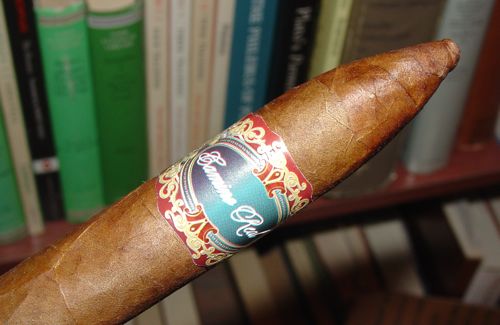
The wrapper on the Camino Real Series 6 is a fine looking claro leaf with a few prominent veins that are widely and evenly spaced; wrappers from Colombia’s neighbor Ecuador frequently appear this way, so maybe it’s a geographical trait. The wrapper is fairly thin and shows the texture of the binder leaf beneath. The roll is solid and regular, the cap is well formed, and the draw is excellent. The burn is slow, even, and cool. The ash is a little uncivilized — it varies from light gray to almost black; it’s solid but a little flaky.

Overall construction: Very good.

Tasting Notes

As expected, the Camino Real is smooth and mild. What I didn’t expect was that the smoke texture would be as full as it is; in fact, it’s almost creamy. It starts up with a sweet flavor on the palate, which is also unusual. I had expected a sweet aroma, but the light sugary touch on the tongue is pleasant and sits nicely with a morning cup of coffee.

The aroma is fragrant but it isn’t floral the way Connecticut Shade tends to be. It’s lighter and less cloying. The base flavors of the cigar become earthier as the smoke progresses, and the aftertaste grows from nothing at all to slightly woody. There is a suggestion of toast with powdered sugar in the aroma as it drifts from the foot of the cigar.

The flavor grows a bit stronger in the last third of the cigar, but it’s still mild enough that it can easily be nubbed. The last inch is less sweet and earthier, with a note of bergamot (like Earl Grey tea.)

Conclusion

Camino Real is a very distinctive cigar, and I would consider it a serious contender in the featherweight division. Smokers of mild cigars who reach for Macanudo or other lightweight Connecticut Shade smokes should really give this one a shot. I believe its complexity and unusual palette of flavors raises it above the competition in the mild category.

While not readily available in stores, five-packs can be purchased from the Route 45 website. The MSRP is around 5 USD, which is extremely reasonable. If you’re up for a walk on the mild side and want out of that old Macanudo-Baccarrat-RP Connecticut rut, I can recommend this Colombian puro for a nice change of pace.

Final Score: 89

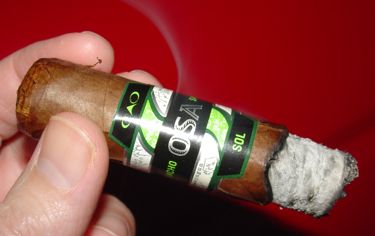
CAO OSA SOL

CAO Cigars was acquired by STG (Scandinavian Tobacco) in 2007 and is now one of General Cigar’s many holdings. There was much speculation about what would happen to the brand after its acquisition, particularly since the company had such a large presence in the marketplace. Not many cigar makers have a “lifestyle director,” but CAO did, and it showed. As just another species swimming in the sea of General Cigar it could be expected that the brand would now assume a lower profile, and to some extent it has. (Check out the Stogie Guys’ interview with Ed McKenna of CAO for more details on this transition.)

But the brand continues to evolve, and the latest creation to crawl from the surf is this one, the OSA Sol.

OSA stands for Olancho San Agustin. The departament of Olancho is the largest in Honduras (larger than the country of El Salvador, actually) and lies to the northeast of Danli, the capital of cigar production in Honduras. There is an interesting saying about Olancho: “Entre si quiere, salga si puede” (Enter if you wish, leave if you can.)

The San Agustin valley is not on any map I can find, but if the coordinates that are printed on the OSA band are correct, it’s just across the El Paraiso border. Hopefully that makes it easier to leave. I looked at the coordinates on Google Maps and it appears to be an extremely remote location. No surprises there.

General uses a wrapper from the same region on their Punch Gran Puro, one of my favorite General smokes, and also on the Partagas Spanish Rosado. The OSA blend is quite different from those, but it is designed to “highlight the nuances” of this particular wrapper. The binder is Connecticut broadleaf, and the filler is a blend of Honduran and Nicaraguan tobaccos. Three sizes are in production:

  • Lot 54 – 54 x 6
  • Lot 58 – 58 x 6 1/2
  • Lot 50 – 50 x 5

Construction Notes

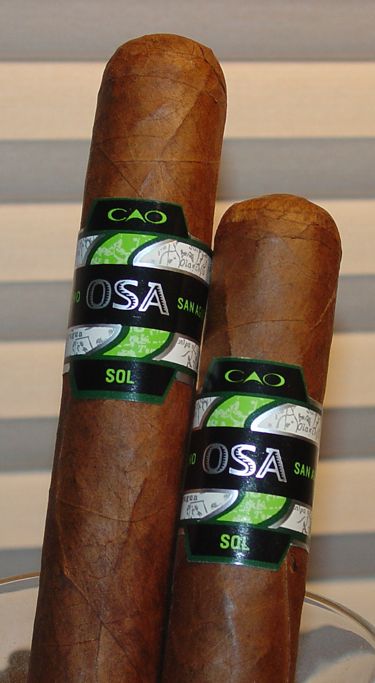
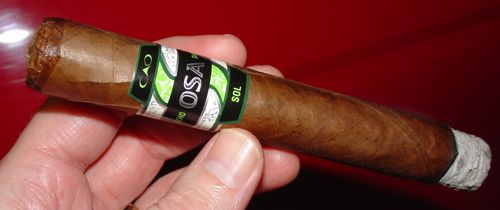
The star of the OSA Sol is the wrapper, but you wouldn’t know it by looking. It’s a little rough, fairly veiny, and somewhat dry in appearance. The cap is smooth but sort of pasted over a round Cullman style head, emphasizing its functionality. The cap cuts neatly though, and it doesn’t unravel. Triple seams are nice to look at, but function is what counts.

The roll of the cigar is solid, but contrary to some other reviews I found these to draw a little too freely. They seem to burn pretty quickly, which may be a result of the loose draw. On the other hand, the burn is perfectly even, and the ash is smooth and solid.

Overall construction: good to very good.

Tasting Notes

In a word, the OSA Sol is woodsy. Cedar and humus. It starts up with a cedary spice and a touch of tannin on the tongue. It’s smooth on the palate though, and the aroma is sweet and woody.  A couple inches into the cigar and the wrapper really starts to shine. Nuanced notes of apple and leather combine with the cedar in balanced complexity. The smoke remains smooth up to the end, but a slight pucker of tannin  persists; a dash of pepper in the last third adds a dimension to the woody flavors on the palate.  The sweet woodsy aroma continues to the end, but the flavor starts to char at the band.

Conclusion

Based on its wrapper I thought the OSA Sol would be similar to the Punch Gran Puro, but it’s mellower and maybe a bit more complex as well. It’s a great medium-bodied smoke for this time of year — I always like a woodsy cigar when the temperatures start to come down, and this one is smooth and burns beautifully. I wish it were a little more affordable, but 6 USD is probably not too much to ask. It’s worth a shot if you’re in the mood for a smooth and flavorful autumn smoke.

Final Score: 89

Special thanks to General Cigar for providing samples of this new blend.

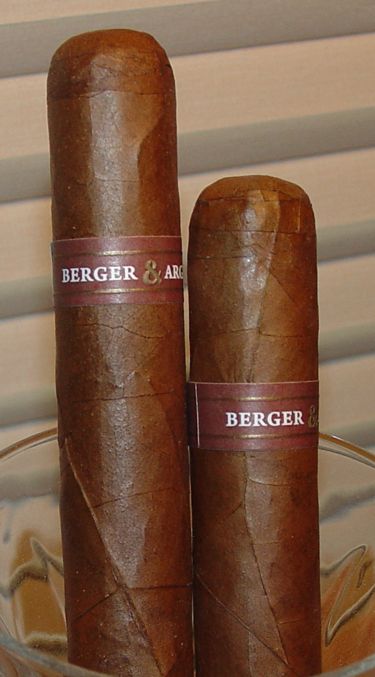
Berger and Argenti Clasico Rothschild

Berger & Argenti snapped up the number two spot on our Best Cigars of 2010 list with their Entubar, a fantastic and odd-looking cigar with a filler “fuse” that extends from the foot of the stick. The Clasico bears some similarity to that dynamite smoke, starting with the Ecuadorian-grown Connecticut-seed wrapper called “desflorado.”  The binder is a Nicaraguan corojo and the filler is harvested locally in Esteli, Nicaragua, where the cigar is made.

Entubar was designed to be a cutting-edge cigar, and as such it carries a premium price. Clasico, on the other hand, was envisioned to be a “cubanesque” cigar available widely at a more affordable price. The unassuming presentation and simple band on this cigar are true to the “classic” vision, and the fact that I was able to  find these at my local cigar haunt demonstrates the success of their distribution strategy. Now to test this “cubanesque” allegation.

Clasico is produced in four sizes:

  • Rothschild – 5 x 50
  • Corona Gorda – 4 1/2 x 46
  • Belicoso – 5 3/4 x 50
  • Churchill – 7 x 50

Construction Notes

The Clasico Rothschild has the sleek and smooth look that Connecticut wrapper imparts, but the color is a darker golden brown than what is usually found on shade wrapper. The head of the cigar is nicely formed and topped with a classic Cuban-style cap that shears away cleanly. The roll has a little give to it, but the draw is perfect and it burns evenly to the band. The only issue I had was the delicacy of the wrapper, which apparently does not agree with the dry desert heat. There was a small amount of cracking which I fully attribute to atmospheric conditions and not the design of the cigar.

Overall construction: Excellent.

Tasting Notes

The Clasico Rothschild opens boldly with pepper on the palate and a toasty aroma. The spice dies down after an inch or so and earthy flavors emerge on the tongue, while the aroma continues to provide a bready element that is characteristic of many Cuban cigars. The smoke texture is creamy, and at the mid-point of the cigar there is a note of sweet cream on the nose which matches the texture quite nicely.

The base flavor of earth is masked by pepper for the first inch or so, but after that point it takes the reins and drives the cigar home. Meanwhile, the toasty notes in the aroma become sweeter and are replaced by Spanish cedar. Pepper makes an encore appearance in the last scene before the curtain drops.

Conclusion

Berger and Argenti have another success on their hands, and it’s nice to see that affordability was part of their vision for this cigar. The Clasico blend does indeed have a Cuban flair — the earthy base and sweet notes of bread and cedar are, to me anyway, very similar to what can be found in many classic Cuban cigars.

The Clasico Rothschild is a medium-bodied cigar with great construction, a moderate amount of complexity, and at around 5 USD per stick it’s a fantastic deal.

Final Score: 90

Alec Bradley Family Blend D3 Robusto

Alec Bradley’s Family Blend stumbled into the spotlight in 2010 when it found a place on Cigar Aficionado’s Top 25 cigars of 2009. It was originally made in only one size — the VR1 Robusto — but in 2010 Alec Bradley announced the “birth of quadruplets,” and the line was expanded to a family of five in all. More recently a 6 x 60 was adopted, yet another indication of the childhood obesity problem in this country.

The Family Blend was created for the fathers of the company’s three principal executives, but a very attractive price point quickly made this family affair of great public interest. The stubby D3 earned 93 points and was labeled a “Best Buy” for 2010 by Cigar Aficionado. Any more accolades from CA might and a man might get suspicious.

Speaking of suspicious, I think AB could possibly learn something from Illusione’s Dion Giolito about how to name cigars. The names for the Family Blend vitolas are codes referring to “names and dates that are significant to certain family members.” That’s just dandy, but codes are not exactly consumer-friendly. I can barely remember my PIN when I go to the store, so I’m not going to remember if MX23 or BX2 is the toro or the double corona. Illusione cigars suffer from the same nomenclature problem, but Giolito has added a phrase to the number as a crutch for the mnemonically challenged. Granted, the phrase is as arcane as the code, but I can remember that “Necessary and Sufficient” is the churchill. But I can’t remember if it’s the 88 or 888 or 8/2 or whatever.

Anyway, here are the codes. You can either commit them to memory or write them down and keep them in your wallet.

  • D3 – 4 1/2 x 58
  • VR1 – 5 1/2 x 50
  • BX2 – 6 x 54
  • M23 – 7 x 50
  • T11 – 6 1/8 x 52 (Torpedo)
  • GS27 – 6 x 60

Construction Notes

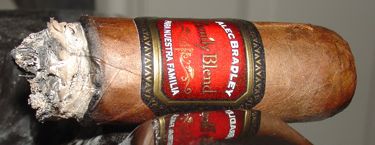
The D3 is a short and plump robusto with a dark and slightly rustic wrapper from Trojes, Honduras. AB seems to have the Trojes market cornered, which so far has turned out to be a very good thing for them. (The binder is Indonesian, and leaves from Honduras and Nicaragua comprise the filler.) The roll on this cigar is solid and the draw is excellent. The torcedors at Raices Cubanas in Danli are on a par with Pepin’s rollers in Esteli, as the cap on this cigar attests. The pig tail is discreet and the cap is perfectly triple or quadruple wound. (I fell down on the job with the pics for this one. I’m blaming the summer heat.)

The ash tends to flake a little but the burn was slow, a product of both the solid roll and the 58 ring gauge of the cigar.

Tasting Notes

The Family Blend D3 has a bright Nicaraguan taste similar to other cigars rolled at the Raices Cubanas factory, but it isn’t as robust as Illusione or Alec Bradley’s Tempus line. The flavor is woody with sweet cedary spice on the nose. There seem to be some other milder spices I can’t quite identify — nutmeg maybe — and a touch of pepper on the tongue. It’s medium bodied, but complex.

The flavor on the palate gets a little meatier in the second half and the aroma picks up sugary notes like caramel and cotton candy. The D3 has what I’d consider a Nicaraguan flavor profile, even though it is not Nicaraguan, and is much smoother and a bit sweeter than your typical Nicaraguan puro.

Conclusion

The Family Blend is yet another great line from Alec Bradley, and it’s nice to see them add a milder cigar to their portfolio. It has all of the sweet complexity that you’d expect from one of their Trojes blends, but it’s smooth and easy to smoke. The MSRP on the D3 is in the 5 to 6 dollar range, which is a good value in light of the cigar’s quality.

I’m not crazy about the ring gauge on this particular vitola, but my D3 experience was enough to fuel interest in other sizes. The cigars in this line run fat, unfortunately. I think I’ll have to try the relatively slim 50-ring robusto next. Which one is that? M23? BX2? Where is my decoder ring?

Final Score: 90

El Triunfador No. 4

El Triunfador is made by Pete Johnson, known best for his Tatuaje brand and his partnership with Jose “Pepin” Garcia. The El Triunfador name is an old Cuban mark that Johnson revived, but in order to retain ownership of the name he had to produce a certain number of cigars under that mark. So he made what he described at the time as a Cabaiguan Maduro in a lancero size and released it to a select few in 2009 as El Triunfador.

The blend in production today is entirely different from that original release, though the lancero with a broadleaf wrapper is still made in a limited number. The new blend, originally designed for release in Europe, has an Ecuadorian Habano cover. Under the hood is a Nicaraguan binder and filler, including leaf from Pepin Garcia’s La Estrella farm in Esteli. Seven sizes are in production:

  • No. 1 Lonsdale – 6 1/2 x 42
  • No. 2 Belicoso Fino – 5 1/2 x 52
  • No. 3 Corona Gorda – 5 5/8 x 46
  • No. 4 Robusto – 5 x 48
  • No. 5 Petite Corona – 4 3/8 x 42
  • No. 6 Lancero – 7 1/2 x 38
  • No. 7 Toro Grande – 5 7/8 x 54

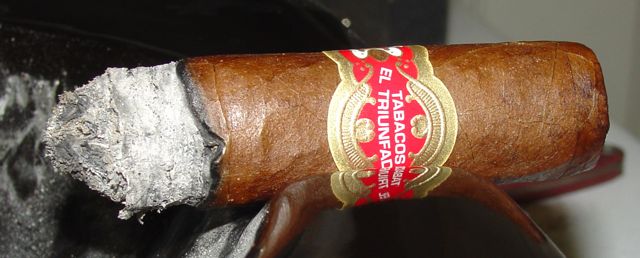
The original release El Triunfador is easily distinguished from the No. 6 lancero by the band — the original broadleaf lancero has a dark brown band, while all of the newer numbered cigars have red bands. Both bands are classic and simple, reminiscent of the vintage Havana style. As are the cigars, for that matter.

El Triunfador is made by Jaime Garcia at My Father Cigars in Nicaragua.

Construction Notes

According to the specs on the Tatuaje website, the No. 4 Robusto is a standard 5 x 50, but it seems a bit undersized for a robusto. Maybe it’s because so many cigar makers are inflating their robustos with an extra leaf or two these days, or maybe it’s because of the box press. The roll is solid and the head and cap are classic Havana style, as expected from My Father Cigars. The wrapper is a rich looking colorado maduro with some fine veins. The burn is perfectly even and leaves a solid light gray ash in its wake.

The draw on one of the two I smoked for the review was loose and drew hot in the last third, but the other one was just right. Both cigars seemed to burn very quickly, however. I can usually stretch a robusto sized cigar out to 45 or 50 minutes, but the No. 4 seemed to have only 30-35 minutes in the tank.

Good to very good construction, with possible consistency issues.

Tasting Notes

The styling of this cigar is classically Cuban, so it makes sense that the flavor would be similar, or as similar as possible outside of Havana. It’s a medium-bodied smoke that starts up with sweet cedar and an earthy muskiness eerily reminiscent of the classic Cuban blends. There is a touch of pepper in the first half-inch, but that quickly dies away. The Nicaraguan zing is present on the tongue for the first half of the stick, but eventually that too gives way to a smoother, but less expressive combination of sweet wood and musk. In the last half some saltiness comes through and at the very end are floral notes similar to what I love in La Riqueza, one of Johnson’s other blends.

Conclusion

El Triunfador combines the best of Nicaraguan tobacco and Cuban style into a medium-bodied package that almost anyone will enjoy. It’s mild enough for a mid-day smoke, but will serve medium-bodied cigar smokers well at any time of day.  It appears to be designed as a mainstream cigar, and it smokes like one. It’s very good, but it’s not going to blow away of any of the top tier smokes in Tatuaje’s portfolio.

Going price for the No. 4 is 8 USD. There is a lot of competition in that price range, but El Triunfador is still a blend worth checking out.

Final Score: 88

Kinky Friedman Kinkycristo

Kinky Friedman is best known as a musician, author, and perennial candidate for political office, but a cigar is his constant companion in whichever guise he appears. He is an American humorist in the tradition of Mark Twain, and like Twain his quips are many and well known. My favorite is still what he said to Bill Clinton after handing him a Cuban cigar: “Remember, Mr. President, we’re not supporting their economy. We’re burning their fields, one cigar at a time.”

Kinky prefers Cuban Montecristos, but laments the price. He considers Honduran leaf second only to Cuban, so it is fitting that the original line of Kinky Friedman cigars uses a Honduran Habano wrapper. The binder is from Costa Rica, and the filler is a Honduran-Nicaraguan blend. They are manufactured by Habana Cuba Cigars, the makers of Oliveros, in the Dominican Republic. Five sizes are in production:

  • Kinkycristo – 6 1/4 x 54 torpedo
  • Texas Jewboy – 6 x 56 torpedo
  • Governor – 5 3/4 x 60 toro
  • The Willie – 6 x 48 parejo with a shaggy foot
  • Utopian – 6 x 52 toro

Proceeds from sales of the Utopian size go to Friedman’s Utopia Animal Rescue Ranch in Medina, TX. So you can add animal lover and philanthropist to Kinky’s already extensive resume. He also makes salsa, which I haven’t tried but probably should since the proceeds from that product line also go to the Utopia Rescue Ranch.

Construction Notes

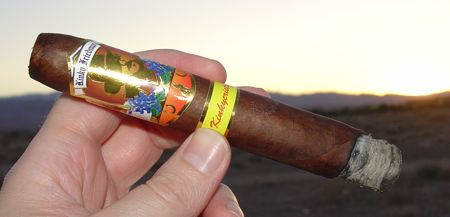
The Kinkycristo is a nice looking torpedo with a Texas-sized primary band featuring a silhouette of the Kinkster himself. There is an additional, more discreet secondary band bearing the frontmark name, “Kinkycristo.” Together these bands cover half the cigar, which wouldn’t be a problem were it not for the surplus glue that has been smeared all over the ventral side of the stick. I wonder what would happen if I ran that fingerprint through AFIS?

That rather unsettling aesthetic anomaly aside, the Kinkycristo is rolled well, draws easily, and burns evenly.

Overall construction: very good.

Tasting Notes

I’ve smoked a few “celebrity” cigars in my time, and I can’t say that I’ve been terribly impressed with any of them. Using one’s celebrity to market a product is a business decision, not a demonstration of talent, and I am accordingly skeptical of any product peddled that way. So my expectations of this cigar were lower than they might have been. All the same, I was pleasantly surprised.

The Kinkycristo is a smooth medium-bodied cigar with a substantial amount of complexity. In the first third I found a soft woody aroma coupled with an earthy aftertaste and a few flavor notes that kept me guessing.

The middle of the cigar is a little bit spicier, but is still balanced and smooth. Cocoa, or perhaps sweet coffee with lots of cream, makes an appearance at times, along with that elusive note. It reminds me of vanilla and balsa wood, but I could be persuaded otherwise.

The Kinkycristo is surprisingly complex, but it doesn’t change much from start to finish. It stays even tempered, mild and tasty to the end. I was expecting a little more power in the last act, maybe a shot of Tabasco or chile powder, but it just tips its hat politely and meanders into the sunset.

Conclusion

The Kinkycristo is a smooth medium-bodied smoke that could be easily enjoyed as a breakfast cigar, or anytime at all if the medium range is where you live. The MSRP is a bit high ($165 for a box of 20), but the online behemoths are selling them right now for about 70 dollars under that.  If you play your cards right on the auction sites you can do even better than that.

It’s nice to know that Kinky has a fall-back plan if the book-writing, song-singing, and campaigning-for-office gigs dry up. Cigar slinging might be what he was born for.

Final Score: 89

El Credito Perritos

The other day as I was sweating my way into the second half of a nice toro-sized cigar I realized it is officially summer, and it’s time to switch to something smaller. Every summer I find new-found appreciation for full-bodied petite coronas, perlas, and minutos. In past years I’ve acquired boxes of Rocky Patel Sun Grown Juniors and Pepin Garcia Black 1952s to bide my time until the earth’s axis tilts more comfortably away from the sun, but so far this year I have no contender for the position.

But just in time, there appears to be a qualified applicant at the door. A new cigar called Perritos was quietly released a few months ago by General Cigar. Made in Santiago in General’s El Credito division (E.P. Carrillo’s old La Gloria Cubana outfit), Perritos are ugly little smokes made without the benefit of molds or presses. They look like slightly larger versions of the Italian cheroots Clint Eastwood smokes in the spaghetti westerns.

In this case, looks are deceptive. Somehow Team La Gloria has packed into this 5.5 x 38-ring gauge cigar a Connecticut Broadleaf binder, two filler leaves from Nicaragua and the Dominican Republic, and then wrapped it up in a Habano leaf from Ecuador.

And to my great surprise, this little doggie has teeth.

Construction Notes

Okay. This is not a cigar you’ll be passing out at your wedding, or handing to the boss on the links. The cigar is rolled entirely freehand and the head is shaped to a point that is left open. Some of them crook a little to the left, others to the right, and they’re as bumpy as a washboard road. Looking at this cigar for the first time, you have to hope that its smoking qualities exceed its aesthetic beauty, because it has very little.

On the other hand, it draws and burns quite well. The ash doesn’t fall off like you’d expect it to, and in every other respect it seems to be constructed like a premium cigar.

Looks aside, very good overall construction.

Tasting Notes

Some cigars have names a mile long, but Team La Gloria has surpassed that by giving the Perritos a subtitle: “War of Flavors.” I initially took that to be advertising overkill, but after smoking a few of these I think it truly is an apt description.

The Perritos start up with a expressive bang of pepper and sweet cedar. The smoke is aromatic, strong, and full-bodied. After a half-dozen puffs it coats the palate nicely.

The pepper drops off after an inch or so, but at that point other spices pick up the slack and make sure its martial spirit doesn’t flag. Leather enters the fray at the mid-point and the aroma turns from cedar to oak.

Char characterizes the last inch before the band, but I was captivated by a sweet cherry note which kept me interested to the end.

Conclusion

There’s a lot of fight in these mangy looking mutts, and I have to admit that I’m impressed. Despite their diminutive and careworn appearance, they’re remarkably complex. Even better,  you won’t pay a purebred price — the MSRP is marked at $2.50 a pup, but boxes of 50 can be found without much effort for around 70 bucks, dropping the single price considerably.

If you’re in the market for a short smoke but don’t want to sacrifice flavor, these Perritos may turn out to be your new best friend.

Final Score: 90

La Aurora 107 Lancero

La Aurora hit an out-of-the-park home run with its last anniversary cigar, Cien Años, to celebrate an amazing 100 years in the business. Any business (or human being, for that matter) still going strong after a hundred years is worth celebrating with a Centennial bash. Seven years later, Willard Scott is proud to congratulate La Aurora one more time.

107 is an odd number though. Not only is it odd, it’s prime. (And of course I’m late:  this blend was released last year.)

La Aurora has been known over the years for milder cigars like its eponymous La Aurora,  a nice nutty Dominican-style cigar with a tasty Cameroon wrapper.  But in recent years they have turned with the times to heavier, more complex cigars like the 1495 and Preferidos lines. While not the spice bombs that many full-bodied cigar enthusiasts crave, the more recent releases certainly bring more flavor to the table.

That trend is continued with the 107, which employs a sun grown Ecuadorian wrapper, a Dominican binder, and filler from Nicaragua and the DR.  Originally released in just three sizes, a fourth — the lancero — was added after a successful drive by fans of the blend, mostly via Twitter.

  • Robusto – 4 1/2 x 50
  • Toro – 5 1/2 x 54
  • Belicoso – 6 1/4 x 52
  • Lancero – 6 7/8 x 40

Construction Notes

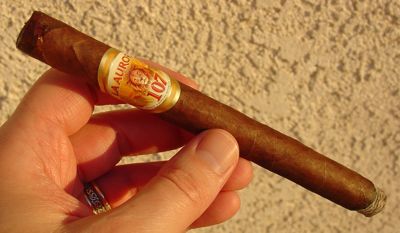
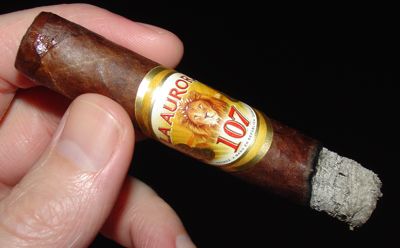
The Aurora 107 has a dark pecan-colored wrapper with some lighter veins that are prominent by contrast. It’s a striking leaf, similar in appearance to the 5 Vegas Limitada 2005,  also made by La Aurora. The roll is mostly solid, with a few soft spots that will escape notice unless you’re palpating the cigar for a review.

True to its lancero roots, the head is finished with a discreet pig tail and the draw is a bit tight for the first inch or two. It burns evenly and produces a solid light gray ash.

Overall good construction.

Tasting Notes

The 107 is not a shy cigar, but it’s not exactly boisterous either. The flavor on the palate is mild and woody to begin with, but this is overshadowed by the brown sugar and caramel on the nose. The aroma is sweet and gradually picks up woodier scents as the ash grows. There is a touch of pepper on the tongue and the aftertaste is noticeably salty.

The mid-section turns spicier — a little more pepper, and the woody flavors char a bit. It gets richer and picks up some leather at the 50-yard line.

The 107 lancero finishes a bit charred and burnt on the palate, but the aroma continues to impress with its sweetness and complexity. Like many thin-gauged cigars, this one should be smoked patiently for maximum enjoyment.

Conclusion

La Aurora’s 107 lancero is a medium-bodied cigar that verges on full body and offers plenty of sophistication in a finely crafted package. It reminds me a little bit of their Barrel-Aged cigar, which is also medium in body with a lot of complexity on the nose. I just finished off a box of Barrel-Aged No. 4, and it seems to me that the 107 is quite a bit more sophisticated and not as sweet.

While I enjoyed this cigar quite a bit, I think I will have to acknowledge my impatience with lanceros and try the 107 in a slightly larger incarnation the next time around.  The lanceros run around 6 USD per stick — not bad for an “Anniversary” blend, even in an odd year.

Final Score: 89