Fuente Don Carlos Vertical Review (Pt. 1)

afdoncarlospres

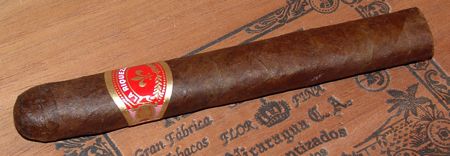
Arturo Fuente Don Carlos Presidente

The Don Carlos line is one of Arturo Fuente’s “super-premium” brands, a step up from the Hemingway Series, but not quite as exalted as the Opus X. The highlight of the blend is an aged Cameroon wrapper, underneath which is a Dominican blend from the Fuente farms.

I’ve always liked this blend, but I don’t smoke it much because of the price (in the $10 -12 range).  The robusto has always been my goto Don Carlos, when my wallet has been sufficiently lined, but our friends at CigarsDirect.com were kind enough to send a sampler pack my way so I could try a few of the sizes I’ve never smoked.

Last year Lucky7 posted what I think is the definitive Arturo Fuente Don Carlos Double Robusto review –check it out for more information about the blend and the story behind it. I’m not going to try to top that review but I’m going to try my hand at a few of the other sizes in a vertical review to see how they compare with each other. First up, the No. 3 corona versus the toro-sized Presidente.

Arturo Fuente Don Carlos No. 3

Arturo Fuente Don Carlos No. 3

The No. 3 is a typical corona: 44 x 5.5 inches long. The wrapper is attractive but marred by a mucilaginous smear, a strangely common defect in the Don Carlos line. The corona cuts cleanly and has a satisfyingly firm draw. It lights up easily, burns evenly, and builds a long and solid light gray ash.

The flavor starts out smooth and full, nutty with a minty veneer typical of Cameroon. Unlike some other Cameroon blends, afdoncarloscamthe wrapper here seems better integrated with the rest of the blend: it adds an element of spice but maintains its neutrality.
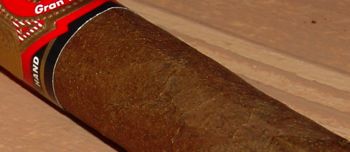
The Don Carlos corona definitely has a sweet spot in the middle third where the flavor becomes a little richer, moving from nuts to leather, and the aroma is sweet and mildly spicy. The final third heats up a bit, so you’ll have to slow down to maintain the balance and keep the taste from getting bitter.

This is a great little cigar — one of the best in its size, I think — but there may be some consistency problems, as Lisa found in her review for Her Humidor.

The Presidente, a 6.5 x 50 toro, is the largest (or at least the longest) size in the line. It displays the same construction characteristics as the Corona, including a distinctive glue smear half way down the barrel, and a neat triple cap. It lights easily on a match or two and burns without a hitch.

afdoncarlospres2

AF Don Carlos Presidente

By contrast with the corona, the Presidente has a little more kick and by the end a lot less nuance than the smaller cigar. This toro opens up with a dose of peppery tobacco — piloto cubano, perhaps — and a barely noticeable touch of Cameroon spice.

After an inch the pepper wears off and the flavors glide down into nuts and leather, but it never achieves the same smoothness as the corona. It’s not harsh by any means, but there is a spicy vibrancy here that the corona does not possess. And while the corona is a solidly medium-bodied smoke, the Presidente reaches well into the full range.

The cedary sweetness from the Cameroon rises up when the pepper dies down and stakes its claim in the middle third of the Presidente, followed by a peppery reprise from the final third to the band. In the last couple of inches the pepper gradually builds and eventually overpowers the more subtle spices, leaving a lengthy and powerful finish on the palate.

Obviously there are similarities between the Don Carlos No. 3 and the Presidente — the way the wrapper blends with the core of the cigar, adding an element of spice without being obtrusive, is common to them both. Aside from that, they smoke quite differently and might very well appeal to different kinds of smokers. The No. 3 is smooth and medium bodied with finer notes of leather and mint, whereas the Presidente is medium to full and offers lots of pepper at the start and again at the conclusion of the cigar.

Both are quality cigars, but they are as different as the youngest and oldest brothers in a large family. Sure, they resemble each other, but one might be your best friend. The other might just be your best friend’s brother.

Thanks again to CigarsDirect.com for allowing me to meet the family! Stay tuned for the next installment of the Don Carlos Vertical Review, this time featuring the Robusto and the Double Robusto.

doncarlosband

Fundacion Ancestral Pinar del Rio 1941

From Tabacos de la Cordillera in Costa Rica comes another Fundación Ancestral — this time the Pinar del Rio 1941, the heaviest of the three blends currently available. I say blends, but these are actually puros blended from different primings of the same strain of tobacco.

Like the Vuelta Abajo 1940, this cigar is rolled using “genetically pure” pre-Castro Cuban seed tobacco grown in the mountains of Costa Rica. A few weeks ago I reviewed the Vuelta Abajo and found it to be an exceptionally smooth cigar with a truly unique flavor.

One of the outstanding characteristics of this line is its crisp and clean flavor profile. This may be due to the purity of the genetic strain, but the soil and growing technique may be equally responsible. In the last review I discussed the history of John Vogel’s project and his dedication to maintaining the integrity of the pre-embargo Cuban seed bank. It’s important to note that this tobacco is also grown in an entirely organic fashion, meaning all fertilization and pest control is accomplished without the use of industrial chemicals.

The soil is prepared using only natural organic fertilizers and nutrients, levels of which are tailored to each specific type of tobacco. All of the work is done by hand — other than hand tools, very little farm equipment is used. Traditional organic methods of pest deterrence, including the cultivation of pest-resistant varieties, are used instead of chemical pesticides.  The result is a virtually chemical-free cigar. (More details about the organic growing process are available on the Tabacos de la Cordillera website.)

The only other non-Cuban cigar I’m aware of that can lay claim to being totally organic is Plasencia’s Reserva Organica. Incidentally, the PRO is also a very clean-tasting cigar, so I have to wonder if there really isn’t something to all this organic stuff.

The Fundación Ancestral Pinar del Rio is an attractively rolled stick. The wrapper is a tawny claro with evenly spaced veins and a slightly oily appearance. The surface texture is a little bumpy from the binder beneath, but nothing you’d notice without close examination. The head of the cigar is rounded, “Cullman” style, and finished neatly. It cuts simply and lights with a single match.

I really liked the Vuelta Abajo cigar, but any resemblance between that cigar and regular production Cuban cigars escaped me. With the Pinar del Rio it’s a different story. Almost immediately upon lighting up the Pinar I was greeted with that Cuban “twang,” a sweet bready aroma that I’ve come to think of as exclusive to Havana cigars.

The first half of this corona brings a complex brew of wood, earth and gentle spice that is truly delicious. The draw is easy, but firm, and the burn wavers only slightly. The ash is dark and flaky, but holds. The finish is short and the aftertaste minimal at this point — the effect is crisp and clean, much like the Vuelta Abajo. The flavors are distinct and pronounced while the smoke lingers on the palate, and then they quickly dissipate, leaving only a trace of wood and nuts.

This is a solidly medium-bodied smoke, heavier than the Vuelta Abajo, but without the gravity or the bite of the Nicaraguans I’ve been smoking lately. The subtlety of the smoky wood flavors continues into the second half of the cigar, but an inch before the band a dose of pepper enters the fray and gives the blend a little boost as things wind down. The finish at the end is stronger and lasts a little longer, but it remains crisp and clean.

Hardcore cigar enthusiasts seem to be overwhelmingly partial to full-bodied cigars, and while there’s no arguing with taste I find that I frequently disagree, and I’m happy to say I’m not alone. There is much to be said for the subtleties of milder cigars like the Fundación Ancestral (which is mild only by comparison) and there is an eloquence to this cigar that high-powered ligero-laden blends can’t match.

If giant-killers like Opus X or Camacho Diplomas are what get you going, you probably won’t find this cigar too impressive. But if you enjoy the subtle nuance that mild to medium bodied cigars can bring, particularly that mildly spicy bakery aroma that distinguishes some Cuban cigars, I think it will be worth your while to seek this one out. They’re not easy to find, and they’re pricey — I paid around $12 retail — but I’m not disappointed with my purchase. (I’m just disappointed that I can’t afford to buy more.)

La Herencia Cubana Robusto

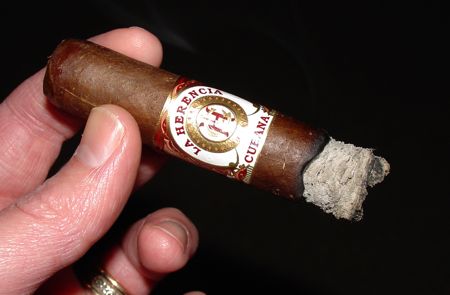
Made in the Tabacalera Fernandez factory in Esteli, Nicaragua, La Herencia Cubana is a great example of how a Nicaraguan cigar in the style of Padron and Pepin does not have to cost over five dollars a stick.

AJ Fernandez is the man behind brands like Padilla Habano, Man O’ War, and Rocky Patel’s ITC 10th Anniversary cigar. AJ is a relatively young guy, but already we are seeing signs that he has a very bright future in the industry. Recently arrived from Cuba after receiving an education in the business from the legendary Alejandro Robaina, he is currently growing his own tobacco in Condega and Jalapa for filler and binder in his new blends.  He has yet to grow his own wrapper leaf, but his close relationships with Nestor Plasencia (his uncle) and the Oliva Tobacco Company have given Fernandez all the resources he needs to create the next stellar Nicaraguan cigar.

La Herencia Cubana (Cuban Heritage) features filler tobaccos from Nicaragua’s three main growing regions: Condega, Jalapa, and Esteli. The wrapper is a dark Ecuadorian Sumatra that shows a fair amount of tooth for this type of wrapper, and seems to have small chips in it like some maduro leaves do. The roll is excellent: solid and consistent, and the cap is uniform and well made.

My first impression upon lighting this cigar is that it could have been made at another, more familiar, Esteli factory: Tabacalera Cubana. The initial blast of pepper lasts for half an inch or so and then settles down to a still aggressive foundation of wood and earth. There is a bright, almost acidic edge to this smoke that stings a bit on retrohaling. The aroma is sweet and earthy, reminding me a little bit of United Tobacco’s Cubao.

An inch or two into this robusto and a couple more familiar Nicaraguan suspects are at the door: cocoa and his cousin coffee. They blend very well with the sweet earthy aroma from the wrapper. The burn is excellent, requires no babysitting, and the ash holds reasonably well. My only complaint at this time is an unpleasant bite in the back of the throat. It’s not so excessive that it overtakes the character of the cigar, but it does prove a distraction.

The last third delivers a pretty good nicotine hit and the finish grows long and increasingly earthy. The sweetness from the wrapper keeps up with the strength of the blend, a mark of superior blending. After the band the flavor gets a little too dirty for my taste, but lovers of strong Nicaraguan tobacco may just want to nub this one.

My first impression when I lit up the Herencia Cubana robusto was that it was “Pepinesque,” and I think I’m going to stick with that description. It’s not as complex or rich as the average Pepin cigar, but there are definitely similarities. The sweet cocoa reminds in particular of EO’s Cubao, but again, without the same depth of flavor.

On the other hand, the price is a little less than what you’d pay for a Cubao or most of the cigars coming from Don Pepin — around 3 bucks a stick, or less if you catch a good deal. Cigars International occasionally offers this blend in an 8-cigar “flight” which is a great way to sample the line.

If you like the peppery cigars coming out of Nicaragua right now and your taste runs to medium-full rather than straight on full-bodied smokes — and your budget is a little cramped — you would do well to check out Herencia Cubana.

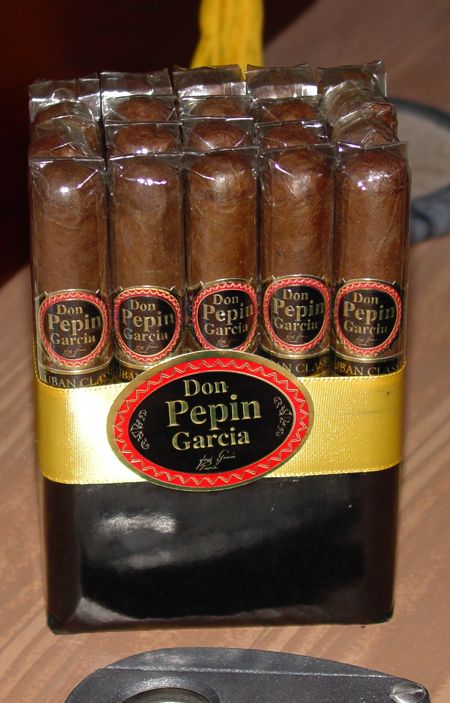
Don Pepin Garcia Cuban Classic 1952 Perla

As we head into the cold months of winter, a lot of us will be reaching for our favorite short smokes — petite coronas, short robustos, perhaps even the occasional cigarillo. But there is an art to smoking a small cigar; it involves more than huddling with your buddies around the flaming trash barrel and passing the flask (as rewarding as that can be).

The small cigar presents challenges, one of which is caused by the perception that since the smoke volume created is smaller, you can smoke it more quickly and obtain the same results as smoking a larger gauge cigar. Not so. More often than not this results in a hot smoke, a bitter taste, and disappointment in general.

The small cigar demands respect of a different nature. There’s less of a chance that it will burn askew, but a greater chance that the draw will be tight. There’s a greater chance that you will have less time to enjoy the small cigar — otherwise you might have opted for a larger vitola — thus the greater chance you will rush and fail to observe the nuance the mighty mite has to offer. And finally, you might be a little embarassed by the diminutive stature of your lil’ smokie. Don’t worry. It’s not a reflection on the breadth of your knowledge or experience. Not when you’re smoking a DPG Black.

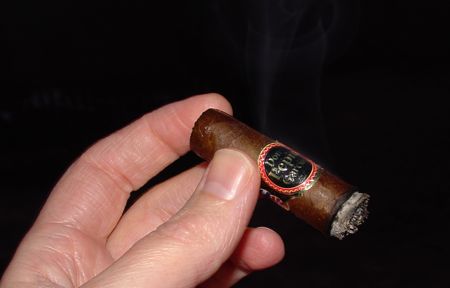
The frontmarks for José “Don Pepín” García’s Cuban Classic series are all named for milestones in the life of the master — 1952 is the year José was born, so it’s fitting that the smallest cigar is graced with that appellation. The perla is a classic Cuban vitola, a bit smaller than a petite corona. DPG’s perla is a bite-sized 4.25 x 40 and smokes very much like the other sizes in the line.

I’m not sure if it’s any more difficult to roll a smaller cigar than a larger one, but if so it’s hard to tell from the appearance and construction of the 1952. I burned through a box of these over the summer (which is the desert-dweller’s winter in terms of atmospheric suitability for smoking outside) and each one was like the next: attractively presented and very consistently rolled.

The draw is a little bit firm on these, but I have to wonder if that isn’t intelligent design: it discourages hotboxing.  They all smoke fairly cool, even close to the band, which is remarkable for such a small cigar. The burn is even but the ash is a little weak, falling off after an inch or so. Can’t have everything I guess.

The flavor is typical of the DPG Black series: lots of pepper up front that mellows into woody notes with a touch of caramel from Pepin’s signature corojo wrapper. It maintains a healthy bite throughout, just to remind you that even though it’s small, you’re still smoking a Pepín. But like Lucky7 said in his review of the 1979 robusto, it “definitely has a kick but it’s not a barn burner.”

Actually, Lucky7’s description of the robusto’s flavor is right on the mark for the perla as well, so I’m just going to swipe it:

Starts with the typical JDPG bang for about a half inch then softens to a creamy base flavor of toasted cedar and rich coffee with notes of bittersweet cocoa, nuts and black pepper. The aftertaste and aroma are sweet and pleasant. During the last third I always detect a little caramel on the nose.

The Blacks are widely available and have always been attractively priced, but the perlas can be a little difficult to find. Online it looks like these can be had in various places for anywhere from 60 to 80 dollars, which is a fine price for a quality short smoke like the 1952. Highly recommended for those of you planning on herfing with Jack Frost in the coming months.

La Tradicion Cubana Deluxe Anniversary Robusto

I was reminded this week by Kevin’s review of the Sabor Cubano that I had an LTC Deluxe quietly aging in the humidor. The Box Press reviewed La Tradicion Cubana Deluxe Anniversary earlier this year, in the corona size, and being familiar with Kevin’s reviews I wasn’t too surprised that we’re pretty much in agreement on this one.

The LTC Anniversary blend was introduced in 2004 to celebrate their tenth year in the business. At the time, La Tradicion Cubana was made exclusively in Miami, and this particular blend used tobacco from 1996. Press releases claimed that seals on the bales proved the age of the tobacco, a guarantee that more of us might reasonably request from cigar makers prone to, um, hyperbole.

This Anni blend features an Ecuadorian wrapper (no mention of seed origin) which encases a Honduran binder and filler leaves from Nicaragua and the DR. The wrapper is a smooth and dry colorado with minimal veins, though one stick suffered a crease toward the foot, probably due to hasty rolling. The head of the cigar is flat, but lopsided, and the sloppy triple cap looks almost inadvertent. It’s not a bad looking cigar if you don’t look too closely, but it’s not what I expect from an “Anniversary.”

Dude. Clean your ashtray.

Dude. Clean your ashtray.

In any case, it cuts easily and draws well, revealing sweet hay and hints of barnyard on a cold pull. I was surprised to encounter burn issues from the start here, calling for correction three separate times to keep the wrapper in line with the rest of the blend. I might expect this from a maduro leaf (actually, I do) but not a natural Ecuadorian of an “Anniversary” stature.

While the appearance and the burn might leave a little something to be desired, the flavor and aroma do not. The LTC Deluxe robusto begins its performance with an earthy overture, over which floats a sweet woody aroma. The texture of the smoke is creamy and fairly mild with a short dry finish and a touch of spice at the back of the palate.

The Deluxe Anniversary starts out like a slightly more elegant version of the standard line LTC, but gradually shows more complexity. In the middle section the earthy notes fade and are replaced by nutty flavors. The body builds a little to about a medium and the smoke remains creamy. The aroma is really unusual and interesting at this point, retaining the sweetness but picking up a bready scent in place of the earlier woodiness. The combined effect reminds me of freshly baked cookies.

The last section turns up the spice in a big way and by the end the finish is long and peppery. In addition to its increased sophistication, this cigar accelerates and crosses the finish line a lap before standard line LTC. They’re both fine smokes, but the Anniversary really shows up the regular blend in the last stage of the race. Despite my grumblings about the appearance and burn of this cigar, the flavor really redeems it. The burn is a nuisance, but sometimes a cigar maker has to make sacrifices for great taste. In this case that was a winning move.

Unfortunately it looks like these were a limited run and are no longer available for sale. Just keep in mind that next year marks La Tradicion Cubana’s 15th Anniversary — so maybe there will be a reprise! In the meantime, run out and get yourself some of the regular blend, or a box of Sabor Cubanos. For around 75 bucks a box, I really doubt you’ll regret it.

Fundacion Ancestral Vuelta Abajo 1940 Corona

Forty seven varieties of genetically pure cigar tobacco were lost in the Cold War. With Fundación Ancestral, Tabacos de la Cordillera intends to resurrect a few of them.

John Vogel, the agronomist behind Tabacos de la Cordillera, tells a tale of woe for the Cuban cigar lover: when Fidel Castro seized control and the United States embargoed the island, the Cubans turned to the Soviet Union for economic assistance. But the Russians were not interested in premium cigars. They wanted sugar. So the Cubans effectively abandoned the research facilities and seed banks that supported the cigar industry and stepped up the growing of sugar cane for the Russkies instead.

Over time the professionals who nurtured the crops and rolled the leaves into the world’s best cigars fled the country. New plagues like blue mold and black shank attacked the remaining strains, and without the facilities and expertise to combat them, the quality of the final product declined. The cigar boom of the ’90s brought a huge new demand to the market, prices soared, and the Cubans found no incentive to improve an export for consumers with deep pockets and no regard for quality or consistency.

As Vogel says, “Cuba forgot how to make cigars.”

Vogel has made the protection and stewardship of pre-Castro Cuban tobacco his life’s work. As an agronomist and geneticist working with tobacco for forty years he has been able to collect a bank of genetically pure pre-Castro Cuban seeds, the products of which have been used in puros like the Fundación Ancestral line.

But the question remains: what good are Cuban seeds without Cuban soil? Vogel’s somewhat controversial opinion is that Cuban “terroir” is not irreproducible. He believes that his ancestral seeds grown in the mountains of Costa Rica share the same potential as those grown in Cuba, and with proper care and engineering may in fact produce even better cigar tobacco. But the fact is that most of us simply don’t know what a genuine pre-embargo Havana tastes like, and those of us who do had that experience a very long time ago. The controversy seems somewhat academic to me. At the end of the day what we really want to know is how the cigar smokes, regardless of provenance.

There are currently three varieties of Fundación Ancestral available from Tobaccos de la Cordillera: a full bodied Pinar del Rio 1941, a medium bodied Artemisa 1944, and this one, the Vuelta Abajo 1940 which is billed as medium to full. Two more varieties, the Santa Clara and the Remedios, are “in aging” and should be available soon. These are all puros utilizing different primings from the same plants grown in the same mountain vegas of Costa Rica. Four shapes are made: a double-corona sized “Churchill,” a robusto, a torpedo, and this one, a 6 1/4 x 44 corona.

The wrapper on this corona is a consistently shaded colorado claro with evenly spaced fine veins. The head is well formed, but on close inspection the single cap looks a little sloppy. The cap shears off perfectly with a guillotine, so perhaps in this case it pays not to look too closely.

The scent on the wrapper and foot is of mild sweet tobacco — very inoffensive and placed well away from the barnyard. The roll is solid and feels uniformly packed. The draw is a little bit tight, and delivers a bright hay-like taste on a cold pull.

Most cigars identify themselves immediately, like politicians and their political parties — they’re either earthy or woody or leathery. Sometimes it’s a combination of the three, in different proportions, but usually one or the other base flavor gains prominence as the smoke progresses. But this Vuelta Abajo corona surprised me with unusual flavors from the first puff.

Eventually this cigar settled down into the earthy category, with some woody leanings, but it had enough subtlety and complexity to keep my palate guessing for a while.  There is no bitterness and absolutely no bite to this cigar, just smooth cool sweet tobacco flavors. The flavor on the palate is earthy, but not dirty — the way it settles on the palate as the finish grows is really nice. The aroma on the other hand, adds a mildly spicy woody element, something akin to sandalwood, but in a very muted way. The flavor on the palate, the fragrance on the nose, and the aftertaste all have distinctive qualities of their own that combine in a complex and balanced manner.

Into the second third the body builds to about a medium in texture and the flavor remains extremely clean. The burn on this corona is absolutely perfect, requiring nothing more than admiration to keep it smoldering in a level line.  The ash is a solid medium gray, and while the draw remains tighter than I prefer, it’s not a serious impediment.

The flavors get a little darker after the mid-way point as woodier flavors take over and bring their tannins to bear. Against the drier backdrop the aroma seems a little sweeter, but otherwise it seems unchanged. This cigar can easily be smoked past the band since the flavors don’t dirty or get bitter. One of the really distinctive aspects of this smoke is how clean it tastes.

And in case you were wondering, it doesn’t really taste like any of the “modern” Havana cigars I’ve been lucky enough to get my hands on. That said, I think the Fundación Ancestral is better than many of them.

Unfortunately, there is one more trait that the Fundación has inherited from its Cuban ancestors: its price tag. The corona size runs around 12 USD per single cigar, or $288 per box. Ouch. As a special treat I think this cigar is up there with other mild to medium bodied super-premiums, but I do wish they were a little more affordable.

Cubao No. 5

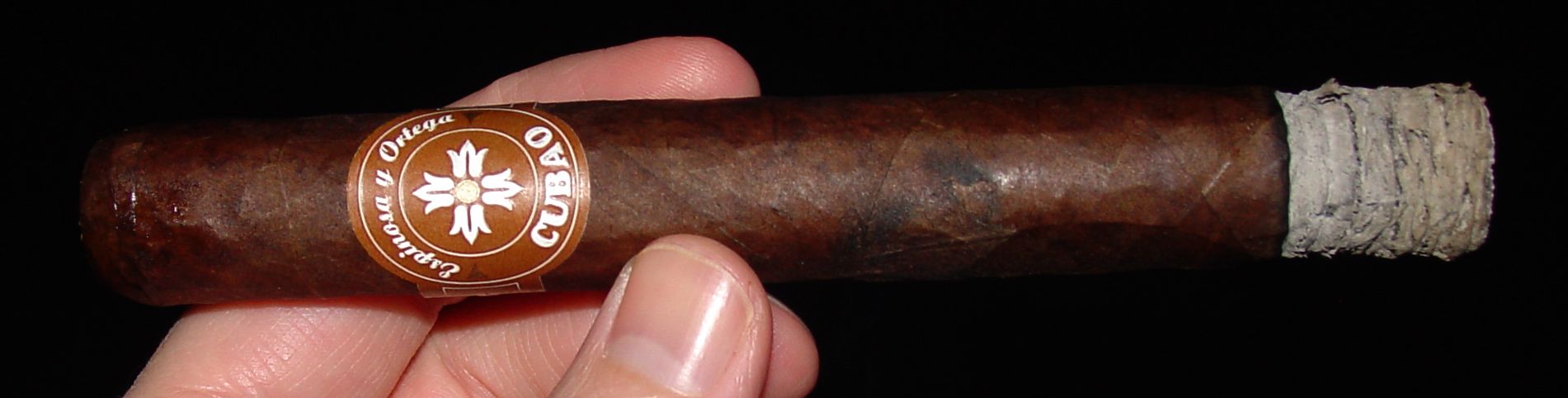
Cubao is the latest offering from Erik Espinosa and Eddie Ortega’s United Tobacco, blended by Pepin Garcia and manufactured at the Tabacalera Cubana factory in Esteli, Nicaragua. The No. 5 is the toro in the line, and comes equipped with a rough looking oscuro Ecuadorian Sumatra wrapper. The boxes are really interesting — the wood almost looks salvaged, like it was recovered from an old barn.

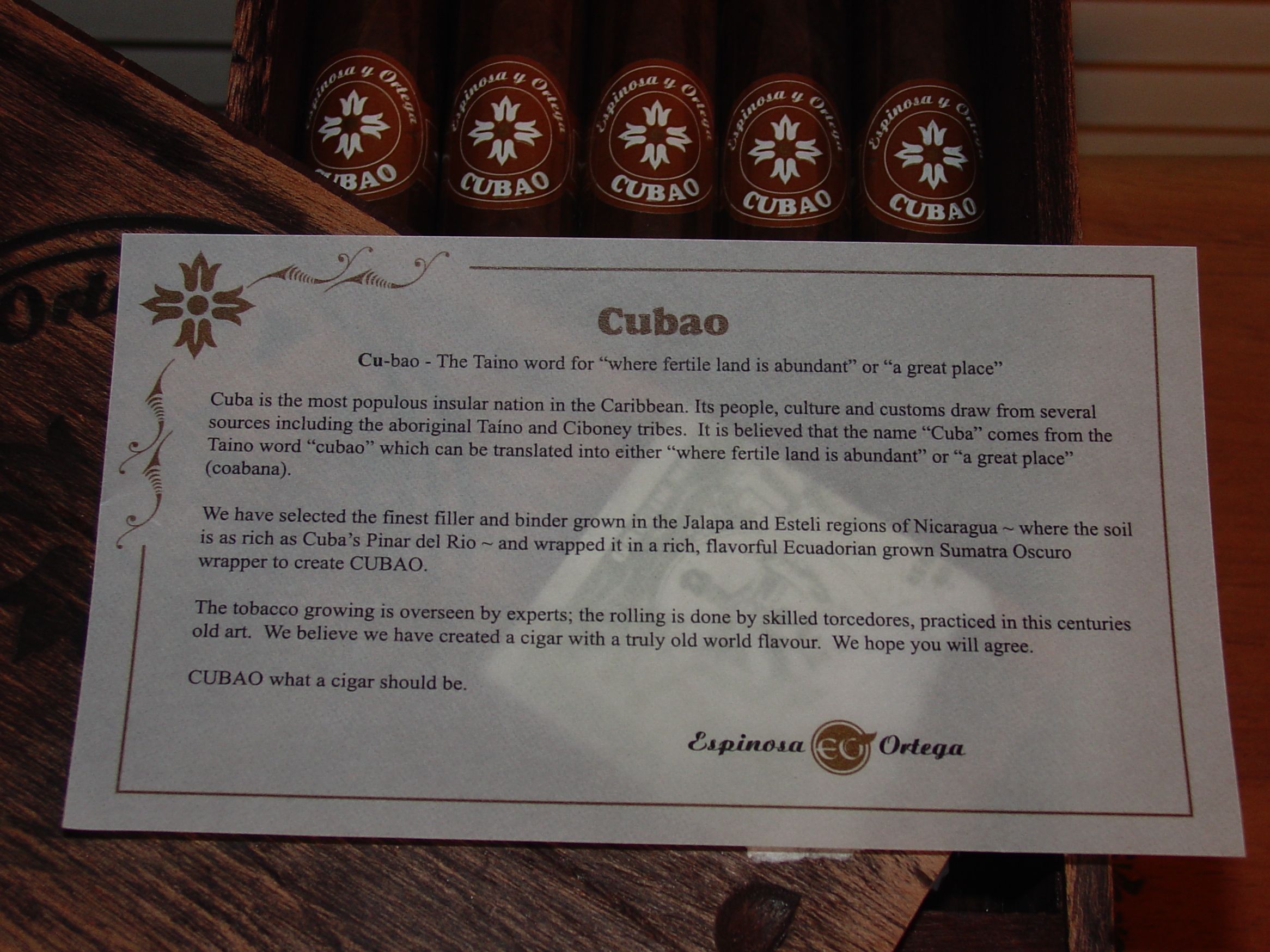
From the Habanos-style parchment included in the box:

Cu-bao – The Taino word for “where fertile land is abundant” or “a great place.”

Cuba is the most populous insular nation in the Caribbean. Its people, culture and customs draw from several sources including the aboriginal Taino and Ciboney tribes. It is believed that the name “Cuba” comes from the Taino word “cubao” which can be translated into either “where fertile land is abundant” or “a great place” (coabana.)

We have selected the finest filler and binder grown in the Jalapa and Esteli region of Nicaragua — where the soil is as rich as Cuba’s Pinar del Rio — and wrapped it in a rich flavorful Ecuadorian grown Sumatra oscuro wrapper to create CUBAO.

The tobacco growing is overseen by experts, the rolling is done by skilled torcedors, practiced in this centuries old art. We believe we have created a cigar with a truly old world flavor. We hope you will agree.

The wrapper on this cigar mirrors the distressed look of the box — it’s not black (as you might expect from an “oscuro”) but dark brown with some black mottling.The wrappers bear the scars of thorough fermentation and the result is a weather beaten appearance. But the compensation for this less than gorgeous appearance is the flavor.

The 6 x 50 Cubao No. 5 lights up easily and burns almost perfectly for the duration of the smoke. The draw is excellent and the smoke production is generous. It forms a solid light gray ash that seems to hold for about an inch and a half before cracks form. Draw whatever comparisons you like to the fine cigars of Havana, the Cubao has them outflanked in the construction department.

This toro starts up with that trademark Pepin pepper, but it’s not as powerful as a lot of his heavier blends. It’s certainly lighter than any of the 601 cigars, and as usual this flavor dissipates after an inch but never really exits the stage completely. After an inch I’m tasting cocoa and coffee with cream types of flavors, and the aroma from the foot is quite nice, though non-smokers will find it pretty pungent. Stogie connoisseurs, on the other hand, will appreciate the way the sweet wood on the nose melds with the spiced cocoa on the palate.

There isn’t a lot of transition in the second half of the cigar, but I’m noticing a dry finish and a little scratch on the throat. Nothing a cold pale ale can’t take of. The intensity doesn’t pick up too much until I hit the band where the pepper ratchets up a bit. The flavor remains sweetly woody up front with cocoa notes in the margin. The pepper stays in the background and in the aftertaste, which is otherwise pretty clean.

Overall I’d say this is a medium to full bodied cigar, though regular Pepin smokers will think it’s more on the medium side. It certainly heavier than the Rey de Los Habanos (Red Label) or Vegas Cubanas, but it seems lighter than the 601s, San Cristobal, and most of the Tatuaje family. But for me it’s still most definitely an after-dinner smoke.

These are going for around 6 or 7 bucks, which is a great deal for the complexity you’re getting. I think most DPG fans will like this cigar as a flavorful medium-bodied departure from the heavyweights, and for those new to Pepin’s many blends, this is a great place to start. It’s not the prettiest cigar in the Pepin stable, but it definitely smokes better than it looks. And finally, an added bonus: these seem to be getting better after only a couple months in storage.

Other Reviews of the Cubao Line

The Stogie Guys review the No. 4

Walt’s review of the No. 5 at The Stogie Review

A Cigar Smoker checks out the No. 6

The Maytag Man on the No. 5

Cigar Jack digs the pre-release No. 1

Alec Bradley Harvest Selection ’97

A few months ago I finally polished off a box of Alec Bradley Trilogy Cameroons. That box lasted over a year, and while it wasn’t quite up there with Torano’s 1916 cameroon, it was still a good smoke for a reasonable price. I have yet to smoke an Alec Bradley cigar I didn’t like (though I don’t care much for the proportions of the stump sized Maxx.)

Lately AB’s new Tempus brand is hogging the spotlight, and rightly so since the reviews that I’ve seen are almost uniformly favorable. But at nearly the same time that Tempus debuted, Cigars International unleashed an AB exclusive called Harvest Selection ‘97. I haven’t had a chance to smoke the Tempus, but when I saw CI running a Harvest Selection special for two bucks a stick, I jumped on them.

Since these appear to be made exclusively for CI, there isn’t much information about them aside from what CI generously extends to us: a Nicaraguan Habano wrapper (from 1997), plus filler leaf from the DR (1997 piloto cubano), Mexico (1997 ligero), and Nicaragua (criollo, class of 1998.) The description doesn’t specify a binder type, but it does supply lavish praise for the ample oils and medium bodied bouquet, etc. etc.

Which at least simplifies the research part of this review, so thank you CI.

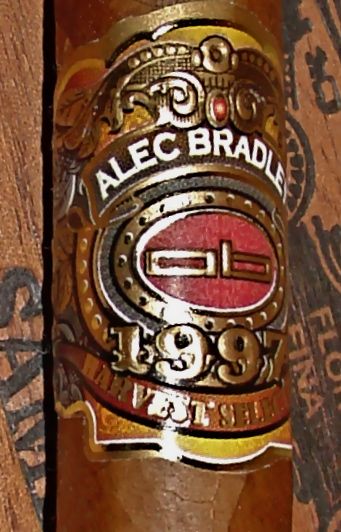
The band on this cigar is just as large and ornate as the one on the Tempus. I’m hard pressed to think of another three-dollar cigar with a band this attractive — all that embossed red, yellow and gold detail is pretty impressive.

Setting off the brilliancy of the band is a golden colorado wrapper that appears almost semi-glossy. There are a few fine veins, but again, for a three-dollar smoke this one’s a looker. The roll is solid and the cap is firmly fixed. No triple wrap, but decent enough.

The draw is initially very good and it stays that way. The first flavors are earthy with a mildly peppery finish. It starts off fairly mild and slowly amps up to about a medium in body. The aroma is excellent, adding a sweet and fragrant element to the earth on the palate. The earthiness here reminds me of a milder version of the Gran Habano No. 5, with maybe a little more pepper (but less strength) than what the Gran Habano provides.

There aren’t any profound transitions in the second half, just a little more peppery intensity with maybe a touch of leather thrown in for good measure. Ironmeden from the Velvet Cigar thought this cigar bottomed out half-way through, but I didn’t find that the flavor vanished as much as it just coasted on. The last third seemed to get fairly dry, so having a neutral-flavored beverage on hand would be a good idea. (I was swilling some cheap light-bodied beer from El Salvador called Taurino.) The aroma from the Harvest Selection remains sweet to the end, but by the final stage the fragrance notes seem woodier and not as earthy as they were at the starting line.

I have noticed no construction issues with these cigars — so far all of them have burned evenly (with a little waver here and there) and have drawn very well.

The Alec Bradly Harvest Selection is not going to blow anyone’s socks off, but it’s a fantastic value. I managed to snag these for well under three dollars shipped, and I’m completely satisfied with them as an everyday casual walk-the-dog kind of cigar.

LG Diez Chisel Puro

Litto Gomez has never been afraid to experiment. From the oddly shaped El Jocko to the widely praised chisel shapes — not to mention his innovations with purely Dominican tobacco blends — Gomez has always been interested in the creation of something new and interesting for the cigar smoker.

The LG Diez Line was released in 2004 to celebrate La Flor Dominicana’s tenth anniversary. Following in the footsteps of the Fuentes, Diez decided to create a Dominican puro for the occasion. Never an easy feat, they nevertheless succeeded in growing a suitable wrapper on the Flor Dominicana farms in La Canela. Patience was required as they grew, cured, fermented, and aged the tobacco to perfection — in all it took five years before the blend for the LG Diez was ready.

The year before, 2003, marked the introduction of La Flor Dominicana’s most celebrated innovation: the Chisel. The story is that Litto was on his way to work one morning, chewing on a pyramid shaped cigar, and came to the realization that the flattened shape really felt good in his mouth. He arrived at the factory and gave his torcedors the challenge of creating a chisel shaped head. Ten months later, they succeeded.

“This way it goes into the mouth in a perfect way, very comfortable,” said Litto Gomez. “I think it even fits better than a torpedo or a pyramid. It also allows you to smoke a big ring gauge cigar without filling your mouth. After I made it and I smoked it, I discovered the way that it distributes smoke into your palate is fantastic.” (Cigar Aficionado, 2003)

The first chisels to enter the marketplace were the Double Ligeros, arguably the most powerful cigars commonly available when they hit the scene in 2003. (And even today they rival the saurian strength of the Opus X or Tatuaje Cojonu.) So it was natural to create a chisel for the full-bodied LG Diez line of Dominican puros as well.

The one I smoked for this review was from a 2006 box. This is important to know because La Flor Dominicana recently changed their approach to this blend; they are now blending them as annual “vintage” cigars that will change each year. This will reportedly release them from having to maintain the exact same flavor from year to year, a difficult task when all of the tobacco comes from one relatively small farm.

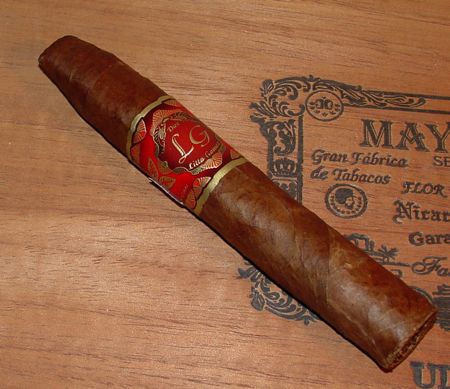
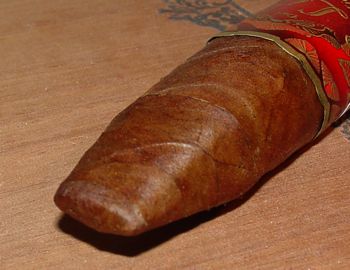
The wrapper on this LG Diez puro is a beautiful colorado maduro, not quite rosado but golden brown. Several bumps and veins from the binder show through the slightly oily sheen of the wrapper, which gives it a rough, but still handsome appearance. The spike is perfectly formed and wrapped. I was a little worried about the wrapper at the head unraveling with a straight cut, but my worries were unfounded. It cut as easily as a torpedo, if not easier.

I had some difficulty getting this one to light evenly: after torching the foot for a good fifteen to twenty seconds it still lacked an even glow. With a little more work it finally came to life, but the wrapper on this cigar is not what I’d call a team player. On the other hand, it smolders with an exquisite and uniquely pungent aroma.

From reading other reviews I was prepared to be met with a Pepin-style fusillade of pepper, but I found that the first flavors from this cigar are more complex than that. The aroma is unusual and difficult to describe, but it’s equal parts leather and spice with an extremely smooth and creamy texture. I once remember laughing at a Russian cigar review that described a tobacco flavor as “animal,” but I think that might just be the descriptor I’m looking for here.

The flavor, as well as the power of this cigar gathers strength into the second third. Strong earthy tobacco flavors begin to cloud the complexity that I experienced in the first section. I can still detect a little woodiness, but the pepper starts to take over at this point and the finish lengthens considerably.

The last section — the last section for me anyway — is extremely intense. The dark spicy finish overpowers everything and I can’t taste much else. Letting the butt cool in the ashtray for a while helps a little. When I pick it up again I can still pick out the sweet pungency of the wrapper, but when I take another puff that subtlety disappears in a flood of pepper.

The ash on this cigar is a little crumbly and actually blew off when I purged the cigar in the last section. The burn problems I experienced at the start improved over the course of the smoke, but were never entirely resolved. Keep your lighter handy with this one.

The LG Diez Chisel is definitely a cigar everyone should experience at least once: the flavors here are as original as they are powerful. Retail prices hover around the ten dollar mark, so it’s not an everyday kind of smoke, but I think it’s worth the experience.

This Chisel is an A-ticket ride. Remember to buckle up!

La Riqueza No. 3

La Riqueza is the latest offering from Pete Johnson, maker of popular Tatuaje and Cabaiguan cigars. Not surprisingly, La Riqueza is also manufactured by Jose “Don Pepín” Garcia, this time around in his Nicaraguan factory.

Five sizes have been released, curiously numbered one through five:

  • No. 1 — 6 1/2 x 42
  • No. 2  — 5 1/2 x 52
  • No. 3  — 5 5/8 x 46
  • No. 4 — 5 x 48
  • No. 5 — 4 3/8 x 42

Even more curious is the wrapper on this cigar — it’s Connecticut broadleaf. We have become so accustomed to to Johnson’s (and Pepín’s) Nicaraguan puros, and his corojo wrappers in particular, that a broadleaf wrapper invites special scrutiny. There’s something inherently less refined about broadleaf, an impression inspired mostly by its rough and dry appearance.

Broadleaf tends to be thick and veiny, and unlike its shade-grown brethren it bears the full brunt of the weather. While Connecticut Shade is beautiful, refined, and mild, broadleaf is much bolder and more flavorful. But this amplified bravado is accompanied by a reduction in finesse. For all these reasons it is most often used as binder — it’s tough and flavorful, but for aesthetic reasons best kept under wraps.

Further piquing my interest is the fact that the Riqueza wrapper is the product of the Oliva Tobacco Company. Oliva grows and processes tobacco for some of the most prestigious labels in the business: Fuente and Newman being at the top of the list. The Angel 100 is the only cigar the Oliva Tobacco Company has actually produced themselves, and to my eye (and nose) there is in fact a similarity between the Angel 100 and La Riqueza.

The Riqueza is box pressed and bears the classic triple cap we expect from Pepin’s Tabacalera Cubana. The dark wrapper looks like a maduro, but it is reportedly a naturally dark broadleaf that hasn’t received maduro fermentation. The wrapper leaf is just barely oily and a close examination reveals a few fine crystals glittering in the tooth.

The draw on this cigar is spot on perfect.  It burns evenly and builds a solid light gray ash. Overall construction values are excellent.

La Riqueza No. 3 lights easily and produces billows of smoke from the start. The smoke texture is smooth and the initial flavor is moderately peppery with a mild bite. Pretty much what you’d expect from Pepin, but within half an inch the cigar opens up and becomes something completely different.

The flavor on the palate is coffee-like, but the aroma is very sweet, floral but also spicy. There is a lingering aftertaste of wood and pepper, and the overall effect is complex.

Into the second third the flavors lose some of their nuance and focus on earth. There is still a smattering of pepper on the palate, and the fragrance remains spicy sweet. The smoke gathers strength at this point as well, becoming slightly harsh on the back of the throat and sinuses.

The last section of the Riqueza No. 3 delivers rich earthy tobacco flavors — exactly what you’d expect from broadleaf — but the concentration of this flavor begins to overpower the subtle aromas in the last third. By an inch from the band the aftertaste surpasses earthiness and borders on dirty, becoming a little bitter, a little dry, and a little too much in my opinion.

What is remarkable about this cigar is the aroma, which is similar in some respects to what I’ve found in the Cuban Romeo y Julieta. But even more than that, it reminds me of the wrapper on the Angel 100 — the overall impression La Riqueza creates in combination with the flavor on the palate is more complex than the Angel, but the floral spiciness is quite similar. I have to wonder if these will age as well as the Angels, and if they will eventually lose some of their sharpness, especially in the back third. My only criticism of this cigar is that it seems to end about an inch and half too soon.

Aside from the unpleasant turn this one took in the last lap I think it’s a fine cigar. With age it should mellow into a great medium bodied Nicaraguan style smoke, one with a fantastic bouquet. If a retail tag of 9 USD isn’t a sticking point for you, I’d recommend picking up a box and letting it simmer for a year or two.

For other opinions of La Riqueza check out the Great Torpedo’s video review of the No. 3 at the Stogie Review, and Lisa’s review of the robusto size at Her Humidor.