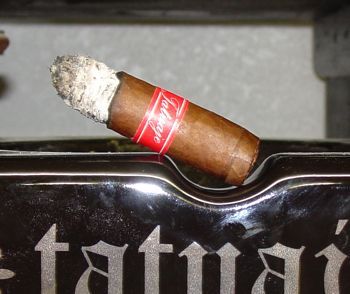
Tatuaje Havana VI Verocu No. 9

This boy is no longer a boy. He’s a brave. He is little in body, but his heart is big. His name shall be “Little Big Man.”

–Calder Willingham

So let’s get this straight. The Tatuaje Havana VI series is a toned down version of Tatuaje, but the Verocu is the “Havana VI on steroids.” Not a big man, but not a small man either. A little big man.

Whatever it is, the Verocu is a little hard to find these days except in the stubby form of the No. 9. The first Verocu blends were regional releases — the 6 1/4 x 52 parejo dubbed No. 1 and sold west of the Mississippi, and the 5 1/2 x 54 No. 2 for those east of the river. Those releases are sold out, but the No. 9 is still available as an exclusive from Holt’s. I picked these up about six months when they were running a special, and I’m glad I did.

But I wasn’t so glad when I first got them. There aren’t too many cigars made by Don Pepin’s outfit that I haven’t been pleased with, but the Verocu No. 9 left a lot to be desired right off the truck. They were quite harsh, unbalanced, and burned terribly. Not what I expected from a Tat at all.

So I did what all hapless victims of the badly behaved box do: I attributed its faults to youth and put it away for a few months. And here I am, a few months later, with another good Nicaraguan puro to crow about.

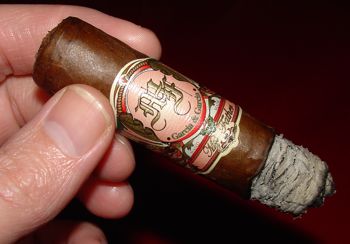
The Verocu No. 9 is a short rothschild — at 4 1/2 inches long the cigar is almost eclipsed by its double bands, but its 49 ring gauge provides enough girth to keep it from petite corona status.

Construction Notes

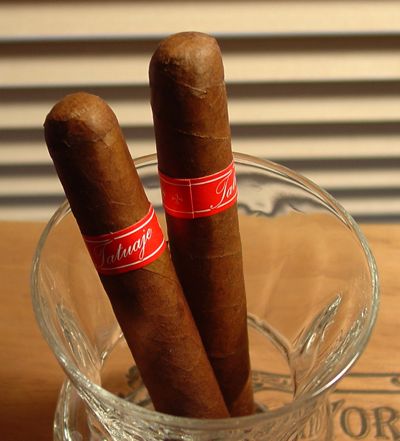
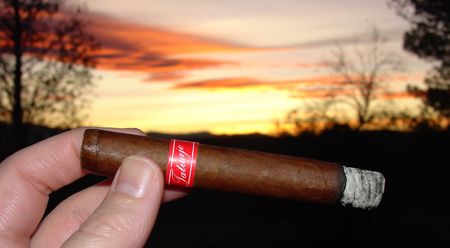
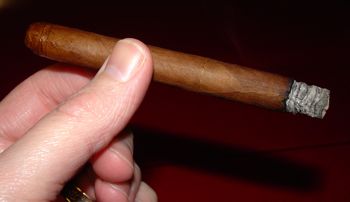
The first impression this cigar makes is that it is well made, but rustic. The wrapper has a dry leathery appearance with a lot of variation in shade — from a dark brown, maduro-like color, to a ruddy colorado. The roll is solid and the head is finished with a traditional triple-cap. It’s not a gorgeous cigar, but it has redeeming qualities to be found elsewhere.

The draw is excellent, but these bad boys still burn a little off kilter. They behave much better than the fresh ones I smoked last summer, but they haven’t been completely reformed.

Overall good construction, but it has a stubborn wrapper leaf.

Tasting Notes

The Verocu No. 9 opens with flavors that I usually associate with maduro wrappers — anise and chocolate. Of course it wouldn’t be a Tat without a little black pepper to liven things up, and the No. 9 does not disappoint in this regard. It’s not overpowering, but it spikes the palate in a friendly way. The underlying flavor seems to be leather, and this continues for the duration of the cigar.

The bold corojo heart of the No. 9 beats a little stronger in the mid section, adding some caramel-tinged sweetness to the aroma. It helps to slow down a little with this one to minimize the sharpness of the aftertaste. The resting smoke seems a little sweeter this way as well.

The last stage continues to serve up a base flavor of leather with delicious caramel tones, along with a more assertive spice on the tongue.

Conclusion

Tatuaje’s Verocu No. 9 is a cigar to be savored. It cannot be rushed or all kinds of things go wrong — the burn goes haywire, the flavors get muddied, and the aftertaste becomes burnt tasting. Taken slowly, the flavors are instead quite distinct and enjoyable and the burn is decent (but not great.) They do have a decent kick, but by Tatuaje standards these are still medium-bodied.

This cigar doesn’t really taste like the standard Havana VI (which I think I like a bit better) or any other Tatuaje exactly. It’s a blend unto its own, with its own merits and downfalls.  I think any lover of Tatuaje or Pepin Garcia’s blends will find the Verocu No. 9 an enjoyable experience, though it might not rate among the best of them all.

The Verocu No. 9 is a Holt’s exclusive. Boxes of 20 retail for around 130 USD, though that price occasionally drops. I snagged a box for $100 last summer, and I’m not disappointed. The intervening months have done them a world of good, and if they continue on their current trajectory, these could turn out to be bigger little men than they already are right now.

Final Score: 85 (but climbing)

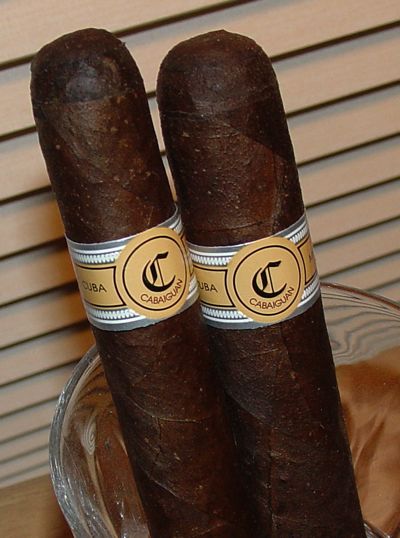
Cabaiguan Maduro

CabaiguanMaduro

I have to wonder if a maduro variation is really necessary for every successful cigar blend. Obviously this is the conventional thing to do, and manufacturers feel no need for discipline when it comes to creating new extensions for reputable brand names, but I still wonder if it doesn’t water down the label a little.

On the other hand, when your forte is making powerful, bold tasting cigars, maybe you do what you can to extend the softer side of your range. Which is what Pete Johnson has done with Cabaiguan Maduro. Cabaiguan is Johnson’s milder alternative to his bold and powerful Tatuaje line. The original Cabaiguan was rolled in Miami with an Ecuadorian Connecticut wrapper and made its debut in 2005. It was followed a couple years later by the Guapo, a slightly larger vitola with a sun grown Ecuadorian wrapper, which was slated to be a limited edition rolled in what was then Pepin Garcia’s new factory in Nicaragua.  Both are excellent cigars —  the Corona Extra is in my opinion one of the very best Connecticut Shade cigars available anywhere.

And now we have a maduro edition to tantalize our tastebuds as well. It should be noted that this wrapper is maduro in color only — it is in fact a natural sun-grown Connecticut broadleaf.  The rest of the blend is the same as the standard Cabaiguan, which is of course Nicaraguan.

Like the Guapo series, the Maduro Cabaiguan is available in only a few sizes. Two, to be precise:

  • Rx (Robusto Extra) – 5 1/4 x 50
  • 46 (Corona Extra) –  5 5/8 x 46

CabaiguanRXMad

Construction Notes

Both the Rx and the 46 are well made cigars with a dark, toothy wrapper. The wrapper is typical of sun grown leaf — it’s rough and weathered with a few chips here and there. Both varieties are rolled perfectly — these are products of Pepin Garcia’s factory, and perfection (or something close to it) is what we’ve come to expect from “My Father“.

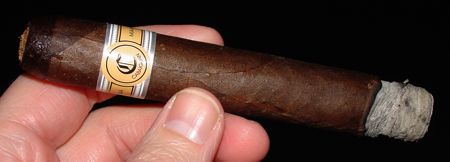
CabaiguanMadAshBoth sizes burn very well, though the robusto was not plumb-line even; it corrected itself over time and needed no assistance from me. The 46 was spot-on all the way. The ash is a solid light gray with a yellowish cast.
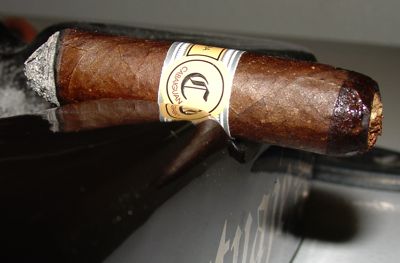

Overall excellent construction.

Tasting Notes

These are both smooth smoking cigars, but the 46 is slightly more assertive. In the first third I found the Rx easy going, with bittersweet chocolate, cedar, and a touch of anise. The 46 featured more tannin and pepper, with cocoa rather than chocolate.

The robusto picks up a little more tannin in the middle section, while the corona’s peppery edge softens. Both sizes seem to level out at this point, and agree on cocoa with an interesting malty note.

The Rx finishes up with a touch of woody bitterness on the palate that balances well with the sweet chocolate on the nose.  The 46 goes in an interesting direction at this point, increasing the spice and throwing some floral notes into the mix, something almost like lilac. I was reminded a little bit of La Riqueza at this point — it’s a little unusual to find this flavor in one of Pepin’s blends, but I think it’s there in La Riqueza as well.

Conclusion

The Cabaiguan Maduro is a worthy addition to the line. The sun grown broadleaf brings a lot of balance and a little more complexity to a medium-bodied blend that is exceptional to begin with. The wrapper adds some sweet notes of chocolate and cocoa that work well with the tannins on the palate. Over time the tannins might weaken a bit, resulting in a slightly sweeter cigar, but the blend is still very good right now, as long as you don’t mind a little of that fresh green woody taste on the tongue.

I thought the 46 was a little more expressive than the Rx, but both are excellent cigars. The MSRP is a bit steep, around 8 or 9 USD per stick, but that’s not too surprising given the overall quality on display here.

CabaiguanMaduro2Final Scores

Rx: 89

46: 90

Aging Report: Cubao No. 5

Cubao1yr

I have been aging cigars for a few years now and have come to the tentative conclusion that aging does not immeasurably enhance the quality of most non-Cuban cigars. Despite this I still have a few boxes put away for testing and comparison purposes.

I have all but given up on aging mild to medium-bodied cigars because the effects of aging seem to be a gradual diminishing of flavor. On the other hand, medium to full bodied cigars are able to withstand and possibly benefit from this moderation, especially when the cigar is a little too aggressive in its fresh state.

The Cubao No. 5 falls into this latter category: a medium-bodied smoke with a few rough edges that might smooth out with some age. After about a year in storage, it’s time to break them out and file a progress report.

My original assessment from September of last year ran as follows:

This toro starts up with that trademark Pepin pepper, but it’s not as powerful as a lot of his heavier blends. … After an inch I’m tasting cocoa and coffee with cream types of flavors, and the aroma from the foot is quite nice. …the way the sweet wood on the nose melds with the spiced cocoa on the palate.

There isn’t a lot of transition in the second half of the cigar, but I’m noticing a dry finish and a little scratch on the throat. Nothing a cold pale ale can’t take of. The intensity doesn’t pick up too much until I hit the band where the pepper ratchets up a bit. The flavor remains sweetly woody up front with cocoa notes in the margin. The pepper stays in the background and in the aftertaste, which is otherwise pretty clean.

Cubao cigars are brought to you by Espinosa y Ortega, makers of 601 and Mi Barrio cigars. They are manufactured by the Garcia family’s Tabacalera Cubana in Esteli, Nicaragua, with Nicaraguan filler and binder leaves and topped off with a dark Ecuadorian Sumatra wrapper. Six sizes are available. At 6 1/8  x 50, the No. 5 is their toro entry.

Cubao1yr2

Construction Notes

A year in the coolerador hasn’t done much for these cigars’ complexion, but of course that wasn’t expected to improve. The Cubao No. 5 is a masculine looking cigar — the wrapper is rough and mottled dark brown to almost black in places. The roll is a little soft, but that may be due to storage. Storage conditions were 60-65% relative humidity, and judging by the loose draw they might do better with a little higher RH. Despite this the stick burned perfectly and never got hot, so no points were lost on that count.

Overall very good construction.

Tasting Notes

I’m not sure why, but it always seems like aged cigars take a minute or two to wake up. The first few puffs of the Cubao are straightforward tobacco, nothing too interesting, but certainly not unpleasant either. After a minute the flavor gets grainier, like cereal with some natural sweetness and a dash of pepper.  The aroma from the smoldering wrapper carries the most interest here — it’s leathery, with a muskiness to it that is very nice.

After twenty or thirty minutes the heart of the cigar opens up and pours out its sad story. “I’ve been locked away for so long in that dark damp cooler and I’ve missed you so much, man.” It’s a familiar story, bittersweet with a dry finish. (A cold beverage is recommended at this point, and put some Hank Williams on while you’re at it.) Coffee and chocolate accents accompany the woody dry flavor, and the aroma continues its heartfelt refrain. “I’m so lonesome, I could cry…”

The last third is where the Cubao becomes most complex, and where the aging difference becomes most evident. The flavor doesn’t change dramatically, remaining sweet and woody for the most part, but the pepper intensifies and the body becomes almost wine-like. The smoke is very smooth and sippable, but still moderate in strength and medium in body. Chocolate notes are more pronounced in the fragrance, making this cigar almost like smoking mole. (As in mole poblano, not the rodent, wise guy.)

A small scratch at the back of the throat is the only real negative here, but it is not as severe as it was in its bolder, fresh state.

Conclusion

A year is not a long time in terms of serious cigar aging, but the effects are still apparent with the Cubao No. 5. In a year’s time these cigars have mellowed a little bit and are starting to show increased complexity. This is a very good cigar to start with, so it’s basically a matter of comparing subtleties. I detected a wider range of different flavors in the aged stock, including some things I didn’t pick up a year ago — notes of leather and musk, and more flavors in the transition after the mid-point. Combined with a slightly less aggressive attack on the back palate, I’m going to say the Cubao is a very good candidate for aging.

For now I will have to retract my conclusion about aging non-Cuban cigars — and revisit these in another year, if I can resist them that long.

Final Score: 90


Cubao1yr3

Tatuaje Havana VI Angeles

TatVIAngeles

I first reviewed the Tatuaje Havana at the end of 2006, not long after the blend was released as a medium-bodied alternative to the standard Tatuaje line.  Since then I’ve continued to enjoy this line as well as it’s more powerful mutation — the  Havana VI Verocu, which is also a good, but very different smoke.

Since I am routinely exiled to the back yard for my evening smoke and the temperature has been hovering around 105 degrees, I find myself reaching for smaller vitolas. That’s where the Angeles comes in.

There are six models of the Tat VI — the first letter of each size forms an anagram of the name of one of Pete Johnson’s dogs, “Havana.”

  • Hermosos – 5.625 x 46
  • Angeles – 4.625 x 42
  • Victorias – 6 x 38
  • Artistas – 6.125 x 52  (torpedo)
  • Nobles – 5 x 50
  • Almirante – 7 x 47

The Angeles is of course the  petite corona size.  Just the right size cigar for when the mercury drops below the century mark around 8 pm this time of year.

As is the case with most Tatuaje cigars, this one is a Nicaraguan puro and is made in Esteli by Tabacalera Cubana. The wrapper is Pepin’s familiar Corojo 99.

TatVIAngeles2

Construction Notes

Almost every cigar to leave one of Don Pepin or Jaime Garcia’s factories is picture perfect, and this little corona is no exception. The wrapper is a slightly oily colorado maduro, almost rosado in the fading light, and the tight triple cap is the envy of the industry. The only flaw in this cigar is a prominent vein running down the back of the stick, straight as a stocking seam in one of those classic pin-ups.

The draw is good, and the burn is fine. All cigars should made as well as these.

Tasting Notes

The cigar makes its first impression with that trademark Pepin twang. I’d like to think that I could identify this flavor and aroma anywhere, because this Corojo 99 is just that distinct.  The aroma is slightly sweet, somewhat caramel-like, and this is counterbalanced by a mild woody tannic flavor on the palate. The overall effect is earthy at first and gradually becomes more leathery as the stick burns down.

The peppery flavors I associate with Tatuaje are toned down in this blend, and they don’t make an appearance here until the second half of the smoke. This peppery note never really makes a solo appearance, but it does quietly simmer beneath the bitter-sweet melange above.  The last half-inch or so gets a little hot and starts to taste graphitic, but slow down and it can easily be enjoyed to a point well below the band.

Conclusion

Even in the triple-digit heat I find myself nubbing these little guys.  The Tatuaje Havana blend is a nice alternative for medium-bodied smokers, and I think this is my favorite vitola in the line. It’s all killer, no filler, as the kids say.

Once again though, the price is not ideal. These retail for around 5 or 6 dollars a stick. Not bad really, but not fantastic either. Still, if you’re in the market for a medium-bodied petite corona with real distinction, this is one you’ll have to consider.

Final Score: 90

TatVIAngeles3

Other Reviews of Note

Stinkie says the Angeles has it all on Cigar Beat

Rob (from PuffingCigars.com) finds the Angeles a clean, but less spicy smoke than others in the line.

Scott reviews the Almirante for Cigar Command and says EVERYONE should try this cigar at least once.

Patrick S. hedges his bet on the Nobles for The Stogie Guys.

Ambos Mundos by Tatuaje

ambosmundos

There is no cigar cliché that gets under my skin more than the image of the fat cat lighting up his churchill with a hundred dollar bill. Aside from being moronic (rich people don’t get that way by burning money) it justifies in the minds of many non-smokers the marginalization of cigar enthusiasts and the taxing of cigars. The reality is that most of us checking out cigar reviews and eyeballing the auction sites are doing our best to manage a tight budget in a challenging economic environment.  It’s been a while since I saw any fat cats licking their paws around my neighborhood.

It wasn’t due to the stormy economy that Pete Johnson decided to blend a cigar with affordability in mind, but price control was definitely an objective in developing Ambos Mundos. Tatuaje has been a runaway success for “Tattoo” Pete, but like many Miami-rolled cigars, they’re pricey. By producing this cigar in Nicaragua with lower grade (but still high-quality) tobaccos, he is hoping to keep the price down and fill the bargain cigar niche for his label.

As Pete told Cigar Insider,

This value-priced cigar uses B and C – grade tobacco. In other words, it’s tobacco that was not used on Tatuaje, the premium brand,  which uses A – grade. It’s very good tobacco, but just needs more time to be processed and needs more fermentation, taking a little longer to get out all the impurities. These bales don’t cost as much, so it’s a way to pass on the savings using some really good tobacco.

Ambos Mundos differs a bit from Tatuaje’s other budget-priced cigar, the Tatuaje Serie P, in that the latter is a short filler cigar made from the scraps of the standard Tatuaje line. AmbosAdAmbos Mundos is a long filler cigar that uses tobacco that just didn’t make the cut for standard Tatuaje cigars.

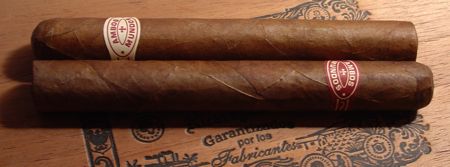
Only two sizes are in production so far (a robusto and a toro) but they are available  in two different wrappers: Ecuadorian Sumatra (red label) and  Nicaraguan Habano (white label.)  They are rolled in Jaime Garcia’s Tabacalera Garcia factory in Esteli, Nicaragua.

Construction Notes

I smoked the Habano (white label) Ambos Mundos Toro first and found that it has just the quality construction you’d expect from Tatuaje and Tabacalera Cubana. A toothy wrapper tops off a solid roll, finished with Garcia’s trademark triple cap. Once lit, the Habano set to building a solid white ash. The burn was steady and even from start to finish. The draw was just a little bit firm, but that was the only demerit it received. Aside from that it was perfect.

The Sumatra (red label) version has a leathery looking wrapper, a little smoother and a little oilier than the Habano. The same good construction qualities were in evidence here, though the draw on these seemed to be a little better, while the burn was more erratic and required a couple touchups. The ash on the Sumatra was more variegated in color, but held just as well as the Habano.

ambos3

Tasting Notes

Both of these toro-sized cigars are lighter in body than the standard Tatuaje line, but the Sumatra seems a little bolder than the Habano version. Both cigars score well in terms of aroma — the Habano had a woody spiciness to it, while the Sumatra was a little meatier with notes of leather. Both versions have Pepin’s characteristic tartness, especially in the first inch or so, but also a sharpness and an irritating burn at the back of the throat, with the Sumatra being heavier, more peppery, and more aggressive in this regard. Some aging might temper this quality.

The white label Habano starts up with an earthy flavor and a good dose of tannin. The aroma is a pleasantly spicy, but for the first couple inches this is a simple and straightforward smoke. It transitions to aromas of hardwood with a touch of caramel and about an inch from the band picks up a good pinch of black pepper. The last third gets fairly sharp, but it’s smokeable. The Habano reminds me of some of Pepin’s milder offerings, but with less complexity.

ambos4

The red label Sumatra starts up where the white label leaves off — with lots of pepper. The difference between the two is immediately apparent. The Sumatra is a meaty and leathery smoke while the white label is woody. The tannins still make an appearance, but they seem to be overpowered by the wrapper’s rich flavor and aroma.  It’s slightly sweet with a dry finish. The last third increases in intensity until it unexpectly sours about a half inch from the band.

Conclusion

Both versions of the Ambos Mundos are good, but not great cigars. Personally I’d rather pony up the full price for an “A-grade” Tat than settle for a C-grade alternative that pales by comparison.  If this were a 2 dollar bundle stick I’d  be impressed, but it isn’t, and my opinion of this cigar suffers for it. For nearly the same price you could be smoking a DPG Black or an Illusione, better cigars that are similar in style as well as price.

Ambos Mundos is a long filler cigar set to retail around 5 USD per stick, or around $115 per box of 25. This stretches my definition of “bargain” a little bit, but it’s still a reasonable price for a premium cigar.  Just remember that there is a fair amount of competition in this price range.

Final Scores

Ambos Mundos White Label Habano: 85

Ambos Mundos Red Label Sumatra: 79

ambos5

Other Points of View

Her Humidor approves of Ambos Mundos as an everyday smoke.

The Great Torpedo thinks the Sumatra version is a decent smoke for its price.

Barry gives the Sumatra an edge over the Habano.

Resident Tatuaje expert Matt lets both wrappers have both barrels.

~cigarfan

My Father No. 1 by Garcia & Garcia

myfather

Jose “Don Pepin” Garcia has two cigar factories — the original El Rey de Los Habanos in Miami, and the much larger Tabacalera Cubana in Esteli, Nicaragua. Garcia’s son Jaime operates the Nicaragua factory, and apparently while his father is away he likes to conduct experiments on his own.

According to Cigar Aficionado’s David Savona, Jaime developed the blend for the “My Father” cigar in secret, and it was only after someone in the factory leaked “classified” information that Don Pepin discovered what was going on behind his back.  He proceeded to investigate, and having reduced the resulting evidence to ash he approved of his son’s surreptitious activities. He was also honored by the name Jaime decided to give the cigar: “My Father.”

The Garcias have till now quite effectively used tobacco grown in Nicaragua by other producers, but “My Father” is the first to use leaf grown by Garcia himself, in this case for the filler and binder. (The word on the street is that their wrapper leaf is in still in development.) For the wrapper on this cigar Jaime is using an interesting Habano – Criollo hybrid grown by the Oliva Tobacco Company in Ecuador.

“My Father” cigars are available in four sizes:

  • No. 1 – 5.5 x 52  Robusto
  • No. 2 – 5.5 x 54  Belicoso
  • No. 3 – 6 x 49  Crema
  • No. 4 – 7.5 x 38  Lancero

myfather2

Construction Notes

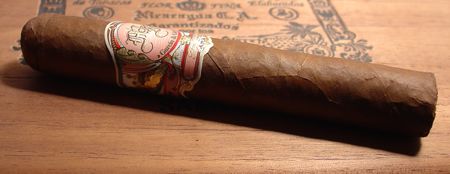
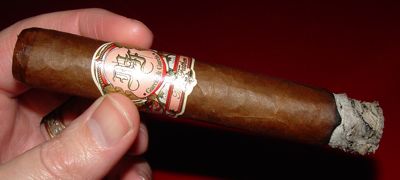
The wrapper on this cigar is a smooth and creamy looking colorado claro leaf with a few subtle veins. The roll is perfectly regular, with no lumps or soft spots, and the cap is typical Pepin workmanship. The caps on Garcia cigars are probably the finest in the world.

After clipping I found the pre-light draw to be grassy,  hay-like with some spice. The draw is surprisingly loose, but this didn’t affect the cigar’s performance. The burn was slow and mostly even to the end. My only complaint is very minor: the ash had a tendency to crack every inch or so. It never fell off in my lap, but it took no more than a light tap for it to fall into the ashtray.

Tasting Notes

My initial reaction to this cigar was two-fold: first, the tannic flavor simply bursts from this cigar. If you’ve smoked cigars from El Rey de Los Habanos or Tabacalera Cubana, you know what I’m talking about. It’s woody, but lip-smackingly tart. The second thing was that the aroma from this robusto is delicious. I would almost swear it’s DPG’s old Corojo 99, but it’s creamier and a little more fragrant. That trademark peppery taste is in evidence as well, but it seems to be toned down in comparison to other Pepin blends.

Working into the center of the cigar brings cocoa and caramel flavors reminscent of some of Pepin’s lighter cigars: the Red Label and Vegas Cubanas. This cigar is definitely more complex than either of those, with base notes of earth and leather, a mildly spicy but sweet aroma (sort of like sandalwood) and those intermingling cocoa or coffee bean flavors. The finish is lengthy and the aftertaste becomes increasingly peppery.

As I coast into the last section of this “My Father” cigar I’m feeling a pretty good nicotine hit — a breakfast smoke this is not — but it’s not overwhelming. The body of this cigar is a solid medium, maybe leaning towards full. It culminates with an earthy flavor, a long peppery finish and sweet caramel on the nose.

Conclusion

“My Father” is one of the more complex creations coming from the Pepin family. It probably fits in with the more medium-bodied cigars that Pepin makes, but it’s at the head of the class in terms of finesse. The tannic flavor that marks some young Cubans is the highlight of this smoke, and while Habanos enthusiasts age their stock to reduce this effect, it is in fact one of the great qualities of this blend. This is also why Don Pepin reportedly does not believe in aging his product.

This smoke runs around ten dollars per stick from Cigars Direct, which is a few dollars more than the middle-of-the-road blends from DPG that I’m used to smoking, but for the complexity and quality that you’re getting, it’s worth it.

This might be the best cigar coming out of Tabacalera Cubana right now, so I can see why Jose would be proud of his son with this blend. Clearly the acorn has not fallen far from the tree.

myfather3

Final Score: 89

~cigarfan

Other Reviews of Note

Barry gives the No. 2 Belicoso an 88 for A Cigar Smoker’s Journal

Lisa smokes the No. 3 Cremas and finds it “dry as French champagne.”

The Cohiba Club gives the No. 1 Robusto an 86

Tabacos Baez Monarcas

Baez is a small town in the Villa Clara province of Cuba where in 1950 our hero José “Don Pepín” Garcia was born, presumably with chaveta in hand.  (The first infant ever to cut his own umbilical cord!) Tabacos Baez, a newish blend from Tabacalera Cubana, is named for that town.

Of course, Tatuaje’s Cabaiguan was also named for Pepin’s hometown. So was Cigar King’s Sancti Spiritus.

baezI’m sure if we were to scry deeply enough into the crystal ball of Pepinolatry that some clarity could be found — maybe in the fact that the provinces of Villa Clara and Sancti Spiritus are contiguous and were at one time two separate parts of one province called Las Villas, and Cabaiguan is a city within Sancti Spiritus. Or perhaps we’d see that Pepin is a quasi-religious figure in these lands and thus his birthplace is claimed by competing bands of disciples  — or we could just forget the magic carpet ride and smoke a cigar.
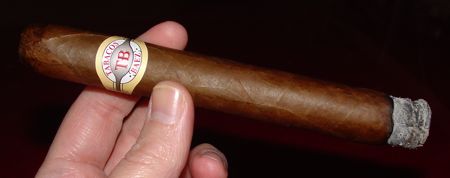
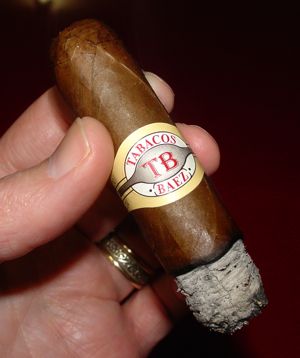
The Tabacos Baez brand name was at one time owned by Pete Johnson’s Havana Cellars, at which time they were the best of the student-rolled cigars coming out of Pepin’s factory.  In a Cigarcyclopedia.com article from July 2007, Pete said:

Tabacos Baez is one of those things we use for factory seconds or student-rolled cigars. We use that brand name for cigars that Pepin has trained people on. If [a batch of student-made] cigars seems good to me, we pack it up as Tabacos Baez. It’s gained a little cult following, since people found out that they are student-rolled cigars and are half the price. It’s made from similar leaves [as Tatuaje]; if a roller knows how to blend them properly, they’re pretty good.

The Tabacos Baez name appears to have passed back to El Rey de Los Habanos, and from the looks of things they are no longer student products. At around 7 or 8 USD retail they aren’t “half the price” either.

There appear to be three sizes available at the moment:

  • Monarcas (toro) – 6.5 x 52
  • Favoritas (belicoso) – 5.5 x 52
  • Robusto – 5 x 50

Some sites state that the wrapper used here is Connecticut Shade, others Ecuadorian Connecticut. I’m inclined to think that it is Ecuadorian Connecticut from the way that the cigar performs — it has that creamy, slightly salty flavor that I usually get from ECCT, and with its wide, almost parallel, veins it looks like Ecuadorian leaf.  It’s also a little darker than typical shade tobacco.

The balance of the tobaccos in this cigar are Nicaraguan, as you’d expect from Don Pepín.

baez2

Construction Notes

This is a stout and well packed cigar that scored perfectly in terms of appearance and roll. The wrapper is a smooth and oily golden brown and the triple cap is a work of art. A gorgeous stick.

The draw is good, but a couple cracks in the wrapper resulted in thin smoke volume at times. The cracks were small and near the foot, so I burned through them in short order. The burn was a little erratic at first, threatening to tunnel (which it did not) and it required a couple of corrections. After the first third these problems unnaccountably disappeared and the stick behaved perfectly.

Tasting Notes

The first half-inch of the Baez Monarca is hallmark Pepin — an aggressive peppery bite, accompanied by a slightly greenish tasting tannin. The wrapper contributes a smooth buttery element — at this point it’s reminiscent of the 601 Connect, also blended by Pepín. But soon the bite subsides and the flavor slides into mild cocoa. The aroma becomes more pronounced, somewhat floral and slightly caramel-like, almost like a mild corojo.

The middle section is quite mild in flavor while remaining a little tannic. The smoke texture is medium in body, mild in strength, and short on action. There are lightly spiced woody flavors here, but unless smooth and uninteresting is your thing you might want to get a book.

The last section returns with the black pepper that kicked things off, though not as intense and less tannic, and a dry finish that begs for a liquid refreshment.

This blend definitely goes through some changes, but they aren’t dramatic ones. The first inch of this cigar reminded me of EO’s 601 Connect — a relatively robust Pepin creation with a Connecticut wrapper — but the rest of this Tabacos Baez reminded me of a knockoff Cabaiguan. The flavors were smooth and familiar, but not as refined –or as interesting — as the Cabaiguan. (It even had some of the construction issues I’ve experienced with Cabaiguan.)

Overall, this is an above average smoke that just about anyone will enjoy. But for the same price (around $7 a stick) or only slightly more, you could be smoking a Cabaiguan Coronas Extra (about $8 each). If that’s the style of cigar you enjoy, as indeed I do, I recommend you compare and invest accordingly.

Final Score: 87

baez3

Other Points of View

The Baccy Bodhisattva meditates on the Monarcas

Lisa selects a Monarcas from Her Humidor

George meets the Quick Smoke deadline with a Monarcas for Stogie Guys

~cigarfan

Cabaiguan Petite Cabaiguan

cabaiguanpetite

I’ll admit it. I’m no Shackleton. With a little nip in the air this week I’ve been reaching for the small stuff — RP Sungrown PCs, AF Hemingway Short Stories, and these Petite Cabaiguans — in an effort to grab a quick smoke without freezing my phalanges off.  I mean, seriously, it’s been in the low 40’s. It may be a cliche, but it’s true about the desert: it’s not the cold, it’s the aridity.

shack1

Not Pete Johnson

And even though I miss having my long leisurely apres dinner smoke, I’m happy to say that all of the small sticks I’ve had this week have hit the spot, including this Petite Cabaiguan.

Most folks are familiar with this line by now — it’s made by Pepin Garcia’s crew for Pete Johnson, best known for his Tatuaje cigars. It’s usually characterized as a milder version of Tatuaje, but I think the blend really stands on its own without that comparison.

The filler and binder are Nicaraguan, though I have to wonder how much of each is required for a cigar this thin. The wrapper is a gorgeous Ecuadorian Connecticut leaf that ultimately steals the show.

The only problem that I’ve ever experienced with Cabaiguan is the occasional tight roll. I’ve had no such trouble with these unbanded 4 1/2 x 32 Petites. Every one has drawn perfectly. They’re rolled firmly with the expected triple cap (even on this tiny vitola they cut no corners) and are as attractive in miniature as my preferred Corona Extras.cabaiguanpetite2

The Petite Cabaiguan has a crisp flavor that will be familiar to anyone who has smoked the full size cigars in this line — it starts out cedary with a citric accent and a delicately floral aroma. The smoke is creamy and about medium in body, though less so in strength. The smoke production is limited by the ring gauge, but there is still plenty of flavor to go around.

For a small cigar, the Petite is quite complex — cedar, earth, citrus and floral qualities all emerge at different points in its 20-minute career. Despite the lack of a transition in flavors it’s a far more interesting smoking experience than anyone has the right to expect from such a little guy.

Aside from its role as my inclement weather friend, the Petite Cabaiguan would be perfect for a coffee break smoke. At 150 USD for a box of 50 it’s not exactly a budget quick smoke, but given the quality of this cigar the asking price is within reason.

cabaiguanpetite3

Final Score: 88

~cigarfan

Aging Report: 601 Oscuro Tronco

United Tobacco’s 601 series manufactured by Pepin Garcia has been a smashing success, and the Green Label is one of my favorites in the line. It hasn’t been easy to resist the siren’s call over the past year, but I still have a few of these left from the 2007 box that made it to the top ten list for the year.

This is a heavy cigar by design, and I was really curious to see how it would age. Many of the cigars I’ve chosen for “Aging Reports” have not benefited from their extended naps, but the ones that have are the sluggers like this one. I’m coming to the conclusion that as tobacco ages its strength and body attenuate, but in return more subtle nuances appear. So depending on the cigar, and the cigar smoker, this can be either a good or a bad thing.

I gravitate toward medium-bodied blends, with occasional forays into full-bodied and mild territory, so I was sort of looking forward to this one settling down a little. But only sort of, because the flavor is dynamite even if it’s not really in my weight class. So I still found myself picking at the box over the past year, handing a few out with both warnings and accolades, and now I have only a few left. But the year is up. Time for a visit from the ghost of Green Label past.

The first thing I noticed about the aged 601 Oscuro is that it doesn’t start up with the blast of pepper I was expecting — it’s certainly spicy, especially for the first half inch or so, but age has pacified the beast. The next thing I notice is that it burns very slowly, so slowly in fact that the time I allotted to smoke this robusto wasn’t enough to finish the cigar. But this being the 601 Green, two-thirds was enough. I’ve seen how this movie ends.

Despite the slow burn (and somewhat erratic burn line) the Green produces plenty of smoke. There is a sweet char on the nose that gradually becomes more chocolatey. On the palate I get wood with a nice black licorice accent, accompanied by a lingering but not overpowering aftertaste of chocolate and char. Ignoring the spicy overture, this is a medium bodied cigar that quickly becomes full bodied with a good nicotine hit, but it’s not the monster it was a year ago.

The bottom line is that the boldness of this cigar has faded somewhat. There’s plenty of flavor left for smokers of medium to full-bodied cigars, but if you love the explosion of pepper and tannin that a lot of Pepin blends offer when fresh, you’ll want to smoke these within a year of packing. But even after a year the Green Label is still a fantastic cigar, especially if you prefer a mellower profile. It looks like it’s time for me to restock.

601green

Some recent reviews of the 601 Oscuro Tronco:

Linus gives it a 7.5 out of 10 for Cigar Newbie.

Beezer goes toe to toe with the Tronco and learns his lesson.

Don Pepin Garcia Cuban Classic 1952 Perla

As we head into the cold months of winter, a lot of us will be reaching for our favorite short smokes — petite coronas, short robustos, perhaps even the occasional cigarillo. But there is an art to smoking a small cigar; it involves more than huddling with your buddies around the flaming trash barrel and passing the flask (as rewarding as that can be).

The small cigar presents challenges, one of which is caused by the perception that since the smoke volume created is smaller, you can smoke it more quickly and obtain the same results as smoking a larger gauge cigar. Not so. More often than not this results in a hot smoke, a bitter taste, and disappointment in general.

The small cigar demands respect of a different nature. There’s less of a chance that it will burn askew, but a greater chance that the draw will be tight. There’s a greater chance that you will have less time to enjoy the small cigar — otherwise you might have opted for a larger vitola — thus the greater chance you will rush and fail to observe the nuance the mighty mite has to offer. And finally, you might be a little embarassed by the diminutive stature of your lil’ smokie. Don’t worry. It’s not a reflection on the breadth of your knowledge or experience. Not when you’re smoking a DPG Black.

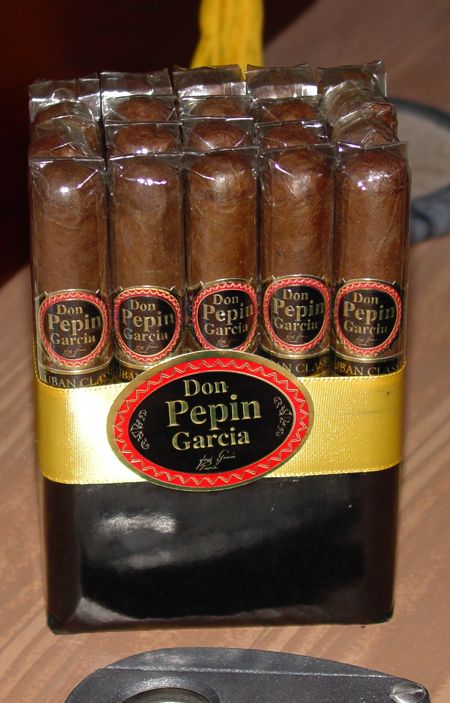
The frontmarks for José “Don Pepín” García’s Cuban Classic series are all named for milestones in the life of the master — 1952 is the year José was born, so it’s fitting that the smallest cigar is graced with that appellation. The perla is a classic Cuban vitola, a bit smaller than a petite corona. DPG’s perla is a bite-sized 4.25 x 40 and smokes very much like the other sizes in the line.

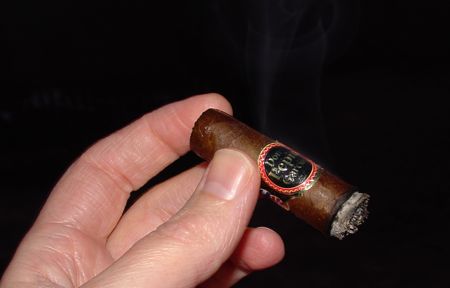
I’m not sure if it’s any more difficult to roll a smaller cigar than a larger one, but if so it’s hard to tell from the appearance and construction of the 1952. I burned through a box of these over the summer (which is the desert-dweller’s winter in terms of atmospheric suitability for smoking outside) and each one was like the next: attractively presented and very consistently rolled.

The draw is a little bit firm on these, but I have to wonder if that isn’t intelligent design: it discourages hotboxing.  They all smoke fairly cool, even close to the band, which is remarkable for such a small cigar. The burn is even but the ash is a little weak, falling off after an inch or so. Can’t have everything I guess.

The flavor is typical of the DPG Black series: lots of pepper up front that mellows into woody notes with a touch of caramel from Pepin’s signature corojo wrapper. It maintains a healthy bite throughout, just to remind you that even though it’s small, you’re still smoking a Pepín. But like Lucky7 said in his review of the 1979 robusto, it “definitely has a kick but it’s not a barn burner.”

Actually, Lucky7’s description of the robusto’s flavor is right on the mark for the perla as well, so I’m just going to swipe it:

Starts with the typical JDPG bang for about a half inch then softens to a creamy base flavor of toasted cedar and rich coffee with notes of bittersweet cocoa, nuts and black pepper. The aftertaste and aroma are sweet and pleasant. During the last third I always detect a little caramel on the nose.

The Blacks are widely available and have always been attractively priced, but the perlas can be a little difficult to find. Online it looks like these can be had in various places for anywhere from 60 to 80 dollars, which is a fine price for a quality short smoke like the 1952. Highly recommended for those of you planning on herfing with Jack Frost in the coming months.