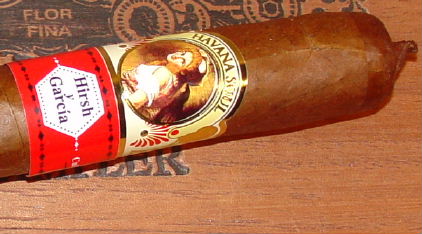
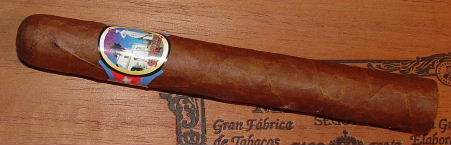
Don Pepín García Black “Cuban Classic” 1979 (Robusto)

Since this is my first post on KOTF, some style notes are in order before I start. My reviews may seem familiar in style and form since I am a product of my environment and have been surfing the cigar blogs for a while. A big “thanks” to all in the cigar blogosphere that have helped shape my presentation style.

Taste in cigars is such a personal thing, I don’t try to rate anything. Just describe and recommend. Hope you find my posts informative, accurate and fun! Don’t be shy, let me know what you think (as if I thought you wouldn’t).

And now …

Cuban Classic 1979 on Box

Cigar Stats
Brand Owner: El Rey de los Habanos, Inc.
Tabacalera: Tabacalera Cubana (TACUBA)
Model/Vitola: Don Pepín García Black Edition “Cuban Classic” 1979 (Robusto)
Size: 5.0 x 50
Wrapper: Nicaragua Corojo 99
Binder: Nicaragua Habana
Filler: Nicaragua Habana

Other sizes available

  • 1950 6.0 x 52 (toro)
  • 1973 6.0 x 60/48 (figurado)
  • 1977 5.5 x 38 (petit lancero)
  • 1970 5.0 x 54 (belicoso)
  • 1952 4.25 x 40 (perla)

(Each size in the line is named after a year that has been a milestone for the García family)


Introduced late in 2006, the Don Pepín García Black Edition is the newest and most affordable blend in the amazing trio of cigars that make up the Don Pepín García line. The Black Edition is also referred to as the “Cuban Classic” for its striking resemblance to old time Cuban cigars. It is made in Pepín’s factory in Esteli, Nicaragua and like the Don Pepín García Blue label and the Don Pepín García Serie JJ, it is a Nicaraguan puro using Pepín’s famous Corojo 99 wrapper. The cigar is medium to full-bodied, carrying that now classic Pepín flavor. He always manages to get very different flavor profiles using all Nicaraguan tobacco. Each cigar he produces has its own unique characteristics that prove his blending genius. The Don Pepín García Cuban Classic shows once again that he doesn’t strive to produce just a good cigar – he always blends the best. José “Don Pepín” García is on fire producing some of the finest Cuban style cigars outside the island.

Bottom line up front …
If this is truly a “Cuban Classic” I can’t wait to have cubans available to me (without the threat of legal action). This cigar is smooth and creamy with a little bite and a nice crisp finish. Although not as complex as the Blue or White, the flavor is special and consistent from start to nub. Definitely holds a place in my regular rotation.

Pre-light
A smooth caramel-colored Corojo wrapper and a beautiful Cuban triple-cap common to JDPG stogies. Construction is solid with very nice draw. An almost sweet aroma from the wrap and a little barnyard from the foot. The band is nicely done and is removed very easily without effect on the cigar. I have used both punch and cutter and would suggest the punch on this one but be careful whichever you choose. The wrap on this guy is quite fragile.

The Smoking Experience
The foot toasted and lit easily. Overall the burn was good but somewhat inconsistent from one stick to another requiring a touch-up once in a while. Certainly not troublesome though. Draw was very good. The ash was light gray and held on well to about two inches each time. This cigar puts out allot of smoke.

Starts with the typical JDPG bang for about a half inch then softens to a creamy base flavor of toasted cedar and rich coffee with notes of bittersweet cocoa, nuts and black pepper. The aftertaste and aroma are sweet and pleasant. During the last third I always detect a little caramel on the nose.

Most I’ve read have this as a full-bodied cigar. I would call it medium to full-bodied. Definitely has a kick but not a barn burner. Great with a Guiness Stout or Patron tequila.

My take ….
I enjoy these smokes immensely and will always keep some in the humi. My only problem is I smoke em’ when I get em’ and haven’t been able to get any age on mine. Oh well!

MSRP comes in at $6.00 per stick. My local B&M has them for $5.85 a stick. Online they run $4.80 per stick if you buy a box ($95.95/20) and $5.60 if you get a 5ver. Medium price point but worth it in my book.

Smoke Til Your Green

Like it … Very much
Buy it again … Absolutely
Recommend it … Yes

What others are saying about the Don Pepín García Black Edition “Cuban Classic” …..

26 December 2006 – Matt’s Cigar Journal
Don Pepín García Cuban Classic Robusto 5×50

20 April 2007 – Uncle Moneybag$ of Leafy Times
Don Pepín García Cuban Classic Robusto (5 x 50)
(See, not everyone likes em’)

27 April 2007 – Michal of CigarPass
Don Pepín García Black “Cuban Classic” Perla 1952

As of 18 July 2007 – Top 25 Cigar Ratings (7 reviews)
Don Pepín García Black Edition “Cuban Classic” 1979 (Robusto)
Average Rating 7.17 out of 10

Publications

29 June 2007
The Cohiba Club
The Many Faces of Don Pepín García

Wikipedia on Don Pepín García Cigar Brand

Wikipedia on José “Don Pepín” García

Just look at all these cigars José “Don Pepín” García has had a hand in …

(Listing from Clubstogie’s Glacierman)

Not a new brand, but a new vitola: the DPG Blue Label Firecracker

El Rey de los Habanos (Miami)
Don Pepín García Blue Label
Don Pepín Serie JJ
Cabaiguan
Tatuaje
Tatuaje Nuevitas
Padilla Miami 8/11
Padilla Signature 1932
Vegas Cubanas
El Rey los de Habanos
Nacionales W (Cigar King / Phatash)
Sancti Spiritus (Cigar King / Phatash)
Havana Soul (Cigar King / Phatash)
Hirsh y García (Cigar King / Phatash)
Habana Leon (Cigar King / Phatash)
Cuban Diplomat (Cigar King / Phatash)
Cuban Diplomat Corojo Rosado(Cigar King / Phatash)
Top Shelf Signature Select (topshelfcigar.com)
Trahan – (Cigar Merchant, Georgia)
Rey Miguel – (Black Cat Cigar Company)
Sam’s GS Stash – (Black Cat Cigar Company)

Tabacalera Cubana (Pepín’s Nicaraguan factory)
Don Pepín García Black Label
EO Brands 601
Tatuaje Havana VI
Tatuaje Series P
Old Henry (Holt’s)
Padilla Edicion Especial Achilles (Cigars International)
Legends Pepín García – Yellow Label (Cigars International)
Troya Clasico
Cigar.com Corojo Label
Exclusivo Verocu
Holt’s Connoisseur Selection
Fumadores
Ashton San Cristobal
5 Vegas Miami (yes this is made in Nicaragua)

Tabacalera Tropical (Nicaragua)
It is believed Pepín created these blends:
JFR
Condega
Nicarao
Rio Tabac Alpha Series R – (Rocky’s Cigars)
Nicaragauan Heirloom (now discontinued)
Aganorsa


… lucky7

“It has always been my rule never to smoke when asleep,
and never to refrain when awake.” (Mark Twain)

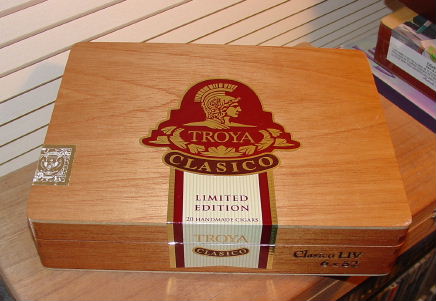
Troya Clasico LXIII

cnv0369.jpg

Troya cigars were made in pre-revolutionary Cuba beginning in 1932 and are in fact still made today as a relatively obscure and hard to find machine made cigar. Despite their rarity they have a small but devoted following, as evidenced by the fact that they survived the nationalizing of the industry when many smaller brands were culled out. Like the legend of Troy itself, the brand has endured.

In 1985 a California company began production of a cigar for the American market and saw further opportunities for Troya as a brand name. The original Troya cigars were respected and sold well, but like many of the best cigars of that generation they were battered by the tempest of the 90’s Cigar Boom. But once again, they survived. In 2004 the blend was revamped and another line, the Troya X-Tra, was introduced to appeal to the heavyweight crowd.

The next stop on Troya’s path was at the door of Jose “Pepin” Garcia, one of the hottest cigar makers around. In early 2007 the Pepin-made Troya Clasico was unveiled in three sizes — robusto, toro, and churchill. I haven’t figured out why Troya names their cigars with the numbers they do — their robustos are called 18, toros are 54, and churchills are 63. (The individual digits all add up to nine. Hmmm…) The Clasicos are numerated in this fashion as well, but with the roman numeral instead. Nice touch.

cnv0367.jpg

Troya Clasicos are made in Esteli, Nicaragua at Garcia’s Tabacalera Cubana with all Nicaraguan tobaccos. The wrapper is a luscious and dark “corojo oscuro” and the filler is a blend of corojo and criollo from the Jalapa region. The churchill is a 7 inch by 50 ring double corona size, and these come packed 20 to the box. It’s a handsome cigar with an oily, rich looking wrapper and a perfectly triple-capped head.

The churchill starts up in an unusual fashion for a Pepin cigar: it’s buttery smooth. Bean flavors take the vanguard here — cocoa and African coffee (I’ve been roasting some Ethiopian Harrar that has an eerily similar aroma.) Following quickly on this initial impression is a bittersweet woody flavor that fans of Pepin will recognize immediately. The smoke for the first third is relatively mild compared to other Pepin made cigars — relative, that is, to the blast of pepper that introduces many of Garcia’s cigars.

The body picks up more weight into the second and third acts, and ventures into leathery territory. The finish is lengthy and the aftertaste retains the slightly bitter woody flavor that announces itself at the start. What remains the same throughout the duration of the smoke is the delicate caramel-coffee sweetness of the aroma from the wrapper, and I think this is what defines this cigar.

The last third builds, edging towards a full body, and the cigar exits with a tart smack. This is a hallmark of Don Pepin’s blends, and it’s what fans of his cigars appreciate. This is a long smoking cigar (about an hour and a half for me) and while there aren’t any major transitions it is consistently complex and very well balanced throughout.

I was lucky enough to receive a fiver of these from reader Lucky7 (thanks again!) and so far I’ve smoked three. One had a weak plug at the head of the cigar which I was able to bore through with a pipe tool. Other than that these burned quite well and had no serious construction problems.

Troya Clasico churchills are going to run in the 8 to 10 dollar range, and I do believe they are worth the expense. This is a medium to full bodied cigar that reminds me a little of Pepin’s Sancti Spiritus — it’s a less aggressive blend that leaves out none of the complexity or the basic character of his art. If you’ve smoked the Pepin Blue Label or Tatuaje or any of the stronger cigars from El Rey de Los Habanos and found them to be too heavy for your taste, do yourself a favor and try a Troya Clasico. I don’t think you’ll be disappointed.

cnv0368.jpg

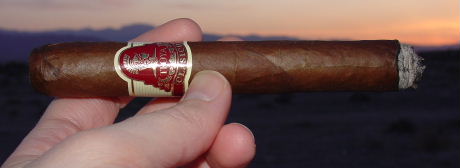
A desert sunset and a fine cigar. Life is good.

Padilla Miami Corona

cnv0338.jpg

Originally this line was called “Padilla Miami 8/11” but at some point it seems to have lost the cross streets. These are made in Pepin Garcia’s Rey de Los Habanos operation in Little Havana, which of course is located near the intersection of 8th street and 11th Ave. This line has gotten a lot of positive feedback in the last couple years, making it one of the best known and most sought after boutique cigars on the market.

Padilla Miami cigars are Nicarguan puros, bunched by hand and rolled by only ten experienced torcedors. The tobaccos used are first-generation cuban seed corojo and criollo grown in Nicaragua. The wrapper is corojo, and the filler is a blend of the two. As noted elsewhere, these particular varieties of tobacco are even more hygroscopic than your average black tobacco — they absorb the humidity more readily and in an excessively humid environment will not draw as well as they should. For this reason these cigars are best stored at a lower relative humidity than the typical 70-75%. The low 60’s is usually recommended.

These are not easy cigars to find. I finally managed to snag a five-pack on an auction site for a reasonable, though still substantial price. It’s a nice looking cigar and I noticed right away how well balanced it feels in the hand. The wrapper is a smooth dry natural color with maybe a touch of colorado. The prelight scent is not as spicy as I expected — simple sweet tobacco with an overtone of cedar.

Construction on these is a little bit questionable, just because they all seem to be rolled pretty tight. Two of the five I had to toss halfway through the cigar because it had become more labor than pleasure. The rest were better, but if held to the highest standard these are going to take a hit in the construction department.

On the other hand, these are some of the best tasting, most flavorful and complex cigars I’ve experienced from Don Pepin. They start out with Pepin’s trademark peppery prelude and slowly grow into a powerful smoke with a woody foundation. The aroma is the best that corojo has to offer — a sweet, lightly spiced caramel that starts out with some edges but then mellows after an inch or so and shows up some cocoa and coffee bean.

After a couple inches I’m ready to buckle up and settle in for the ride. Despite its size, this is a powerful cigar. In strength I’d rate it with the Opus X petite corona, though I think this is a superior smoke in terms of flavor. More than anything the flavor reminded me of a Montecristo No. 4 I was gifted a few weeks back, though not as smooth.

Construction problems aside, this is probably the best cigar I’ve smoked this year. I enjoyed the hell out of these, and even though I ended up paying around 6 dollars a stick (which is a pretty good deal, actually) I’d say they’re worth the standard retail 8 to 10 bucks a stick. It’s not an everyday cigar, but when you want to really concentrate on an intense and complex smoking experience, a Padilla Miami will not disappoint.

EO 601 Habano Robusto

cnv0336.jpg

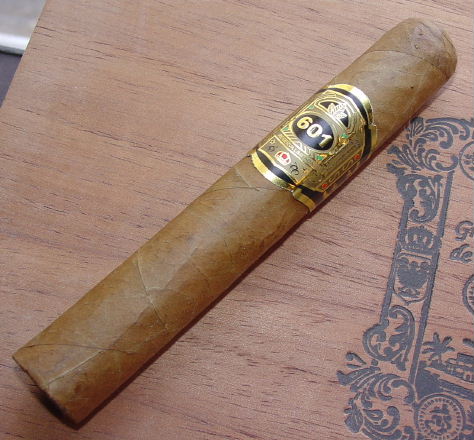
I was checking out the EO Cigars Website a few days ago, and after escaping the clutches of the sirens who grace the front page I discovered their “blog” section, which is really more of a place to post comments and questions. Eddie Ortega was kind enough to answer a question I posed about the origin of the “601” name for this series of cigars. I was thinking maybe it was a birthdate, or part of an meaningful address, something like that, but it turns out that 601 was the date that Eddie and Erik first went to visit Pepin’s factory in Nicaragua.

There are now three 601 cigars created by Don Pepin Garcia for EO Cigars — the 601 Connect I reviewed a few days back, a newly released box-pressed maduro, and this one: the Red Label with a Nicaraguan Habano wrapper.

The wrapper on the Red Label is a dark oily rosado that could easily be mistaken for maduro. It has a leathery look to it and is heavily stippled with prominent “teeth” that are much coarser than than the toothiness of most Cameroon wrappers. The head is nicely finished with a classic Cuban cap, of course. This is a Don Pepin production, after all. The final result is a real winner in the looks department.

So with all those teeth it’s appropriate that this smoke should start up with a bite. It’s similar to the 601 Connect in this regard, but overall I think it’s comparatively tame for a full bore Pepin. The base flavor here is leathery, with the wrapper contributing some subtler spices. Cinnamon, maybe. After the mid-point the flavor gets sweeter, taking on a molasses like tang, and the pepper enters for a reprise. It’s similar, but not the same pepper as the Connecticut version — I tasted a lot of black pepper in that one and it had me sneezing pretty good for a while. The Habano is a sweeter rendition — instead of peppercorns I’m thinking hot northern New Mexico chiles.

The construction was good, but not perfect. This one suffered a little from an uneven burn and at one point the wrapper unraveled a little. But neither of these things really affected the performance of the stick.

The 601 Habano is a powerful little puro with a lot of sweet spicy flavor. At around 6 US greenbacks it’s not a cheap date, but ya gotta live a little sometimes. If you’re in the mood for a well-balanced but brawny cigar, check it out. Fill up at the dinner table first though. A big plate of chile rellenos, some black beans and rice, and a couple of Tecates would be a great prelude to this tough guy.

EO 601 Connect

cnv0330.jpg

United Tobacco’s “EO Premium Brands” are blended by the team of Erik Espinosa and Eddie Ortega, (the E and the O of the brand name.) Previously they have partnered with Rocky Patel to produce the REO and Vibe Corojo cigars, and they also have a line of flavored smokes called Bluebanana made in the Cojimar factory. But for their most recent project they enlisted the expertise of Jose “Pepin” Garcia and the result is pure Pepin.

The 601 Serie are produced in Pepin’s Tabacalera Cubana in Esteli, and first appeared on the market last year. So far there are two versions, the black label Connect and the red label Habano. (A box pressed maduro is also forthcoming.)

One of the goals of the blenders was to create a full bodied Connecticut cigar, which on the face of it sounds like a contradiction in terms. Connecticut Shade is smooth and creamy, notable for its soft aroma and beautiful texture. It’s not really Pepin’s style, which tends more toward full flavor and vibrant potency. Topping Pepin’s peppery Nicaraguan tobaccos with an Ecuadorian Connecticut wrapper sounds a little like experimental cuisine, dipping jalapeños in chocolate or something. It might work, but it’s not exactly intuitive.

There were no construction problems to speak of — the burn was even and the draw perfectly generous. It isn’t the prettiest Ecuadorian Connecticut wrapper, but I’m sure it was picked for other reasons. This wrapper has a big job to do, so aesthetic appeal was probably not the first item on the blenders’ list of desired qualities.

Like many of Pepin’s productions, the 601 Connect opens with a good dose of pepper delivered straight to the sinuses. When you light this cigar, you know you’re smoking. It’s full bodied from start to finish, but it goes through a fair number of changes and shows a lot of complexity. The wrapper imparts a really nice buttery aroma to an otherwise spicy Nicaraguan brew — an unusual combination, but for whatever reason it works. After an inch or so the spice dies down a little and makes way for a citric, dry wood type of taste. It’s not quite astringent, but it’s dry.

After the mid-point the smoke becomes creamier in texture and the flavor takes on a leathery aspect. The spice lightens up a bit, but this cigar never strays too far from the pepper mill. The aroma from the wrapper is a little bit overpowered by the full bodied blend at this point, but it’s still present enough to maintain the balance of the cigar. About half way through the last third my nose was running so much that I couldn’t really enjoy the cigar anymore so I laid it to rest.

For some reason this cigar makes me think of the baptism scene in the Godfather. While the discreet and dignified wrapper is pledging fidelity to God and renouncing Satan, the filler and binder are taking out the family’s enemies in brutal and symbolic fashion. Meanwhile the moviegoer– or the cigar smoker– is enthralled by both at once. And like Michael Corleone, this cigar is a paradox of sorts, a gentleman and loving father and at the same time a killer without remorse. If nothing else, this is a very dramatic cigar!

Legends Series Yellow – Pepin Garcia

cnv0326.jpg

Jose “Don Pepin” Garcia joins several of the biggest names in the cigar business with the Legends Series Yellow Label. Cigars International made up the rules for the Legends Series, as well they might since they sponsor and distribute them. All the Legends Series cigars must be 5.75 inches by a jaw breaking 54 ring gauge, and they must be affordable as well. CI set an initial MSRP ceiling of 5 bucks a stick, though they gave Graycliff and now Pepin a little cushion at around six dollars per cigar. The actual price — c’mon, who pays MSRP? — is around $70 for a box of 20.

This is a nice looking cigar, solid to the touch and complete with the expected triple cap. The foot reveals a swirl of tobaccos that vary widely in color from tan to black. Upon cutting the cap with a guillotine I was a little concerned to find several stem ends. The draw was very good though, and seeing that this is a Pepin production I didn’t expect any problems.

But problems there were. First off, the foot cracked when I lit it. Never had that happen with a Pepin cigar before, at least one that has been stored at the recommended 63% RH. I ignored the split in the wrapper and kept on puffing, but an uneven burn was the next issue. I ignored that also, until the cigar was burning down one side and a correction became necessary.

The flavors and aroma from the Yellow Label are more on par with what I expect from Pepin. It starts out with the expected blast of pepper (though not as strong as the Achilles or the heavier bodied Cigar King blends) and mellows into a somewhat tannic, woody cigar with overtones of cocoa and a semi-sweet aroma. Despite the split in the wrapper, the fragrance of Pepin’s corojo has yet to disappoint. This cigar has a youngish taste to it, as do most of the cigars from Rey de Los Habanos and Tabacalera Cubana. (I’d be curious to know if boxes of the Yellow Label are being date stamped.)

You’ll probably want to have something to eat before tackling this hefty heifer. It’s not a killer in the nicotine department, but it’s no slacker either. The full bodied smoke and tannic finish calls for a good meal beforehand, and probably a beverage to accompany the cigar.

I didn’t find the same level of complexity here that I find in Pepin’s top shelf blends, but I think the Yellow Label would be an economical way for smokers new to Pepin to sample the flavor that typifies his style. If cigars like Tatuaje and Habana Leon are called “Cubaneque,” then I might venture that the Yellow Label is “Pepinesque.” You’re not going to get the same full throttle experience, but you’ll get the general idea, and at a pretty reasonable price.

Padilla Edicion Especial Achilles

cnv0320.jpg

There is a curious term Homer uses to describe Achilles: ainaretes. It isn’t easily translated, but it means something like “terribly excellent” or “darkly brave.” I read classics as an undergrad and now, whenever I hear the name of this powerful and tragic figure, I think of this term. I’m not sure why Ernesto Padilla chose to name his special edition cigar in this manner– maybe Homer has nothing to do with it — but for me there is something dark and brooding and yes, powerful, about this blend which might bring Achilles to mind.

As with his Padilla Miami 8 & 11 and his Signature 1932, this cigar is blended by Ernesto Padilla and executed by Jose “Don Pepin” Garcia. Unlike the other two, which are made in Garcia’s Miami factory, the Achilles is produced in his Tabacalera Cubana in Esteli, Nicaragua. Distribution is exclusive to Cigars International, as far as I know, and the production has been limited to 60,000 cigars in one size only: a 6 x 50 toro.

This is a Nicaraguan puro with a Nicaraguan corojo wrapper. It’s a handsome and solid looking stick. The wrapper is very smooth and slightly glossy, and the head is finished with a beautiful triple cap. From start to finish this cigar has great construction: an easy draw, a fine white ash, and a mostly regular burn. (I let these stabilize for a month in the humidor after receiving them, which is a good practice with any of Don Pepin’s smokes.)

It starts out with pepper on the palate and begins to mellow after the first half inch or so. It gets creamy with leathery undertones for the next couple of inches and then the pepper returns. The aroma from this corojo is fantastic. I think the wrapper is the secret to all of Pepin’s cigars, and this one is no exception. There is a caramel and bread-like aroma here that I have found only in Havanas and in Garcia’s cigars, which is probably what so frequently earns his cigars the title “Cubanesque.” I would mark this one down on just one point: there is a slightly greenish, astringent quality to the tobacco which to my palate indicates some young leaf. It isn’t overpowering, but it is present and persistent. The combination of sweet caramel breadiness and this astringent quality is what makes this cigar smoke “dark,” I think. But again, this is not unusual for a Pepin produced cigar. He seems to be making cigars not just for today, but for years to come.

Padilla’s Achilles is a medium to heavy bodied cigar that packs a decent punch, like the warrior who shares its name. Smoke them slowly with a cool drink after a good meal. These won’t be around forever, so you’d be wise to pick up a few mazos now, try a few, and put the rest to sleep in a deep dark pleasantly humid place where they can mature in peace. A couple years down the road and I bet this will be a classic.

Habana Leon Torpedo

cnv0314.jpg

The name of this cigar is a tribute to the Habana Leones, the pre-revolutionary Cuban baseball team also known as “Los Rojos” due to their red uniforms. Ever since baseball was introduced to the island in the mid-nineteenth century, it has been enormously popular. The Leones of the Cuban League era have been compared to the New York Yankees — they were celebrated throughout the nation, but hated by fans of their rivals. And for the Leones, the Almendares Scorpions — also known as “The Blues” — were their Brooklyn Dodgers. So far there is no Scorpions cigar from Don Pepin, so we know where his allegiance lies.

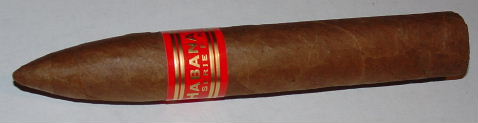
The band on the Habana Leon is an immediate tipoff to its Cuban inspiration: the Partagas Serie D (or P.) And like the PSD this is a powerful cigar. Utilizing a reported 70 percent ligero, this is one of Pepin’s strongest blends. Like most cigars from Rey de Los Habanos, this one uses all Nicaraguan tobaccos.

The torpedo is perfectly proportioned but somewhat shorter than the standard at 5 1/2 inches long. The wrapper is a fairly dry and veiny vintage 2000 corojo, but the roll is rock solid and the cigar feels very well balanced in the hand.

I figured I would need a wide cut for this cigar, so I took about half an inch off the tip with a Palio cutter and fired it up with a torch lighter. The first thing that jumped out at me was a rich skunky odor. Take a typical barnyard kind of tobacco aroma and compound it with rich loam: a nasty dirty lovely smell. The first few puffs were surprisingly smooth, and the rest of the cigar would follow suit.

The draw was a little bit loose, and the stick softened considerably after a few minutes. It burned a little unevenly and required a couple of touchups. The ash is a striated light and dark gray in color, similar to the ash produced by many Cuban cigars. Overall decent, but not great construction.

The Habana Leon is a powerful, but not a hugely spicy cigar. (Another surprise, since almost all the Pepin Garcia cigars I’ve smoked have at least started with a fistful of spice.) The flavors are complex and varied, making this a really interesting experience. It starts out fairly mild in flavor with a short finish and very little aftertaste. What I notice at first is the outstanding aroma rather than the flavor. Within a couple minutes I feel a big buzz coming on and decide to take it slow.

The flavors here evolve slowly and show a lot more subtlety than I expected: some bean flavors, a little papery at times, and some sweetness even. Halfway through the cigar comes the pepper I was expecting at the outset, but it arrives without the expected harshness. The most surprising aspect of this cigar is its smoothness. The finish and aftertaste gain prominence, as expected, but this cigar never gets bitter or sour. By the time I’m ready to put the butt to bed (and my butt into bed) I’m tasting a lot of bright Nicaraguan tobacco flavors typical of Pepin cigars. And to be honest, I almost nubbed this guy, which is unusual for me to do with a strong cigar.

One thing I’ve noticed about all the Pepin cigars I’ve been lucky enough to try is that they benefit greatly from a little humidor time — they seem to mellow out quite a bit in a relatively short amount of time. Maybe traveling makes them grumpy.

This one had been idling in my desktop humidor for about six months and while I had some minor quibbles with the construction, the complexity of the smoke really made up for it. Habana Leon is available from Cigar King for around six or seven dollars. If you like Pepin’s other blends, you’ll love this one. And if you’ve never smoked one of his creations, you’ll get a kick (quite literally) out of this big red brute. Just don’t try it on an empty stomach.

Havana Soul Limited Edition Super Toro

cnv0306.jpg

Last summer I picked up this limited edition Havana Soul at the Cigar King in Scottsdale. It was created by Don Pepin Garcia for a special event at the store (if I recall correctly) but there were a few left over after the event, so in addition to a couple smaller sized Havana Soul cigars I picked up this “Super Toro.”

The blends that Don Pepin makes for Cigar King are based on the classic Habanos that Pepin made in Cuba for many years. The Havana Soul takes as its patron the rich smooth flavor and medium body of the Montecristo line. I am certainly no expert on Cuban cigars, but in my modest opinion this is one of the most “cubanesque” cigars available for sale in the U.S.

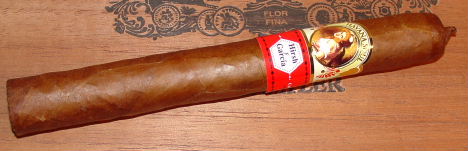
This is a limited edition super-sized toro at 6 1/2 inches long with a 52 ring gauge. There are two bands on the cigar, which at first glance looks like a mistake of some kind. Is it a Havana Soul, or is it a Hirsh y Garcia? The wrapper used on the Havana Soul is Pepin’s Corojo 99, a hybrid version of the original Cuban corojo, in this case grown in Nicaragua. The filler and binder are Nicaraguan as well, a combination of corojo and criollo blended to achieve a flavor that is truly unique.

Like all of the cigars from El Rey de Los Habanos, this one bears the classic Cuban triple cap, which in this case is curled into a short point. The wrapper practically glows with oil, and I have to admit that I hesitated before cutting and lighting this one up. It’s one of those cigars that is almost too pretty to torch. But cigars aren’t created to hang on the wall and be admired by the passing crowd. They’re cigars, meant to be smoked by heartless thugs like me. So I headed for the garage with my cigar, my lighter, and my evil intentions.

I was a little concerned about the cut at first, remembering caps with tails in the past that have unraveled on me. This one was solid though, and stayed that way. Looking at the foot of the cigar before lighting I noticed the wild swirls that are characteristic of the entubado method of cigar rolling. A quick prelight pull on the cigar revealed a perfect draw, and the time was right for lighting.

It starts up with a touch of green wood that disappears almost before I can recognize it. A peppery finish is present from the start and will make several return appearances before the final act. Very quickly the flavor becomes smooth and nutty, with just a hint of youthfulness. The aroma is, for lack of a better word, “twangy.” It’s a sweet, caramel laced nutty aroma that is very reminiscent of Habanos — I’m thinking of the Bolivar petite corona in particular, maybe because of the peppery flavor profile that these cigars share.

The construction is spot on perfect, with the exception of a wavering burn line that causes no issues, but isn’t perfect. The ash is a solid light gray with a somewhat flaky appearance. It looks like it should fall apart when I ash it, but it doesn’t. At a couple inches into the smoke I’m finding it to be medium bodied, but fairly powerful. I had a full meal before lighting this one up, and I’m glad I did.

The second third picks up some cocoa on the nose and the finish gets stronger and spicier. There’s a slight burn on the tongue, but I may have been oversmoking at this point. I forced myself to slow down and let the cigar cool off a little. Five minutes into the final third found the flavors traveling from solidly nutty country into smooth buttery territory, still accompanied by a sharp peppery finish.

This is a wonderful and very complex cigar. The larger sized limited edition is a bit more complex than the other sizes I have sampled, but certainly bears the same marks. My only criticism is a slightly green flavor that is present more acutely for the first inch of the cigar and gradually dissipates but never entirely disappears. But rather than a damning flaw, I’m going to take this as an indication of how well this cigar will age.

I’ve been contemplating buying a box of Havana Soul for aging purposes, and the Super Toro has just about nudged me over the tipping point. They’re not cheap at $150 – 200 per box but if you’re a Pepin fan it’s well worth the investment.

Right now, this is a great cigar. With a few years of age, I think it will be spectacular.

cnv0308.jpg

Sancti Spiritus by “Don Pepin” Garcia

cnv0297.jpg

Sancti Spiritus cigars are named for the province in Cuba in which the cigar’s maker, Jose “Don Pepin” Garcia, was born. The Sancti Spiritus region of Cuba cuts right through the center area of the island and is a cultural focal point. The scene depicted on the band is La Plaza Mayor in Trinidad, a major city and big tourist attraction in Sancti Spiritus. The statue in the foreground is of the Greek muse Terpsichore, the muse of dance, music, and lyric poetry. In the background is one of the many museums in the area which have been restored from their original function as the baronial mansions of sugar plantation owners.

Right off the bat I knew this was going to be a great cigar. It’s a Nicaraguan puro with a corojo wrapper that is just a little oily. It has a leathery texture to it and a pre-light scent of cedar. The model I tried, the 6 x 50 toro, was solidly rolled and felt very balanced in the hand.

I fired it up with my new Prince Blazer (nice torch, that) and got the show on the road. The first thing that struck me was the incredible amount of bean flavors — this cigar is absolutely chock full of cocoa and creamy coffee flavors. There are some base flavors of wood as well, but the cocoa is very prominent all the way to the end of this smoke. It’s a good medium in body, maybe a medium-plus by the end, but it’s not your typical Pepin powerhouse.

The flavors here are not as spicy as I’ve some to expect from Don Pepin, but this cigar was designed to be a little friendier than the heavier blends like the Habana Leon with its 70% ligero content. It’s lighter than the Havana Soul as well — in terms of body it’s probably on a par with the Tatuaje VI, but the flavors are totally different.

It’s well constructed, as to be expected, with a great draw and a burn that wavers at points but never needs correction. The ash is a very light gray and somewhat flaky. The aroma from the wrapper is sweet — a really nice bouquet of cedar.

All told, this is a helluva smoke for fans of relatively lighter bodied cigars — relative to Pepin’s other blends, that is. This is certainly no Macanudo, but it won’t blow you out of the water either. And the sweet cocoa and cedar flavors are about as good as they come. If this sounds at all close to the kind of flavor and body profile you like, don’t hesitate to try this cigar. Sancti Spiritus cigars sell for around 5 to 6 USD and yes, I do think they’re worth it.

So far I think these are only available from Cigarking.