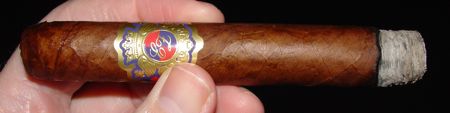
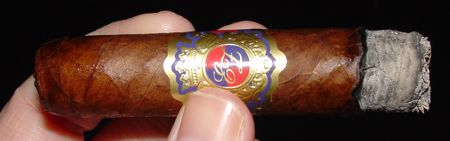
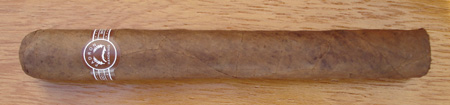
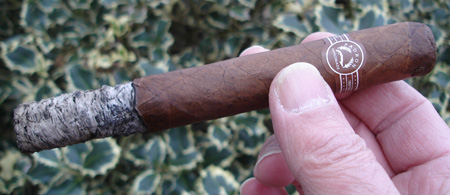
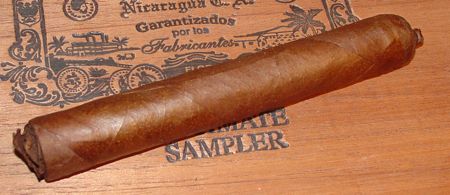
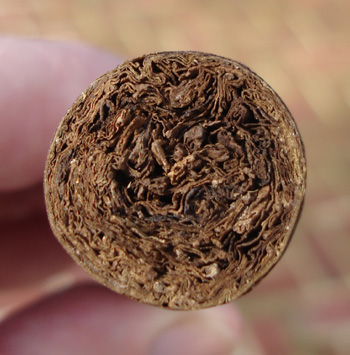
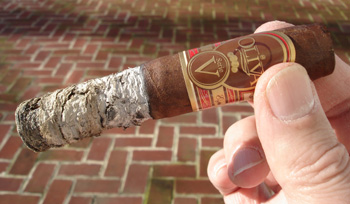
El Rey del Mundo Olvidados Robusto

The phenomenon of brand extension is in evidence once again with El Rey del Mundo Olvidados. The original “King of the World” is a Cuban marca, but in the U.S. we are more familiar with the Villazon version blended by Estelo Padrón in Honduras. I don’t know how many boxes of oscuros I’ve consumed over the years, but for a long time it was my “go to” smoke.

In 2006 Padrón developed El Rey del Mundo Real with a Honduran wrapper from San Agustin, but in my opinion it fails to live up the “original” broadleaf maduro ERDM.erdmo1.jpg

The newest blend was created by protegés of Estelo Padrón for Cuban Imports, who are themselves no strangers to brand extensions: in 2006 they unveiled their Por Larrañaga “Cuban Grade” and last year the H. Upmann “Signature,” both Altadis owned brands. With ERDM Olvidados they add a player from General Cigar to their team.

They came up with a diverse blend for this cigar. The filler includes ligero from Nicaragua, viso from Honduras, and seco leaf from the Dominican Republic. The binder is a Connecticut broadleaf, and the star of the show is a dark Ecuadorian grown Sumatra wrapper.

Big ring gauges are another theme for this line. The Chateau E Epicure is the smallest at 52, and they only go up from there. The full rundown:

  • Chateaux R Robusto – 5 x 54
  • Chateaux E Epicure – 6 x 52
  • Chateaux T Torpedo – 6 1/8 x 54
  • Chateaux X “X” – 6 x 60
  • Chateaux D Double Corona – 7 1/4 x 54

Normally I don’t find a ring gauge over 52 very comfortable, but for this review I picked up a couple of the 54 ring gauge robustos (because this was the only size the shop had in stock.) My Palio sliced off the cap nicely, though it was a little cumbersome in the cutter. A prelight pull revealed a nice draw but not much else to enlighten me.

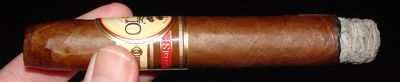
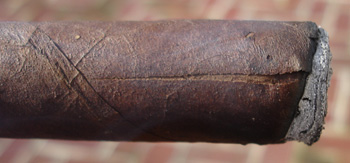
The wrapper on this cigar is rough and maduro in color, much darker than you’d expect from Ecuadorian Sumatra. It reminds me a little of the wrapper on the standard ERDM — it’s a little bit chipped at points and looks weathered. The antique style of the black and bronze band fits in perfectly with this look. The roll is solid and despite the large footprint it takes a light with ease.

What is most impressive about this cigar is how smooth it is. Maybe I’m getting used to all these Nicaraguan cigars that start out with a blast to the palate, but this one was a nice change from that. There’s nary a scratch or burn anywhere here. Just a very easy going, medium bodied full flavored smoke from start to finish.

The predominating flavor here is a sweet woody char very similar to what I find in another Villazon cigar — Flor de A. Allones. The first half of the Olvidados is also characterized by a salty element that went in and out of balance with the sweetness of the smoke. It certainly wasn’t overpowering, but at times I thought it could be a little overbearing.

The middle part of the cigar achieves a better equilibrium. The aroma is almost syrupy, and the flavor is balanced and round. The saltiness is no longer in the smoke as much as it is in the aftertaste. A cool drink is helpful at this point.

But unfortunately the last section was not really to my liking. The flavors become more one-dimensional, focusing on charcoal, and the aftertaste gets a bit sour. I found on both attempts that I couldn’t quite finish the cigar. Up to this point I thought it was pretty good, though overall this cigar is a little too salty for me.

El Rey del Mundo Olvidados scores very well on construction, and would score fairly well on taste — especially in the middle section — were it not for the last third where the aftertaste turns a little sour. The flavors here are very similar to what I find in Flor de A. Allones — which is fitting in a way, since Antonio Allones was one of the founders of the Cuban El Rey del Mundo. But if you like the currently available Allones blend from Villazon, you’ll probably like this one as well. As for me, it’s time to light up something else.

Prices run in the 7 USD range.

Oliva Special “S” Torpedo

I have to admit that I haven’t yet fallen in love with any Oliva cigars. The Serie V blend has gotten a lot of press in the past year, (including a 93 rating and a spot in Cigar Aficionado’s top five for 2007) but I’m sorry to say it didn’t even make my list last year. A good cigar, sure, but it just didn’t captivate me like it did many others. Even the Master Blends have made only an average impression on my grizzled palate.olivas5.jpg

But if there’s one way to get me, it’s with a sun-grown Ecuadorian wrapper. So I couldn’t pass up Oliva’s Special “S” when I spied a box of torpedos at the tribal smoke shop. They’re one of Oliva’s more expensive cigars, so I only picked up a few, but they certainly looked tasty.

The Special “S” is built around a Nicaraguan habano filler and Nicaraguan “cuban seed” binder, with a sun-grown Ecuadorian Sumatra seed wrapper that has been cedar aged for five years. Interestingly, the wrapper is grown by the Oliva Tobacco Company, which is a completely different company (and family) from the Oliva family who makes “Oliva” cigars. Profiles of these companies can be found in our Angel 100 and Oliva Serie V reviews.

This series was introduced by Oliva in 2006 as a “complex, medium to full bodied blend.” The Oliva website includes an aging recommendation for each of its lines: the Special S, according to the site, will reach full maturity in 5 years. Unfortunately in my case 5 weeks was all the aging I could muster.

This is a very well rolled cigar, and it turns out to have superb construction across the board. Its aesthetic appeal stems from a dark colorado claro wrapper with very fine veins and a moderately oily appearance. The seams of the torpedo head are wrapped so tightly they’re nearly invisible. It’s almost heartbreaking to cut this baby, but it’s the only way to separate the glitter from the gold.

Decapitation accomplished, it’s on to the first stage of this complex and rich cigar. The Special S is bold from beginning to finish, but it starts with a powerful flourish of pepper on the nose and tongue. The finish is long and the aftertaste powerful right from the start, which can be a little startling. I usually like to settle into a cigar, but this one straps you in and stomps on the accelerator as soon as the light turns green. Just gotta hang on.

olivas2.jpg

The strong peppery flavors muddy my palate for the first part of this smoke, but in the background there seems to be leather and sweet spice. After an inch or so the pepper lets up and the aroma becomes more prominent. I think this is where the leathery element is coming from — leather and an almost fruity sweetness. An interesting combination. At this point the smoke is medium in body, but I can feel the nicotine already. I also get a little tongue burn, which makes me ease up on the throttle a bit.

The next stage transitions to wood and cocoa flavors, and the smoke takes on a smoother texture. The flavor is still quite bold, but the finish and aftertaste are a little more civilized. There is a slight burn on the throat, but the flavors and aroma are well balanced.

The last third gets earthier and exemplifies what I think of as “Nicaraguan Habano.” It’s an earthy flavor accented by a sweet woody, caramel-like aroma. The flavor begins to sharpen at this point, returning to the opening stage of the cigar. The finish grows longer again, and the aftertaste is very pronounced. And then the nicotine sneaks up… and smacks me in the noggin, whips me around and gives me one in the gut, and then, reluctantly, I am finished. Finito.

It’s safe to say that this is not a beginner’s cigar. And while this is a very good cigar right now, I think the aging advice on Oliva’s website is well heeded. There is an edge to this smoke that will be blunted over time, and I think that will be a good thing. Now if you prefer a smoke with a little sting to it, these are ready to smoke right out of the box.

As long as you don’t mind the other sting: the one to your wallet. A 20 count box of these runs around $170 US.

olivas3.jpg

Vegas Cubanas Generosos by Don Pepin Garcia

vc1.jpg

With the manifold array of brands issuing from the factories of Jose “Don Pepín” Garcia, it is interesting to note that only six of them bear the imprint of the master’s name. Vegas Cubanas (by Don Pepín Garcia) is one of them.

Introduced in 2005, before the Pepín renaissance reached full bloom, Vegas Cubanas was just another “boutique” cigar from Miami’s El Rey de Los Habanos.

By contrast with the swooning that accompanied Tatuaje, Padilla Miami, and later on San Cristobal, vclabel.jpgVegas Cubanas never really attracted that much attention. Perhaps because it’s a lighter-bodied cigar? Or because it is in relatively good supply? (When we all know that the power hitters and the “exclusive” limited editions are by definition better. Right?) In the retail shops I frequent this one is usually shunted off to the side, in the vicinity of the Tatuajes, Series JJ, El Centurion, etc., but never in the same spotlight.

So maybe they were trying to amp up the label a bit when El Rey de Los Habanos gave Vegas Cubanas a makeover in 2007: new box art, a new band, and cellophane. (Matt’s review shows the somewhat lackluster original band.)


Like most of Pepín’s blends, this one is a Nicaraguan puro. The wrapper is touted as “Habano Rosado Claro” and under the hood there’s a “Cuban Seed Corojo 99 blend.” Vegas Cubanas are available in six sizes:

  • Invictos – 5 x 50
  • Generosos – 6 x 50
  • Delicias – 7 x 50
  • Imperiales – 6.125 x 52
  • Magnates – 7.625 x 49
  • Coronas – 5.5 x 44

Early in my journey through the vast cigar wilderness I became partial to the toro size. I found that most draw problems could be avoided with a larger ring size, and a six inch cigar allows a little more room for development than a stubby robusto, so I gravitated to the toro, or corona grande, or whatever name is applied to a cigar with a 48 to 52 ring gauge and a length from 6 to 6 1/2 inches. Construction qualities have generally improved over the years, but I still like this size.

vc2.jpg

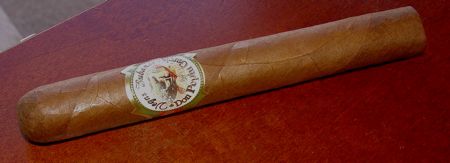
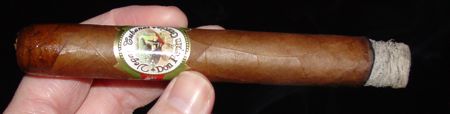
So the one I reached for was the Generosos. The wrapper on this cigar is an attractive colorado claro, with an emphasis on the colorado. It has a sleek appearance without being oily. A close examination shows a small amount of tooth, but not enough to overcome the overall smooth impression. The roll is solid and the head bears the classic cuban triple-cap we expect from El Rey de Los Habanos.

Once lit, the Generosos opens with a tannic woody flavor and a smattering of pepper. Compared to a blend like the DPG Blue Label, this one is a sweetheart. After half an inch or so, the tannins and the wood merge and morph into the smooth cocoa flavor that for me defines DPG’s lighter bodied cigars. The finish at this stage is lingering, but mild — just a slightly earthy aftertaste, and a grazing of a scratch on the back of the throat.

Into the two-thirds stage the smoke evens out and takes on a wonderfully creamy and smooth texture. If by “body” you mean the texture of the smoke, this is a full bodied cigar at this point. But it’s not powerful; it’s simply full on the palate, like a full bodied Sumatran coffee with cream: it sits heavily on the palate, but doesn’t overwhelm with nicotine.

The final stage of the cigar features a gentle transition from smooth cocoa flavors to a darker, earthier taste. Up to this point, the wrapper has not really distinguished itself. For most of the way the wrapper melds nicely with the rest of the blend, but in the last couple inches the wrapper contributes an aroma that steps out and shouts Twang! It’s a sweet, spicy, caramel inflected aroma that defies description, but you know it when it shows up at your door.

My only complaint, and it is a minor one, is that the burn was uneven throughout the length of this smoke. It wasn’t serious enough to affect the balance of the flavors, but it was just a tad annoying.

In the brick and mortar retail shops this cigar sells in the $6-7 US range. Boxes can be found for around $130 online, which is quite decent for a cigar of this quality. It compares favorably to the more expensive Troya Classico and Cabaiguan lines, though I’d have to say this one is a less complex experience than those.

From first light to last ash, Vegas Cubanas is an everyman’s cigar. It does not stomp on the terra like some of Pepín’s other blends; it steps lightly and sings a tuneful little ditty. It’s bound to please everyone, at one time or another, with the exception of those who insist on double ligero for breakfast. If I had to smoke nothing but these for a long time, I might get a little bored, but I’d be happy.

vc3.jpg

E. Zarzuela Toro Fuerte

ezfuerte.jpg

First introduced in 2005, E. Zarzuela is a relative newcomer to the world of “boutique” cigars. This particular line is sometimes called the “Premium” line to distinguish it from Zarzuela’s milder-bodied “EZ” series released in 2006. Both are made in the Dominican Republic.

The Zarzuela website is sparing in detail about the company, but it does tell us that the chief blenders of this cigar — Felix Rodriguez and Eddy Fontana Zarzuela — have previous manufacturing experience with Arturo Fuente and La Gloria Cubana. So they come with impressive credentials.

The Zarzuela Premium has been rated highly in Smoke magazine and by cigarencyclopedia.com, and since I’m always game for a small production cigar I thought I should check it out.

One of the arcane aspects of the cigar industry is the seemingly arbitrary way that different shapes and sizes obtain their frontmarks — why double coronas are often called “churchills” and why toros are sometimes called “corona grandes” and so on. Here is a case in point: this “Toro Fuerte” measures 5 x 50, which is the standard robusto format. But there is no “Robusto.” On the other hand, there are two toro sizes in the line, the 6 x 52 “Toro Grande” and the 6 x 54 “Long Drive.” And to augment this toro madness, the petite coronas are called “Toritos.”

The torpedo size is refreshingly called Torpedo (I would have suggested Toro-pedo) and the 7 x 50 double corona is called, of course, Churchill.

The Zarzuela Premium features a Nicaraguan Cafe Habano wrapper, some Dominican piloto cubano for binding, and filler composed of Nicaraguan ligero and Dominican piloto. Habano, piloto, and ligero…sounds like a powerful brew.

ezar.jpg

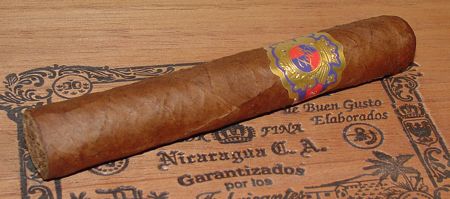
The wrapper on the Toro Fuerte is a splotchy colorado maduro, but it has a nice oily sheen and a roughshod leathery appearance. The prelight scent is tannic with maybe a tinge of ammonia, just enough to raise a pucker. The roll is solid and the draw quite firm.

The first few puffs taste dry and woody but in just a few seconds the wrapper kicks in a sweet and complex aroma typical of Nicaraguan habano. After smoking for five or ten minutes a solid and uniformly light gray ash forms that adds to the aesthetic appeal of this cigar. The burn is perfectly even up to this point.

Just after the one-third point the draw opens up like a door and this robusto becomes truly enjoyable. The burn is perfectly even and the ash holds solid. It’s not as strong as I had guessed it would be — it’s more a medium body smoke at this point, with a short finish and very little aftertaste. The aroma is the highlight at this point — a sweet, almost fruity perfume that blends well with the woody and leathery base flavors of the tobacco.

At the two-thirds point the body begins a gradual ascent to medium-full, some tannins enter the fray, and the flavor takes on an earthier aspect. The last third gets meatier yet, the finish grows and the aftertaste becomes more mineraly. Meanwhile the wrapper continues its sweet leathery contribution.

This cigar goes through a lot of changes in a short amount of time, but remains balanced all the way. Construction values are also very high. The tannins come heavier in the last third of the cigar, which may be by design, as some smokers love this tart flavor, or it could be youth. If the latter, this cigar will only improve over time.

A box of 24 will run around 100 USD, which in most places puts it in the $5 to $8 per stick range. Very reasonable, I think, for a cigar of this quality. Don’t take the “Fuerte” in its name too seriously, since this turns out to be a solid medium-bodied cigar. The flavors are good, and the aroma is outstanding. If that’s your style, I say go for it.

The E. Zarzuela Toro Fuerte is not a typical Dominican cigar — it’s closer to a Nicaraguan, but less powerful than what you’d expect from Pepin or Padron. And that’s what I love about boutique cigars: they’re usually not what you expect. This is a nice one.

ez3.jpg

Nestor Reserve Maduro

nestor-reserve.jpg

“Learn thou the worth of a dollar and how to keep it from damning thee.” –Joseph Seamon Cotter, Sr.

The other day I received in the mail sad tidings from the gentleman who claims to manage my meager stock portfolio. Like most people struggling to save for retirement (a very distant shore) I try to take the long view. But as I watch my modest investments dwindle further into the mire, my thoughts turn from luxury limited edition cigars to the humble bundle smoke, a suitable companion for a season of economic decline.

Unlike the federal government, I am not entirely comfortable with a budget extending far beyond my means, and since I am as yet unable to print money myself, I must instead seek solace in cheap Honduran stogies. Luckily there are a few out there, and there is a man named Nestor Plasencia.

Nestor over the years has produced a number of quality budget smokes — Maria Mancini, Mayorga, American Stogies, among others, and while none of these are exactly stellar cigars, they’re solid blue collar fare. And as I watch the foreign tourists pour in to feast on the weak dollar, I’m feeling bluer all the time.

So I thought I was exercising fiscal responsibility when I low-balled a “Mega Sampler” of these Nestor Reserves on Cigarbid. I’d tried the toro size previously and thought well of it, so when I came away a winner with a bid of 19 dollars I thought I hit the big time. 20 cigars for 19 dollars. Can’t beat it, right?

In the past I’ve really enjoyed the Connecticut version of this cigar — a mild and smooth smoking robusto that is unfortunately no longer available. The Maduro version is still kicking though, and comes in the standard sizes: corona, double corona, robusto, toro, and torpedo. The wrapper is Honduran, while the filler is a Honduran/Nicaraguan blend. The really interesting ingredient here is a Cameroon binder.

Curiously, the first thing I noticed upon slicing open my “Mega Sampler” bundle was that one of the double coronas was round, and the rest of them were square pressed. In fact, all the cigars were square pressed except for that one odd double corona. I figured that must be The One, the Neon of the cigar matrix. So I cut it, torched the end and prepared myself for a leisurely smoke.

Double Corona

But it was not to be. It wasn’t plugged, exactly, but it was extremely tight. I cut a bit more off the head to no avail. Diagnostically palpating the cigar to find a plug, I found that the plug seemed to start at the head and end somewhere close to the foot. Exploratory surgery was my only option. I cut it in half and gave the remainder a hearty pull. Nothing. Flat line. Most definitely not The One.

On to the next contestant, a square pressed double corona. No draw problems this time, but even before lighting it I was greeted with a bitter and unpleasant taste from the wrapper leaf. For the next ten minutes I couldn’t stop spitting and the taste seemed to worsen. The smoke wasn’t bad — woody, with some earthiness and a semi-sweet maduro aroma, but the flavor from the wrapper on my tongue was unbearable. And so round two sent me staggering to the corner with two unsmokeable cigars lying pathetically in the ashtray.

But I couldn’t give up now. After all, Cigars International calls this cigar “chocolate thunder.” Cigar Insider gave it an astounding 93! My double corona experience must have been a fluke. On to the robusto size.

Robusto

The prelight impression this cigar makes is a good indication of how it smokes: mild and grassy. What lies hidden — until flame is set to leaf — is how smelly it is.

The first third is mild, smooth and focuses on sweet hay. After an inch a vegetal flavor makes an entrance, and the finish is mildly metallic. The Cameroon adds an earthy accent in the second third, blending nicely with the sweet aroma of the maduro. The robusto becomes increasingly earthy into the final stretch, a little flinty but still quite mild.

This cigar most emphatically failed the wife test. She coughed and waved her arms and put on quite a show for me and the dogs. But she’s right — this is a very smelly cigar, but in a sweetish maduro kind of way.

Toro

The toro is not quite as grassy, and not quite as mild as the robusto. It’s a little woodier, but it retains that flinty, metallic aftertaste. The maduro-cameroon tango is a little more animated in this size: it’s sweet and smooth, but tangier than the robusto. It tastes more like the double corona, but lacks the construction problems I had with those.

Torpedo

The torpedo smokes very much like the toro. It might be a tad smoother, but it seems so similar to me that any difference could easily be chalked up to what I was drinking or what I had for dinner on a given night.

Conclusion

What all the Nestor Reserve Maduro cigars have in common is this: they’re all relatively mild, smooth smoking cigars with a stinky disposition. They tend to burn erratically, but with one exception they all drew well and had decent construction. One annoying thing about them is that the wrapper bleeds and leaves brown stains on one’s lips and fingers. Along with the consistently oscuro coloration of the wrapper, this is a good indication that the leaf has been “cooked,” or artificially treated (perhaps even dyed) to speed up the fermentation process and achieve a uniform hue. I can’t say with total certainty that is what we have here, but it certainly seems like a possibility.

So, in the final analysis, are the Nestor Reserves worth two bucks a pop? It’s not easy to find a decent cigar for under two dollars, but with some effort it is possible. I don’t think this is Nestor’s best effort, and while there are some admirable qualities here (the cameroon binder is an intriguing touch) I think there are probably better bargains out there. It’s a passable yard gar, but even at less than a dollar a stick at auction I will probably seek out other pastures. I’m trying to be frugal, not masochistic.

-cigarfan

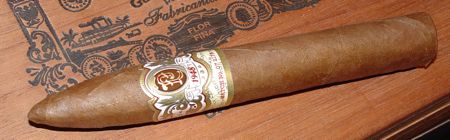
Padilla 1948 Torpedo

1948.jpg

All of Ernesto Padilla’s year-branded cigars correlate to an event in the life of his father, the Cuban poet Heberto Padilla. The Padilla 1948 was named for the year in which Heberto’s first book of poems, Las Rosas Audaces, was published. Incredibly, he was only 16 years old at the time.

The 1948 follows the success of Padilla’s Signature 1932 — both are blended by Jose “Don Pepín¨ Garcia, though the ’48 is produced in his Esteli, Nicaragua facility rather than in Miami. Four sizes are currently in production: robusto, churchill, lancero and torpedo.

If you know the cigars of Don Pepín, you will immediately recognize the sweet corojo that wraps the ’48. The blend is, as usual, a combination of Nicaraguan criollo and corojo, but for me the wrapper is what seals the deal. While I like what Pepín has done with Connecticut Shade (in the 601 Black and the Cabaiguan Guapo) and maduro (in the Series JJ and the 601 Blue & Green labels) there’s still nothing like this Nicaraguan corojo.

1948-foot.jpg

The wrapper on the 1948 is a natural but dark looking colorado claro; not quite dark enough to reach colorado maduro, but there’s enough red in there to make it darker than the average colorado claro. It’s a little dry looking with significant veining. The foot is a little bit loose, but the rest of the cigar is firmly rolled. The head is flawlessly formed. There appears to be some lighter colored tobaccos, or very fine stems, at the foot; the head reveals the same thing after clipping.

Usually I find the strongest prelight scent to come from the wrapper of a cigar, but not in this case. The wrapper has a mild tobacco smell to it, while the foot has a stronger earthier scent. (Perhaps this is what I should expect from a foot.) There also seems to be something grainy about the scent, sort of like whole grain cereal, which can only mean one thing: this cigar is good for you!

The 1948 torpedo lights easily after a smooth clipping. The draw is good and the burn is mostly even: a little waver here and there, but it corrects itself and needs no supervision.

The first third is typical of most Pepin blends, but a little less aggressive. It starts up sweet and toasty with a touch of pepper on the tongue. Almost immediately the core flavors come to the fore: cocoa, caramel, and black pepper. It’s comparatively mild for a Pepin blend; it’s reminiscent of the Padilla Signature 1932, but not as intense. There is perhaps a little less complexity in the 1948, but it’s still a very engaging smoke.1948c.jpg

Into the second third the pepper dies away and is replaced by a dry woody flavor. The cocoa persists throughout the duration of the cigar, but at this point the aroma also takes on a spicy sweet character. I’m detecting something like cinnamon… maybe. Whatever it is lends delicacy to the aroma without overtaking the basic bean flavors of the smoke.

The last segment of the cigar continues to sing the same sweet beany, mildly spicy refrain. I’m usually not one to nub a cigar, but I like this one well into the band region. And speaking of the band, I should mention there are two on this cigar: the additional one is a counterfeit control label that is discreetly placed below the Padilla band. Whether this is really necessary, I don’t know, but in any case it’s tastefully executed. (pssst… mister. I got them Piddillers you like. 49.99 a box!)

Overall, the Padilla 1948 torpedo turns out to be one of my favorite blends from the master of vanguard Nicaraguan cigars. It’s medium bodied, well constructed, smooth, and oh so tasty. If you’re really into the heavy Tatuajes and 601s, the’48 might not float your boat. On the other hand, if you’ve developed a craving for Pepin’s signature corojo but prefer the lighter side of life, this cigar is for you.

Retail prices ring up in the 8 to 10 USD range, which seems about average for upper echelon cigars these days. (Reasonably priced ones, that is.) It may not be an everyday smoke for the budget minded, but in this case you definitely get what you pay for… and maybe just a little bit more.

-cigarfan

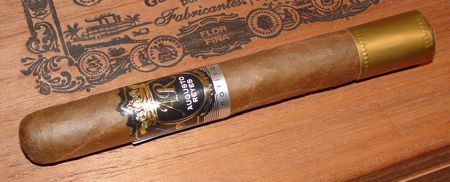
Augusto Reyes Nativo Corona

arn-corona.jpg

Unlike many of the big names in the Dominican and Central American cigar industry, this one has no Cuban ancestry. The Augusto Reyes family has roots in the Dominican Republic and the Dominican tobacco world going back 150 years and six generations, though much of that time has been in the agricultural and leaf brokerage side of the business rather than in cigar manufacturing.

Currently the Augusto Reyes family of companies includes a leaf importing concern (Tobacco Leaf Sorting S.A.), a company that processes Dominican leaf only (Capas Nacionales), and two cigar manufacturers: Corporacion Cigar Export and De Los Reyes Inc.

The first Reyes-operated cigar factory was established in 1990 in Navarette. Over the years they have produced several different private label cigars but the only one to gain much recognition is the Fittipaldi brand designed for Emerson Fittipaldi, the racing legend.

It was only in 2006 that the Reyes came up with a blend they could truly call their own. It was fittingly introduced at the wedding of Augusto Reyes to Monika Kelner. (I was unable to determine if Monika is a relation of Hendrik, but it wouldn’t surprise me!) After the wedding those who had tried the cigar began to clamor for more, so it was readied for commercial production and finally released at that year’s RTDA.

This blend also has the honor of being the first non-Cuban cigar to be featured at the “Epicur Dinner” hosted by the the Spanish cigar club of the same name. As Augusto explains, it is a more powerful Cuban style blend that Spanish smokers frequently prefer. This style has also developed a following in America, so we are lucky to have the same cigar available now in the U.S. It is currently being distributed here by SAG Imports, who also bring us Fonseca and Joya de Nicaragua.

There are now three lines of the Augusto Reyes brand: the Criollo and Epicur lines — both of which are finished with Ecuadorian Connecticut wrappers — and this one, the Nativo, a Dominican puro. The Reyes have been experimenting with wrapper crops in the DR since the 1960s and at various times have provided wrapper leaf to other companies, but the Criollo 98 wrapper for the Nativo comes from a farm dedicated to AR cigar production. It is complemented by an olor binder and a piloto/criollo filler blend.

The Nativo is available in seven sizes from double corona to a 4 x 34 perla. The corona size I’ve been smoking measures 5 1/2 inches by a 44 ring gauge. They’re nice looking smokes with wide bands and a decorative gold ribbon at the foot. The wrapper is a creamy looking colorado claro with very moderate veining and a few small water spots. The cap is nicely formed and the stick is firm to the touch. My only initial concern was that the feet on a couple of these seemed underfilled.

The prelight scent from the wrapper is very mild. The draw is acceptable (maybe just a tad loose) and a prelight draw results in some grassy and coffee bean flavors.

The loose fill at the foot made for a difficult light, and one sample had a seriously deficient burn. Consistency problems aside, I found this to be a complex and fascinating little stick.

It starts up with an earthy, dusty quality that quickly takes on a peppery edge. The base flavor is leathery with a dollop of musk that rises from the wrapper. This wrapper, despite its smoldering hesitance, is extremely pungent. In fact, when my wife stepped outside for a moment she thought the kids down the block might be smoking something illegal. “No,” I told her, “it’s my cigar. Which isn’t illegal. At least not yet.”

The AR Nativo produces a good volume of smoke that I would characterize as full bodied in terms of texture and mouth feel, but medium in terms of strength. The flavors become more concentrated as the cigar burns, getting spicier as the ash gets longer. That is, if the ash actually succeeded in getting longer…which leads to what might be a problem with this cigar.

The first sample I smoked went out several times, needed constant adjustment, and developed an ash that was flaky, crumbly and tragic to behold. And while I have to say I really enjoyed the rich peppery flavor and musky aroma of this cigar, its burning qualities (or lack thereof) really weighed it down. The second cigar was much better — it burned straight and the ash didn’t peel away like the first one, but without constant puffing (which results in a hot smoke) it went out. To be fair, I have to say that I let these rest for less than a week after receiving them in the mail… but even so, the construction could probably use a little work.

The retail price on these is in the 7 to 9 USD range, which makes them the most costly of the three Augusto Reyes lines. Lower prices may be found online, but I’ll be trying a few different sizes before I invest in a box. The smooth peppery flavor and funky aroma have convinced me to give the Nativo another shot, but if other sizes have the same inconsistency I won’t be returning. There are just too many great cigars out there right now to put up with faulty or inconsistent construction in a 7 dollar smoke.

-cigarfan

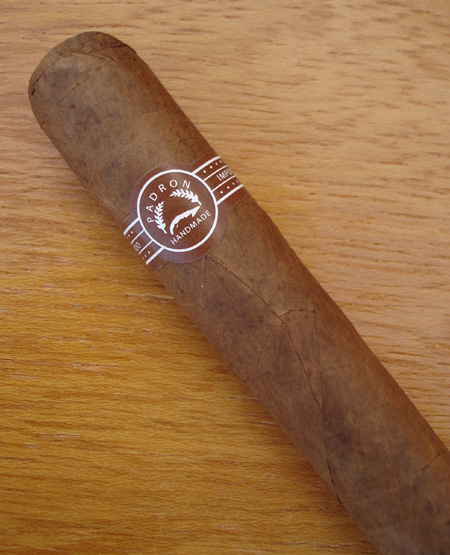
Padron 4000 Natural

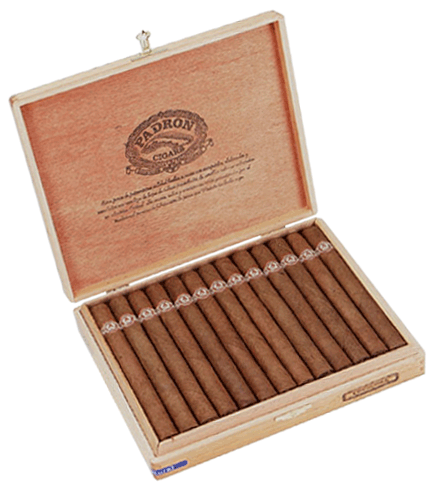
Padron 4000 on Box

Skip the fluff and jump straight to the review!

Cigar Stats
Brand Owner: Padron Cigars, Inc. (also operates under the name Piloto Cigars, Inc.) – Miami, FL
Factory: Tabacos Cubanica, S.A. – Esteli, Nicaragua
Factory: Tabacos Centroamericanos, S.A. – Danli, Honduras
Model/Vitola: Padron 4000 Natural
Size: 6.5 x 54 (Corona Gorda)
Wrapper: Nicaragua
Filler & Binder: Nicaragua
Body: Medium to Medium Plus
MSRP: $6.75 USD
Cigar Insider/Aficionado Ratings:

    90 – April 2000
    87 – November 2001 & June 2007
Padron 4000 Open Box

Fourteen other vitolas available in the traditional Padron line

  • Corticos 4.25 x 35 (short panatela)
  • Delicias 4.875 x 46 (corona extra)
  • 2000 5.0 x 50 (robusto)
  • Londres 5.5 x 42 (corona)
  • 3000 5.5 x 52 (robusto)
  • 6000 5.5 x 52 (torpedo)
  • 5000 5.5 x 56 (robusto)
  • Palmas 6.25 x 42 (long corona)
  • 7000 6.25 x 60 (toro)
  • Panetela 6.875 x 36
  • Ambassador 6.875 x 42 (lonsdale)
  • Churchill 6.875 x 46
  • Executive 7.5 x 50 (double corona)
  • Magnum 9.0 x 50 (giant)

All sizes come in lacquered cedar boxes of 26, packaged with cellophane sleeves on individual cigars. Many vendors list a box size of 25. I am not entirely sure why that is. It may be that Padron changed the box count since the initial release. The Corticos are the only exception packaged in boxes of 30
or tins of 6.

The Padron Story

Sometimes a cigar is just a cigar. That should never be said of a Padron. Jose Orlando Padron has put so much into the cigars that bear his name that both have earned the highest respect from those who know them. Both are Cuban to the core as evidenced by the Padron mantra:

Cuba has no boundaries, barriers or politics. At least not the Cuba we know and love. Cuba is in our hearts. It’s a state of mind. The sun on your face. The smoke that tells your nostrils you are home once again. Cuba is Padron Cigars. Wherever you smoke them.
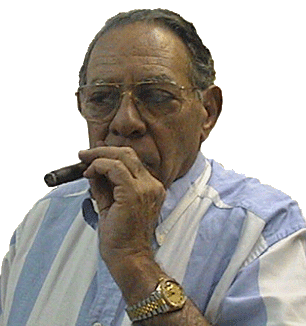
Jose Orlando Padron

Hand-rolled Padron cigars, like the man they’re named after, have roots that reach all the way back to 15th-century Spain. Spanish explorers discovered the Central American tradition of smoking string-tied rolls of select tobacco leaves. In fact, the Spanish word cigarro, from which “cigar” is derived, was probably an adaptation of sik’ar – the Mayan term for smoking. The tobacco and the tradition these explorers subsequently introduced to Spain became widely adopted throughout Europe two centuries later. Cigars found their way to North America with the Connecticut settlement in 1633.

Jose Padron’s personal story ranks up there with some of the great American success stories of all time. The Padron family has been involved in the tobacco industry since the late 1800s, when Jose Orlando’s grandfather, Damaso Padron, emigrated from the Canary Islands to Cuba and began growing tobacco in a small agricultural town called Las Ovas in the province of Piñar del Rio. Born and raised there, Jose was trained at an early age in the ways of tobacco cultivation and the fine art of hand rolling cigars. Just like his father and grandfathers before him.

The political tensions in Cuba following Fidel Castro’s rise and the confiscation of the family’s tobacco plantation in 1961 forced Jose to flee with his wife and young children in tow to the land of his ancestors in Spain. Less than a year later, they came to the U.S. through New York and finally settled in Miami, penniless but full of desire to rebuild their lives and to live in freedom.
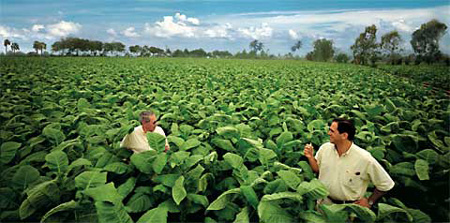
Jose and Jorge Padron in a tobacco field

For over two and a half years, Jose worked an assortment of odd jobs – anything to keep his family fed. One of those jobs was carpentry. You can read an interesting story in the February 2008 edition of Cigar Aficionado about the “little hammer” gifted to Jose and put to very good use in those early days. He managed to set aside a little cash over time, and on September 8, 1964 he launched Padron Cigars with a meager $600 in savings. Jose put everything he owned into his dream: planting the tobacco seeds he managed to secret away from Cuba. Renting a small warehouse in Little Havana, he and a single employee began producing cigars by day, which Jose then sold at night. In 1965, they sold 66,000 cigars. Today, Padron sells more than that every week. Meanwhile, the Padron grandchildren are being trained in the ways of tobacco cultivation and the fine art of hand rolling cigars. Just like the generations of Padrons before them.

Jose Orlando Padron is the Chairman of Padron Cigars, Inc. and Jorge Luis Padron is the President of the company. They operate two production facilities in Central America. Tabacos Cubanica, S.A. in Esteli, Nicaragua, and Tabacos Centroamericanos, S.A. in Danli, Honduras. The difference between the two factories is size and the functions they perform. The Honduran facility functions strictly as a production plant. The Nicaraguan facilities serve many purposes such as warehousing of raw material, sorting and deveining, and fermentation as well as production. There was a rumor circulating early in 2007 that the Danli operation was closing but I have been unable to corroborate that as fact.
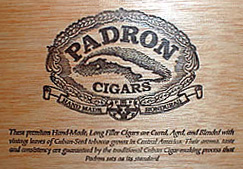
Padron 4000 Box Top

Padron Cigars is one among a handful of companies that control every aspect of the manufacturing process from seed to smoke. Emphasis on quality rather than quantity, is one of the keys to the company’s longevity. Jose says, “We’ve never fallen on the trap like other manufacturers that produce, produce and produce to respond to the growing demand, as if we were making churros.” Production is modest, some four million cigars a year, and Jose has no intention of growing into a cigar giant. He says, “We will follow our family traditions and remain faithful to the course we set years ago, continuing to focus all of our efforts on producing quality and not quantity.” Jorge is quoted as saying, “Our philosophy has always been that it takes years and years to build a strong loyal customer base but it only takes a few bad cigars to lose it. With this in mind, we do not lose sight of what it is that has made Padron successful… our products… not a fancy marketing campaign or story.”

From the Padron website …..
We deliver only the finest, handmade, complex cigars with the flavor of the Cuban heritage out of which the Padron recipe was born. Our primary mission is the exceptional quality of our product, not the quantity produced. As a vertically integrated, family-owned company, we pay personal attention to every detail throughout all steps of our tobacco growing and cigar manufacturing process. Because we strive to give you, the smoker, the confidence that each cigar is the same ….. perfect.

Battling Counterfeits

As with many popular products, counterfeiting for the Padron’s has been an issue. More so with the Anniversary and 1926 lines but they deal with it across the board. In June 1999, the first fake Padron Anniversary cigars surfaced in Nicaragua. In January 2000, police seized more than 3,000 counterfeit Anniversary cigars and 5,000 fake bands from a Los Angeles warehouse. Two months later, a seizure in Miami forced the Padrons to send a letter to retailers warning about the surge in counterfeiting. Undercover agents seized more than $60,000 of fake cigars in a September 2000 raid that took place in New York City.
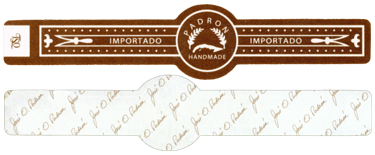
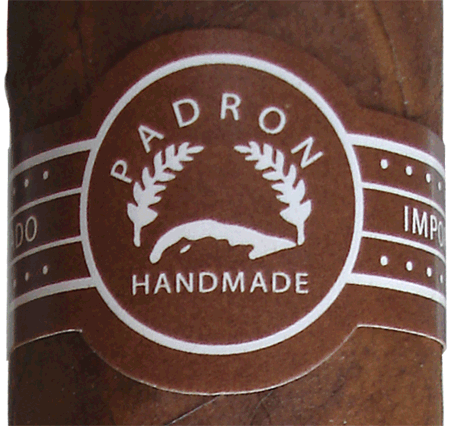
Padron 4000 Cigar Band

“We have to make it as hard as possible for someone to counterfeit our cigars,” says Jose. “We’ve been working on new ways to make the band more difficult to counterfeit and to make consumers feel more secure that they are getting a genuine Padron.” The company has modified its Anniversary boxes with special engraving on the hinges and tey have added an additional numbered band. Padron representatives inform us there was a system to the numbering to help track possible fakes, but it won’t be revealed to the public. Additional measures to hinder counterfeiters are anticipated. For the traditional Padron line, the signature of Jose O. Padron was added, running at a diagonal across the backside of the cigar band.

Cigar Aficionado has published several articles on the Padron’s troubles with counterfeit cigars. They take counterfeiting very seriously and are doing all they can to combat the problem.

Padron 4000 Cigar Band

The Padron 4000

The Nicaraguan blend in all of the traditional Padron line is the same. The difference is in the size and shape which interestingly yield some distinctly different flavors. All are available in both Natural and Maduro covers. The Padron’s listen carefully to their retailers and consumers. As I understand it, the 4000 (and the 5000) released late in 2000 was due directly to customer feedback and requests for larger ring gauge cigars and the 6000 in answer to requests for a torpedo shape. All tobacco used in the line is sun-grown habano, aged for a minimum of two and one-half years.

Just a note of caution. The Natural and Maduro versions of the 4000 are quite difficult to tell apart visually. I have to put them in separate humidors so I don’t get them confused (not that confusing me is so difficult to do).

Bottom line up front …..
For a line of cigars that gets such little attention, the traditional Padron is a quality cigar at quite the affordable price. Rich and flavorful, it makes for an easy smoke anytime. This is regular “everyday” rotation stuff for me! As George E from the Stogie Guys says, “If your Padron smoking experiences haven’t included this line, you should change that. Soon.”
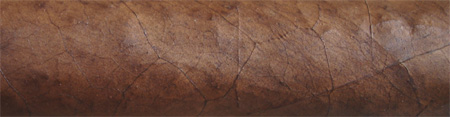
Padron 4000 Wrapper

Pre-light
The 4000 feels quite fat in the hand but nicely balanced. It is well packed with no soft spots but just a bit lumpy. The Colorado brown wrapper has a very dull sheen and a few darker brown spots mottled in. There are a few minor veins but they are pretty small. Aroma from the wrap is a very faint barnyard and from the foot, sweet tobacco. The head is slightly flattened with a single cap which I found unusual since they are hyped as “the heritage of Cuba.” Isn’t that where the triple-cap is tradition?

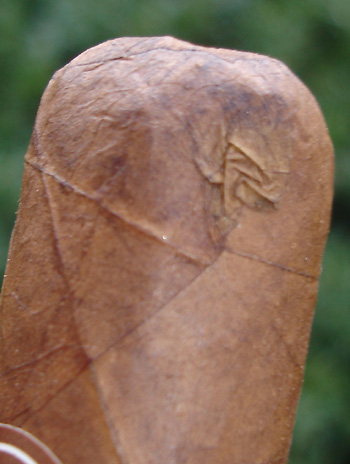
Padron 4000 Head Anomaly

The Padrons claim to fame is quality and consistency but on the smokes I had for this review, one had a double cap and the other two had single caps. Not really consistent or Cubanesque IMO. One had a spot where the wrapper was not very well smoothed at the head (pictured above). None of these things caused anything but visual distraction.

After the clip, a very nice pre-light draw leaves a touch of sweetness on the lips. Now I’m ready!

Padron 4000

The Smoking Experience
The toasting and light come off without a hitch. Very nice aroma for standers by. First couple pulls are a bit raspy, then settles in to a smooth raisiny tobacco flavor with a little twang on the nose. As the stick warms, the core of earthy sweet tobacco continues and yields notes of toasted cedar, leather and spice. Not allot of pepper here. Not allot of flavor complexity either but there is enough rich flavor and aroma to keep me puffing. At the halfway mark, flavors take on a little darker complexion of the same core with the addition of some light coffee bean. The aroma is not unlike the flavor profile and has a slight “twang” to it all the way to the nub.

The 4000 carries a moderate finish with a sweet raisiny edge. Maybe gets a little longer in the last third.

Padron 4000 Ash

Ash is medium gray and held to about 2 inches. Burn is good with no corrections required. Draw was fantastic throughout. Smoke is cool and lots of it.

Although the first couple tugs may have you wondering, what have I got myself into, I’d say this cigar starts in the medium column and only edges past medium-plus right at the nub. No real nicotine kick that I could detect.

Smoketime was about 80 minutes.

My take …..
Consistently tasty and aromatic at an affordable price. Fits me like a glove. I like these gars and plan to experiment with the other sizes to see what they are like. I am a “robusto” kinda guy and the 4000 is a pretty big stick for me!

MSRP is $6.75 per stick. Online they run between $4.75-$6.00 a stick when you purchase a box. Best online price at the moment is the members price at Little Anthony’s Cigar Store. They run 108.45/26 or $4.17 per stick. An incredible price for this premium cigar. You cannot get the members price until you have an order from the site under your belt. They send you the members login (user/pswd) with your first order. I can vouch for the vendor. Quite the conscientious group down there at LA’s.

Smoke Til You're Green Like it … Yes
Smoke Til You're Green Buy it again … Yes
Smoke Til You're Green Recommend it … Yes

What others are saying about the traditional Padron line …..

3 June 1999 thru 31 December 2007
Famous Smoke Shop Reviews – Padron

28 August 2000
7 reviewers – Cigar Weekly Magazine
CW Review: Padron 2000

22 November 2005
fletchman – Cigarzilla
Padron 3000 Maduro

5 January 2006
Matt’s Cigar Journal
Padron #5000 Maduro

23 April 2006
cigarfan – Keepers of the Flame
Padron 5000

18 June 2006
Walt – Stogie Review
Padron – Delicias

9 December 2006
Walt – Stogie Review
Padron Londres

21 December 2006
Kyle Hammond – Club Stogie
Padron 4000

23 March 2007
cigarfan – Keepers of the Flame
Padron Panatela

8 June 2007
Brian – Stogie Review
Padron Londres Maduro

17 August thru 28 October 2007
Cigar Inspector
Padron

3 January 2008
George E – The Stogie Guys
Padron 5000 Maduro

As of 4 January 2008
Top 25 Cigar Ratings (26 reviews)
Padron 4000 Natural
Average Rating 7.72 out of 10

Top 25 Cigar Ratings (41 reviews)
Padron 4000 Maduro
Average Rating 8.46 out of 10

Date Unknown
ProCigars
Padron Cigar Reviews
(a good baseline for all traditional Padron vitolas)

Publications

July/August 1997
Jim Daniels – Cigar Aficionado
The Padron Family: A Nicaraguan Legacy
Seeds of Survival
Despite Wars in Nicaragua and Bombings in Miami, Jose Padron Has Built a Thriving Cigar Business

7 June 1999
David Savona – Cigar Aficionado
Fake Padrons Spotted in Nicaragua

5 September 2000
David Savona – Cigar Aficionado
Fake Padrons Seized In New York

2 March 2001
Mike Marsh – Cigar Aficionado
Padron Adds Second Band To Anniversary Line

April 2001
Top25Cigar Interviews
Jorge and Orlando Padron Interview with Top25Cigar

10 December 2001
Jordan Russin – Cigar Aficionado
Padron Cigar Counterfeiters Sued for $146,000

November/December 2002
CA Staff – Cigar Aficionado
Movers and Shakers II

12 March 2003
Rob Shibata – Top25Cigar.com
Saturday Morning with the Padrons

1 June 2004
David Savona – Cigar Aficionado
Q&A: An Interview With Jorge Padron

13 December 2004
Daniel Shoer-Roth of the Miami Herald – Havana Journal
Little Havana Padron Cigar History
(Padron’s Little Havana Factory is Bombed!)

27 October 2005
Rob Shibata – Top25Cigar.com
Visit The New Padron Cigar Offices

Winter 2005
thecigarWRAPPER.com
Padron Cigars

15 February 2006
James Suckling – Cigar Aficionado
An Interview With Jose Orlando Padron, Chairman, Padron Cigars, Inc.

18 October 2007
David Savona – Cigar Aficionado
Smoking a New Padron (Padron Reserva de la Famila No. 44)
(only available at special Padron cigar dinners – &!@#^&*^$!@#)

RTDA 2007
Video – 0:40 seconds
Jorge Padron
(I think he was really taken with the lady interviewer; watch his eyes; wonder if they hooked up?)

Date Unknown
Cigar Nexus
An Interview with Jose Padron Sr., Padron Cigars – Part 1

Date Unknown
Cigar Nexus
An Interview with Jose Padron Sr., Padron Cigars – Part 2

Why even Rush Limbaugh recommends Padron Cigars!


… lucky7

“It has always been my rule never to smoke when asleep,
and never to refrain when awake.” (Mark Twain)

JFR – “Just For Retailers” Corona Gorda

jfr.jpg

I was trolling for goodies in a local cigar shop the other day and happened to notice an unfinished crate crammed inconspicuously into the corner under some big-ticket Ashtons. The box was filled with toro sized cigars. I didn’t see a brand advertised, and they didn’t have bands. What they did have was alluringly oily wrappers, beautifully rounded heads, and triple caps finished with tight neat pig tails. And the feet were flagged. Sitting nicely in the box they looked like a bunch of shoeless orphans getting ready to go to church.

When I asked after their pedigree, the counter guy said “They’re called JFRs. Four something a stick. You can hardly buy a cigar for four bucks.” This was not exactly a glowing endorsement, but they looked sweet, and yeah, the guy is right. Four bucks is not much for a handmade cigar these days.

JFR stands for “Just For Retailers,” and they mean it. Don’t look for them online. They’re made by Tabacalera Tropical, and originally they were blended by none other than Jose “Don Pepin” Garcia. Or so the story goes.

Pedro Martin successfully escaped the Castro regime in the early 60’s and subsequently spent almost two decades in the American tobacco industry before he entered the cigar market with Tropical Tobacco in 1978. Martin has produced cigars at various times in Cuba, the Dominican Republic, and Central America, and has had his hand in the making of brands as diverse as Avo and Ashton (at Tabadom) and the current stable of Tropical blends like Lempira and Indianhead.

“Don Pepin” Garcia’s first employer after his exodus from Cuba in 2001 was Eduardo Fernandez’ Aganorsa in Esteli, Nicaragua — the same Aganorsa which in 2002 acquired Martin’s Tropical, which at that point became Tabacalera Tropical. It seems most likely that if Garcia blended the original JFR, it was during this time. And the fact that Fernandez is still Garcia’s primary tobacco supplier lends the JFR blend an even darker shadow of Pepin ancestry. But no birth certificate.

Tropical doesn’t acknowledge these cigars on their website, and an email for information was unsuccessful as well, so I remain unsure of the JFR’s constitution and provenance. The word on the street is that these are made in Honduras with a Nicaraguan corojo/criollo blend. After smoking a few of these, that sounds quite plausible. There are reportedly four sizes: robusto, toro, supertoro (corona gorda) and torpedo.

The wrappers on these cigars are really attractive — a nice sheen of oil enhances a slightly toothy surface throughout. The few I’ve smoked so far have been competently constructed, though one had a significant soft spot and uneven roll. Despite this it drew well and burned without a hitch.

The JFR introduces itself with a spicy but smooth flavor; it’s not as peppery as a Pepin, but it has that Nicaraguan bite. The base flavor is leathery with spicy accents. Over the course of the cigar this flavor creeps along and builds while the smoke texture gathers weight and grows from medium to full in body. The aroma of this cigar is somewhat sweet and combines really well with the leathery foundation.

About halfway through this smoke I sensed the strength beginning to sneak up on me and I noticed a little harshness on the throat. The spices get darker at this point, more peppery, more Pepiney. There are some coffee flavors at this point, and maybe a little hazelnut on the nose. By the last third the smoke is very rich, quite strong and the harshness begins to mount. I normally put the butt to bed at this point.

More than a Pepin blend, this one reminds me of Illusione. Either that or a St. Luis Rey Regios. It’s not as complex or as refined as the Illusione (I’m thinking of the 888) and it’s bolder than the Regios, but there seem to me some similarities. If you told me these were Illusione “rejects” I might just believe you.

Rejects or not, they’re decent smokes for $4 or less. The counter guy undersold these, but they appear to sell themselves just fine.

-cigarfan

Oliva Serie V Torpedo

 Oliva Serie V Torpedo

Skip the fluff and jump straight to the review!

Cigar Stats
Brand Owner: Oliva Cigar Company – Miami, FL
Factory: Tabacalera Oliva S. A. (Tabolisa) – Esteli, Nicaragua
Model/Vitola: Oliva Serie V (Ligero Especial) Torpedo
Size: 6.0 x 56
Wrapper: Nicaragua (Habano Sun Grown)
Filler & Binder: Nicaragua (only specially fermented Jalapa Valley ligero)
Body: Medium to Full
MSRP: $6.75 USD
Cigar Insider Rating: 94 (September 2007)
Cigar Aficionado Rating: 94 (December 2007)
Cigar Aficionado Rating: 93 (2007 Top 25 List – January 2008)

Six other vitola sizes available

  • Double Robusto 5.0 x 54 (robusto grande)
  • Belicoso 5.0 x 54
  • Double Toro 6.0 x 60 (toro grande)
  • Special V Figurado 6.0 x 60
  • Lancero 7.0 x 38
  • Churchill Extra 7.0 x 52

All sizes come in dark lacquered cedar boxes of 24, packaged naked with no cellophane sleeves. The Lancero is the exception packaged in boxes of 36. Although I have not seen one, Cigar Insider states the Serie V also comes in a culebra size available exclusively at special events.

The Olivas

The Oliva Family has been growing tobacco for a little over 120 years. Melanio Oliva first grew tobacco in Pinar Del Rio, Cuba beginning in 1886. His growing operations were suspended while he fought in Cuba’s War of Independence. On his return, Melanio resumed his operations and in the early 1920’s his son Hipolito took over. Hipolito cultivated the Oliva family fields for several decades but as Cuba became over-run by communists, the tobacco landscape changed. Hipolito’s son, Gilberto Sr., was born literally across the street from Cuba’s Hoyo de Monterrey factory and following in his fathers footsteps, that is where he first worked in Cuba’s tobacco industry. When Gilberto, Sr. took over the family’s business he shifted from growing to brokering tobacco. In the early 1960’s the pressure in Cuba became unbearable and Gilberto, Sr. left in search of growing conditions that would produce that distinct Cuban taste. His travels took him to Honduras, Panama, Mexico and even the Philippines before he finally found his desired fertile ground in Nicaragua and today the Oliva Family is Nicaragua’s second largest grower of Cuban-seed tobacco.

In 1984 Gilberto, Sr. decided it was time to expand into cigar making for other brands and in 1994 began to produce the first Oliva Family cigar line. After success with their frontmarks in the USA, last year the Oliva’s began selling their cigars in Europe and today Oliva lines are enjoyed around the world. Business is booming!

Oliva Family Members
The Oliva Family.
(From left to right, Jeannie, Carlos, Gilberto, Sr., Jose and Gilberto, Jr.)

Management of Oliva Cigar Company activities is still very much a family affair with Gilberto Sr. overseeing growing, curing, and fermenting operations and Gilberto, Jr. deeply entrenched in blending. Cigar rolling falls under the direction of Carlos. Jeannie and Jose manage marketing, customer relations and distribution operations from the Miami office.

The Oliva Serie V

The Oliva’s have been listening to their customers asking, “Where’s the beef? Love the quality of your cigars but we need more power!” Finally their answer is ready. With a soft-release in June 2007 and official release at the 2007 RTDA the buzz on the Serie V has been high volume. Vice President of Operations, Jose Oliva describes development of the Serie V blend as the most challenging undertaking the company has ever embarked upon. In his opinion, a cigar smoker should feel the strength of a cigar in the stomach and head, not in the throat. Striking the right balance of potency with ultimate smoothness was the goal.

With all of the tobacco for the Serie V grown on Oliva Family Farms in Nicaragua it is the strongest cigar they have released to-date. With maximum production anticipated at 750K per year due to limited availability of tobaccos, they will be quickly be at that level and following a Cigar Aficionado rating of 94, it will be a challenge to stay up with demand. I can see the price on these puppies going through the roof.

Cigar.com claims, in order to be an authorized Serie V dealer, tobacconists must undergo special training from Oliva representatives aimed at providing insight to the sheer power of the blend. This cigar only contains ligero leaf (the strongest variety of tobacco), but is blended so the initial taste doesn’t overwhelm the enthusiast with in your face power. In other words, the Serie V is very strong but can still be enjoyed by individuals who prefer medium bodied cigars. Upon lighting, many may believe the Serie V is medium in body, but as Jose Oliva himself has explained, if you exhale through the nose you will realize the true strength of the Serie V.

Oliva Serie V Cigar Band

Cigar Insider released a vertical tasting of the entire line in September 2007 with the average rating weighing in at a whopping 89.7 points. The Torpedo led the pack with an individual rating of 94 points. CI claims, “The Torpedo was an outstanding cigar, with aesthetics, strength, complexity and many flavors that kept the cigar interesting and balanced.”

Cigar Aficionado ranks the Oliva Serie V Torpedo as #4 on the list of the top 25 smokes of 2007. Impressive!

From the website …..

 Oliva Serie V Website Photo

Serie V is a complex blend of Nicaraguan long filler tobaccos. Blended with specially fermented Jalapa Valley ligero, and finished with a high priming Habano Sun Grown Wrapper (high priming being closer to the top of the tobacco plant and therefore soaking up more sun). It is blended to deliver full body taste while maintaining an unparalleled smoothness. This flavorful blend exhibits complex tobacco with rich coffee and dark chocolate tones. A subtle and well balanced spice is present throughout.

Bottom line up front …..
Although not the powerhouse I was expecting, the Serie V is a beauty to behold and a premium quality full flavored smoke with balance and finesse sure to become a favorite for many cigar smokers. Definitely the richest and strongest Oliva Family cigar on the market today! My only concern is if the Oliva’s can keep up with demand and thereby maintain the reasonable price-point. As of this writing they are very hard to find in-stock.

Pre-light
The Serie V sports a silky smooth colorado maduro wrapper with no veins to speak of and a small tooth evident over its length. The chubby torpedo is a very solid, tightly packed 56 ring with the conical cap packed too tight IMO. Handsome to look at, the stick feels very nice in the hand. Scent from the wrap is very mild tobacco except toward the foot where there was a slight touch of barnyard. A good whiff of the foot tingled the olfactory and caused a tobacco sneeze. The bunching at the foot shows a healthy amount of dark ligero as advertised (about now the drooling has begun!).

Oliva Serie V Bunch

One of the three cigars smoked for this review had a lengthwise crack in the wrap about one and one half inches long located about a half inch from the foot. It caused no burn problems but was unsightly and worrisome. Not sure the stick was properly cared for prior to coming into my possession. This always concerns me when a review is in the offing. I would rather smoke the best sticks and offer a review on the merits. That is part of the reason I smoked three Serie V cigars prior to writing the review. The other part is I just love smoking cigars and probably would have smoked five if they were around.

The clip took some hand strength as I had anticipated. On the first stick I removed about a half inch (half of the torpedo cone) and the draw was very tight. Flavor in the pre-light draw was interesting with a light sweet grass and nuts on the palate. After lighting, the first few pulls on the draw were still too much work so I clipped a bit more (toward the cap end just below the shoulder of the cone) and the draw opened up to perfect. Don’t be shy when clipping this one and you will be rewarded with a fine draw. Remove most of the torpedo cone.

The Smoking Experience
The aroma from the toasting foot is exquisite. Due to the amount of ligero in this cigar, the lighting takes a little more effort. Toast the foot really well before beginning to pull for the light. Initial pulls were very smooth and creamy. So much so I found myself thinking, where’s the bang associated with ligero. No worries. It was coming. I just had to exhibit a little patience. Like the pre-light draw, initial flavors were of sweet grass and nuts with a little pepper on the tongue. About a quarter inch in the ligero twang on the nose arrived in force. At the one inch mark the blend smoothes out to a base of creamy toasted hardwood and earthy leather with slightly sweet notes of vanilla/caramel with some spicy nuances. Over the first 2 thirds the flavor is consistent and then builds in intensity with the entrance of some cocoa and espresso flavors. The finish starts crisply short but builds over the length of the cigar to a long one with distinct flavors of dark, unsweetened chocolate and black coffee.

The ash is light gray and very smooth. Stack of quarters effect is barely visible. It held for me to about two and a half inches and took several solid taps before it fell. Interestingly, the ash is the same color for the wrap and the filler indicating well fermented tobaccos.

Oliva Serie V Ash

The burn is slow and cool with a few bumps developing in the burn line but no torch corrections necessary. This cigar is a dream for smoke rings as the volume of smoke is incredible.

In addition to the wrapper anomaly discussed above, I had other wrapper splits and unraveling in all three cigars for this review. Amazing to me, none of the problems caused the burn to waver but they did detract a bit from the smoking experience. I’m not sure this isn’t a phenomena typical to habano wrappers in general. I’ve had several treat me this way. Just a very sensitive and fragile wrapper leaf.

Oliva Serie V Wrapper Split

Smoketime ~85 minutes.

My take …..
I find Oliva Family cigars are generally mild to medium and a little less potent than I prefer. Although the Serie V is most definitely stronger, it was not the monster I was expecting with all the hype and the “Ligero Especial” moniker. I would call it medium to full bodied but for $5, a fine flavorful smoke. I enjoyed it very much. The $5 price tag must have carried allot of weight in CI 94 rating which was a little high IMHO. Most definitely a quality smoke for the price and I can see it becoming very popular in regular rotations if the Oliva’s production can match demand. It will be interesting to see how that plays out.

MSRP is $6.75 per stick. Best online price at the moment is Cigar Place at $119.95/24 or $5.00 per stick but as of this writing they are out-of-stock as is the case most everywhere. This is a fine cigar and with the high CA/CI rating don’t hesitate to pull the trigger if you find them available.

I had an online vendor call me and say “We don’t know how your order for these snuck through since we are currently out-of-stock. You must have pressed the submit button just before we updated the website.” @*&#*^^^!%@$$#!!

Smoke Til You're Green Like it … Yes
Smoke Til You're Green Buy it again … As long as the price remains reasonable
Smoke Til You're Green Recommend it … Yes

What others are saying about the Oliva Serie V …..

20 May 2007
Walt – Stogie Review
(Video Review) Pre-release Oliva Serie V Ligero Especial

1 June 2007
Topshelf14 – Topshelf Cigar Review
Oliva Serie V – 6 x 60

4 July 2007
Jesse – Cigar Jack
Oliva Serie V Figurado Cigar Review

24 July 2007
Brian – CigarBeat
V For Vigoroso: The Oliva Serie V Ligero Especial Review

17 September 2007
Walt – Stogie Review
Oliva Serie V Ligero Especial – Lancero

3 November 2007
Matt’s Cigar Journal
Oliva Serie V Double Robusto

5 November 2007
Multiple Reviewers – Cigar Review
Oliva Serie V Lancero

3 December 2007
Jesse – Cigar Jack
Oliva Serie V Lancero Cigar Review

Multiple Reviews – Dates Vary
Famous Smoke Shop
Oliva Serie V Ligero Cigar Reviews

Cigar Aficionado Forum on Oliva Serie V

Date Unknown
Dr. Mitch Fadem – About.com
Review of Oliva Serie V Ligero Especial Cigars

Top 25 Cigar – As of 7 January 2008
Oliva Series V Cigars Torpedo
11 reviews
8.18 out of 10

Publications

5 November 2007
David Savona – Cigar Aficionado
Sharing a Smoke with Jose Oliva
(Nice short video with Jose Oliva at the bottom of the article)


… lucky7

“It has always been my rule never to smoke when asleep,
and never to refrain when awake.” (Mark Twain)