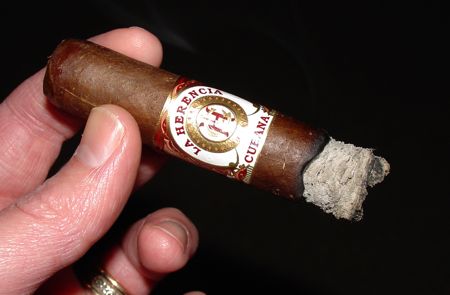
Casa Fernandez Robusto

CasaFernandez

It’s safe to say that the Casa Fernandez cigar is the flagship blend of Casa de Fernandez, the new face of Tabacalera Tropical. The cigar was introduced in 2007, before the company’s name change, but it hasn’t gotten as much press as I would expect. The lancero has received some attention on the cigar forums (mostly positive) but only a few of the review sites have taken a serious look at the blend. After smoking this cigar, I don’t think that it’s a quality issue. The fact is that this cigar is not terribly easy to find on the shelves.

It looks like the distribution of this brand is spread worldwide, so maybe it’s easier to find in Europe or Asia than on American retail shelves. I had to track these down online.

The Casa Fernandez features a wrapper that is dramatically described as “Super Premium grade ‘A’ 2006 Sun Grown Corojo.” It is of course an Aganorsa grown Nicaraguan leaf, as are the binder and filler leaves.

Five vitolas are listed as currently in production, per the Casa de Fernandez website:

  • Robusto – 4 1/2 x 52
  • Torpedo – 6 1/4 x 52
  • Toro – 6 1/2 x 52
  • Lancero – 7 1/2 x 40
  • Salomon – 7 1/8 x 60  (the Salomon is also available in Ecuadorian Connecticut and Nicaraguan Maduro)

Construction

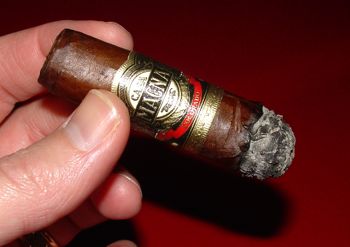
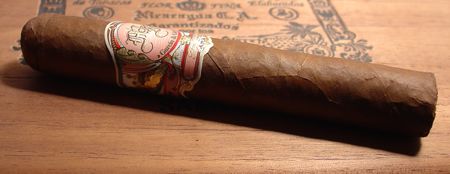
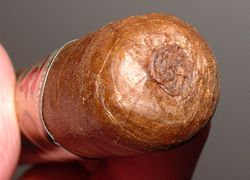
This robusto seems squat by comparison with traditional 5 x 50 robustos; it’s slightly truncated and a little overinflated, but handsome nevertheless. It feels a little light in the hand, but the pack is firm with no soft spots. The pig-tail cap is mashed into the head of the cigar, making a little swirl that is easily overlooked.CasaFernandez2 (The same technique is used to finish the Particulares cigar.)  The triple cap is otherwise extremely well executed. The wrapper is dark, glossy and attractive, despite being a little rough. The corojo cover leaf seems to be very thin, allowing the  texture of the rough binder leaf to show on the surface of the cigar. One sample arrived with a small v-shaped crack that posed only a cosmetic threat.
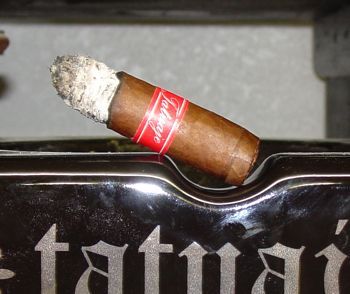
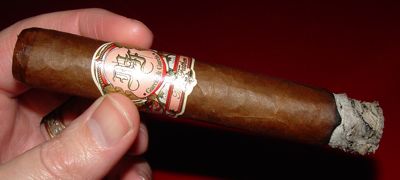
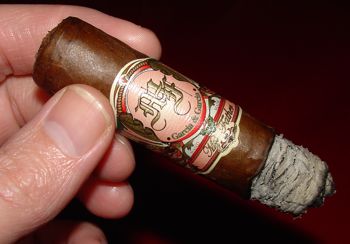
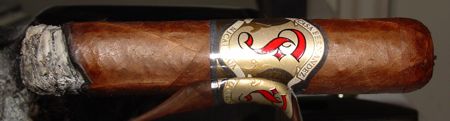
The Casa Fernandez burns well with an open draw.  The ash is dark and little bit crumbly — typical of Aganorsa leaf, and not really an issue. CasaFernandez3One odd thing I noticed was that the ligero centered in the middle of the cigar seems to flame out as the cigar burns, creating the illusion that the cigar is tunneling, when it really isn’t. I would say it was my imagination, but it happened with both of the cigars I smoked.

Tasting Notes

The smoking characteristics of the Casa Fernandez are quite similar to the Particulares, but a little heavier. There is more pepper and more punch to this cigar, especially in the back half.

The first few puffs of smoke are smooth in texture but are served with plenty of black pepper. It doesn’t come out as trenchantly as say, the Don Pepin Blue, but it isn’t shy either. The aroma is corojo all the way — caramel sweetness over an underlying cedary base.

The pepper dies down after the two-thirds point and the flavor becomes less sharp. An astringent woodiness takes over from here, accompanied by a pleasant and familiar nuttiness. The aroma continues on the same track as before, but replaces some of its sweetness with a stronger pungency while remaining woodsy and cedar-like.

The last part of the cigar turns up the heat. Pepper returns on the palate and the aftertaste becomes tannic. While still tasty, the smoke becomes a little too aggressive for my taste. I let it smolder on anyway to enjoy the aroma, hoping the neighbor doesn’t think I’m nuts for waving a cigar butt under my nose instead of just smoking it. Corojo is good stuff.
CasaFernandez4

Conclusion

The Casa Fernandez robusto is a fine smoke, but it loses some of its finesse in the home stretch. It’s similar to but more complex than its sister blend Particulares, but it’s also slightly more expensive. Ringing in at around 8 USD per stick, it’s not over the top for a “super premium” smoke, but I’d think twice before picking the Fernandez over Particulares.

Final Score: 87

Other Thoughts

Brian finds the Torpedo to be boxworthy for the Stogie Review

Rob digs the robusto but finds the price discouraging for PuffingCigars.com

J. Fuego “Casa Fuego” Belicoso

CasaFuego

Jesus Fuego is perhaps best known for his work with Rocky Patel’s 1990 and 1992 Vintage blends, but he has come into his own in the last couple of years with Tabacos S.A. and his “J. Fuego” line of cigars.

Like so many other premium cigar makers, Fuego’s family tree stretches back several generations to the fertile soil of Pinar del Rio, Cuba.  His family has been in the tobacco growing business since the 1870’s, in a part of Cuba that would eventually become known as “El Corojo.”  The Fuegos were mostly tobacco producers for the factories in Havana, but Jesus took it a little further along the production line to become an expert in post-harvest tobacco processing.corojo

Fuego holds a master’s degree in agronomy and wrote his thesis on tobacco fermentation after studying at Havana University and receiving training at the Fabrica de Tobacos Francisco Donatien, where he worked on the emerging new Cuban marca called Vegueros.

In the late 90’s he left Cuba and arrived in Honduras, where he went to work for Camacho’s Julio Eiroa.  Later on, while he was working for U.S. Tobacco, he impressed Rocky Patel, who at the time was in the development stages of the blends that would become known as the Vintage 1990 and 1992. Fuego eventually would become Rocky’s “right-hand man,” not only assisting in the blending of his cigars but also supervising many of his factories.  Along the way he would also help to blend my favorite RP blend, the Sun Grown, and the Olde World Reserve as well.

But in late 2006 Fuego decided to step out on his own. With the help of the ubiquitous Plasencia family (the Fuegos and the Plasencias have a long history as neighbors going back to the nineteenth century in Cuba) Fuego introduced his inaugural J. Fuego cigars: the Natural, and the Gran Reserva Corojo No. 1.

Since then he has lent a hand in several other blends, both for his own J. Fuego brand and others such as Defiance by Xikar, a house blend for Famous Smoke (Royal Nicaraguan), and this one for Cigars International: Casa Fuego.Corojo3

The Casa Fuego is made in Honduras with Nicaraguan tobaccos: the wrapper is Nicaraguan Habano, while the binder and filler are corojo. Fuego has a long history with corojo — in fact, his family’s farm in Cuba was called Corojo No. 1 — and the fact that his first employer in Honduras was the Eiroa family says something as well. This guy really knows corojo.

Casa Fuego is available in five sizes:

  • Corona (5.5 x 46)
  • Double Corona (7 x 50)
  • Robusto (5 x 50)
  • Toro (6.5 x 52)
  • Belicoso (6 x 52)

Construction Notes

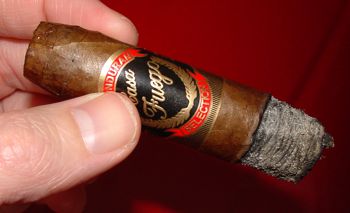
The Casa Fuego Belicoso features a slightly oily golden brown wrapper that shows a nice amount of fine tooth. The roll is a little bit spongy and irregular in places, particularly toward the head of the cigar, but once cut the draw and burn are perfect. These sticks are box pressed, but not square. After they have been in the humidor for a couple weeks the press is barely noticeable.

The ash is a solid dirty gray with lots of white speckles, a common occurrence with grainy wrapper leaf. The toothiness of this wrapper is quite reminiscent of Cameroon, as are some of the other smoking characteristics.

CasaFuego2

Tasting Notes

The Casa Fuego starts up with that typically tannic Nicaraguan flavor — woody, with a smattering of black pepper. The finish is dry and leaves an acidic tang on the tongue. The aroma contributes a sweet note of caramel and blends well with the drier flavors on the palate.

The sharp nature of the smoke softens up a bit after a couple inches. The pepper drops off and is replaced by cocoa or mild coffee, which combined with the residual tannins might come across as bittersweet chocolate. The aroma is spicier at this point, cedary with some mint, which strikes me as very Cameroonian.

The last third turns up the nicotine a couple notches, giving this medium-weight cigar a little more punch. The aroma is almost piney as the ash approaches the band. The aftertaste gets heavy and a bit tarry if rushed, so take it easy across the finish line.

Conclusion

Aside from the fact that the Casa Fuego is a very well made and pleasant cigar, what impresses me the most is the price. The retail price is around 5 USD, but these can be easily had for half that on Cigarbid, the auction arm of Cigars International. For less than three dollars this is a great everyday cigar. Even though it isn’t a spectacular smoke, dollar for dollar this is one of the better buys I’ve made this year.

CasaFuego3

Final Score: 85

Tatuaje Havana VI Angeles

TatVIAngeles

I first reviewed the Tatuaje Havana at the end of 2006, not long after the blend was released as a medium-bodied alternative to the standard Tatuaje line.  Since then I’ve continued to enjoy this line as well as it’s more powerful mutation — the  Havana VI Verocu, which is also a good, but very different smoke.

Since I am routinely exiled to the back yard for my evening smoke and the temperature has been hovering around 105 degrees, I find myself reaching for smaller vitolas. That’s where the Angeles comes in.

There are six models of the Tat VI — the first letter of each size forms an anagram of the name of one of Pete Johnson’s dogs, “Havana.”

  • Hermosos – 5.625 x 46
  • Angeles – 4.625 x 42
  • Victorias – 6 x 38
  • Artistas – 6.125 x 52  (torpedo)
  • Nobles – 5 x 50
  • Almirante – 7 x 47

The Angeles is of course the  petite corona size.  Just the right size cigar for when the mercury drops below the century mark around 8 pm this time of year.

As is the case with most Tatuaje cigars, this one is a Nicaraguan puro and is made in Esteli by Tabacalera Cubana. The wrapper is Pepin’s familiar Corojo 99.

TatVIAngeles2

Construction Notes

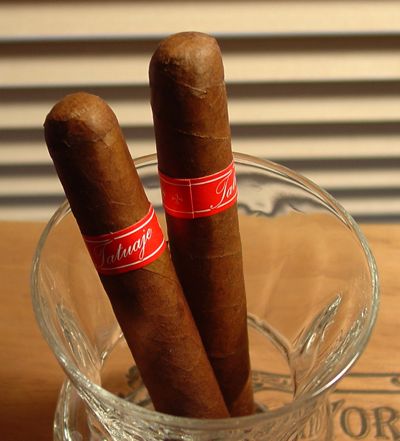
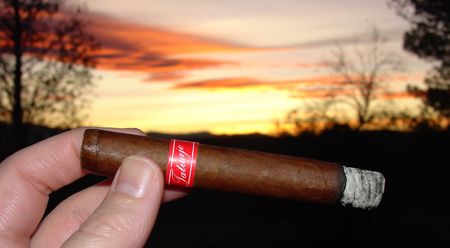
Almost every cigar to leave one of Don Pepin or Jaime Garcia’s factories is picture perfect, and this little corona is no exception. The wrapper is a slightly oily colorado maduro, almost rosado in the fading light, and the tight triple cap is the envy of the industry. The only flaw in this cigar is a prominent vein running down the back of the stick, straight as a stocking seam in one of those classic pin-ups.

The draw is good, and the burn is fine. All cigars should made as well as these.

Tasting Notes

The cigar makes its first impression with that trademark Pepin twang. I’d like to think that I could identify this flavor and aroma anywhere, because this Corojo 99 is just that distinct.  The aroma is slightly sweet, somewhat caramel-like, and this is counterbalanced by a mild woody tannic flavor on the palate. The overall effect is earthy at first and gradually becomes more leathery as the stick burns down.

The peppery flavors I associate with Tatuaje are toned down in this blend, and they don’t make an appearance here until the second half of the smoke. This peppery note never really makes a solo appearance, but it does quietly simmer beneath the bitter-sweet melange above.  The last half-inch or so gets a little hot and starts to taste graphitic, but slow down and it can easily be enjoyed to a point well below the band.

Conclusion

Even in the triple-digit heat I find myself nubbing these little guys.  The Tatuaje Havana blend is a nice alternative for medium-bodied smokers, and I think this is my favorite vitola in the line. It’s all killer, no filler, as the kids say.

Once again though, the price is not ideal. These retail for around 5 or 6 dollars a stick. Not bad really, but not fantastic either. Still, if you’re in the market for a medium-bodied petite corona with real distinction, this is one you’ll have to consider.

Final Score: 90

TatVIAngeles3

Other Reviews of Note

Stinkie says the Angeles has it all on Cigar Beat

Rob (from PuffingCigars.com) finds the Angeles a clean, but less spicy smoke than others in the line.

Scott reviews the Almirante for Cigar Command and says EVERYONE should try this cigar at least once.

Patrick S. hedges his bet on the Nobles for The Stogie Guys.

ITC 10th Anniversary Salomon

ITC10th

Rocky Patel is known as the hardest working man in the cigar business — he’s constantly on the road, hobnobbing with cigar execs and enthusiasts alike — and he still manages to find the time to create numerous new blends. The Indian Tabac label was his first (the Rocky Patel label wasn’t launched until 2002) and it is this, his entry into the world of cigar making, that he is celebrating with the ITC 10th Anniversary. Granted, I’m a little late to the party. Indian Tabac debuted in 1996, placing the 10th Anniversary in 2006. But since the cigar itself was late (it wasn’t released until 2007) and the Salomon is a recent addition, I’m going to make my late entrance without apology.

Rocky actually developed two “anniversary” cigars: this one, and the Rocky Patel Decade. Like the Indian Tabac label, the ITC Anni blend was developed first, though at the time it was supposed to be for the Decade. The blend for the ITC, in Rocky’s opinion, turned out to be more elegant and refined, so he switched labels. The original ITC blend became the Decade, and the later blend became the ITC. So what we have here is the original Decade, which is now the ITC 10th Anni. Got it?

The Salomon vitola is a large and unusual figurado that flares at the foot and tapers in the other direction to a torpedo head. The format is similar to Fuente’s Work of Art or Short Story, but much bigger — this one measures 7 1/8 inches in length and has a 58 ring gauge at its thickest point. Usually only a couple of rollers in each factory know how to roll a cigar with proportions as strange as these; in Cuba they are frequently rolled without molds, making the process even more challenging. Like most vitolas this one has a Cuban genealogy, though Salomones have recently become more popular in the Non-Cuban world.

The ITC 10th Anniversary is made in a small Esteli (Nicaragua) factory that Rocky describes as once being “an upstart factory that was making inexpensive bundle cigars.” That factory has obviously come a long way, in terms of skill as well as tobacco quality. In addition to the ITC 10th they also produce the Rocky Patel Summer Collection and other “very special limited projects.”

The Salomon is not easy to find, but the other sizes are readily available:

  • Lonsdale: 6.5 x 44
  • Robusto: 5 x 50
  • Toro: 6.5 x 52
  • Torpedo: 6.5 x 52

I was surprised to learn this is a Nicaraguan puro, because it doesn’t smoke like one. The wrapper is Nicaraguan corojo, and the filler and binder is a blend of tobaccos from Nicaragua’s premier growing regions: Esteli, Condega and the Jalapa Valley.

ITC10th2

Construction Notes

This is an impressive looking cigar. It takes a large leaf to wrap a cigar of this size, and this one is a smooth and even claro. The foot is nicely finished, though I noticed one small flaw, and the head is tightly wound. The cigar feels light in the hand, but the roll is solid with no soft spots. After clipping about half an inch from the point at the head I found the draw had just the right amount of resistance.

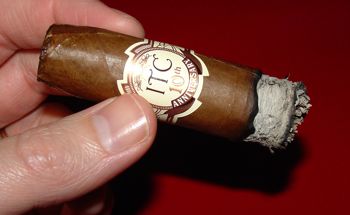
The burn was neither too slow nor too fast, and despite some inconsequential flaking the ash proved to be solid enough. The volume of smoke produced was nicely balanced with the body of the cigar.ITC10thAsh

Tasting Notes

The perfecto “nipple” at the foot of the 10th Anniversary Salamon fires up nicely on a single match and for the first few puffs produces a creamy sweet aroma. The steadily growing cinder quickly reaches the main shank of the stick and the flavor shifts to a light wood with mild tannins and a touch of black pepper.  The texture is very creamy and there are subtle spices of balsa or sandalwood on the nose. The finish is fleeting and there is a slightly dry aftertaste.

The middle section continues the woody theme, but is a little heavier than previously — think oak instead of balsa. The aroma continues to please, bringing an accent of honey and fresh cedar saw dust. The nicotine content here is very moderate; this could be a morning cigar for many (if you have an hour and half to spare after breakfast.)

The last third grows a little more somber. Wood gives way to roasted nuts for a few minutes, and then around the secondary band the flavors pick up some char and become earthier. The finish lengthens and the aftertaste gets dirty. Maybe I was smoking this one a little too fast, but it seemed to go downhill pretty quickly. (It’s easy to see why when you consider that the business end of this stick has been filtering smoke for almost an hour and a half. Some cigars are able to this better than others.)

Conclusion

The biggest surprise about this cigar is how smooth and mellow it is. From other reviews I was prepared for a harsher, more “Nicaraguan” experience. Not so with the Salomon — in fact it’s hard to believe that the wrapper here is really Nicaraguan corojo. I would guess Ecuadorian instead, but multiple reference sources point to Nicaragua.

The ITC 10th Anniversary Salomon scores high for construction and smoothness, though it does lack a certain complexity. That said, there was still enough mild woody spice here to keep me interested over the 90 minute haul.

I haven’t found a source for the Salomon online, but my B&M had these on the shelf for around 8 dollars each. Not a bad price for a cigar of this stature.

Final Score: 90

ITC10th3

Other Reviews of Note:

Jeff reviews the Robusto for Cigar Jack.

Barry gives the Toro an 86 for A Cigar Smoker’s Journal.

George from the Stogie Guys awards the Robusto 3 out of 5 stars.

Walt suspends judgement on the Robusto for the Stogie Review.

Lisa checks out the Toro for Her Humidor.

~cigarfan

Aging Report: Padron 2000 Maduro

Padron2000M

Last summer we reviewed, with help from our friends, the entire range of the standard Padron series.  This was a great exercise in “vertical” comparison, and we had a heap o’ fun doing it.  I squirrelled away a few cigars from that test and last night seemed like a good time to see how they’re coming along. The Padron 2000 fit my time slot just right: about 45 minutes around sundown.

Some cigar makers are able to combine flavor, quality workmanship, and aesthetic appeal all in one sweet cylinder of tobacco. Padron is not one of those cigar makers. The flavor and construction of these Nicaraguan puros is not to be denied, but Padron’s reputation is based on consistency and taste, not good looks. This is honestly one of the ugliest cigars I’ve seen in a long time.

Were it not for the Padron band, this cigar would most likely languish on the retailer’s shelf until the owner was forced to give it away or smoke it himself. Calling it butt ugly is being kind to this stick (aside from the fact that as a cigar smoker I do have a certain affection for butts.)

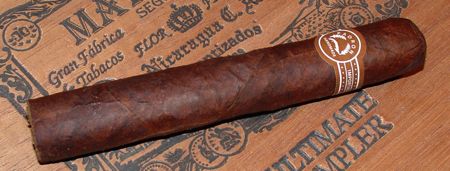
The wrapper leaf is a rich dark brown color — a little lighter than most maduro cigars —  and it has a rough texture. Padron2000MpatchGlue spillage gives it a crusty appearance in places. The cap looks like it was glued on by a three year old, and this particular cigar features a poorly applied patch a little smaller than my thumbnail. The roll is firm, but dented in a couple places. It sort of looks like this cigar was made by a committee of crafty Nicaraguan school children. Or more likely, by a torcedor on Friday afternoon with one eye on the clock.
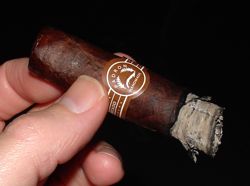
But the draw is good and the burn is fine. And what would you prefer — a gorgeous cigar with deal-breaking construction flaws, or an ugly duckling that performs? Me? I’ll take the duckie.

The aging of this cigar shows in the flavor, which right out of the gate is classic Padron — woody with a touch of black pepper — but it has toned down a little from a year ago.  There’s a hint of that sweet pecan flavor I find occasionally in some Padron maduros, and later on some leather and burnt coffee bean. The finish grows substantially at the midway point, and close to the band the aftertaste takes on a strong taste of char.

Padron2000M2

But all of these flavors seem to be less profound than they were when this cigar was relatively fresh — on the other hand, the smoke is also less aggressive. Compared to the freshies, the aged Padron 2000 maduro is much smoother. I still wouldn’t qualify it as smooth per se, but by comparison it is a much less boisterous smoke.

The burn wavers a little at times, but it corrects itself without prompting from the lighter. Other than that, the construction of this cigar was very good. (It goes without saying that it never got better looking.)

At around 3 USD and change this little maduro is still hard to beat as an everyday smoke, but I think I prefer the boldness of the fresh ones over the slightly more refined character of the more mature stick.

Padron2000M3

Final Score: 85

~cigarfan

Casa Magna Colorado Corona

casa-magna

Like any other publication that purports to recommend or dismiss consumer products,  Cigar Aficionado magazine is sometimes accused of bias in favor of companies that advertise in its pages. This is an argument the premier publisher of cigar news and views can win only by refusing to favorably review its advertisers’ products. If this were even possible, given the wide range of cigars they review, it would probably be financial suicide.  The wisest response is probably no response at all, and that seems to be the magazine’s stance.

My beef with the magazine is not that it’s biased — it’s that only a quarter of the coverage is devoted to cigars. I don’t golf, and I am currently one yacht and one Audi short of living the “good life…for men,” so I have to content myself with a microbrew and a decent smoke every now and again.

But the fact that the magazine is geared toward the stereotypical man of wealth and taste made their selection for 2008’s “Best Cigar of the Year” even more surprising.  It wasn’t a 25 dollar Cuban, a 20 dollar Padron Anniversary, or a Fuente rarity. It was a 5 dollar Nicaraguan cigar made by guys who usually make cigars for regular blokes.

Casa Magna Colorado is the result of a joint endeavor between Manuel Quesada, maker of Fonseca and the founder of MATASA, and Nestor Plasencia, who is possibly Central America’s largest cigar tobacco producer and produces dozens of affordable blends.

Apparently when the maker of Joya de Nicaragua pulled its line from Quesada’s SAG Imports (the U.S. distribution wing of MATASA) it left an opening for a star player. Casa Magna made the tryout, impressed at the call back, and won the part.

Quesada and Plasencia’s newly crowned creation is a Nicaraguan puro utilizing tobaccos from Esteli and the Jalapa Valley regions. Six sizes are currently produced by Plasencia’s Segovia factory in Esteli:

  • Corona – 5 5/8 x 42
  • Gran Toro – 6 x 58
  • Robusto – 5 x 50
  • Torito – 4 3/4 x 60
  • Belicoso – 6.25 x 54
  • Pikito – 4 3/4 x 42

casa-magna-2

Construction Notes

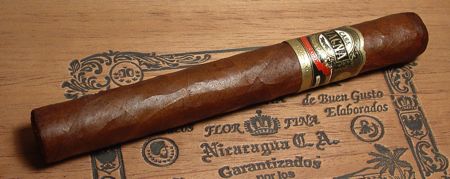
The Casa Magna corona makes a significant first impression: the colorado wrapper on this stick is saturated with oil. It quite literally glistens, enhancing the rich ruddy color of the cigar.  The cap is somewhat flattened, and while not as perfect as a Cuban or Pepin made stick, it is quite presentable. The overall appearance of this cigar is superb. The roll is quite solid and regular.

After clipping the cap I discovered that the draw was a bit tight — in both samples, which were from the same box. Both cigars smoked well enough, but I had to work my buccinators a little more than usual to get a good puff. I work hard to buy good cigars so that I don’t have to work so hard to smoke them, ya know?

The slow burn went a little off kilter from time to time, but never needed correction. The ash was solid but flaked a little.

Tasting Notes

Like many top notch Nicaraguans, this one opens up with a peppery blast that attenuates gradually but doesn’t entirely vanish. The aroma from this outstanding wrapper leaf is sweet and hickory-like. The first couple inches of this cigar reminded me of the Illusione blend, but it’s not quite as sharp tasting or as clean, and it’s not as full bodied. Casa Magna by comparison seems about medium-bodied and it stays that way for the duration.

The cigar transitions through several distinct flavors in the middle section — leather, some woody spice, and a touch of caramel. I really enjoyed the range of different flavors this cigar serves up. The is one of the more complex smokes I’ve reviewed this year.

The last third enters beany territory — coffee primarily — but turns up the caramel accents a tad before it dives back to earth with a peppery flourish. The finish grows substantially and leaves an aftertaste of earth, char, and pepper.

Conclusion

Starting up with that trademark Nicaraguan pepper and marching though leather and spicy wood to a smooth earthy finale, I wasn’t bored for a minute. The sweet hickory-caramel aroma popped up from time to time, adding yet another voice to the conversation. I was really impressed by the complexity of this cigar, though somewhat disappointed with a tight draw. All things considered, I enjoyed this cigar a lot.

The obvious question is whether the Casa Magna is deserving of Cigar Aficionado‘s “Best Cigar of the Year.” I think it’s certainly deserving of a place on the top ten list, though I would be hard pressed to say it was the King of the Hill.

Factor in the price, however, and it could definitely be a contender. For around 5 to 6 USD per stick retail this is a most excellent smoke.  The distributor is discouraging online or catalog sales, so definitely give them a shot if you can snag a few at your local tobacconist. They might not be your Numero Uno, but they may just make your fab five.

Final Score: 89

casa-magna-3

~cigarfan

My Father No. 1 by Garcia & Garcia

myfather

Jose “Don Pepin” Garcia has two cigar factories — the original El Rey de Los Habanos in Miami, and the much larger Tabacalera Cubana in Esteli, Nicaragua. Garcia’s son Jaime operates the Nicaragua factory, and apparently while his father is away he likes to conduct experiments on his own.

According to Cigar Aficionado’s David Savona, Jaime developed the blend for the “My Father” cigar in secret, and it was only after someone in the factory leaked “classified” information that Don Pepin discovered what was going on behind his back.  He proceeded to investigate, and having reduced the resulting evidence to ash he approved of his son’s surreptitious activities. He was also honored by the name Jaime decided to give the cigar: “My Father.”

The Garcias have till now quite effectively used tobacco grown in Nicaragua by other producers, but “My Father” is the first to use leaf grown by Garcia himself, in this case for the filler and binder. (The word on the street is that their wrapper leaf is in still in development.) For the wrapper on this cigar Jaime is using an interesting Habano – Criollo hybrid grown by the Oliva Tobacco Company in Ecuador.

“My Father” cigars are available in four sizes:

  • No. 1 – 5.5 x 52  Robusto
  • No. 2 – 5.5 x 54  Belicoso
  • No. 3 – 6 x 49  Crema
  • No. 4 – 7.5 x 38  Lancero

myfather2

Construction Notes

The wrapper on this cigar is a smooth and creamy looking colorado claro leaf with a few subtle veins. The roll is perfectly regular, with no lumps or soft spots, and the cap is typical Pepin workmanship. The caps on Garcia cigars are probably the finest in the world.

After clipping I found the pre-light draw to be grassy,  hay-like with some spice. The draw is surprisingly loose, but this didn’t affect the cigar’s performance. The burn was slow and mostly even to the end. My only complaint is very minor: the ash had a tendency to crack every inch or so. It never fell off in my lap, but it took no more than a light tap for it to fall into the ashtray.

Tasting Notes

My initial reaction to this cigar was two-fold: first, the tannic flavor simply bursts from this cigar. If you’ve smoked cigars from El Rey de Los Habanos or Tabacalera Cubana, you know what I’m talking about. It’s woody, but lip-smackingly tart. The second thing was that the aroma from this robusto is delicious. I would almost swear it’s DPG’s old Corojo 99, but it’s creamier and a little more fragrant. That trademark peppery taste is in evidence as well, but it seems to be toned down in comparison to other Pepin blends.

Working into the center of the cigar brings cocoa and caramel flavors reminscent of some of Pepin’s lighter cigars: the Red Label and Vegas Cubanas. This cigar is definitely more complex than either of those, with base notes of earth and leather, a mildly spicy but sweet aroma (sort of like sandalwood) and those intermingling cocoa or coffee bean flavors. The finish is lengthy and the aftertaste becomes increasingly peppery.

As I coast into the last section of this “My Father” cigar I’m feeling a pretty good nicotine hit — a breakfast smoke this is not — but it’s not overwhelming. The body of this cigar is a solid medium, maybe leaning towards full. It culminates with an earthy flavor, a long peppery finish and sweet caramel on the nose.

Conclusion

“My Father” is one of the more complex creations coming from the Pepin family. It probably fits in with the more medium-bodied cigars that Pepin makes, but it’s at the head of the class in terms of finesse. The tannic flavor that marks some young Cubans is the highlight of this smoke, and while Habanos enthusiasts age their stock to reduce this effect, it is in fact one of the great qualities of this blend. This is also why Don Pepin reportedly does not believe in aging his product.

This smoke runs around ten dollars per stick from Cigars Direct, which is a few dollars more than the middle-of-the-road blends from DPG that I’m used to smoking, but for the complexity and quality that you’re getting, it’s worth it.

This might be the best cigar coming out of Tabacalera Cubana right now, so I can see why Jose would be proud of his son with this blend. Clearly the acorn has not fallen far from the tree.

myfather3

Final Score: 89

~cigarfan

Other Reviews of Note

Barry gives the No. 2 Belicoso an 88 for A Cigar Smoker’s Journal

Lisa smokes the No. 3 Cremas and finds it “dry as French champagne.”

The Cohiba Club gives the No. 1 Robusto an 86

Tabacos Baez Monarcas

Baez is a small town in the Villa Clara province of Cuba where in 1950 our hero José “Don Pepín” Garcia was born, presumably with chaveta in hand.  (The first infant ever to cut his own umbilical cord!) Tabacos Baez, a newish blend from Tabacalera Cubana, is named for that town.

Of course, Tatuaje’s Cabaiguan was also named for Pepin’s hometown. So was Cigar King’s Sancti Spiritus.

baezI’m sure if we were to scry deeply enough into the crystal ball of Pepinolatry that some clarity could be found — maybe in the fact that the provinces of Villa Clara and Sancti Spiritus are contiguous and were at one time two separate parts of one province called Las Villas, and Cabaiguan is a city within Sancti Spiritus. Or perhaps we’d see that Pepin is a quasi-religious figure in these lands and thus his birthplace is claimed by competing bands of disciples  — or we could just forget the magic carpet ride and smoke a cigar.
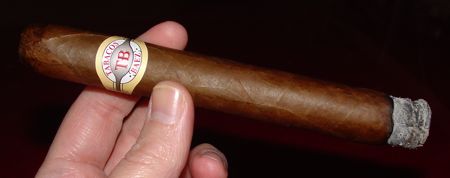
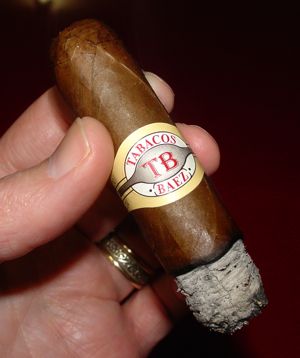
The Tabacos Baez brand name was at one time owned by Pete Johnson’s Havana Cellars, at which time they were the best of the student-rolled cigars coming out of Pepin’s factory.  In a Cigarcyclopedia.com article from July 2007, Pete said:

Tabacos Baez is one of those things we use for factory seconds or student-rolled cigars. We use that brand name for cigars that Pepin has trained people on. If [a batch of student-made] cigars seems good to me, we pack it up as Tabacos Baez. It’s gained a little cult following, since people found out that they are student-rolled cigars and are half the price. It’s made from similar leaves [as Tatuaje]; if a roller knows how to blend them properly, they’re pretty good.

The Tabacos Baez name appears to have passed back to El Rey de Los Habanos, and from the looks of things they are no longer student products. At around 7 or 8 USD retail they aren’t “half the price” either.

There appear to be three sizes available at the moment:

  • Monarcas (toro) – 6.5 x 52
  • Favoritas (belicoso) – 5.5 x 52
  • Robusto – 5 x 50

Some sites state that the wrapper used here is Connecticut Shade, others Ecuadorian Connecticut. I’m inclined to think that it is Ecuadorian Connecticut from the way that the cigar performs — it has that creamy, slightly salty flavor that I usually get from ECCT, and with its wide, almost parallel, veins it looks like Ecuadorian leaf.  It’s also a little darker than typical shade tobacco.

The balance of the tobaccos in this cigar are Nicaraguan, as you’d expect from Don Pepín.

baez2

Construction Notes

This is a stout and well packed cigar that scored perfectly in terms of appearance and roll. The wrapper is a smooth and oily golden brown and the triple cap is a work of art. A gorgeous stick.

The draw is good, but a couple cracks in the wrapper resulted in thin smoke volume at times. The cracks were small and near the foot, so I burned through them in short order. The burn was a little erratic at first, threatening to tunnel (which it did not) and it required a couple of corrections. After the first third these problems unnaccountably disappeared and the stick behaved perfectly.

Tasting Notes

The first half-inch of the Baez Monarca is hallmark Pepin — an aggressive peppery bite, accompanied by a slightly greenish tasting tannin. The wrapper contributes a smooth buttery element — at this point it’s reminiscent of the 601 Connect, also blended by Pepín. But soon the bite subsides and the flavor slides into mild cocoa. The aroma becomes more pronounced, somewhat floral and slightly caramel-like, almost like a mild corojo.

The middle section is quite mild in flavor while remaining a little tannic. The smoke texture is medium in body, mild in strength, and short on action. There are lightly spiced woody flavors here, but unless smooth and uninteresting is your thing you might want to get a book.

The last section returns with the black pepper that kicked things off, though not as intense and less tannic, and a dry finish that begs for a liquid refreshment.

This blend definitely goes through some changes, but they aren’t dramatic ones. The first inch of this cigar reminded me of EO’s 601 Connect — a relatively robust Pepin creation with a Connecticut wrapper — but the rest of this Tabacos Baez reminded me of a knockoff Cabaiguan. The flavors were smooth and familiar, but not as refined –or as interesting — as the Cabaiguan. (It even had some of the construction issues I’ve experienced with Cabaiguan.)

Overall, this is an above average smoke that just about anyone will enjoy. But for the same price (around $7 a stick) or only slightly more, you could be smoking a Cabaiguan Coronas Extra (about $8 each). If that’s the style of cigar you enjoy, as indeed I do, I recommend you compare and invest accordingly.

Final Score: 87

baez3

Other Points of View

The Baccy Bodhisattva meditates on the Monarcas

Lisa selects a Monarcas from Her Humidor

George meets the Quick Smoke deadline with a Monarcas for Stogie Guys

~cigarfan

Troya X-Tra Cetro

troyaxtra

When Britain’s Imperial Tobacco swallowed up California’s tiny Lignum-2 last summer for a paltry $22 million they were primarily interested in Lignum’s budget cigarette line called “Rave.” I’d never heard of Rave, nor have I any interest whatsoever in cheap cigarettes, but I was momentarily alarmed by the news because Lignum-2 owns one of my favorite premium cigars: Troya Clasico.

Imperial’s acquisition means that Altadis USA will take over distribution. When I saw an Altadis sales rep in the B&M the other day I had to ask him about the fate of Troya Clasico. He said “I think that’s the one they’re keeping,” and that the other lines would most likely be re-blended, or dropped and replaced with other lines.

Which makes sense — if they are going to keep any of the lines it has to be the one Don Pepin Garcia makes. It’s the only DPG blend Altadis owns. Even if it isn’t their best seller, it might be their best cigar.

So it was no surprise when I began to see Troya X-tra Cetros for under 2 dollars a stick in clearance sales and on the auction sites.  A premium cigar for under two bucks? Hell, I’ll try it, even if the line is on the endangered species list.

The traditional Troya is a mild-mannered Dominican blend that was unveiled way back in 1985. The X-Tra was released in 2004 in response to the demand for fuller bodied cigars — it’s a Nicaraguan puro featuring a Corojo 99 wrapper and binder surrounding a criollo filler in the core.  Sound familiar? According to the manufacturer, Pepin had a hand in the early development of the X-Tra, though he was not the sole blender.

The X-Tra line is available (for now) in five sizes which are numbered, as all Troya cigars are, in rather mysterious fashion:

  • No. 18 – Robusto
  • No. 54 – Toro
  • No. 63 – Churchill
  • No. 81 – Torpedo
  • No. 45 – Cetro

The first four are standard size vitolas, but the Cetro is a little unusual. At 6.2 x 45 it’s basically a gran corona.

The wrapper is a rich dark colorado maduro with a few veins and a grainy texture. It’s not the prettiest wrapper around, and the cap is nothing to look at either — just a single flap slapped on tight. But the roll is solid and the cap shears off nicely. The prelight scent is horsey.

troyaxtra2

I’ve tried these in batches of five from three different boxes and have found the draw to be a little inconsistent. Some of them had a perfect draw, some were a little tight. The tight ones were still smokeable, if a little annoying.

First light impressions were that this is a nice medium-bodied Nicaraguan style cigar — lots of corojo sweetness over a base of leather. The coffee and caramel notes that are typical of Nicaraguan corojo are the primary players here.

Aside from the minor draw issues that some of these exhibited, construction values are good: most of them burned plumb-line straight, and the resulting ash is strong and tight.

The mid section seems to me a little juicier than the first, almost fruity at times. As it winds down to the close there isn’t too much of a transition and the cigar doesn’t get much more complex: just continued caramel-tinged coffee that combines with the leathery aroma to create a satisfyingly simple package. It’s somewhat similar to an aged Famous Nicaraguan Corojo.

If there’s anything “extra” as this cigar burns past the secondary band it’s a slight burn at the back of the throat — this is typical of  mid-range Nicaraguan cigars, and is quickly cured with a swig of iced tea or cold beer. That’s really the only fault I could find with this cigar.

The Troya X-Tra is a pretty decent smoke at its regular price, but at closeout prices around 50 USD for bundles of 24 it’s fantastic. If you’re looking for a deal on medium-bodied Nicaraguan corojos, this is a nice pickup. Better be quick about it though.

troyaxtra3

Final Score: 88

~cigarfan

La Herencia Cubana Robusto

Made in the Tabacalera Fernandez factory in Esteli, Nicaragua, La Herencia Cubana is a great example of how a Nicaraguan cigar in the style of Padron and Pepin does not have to cost over five dollars a stick.

AJ Fernandez is the man behind brands like Padilla Habano, Man O’ War, and Rocky Patel’s ITC 10th Anniversary cigar. AJ is a relatively young guy, but already we are seeing signs that he has a very bright future in the industry. Recently arrived from Cuba after receiving an education in the business from the legendary Alejandro Robaina, he is currently growing his own tobacco in Condega and Jalapa for filler and binder in his new blends.  He has yet to grow his own wrapper leaf, but his close relationships with Nestor Plasencia (his uncle) and the Oliva Tobacco Company have given Fernandez all the resources he needs to create the next stellar Nicaraguan cigar.

La Herencia Cubana (Cuban Heritage) features filler tobaccos from Nicaragua’s three main growing regions: Condega, Jalapa, and Esteli. The wrapper is a dark Ecuadorian Sumatra that shows a fair amount of tooth for this type of wrapper, and seems to have small chips in it like some maduro leaves do. The roll is excellent: solid and consistent, and the cap is uniform and well made.

My first impression upon lighting this cigar is that it could have been made at another, more familiar, Esteli factory: Tabacalera Cubana. The initial blast of pepper lasts for half an inch or so and then settles down to a still aggressive foundation of wood and earth. There is a bright, almost acidic edge to this smoke that stings a bit on retrohaling. The aroma is sweet and earthy, reminding me a little bit of United Tobacco’s Cubao.

An inch or two into this robusto and a couple more familiar Nicaraguan suspects are at the door: cocoa and his cousin coffee. They blend very well with the sweet earthy aroma from the wrapper. The burn is excellent, requires no babysitting, and the ash holds reasonably well. My only complaint at this time is an unpleasant bite in the back of the throat. It’s not so excessive that it overtakes the character of the cigar, but it does prove a distraction.

The last third delivers a pretty good nicotine hit and the finish grows long and increasingly earthy. The sweetness from the wrapper keeps up with the strength of the blend, a mark of superior blending. After the band the flavor gets a little too dirty for my taste, but lovers of strong Nicaraguan tobacco may just want to nub this one.

My first impression when I lit up the Herencia Cubana robusto was that it was “Pepinesque,” and I think I’m going to stick with that description. It’s not as complex or rich as the average Pepin cigar, but there are definitely similarities. The sweet cocoa reminds in particular of EO’s Cubao, but again, without the same depth of flavor.

On the other hand, the price is a little less than what you’d pay for a Cubao or most of the cigars coming from Don Pepin — around 3 bucks a stick, or less if you catch a good deal. Cigars International occasionally offers this blend in an 8-cigar “flight” which is a great way to sample the line.

If you like the peppery cigars coming out of Nicaragua right now and your taste runs to medium-full rather than straight on full-bodied smokes — and your budget is a little cramped — you would do well to check out Herencia Cubana.