Don Kiki Limited Reserve Brown Label “Botella”

cnv0236.jpg

The starting point for some cigars, the detail you notice first, is the wrapper. For others it’s the construction. For the Don Kiki Brown Label, the first thing you notice is the price. This is a bargain cigar: at 36.99 for a box of 25, or about 1.50 each, this is a decent smoke.

According to the Cuban Crafters website, the leaves for this cigar are aged for three years, and after the cigars are rolled they are aged for an additional three years. The wrapper is a fairly dry colorado maduro, Nicaraguan sun-grown criollo. The binder is Nicaraguan corojo (which gives the Brown Label some strength) and the filler is also Nicaraguan.

Kiki Berger developed the original blend, this one, in 2003. The following year he released two other less powerful lines, the Green (medium body) and the Red (mild to medium.)

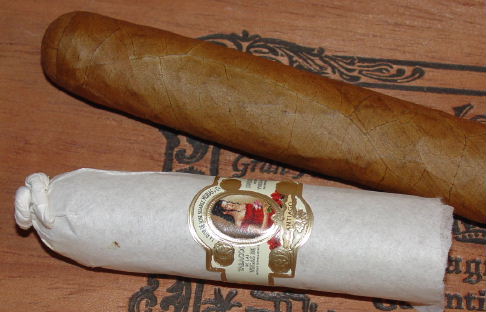
The “Botella” is true to its name and is shaped like a bottle, the kind you might expect a genie to pop out of. It’s short at only 4 and half inches long, and flares to a 48 ring gauge at its thickest point. The foot of this perfecto is finished with a cap-like construction, a narrow piece of leaf wrapped around the foot. I thought this might present some construction problems — it looks like it might easily unravel, but it never did.

The head narrows to about a 32 ring gauge, but it still feels fairly well balanced. This cigar is pressed, so even with its unusual shape it’s still sort of boxy. It’s also a bit spongy with an occasional soft spot. It lights easily with a good draw and burns slowly with a nice volume of smoke.

The main flavor is straight forward tobacco, a little bit earthy, but mostly tobacco. Almost like Virginia pipe tobacco or untreated cigarette tobacco, but stronger. On top of this is a distinctive flavor of chocolate or cocoa. It’s a fairly heavy smoke and at times can be harsh. There’s another flavor in there that is somewhat cloying, a bit waxy, and not exactly my cup of tea. I can’t identify it precisely, but I’ve tasted it before… One of these days I will be able to identify and name all the tastes and aromas of a cigar and where they come from. Alas, that day is not today.

I found I had to touch this one up at least once during the smoke, and none of them burned straight. Not down the side, not problematically, but not straight either.

Overall, I think this is not the best cigar from the Cuban Crafters stable. It burns a little lopsided, it’s a little inconsistent, and it’s a little harsh. But when you take the price into consideration, it’s a full flavored stick that you can toss after twenty minutes with no regrets.

In keeping with my original Pass/Fail system for Bargain Cigars : PASS.

Lovo Robusto Maduro

cnv0235.jpg

I was in my favorite reservation smoke shop a couple weeks ago and came across a couple crates of unbanded cigars that looked pretty good. I thought they might be Rocky Patel Edges. I asked what brand they were and the lady behind the desk said “Lobos”.

That Chuck Norris cigar?

No. What she meant was “Lovo.” Inquiring further, I asked her where they came from. “California,” she replied. Hmmm… that rare and exquisite California maduro. I had to carefully lift the crate and peer underneath to see the Nicaragua stamp. There were two crates of Lovos: square pressed maduro robustos, and some fat torpedos with a delicate rosado wrapper. I thought I’d give the robustos a shot first and picked up three at around 2 bucks each.

I can give you almost no background on this stick, except that it’s made in Esteli. The Lovo Cigars website is enigmatic at best, but it appears that the company is named after Egda Lovo Ramaz, an esteemed Nicaraguan cigar roller. After a little more research, I discovered that Ms. Ramaz is a featured cigar roller at the Las Vegas Cigar Lounge… The Cigar Lounge website says she started rolling cigars as a young girl and as a teenager rolled cigars in the Esteli Plasencia factory. I don’t know if these robustos were actually rolled by her, but there’s a connection there, somewhere. The Lovo is indeed a well rolled cigar.

These smokes are sharply square pressed and wrapped in an oily maduro. Prelight they smell a bit wild, like they probably would benefit from some aging. They are solidly rolled and every one had a slow even burn.

They start out a little rough but quickly come around to a smooth rich taste that reminds me of the standard Padron line. They start out with a peppery flavor that soon becomes decisively woody, while the sweet maduro aroma floats overhead.

This is a heavy bodied, after-dinner cigar. I had one out on the patio this evening and listened to my neighbor’s country-western radio station while he was tending to the horses. I had to put down the cigar for a few minutes to help my wife with something and when I returned it was still smoldering, holding a solid white ash.

It’s got a little bite to it, and a pretty good nicotine kick. I think these sticks probably would get better with time, but they’re smoking good now. With a few months in the humidor I bet I would have a hard time telling the difference between the Lovo and several premium brand name Nicaraguans.

I smoked a Padron 6000 the other night just to compare, and while this Lovo maduro is a little rougher than the Padron maduro, it’s really damn close. A very pleasant surprise from a no-band no-name cigar from “California.”

La Flor de Murias Sovereign

cnv0232.jpg

Allow me to introduce La Flor de Jose Suarez Murias y Ca, or to be a little less formal, Flor de Murias. This is a long defunct Cuban label that Cigars by Santa Clara appropriated and is now using for a mild blend made in the Dominican Republic.

I don’t know if I’ve mentioned this before, but I have a thing about smoking the last cigar in a box. For some vague reason I always hesitate when it comes to smoking that last stick, as if it were the last of the tribe, which of course it isn’t. For this reason I tend to have a few finalists hanging around the humidor, so despite myself I always have a few aged sticks. This Sovereign was one of those.

Flor de Murias are available in natural (Connecticut Shade) and maduro (Connecticut Broadleaf) wrappers — the naturals come wrapped in white tissue paper, the maduros in black.

The very fine print on the band says: “Tabacos Superiores de las Mejores Vegas de Vuelta-Abajo Hechos Espresamente Para Personas de Gusto.” Presumably this is from the original Cuban lithography, but who knows. In any case, this particular cigar is certainly not from the Vuelta-Abajo; it is in fact from Santiago, made with a Mexican-Dominican blended filler, a Mexican binder, and a Connecticut Shade wrapper.

The Sovereign is a long corona measuring 6 3/4 by 45. Prelight, the wrapper smells slightly sweet, with a very mild spicy tang to it. I last reviewed this cigar in April 2005, when I said it was “a smooth and mild smoke with a good draw, subtle aroma, and decent price.” This particular cigar has been resting in my humidor for close to two years, so I was eager to see if I could detect any change in how it smoked, for better or worse.

The wrapper on this cigar is a fine example of Connecticut Shade — light spice and a pleasant floral aroma are in abundance. This is a very mild cigar with a grassy, somewhat papery flavor, and a touch of tannin. Very little aftertaste. I don’t think it has benefitted greatly from the humidor time; it performs pretty much the way I remember it did in late 2004, early 2005.

There were no construction flaws to speak of — a perfect draw and an even burn lasting a good 45 minutes. It forms a long ash and needs no special care. You could have your morning coffee and read the paper without a second thought while puffing away on this one.

Overall, this is a pretty decent morning or mid-day cigar. I can taste the Mexican leaf in this one, but it’s not overpowering. A nice blend, and that’s coming from someone who doesn’t care for Mexican cigars. One of the better sticks from Santa Clara.

Fuente Fuente OpusX Perfexcion No. 5

cnv0231.jpg

This year marks the ten year anniversary of the Fuente Fuente OpusX, one of the most highly praised and sought after cigars in the world.

In the early 1990’s Carlos Fuente, Jr. had a dream to produce quality cuban-seed shade- grown wrapper leaf in the Dominican Republic. Wrapper leaf had never been grown there before, and the Fuente company was still importing wrappers from other countries to finish their cigars. The mere idea of growing wrapper leaf in the Dominican Republic was ridiculed and many believed it to be impossible.

But the Fuentes are not people who back down in times of adversity. From their beginnings in Cuba, to Nicaragua where their barns were burnt down by the Sandinistas, to Honduras and another fire, to the Dominican Republic where they were told they couldn’t grow wrapper leaf… this is not a family that gives up easily.

With the assistance of Angel Oliva and the Oliva family, the OpusX project was started on Chateau de la Fuente, about two hours south of Santiago, where Oliva believed the soil to be the closest he had ever seen to the soil in San Luis, Cuba. The first crop was sun grown piloto cubano, but soon after that the farm was expanded and began to produce the shade grown piloto that would make OpusX a star.

It wasn’t long after I first started smoking cigars that I heard about the OpusX, partly because of the way it was released and marketed to the public. At first the OpusX was only available on the east coast of the United States. At the same time, the Newman family’s Diamond Crown brand was released exclusively on the west coast… and being in the west, of course everyone wanted what was in the east. Because, as we know, the forbidden (or in this case unavailable) fruit is always sweeter.

These days the OpusX is sold throughout the U.S. and the world, though it’s not exactly easy to find, and comes with a super-premium price tag.

The Perfexcion No. 5 is the petite corona in the OpusX line, a handsome little stick at a bit under five inches long with a 40 ring gauge. I thought this little feller would be a nice cap on a pleasant Saturday evening. I was in for a little more than I expected.

I clipped the end and took a pre-light draw. The foot of the cigar shows a crazy swirling of leaves, with a solid black leaf curling in the center. The wrapper leaf is smooth and silky, and to my surprise it actually tastes peppery even before it’s lit. This should have been my first sign that this would be more than a little nightcap.

Unsurprisingly, the first taste is a burst of pepper. This lasts only a minute or two until the smoke mellows into a very smooth and complex blend of leather and cedar. It’s a very full-bodied, tasty smoke, but not harsh in the least. Sneaky little devil.

It burns very slowly, though I admit I took my time, smoking slowly and looking at the stars. I almost let it go out, as I felt myself sinking deeper and deeper into the chair. But it smoldered indignantly and never extinguished itself.

At the mid-way point the aroma turns a little musky, an aroma I associate with Ecuadorian sun grown wrappers — a rich scent like new leather, though this time spiked with a peppery flavor that grows to the end. By the finale the pepper had taken up residence in my sinuses and I enjoyed several hearty sneezes which I hope didn’t wake the neighbors. But at the same time, this was a very smooth, almost creamy smoke from start to finish.

And that’s the trouble. This is a powerful little smoke, which I didn’t realize until I stood up after about forty minutes to toss the nub on the compost heap and discovered I didn’t feel so well. This cigar is so smooth and tasty that you don’t realize that with the great flavor you’re also getting a serious nicotine payload.

The OpusX Perfexcion No. 5 is a great little cigar, but don’t take it lightly. It’s much much bigger than it appears.

(I received this cigar in a Club stogie trade from “StudentSmoker”. This was a great experience. Many thanks!)

Fonseca Habana Selección Cosacos

cnv0230.jpg

Manuel Quesada’s Fonseca brand is known for mild to medium strength and quality construction. I’ve always liked the standard Fonseca as a mild cigar. The Connecticut shade wrapper on the standard Fonseca is a perfect example of that wrapper’s delicacy.

But these days I’m usually looking for a cigar with a little more body, as are many other veterans of the leaf. For this reason Quesada introduced the Fonseca Serie F. (F for Fuerte, of course.) It’s smoking characterics are similar to the standard line, but amped up a little. Not a lot, but a little.

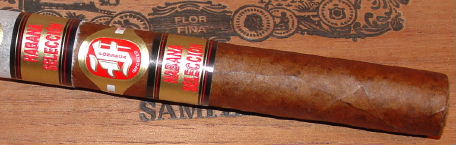
So along comes the Habana Seleccion, with more Nicaraguan leaf and ligero than any of Quesada’s entries to date. The wrapper is Nicaraguan grown Habana Criollo 98; the binder is “Cuban Seed” Nicaraguan; and the filler is a blend of Dominican seco and ligero leaf that has been aged for five years.

The Fonseca Habana Seleccion is available exclusively from Cigars International (at 4 to 5 USD) or from its auction affiliate Cigarbid.

The sizes in this line are named after the classic Cuban vitolas from Fonseca: Cadetes, Cosacos, Delicias, etc. The Cosacos are presented in tissue wrappers, similar to the way the Honduran El Rey del Mundos are. The Cosaco is a slightly undersized robusto at 5 inches by 48.

The wrapper is a fairly oily colorado maduro, and in the Havana tradition the head is finished with a triple cap.

The construction on this stick is good, though the draw is not easy and does not loosen up at any point. It has the fullest body of any of the Fonsecas I have tried, though it still rates only a medium at it’s strongest point.

And while the Habana Seleccion is not a heavyweight by any means, it is indeed full flavored. A woody flavor serves as a base with some cinnamon hints and a touch of earth. The aftertaste is negligible.

All in all this is a very civilized cigar, suitable for a mid-day accompaniment to a cup of joe, or an afternoon stroll in the park. I picked up four of these in a Fonseca sampler pack from cigarbid at a very reasonable price and I’m not disappointed at all.

La Carolina Capitan

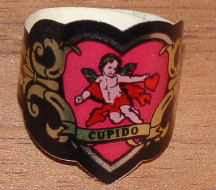
In the late 90’s I was fond of a cigar called Cupido, a rich and earthy Nicaraguan cigar made by Henry “Kiki” Berger. Don Kiki was making cigars for private customers in Esteli when he ran into Yossi Kviatkovsky and Dixi Monaco who had a stockpile of tobacco they wanted to turn into the Cupido brand cigar.

cnv0229.jpgAt first it was only available as a churchill, and that’s the size I remember. Looking over my notes from 1997, I said it was a little tight on the draw, but very tasty. I even compared it to a Cuban H. Upmann, which I will attribute to the enthusiasm of my youth.

The Cupido brand expanded and was eventually available in several more sizes, including the “torpito,” a truncated torpedo. A few years later the Cupido Criollo and the Tuxedo versions were also introduced. I liked these, but not as much as the original.

And then around 2002 or 2003 something happened and the brand went under. Sources vary as to whether it was poor business practices or just another victim of the “boom”. I bought several boxes on clearance around that time, and that was the end of my Cupidos. Or so I thought…

Regardless of what happened to the Cupido brand, Kiki Berger stayed in Nicaragua and continued to produce cigars. In 2005 Tabacaleri Esteli resurrected the Cupido under a new name: La Carolina. According to the manufacturer, La Carolina was an old Cuban brand that only “select connoisseurs” were able to obtain in the United States. The same tobacco and the same blend that was used to make the Cupido is now going into La Carolina, so I was eager to meet the reincarnation of what used to be one of my favorite smokes.

cnv0228.jpg

La Carolina cigars are Nicaraguan puros, and the Capitan is the line’s torpedo entry. The wrapper is a smooth EMS color with a few prominent veins. The first thing I noticed when I clipped the head and took a quick draw-check is that the wrapper is sweet, like a Baccarat. I usually don’t care for this, because there seems something unnatural about it, but that didn’t stop me from lighting up.

The draw is perfect, by the way, and this cigar exhibited excellent construction in all other ways as well. It burned perfectly from start to finish, and formed a solid near-white ash. Someone once said you could let a Cupido cigar burn for an inch or so, remove the ash with moistened fingers, and then stick the ash back on the cigar. I tried this with the Capitan. It didn’t work, but it’s still a solid ash.

This is a mild to medium cigar with an incredibly sweet floral scent. For the first half of the cigar it’s so smooth that it has no aftertaste at all. But the aroma is worth the price of admission alone. It’s hard to believe this is a Nicaraguan cigar until the half-way point where it picks up a little more body and a woody flavor enters the stage. From this point to the end it gets slightly salty. The real highlight of this cigar is the fantastic perfume. I can’t think of another cigar that smells quite like this — almost like lavender at times.

I don’t remember exactly what the Cupido tasted or smelled like, but I can see how I could, as a new cigar smoker, become quite enamored of a cigar like this. It’s a little too light for me now, as a grizzled fan of El Rico Habano and Padron, but on the right evening, when the air is still and the moon is full, I could still get sentimental about a cigar like this.

La Carolina is a winner. I’ll be looking for more of this great cigar from Cuban Crafters.

Partagas Spanish Rosado Familia

cnv0227.jpg

Vital Statistics:

Wrapper: Honduras (San Agustin)

Binder: CT Broadleaf

Filler: Dominican Republic, Honduras, Mexico

This toro is a tasty medium-bodied cigar that is notable for its delicious aroma. It’s an attractive stick: rough, somewhat dry, and a rich colorado maduro in color. The richness of the color goes beyond the visual when at first light the smoke envelopes you in a sweet, cinnamon-laced cloud.

San Agustin leaf is also used to great effect in the Bolivar 2005 blend and the Punch Gran Puro. I don’t know what they’re doing in the San Agustin valley, but whatever it is, it’s working. The wrappers they’re growing are among the best on the market, I think.

The Spanish Rosado Familia has a perfect draw and a fairly even burn — it never needs correction, though it does go a little off at times. It forms a very light gray ash that drops with great reluctance.

The flavor is somewhat woody — a very nice complement to the cinnamon and chocolate from the wrapper. There is only the slightest bite, a tingle really, on the tongue towards the middle of the smoke. The flavor gets a little muddier, a little deeper into the earth as the stick progresses to the mid-way point. But the aroma remains rich and lovely to the end.

I really enjoyed this cigar up to the two-thirds mark when the muddy tones began to overtake the aroma. The finish is fairly strong at this point and I had to send for a diplomatic envoy — Sierra Nevada Stout — to moderate the argument between my nose and my tongue. Ultimately an agreement was reached, and the cigar was amicably extinguished.

A very nice cigar, but I think I prefer the Punch Gran Puro, which has a similar flavor profile but is a little less earthy, if memory serves. It may not.

H. Upmann Vintage Cameroon Pequeños

cnv0217.jpg

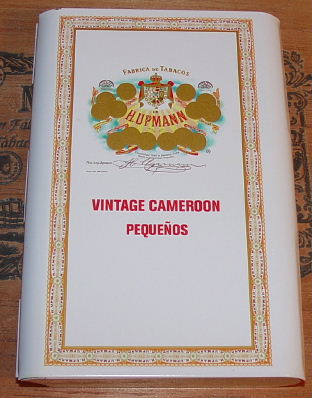
Just finished up this tin of Pequeños. The flavor is not as pronounced as what you get from the regular sized H. Upmann Vintage Cameroons, but it’s still present and quite nice for a short smoke.

They’re about 4 1/2 inches by a 38 ring gauge — a little bigger than the Rocky Patel 1990 Juniors I bought at the same time.

The pequeños are solid little sticks, packed tightly for a longer than expected burning time (about 20-25 minutes) but with a tough draw. Not plugged at all, but requiring a little effort.

Which prompts this question: why is it that cigars with smaller ring gauges typically have a tighter draw? Are they more difficult to roll? Is there less quality control?

cnv0215.jpg

Like the larger sizes in this line, these little guys bring a lot of earth and sweet cameroon spice to bear, along with a little bit of a bite at the back of the throat. They seem a little woodier than the Belicoso I reviewed some time back. This may be due to the fact that the Belicoso has so much more depth that the other flavors overpower the woody element.

This is a nice little quickie, but it’s a little bit thin in the flavor department. Factor in the price (about 12 bucks for the tin) and I think the RP 1990 Juniors with their bold flavor and lower price point were the better deal.

Cuban Crafters Cameroon Torpedo

cnv0224.jpg

Cameroon wrapper is among the finest, sweetest, most aromatic tobacco grown in the world, so it’s no surprise that Cuban Crafters takes advantage of the Cameroon mystique to wax exotic in their description of this cigar:

In search of the perfect blend, various tribes in Cameroon, Africa were visited by our scouts. After years of searching an ultra premium Cameroon wrapper was located. It blended perfectly with the Cuban seed tobacco from Tabacalera Esteli. It is grown by a tribe in a small village on the western edge of Cameroon, close to an active volcano named Mount Cameroon. The country’s most fertile soils are in this region, and the tobacco is among the world’s most expensive.

Doctor Livingstone, I presume?

Not that I have anything against tribal contact in an effort to procure the finest tobaccos. I visit the Las Vegas Paiute Tribal Smokeshop on a regular basis in the furtherance of just this cause. No hypocrite am I.

But on to the cigar: This is a solidly rolled, stout torpedo — I might be tempted to call it a short pyramid instead — with a rough but attractive wrapper. I would not guess this to be Cameroon by sight. No tooth, and that’s the truth. The head on this one is finished, unlike the pig-tailed Cameroon torpedoes on their website, and the foot is unevenly cut.

The pre-light draw is very liberal, almost loose. I worried for a moment that this was an indication of poor construction, but this turned out not to be the case. It lit up like a charm and burned fairly even all the way to the band.

The filler and binder on this smoke are Nicaraguan, and true to form the base flavor is woody. It’s a little bit papery at times, but paper is still wood, right? On top of this floats the cameroon — not as sweet and spicy as many other cameroons, but aromatic just the same. The smoke is smooth and medium bodied from start to finish, with a decent kick at the end.

The aftertaste is a little bit bitter, slightly green and aspirin like. It’s the same sort of flavor I get from Indonesian wrapper and some Mexican smokes.

Overall this was a decent cigar, but not really my cuppa. Maybe a few months in the humidor would cure it of the rough spots.

If you like that Indo-Mexican tartness you might want to give this one a shot. Keep a few on hand just in case you happen to meet Stanley in darkest Cameroon.