Aging Report: Medal of Honor “Intellect”

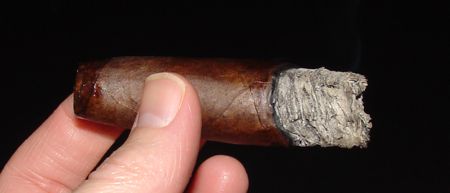
It’s been a little over two years since I visited the Medal of Honor Intellect, and while it hasn’t staged a remarkable transformation in that time, it’s still a really nice mellow smoke.

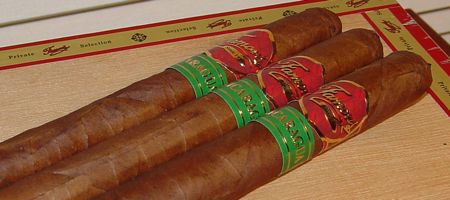
The Medal of Honor series was created for JR Cigars by Estelo Padron in Honduras to celebrate the cigar men who helped JR Cigars become the retail giant that it is today. This particular size honors Martin Herbst, who created the Maria Mancini and La Finca cigar brands.

I couldn’t remember exactly what went into this cigar when I pulled it out of long-term storage, and I decided to smoke it before refreshing my memory. This is not my habit at all, but since I’m quite familiar with this cigar I thought I could probably guess its composition.

My guess was wrong. Mid-way through this cigar I guessed that this was a Cameroon wrapper due to its bright cedary sweetness. I thought it was a little mild for Cameroon, but I attributed that to aging. For the first two inches it’s a simple blend of wood and cedar spice. As it turns out, this is actually an Ecuadorian Sumatra wrapper. The buttery texture (and lack of tooth in the wrapper) should have given it away, but not this time.

This has always been an easy going, mellow smoke, and it continues to be so. There isn’t much of a transition from first light to last ash, but this is nothing new either. The only surprise is a caramel spice in the second half that replaces the cedar from the first part. The foundation flavors remain woody from start to finish, and the aftertaste is pleasantly crisp and clean.

Construction values here have not changed over time and remain excellent — a beautiful solid ash and a razor sharp burn. Every one of these has been consistent in that regard.

The Medal of Honor Intellect is a mild mannered but articulate smoke that requires few words to make its point, which is well taken.

If you’re lucky enough to be sitting on a box of these from when they were first released in 2005, I’d say the time is ripe to break them out and pass them around to friends who enjoy lighter smokes; from this point forward I would expect them to simply make a gentle and gradual decline.

And if the mild-bodied stuff doesn’t interest you, stay tuned for the Padron Roundup scheduled to begin here on June 10 and continue for several weeks into the summer.

-cigarfan

Ancient Warrior Perfecto #2 by K. Hansotia

K. Hansotia and his Gurkha cigar line have done very well over the years by producing high quality cigars that are frequently veiled in mystique and hyperbole. Elaborate bands and boxes that border on the baroque are standard for Gurkha, not to mention the extreme “super premium” cigars infused with rare cognacs that have been advertised for $750 to over a thousand dollars per cigar. While producing some nice cigars, Mr. Hansotia evidently likes to put on a show as well.

But the fog that surrounds this line tends to obscure the simple facts, like who makes this cigar, and what is in the blend? The first Ancient Warriors I encountered were nothing like the ones I smoked for this review; in fact they weren’t even close to being the same — they were Brazilian puros with red bands and ribbons in a giant 7.5 x 50 size exclusive to Cigars International. (I was planning to review that cigar, but couldn’t get through more than half of it without wanting to shoot myself out of boredom. George at the Stogie Guys fared a little better.) So when I first saw the “regular” Ancient Warriors with the yellow and black labels in a local cigar shop, I was of course confused. That seems to be the nature of the Gurkha line.

In 2005, when the Ancient Warrior was introduced, a press release announced its composition:

  • Wrapper: Brazil
  • Binder: Costa Rica
  • Filler: Dominican Republic; Honduras

The information now available on their website (and confirmed by cigarcyclopedia.com) is that the binder is in fact Dominican. To muddy the water further, some retailer sites advertise a Nicaraguan binder. At some point the only thing you can do is throw up your hands and say, Who cares?

So, in that spirit, I clipped this attractive 5 x 56 zeppelin perfecto and put its foot to the fire.

My prelight impression of this cigar was mostly favorable: it smells like well aged and fermented maduro leaf. The roll is solid and even, and the wrapper is invitingly oily. It has a few prominent veins that give it a rustic appearance. The only real flaw here is that the wrapper bleeds a bit. Time to get out my Michael Jackson smoking glove.

Lighting this cigar was easy, and unlike some perfectos I’ve torched recently I didn’t have to play with the burn too much. The first flavor to make an entrance here is the theme to which this cigar returns over and over again: bittersweet chocolate. This is a really nice wrapper — in addition to the chocolate element, there’s a harmonious aroma that slowly turns from musk to wood.

It’s easy on the palate, starting with touches of sweetness on the tips and edges of the tongue and gradually developing a more earthy flavor. The smoke is smooth, medium-bodied, and easy going. The finish is moderate in length and the aftertaste is mildly bittersweet.

At the mid-way point the aroma becomes woodier, but it maintains its basically chocolate profile. Toward the end (for me a bit beyond the 2/3 point) it begins to heat up considerably, and it starts to lose its Bitter/Sweet balance. Finally it falters and falls away from chocolate into an overly tart bitterness.

Overall, the Ancient Warrior is a tasty smoke that offers a lot of flavor while remaining relatively tame. it’s similar to the Carlos Toraño Signature series, with a little less emphasis on the coffee flavors that the Signature offers.

The Ancient Warrior was reportedly designed to be a “more affordable” cigar, but when it comes to the Gurkha outfit it’s hard to tell if that’s the truth, or merely advertising. In any case, these are reasonably priced at around $100 for a box of 20 or $5 to $6 per stick.

The perfectos are a little hard to find right now, but our friends at Fumée World have the 60 ring gauge “El Duke” in stock right now for 5 bucks. And they’re offering a special deal for readers of Keepers of the Flame:

Enter the coupon code “keepersoftheflame” at checkout and get a FREE 1/2 pound bag of Black Dog Coffee!

A perfect companion to this cigar. Of course, the free coffee deal applies to any order from Fumée World, but for the first ten users only. Heather and Ralph run a great shop with the most personal and friendly customer service I’ve run across, so give them a call at 1-877-FUMEE-01 if you have any questions.

The Padron Series Roundup

Padron Series Band

Cigar Stats
Brand Owner: Padron Cigars, Inc. – Miami, FL (website)
(distributor operates under the name Piloto Cigars, Inc.)
Factory: Tabacos Cubanica, S.A. – Esteli, Nicaragua
Factory: Tabacos Centroamericanos, S.A. – Danli, Honduras
Line: Padron Series (the original line)
Wrapper: Natural and Maduro – Nicaragua
Filler & Binder: Nicaragua
Body: Medium to Medium Plus
Strength: Medium to Full
Cigar Insider/Aficionado Ratings: Consistently high 80s to low 90s

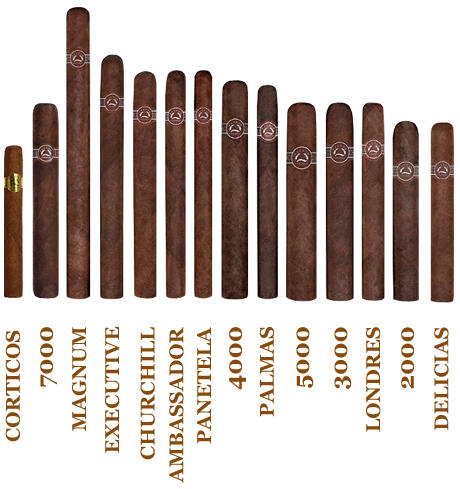
Fifteen sizes available in the Padron Series along with the Chicos which was recently discontinued.

Frontmark

Length x Ring

Shape

2000

5.0 x 50

robusto

3000

5.5 x 52

robusto

4000

6.5 x 54

toro

5000

5.5 x 56

robusto

6000

5.5 x 52

torpedo

7000

6.25 x 60

toro

Ambassador

6.875 x 42

lonsdale

Chicos

5.5 x 36

discontinued

Churchill

6.875 x 46

churchill

Corticos

4.25 x 35

short panatela

Delicias

4.875 x 46

corona extra

Executive

7.5 x 50

double corona

Londres

5.5 x 42

corona

Magnum

9.0 x 50

giant

Palmas

6.25 x 42

long corona

Panetela

6.875 x 36

panetela

All sizes come in laquered cedar boxes of 26, packaged with cellophane sleeves on individual cigars. Many vendors list a box size of 25. Not entirely sure why that is. It may be that Padron changed the box count since the initial release (or it may be select vendors have lost a cog “up there” somewhere). The Corticos are the exception packaged in boxes of 30 or tins of 6.

The Padron Series

As the Padron’s describe it … founded in 1964 and evolving throughout company history, the Padron Series today consists of sixteen medium-to full-bodied, long-filler cigars ranging from cigarillo to the large “A” size. All tobacco in this line is sun-grown habano aged a minimum of two-and-one-half years. Each vitola is available in a natural or maduro wrapper. The Padron Series offers exceptional quality and value.

Padron Series cigars are handmade, in one of two factories, with Cuban seed tobaccos grown entirely in Nicaragua. A true classic and unique-tasting cigar whose outstanding quality absolutely defies its affordable price. These perfectly balanced puros brim with flavor. Their consistency is family tradition which they are committed to maintaining it even if it means limiting production numbers.

The blend in each cigar is the same. The difference is in the size and shape which interestingly yield some distinctly different flavors. Just a note of caution. The Natural and Maduro versions of this line are quite difficult to tell apart visually. Be sure and mark them or store them separately otherwise you may just have to smoke ’em to tell which is which.

The Keepers of the Flame Padron RoundupJose Padron, Sr.

In the interest of providing a good roadmap to this extensive line of cigars, we are gearing up for what promises to be a challenging project. We have enlisted some of the best reviewers available in the cigar community and, in the coming months, will post a comparison review of the natural and maduro wrapper editions of each vitola in the list above based on a concensus of opinion. When that is done, we will publish a vertical tasting for each wrapper giving cigar shoppers a valuable resource for cigar selection decisions.

Although cigar reviews are very much subjective and based on personal opinion and palates, what better way to level the playing field than to have multiple experts weigh in. We have assembled a cadre of guest reviewers, from the blogroll here on Keepers of the Flame, to assist us in this mammoth project. For each vitola listed above, cigarfan, lucky7 and select guests will sample the smoke and offer their observations. A consolidation of those views will be presented in a consensus review here on Keepers of the Flame. In addition, we will link each review to the vitola listing above for central access.

An impressive list of reviewing talent by anyone’s standard.

Cigar Command
Ricky & Scott

Cigar Inspector
Inspector

Cigar Jack
Alex, Jeff & Jessie

Her Humidor
Lisa

Club Stogie
McCharlie & TXMatt

Matt's Cigar Journal
Matt

Stogie Review
Doc

Stogie Review
Brian & Walt

The Box Press
Kevin


GeorgeE, JonN & PatrickA

The Velvet Cigar
Ironmeden & Elvis

We are still gathering and distributing the raw materials for the project but look for the comparison reviews to begin in a few weeks. Until then … Disfrute de los Padrons!

Update — 5 June 2008: The fun has begun! As each vitola review is posted it is linked to the corresponding Frontmark in the table toward the top of this post.

Update — 29 July 2008: The comparison reviews are now complete. Look for our vertical tasting reports in a few weeks.

… cigarfan & lucky7

Augusto Reyes Criollo Corona

A few months back I gave the Augusto Reyes Nativo corona a walk around the block and found it to be a tasty — if a little bit quirky — cigar. Around the same time I pick up a couple of their cousins, the Augusto Reyes Criollo coronas. Having consigned my Nativos to the flames with fine results, I thought it was time for the Criollos to have their day of reckoning as well.

The robusto size in the AR Criollo line earned an accolade from the Robb Report as the “Best of the Best 2007.” I’m not sure how many cigars are entered into their evaluation, or what their technique is, but I would expect that they’re not testing too many Consuegras. Cruising in your Audi R8 with a Connie just ain’t happening.

The information I have on the blend is pretty basic: the binder and filler are Dominican, and the wrapper is Ecuadorian grown Connecticut Shade. One of the few articles I could find about this cigar is from a Dominican social news site, which relates that it was “designed for smokers who enjoy a blend a little smoother than the Nativo, but with a lot of aroma and flavor.” Having smoked this cigar, I have to disagree that it’s smoother, but it certainly does have plenty of flavor and a nice aroma.

I had forgotten that this cigar had a Connecticut wrapper when I first lit it up — because the name of the cigar is Criollo, I assumed that the wrapper was as well. So I was surprised by the first few puffs, which were smooth and nutty. Hmmm, I thought. It’s almost like Connecticut Shade. After half an inch or so I changed my mind because a touch of cayenne kicks in; too spicy to be Connecticut, I thought.

My first impression was correct, of course. The Connecticut wrapper itself is a smooth claro in shade, with a very light sheen of oil and miniscule veins. The draw is excellent, and these little coronas burn perfectly to a solid light gray ash.

Into the second third the Criollo turns up the intensity. The flavor turns from nuts with a bit of pepper to earth with even more pepper, and the finish lengthens considerably. The aroma contrasts with the changes in the flavor of the cigar in an interesting way — as the flavor takes on more minerals and becomes richer, the aroma seems sweeter.

The last third is positively punchy. This is basically a medium-bodied cigar, but the nicotine content is nothing to sneeze at. The flavor is intensely earthy, almost ashy at times, and the aftertaste is overpowering. Some might call this “harsh,” but I find it just very intense. On the other hand, if earthy is not your thing, you’ll want to avoid this smoke.

The “criollo” in this smoke is obviously not from the wrapper — it’s from the blend itself, which has a lot in common with the flavors of Creole food — charbroiled seafood, paprika, and cayenne. Topped off with a little sweet nuttiness from that wrapper and a good dose of nicotine.

The Augusto Reyes Criollo line runs a little less than the Nativo, but not by much. Expect to see these for around 7 USD, if at all. They’re still in production, but not exactly ubiquitous. Consuegras they’re not. Just ask the folks at the Robb Report.

–cigarfan

La Flor Dominicana El Jocko

In 1997 as the cigar boom began to wane, La Flor Dominicana blessed us with a funky little figurado called El Jocko. There were relatively few decent cigars to be found at that time —the few reputable manufacturers were struggling to keep up with demand and maintain quality amid severe tobacco shortages, while some retailers were limiting purchases of standards like Fuente 858s. El Jocko was exactly what seasoned smokers needed — a full flavored and consistent cigar with a strange shape that would confuse and repel the amateurs.

It only took a few years for the industry to recover from the boom. Quality improved dramatically, and the diversity of blends and brands expanded. In the late 90’s El Jocko crested in a sea of mild cigars, but within only a few years the full-bodied trend let it silently drift away. It’s been a long time since I’ve tried one of these, and my experience of them today is bound to be a lot different from what it was in the era of the “Don Nobodies.”

This small cigar is immediately identifiable by its bowling pin shape. It’s basically a “bouquet” perfecto, similar to a Fuente Short Story, but with more gradual proportions. It was named for a cigar retailer named Jacko Headblade who visited the Flor Dominicana farms and for some reason attempted to ride one of the farm’s donkeys (not very successfully, I presume.) The spectacle inspired Litto Gomez to name both the donkey and his new cigar “El Jocko.”

El Jocko comes in two styles: an Ecuadorian Connecticut, and a Mexican maduro. At one time there were two sizes as well, but it appears that now there is only one, which measures 4 1/2 inches long and has a 54 ring gauge at it’s thickest point. (The other size was a larger version of this one.) The binder is Nicaraguan, and the filler is Dominican piloto cubano.

The Connecticut and Maduro versions of this cigar have similar construction values. This shape is challenging and would seem to invite construction defects, but for the most part it avoids these. I smoked two of each for this review, and they all drew very well and burned with a slow determination. Minor burn problems had me reaching for the lighter a couple times, but the corrections I made were not entirely necessary.

Both species start out a tad harsh, but in different ways: the Connecticut is noticeably tannic, while the Maduro bursts with peppercorn. In both blends this dies away as the ring gauge expands.

The Connecticut is typical of medium to full-bodied Dominicans — the piloto gives it a respectably spicy spine, while the wrapper imparts a softer touch: nuts, and a sweet clover honey-like fragrance. As the bulbous section burns to a solid light gray ash the pepper returns, and the flavors grow more aggressive. Smoking slowly is highly recommended at this point to avoid overheating. The flavors remind me a little of the 601 Connecticut, but considerably toned down.

The Maduro displays a little more character. It comes out of the gate with a dose of black pepper and can initially be a bit harsh on the throat. It mellows after the first half-inch or so and the smoke takes on a creamier texture. The first section tastes of burnt coffee or bitter chocolate. As the cinder burns through the waist of the stick it gradually becomes sweeter and develops a leathery aspect. It’s slow burning with a lengthy finish and leaves an aftertaste of char. Into the final stretch the flavors turn darker and sharper once again, reminding me of La Flor Dominicana’s popular Double Ligero series. Again, not as bold as the DL, but similar in taste. Unfortunately, it’s not a taste I really enjoy. The middle section was quite nice — smooth and flavorful without the carbonized sugar taste that I didn’t care for in the last third.

These are both very good cigars, but when compared with the incredible array of fantastic smokes available right now, they pale a little bit. My memory of El Jocko is that it was much better ten years ago than it is now, but taste must be taken in context and memories fade. Trying to compare today’s cigar to a ten year old memory is probably no more than an interesting experiment. It’s a much better world for cigars now, and ten years of tasting many different blends has honed my palate a little… for the better I hope.

El Jockos sell for around $5 to $6 individually, or around $100 a box. That seems reasonable to me, especially considering the craftsmanship required to make this unique looking cigar. It may seem a bit much for such a small cigar, but take it slow and this little perfecto will spin an interesting yarn for up to 45 minutes.

Famous Nicaraguan Corojo Corona

Well, Don “Pepin” Garcia has finally dropped the bomb. We knew it was coming, like the End of Days, but we didn’t know when. First Pepin announced he would no longer take on new clients. Soon after that, Ernesto Padilla announced that Pepin would no longer manufacture Padilla cigars. Then there was a public airing of grievances at Stogieguys.com regarding Pepin dropping Black Cat as a client. And at some point during all this, the prices on Pepin blends at Cigar King went through the roof. The time is nigh!

For lovers of full bodied Nicaraguan puros this may sound like a death knell, but of course it isn’t. Pepin will still make plenty of cigars (though a rumored 20% across the board price increase is entirely credible) but it’s not like he’s going away. Like he says, “The day I stop making cigars will be the day I die.” Furthermore, there are plenty of other fine Nicaraguan puros out there, many for a much more affordable price. The Famous Nicaraguan Corojo is one of them.

Now these coronas are not Pepin replicas or seconds, or what have you, but there is a connection. They’re made for Famous Smoke Shop by Tabacalera Tropical, where Pepin was once employed as a blender. The principal backer for Pepin’s solo venture was the owner of Tropical, Eduardo Fernandez, and Fernandez reportedly grows many of the tobaccos Pepin uses in his Rey de los Habanos blends.

I like small full-flavored cigars as “fixers.” Sometimes I’ll start a cigar that turns out to be plugged, or won’t burn right, or just rubs me the wrong way for some reason. Instead of struggling though the cigar and having a miserable experience, I’ll toss it and grab a fixer instead. The corona size in this line is a great fixer.

I bought a box of these about a year ago and have observed them mellow from sharp pungent smokes to smooth, but still quite bold cigars. They’re billed as having a 42 ring gauge, but they seem a little narrower to me — closer to a 40 I think. At 5 1/2 inches long they’re still well within the corona range.

The corojo wrapper is an oily colorado maduro and makes an attractive casing for the intensity of the ligero binder and filler within. The roll is firm, and like most corojo blends this one does best at a lower humidity — in the low 60s at most. The draw tends toward the firm side and can be difficult if these are kept at 70%.

The opening is classic Nicaraguan spice — lots of black pepper held in check by a leathery underpinning. After an inch or so the pepper subsides, but it never entirely disappears. The burn is a little erratic and needs an occasional touch up.

At the midway point the corona stretches its legs a little and becomes a smoother, more relaxing smoke. It’s not the most nuanced cigar on the planet, but at this point the spice melds with the leathery aspect and if taken slowly it’s quite enjoyable. It continues in this fashion as it glides in for a landing. My only advice here is to take it slow. Hotbox this one, especially in the last third, and it will get a little mean.

The Famous Nicaraguan Corojo blend is a solid blend of spice and leather that is reminiscent of the recent Nicaraguan corojo blends, but is available at a much more reasonable price. A box of 20 will set you back only 50 clams. It’s not the most subtle or sophisticated cigar on the market, but for the price it’s most definitely worth checking out, either as an everyday smoke for the medium to heavy bodied palate, or in my case, as a “fixer.”