Urbano Corojo Robusto

It is with some trepidation that I call Urbano Cigars a “boutique” manufacturer because the term has become a little shopworn. The word has become a mantra for the marketing departments of almost every cigar company, big and small, and I have consequently become wary of it.  But at this stage of the game it appears that Urbano Cigars is in truth a boutique manufacturer, and while no company wants to stay small forever, Urbano is committed to maintaining quality over quantity.

Urbano cigars are made in the Dominican Republic and limited to a total production of 75,000 cigars per year. The Corojo is their flagship blend, a Dominican puro with an assertive corojo wrapper. (The other primary blends are the Connecticut and the Sumatra.) The wrapper is triple fermented for smoothness and aged for three years.  The assembled cigars are then seasoned for at least 90 days before banding and boxing.

The rollers employ entubado bunching, a time-consuming process whereby the filler leaves are rolled into tiny tubes before bunching. This improves the cigar’s draw and eliminates the likelihood of plugging.

Four traditional sizes plus a Sixty are in production:

  • Robusto – 5 x 50
  • Torpedo – 6 x 52
  • Toro – 6 x 50
  • Churchill – 7 x 48
  • Sixty – 6 x 60

Construction Notes

The wrapper on the Urbano Corojo is a weathered, veiny, and rustic colorado maduro. The veins are a bit puckered in places, which I’ve seen on other Dominican wrappers (like La Aurora’s Cien Años) and I usually take this to be a good sign. The cap is functional but adds no aesthetic value to the cigar. I guess this cigar is meant to be smoked and not framed. Very well then.

The draw is excellent, but the burn is not. Over the years I’ve discovered there is a prima donna factor to be reckoned with when smoking certain cigars. Sometimes a difficult burn is an unavoidable side effect of complex flavors — it’s like putting up with a virtuoso’s personality defects. You rarely get an opera star without some temperamental antics. And the corojo wrapper on this cigar is a great example of that. It reminds me a little of the Habana 2000 that was used a few years back — great taste and aroma, horrible burn. It’s a trade worth making. Just keep your lighter handy.

Overall construction: Very good.

Tasting Notes

The Urbano Corojo robusto skips the overture and goes straight to the aria. That’s a diva for you. (Maybe I should say divo instead. There isn’t anything remotely feminine about this cigar.) From the opening bars the flavor is complex and hearty, spicy but not harsh. There are notes of leather, grilled meat, pepper on the back of the palate, and sweet caramel on the nose. The smoke is medium in texture but full flavored. The spice gives the illusion of greater strength, but as the cigar mellows a bit in the middle section it seems on the full side of medium.

The flavors calm down a bit in the second act, but leather and spice predominate with the addition of cocoa and a touch of citrus on the nose. The cigar winds down with charred wood and can get a bit sharp as the curtain falls.

Conclusion

The complexity and temperament of this cigar demand attention from the smoker, and that’s not entirely a bad thing.  I don’t mind touching up a cigar every once in a while if the flavors and aroma are outstanding, which here they are. How’s the phrase go? With great flavors come great responsibility? Hmm. Maybe not. In any case, the Urbano Corojo is not an effortless smoke, but in my opinion it is worth the effort.

Urbano cigars are currently available only from brick and mortal retailers or directly from the Urbano Cigars website. The price for the robusto is around $7 USD.
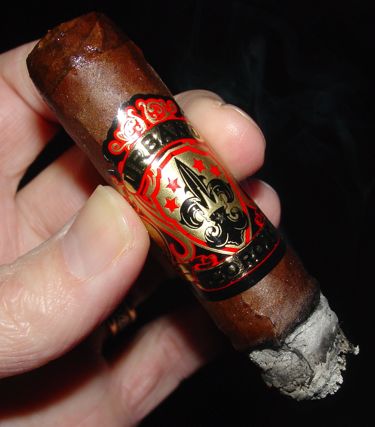

Final Score: 90
Undercrown by Drew Estate

I’m not sure what an undercrown is exactly. Is it like a cardinal’s zucchetto? Or more like a football player’s do-rag?  When the pontiff comes home after a hard day and hangs up his mitre, does he look a little like Deion Sanders in his undercrown?  I’m guessing no.

Maybe the only true Undercrown is Drew Estate’s recent creation,  a version of their extremely popular Liga Privada No. 9 and T52 blends. But anyone who has ever set foot in a cigar lounge knows there has to be an “interesting story” to accompany the cigar’s genesis. And no, it isn’t the one about the newly discovered bale of Cuban leaf mysteriously concealed in the cellar for fifty years. The story is that the torcedors in the Drew Estate factory were smoking up too many Liga Privadas, thereby depleting the precious Connecticut wrapper and other choice cuts of leaf necessary for building that primo smoke. Plant supervisors ordered the rollers to stop smoking the damn product, but the torcedors were so distressed by this sensible business decision that they started rolling a different but very similar blend to smoke in place of Liga Privadas. Ha! That’ll show those meddling supervisors.

Stories aside, the Undercrown is evidently designed to be a less exclusive blend that still bears some similarity to the Liga No. 9. Instead of the Connecticut broadleaf that torcedors love beyond all measure, a Mexican San Andres wrapper is employed, and a different priming of the same Connecticut broadleaf is used as binder. The filler is a blend of Brazilian Mata Fina and Nicaraguan Habano seed.

Sounds good to me. I prefer San Andres to Connecticut anyway.

Five chunky sizes are currently in production:

  • Robusto – 5 x 54
  • Gran Toro – 6 x 52
  • Belicoso – 6 x 52
  • Corona Doble – 7 x 54
  • Gordito – 6 x 60

Construction Notes

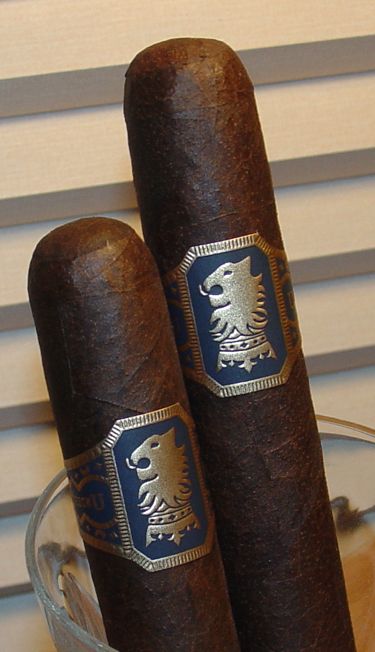
The wrapper on the Undercrown Robusto is perfectly even in hue and much smoother than most Connecticut broadleaf. It’s an oily dark maduro that in some cases might arouse suspicion because it’s so even and consistent. But the roll is almost as perfect — firm and even as a dowel rod but with an excellent draw. The head of the cigar is simple, just a single cap that needs no fancy winding because the edges of the cap are almost seamless.

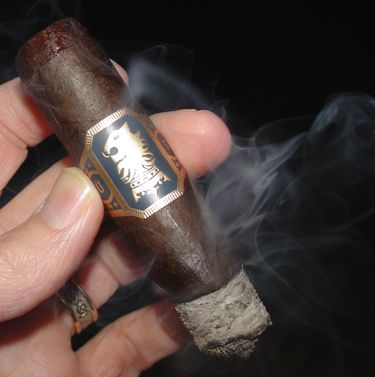
The burn is remarkably even for a maduro-wrapped cigar, and the burn line is extremely sharp. It burns slowly, perhaps due to the robust ring gauge, and the solid ash is smooth and light gray in tone. It doesn’t really act like a maduro — it’s far too civilized. But its civility only goes so far.

Overall construction excellent.

Tasting Notes

The trademark characteristic of the Undercrown is an immense amount of resting smoke. The room scent is very powerful and it starts up almost immediately, so if you want to clear the room of non-smokers light up an Undercrown and watch them fly.

The initial flavors are smooth and somewhat dry with just the right amount of pepper on the palate. The main flavors are typical of maduro style cigars — cocoa and chocolate, but there is a note of cedar buried under all this. The smoke texture is so full in body that it is almost palpable on the tongue. The volume of smoke this cigar produces is  astounding, but the taste is not overwhelming at all. This is another example of a cigar with a full-bodied texture that is not a nicotine shillelagh.

The taste of this cigar is quite concentrated, but the flavors are not terribly complex. The smoke is almost too rich to carry a whole lot of subtlety, but in the last third I detected some raisins and increasing spiciness swirled in with the chocolate and cocoa-based flavors. It’s certainly complex enough to keep my attention, and probably more complex than most maduros.

Conclusion

Anyone who appreciates a good maduro will get a kick out of this cigar. Those looking for a high octane thrill may need to look elsewhere, but if rich, thick, chocolatey smoke with a pinch of spice — all in a moderate strength package — strikes your fancy, you’ll want to check this one out.  Prices are in the $7-8 USD range, which falls outside my everyday smoke zone, but I could fit this guy in once or twice a week easily.

Final Score: 91

La Gloria Cubana Artesanos Retro

Team La Gloria is back again with an addition to La Gloria Cubana Artesanos series. This time it’s the Retro Especiale, inspired by an old humidor that they found in the El Credito cigar factory. This is the third entry in the Artesanos line, which also includes the dual-wrapper Artesanos de Tabaqueros and the pyramid-shaped Artesanos de Obelisco.

The Retro Especiale looks like a plain old cigar when compared to the eye-catching Tabaqueros and Obelisco, but the band and box design give it plenty of class. Each frontmark has a different box design, and like the band the images harken back to the early days of cigar making in Miami and Cuba.

The centerpiece of the Retro Especiale is a Connecticut seed hybrid wrapper that is grown in Honduras. It reportedly took eight years to develop the blend, which features Nicaraguan and Dominican fillers held in place by two binders: one from Nicaragua, and one from (gulp) Mexico.

Four sizes are in production:

  • Club 5 3/4 x 47
  • Taino 7 x 52
  • Habanero 6 x 52
  • Cubano 6 1/2 x 58

Construction Notes

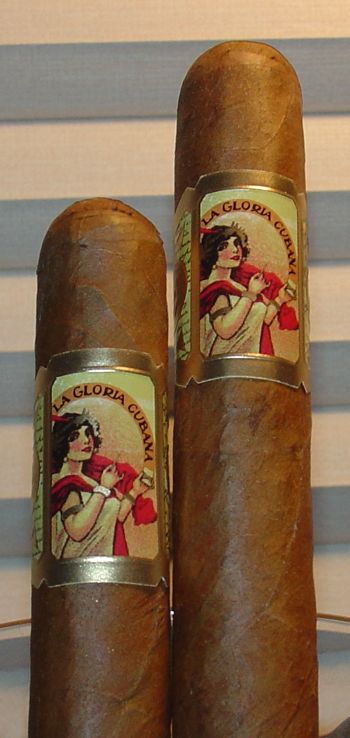
The wrapper on the LGC Retro Club is an attractive milk chocolate color, a touch darker than is typical of standard Connecticut Shade wrappers. The wrapper is thin, allowing the rough texture of the binder to show through. The head is rounded, which is not unusual for General Cigar products, and the roll is solid. The burn is fairly slow (although one stick canoed a bit) and the ash is surprisingly dark.

Overall good construction, with a little concern about canoeing.

Tasting Notes

The most interesting aspect of this cigar is the Honduran grown Connecticut-seed wrapper, which gives the Retro a nice creamy body from the start. Cedary spice is evident as well, with a touch of vanilla on the nose. The aroma is slightly sweet but quite pungent, and the aftertaste is very dry. The flavors become a little bolder toward the middle of the cigar, but for the most part this is a medium bodied cigar.

The second half serves up an interesting combination of sweet cream, earth, and astringency. The flavors on the palate are dry and earthy, bordering on bitter at times. I’m not sure, but I’m going to guess that’s the Mexican binder in there. The aroma doesn’t have the same floral character that I expect from Connecticut Shade, but it stays creamy and assertive to the end of the cigar. Toward the band the flavors get a little darker and pepper vies with the dryness on the palate.

Conclusion

Despite good construction and considerable inventiveness, I’m afraid this cigar just isn’t for me. Maybe the dryness on the palate could be remedied by a good lambic or witbier, but I would not smoke this cigar straight up or with anything that might add to the bitterness. It needs something sweet to cut the astringency.

But again, there is a market for this style of cigar, and the wrapper on this blend is quite nice. I’ll be interested to see if Team La Gloria uses this Honduran-Connecticut leaf again in a cigar that is more my style. The Club size can be found for around 4 bucks a stick, so there’s definitely no complaining about the price.

Final Score: 82

A special thanks to General Cigar for the review samples, and for so generously engaging the blogging community.  

Morro Castle Robusto

I remember buying a bundle of Morro Castle cigars about a decade ago before the brand was swept out with the tide. I don’t remember who made them, but they were relatively decent yard ‘gars. A good everyday smoke is a necessary commodity in today’s economy, and that’s how I remember the old Morro. It was not a subtle or enlightening experience, but it was a good everyday stogie. And though this Morro Castle is an entirely new incarnation, my sentiment remains the same.

Made by A.J. Fernandez for Cigars International, this Morro Castle has an Ecuadorian Sumatra wrapper that surrounds a blend of Honduran tobacco from Jamastran and Nicaraguan leaf from Esteli and Ometepe. (Ometepe is the volcanic island that sits in the middle of Lake Nicaragua.)

The cigar is offered in five sizes:

Robusto – 4.7 x 52
Toro – 6 x 52
Churchill – 7 x 50
Belicoso – 5 x 52
Torpedo – 6.5 x 52

Construction Notes

One look at the robustos pictured above and you can see there might be some consistency issues here. I bought two sticks for this review, and if they didn’t have bands I would have sworn they were different cigars.  Somebody in Quality Control must have been seriously distracted when the one on the left rolled off the assembly line and into the box. It’s pale and weathered and looks as though it went through the wash.

On the other hand, the golden brown wrapper on the other cigar is far more approachable. Attractive even. The wrap and roll was otherwise pretty solid on both samples. Both burned well and were trouble-free.

Tasting Notes

Obviously there was something wrong with the wrapper on the first cigar. Aside from its anemic appearance it made the cigar taste like tar and black pepper. It started rough and didn’t get much better. When the flavor didn’t improve after twenty minutes I tossed it. As the Stranger says, some days the bar eats you.

The second sample was much better. While still fairly aggressive (in a friendly Nicaraguan way) it calmed down after an inch or two and allowed the woody and slightly creamy aspect of the wrapper have its say. The spice continues through the rest of the smoke, but it mellows considerably and turns out to be an outspoken but still medium-bodied cigar.

Conclusion

I didn’t hold out great hopes for Morro Castle, and I wasn’t hugely surprised by an average showing. Assuming that the washed out robusto was truly a mistake that won’t often be repeated, I got about what I expected. But for 3 to 4 bucks a pop this could be a nice pickup for someone who likes A.J. Fernandez-style Nicaraguans. It’s a tasty medium-bodied smoke that starts out with a dramatic burst of pepper and then mellows into an above average yard ‘gar. It’s not really for me, but there’s definitely a market out there for this style of cigar in this price range.

Final Score: 83

JML 1902 Torpedo

JML 1902, from Miami’s La Tradicion Cubana, is named for José M. Losa, the grandfather of LTC founder Luis Sanchez. The JML was the first cigar from the new factory in the Dominican Republic after the original factory in Miami was destroyed by fire in 2006.

The JML 1902 uses a Pennsylvania wrapper, which is unusual for today but historically well grounded. In the nineteenth century so many cigars were made in Pennsylvania’s Conestoga River Valley that the word “stogie” became common usage throughout the United States. In the past few years the leaf has experienced a resurgence, especially Pennsylvania broadleaf, which has been used by Rocky Patel and A.J. Fernandez in several different blends. Like Connecticut Broadleaf it is often used as binder, but it is less commonly seen as wrapper.

Both Connecticut and Pennsylvania broadleaf are grown from Cuban seed, but apparently there’s something about Lancaster County that adds some fight to the leaf. It is generally acknowledged that Pennsylvania leaf is more robust in flavor than the Connecticut variety, and it takes longer to process and mature. These characteristics may be why Penna leaf is less commonly used.  The resurgence may be due to the fact that cigar smokers have become increasingly curious and more open to new experiences — sometimes it seems that the rarer the leaf, the better. But the cigar, however refined or rare its components, must still perform well. And the JML 1902 does just that.

That said, I don’t think the Pennsylvania wrapper on the JML 1902 is  actually broadleaf. It’s thinner, more attractive, and in my opinion more subtle than broadleaf. In combination with a Honduran binder and Dominican seco and ligero fillers, the wrapper adds a sweet sharpness that balances out the blend very well.

Four sizes are currently available:

  • Petit-Cetro – 5 3/4 x 44
  • Corona – 6 1/2 x 44
  • Churchill – 6 1/2 x 50
  • Torpedo – 6 1/4 x 54

Construction Notes

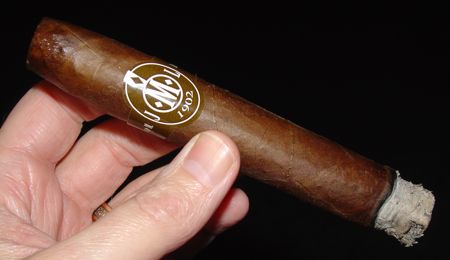
The vintage appeal of the umber-colored band sets the tone for this cigar. It looks like something you might find in your grandfather’s junk drawer, along with a dried out can of Kiwi and a stitching awl for fixing baseball mitts. The band is offset by the dark smooth wrapper, a little darker than colorado maduro but not quite maduro. The veins are pronounced enough to make the wrapper rustic without being rough.

The roll is solid, though the cigar feels light in the hand. The cap is finished nicely and the tip clips cleanly with a guillotine cutter. It draws perfectly, burns evenly, and the ash is only slightly flaky.

Overall excellent construction.

Tasting Notes

The JML 1902 torpedo starts up with a sweet bready aroma, something like freshly baked cookies. (And I know how odd that sounds.) Beneath this fascinating aroma are earthy, mineral-like flavors. The flavor is high-toned, sweet but not creamy, and very well balanced. The smoke texture is medium in body, but it has plenty of strength.

Coffee flavors predominate in the mid-section, with sugary, almost maple syrup-like accents on the nose. Earthy flavors continue to occupy the lower register but they gain in strength, as does the aftertaste.

The peppery aftertaste takes over in the last part of the cigar, becoming quite strong, even though the sweetness of the wrapper is still detectable. I found I had to slow down considerably in the last lap to keep the cigar in balance.

Conclusion

There is a whole lot to like about the JML 1902. It’s complex, flavorful, and for those who like a good kick in the pants, it’s got one in reserve. The balance of subtle sweetness and earthy power is quite impressive. Based on these things alone I’d recommend this cigar to any seasoned smoker, but the best part comes last: the price. The JML is a 3 to 4 dollar stick. $60 to 75 USD per box at LTC’s online shop. That’s a screamin’ deal.

This is one of the best cigars I’ve smoked all year, and without a doubt the best cigar in this price range. I can think of no excuse for anyone not to try this cigar. None. Well, maybe one. Some reviewers have reported that these can be a little heavy-handed when fresh. That wasn’t my experience, but it you prefer a gentler smoke, just put them away for a few months and let them mellow. Like any good investment, patience will pay dividends.

Final Score: 92

Jobon Single Flame Torch Lighter

Cigar and tobacco accessories don’t excite me much. I’m not really a watch guy either, and I don’t mess with cuff links or jewelry. So far I’ve managed not to lose my wedding ring in the compost pile, so I consider myself ahead of the game.

I guess that’s why I’ve ever reviewed any accessories…until now. I used to have a couple torch lighters but their piezos pizzled and I’ve been using kitchen matches ever since. But Butanelighterswholesale.com sent me a Jobon standing lighter to review, and this little gadget might drag me back into the lighter racket.

Jobon lighters are made by a Chinese outfit called Wenzhou Zhongbang Smoking Set Co. in the Zhejiang province of China. (My pinyin is a little rusty, but I’m thinking that Zhongbang probably sounds a lot like “Jobon”.) The company was started in 1990 by a fellow named An Xizhong, and they produce two primary brands of smoking accessories: Jobon and Zobo. The company emphasizes consumer value, which is easily seen in their pricing. The MSRP on this lighter is $21.99, but ButaneLightersWholesale.com shaves six bucks off that price.

In the past I have been disappointed by higher priced lighters that plugged up or fizzled out after less than a month, so I didn’t hold out a lot of hope for a low-priced alternative from Wenzhou. But so far I have been pleasantly surprised. I’ve been using it for a month, which is the exact lifespan of my last Colibri, and so far it’s performing as well as my beloved Prince Blazer (resquiat in pace.)

The Jobon lighter is a strange combination of solid engineering and classic Chinese chicanery. The chrome elements are smooth and seamlessly put together and the lighter has a little heft to it. On the other hand, the plastic parts are a little suspicious. The lighter comes with a hard rubber base on which the lighter perches very precariously — the lighter will fall over unless you jam it down into the base with some force. There is a plastic cap that fits over the nozzle which is connected to the lighter by a thin chain like a biker’s wallet. I guess this is decorative. I can’t fathom a practical purpose for it. And around the fuel barrel is a piece of faux leather parquet which just begs to be peeled off.

But the lighter itself seems sound, and of a much higher quality than I would expect for the price. The ignition has so far been absolutely reliable and the flame is consistent and clean. Even though it’s a torch lighter, the flame seems softer than some I’ve seen. You certainly don’t want to use this to light your pipe, but it works very well on everything else. Creme brulee included.

The true test of torch lighters is time. I’ve been using this lighter for about a month now, and though I’ve been smoking less, due to a crowded schedule, this lighter has not let me down once so far. I will be checking back with updates, but for the price, I don’t think the Jobon can be beat.

Check out Butane Lighters Wholesale for a great deal on a quality torch lighter. Tell ’em cigarfan sent you and you’ll get the same great deal that everyone else gets.

La Aroma de Cuba Mi Amor Magnifico

Legend has it that La Aroma de Cuba was one of Winston Churchill’s preferred brands. That would be La Aroma de Cuba de Cuba, a brand which exists today only in the protected vaults of highly disciplined cigar collectors. But all is not lost for the rest of us. “Never give in!” as the old man said.  For we still have Don Pepin. And with the able assistance of the Ashton Cigar Company we have La Aroma de Cuba redux.

There are three distinct blends of La Aroma de Cuba: the non-extension LADC with a Connecticut Broadleaf wrapper (and distinguished red foot band), the Edicion Especial with a sun-grown Ecuadorian wrapper (and secondary EE band), and this one, Mi Amor. This incarnation features a Cuban-seed wrapper grown in Mexico. I’m not sure where in Mexico, but I’m guessing it’s not Tijuana. My guess would be somewhere in the San Andres Valley, one of the only regions in the world that produces leaf with the maduro potential of Connecticut’s broadleaf.

More detailed information about the San Andres region is available on the Montecristo Reserva Negra post. Come to think of it, the LADC Mi Amor reminded me a bit of the Monte Reserva — I wouldn’t be surprised if the wrapper is the same leaf, or at least a close relative. They look quite similar and they taste quite similar… so they must be, um, similar.

Mi Amor was reportedly in planning for two years prior to its release at the IPCPR convention last year. Since then it has garnered rave reviews, including the No. 6 spot on Cigar Aficionado’s Best Cigars of 2010. I don’t always agree with CA, but I think they got it right this time.

LADC Mi Amor is made by My Father Cigars in Esteli, Nicaragua. Five sizes are in production:

  • Robusto – 5 x 50
  • Magnifico – 6 x 52
  • Valentino – 5 3/4 x 58
  • Churchill – 7 x 50
  • Belicoso – 5 1/2 x 54

Construction Notes

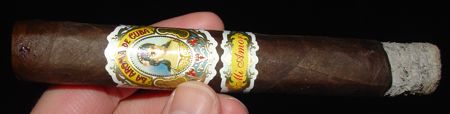
La Aroma de Cuba Mi Amor is not billed as a maduro cigar, but it looks like one, and it tastes like one, so I’m going to say it is one. The wrapper shade is a medium dark maduro, but the wrapper is a little drier and much toothier than what you get with typical maduro processing.

The cigar is box pressed and sports a flat Cuban-style head and My Father Cigars’ impeccable triple-cap. The draw is excellent, and it burns slowly and evenly. The ash is a solid light gray verging on white, though it flakes slightly.

Overall construction: Excellent.

Tasting Notes

The Mi Amor Magnifico (the toro of the family) opens with a combination of earth and chocolate. In the first half-inch there is an old attic-like aroma, somewhat mushroomy, but sweetness soon takes over and the chocolate and coffee flavors prevail. When those somewhat outlandish initial flavors settle down the base flavor of the Nicaraguan filler comes through: a bright acidic tang on the palate. The smoke is rich and smooth.

The chocolate and coffee blend and simmer down to a smooth cocoa in the mid-section of the cigar, but the aroma is still distinctly sweet and the earth tones have almost entirely disappeared.

Some pepper enters the fray in the last third and the smoke is a little sharper on the tongue, though it never becomes harsh. On the nose it’s mostly coffee, but I’m surprised by the floral accents that remind me of another cigar with a romantic reputation — the Cuban Romeo y Julieta.

Conclusion

La Aroma de Cuba Mi Amor is a damn fine smoke. It’s flavorful, smooth, rich, and almost perfectly balanced. The initial earthy flavors quickly mellow into the sweet ones, and the underlying zing keeps the palate popping. The smoke is smooth and the cigar burns beautifully.

After smoking a few of these I immediately went looking for the box price. A heavenly choir did not emerge from a cloud of smoke to sing the under $100 hymn, but I can’t say I was surprised. Around $170 USD is the going rate for the Magnifico. A little outside my range for boxes, but that puts them in the $7-8 range for a single, which I can manage every once in a while. And for a cigar this good, you can bet I will.

Final Score: 93

Camino Real by Route 45 Cigars

Tobacco from Colombia has been used as filler in major brands for years. Big names like CAO, Alec Bradley, and others have used a leaf here and a leaf there to grace their blends with a touch of the exotic and add a nuance that can’t be found in more common varieties of cigar tobacco.

But Colombian puros are another matter. To my knowledge Route 45 Cigars is now the only American company importing cigars made exclusively from Colombian grown leaf, and based on the quality of this tobacco I think they will find their niche in the U.S. cigar market soon enough.

Route 45 produces Colombian puros under the Camino Real and Don Jose Correa brand names. I had a chance to ask the owner, Jon van Bilderbeek, a few questions about the company and about the virtues of Colombian leaf.

Cigarfan: So how did you discover the merits of Colombian tobacco?

Jon Van Bilderbeek: As much as I have been to Colombia I never really paid much attention to the tobacco or the cigars for some reason until I was already very much into the lifestyle of enjoying cigars. I saw that in some of the supermarkets there were smaller cigars in bundles and boxes, maybe two brands at most. But of course these weren’t the premium cigars as until recently premium cigars in Colombia hasn’t quite caught on. So, I decided to try some of these cigars out anyways and sure enough, I liked them. It was something totally different than the usual Dominican, Nicaraguan, or Honduran cigars. They were much smother and mellower but also they just had a very unique flavor profile. This led me to look into the cigars a little more and sure enough just near the city I was living is where the cigars were made.

Cigarfan: Colombia has a long history of tobacco production, but until recently there have been few all-Colombian puros available in the American market? Why not?

JV: I’m not sure really as to why there have been few Colombian puros in the American market or anywhere else aside from Colombia but it might be that most people just look to the more well known cigar producing countries. I definitely do believe that there is a market in the U.S. for Colombian cigars as well as worldwide. I know that competing with the Cuban cigar market is very difficult but not impossible. For the American market though, I think they are a great change, especially for someone who is looking to try something very different from the hundreds of Nicaraguans or Hondurans, etc. They can also be a good start into the lifestyle of cigar smoking as they are not overpowering yet they are full of flavor and aroma, and even better still is the pricing as we aimed at having affordable high quality cigars.

Cigarfan: The Colombian blends I’ve smoked, including Camino Real, are really distinctive, very flavorful, but also quite mild. Most “serious” cigar smokers that I run into are not into mild cigars at all. How do we get these guys to put down their Nicaraguan ligero bombs and appreciate the subtleties of milder smokes?

JV: Exactly, Colombian cigars are very unique and everyone that has tried them has said the same. For some reason we just can’t get very strong tobacco without using imported leaf. What I have noticed is that even the guys who only smoke the Nicaraguan ligero have come to enjoy Colombian cigars. It’s a different experience, and I think that Colombian cigars can even complement the ligero cigars. For example, not many will smoke a ligero cigar in the morning. But with Colombian cigars you could wake up, light one up as you make coffee in the morning and you will not have any of those bad feelings, unless you are inhaling the thing… I think really it will mostly come down to people wanting something new, something totally different and not just with a funky name or packaging, or for some the crazy infusions. I mean, how many peoples humidors have just one type of cigar, or even just one brand?

Camino Real is produced in two blends, the Cabinet Selection, which bears a red label, and the Series 6, which has a blue label. Both are 100% Colombian tobacco, but the Cabinet uses a blend of Colombian and Cuban seed tobaccos, while the Series 6 uses Colombian, Cuban and Dominican seed leaves. Both have Habano wrappers.

Four sizes are in production:

  • Churchill – 7 x 48
  • Torpedo – 6 1/2 x 52
  • Toro – 6 x 50
  • Robusto – 5 x 49


Route 45 Cigars was kind enough to send me a sampler pack of their Camino Real line — a couple of Cabinet Series robustos, a couple Series 6 torpedos, and a Series 6 churchill. One of the Cabinet Series robustos was rolled too tightly and couldn’t be loosened up; the other one smoked well, but since I really don’t like to review a cigar on one experience, I’m going to concentrate on the Series 6, which I liked better anyway.

Construction Notes
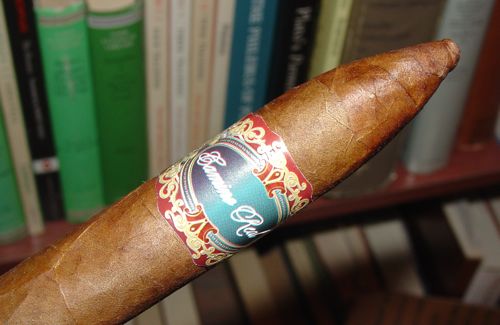
The wrapper on the Camino Real Series 6 is a fine looking claro leaf with a few prominent veins that are widely and evenly spaced; wrappers from Colombia’s neighbor Ecuador frequently appear this way, so maybe it’s a geographical trait. The wrapper is fairly thin and shows the texture of the binder leaf beneath. The roll is solid and regular, the cap is well formed, and the draw is excellent. The burn is slow, even, and cool. The ash is a little uncivilized — it varies from light gray to almost black; it’s solid but a little flaky.

Overall construction: Very good.

Tasting Notes

As expected, the Camino Real is smooth and mild. What I didn’t expect was that the smoke texture would be as full as it is; in fact, it’s almost creamy. It starts up with a sweet flavor on the palate, which is also unusual. I had expected a sweet aroma, but the light sugary touch on the tongue is pleasant and sits nicely with a morning cup of coffee.

The aroma is fragrant but it isn’t floral the way Connecticut Shade tends to be. It’s lighter and less cloying. The base flavors of the cigar become earthier as the smoke progresses, and the aftertaste grows from nothing at all to slightly woody. There is a suggestion of toast with powdered sugar in the aroma as it drifts from the foot of the cigar.

The flavor grows a bit stronger in the last third of the cigar, but it’s still mild enough that it can easily be nubbed. The last inch is less sweet and earthier, with a note of bergamot (like Earl Grey tea.)

Conclusion

Camino Real is a very distinctive cigar, and I would consider it a serious contender in the featherweight division. Smokers of mild cigars who reach for Macanudo or other lightweight Connecticut Shade smokes should really give this one a shot. I believe its complexity and unusual palette of flavors raises it above the competition in the mild category.

While not readily available in stores, five-packs can be purchased from the Route 45 website. The MSRP is around 5 USD, which is extremely reasonable. If you’re up for a walk on the mild side and want out of that old Macanudo-Baccarrat-RP Connecticut rut, I can recommend this Colombian puro for a nice change of pace.

Final Score: 89

CAO OSA SOL

CAO Cigars was acquired by STG (Scandinavian Tobacco) in 2007 and is now one of General Cigar’s many holdings. There was much speculation about what would happen to the brand after its acquisition, particularly since the company had such a large presence in the marketplace. Not many cigar makers have a “lifestyle director,” but CAO did, and it showed. As just another species swimming in the sea of General Cigar it could be expected that the brand would now assume a lower profile, and to some extent it has. (Check out the Stogie Guys’ interview with Ed McKenna of CAO for more details on this transition.)

But the brand continues to evolve, and the latest creation to crawl from the surf is this one, the OSA Sol.

OSA stands for Olancho San Agustin. The departament of Olancho is the largest in Honduras (larger than the country of El Salvador, actually) and lies to the northeast of Danli, the capital of cigar production in Honduras. There is an interesting saying about Olancho: “Entre si quiere, salga si puede” (Enter if you wish, leave if you can.)

The San Agustin valley is not on any map I can find, but if the coordinates that are printed on the OSA band are correct, it’s just across the El Paraiso border. Hopefully that makes it easier to leave. I looked at the coordinates on Google Maps and it appears to be an extremely remote location. No surprises there.

General uses a wrapper from the same region on their Punch Gran Puro, one of my favorite General smokes, and also on the Partagas Spanish Rosado. The OSA blend is quite different from those, but it is designed to “highlight the nuances” of this particular wrapper. The binder is Connecticut broadleaf, and the filler is a blend of Honduran and Nicaraguan tobaccos. Three sizes are in production:

  • Lot 54 – 54 x 6
  • Lot 58 – 58 x 6 1/2
  • Lot 50 – 50 x 5

Construction Notes

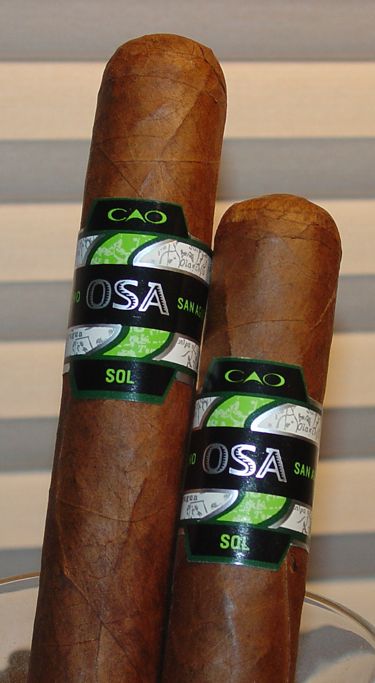
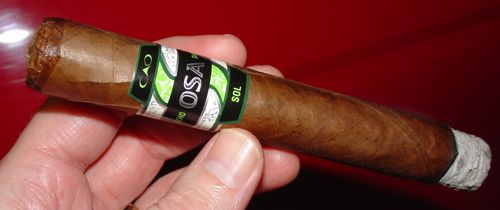
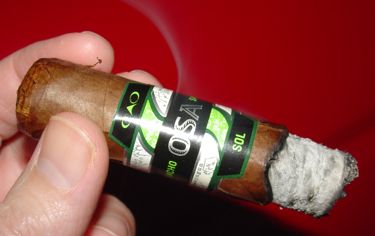
The star of the OSA Sol is the wrapper, but you wouldn’t know it by looking. It’s a little rough, fairly veiny, and somewhat dry in appearance. The cap is smooth but sort of pasted over a round Cullman style head, emphasizing its functionality. The cap cuts neatly though, and it doesn’t unravel. Triple seams are nice to look at, but function is what counts.

The roll of the cigar is solid, but contrary to some other reviews I found these to draw a little too freely. They seem to burn pretty quickly, which may be a result of the loose draw. On the other hand, the burn is perfectly even, and the ash is smooth and solid.

Overall construction: good to very good.

Tasting Notes

In a word, the OSA Sol is woodsy. Cedar and humus. It starts up with a cedary spice and a touch of tannin on the tongue. It’s smooth on the palate though, and the aroma is sweet and woody.  A couple inches into the cigar and the wrapper really starts to shine. Nuanced notes of apple and leather combine with the cedar in balanced complexity. The smoke remains smooth up to the end, but a slight pucker of tannin  persists; a dash of pepper in the last third adds a dimension to the woody flavors on the palate.  The sweet woodsy aroma continues to the end, but the flavor starts to char at the band.

Conclusion

Based on its wrapper I thought the OSA Sol would be similar to the Punch Gran Puro, but it’s mellower and maybe a bit more complex as well. It’s a great medium-bodied smoke for this time of year — I always like a woodsy cigar when the temperatures start to come down, and this one is smooth and burns beautifully. I wish it were a little more affordable, but 6 USD is probably not too much to ask. It’s worth a shot if you’re in the mood for a smooth and flavorful autumn smoke.

Final Score: 89

Special thanks to General Cigar for providing samples of this new blend.

Cigars for the Troops

It has been ten years since the United States suffered the worst attack on American soil since Pearl Harbor. And ten years later we are still fighting. Let’s not forget the brave soldiers who are deployed in Iraq and Afghanistan and in many other places around the world, doing their jobs and risking their lives for the security of Americans and free people everywhere.

I am putting together a shipment of cigars for some soldiers deployed in Kandahar, Afghanistan. It’s scheduled to go out about ten days from now, around September 21 or so. If you would like to contribute, or if  you would like more info on how you can help, please leave a comment below and I’ll get back to you.