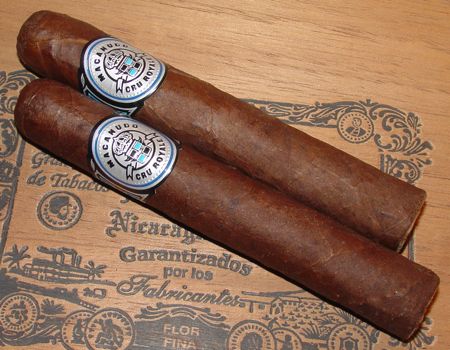
Macanudo Cru Royale Robusto

As much as I appreciate the creativity and craftsmanship that go into small “boutique” blended cigars, I can only imagine what blenders in small-time chinchales would do with the tobacco that General Cigar has at its disposal.

The huge libraries of leaf that large cigar manufacturers have available for blending not only gives blenders the opportunity to work with a wide-ranging palette of flavors, it also allows them to blend cigars that are consistent from year to year. While a veteran cigar smoker at his wife’s brother’s bachelor party is probably going to re-gift that present of a Macanudo, at least he knows that this year’s Mac is not going to be any different from last year’s Mac.

And that can be a very good thing, if last’s years Macanudo is what you’re game for.

But General has started to take the fun out of ribbing the Macanudo brand. The 1997 Vintage Maduro had crusty old ligero junkies taking a second look at the band, and the Macanudo Cru Royale seems to be doing the same.

Benji Menendez and Francisco Rodriguez have chosen an Ecuadorian Habano wrapper for the Macanudo Cru, along with a binder from General’s Vega Especial in the Dominican Republic. (This is the same binder used on the Partagas Black.) The filler blend is a combination of viso leaves from the Dominican and Nicaragua, bolstered by some Brazilian mata fina.

Four sizes are in production:

Lonsdale – 6.5 x 42
Robusto – 5 x 50
Toro – 6 x 54
Gigante – 6 x 60

Construction Notes

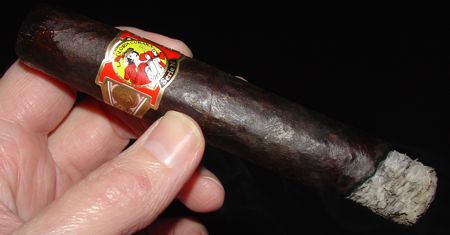
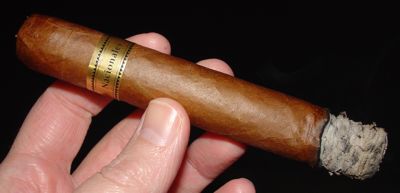
The Macanudo Cru Royale could easily be mistaken for a maduro cigar. Not only is the wrapper leaf dark enough, it’s also rough enough to pass for Connecticut broadleaf. The head of the cigar is rounded, in typical Macanudo fashion, but the leaf is so thick that it looks more like the tip of a blackened sausage than the mild-mannered Macanudo we know and (sometimes) love. This leaf has clearly been chosen for reasons beyond the aesthetic.

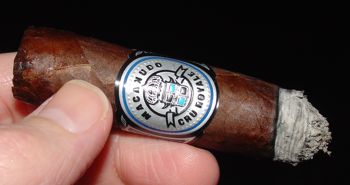
But who needs looks with a personality like this? The roll is solid, the draw spot-on, and it burns without a second thought. Even the ash is attractive. What’s not to love?

Tasting Notes

The Cru Royale looks like a maduro, and it smokes like one too. The soft aroma of sweet chocolate wafts up from the foot of the cigar almost before it is lit. The flavors on the palate are somewhat dry, and surprisingly spicy — not Nicaraguan puro spicy, but certainly spicier than what you’d expect from a Macanudo.

After an inch or two the sweet savor of the chocolate turns noticeably sharper and more complex than the standard maduro. There is a note of hardwood and a mild acidic bite.

The coffee and cocoa bean flavors slowly turn to coffee at the cigar’s conclusion, and it finishes with some pepper on the tongue. Not enough to be called rough, but it’s not exactly creamy either.

Conclusion

The Macanudo Cru Royale is surprisingly aggressive for a Macanudo, but it stays well within the medium-body range and won’t challenge most delicate palates. Rookies graduating to medium-bodied cigars will enjoy the complexity of this smoke, and it won’t knock ’em out.

I want to compare this cigar to the Macanudo Maduro Vintage 1997, but I’m not sure that is fair. The Cru Royale is considerably less expensive — in the 5 to 6 USD range — and is more of a standard line cigar. But they both came out at around the same time, so I can’t help myself. Not surprisingly, the Cru Royale is not as rich or complex as the Vintage ’97. But it’s still a very interesting cigar, especially for a Mac.
Final Score: 86
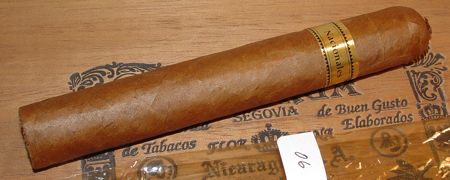
Jaime Garcia Reserva Especial Robusto

There are so many reviews of this cigar in the blogosphere — all of them positive from what I could see — that I can find no reason not to throw another one on the fire. Unfortunately the volume of material fact about the composition of this cigar exists in inverse proportion to the number of opinions, and the My Father Cigars website is still under construction. (A very classy site, by the way, but every link to actual information about a cigar blend yields only a promise that it is “Coming Soon”. )

But the reliable intel is that this cigar is made by My Father Cigars in Esteli, Nicaragua, and is named for (and probably blended by) Jaime Garcia, the son of cigar superhero Jose “Don Pepin” Garcia. The wrapper is a dark Connecticut Broadleaf, and the filler leaf is a combination of tobacco harvested from Garcia’s farms and Oliva’s farms in Nicaragua. Some sites indicate that the binder is Ecuadoran (which would be an unusual choice, but Oliva does grow a huge amount of tobacco in Ecuador) and other sites say the binder is Nicaraguan.

Six sizes are in production, including the newly introduced fireplug format, denominated here as the “super gordo”.

  • Petite Robusto – 4 1/2 x 50
  • Robusto – 5 1/4 x 52
  • Belicoso – 5 1/2 x 52
  • Toro – 6 x 54
  • Toro Gordo – 6 x 60
  • Super Gordo – 5.75 x 66

Construction Notes

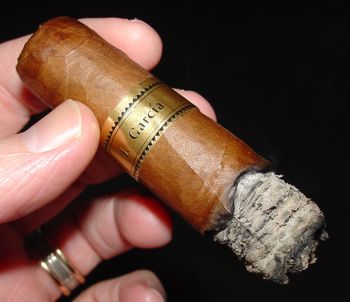
It’s not easy to make broadleaf look beautiful, but My Father Cigars does about the best that anyone can to make it presentable. The wrapper is dark, but variegated in color from dark brown to black. No artificial processing here.  There are the expected veins, but they’re fairly discreet by broadleaf standards. The roll is solid, though the cigar seems a bit light in the hand for some reason. The  head of the stick is rounded and the cap is not triple wound. This is very unusual for a cigar from this factory, but it is understandable given the toughness of the leaf.

The draw is excellent, and while the burn wavers a bit it catches up without encouragement. It seems to burn rather quickly. The ash is solid but slightly flaky.

Overall construction: Very Good.

Tasting Notes

The acorn doesn’t fall far from the tree, and the Jaime Garcia Reserva certainly retains many of the flavors we’re familiar with from his father’s blends. The toro starts up with a dry tannic pinch to the salivary glands, followed by a moderate amount of black pepper on the tongue. The base flavor is earthy, but it is balanced very nicely by the broadleaf’s sweet chocolate aroma.

The mid section continues in the same vein, dry and peppery, though the volume is dropped a few notches on the spice. The sweet earthy flavors momentarily combine to give the impression of pine resin.

The last third focuses on a black coffee flavor as the sweetness dissipates. It finishes a little bit harsh, as if it were serving up a mouthful of grounds rather than a smooth cup o’ joe. The complexity of flavors presented up to this point might have persuaded me to smoke this cigar beyond a prudent point, but I couldn’t help myself.

Conclusion

The Jaime Garcia Reserva Especial robusto is an excellent medium-bodied smoke with an earthy taste on the palate but a sweet broadleaf maduro-style aroma. The blend tastes very much like what one would expect from My Father Cigars, though perhaps a little milder than many of them. It reminded me of a less manly 601 Maduro. 601’s little brother, maybe.

There is a slight raspiness to the smoke that won’t bother My Father aficionados, but I’m hoping that with a little age these will smooth out a bit more. That said, they’re certainly not difficult to smoke now. MSRP appears to be in the 7 USD range. Definitely worth a look for maduro lovers, especially those who enjoy the Garcias’ tannic pinch.

Final Score: 89

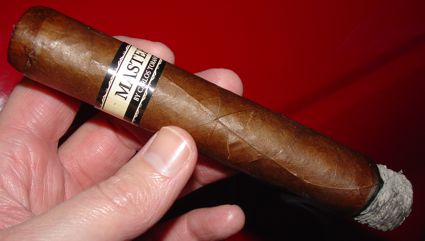
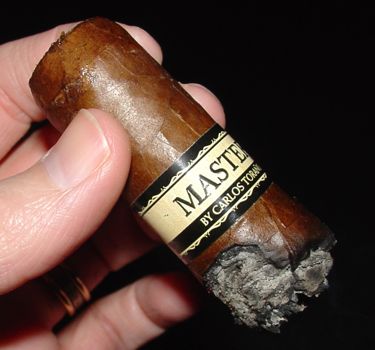
Carlos Torano Master BFC

Large ring gauge cigars have always been popular, at least as long as I can remember, but it’s only recently that the gargantuan ring gauges — 60 or more — have caught on. I reviewed the Toraño Master Torpedo at the end of last year, but since then this 6 x 60 monster has been released. I shy away from super huge ring gauges, but since the Master is a fairly mellow fellow I thought I’d give it a shot. Here are the basics:

  • Wrapper: Ecuadorian Habano
  • Binder: Nicaraguan (Esteli)
  • Filler: Nicaraguan (Esteli and Jalapa)

BFC stands for Breakfast For Cigarfan. Okay, maybe not. But I do think this is a fantastic morning smoke — smooth, flavorful, and easy going.

Construction Notes

The wrapper is a dark golden brown with a nice sheen, and the cigar is perfectly rolled. Gazing at the cut face after clipping, it looks like it could be packed too firmly, but a pre-light test draw dispels that impression. It draws quite easily and despite its girth it lights easily as well. The ash is solid and the burn is slow, as it should be when a cigar has a nearly one-inch diameter.

The only issue I had was the wrapper cracking, but I suspect this may be due to shipping and rapid humidity changes. I haven’t had this problem with the Master in other sizes.

Tasting Notes

Up front there is a nice melding of cocoa and cedar. The wrapper on this cigar has excellent aromatic qualities, resulting in a complex of mild spices on the nose. The woody core of the cigar is typical of milder Nicaraguan blends. There is also a honey-like sweetness in the mix.

The BFC shows some development as it enters the middle section, though it isn’t very dramatic. The cedar on the nose is still present but is bolstered by bean flavors — cocoa and coffee with cream.

This oversized nice guy skates into the last lap with some caramel on the palate and lots of mellow medium-bodied smoke. The honey flavors from the first section linger and blend well with the cocoa and coffee, though the sweetness has more of a caramel than a honey character in the final inch.

Conclusion

The basic characteristics of the Master BFC are the same as the other sizes that I’ve tried — this is a smooth and medium-bodied cigar with a complex aroma. Like the Torpedo, this one reminds me a lot of Toraño’s super-premium Noventa, the difference being a little more body and a little less complexity. (And of course, a lower MSRP.) If anything, the Master BFC seems even smoother than the Torpedo, which is pretty buttery to begin with.

This blend is really starting to grow on me, but I will probably opt for the smaller ring gauges in the future. On the other hand, if you dig the big boys and smoke in the medium-body range, you’ll have to check this one out. The very reasonable price might be the deciding factor here: 6 to 7 USD. That’s a lot of cigar for seven bucks.


Final Score: 90

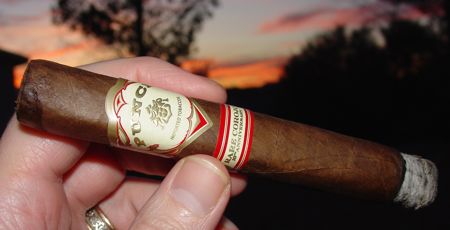
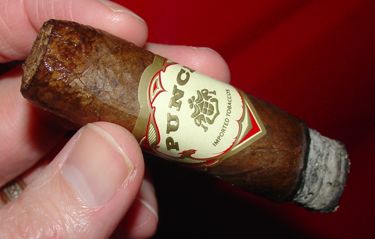
Punch Rare Corojo 10th Anniversary

It’s hard to believe the Punch Rare Sumatra has been around for 10 years already. Yes, I know, it’s actually the “Punch Rare Corojo” but I’ve been calling it “Rare Sumatra” for so long that I can’t change now. This is what happens when you get old.

As most of us already know, the original Rare Corojo doesn’t utilize a Corojo wrapper at all. It has a lovely colorado-hued Sumatra-seed wrapper grown in Ecuador. So WHY did General Cigar call it Rare Corojo? I haven’t the slightest idea, but like many of the cigar industry’s enduring mysteries it probably comes down to marketing.

So it’s a bit of a reversal that the Tenth Anniversary edition of the Rare Corojo is not Sumatran — it’s actually corojo! Truth in advertising at last!  But wait. It’s an odd sort of corojo: it’s grown in Connecticut. So not only is it actually corojo, it’s also quite rare. Up to this point I’d never heard of Connecticut Corojo.

The filler and binder appear to be the same as the Rare Sumatra: the binder is Connecticut Broadleaf, and the filler is a Honduran-Nicaraguan-Dominican blend. And like the original, the 10th Anniversary is rolled in General’s Honduras HATSA facility. Just this one size — a 5 x 50 robusto — has been made in a limited edition.

Construction Notes

Like the original Rare Sumatra, the 10th Anniversary Rare Corojo is box-pressed, and like most cigars from General it exhibits generally excellent construction. The wrapper is quite dark for a non-broadleaf Connecticut, and it shows some weathering and a few fine veins. The single cap is not really attractive, but it’s functional. The draw is excellent, and it burns perfectly.

Overall excellent construction.

Tasting Notes

The Punch 10th Anniversary Rare Corojo flares up with a touch of black pepper and a citric edge. The smoke is quite dry and mouth-wateringly acidic. The aroma is mildly spicy and somewhat intriguing. I’m not sure what to make of it because it has the softness of Connecticut shade, but the spiciness of corojo. An odd combination.

At the half-way point the smoke is decidedly medium in body and strength. The flavor is woody with overtones of earth and nuts. There is enough tannin here to go around for everyone. All you little taste buds, get in line. Who wants more tannin? The aftertaste is earthy and astringent.

The cigar finishes in expected fashion– woody and quite dry — though I found myself primarily concentrating on the sweet and exotically spiced aroma.

Conclusion

While I enjoyed the aroma of the Rare Corojo 10th Anniversary and its excellent roll and burn, these didn’t quite balance out the boldly tannic foundation on which the cigar is built. Tannins have a tendency to even out with age though, so this Punch Anniversary blend may just be a diamond in the rough. I didn’t really care for the original Rare Corojo when I first smoked it years ago, but then it grew on me. This cigar may do the same thing.

The Punch Rare Corojo 10th Anniversary should be in stores soon, if it isn’t already. MSRP is around $6.50 per stick.

Final Score: 84

Special thanks to General Cigar for sending review samples of this new release.

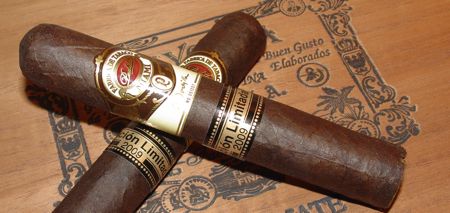
Padilla Miami Maduro “Edicion Limitada”

If it sounds too good to be true, then it probably is. The truism is never more apt than in the cigar world. The earnest gentleman on the boardwalk who swears those Cuban Cohibas are genuine and that he’s willing to part with them for only $200 a box? Think again. Most of us are not so gullible, but at the same time we like to think that we know a good deal when we see one.  Online vendors use good marketing tactics to take advantage of this natural impulse.

An interesting post appeared recently on The Velvet Cigar questioning this practice, and it’s well worth reading.  Like the author of that post, I am a regular and mostly satisfied customer of Cigars International. I can neither confirm nor deny any of Ironmeden’s facts, but from time to time I think we’ve all harbored suspicions  about those “exclusive” blends from upper tier cigar makers. The question is unavoidable: why would a reputable producer of premium cigars which normally sell in the 10 dollar range suddenly decide to make a 3 dollar cigar for a discount vendor?

I don’t have the answer to that question, but as an intrepid aficionado of the cheap smoke I’m willing to throw the dice. So here I go again.

The Padilla Miami Maduro “Edicion Limitada” is a Cigars International exclusive, along with three other “small batch” blends that are all packaged together and sold as a sampler pack. The Miami Maduro doesn’t appear to be available apart from this sampler.

There is no official information available on the blend that I could find. It would be highly irregular for a Padilla smoke to be anything other than mostly Nicaraguan, but again there is no official information available. (There is ad copy information on the CI site, but it is as useless as it is trite.) There is only one size, to my knowledge: this 5 x 50 robusto.

Construction Notes

At first glance, this cigar has substandard construction. The roll is slightly soft and the cigar is misshapen. The caps on some of them are okay, others are pretty sloppy. One of them was actually peeling off. The wrapper leaf is consistent though, and the burn is even and fairly slow. I can easily forgive some aesthetic flaws if the cigar draws and burns well, so I’ll let those slide. But I seriously doubt that this cigar was made in Miami.

Overall construction: Good.

Tasting Notes

The Miami Maduro flames up with a peppery assault on the palate, followed soon after by an aroma of dark chocolate on the nose. It’s much better than I expected it to be. After an inch or so this is clearly a full body cigar.

The pepper dies away after an inch or so and the chocolate flavors mellow out to cocoa. Some char is added to the sweet bean flavors, layered over a woody underpinning. There isn’t a whole lot of complexity here, but there’s plenty of flavorful smoke.

The back half of the cigar is more of the same, but the flavor gets a little more concentrated — chocolate and char. It turns somewhat burnt tasting at the band.

Conclusion

The Padilla Miami Maduro is in this formulation a decent smoke, but it lacks the complexity of the Padilla Miami I’m accustomed to. This may be due to the wrapper, or it may be due to the blend as a whole. I don’t think I could distinguish this cigar from one of Plasencia’s better maduros, which is not necessarily a criticism, considering that I paid only two dollars for it. This is one instance where price really does make the difference.

Final Score: 85

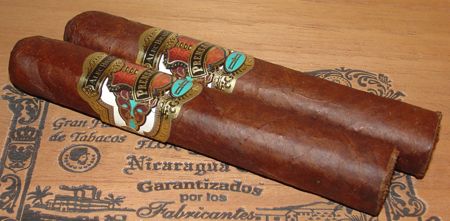
Alec Bradley Prensado Robusto

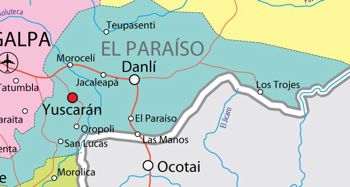
The Trojes revolution that started with the Tempus blend in 2008 is still going strong. Not long after the Tempus was released, Alec Bradley unleashed the Trojes-wrapped SCR (Select Cabinet Reserve) and about a year later the Prensado appeared on the shelves. Since then, leaf from this small Honduran village has almost become synonymous with Alec Bradley.

Las Trojes is a tiny border town about 40 miles east of Danli, the heart of cigar making operations in Honduras. The Jalapa valley is just across the border in Nicaragua, and Esteli is a few more miles down the road, or what passes for a road in this part of the country. This is solid tobacco country, and Alec Bradley seems pretty happy with it. They’ve gone so far as to trademark the name Trojes, so it seems certain that this isn’t the last we’ve seen of this fine leaf.

For the Prensado the blenders have chosen an aged 2006 Corojo wrapper from Trojes, a binder from Jalapa, and a Nicaraguan-Honduran filler combination. The cigar is pressed, which is nothing new for the company (remember the Trilogy?) but this fact is emphasized by the name — prensado means pressed in Spanish.

The cigar is made in the Raices Cubanas factory in Danli, where the Tempus is also made (along with many other cigars for various manufacturers.) Five sizes are in production:

Churchill – 7 x 48
Torpedo – 8 1/8 x 52
Gran Toro – 6 x 54
Corona Gorda – 5 5/8 x 46
Robusto – 5 x 50

Construction Notes

The Prensado Robusto is clearly pressed, but it’s not a severe press — a little more than box-pressed, but not a lot more. The wrapper is a dark colorado maduro with some inconspicuous veins. The head of the cigar is somewhat flat with classic Raices Cubanas finishing, including a smoothly executed triple cap. The draw is excellent and the burn is slow and mostly even. The ash is dirty gray, striated with black, and holds well.

Overall construction: Excellent.

Tasting Notes

The pungency of the pre-light tobacco comes through almost immediately as leather, and the smoke has a lengthy finish from the start. There is a peppery edge to it, which is supplemented by a sweet, nearly fruity accent. It is full-bodied, but smooth.  The combination of flavors here is impressively complex, which is unusual for the first inch of a cigar.

Flavors of cocoa or chocolate emerge after an inch or so into the cigar. The leather remains in the background while the pepper fades a bit. The fruity accent seems to evolve into a minty, cameroon-like flavor. Taken as a whole, the combination of flavors here is really interesting.

The Prensado sails into band territory balanced and smooth, but it still hasn’t completed its voyage. The cocoa takes on a caramel-like tone, over which is laced a touch of vanilla. The cigar gets a bit sharp at the very end, but this is after an hour long journey with some gorgeous vistas.

Conclusion

The Alec Bradley Prensado is a fantastic cigar with a rare combination of complexity, smoothness, and body.  What is even rarer is that it wastes no time in getting to work — from first puff to last there is something to savor here. We’ve all had the “sweet spot” experience, but the Prensado seem to be all sweet spot.  The combination of leather, cocoa, sweetness and spice is extremely well balanced, and the construction is just about perfect.

The robustos are in the 7 to 8 USD range, and I’d say they’re worth the expense. It isn’t often that I enjoy a cigar from beginning to end, so I feel like I definitely got my dollar’s worth out of this one. The only thing I didn’t like about the Prensado is how long it took me to discover it.

Final Score: 93

Other Reviews of Note

The Toasted Foot examines the Robusto

Barry checks out the Robusto for A Cigar Smoker’s Journal

CigarChoice gives the Gran Toro a thumbs up

The Stogie Guys are a little underwhelmed by the Robusto

Ed and Tom award the Torpedo the Stogie Review Seal of Approval™

La Gloria Cubana Serie N

This Friday, March 25, marks what General Cigar is calling the “first-ever national virtual cigar tasting,” or more simply, Serie N Day. The event will be streamed live from the famous El Credito Cigar Factory in Miami and will feature an open forum chat between the members of Team La Gloria and select retailers. They will be taking questions via Facebook and Twitter at that time as well.

La Gloria’s Serie N cigar was designed as a medium-bodied counterpart to its well-known (and full-bodied) Serie R line. I have heard that the N, which is emblazoned on the barrel of each cigar using a lighter colored leaf, stands for Nicaragua. So naturally, the wrapper leaf is an Ecuadorian Sumatra. (Maybe the N stands for something else then. Maybe they’re Cornhusker fans?) On the other hand, the rest of the cigar is composed of Nicaraguan tobaccos proprietary to General, so the N stands vindicated after all.

The Serie N was blended by Yuri Guillen, with the participation of the other members of the team: Benji Menendez, Michael Giannini, and Rick Rodriguez. The line is produced in the Dominican Republic and is presented in 24-count hexagonal boxes that are painted bright red with the Serie N logo in gold.

Four sizes are in production:

JSB – 5 1/2 x 54
Rojo – 6 1/2 x 46
Generoso – 5 3/4 x 49
Glorioso – 6 1/2 x 58

(Somehow I lost my N…)

Construction Notes

The blenders call the Serie N wrapper “capa oscura,” and it’s easy to see why. It’s a shiny, nearly uniform black. There is just enough variation in the black tone to see that the processing of the leaf was done naturally. The roll is solid, though one sample I received had a dent in one side (I’m blaming the mailman) and the draw is excellent. The head is round, but the cap is not particularly admirable. It sort of looks like a massive cheroot (with an N on it.) The prelight scent of this cigar is sweet with a raisin-like note over the cured tobacco smell.

The cap slices off neatly and even with a haphazard light the foot takes on an even burn. After ten or fifteen minutes of leisurely smoking the ash is solid and secure.

Overall construction excellent.

Tasting Notes

The Serie N starts up surprisingly sweet and cedary, with an earthy hint of sulfur lurking in the background. At odds with this is a plummy note, or more specifically, a whiff of prune. The lowly prune has a somewhat checkered reputation, so I am reluctant to use that reference, but the nose doesn’t lie. (Though I admit it is sometimes mistaken.) The smoke is very smooth on the palate, but quite flavorful.

After fifteen or twenty minutes’ smoking time, an acidic zing appears on the palate. The fruitiness fades and gives way to cocoa or chocolate flavors. It remains smooth and creamy on the palate, but picks up some spice on the nose. If you’re a retrohaler, you’ll find some exciting things going on here.

In the last section a leathery base emerges with an overlay of chocolate and pepper. The spice seems to be almost entirely in the nose, not on the palate, where it remains quite smooth.

Conclusion

The Gloria Cubana Serie N isn’t billed as a maduro, but with its sweet chocolate cocoa profile I think it smokes like one. Add to this its initial cedar flavor, the fruity note, and the transition to leather at the end, and you have a maduro-style cigar with more complexity than your standard maduro.

The Serie N is priced in the 6 to 7 USD range, which is eminently reasonable given its high quality. Light one up this Friday and enjoy Serie N Day with the folks at Team La Gloria. I doubt you’ll be disappointed.

Final Score: 90

Macanudo Maduro Vintage 1997

Once every five years or so the blenders at General Cigar deem a selection of their aged tobaccos worthy of inclusion in a limited Macanudo Vintage edition. Last year saw the first such release with a maduro wrapper, a 13-year old Connecticut Broadleaf used on the Macanudo Maduro Vintage 1997.

The cigar was blended by Edmundo Garcia of General Cigar Dominicana in Santiago. It incorporates Nicaraguan ligero, Brazilian mata fina, two types of Dominican piloto cubano, and a binder grown on Nestor Plasencia’s farm in Talanga, Honduras.

The Macanudo Maduro Vintage is packed in handsome 12-count mahogany chests. The initial release last year — the “Reserva Dorada” edition — attracted attention because each cigar was adorned with a concave metal band. I’ve been told the band acts as a humidity gauge, but I am a little sceptical on that point. I do, however, believe it would make a swell engagement ring. (Under certain unspecified circumstances, for the digitally well endowed.)

Only two sizes are made, a 6 x 49 perfecto, and a 6 x 54 toro. I am reviewing the toro, obviously.

Construction Notes

The wrapper is dark but not matte black (an indication of natural processing), and is somewhat rustic despite its rich complexion. The round Cullman style cap is a trademark of the Macanudo line, so it is present here as well. All other construction qualities are excellent — a firm roll, an easy draw, and a solid (but slightly flaky) ash. The burn is surprisingly even for a maduro cigar.

Overall construction: Excellent.

Tasting Notes

As you’d expect from a Macanudo, this cigar is very smooth, but it has a bit more flair than your typical Mac. In the first third there is a fair amount of spice on the nose (though not on the palate) and the smoke is highly aromatic with wood and chocolate scents. The smoke texture is creamy and medium in body.

There is a little more heft in the middle section as the flavors grow slightly more robust. The cocoa and chocolate flavors migrate to the palate while the sweetness of the aroma intensifies and adds a touch of char.

The big surprise is in the final section of the cigar — a mild bite. Imagine that — a Macanudo with a bite! It is admittedly a playful one, and for the most part the cigar remains smooth with lots of chocolate and coffee notes to the end.

Conclusion

This Mac Maddy ’97 is a daddy of a smoke. It’s not tremendously complex, but it’s smooth and packs a whole lot more flavor than I’d expected. All of the flavors you’d expect from a top-shelf maduro are here — chocolate, wood, and sweet char — and it burns beautifully.

The going price for this cigar is around 9 USD per stick, but they’re a rare commodity at the moment. They seem to be sold out everywhere, which in itself is a good indication of its quality.

Final Score: 88

Aging Report: Nacionales W

Over the years I have really questioned whether aging a cigar is always worth the effort. I’ve made a committed attempt, but so far I haven’t found it to be uniformly successful. Obviously there are many dedicated proponents of cigar aging, but I was heartened to read that Jose “Don Pepín” Garcia is not one of them. A few years ago he was at an event and a participant asked him if aged cigars were better than freshly rolled sticks. “A ten year old cigar, you might as well smoke paper.” Garcia said that cigars are meant to be enjoyed while the oils and moisture are still present — and it makes sense as a cigar maker that he would say this. He’s blending cigars to be smoked with the qualities that the tobacco has now, not what it will have years from now.

So it is a little ironic that of all the cigars I’ve aged, this one has performed the best over time — Garcia’s Nacionales W El Mundo. I picked up a handful of these in 2006 at the Cigar King in Scottsdale, Arizona, for which the Nacionales is made. I smoked most of them then (you can see the original review here), but this one has been resting quietly in my long-term humidor ever since. The cellophane has taken on a yellowish-brown hue, but aside from that the cigar still looks perfect.

The El Mundo is a 5.5 x 52 robusto with a triple-wound pig-tail cap that makes it look like a Cabaiguan Guapo. The wrapper is a Nicaraguan Corojo 99, and if any of the oils have volatilized over the years it’s not easy to see —  the leaf is supple and displays a nice sheen. The roll is solid, and the draw is as perfect as you can get.  I was surprised to find that the prelight scent of the tobacco is still pungent with earth and musk.

It often takes a few minutes for an aged cigar to awaken after its long slumber in the humidor, but the Nacionales W perked up right away with a dry woody flavor and a dash of black pepper on the tongue. The flavors of this cigar suddenly came back to me — dry tannins, woody spice, and a sweet semi-floral note on the nose. The aroma is complex, exhibiting everything from cocoa to sandalwood.

At the mid-point this cigar is wonderfully expressive, and I think it probably has improved over time. The tannins have dropped off a bit but the pepper lingers on the palate. There is a bready note that I rarely notice in non-Cuban cigars. The body is in the medium range, and even after five years the nicotine kick is still considerable.

The last third of the cigar is earthy with coffee and cocoa-like overtones. The finish is lengthy and the aftertaste somewhat bitter at the very end.

Conclusion

After five years, the Nacionales W shows none of the evanescence that the blender fears — this is a solid smoke that is every bit as complex and enjoyable as it was on its release, if not more so. My only complaint is that I don’t have more of these on ice. With the tremendous surge in Don Pepín’s production it doesn’t seem likely that the blend is exactly the same today, though there’s always hope.

But at least the Nacionales W is still available, presumably in a formulation that is at least close to the one here. This blend is available only from Cigar King, and the El Mundo size sells for around 6 USD each. I’ll be tempted to pick up a few more the next time I swing through the Phoenix area.

Final Score: 90

Alec Bradley Sun Grown Robusto

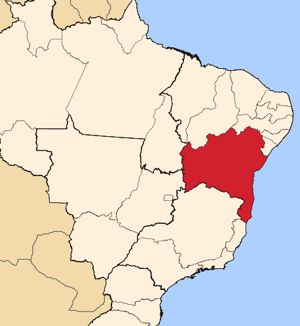
Alec Bradley’s Sun Grown cigar is distributed as a Famous Cigar private label, so there is limited information about it available. The distinguishing feature of the blend is a Mata Fina wrapper from the Bahia region of Brazil.

Mata Fina is a region in the Reconcavo Bahiana, the “bay area” of the state of Bahia. Much of this part of Brazil has been cleared of its natural forest over the years and secondary regrowth has taken place. “Mata Fina” is a farmer’s term for the type of regrowth, secondary forest, in this area. The climate and soil is excellent for tobacco cultivation — tropical weather with plenty of sun (though an average of 42 inches of rain annually) and sandy soil that provides good drainage. Tobacco farmers like to point out that Bahia is the same distance south of the equator that Cuba is north of it.

Tobacco is native to Brazil and was quickly adopted by early Dutch and Portuguese settlers. By the late 19th century it was one of Brazil’s leading exports, both in raw form and finished cigars. Brazil still produces a prodigious amount of tobacco (and a few blends of Brazilian puros) but the vast majority is now exported to major cigar manufacturers in Central America and the Dominican Republic.

All of the tobacco in Mata Fina is sun grown, which is part of the reason for its dark appearance. When mata fina is naturally cured it turns quite dark and can be mistaken for maduro, but the leaf is actually less robust, more refined and more highly aromatic than most maduro wrappers. Mata fina is most frequently used as wrapper leaf (which is hand-picked) but it can also be used as binder and filler (which is stalk cut.)

In addition to a Mata Fina wrapper, the Alec Bradley Sun Grown employs a Honduran binder and fillers from Nicaragua and Colombia. Three sizes are in production:

Churchill – 7 x 48
Robusto – 5 x 50
Toro – 6 x 52

Construction Notes

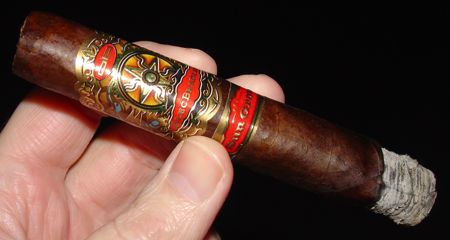
I haven’t seen how the Alec Bradley Sun Grown is packaged (I picked up a five-pack from Famous), but they look box-pressed to me. The roll is a little bit soft and seems to have taken on some press. The wrapper is dark and rich in appearance, though every bit as rustic as you’d expect from a sun-grown leaf. The cap is purely functional. Actually, the stick seems to have been designed without aesthetics in mind at all — maybe after looking at the wrapper they just threw in the towel. The band, on the other hand, is gorgeous. The secondary “Sun Grown” band is probably unnecessary though.

The robusto burns quite well — straight, with an even draw, and a smooth light gray ash.

Overall construction very good.

Tasting Notes

The robusto starts up with a flare of sweet spice, but it’s not the explosion of pepper that is common to a lot of Nicaraguan cigars. It’s palate-tingling, but it’s more like the minty flavor found in  Cameroon. There is a mild bite on the tongue and the aroma is sweet and complex. I have a hard time distinguishing the scents on the nose at this point, but the base flavor is coffee and earth.

Cruising into the mid-section the smoke gets a bit smoother on the palate but remains spicy upstairs. As the flavors settle and coalesce there’s a hint of cherry over the continuing coffee and earth underneath.

The complexity of the cigar diminishes as the cigar burns into its final stage, concentrating on coffee, earth, and that minty or clove-like scent with which it opened. The coffee dwindles into a burned flavor and starts to turn bitter at the very end of the smoke.

(One of the three I’ve smoked so far was a dud. I’m going to count that one out of my assessment, but I’d be interested in hearing if anyone has had a similar experience. Maybe there was a bad leaf in there or something.  If anything it shows that you have to smoke more than one cigar (preferably several) before passing judgment on a blend.

Conclusion

I don’t usually expect much from large distributors’ exclusive cigars, but the Alec Bradley Sun Grown was a good one. The complexity of aromas that the mata fina wrapper contributes really distinguishes the cigar, and at a price around 5 USD it makes a great everyday smoke.

Pick up a five-pack and let me know what you think. (Strangely, buying four five-packs is significantly cheaper than buying a 20-count box. And it’s not like Kaizad Hansotia designed the box.)

Final Score: 89