Long ago and far away, in a distant decade called the Eighties, there was an upstart cigar brand called Ashton. Robert Levin, who had been running Holt’s Cigar Company, decided to get into the cigar manufacturing business and borrowed the Ashton name from the respected line of English pipes. The very first Ashtons were produced in the Dominican Republic by Henke Kelner of Davidoff fame, but within a few years Levin began to work with his old friends the Fuentes.
Levin and Carlos Fuente Jr. began developing the Ashton Cabinet blend in the late eighties. The story goes that Levin asked the Fuentes if they could make a Hemingway cigar with a Connecticut Shade wrapper. Carlito Fuente said they could, and after working the blend for a couple years the final result was the Ashton Cabinet cigar. The original release comprised three shaped sizes; today there are ten, including four perfectos.
Levin remarked in an interview for Cigar Aficionado that at the time of release, the Ashton Cabinet was the highest priced cigar on the market. He doesn’t say what that price was, but the original Ashton Churchill at the time sold for $2.50. My, how times have changed.
The Ashton Cabinet was developed right around the time that Tabacalera A. Fuente took over Ashton production from Tabadom. The blend includes “no less than six different tobaccos” and features a golden Connecticut Shade wrapper. The binder and filler are Dominican, and the belicoso in the line is a short torpedo at 5 1/4 inches long by a 52 ring gauge.
This little belicoso is a handsome cigar — with its finely formed head and firm roll it balances nicely in the hand. The wrapper is a smooth colorado claro typical of quality shade leaf, but I noticed in one sample that the color varied within the leaf. The section toward the foot was a slightly tawnier shade than the upper half. A little distracting, but not a serious defect.
This cigar starts up with a dry flavor that some have described as bitter, but I wouldn’t go that far. This astringency dissipates after half an inch or so, within a few pulls at most, and is replaced by a mild nutty flavor. The smoke becomes increasingly creamy, and then the distinguishing element of the Ashton Cabinet comes to light: a deliciously sweet aroma that in a strange way reminds me of bubblegum. Not as cloying as a big wad of Bazooka, but to me there is something very confectionary about it.
Into the second half the flavor gets nuttier and the creamy texture of the smoke approaches a medium body. At times a dash of pepper touches the palate and throat, but the overall impresson is smooth and sweet with some light kitchen spice.
The burn tends to be a bit erratic but is mostly self-correcting, and the draw is just about perfect. Aside from the wavery burn this stick earns good marks for appearance and construction.
The Ashton Cabinet Beli is a tad pricey at around 8 USD, and I can think of cigars that are comparable in quality that are more affordable (La Tradition Cubana comes to mind) but this is indeed a high quality premium cigar. If price isn’t a determining factor, this is certainly a cigar to try if you’re after a light to medium bodied cigar with that creamy spice one often finds with Connecticut Shade.
So the question is, of course, who is TED? This is a mystery the makers of Ted’s Made by Hand choose to leave unsolved. For the moment Ted appears to be a riddle wrapped in an enigma wrapped in a bunch of advertising rhetoric, but hey, ya gotta sell cigars somehow. I’ll say this much for Ted’s right off the bat: the distributor was kind enough to offer up a hundred sticks to Club Stogie members to try for free, and that’s about as classy as it gets.
A little research shows that Emprise Cigars, the distributor of Ted’s, is also the outfit behind Maker’s Mark and Courvoisier flavored cigars. Following the thread, it turns out that behind Emprise is English Emprise, a company that specializes in building brands and “riding the coattails of brand loyalty.” Among other licensees in the Emprise stable are the Indianapolis Motor Speedway and the Rudy Giuliani Presidential Committee. (And if you didn’t think the leader of the free world could be a brand, check out the George W. Bush store. The Spalding Group is another Emprise company.) And who is the man behind English Emprise, the Spalding Group, and Emprise Cigars? An entrepreneur named Ted Jackson. Gotcha, Ted.
Ted’s website is sharp, if a bit flashy, and offers up this information about the blend: a Connecticut Shade wrapper, a Dominican binder, and filler from Brazil, Nicaragua and a little more DR. (What Ted’s website does not say, but Cigar Insider does, is that Ted’s cigars are made by Victor Sinclair.) They are rolled in the DR, after which they are packed in “seamless, foil debossed wood boxes.” I’m no design expert, but it looks like Ted has the packaging down pat.
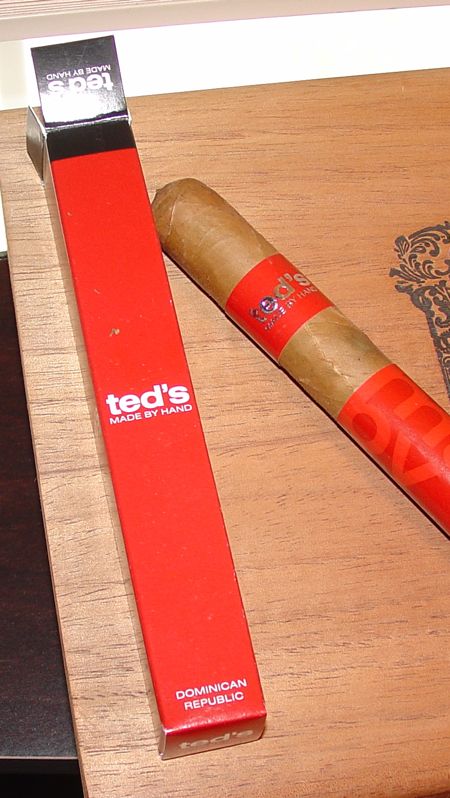
But wait… there’s more! The test package that arrived in my mail box was a marketing marvel: a thin cardboard sleeve holding a box that opens like a book. On the verso a nice photo of some good old boys in a corn field having a laugh and smoking Ted’s handmade cigars. The picture spills over onto the recto side where recessed in the page is another cardboard box containing one of Ted’s finest 6 x 50 Connecticut Shade toros. Snazzy!
On to the cigar, with a caveat: my impressions are based on sampling one cigar only. Bearing that in mind…
Ted’s toro comes equipped with a standard ring in the usual place, plus a large paper sleeve of questionable value that is difficult to remove without damaging the wrapper leaf. The wrapper itself appears smooth and dry with moderate veining but is slightly marred by a pea-sized greenish discoloration near the band.
The prelight scent is grassy. I used a straight cut and took a prelight pull: easy, a little too easy maybe. The prelight flavor is typical light tobacco with a little alfalfa.
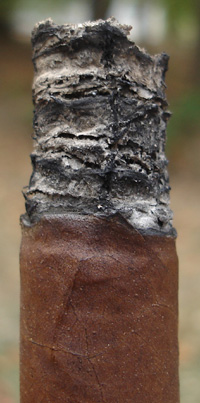
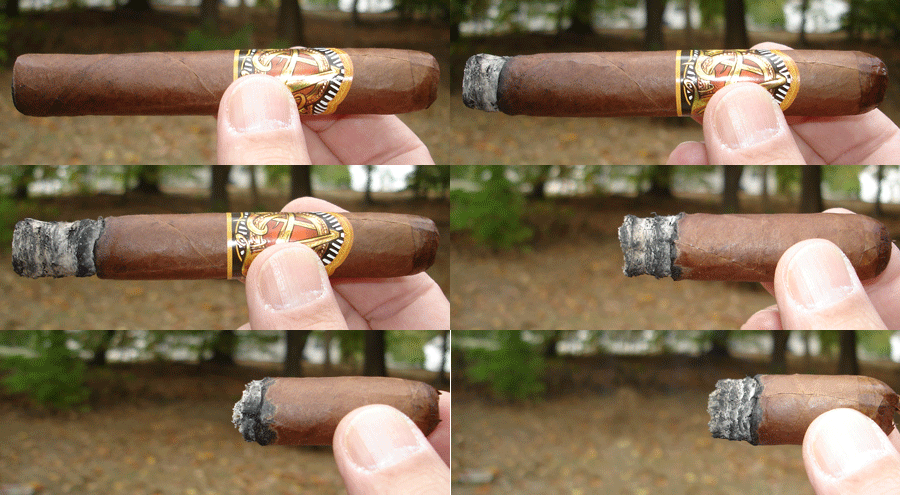
It lights without much effort and maintains an even burn for the next hour, leaving a light gray to white ash that flakes a bit and crumbles in the ashtray. As a personal preference I like a tighter draw, but the cigar never burns hot or suffers from burn problems, so the loose draw can’t really be called a construction defect.
Ted’s Made By Hand is a mild cigar with a pleasant floral aroma. The base flavor is nutty with a light woody element that gets increasingly vegetal as the smoke progresses. There isn’t a whole lot of complexity here and the only transition I noticed was at the band, where the flavor starts to muddy and gradually bitters out. The highlight of this cigar is the aroma — a really nice, lightly spiced floral scent. Despite the discoloration, this turns out to be a sweet wrapper.
About the worst I can say about Ted’s is that it’s a little on the boring side. It needs a companion like the Sunday morning paper or some other light diversion. For me it’s more of an accent smoke than a centerpiece. It just didn’t hold my attention all that well.
Fans of lighter bodied cigars in Connecticut Shade will probably dig Ted’s Made By Hand. Otherwise I think they would probably make good breakfast smokes. Retail prices are a little steep, but it looks like discounts can be found, knocking the box price down to around 90 USD for a box of 20. A reasonable price for an aromatic morning cigar.
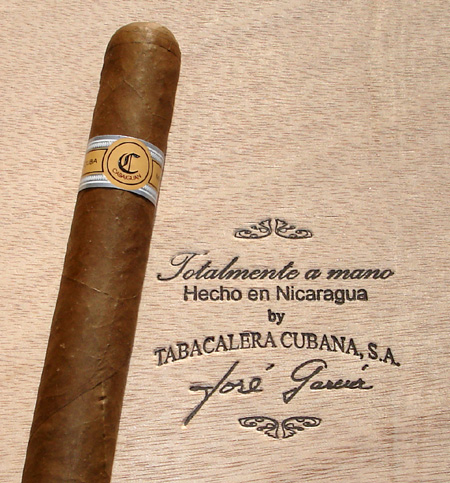
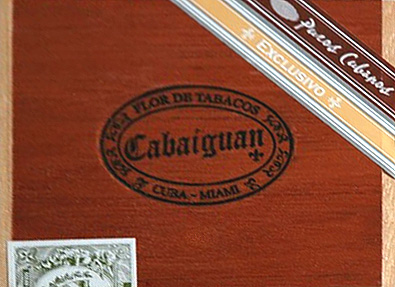
Cigar Stats Brand Owner:Peter Hassell Johnson – West Hollywood, CA Factory: Tabacalera Cubana, S. A. (TACUBA) – Esteli, Nicaragua Factory: Quality Control – El Rey de los Habanos – Miami, FL Model/Vitola: Cabaiguan Guapo – Limited Edition Size: 5.625 x 54 (robusto grande) Wrapper: Ecuador Connecticut – Sun Grown Filler & Binder: Nicaragua
Original Cabaiguan vitola sizes available:
Petite Cabaiguan 4.5 x 32 (small panatela)
Robustos Extra 5.25 x 50 (robusto)
Belicosos Finos 5.5 x 52 (torpedo)
Coronas Extra 5.625 x 46 (grand corona)
Imperiales 7.0 x 47 (churchill)
The Guapo is the only “Sun Grown” size offered. It comes in cedar boxes of 20 without cellophane sleeves in a bunch surrounded by a grey satin ribbon and then wrapped in wax paper. The original Cabaiguans are packaged 24 to a box except the Petite which comes in boxes of 50.
The Guapo Experiment
I believe all Pepin fans are quite amazed at the number of cigars he is involved with either directly, as the brand owner himself or for other brand owners. Especially since he has only been at it for about 5 years after leaving Cuba. Pepin’s initial operation established in Miami has been quickly outgrown (discussed in the Serie JJ review) and as Pepin’s business partner and tobacco supplier, Eduardo Fernandez, hails from Nicaragua, it was only natural to set up the next facility there.The success of Tatuaje and Cabaiguan had a major impact on the decision to branch out. Consistency and quality are paramount to any real cigar success and I’m sure Pete Johnson, owner of those brands, enjoyed the control a small operation affords. But then there is the continuing need to create new and exciting products. To facilitate expansion, Pete and Don Pepin decided some production must move to Tabacalera Cubana, S.A. (TACUBA) but it would be necessary to test quality and consistency. Thus the Cabaiguan Guapo experiment was initiated. A limited-edition run of 50,000 cigars “totalamente hecho en TACUBA” and with quality control conducted at El Rey de los Habanos (ERDLH) in Miami. The Cabaiguan Guapo was the chosen guinea pig.
Cabaiguan Guapo (kah-bei-gWAHN goo-ah-poe)
The Cabaiguan brand is named after the purported Cuban home town of Maestro Tobaquero Don “Pepin” Garcia. Cabaiguan is the capital city in the municipality, of the same name, within the province of Sancti Spiritus, Cuba. The Guapo — Spanish for “handsome” — is a regular Cabaiguan on the inside with an Ecuadorian Sun Grown wrapper on the outside. Larger in ring gauge (54) than the others yielding some blending room. Unlike the original, it was rolled with a pigtail cap. It was pre-released to the market in September just before RTDA 2007.
Both Cigarfan and Lucky7 have sampled the Cabaiguan Guapo and the following review represents a combination of our observations.
Bottom line up front ….. The Guapo is definitely a little stronger than the original Cabaiguan but not by much. Probably a little strong for a breakfast cigar but certainly good any other time of day. Medium body with interesting flavor development through the first half and great aroma. Good construction yielding a beauty to look at as well as good draw and burn. Just a little pricey at $11 but a very good smoke.
Pre-light This cigar is quite the looker. It sports a smooth milk chocolate brown wrapper with a few veins and an abbreviated pigtail triple-cap just begging to be clipped. Construction is solid with no soft spots and it feels very nice in the hand. Aroma from the wrap is almost non-existent and the foot a grassy tobacco. Pre-light draw was fantastic with just the slightest resistance and a sweet tobacco taste. The aroma from the toasting foot really gets the juices flowing. Lucky7 tried both straight cut with a Xikar and a punch. The punch seemed to limit the ensuing heat towards the nub a little better.
The Smoking Experience Starts with a little bite then smoothes out quickly to a creamy base of toasty wood and bread with some spice and pepper on the nose. The wrapper imparts more spice than the regular Cabaiguan. Some notes of caramel and vanilla are evident in the first half. Second third ushers in a slight coffee flavor and the peppery edge on the nose subsides. Flavors leveled off at the halfway mark to a creamy sweet tobacco and remained that way to the nub without much additional development. Still a very pleasant smoke.The draw remained fantastic throughout. Burn line was a little bumpy at times but didn’t require the torch. Moderate volumes of smoke remain cool until the last third where it begins to heat up a bit. The ash is a medium gray and holds very well but flakes a bit. Initial ash nearly made the halfway mark and the rest made the nub. As an experiment Lucky7 tried ashing a Guapo every inch or so which seemed to improve flavor development.
Finish is medium in length with a light grassy aftertaste and it gets a little more toasty in the last third. Not much of a nicotine kick evident in this stick. Very easy going. Smoking time ran about an hour 15 minutes.
Our take ….. Lucky7: A very nice easy going smoke. It made for a successful experiment IMO. Quality and consistency were very good. Think it is probably a little too expensive at $11. Pepin makes some $6-$7 medium-bodied sticks that I would select over this one.
Cigarfan: The Tatuaje family resemblance is clearly evident in this Cabaiguan, but it’s also very distinct from its cousins. Not as powerful, but still very distinguished. To start with, it’s a beautifully constructed stick: solid with a velvety texture, though the wrapper looks light for a sungrown leaf. The burn throughout was good; overall this cigar exhibits very good construction. The flavors and aroma are everything we expect from Pepin and Tatuaje: lots of complexity, starting with his signature spicy opening. Later on we are treated to some interesting citrus flavors (which I always read about but rarely experience in a cigar) and varying shades of cocoa. I found a nice sweet maltiness in the last third. The underlying flavor is a mild woodiness that keeps an even steady beat without ever taking over, preferring to let the accents play the tune. Blending a mildish Ecuador Connecticut Shade with a toned-down version of the Tatuaje blend is an intriguing experiment. My suggestion is for everyone to sign up for guinea pig status. ASAP.
MSRP is $11 per stick. Best online price at the moment is Smoke Inn at $179.95/20 or $9 per stick. At Jack Schwartz Importers you can also buy singles for $10.25. This is a limited edition cigar so if you want to try one and can find them. Now’s the time.
Like it … Yes Buy it again …Probably not Recommend it …At least for a try
What others are saying about the Cabaiguan Guapo …..
Gustav Bock is best known as the first cigar maker to put bands on his Havanas, starting sometime around 1854. At that time most cigars were sold from large bags of loose sticks and couldn’t be identified once separated from the mothership. One story says that Bock invented the cigar band to keep inferior cigars from being sold as his own. Another, more unlikely, tale is that they were designed to prevent staining the fingers of high society ladies (or gents given to the practice of wearing white gloves.)
But Herr Bock was a master businessman who had a gift for marketing. When he found that he could not break into the American market without brand recognition, even when he was offering his cigars nearly at cost, he developed an ingenious plan. Legend has it that he shipped small lots of cigars to “various undiscoverable places” in the U.S. addressed to George Washington. The undervalued parcels never reached their fictitious destinations and were picked up by customs agents, sold at auction, and thereby entered the American market. The cigars were recognized for their quality, identified by their bands, and eventually gained a loyal following.
Today we have these bits of cigar lore by which to remember Gustav Bock, but during his lifetime he became a recognized captain of industry. In the latter part of his career, around the turn of the century, Bock’s holdings were consolidated to form Henry Clay, Bock and Co, and later he gained control of the Havana Commercial Company as well. At that time he controlled almost all of the cigar production in Cuba. Later on this company would be acquired by the American Tobacco Company, and eventually all these dealings would end up at the bar of the U.S. Supreme Court as an antitrust issue. Bock was more about big business than cigar bands, but today that is what remains. That, and a brand name.
One of Bock’s better known brands was called “Aguila de Oro” or Golden Eagle, and while the Bock brand name has passed through many hands in the past century, the eagle remains. There appears to be a Dominican made version of this cigar currently available in Europe. Altadis may be marketing one version to the U.S. and a different one to the EU, as it appears to be doing with the VegaFina brand as well.
In any case, the blend on the shelves here in the U.S. is of Nicaraguan origin, with an Ecuadorian Sumatra wrapper and Nicaraguan Habano binder and filler. The line was created (or re-introduced) by Altadis “to compliment our lines of inexpensive premium brands like Gispert and Vega Fina.”
The general appearance of the Bock robusto does nothing to betray the marketing of this cigar as an “inexpensive” brand. It’s rough and the cap is cut unevenly. It looks like it was thrown together in a rush. The prelight wrapper scent is of fresh hay and a prelight pull tastes bright and grassy. The draw is firm but serviceable.
But this cigar shouldn’t be judged by prelight appearances alone; it performs a whole lot better than it looks. It starts up with a pleasant toasty sweet tobacco flavor. Nothing unusual, just straight up smooth and creamy smoke. It’s mild to medium in body with a nice texture and very little bite. It sets up a solid white ash that compares favorably with any premium Nicaraguan cigar I’ve smoked in the past year.
This robusto builds in flavor toward the mid-point, getting a little woodier and by the last third brings a moderate dose of spice and most surprisingly, cocoa. I can’t think of another cigar in this price range that shows up with cocoa in any amount… but this one has it, at least in the mid to final stages. It’s not as thoroughgoing as the premium Pepin blends, but for a fraction of the price I have to say I’m impressed.
And the price is low. Seriously low. A box of Bock y Ca robustos runs around 30 USD. And yes, it’s a box, not a bundle. At this price you can hardly go wrong, unless you’re expecting a full bodied superpremium, which it isn’t. It’s a quality blue-collar medium bodied smoke, for a solid blue collar price. Try a couple. Your wallet will thank you and your palate won’t complain.
For other reviews of good cheap smokes, check out Walt’s Bargain Cigar Breakdown at the Stogie Review.
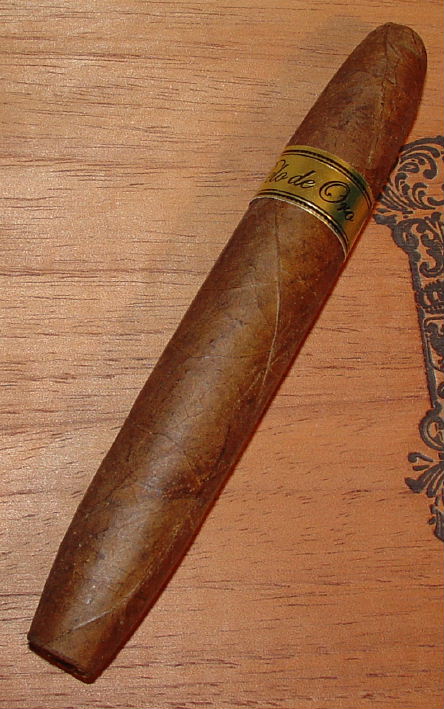
Pelo de Oro Habano from Felipe Gregorio gets its name from the strain of tobacco used for its wrapper. Pelo de Oro — Spanish for “golden hair” — is grown in the highlands of Costa Rica by John Vogel’s Tabacos de la Cordillera, a plantation that specializes in the cultivation of tobacco from “ancestral” Cuban seeds. Over the past twenty years Vogel has accumulated a bank of pre-embargo Cuban seeds obtained from sources in the industry and his colleagues in the field of tobacco genetics.
Whether this tobacco is really comparable to the stuff that went into pre-embargo Cubans is at controversy. At the end of the day, this tobacco is grown in Costa Rica, not Cuba, and I have yet to meet anyone who can reliably compare a flavor today with a memory fifty years old. ( Pre-embargo cigars still exist in the collections of connoisseurs, but it is safe to say they don’t taste now the way they did fifty years ago.) In any case, the preservation of these original seeds is indeed a worthy enterprise. One can only hope that someday Vogel will be able to plant them in Cuba.
As Director of Tabacos de la Cordillera Vogel now produces several lines of cigars, but he also grows leaf from these seeds for other manufacturers, which is where Felipe Gregorio’s Pelo de Oro comes in. Phillip Wynne, founder and president of Felipe Gregorio, wanted to celebrate the 15th anniversary of the company with a new release. He ended up with two: Pelo de Oro Habano, and a line called Power. Both use the pelo de oro wrapper and were introduced in 2006.
Pelo de Oro is available in four sizes, this 6 x 50 perfecto, as well as corona, corona gorda and rothschild formats. The binder used here is Dominican Piloto Cubano, and the filler is composed of aged Nicaraguan leaf. They are presented in traditional cedar chests of 50 sticks.
This perfecto is an attractive and refined shape, with a barrel that very gently expands to the advertised 50 ring gauge, though it appears to be much more slender. The wrapper is rough enough that it is difficult to pick out the cap construction, but the slightly flattened head appears to have a triple cap. The wrapper itself is a little splotchy in color, slightly coarse and marred by veins. I’m not sure that this is what I would call “golden hair.” Rapunzel might be a little embarrassed.
The Pelo de Oro Habano is an earthy tasting cigar with an unusual and pungent aroma. I had trouble coming up with descriptors for the scent, but it reminded me of rich wet earth, recently fertilized the natural way. Lots of barnyard, with maybe a smidgen of leather thrown in for balance. The taste is of straightforward tobacco with a vegetal base, somewhat plain but satisfying. As the cigar progressed it didn’t change dramatically, but perhaps became a little sweeter while retaining its rustic edge.
This cigar scores well in the construction department, with an easy draw, even burn and a solid ash. This allowed me the leisure to puzzle over the aroma and enjoy a well -balanced medium-bodied smoke for a good 45 minutes.
Just for kicks I used the cigar evaluation sheet found on the Tabacos Cordillera website and scored the Pelo de Oro perfecto at 17.4 out of 20, or 87 on the standard 100-point scale. I’m not crazy about numerical scoring, but this number sounds about right.
The perfectos retail for around 10 USD each and are sold in boxes of 50. It may be worth picking up a stick or two (preferably at a discount) just to sample this unusual wrapper leaf. For now I think I’ll pass on the cab.
In the 1960’s and early 70’s the Arturo Fuente company made a cigar in the style of the traditional Cuban perfecto called “Fancy Tales.” They eventually went out of production, but in the early 80’s Carlos Fuente, Jr. sparked a renaissance of the shape with the first Arturo Fuente Hemingway cigar, the 6 x 47 Signature. Carlos Fuente Sr. had learned to make this shape from his father, and to start making them again he first had to recover the original molds. After finding them in the old Ybor City factory, developing the right blend, and discovering that there was genuine interest in this old shape, the Hemingway series became a Fuente mainstay. Five years after the Signature came the Classic and Masterpiece sizes, all with the “Hemingway” perfecto foot, a mark of distinction which today is widely copied by other manufacturers.
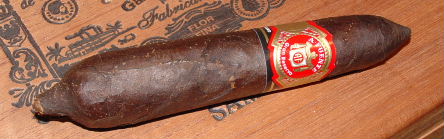
The Work of Art is a limited edition cigar, produced in relatively small numbers and released around the holidays as a special treat for Fuente fanatics. The standard Hemingway series employs Cameroon wrapper, so the Connecticut broadleaf maduro version is an even dearer cigar. The WOAM (as it is sometimes called by Fuente followers) is not a parejo with a funny foot like the Signature or the Classic — it’s a figurado of the first order, with a pointy head and a ring gauge that graduates from 46 to a 60.
The blend is a trade secret. As Carlos Jr. explained in a Cigar Aficionado interview, the Fuente family still operates in stealth mode when it comes to guarding their “recipes”:
Q: They’re not written down? A: They’re not written down.
Q: All your blends? That’s amazing. A: That’s how my father taught me. We’re from the old school. Remember, I was born in a community where right next to my grandfather’s house was another cigar factory. At night, when they would have conversations, they would go, “Hush. They’re listening.”
So the only specifications available are that the filler is Dominican, as is the binder, and that is all ye need know.
Prelight
On second thought, ye need to know just a little bit more: the wrapper on this stout perfecto is rough and a little bit chipped, like an old saddle that has been well taken care of and handed down through the generations. Kind of smells like an old saddle too, or perhaps the horse that’s been saddled with it. In any case, this cigar definitely has the aura of maturity about it. The sugars from the wrapper add a soft note to the barnyard scent. After clipping the tip and taking a prelight draw I find some hay with a little sweetness.
First Half
The WOAM lights up easily, due in part to its surprisingly open draw. It tends to burn unevenly at first, but evens out with a little coaxing. The initial flavors are nutty with a sweet char. The finish is very short with a mild and clean aftertaste. This little guy produces lots of smooth smoke with every effortless draw. The aroma becomes woodier as the burn progresses and has a syrupy, molasses-like tinge to it. For the first couple of inches this is a very easygoing medium-bodied smoke.
Second Half
Due to the bulbous construction of this cigar most of it is consumed in the first half. The “sweet spot” is just at the mid-point where the flavor gets meatier, turning from smooth nutty flavors to smatterings of earth and black pepper. The aroma at this point is unreal — this is perhaps the most potently perfumey, sweet musky smoke I’ve experienced from a maduro. This is what I’m after in a stinky black stogie: something to make passersby turn around and take notice. It’s an exquisite scent.
The flavors get gradually darker as the cigar comes to a close. The finish grows to a spicy bite and finally signals the end with a dirty bitterness. Parting is such sweet sorrow.
Conclusion
This is a marvelous little cigar. I rarely find much complexity in maduros, but this one has it: nuts, earth, spice, and a rich sweet aroma that invariably leaves me in a puddle. Due to the limited production (and because they’re damned good) prices tend to be inflated when they are in fact available, so be careful. Standard retail price is around 7 or 8 USD, which is extremely reasonable given the quality of the cigar.
If you like a smooth medium-bodied maduro with a lot of complexity, you’ll love this one. Keep an eye out this holiday season for this classic and elusive cigar.
Cigar Stats Brand Owner: El Rey de los Habanos, Inc. – Miami, FL Factory: Rosado Corojo – El Rey de los Habanos – Miami, FL Factory: Maduro Corojo – Tabacalera Cubana de Garcia y Fernandez, S. A. (TACUBA) – Esteli, Nicaragua Model/Vitola: Don Pepin Garcia Serie JJ (White Label) Belicoso Size: 5.75 x 52 (torpedo) Wrapper: Nicaraguan Corojo (Rosado & Maduro) Binder: Nicaraguan Criollo Filler: Nicaraguan Corojo & Criollo
Other vitola sizes available Rosado
Selectos 5.0 x 50 (robusto)
Sublime 6.0 x 54 (toro)
Salomon 7.25 x 57 (perfecto)
Maduro
Selectos 5.0 x 50 (robusto)
Sublime 6.0 x 54 (toro)
All sizes are offered in cedar boxes of 24 with the exception of the Salomon which comes in boxes of 5 – Rosado Corojo wrapped cigars are shipped naked and the Maduro with cellophane sleeves
El Rey de los Habanos (ERDLH) in Miami and Estelí
Being a lover of Pepin Garcia’s cigars, I follow events surrounding their production with great interest and, like many others, have a little concern about the volume of labels this man is producing. Not that I have experienced any degradation in quality but at some point, common sense would tell you something’s gotta’ give. There was some negative buzz surrounding new production at Pepin’s Tabacalera Cubana de Garcia y Fernandez, S.A. (TACUBA – co-owned by Garcia and Eduardo Fernandez) in Estelí, Nicaragua, which opened mid-2006. Most aficionados were concerned about maintenance of production quality and the availability of tobaccos but honestly, as a consumer, I have not detected any problems. Products are readily available (relatively speaking) and the quality seems to be improving IMHO. TACUBA will pump out 2 million-plus cigars in 2007 and the Miami facility, will achieve ~700,000. Jaime says, “The company will grow, but not at the expense of quality.” I believe him.
—Some of the cigars produced at TACUBA
Don Pepín García Serie JJ (White Label) Maduro
Don Pepín García Cuban Classic (Black Label)
El Centurion by Don Pepín García
EO Brands 601 (United Tobacco)
Tatuaje Havana VI (Pete Johnson)
Tatuaje Havana VI – Exclusivo Verocu (Pete Johnson)
Tatuaje Series P (Pete Johnson)
Old Henry (Holt’s)
Fumadores (Holt’s)
Holt’s Connoisseur Selection
Padilla Edicion Especial Achilles (Cigars International)
Legends Pepín García – Yellow Label (Cigars International)
Troya Clasico
Cigar.com Corojo Label
Ashton San Cristobal
5 Vegas Miami (yes this is made in Nicaragua)
Tabacalera Cubana Factory in Esteli, Nicaragua
Video — 10:56 minutes
A side note — Please do not confuse Tabacalera Cubana de Garcia y Fernandez, S. A. (TACUBA) owned by Garcia/Fernandez with Tabacalera Cubana Corp. (a cigar manufacturer) and Tabacalera Popular Cubana, Inc. (a cigar retailer) both of which are owned by Pedro Gomez and his sons Edel and Joel. Back in 2003, Altadis won a law suit against the Gomez family for violating Altadis trademarks by selling “Cuban replica” Montecristo, H. Upmann and Romeo y Julieta cigars. A federal judge ruled the Gomez’s were personally liable for the damages and awarded Altadis $900K. An expensive mistake. In addition, there is another factory in Estelí, Tabacalera Cubana Nicaraguense, S. A. (TACUNISA) also totally unrelated.
Pepin has been rolling cigars since the age of 12 and aside from 2-years in the military, has not stopped. He received the rank of Tabequero Maestro while rolling and blending cigars in Cuba. He can make just about anything out of tobacco leaves. He personally specializes in those extremely difficult large figurados called diademas or salomons. A torpedo head and supple curves as you get toward the foot, which has a big bulb then a small nipple. It takes a lot of cuts to make that work, and Pepin makes it look simple. He always seems to smile as he rolls. Watching him, you can tell he really enjoys what he’s doing. He trained rollers in Cuba, and now he’s training them in Miami and in Estelí.
Don Pepín García Cigar Rolling Demo @ RTDA 2007
Video — 2:27 minutes
El Rey de los Habanos Booth @ RTDA 2007
Video — 1:52 minutes
When Pepin Garcia left Cuba for Nicaragua, he worked with Fernandez in the Jalapa region, and then opened El Rey de los Habanos (Little Havana) in 2003. High ratings in Cigar Aficionado soon followed. But the Garcia’s could only do so much in Miami. Given the tiny factory had a total of 12 rollers, expansion was inevitable and I believe the addition of 36 pairs of rollers in the TACUBA factory learning from Pepin is a boon for cigar smokers everywhere. There are differences in rolling approach at the 2 factories. In Miami, the cigars are made by one person, who bunches and wraps. In Estelí, the bunching is done by one worker, the wrapping by another, thus the “pairing” of rollers.
To help bring TACUBA up to speed Pepin’s son, Jaime, now spends much of his time there: one month in Nicaragua, followed by a few weeks in Miami, then back to Nicaragua. His father does a similar rotation to ensure that one of them is at the Estelí factory on most days.
It’s amazing to think that, with so many cigar making operations out there collectively employing tens of thousands of rollers, probably 50-60% of the cigars I regularly smoke are made by the same 12 rollers in one tiny little factory in Miami and 72 rollers in one slightly bigger factory in Estelí. That’s right, I am a Pepin whore and proud of it!
Don Pepín’s Dream Cigar
In an interview Pepin was asked what tobaccos he would use to make his finest cigar. Would it be all Cuban? All Nicaraguan? He replied, “The wrapper would be Cuban. The binder would come from Nicaragua, as would two leaves of ligero filler. The seco and viso filler would come from Cuba. That cigar,” he says with confidence, talking about his dream smoke, “would score perfectly in anyone’s rating system.” Jaime Garcia claims, “Cuban tobacco is the best in the world, when worked properly. Nicaraguan tobacco is very close to the quality of the best tobacco in Cuba.” I think the Garcia’s tried to create that incredible “dream cigar” when they blended the Serie JJ, or come as close to it as possible sans the Cuban tobaccos.
It is arguable that Don Pepin is currently making some of the best smokes in the world today. His secret family recipe for blending and fermentation has been handed down generation to generation since his family’s beginnings in old Cuba. I for one am oh so glad he left the island. Thanks Jose for all these fantastic smokes. Keep em’ comin’ big guy!
Don Pepín García Serie JJ (White Label)
The Don Pepin Garcia Serie JJ, a medium to full-bodied Nicaraguan puro, was blended by Jose in collaboration with his son and protégé, Jaime—thus the name “JJ”. It debuted in 2005. The tobaccos are rich Nicaraguan leaf that rivals the flavor, character and experience of the finest Cuban cigars. Exquisitely made with the careful construction that has become a DPG hallmark. This amazing cigar, which Pepin proudly called “his masterpiece”, was one of the highest rated and top selling cigars of 2006/2007. Because it is so popular, he has blessed the cigar world with a delicious Maduro version of this world-class blend, released at this years RTDA in August. Although it is not the first Maduro created by Don Pepin, it is the first with his name on it.
Also a medium to full-bodied smoke (ERDLH calls it 3/4 to full); the Serie JJ Maduro is an exquisite cigar sporting a luscious Nicaraguan Maduro Corojo wrapper leaf. It is a smooth smoke building in complexity as it is enjoyed and the aromas are truly mouth-watering. I have mentioned to several buds that I think the Serie JJ Maduro could be serious competition for the PAM. Not quite as strong but has all the other attributes one looks for in a special occasion cigar and comes in at less than half the price.
Both Cigarfan and I have sampled the Serie JJ and the following review represents a combination of both of our observations.
Bottom line up front …..
Both the Rosado and Maduro versions of the Serie JJ are not to be missed for anyone who enjoys complex full-bodied smokes. These are some serious good smokin’. The core blend is clearly evident in both while the different wrappers impart a unique experience. Son magníficas y deliciosos!
The Serie JJ is said to be one of Don Pepin’s favorite smokes. It ranks up there for me as well!
Pre-light
Both the Rosado and Maduro appear a bit ruddy with a few veins but the construction is solid with no soft spots. The belicoso’s are beautifully triple-capped in a large swirl. There is a very small tooth over the entire wrap. Pre-light draw is excellent with perfect resistance and the belicoso feels balanced in the hand, like it belongs there.
Rosado
The wrapper is a light-brown Rosado Corojo which is not as dark as regular Corojo and is a bit creamier on the palate. There is very little pre-light aroma from the wrap though the pepper did tingle my nose, even unlit.
Maduro
A thick, oily dark-brown wrapper with a deep red hue in the background envelopes this stogie. The aroma from the unlit wrap is hay with a touch of barnyard. The pre-light draw leaves an ever so slight sweet taste on the lips.
The Smoking Experience
Both versions of the JJ toast and light very easily for a large ring gauge and draw is superb end to end. Both burned well with the burn line getting a little bumpy but self correcting.
Both exhibit lite bite for the first half inch and then hold medium strength until the halfway mark where they begin to ramp up. The last third of each fit squarely in the full strength category. Doesn’t make you dizzy though. The nicotine is not overpowering. Just enough to let you know that you have smoked a fine cigar!
Both had a good volume of cool smoke and time to nub was around an hour fifteen minutes. Each provides a long smooth finish with a pleasant aftertaste of dark coffee or mocha.
Ash on both is a light to medium gray and holds well. First ash for me would hold until about the halfway mark. The Maduro ash did a little flaking but nothing obtrusive. I did find it interesting that both cigars seemed to have better flavor if I kept the ash short. Unusual.
Rosado
Starts with a little pepper on the back of the throat and some sharp pepper on the nose. That lasts about 1/2 inch, and then warms to a creamy and smooth core of toasty wood and leather with very distinct notes of vanilla, cherry and cinnamon. Some hints of coffee and toasted nuts (maybe roasted cashews) in the second half. Aroma is of sweet tobacco and has a “Corojo twang of pepper” pretty much through the entire cigar.
Maduro
Start is similar to the Rosado but has a little sweet edge to it I attribute to the Maduro wrap. It settles into a darker earthy core flavor of sweet wood and bittersweet chocolate with notes of espresso and cinnamon. The flavor and aroma is so buttery you might think you were in the theater for a movie. The aroma from the Maduro wrap is remarkably strong—that’s one serious leaf. You may want to have a handkerchief close by for the aftermath. What starts as a little pepper on the tongue and the back of the throat continue through the entire cigar. Pepper really ramps up in the last third.
My take …..
I read that Don Pepin Garcia feels cigar aging is not necessary, in fact, he says Cuban cigar makers pitch product if it hangs around the humidor too long (love to dumpster dive in that neighborhood). I find that intriguing since I am sitting on about 350 Pepin sticks that just seem to get better and better the older they get!
Both Serie JJ varieties are top notch and near the top of my favorite cigar list. You won’t find me without some these in the humi unless I’m pushing up daisies and my wife has thrown them away or, perish the thought, Pepin stops making them.
Both Cigarfan and I are hoping a little age will temper the pepper in the Maduro version. I like a little pepper, but in moderation.
MSRP on the Corojo wrap is $210.00/24 or $8.75 per stick. MSRP on the Maduro wrap is $238.00/24 or $9.92 per stick. Best online price at the moment is Cigar Place at $149.99/24 or $6.25 per stick. A steal for this kind of quality. These cigars compare to stogies that cost 3 times as much in some cases.
Like it … Love them Buy it again … As many as I can afford Recommend it … Strongly
What others are saying about Don Pepin Garcia Serie JJ (White Label) …..
Manuel Quesada established MATASA (Manufactura de Tabacos, S.A.) in Santiago in 1974, at a time when the Dominican cigar industry catered mainly to domestic consumption. Around this time the Dominican Republic established tax-free export zones which attracted entrepreneurs like Quesada to a country not really known for producing cigars. Baseball players, yes, but not cigars.
MATASA is best known for producing the Fonseca brand (and all its offshoots) but Quesada’s family has been in the tobacco business for generations, going back to pre-revolutionary Cuba where they were primarily leaf growers and brokers. The companies founded by Quesada’s great great grandfather, Sobrinos de A. Gonzales, and his great uncle Constantino Gonzales, were the largest leaf brokerages in the world before the family was forced out of Cuba at gunpoint.
The Quesada family left for Miami, where Manuel Quesada Sr. was able to secure a loan– with no collateral– from a bank the family had done business with since 1907. They invested in warehouses and machinery and soon a fledgling leaf brokerage was started in the Dominican Republic, selling leaf to many of the same customers they had in Cuba. One of those customers was Juan Sosa, whose Miami factory was struggling with labor issues. Based on their previous business relationship, Sosa and Quesada joined forces in Santiago and in 1974 MATASA was born. During the same year, MATASA bought the Fonseca label from Antillian Cigar Co. in Miami.
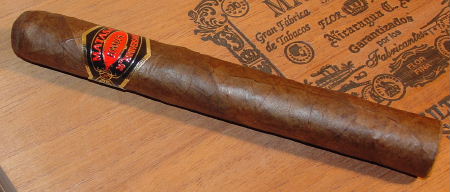
The MATASA 30th Anniversary by Fonseca, created to celebrate the founding of the company, was introduced in 2005 in only two sizes: a 5 3/4 x 54 perfecto, and this 6 1/2 x 52 toro. The binder and filler were selected from bales of Honduran, Dominican, and Nicaraguan leaf aged over ten years. When this cigar was chosen as the Robb Reports’ “Best of the Best 2006” cigar, Quesada told Richard Carleton Hacker,
…we used the finest of old, noble leaf so that we would have the depth of some of the choicest aged Cuban-seed tobaccos, but without the hardened strength. What we got was a strong yet smooth cigar that reminds one of chocolate pudding.
The wrapper is a high priming Olor Dominicano grown by the Reyes family in the Cibao Valley. The limited number of cigars produced was determined mostly by the amount of wrapper produced. “We said we’d make cigars as the wrapper for the project came about,” Quesada told Smoke Magazine. “You’d like to have 100 percent yield from the wrapper crop, but you never do… If you get 60 percent of usable wrapper out of any given crop, you should go to church and thank God.”
In the end, only 30,000 cigars were produced.
The wrapper on this Anniversary Toro is rich and oily, though as it turns out it is also quite thin and delicate. The roll is solid and the head is finished with a triple cap. The prelight scent is of sweet tobacco and hay.
From the first puff the flavors that pour forth are dark and rich — coffee bean and cocoa, with chocolate making a lasting appearance after an inch or so. Beneath the overarching sweet bean flavor is a grassy or green wood flavor which makes the overall impression something like light-roasted coffee. Meanwhile, the aroma is complex, adding an incense-like quality to the smoke.
The body builds strength after the first half, about 45 minutes into this supersized toro. The flavors gradually veer away from cocoa and enter spicier country, with pepper on the tongue and baking spices on the nose. At one point I thought I detected cinnamon, but after an hour of chasing scents my palate might have been a little fatigued.
Part way into the last third I heard the dreaded crack of wrapper splitting; I looked down and my cigar had suddenly unraveled. Thankfully I was nearly finished with this ten dollar Anni, but I was still a little disappointed. (Sadly, this is the second one that has finished in this fashion for me. Other reports are more favorable, so maybe I just pulled from a bad box.) Otherwise the construction here is very good — a fine draw and a slow cool burn.
If you’re a Fonseca smoker, be aware that the MATASA 30th Anniversary is a much heavier cigar than your standard Fonseca, but don’t let that dissuade you — it’s not a giant killer either. This is a limited edition cigar, but it is still available and doesn’t appear to be selling out anytime soon. Part of that may be due to the price, which is in the 8 to 11 USD range. Not your everyday cigar, but a special treat for maduro lovers. Just be extra careful with that wrapper!
Cigar Stats Brand Owner: Miami Cigar & Company – Miami, FL Tabacalera: Esteli, Nicaragua (Plasencia) Model/Vitola: Don Lino Africa Duma (Cheetah) Size: 5.0 x 50 (robusto) Wrapper: Nicaraguan Habano (1999) Binder: Nicaragua Filler: Cameroon, Dominican Republic, Honduras, Nicaragua
Other vitola sizes available
Kuro (Waterbuck) 4.0 x 45 (corona extra)
Kifaro (Rhinoceros) 6.125 x 52 (toro)
Punda Milia (Zebra) 6.5 x 44 (lonsdale)
Kiboko (Hippopotamus) 6.5 x 58 (toro)
Tembo (Elephant) 7.5 x 50 (double corona/churchill)
All sizes are offered in beautifully adorned boxes of 25 with the exception of the Kiboko (24) and the Kuro (tin of 4 or box of 40)
Some background on Miami Cigar & Company
Common traits prevalent among cigar making stars in the industry are unbridled passion coupled with persistent hard work. Nestor Miranda and his family are another example. In the late ’80s, working in the liquor business, Nestor had a chance meeting with a roller working for Guillermo León of La Aurora S.A. Using his skills as a salesman, Nestor made some suggestions on how to expand the La Aurora line and increase business. As he watched their success employing his ideas, he and his wife Miranda decided to launch Miami Cigar & Company in 1989 and distribute cigars. They acquired and launched the Don Lino brand in 1989 which were manufactured by U.S. Tobacco International at their factory in Danli, Honduras. The brand was a huge success. Production in the first year was 80,000 cigars and by 1995 it was up to 3.1 million. In 1995, Miami Cigar began distributing other UST products (Don Tomás and Astral) and in 1996 (during the boom) distribution jumped to a whopping 12 million (75% UST brands). As you may imagine, with those kind of numbers, Nestor retired from the liquor business in 1995 after 25 years and joined his wife full time at Miami Cigar.
What happened next would give anybody nightmares. In November 1996, after Miami Cigar had exceeded all sales projections, UST pulled the plug! They stopped shipping products for distribution and stopped manufacturing Don Lino cigars. The president of UST called and cancelled the contract with Miami Cigar which wasn’t due for renewal until February 1997. UST had decided to distribute their own and manufacturing of the Don Lino brand would take production resources needed elsewhere. Literally overnight, Nestor was faced with closing shop. And right before Christmas! His distribution humidor was empty. Don Lino was back-ordered about 3.5 million cigars. La Aurora/León Jimenes were maxed out and could not produce any more cigars for Nestor to distribute. His retailers were pissed. They couldn’t believe he had no cigars. They thought he was shipping elsewhere and giving them the runaround. And to top it off, he had to lay off most of his warehouse and office staff.
The gory details of this debacle can be found in the Cigar Aficionado interview with Nestor (April 2007) but suffice it to say, there is no quit in this man. He struggled for two years to find quality manufacturing for the Don Lino brand and in 1999 Guillermo León agreed to produce it in the Dominican Republic. Production has since moved again and is now with Plasencia in Esteli, Nicaragua.
Per the Miami Herald, the Miranda’s didn’t consider a lawsuit against UST until Nestor received a deposition in 1999 for a suit filed in Chicago against U.S. Tobacco by cigar distributors Cohabaco. A lawyer approached Nestor with some of U.S. Tobacco’s internal documents, that, according to Miranda, detailed U.S. Tobacco’s plans to obtain Miami Cigar’s distribution network all along, going so far as building a storage facility in Tampa to hold cigars originally intended to go Miami Cigars. In 2002 Nestor won a judgment against UST in the amount of $42.5 million which was appealed and then settled out-of-court. The final amount is undisclosed but I sincerely hope it was big!
Today Miami Cigar & Company distributes a variety of premium name brands, among them Dominican-made La Aurora and Leon Jimenes, Spanish-made Ducados, Wings, and their very own Tatiana line of flavored cigars, Don Lino and Habanitos. The brands owned by the company include Colorado by Don Lino, Don Lino Africa, El Gozo, Havana Reserve Don Lino, Smoke Tatiana – Flavor the Moment and Tatiana.
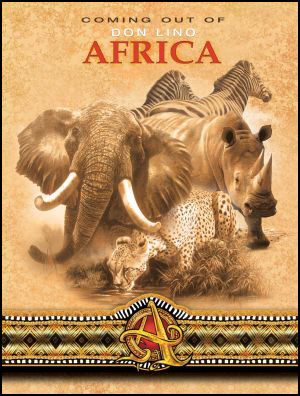
When things had calmed and the company gained its feet again, Nestor decided to fulfill a lifelong dream of his to go on a hunting safari in Africa in 2002. He used to watch Tarzan movies as a child in Cuba and had always wanted to see the land that charged his imagination as a boy. The hunt was a life experience and on the returning plane ride Nestor had an epiphany. Africa was such a great and vast country. Certainly there should be a cigar brand in it’s honor. Why not include some of their tobacco too! He and his son Daniel, who actually runs the operations for Miami Cigar, agreed. A new cigar was in order. Oh, but what to call it. Nestor thought the name of the majestic Kilimanjaro was appropriate but unfortunately someone had already claimed it. Finally, they settled on Don Lino Africa. They designed a elegant box and named the vitolas after select beasts that roam the plains of the Serengeti. But instead of English, they would use native Maasi, the language of the indigenous people of the African Savannah.
The Don Lino Africa blend was introduced in 2003 and then re-blended for 2004. It is currently manufactured by Nestor Plasencia at his factory in Esteli, Nicaragua. Using 4-year aged tobaccos, the cigars are aged for an additional 5 months after rolling. During the blending experiments, Nestor requested they use a leaf of Cameroon in the blend. No one had done that before and when he tasted it, he said, “This is it!” In the interview referenced above, Nestor claims to use Costa Rican leaf in the blend but no one else refers to it. Early renditions claim some Mexican leaf as well. I think the manufacturing and blending have changed so many times, the old Internet info is blending with the new. The Miami Cigar website currently shows the blend as I have identified it above.
Believe it or not, the name “Lino” comes from the individual at the UST factory that Nestor used to deal with. He says “it was just a name, and it sold so well, why change it?” Wow, that’s deep!
Bottom line up front …..
Full-bodied and full-flavored as advertised, this is a curious blend of tobaccos. The taste is like nothing I’ve had and if it weren’t for the total distraction of the burn problems, I probably would have enjoyed it. Every stick I tried had burn issues to the point where the experience was a disaster. Nestor better get his rollers together and give them a thrashing! It’s a cryin’ shame to have such extravagance in packaging and quality tobacco wasted on poor rolling technique.
Pre-light
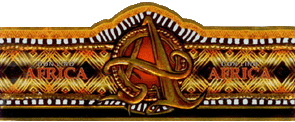
The cigar is stunning to look at. A reddish-brown wrapper oozing with oils and covered in a small tooth cap to foot. I understand the wrapper tobacco was set aside in 1999 with this cigar in mind. The band, like the magnificent box, is truly a work of art. Being the brandophilist I am, this band was definitely tucked away in the archives. Someone did get overzealous with the band glue, but I was able to remove it without damage to the cigar or the band. That was a miracle in itself. The aroma from the wrap was distinctly barnyard and strong tobacco from the foot. The head was nicely finished with a double cap. Pre-light draw was good. The swirls of different color tobacco at the foot were very inviting. I was looking forward to a treat.
The Smoking Experience
The Duma begins with a sharp couple puffs, kinda similar to a Pepin cigar with just a touch of pepper on the nose. The flavor quickly settles into a base of dark wood and burnt toast. The pepper subsides for the first third but then re-enters mainly on the tongue and slowly builds to the end. The aroma was rich and deep. Can’t begin to describe it but definitely the best part of the smoke. About halfway, I picked up a few pulls of a caramel like sweetness that disappeared as suddenly as it arrived. Some interesting spice notes along the way including cinnamon and what seemed to be nutmeg and during the final third hints of cocoa and leather. All-in-all a very flavorful complex smoke which I would expect with that many countries represented. The cigar did start to get bitter at the nub but I was ready to lay it down anyway. Finish is long with a leathery aftertaste.
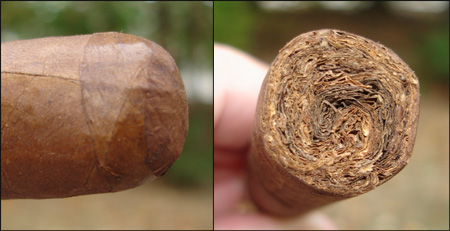
Ash was quite dark and a bit flaky. The burn was horrendous! It looked to me as if the wrap was several layers thick and was downright flame retardant. I was forced to torch the cigar every 1/4 inch to keep the flavors even and burn off the wrap to the next level. Burn maintenance absolutely ruined the experience for me.
This cigar is full-bodied, with a balanced well-rounded explosion of smooth, hearty flavor. With full strength to boot, it is not for the faint of heart. Starts out a little less than full but gets there pretty quick. Please have a seat. And by all means, this is not a breakfast cigar!
My take …..
This cigar just would not burn properly and therefore will fall from my radar, at least for a while. I smoke cigars for the pleasure of the experience. Every Duma I tried was so much work in the burn department, the rest of the experience was lost on me. I’ll try them again in a couple years if they are still around and hope the rollers have got their act together!
MSRP on the Duma is $156.00/25 or $6.24 per stick. Best online price I could find is Abners at $94.95/25 or $3.80 per stick. Price point is right if they could only solve the burn.
As in this beautiful scene, for me, the sun has set on Don Lino Africa for now. But as they say, the sun will come up tomorrow!
Like it … Flavor Yes, Burn Absolutely not
Buy it again … Not anytime soon
Recommend it … Not right now
Cigars from Little Havana’s La Tradicion have garnered much praise from fans of boutique stogies. I certainly have nothing against huge conglomerates like Altadis or General because they make quality consistent cigars, but there’s something special about a small run handmade from a mom and pop chinchal. But business being what it is, successful small runs turn into bigger ones, and boutique companies become industry juggernauts.
This has not yet happened to La Tradicion — they are still a relatively small company (though not really a chinchal) and they are growing despite setbacks such as the fire that hit their Calle Ocho shop last November. The fire was suspected as arson, one incident in a string of such tragedies that befell the neighborhood last fall. The fire destroyed the strip mall in which La Tradicion was located, along with the celebrated Libreria Cervantes, a Spanish language book shop. The only items to survive the fire in the galera were some records on computer disks and their cigar store indian.
The only fortunate aspect of the fire was that La Tradicion had already begun a transition to the Dominican Republic under Sanchez’s partner, Pablo Romay. Romay is a veteran of Havana’s Romeo y Julieta factory who emigrated to the U.S. in 1994. He began rolling cigars for La Tradicion in 2000 and Sanchez quickly promoted him in recognition of his skills and management abilities. After several years in the Little Havana location Sanchez began to explore a move to the Dominican as a solution to labor difficulties and the rising cost of doing business… expenses like fire insurance, and rebuilding your factory after some asshat burns it down.
La Tradicion still maintains an office in Miami, but the new factory in Santiago — Real Tabacalera Sanchez-Romay— is now the main production facility.
Luis Sanchez succinctly describes La Memorias Cubanas this way: “Light wrapper. Full body.” Sometimes less is more… except when it comes to ring gauge. La Tradicion has set records for some of the largest ring gauges made — and this line follows the trend. “Campanas” is a traditional torpedo-shape production vitola; the Cuban Bolivar Belicoso Fino is one of the more common examples, but at 6 1/2 x 60 the LMC Campanas is a bit larger than the traditional vitola.
The wrapper is a silky claro Ecuadorian Sumatra. The filler is a blend of Dominican and Nicaraguan leaf, bound up in a selection from Honduras. The result is a nice looking, if somewhat unwieldy cigar. Between the fingers it feels like grasping a tree branch. The nice thing about a torpedo is that it allows you to choose the aperture of the opening depending on where you cut it. Otherwise, you’re stuck with a jaw breaker.
Las Memorias Cubanas come equipped with a thin cedar sheath — this imparts a distinctly woody scent to the wrapper and the prelight draw. There is an occasional small green blemish on a couple of these, but nothing to be concerned about.
This torpedo draws well and lights easily, even though it seems like a large area to light. It sort of felt like painting the foot with fire. Once it was lit it burned very well and needed no further attention. All the construction tests were passed with flying colors.
The initial flavor is a little mild, sweet and nutty with a hint of pepper on the nose and in the back of the throat. The weight of the smoke is quite heavy though, and the texture is deliciously creamy. For the first fifteen or twenty minutes this is a very domesticated cigar. At the two-thirds point it revs things up with a spadeful of earth and more generous helpings of pepper. The aroma from the wrapper is really nice — toasty with some delicate semi-floral accents. So far this has balanced really well with the earthier flavors on the tongue.
While I am admiring the solid salt and pepper ash that I’ve built and ashed only once, I become aware of an intensely earthy and quite lengthy finish. The last third of this cigar is quite powerful in terms of flavor, but it loses its sense of balance at this point. The nuances from the wrapper become completely obscured by the dark spice on the tongue, and the flavor itself seems a bit one-dimensional at this point. I found that this cigar is very good up to this point, but I didn’t find it “nubbable.”
I really liked this cigar… up to a point. But that point is where somebody with a taste for heavy earthy cigars might begin to really enjoy it. These will run you around 6 USD a stick, which is quite reasonable. These are very large, very well made cigars. But for me, I think I’ll be sticking to LTC’s Sabor Cubano and La Tradicion Cubana.




 Like it … Yes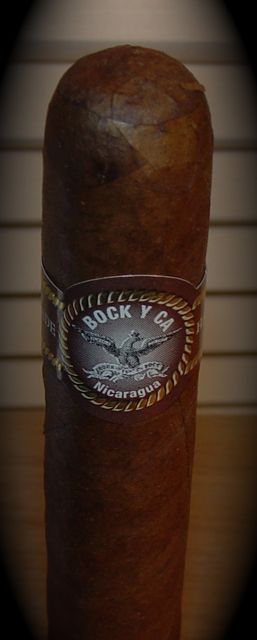





 Cigarfan.net