Indian Tabac Cuban Corojo Arrow

Cnv0143.jpg

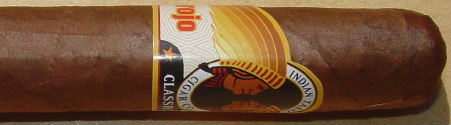
Indian Tabac is Rocky Patel’s original brand made in Danli, Honduras by Nestor Plasencia. The Corojo line is somewhat newer, however, having been introduced in 2003. The Cigars International catalog calls this line “Cuban Corojo” while Cigarcyclopedia calls it the “Classic Corojo.”

(Ah, the confusion that rains down upon the unsuspecting 5-pack consumer. Witness his befuddlement…)

The “Arrow” designation is also a bit confusing, since Top25Cigar says it’s a slim panatela; this is obviously a robusto. The “Boxer” listed on the Indian Tabac website is also labeled a robusto at 4 1/2 inches long. This one measures 5 x 50. And to top it all off, the Indian Tabac website does not even mention this line. (The Classics listed there have Habana 2000 wrappers.)

The most reliable source of information at this time appears to be the Cigars International website, where there is pictured an actual BOX of these puppies. The size is clearly robusto, and the name on the box is ARROW.

(The witless 5-pack consumer emerges into the peerless sunlight, blinking and looking for his Xikar.)

To the best of my knowledge, the wrapper on this cigar is indeed corojo. It certainly tastes like it. There’s a sweet spice to corojo that is almost unmistakable, and this stick has it in spades. It’s similar to Cameroon, but lighter, a little more complex, a little more refined; yet it makes sense that after the embargo U.S. manufacturers would turn to Cameroon as an alternative.

The wrapper competes nicely with the Nicaraguan binder and the Honduran and Nicaraguan filler. It’s a medium bodied smoke that builds, but never reaches full blast. The construction is uniformly excellent, and the aftertaste minimal. The sweet caramel aroma really sells this one for me, and sells it at a fantastic everyday price of two dollars a stick.

(The bewildered five-pack consumer revels in his good luck and goes in search of yet more five-packs to confuse him…)

Diamond Crown Maximus Pyramid No. 3

Cnv0140.jpg

The first Diamond Crown line was developed by Stanford Newman and the Fuente family to celebrate the 100th anniversary of the Newman cigar company. As he tells it in Cigar Family, Stanford’s father first began rolling “buckeye” cigars in Cleveland for direct sale to grocery stores. He stored the tobacco in his mother’s cellar. And this was the humble beginning to a family legacy that would survive for the next century and beyond.

The Newmans first got involved with the Fuentes when Carlos Fuente approached Newman to take over his machine-made business in Tampa. Fuente wanted to concentrate on his hand made cigars in the Dominican Republic, but he didn’t want to totally abandon his machine made business in Tampa. Newman balked at first, but realizing the talent of Fuente he finally agreed, with the condition that Fuente make hand made cigars for the Newman company. An agreement was forged, and cigar fans are all the better for it.

The Diamond Crown line and the Opux X line were released at about the same time, in 1996. I remember at the time the clamor that arose over the Opus X, in part because it wasn’t available on the west coast. Part of the Newman and Fuente marketing plan was to release the Opus X on the east coast exclusively, and to release the Diamond Crown on the west coast exclusively. Very smart…and aggravating! I can just see Carlos and Stanford snickering over this, like Boris and Natasha Badenoff. But as far as a publicity generator, it was brilliant idea.

The Diamond Crown Maximus came as a response to the trend toward heavier bodied cigars. The original line is a fairly mild blend with a Connecticut wrapper, while the Maximus is heavier and employs an Oliva grown Ecuadorian sun-grown wrapper from the El Bajo region. The Maximus was released at the 2003 RTDA convention.

All of the DC cigars have large ring gauges so they can incorporate five or six different leaves to give the smoke complexity. The Pyramid No. 3 rings in at 6 5/8 x 50. The head of this cigar is something to marvel at. The wrap is perfect, the work of a true artist. The color is an unusual colorado maduro, an almost drab shade of maduro…I can’t find another cigar in my humidor that shares the same shade.

The wrapper on this cigar is the star of the show. I found the blend to be smooth and spicy, but the aroma from the wrapper steals the show. It starts up with a hint of cedar that grows and grows, over a steady smooth beat that heats up in intensity as the cigar burns. Almost like a piece of music, a jazz quartet that starts out cool and easy but breaks out when the players take their solos. But again, the principle player here is the Ecuadorian wrapper. Between puffs it was nice just to revel in the aroma from the smoldering stick.

Certainly a class act. But now for the letdown. As the band packs up its instruments and the crowd finishes their drinks, the bill arrives. Gulp. At 15 to 20 USD, this is still a damn fine cigar. But at this price… I’ll have to let my wife buy me more, like this one, for Christmas.

Saint Luis Rey Cazadore…Mystery Cigar

Cnv0139.jpg

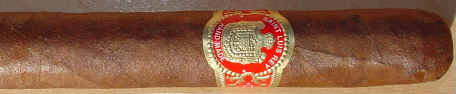
I picked up a box of these for forty bucks during JR's "12 Days of Christmas" promo last year. I can find no description of an SLR Reserva Especial Cazadore anywhere, excepting the Cuban SLR, and the new version which I can find listed only on the JR Cigar website. I can safely trust that this is not Cuban, and the description of the new line differs from this one. So I honestly have no idea what the components of this stick are, but that will not stop me from guessing.

It's a churchill or double corona in size, at 7 x 48. The new SLR double corona is shorter and the churchill is fatter, so "Cazadore" is not an alternative frontmark for either of those. The review descriptions of the "new" SLR double corona are that is mild to medium in body, (though the company publicity says it is "full flavored"); this Cazadore is full bodied from the start.

The new version is a four country blend, while the old version was a Honduran puro. JR Cigars carries a new version of the cazadore that measures 6.75 x 48, and arrives in black semi-boite boxes. These came in a paper-covered flip top box. An enigma wrapped in a mystery… Based on the flavor profile, I'm going to guess this is the old blend.

There is a roundness to Honduran cigars that I really enjoy, and this one has that same quality. It's a woody, spicy smoke with a nice bite to it. The draw is good, and the ash is somewhat flaky. It's certainly a heavyweight cigar. I put it down after the 1/3 point and returned to it a few minutes later after attending to some things in the house and finding a suitable beverage to accompany the last few inches. Re-lit, it burned and tasted like I never put it down.

If you've been following these posts you know I'm a little bit compulsive about knowing the minute details of the cigars I enjoy. My research into the Cazadore has left me dangling. If only Sherlock Holmes were here.

"The writing on the wall was done with a man's forefinger dipped in blood. My glass allowed me to observe that the plaster was slightly scratched in doing it, which would not have been the case if the man's nail had been trimmed. I gathered up some scattered ash from the floor. It was dark in colour and flakey — such an ash as is only made by a Trichinopoly. I have made a special study of cigar ashes — in fact, I have written a monograph upon the subject. I flatter myself that I can distinguish at a glance the ash of any known brand, either of cigar or of tobacco. It is just in such details that the skilled detective differs from the Gregson and Lestrade type."

A Study in Scarlet

Sir Arthur Conan Doyle

Punch Champion

Cnv0138.jpg

This is one of the most unusual shapes I've come across; it's sort of an inflated perfecto. At its largest point it measures nearly an inch in diameter — 60/64ths. The Champion was introduced in 2001, and was promoted by General Cigar with a "Heavyweight" competition judged by smokers who chose by a 58 to 42% margin that this blend was superior to an alternate competing blend.

The Champion is a member of the "original" Honduran Punch family, not to be confused with the Grand Cru, Gran Puro, or other lines. Made in Cofradia, Honduras in the HATSA factory with an Ecuadorian Sumatra seed wrapper, a Connecticut binder, and filler from the Dominican Republic (piloto cubano,) Honduras, and Nicaragua, this is a cigar that took a lot of thought and care in the production.

I picked this one up on an Indian reservation north of Las Vegas, and by the looks of things they weren't doing a whole lot of traffic in the cigar department. They seemed to be selling more fireworks and tourist trinkets than anything else. Plastic paperweights with scorpions in them. That sort of thing. But the cigars seemed to be in good shape, so I picked up a couple Champions because I found the shape intriguing. After about a month in the humidor I unwrapped one and noticed tiny crystals on the wrapper, just the beginning of bloom. Time to fire one up.

This is a tasty little smoke. At 4 1/2 inches it's gone in 30 minutes, but it's a half-hour well spent. It lights up easily and burns well with a solid gray ash. It tastes somewhat woody and has a sweet overtone, something close to cherry. Reminded me a little of the Rocky Patel Vintage 1990, but not quite as smooth.

But once over the hump the flavor declined, and it began to burn a bit hot. At that point my 30 minutes was just about up, and I had to go finish some chores anyway. This is a great short smoke, highly recommended as a medium bodied mid-day cigar.

K. Hansotia “Signature 101” Robusto

Cnv0137.jpg


Information about this line from Kaizad Hansotia is sparse and conflicting. Cigars International says it has a Costa Rican wrapper surrounding a blend of Honduran, Dominican and Jamaican filler. The Ghurka site says its a Connecticut broadleaf wrapper, a Costa Rican binder, and Dominican filler. I guess I'll go with the manufacturer, because this wrapper neither looks nor tastes like the Costa Rican maduros I've sampled.

Hansotia is the maker of the Ghurka line of cigars. He bought the Ghurka brand name for 143 dollars in the late 80's from an obviously struggling company in Goa, India. The brand fought its way to the top through the boom years and today claims many fans who are willing to pay top dollar for Hansotia's boutique stogies.

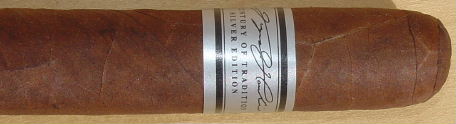
The band says "A Century of Tradition" but it's not a century of cigar making. He comes from a tradition of watch making, which is perhaps why all the Hansotia cigars are packaged so elegantly. The boxes of some of the Gurkhas are works of art all on their own. Even the low to moderately priced cigars have very nicely designed bands that make the cigars appear far more dear than they are.

It isn't clear exactly who makes the Signature 101, but Toraño is a likely suspect. The blend is reportedly Hansotia's personal favorite, hence the "signature" moniker. But this is one of those mysterious cigars that refuses to be categorized, no matter how I try. Even the size is an enigma: at 6 x 50 it's a toro, but it calls itself a robusto. Trust in nothing but your own senses here. The truth is in the smokin'.

Prelight it smells like a well-tended old boot. It starts out with some harshness that lessens and evens out after an inch or so. This is a dry tasting maduro, lip smackingly tart. The wrapper burns unevenly and requires a touch up now and again. The draw is excellent with plenty of spicy smoke. The primary flavors are earth and char; a good smoke to clear a room with. I'd read this was a medium bodied stick, but once again the information is wrong– this is a full bodied cigar, akin to the Romeo y Julieta Reserve Maduro without the funkiness. The ash is flaky, and aside from the uneven burn the construction is good.

All in all, it's a good cigar. Not my favorite flavor profile, but a quality cigar nevertheless.


Joya de Nicaragua Antaño 1970 Robusto Grande

Cnv0135.jpg

Joya de Nicaragua was the first Central American brand to be produced after the Cuban revolution. The company that originally made the brand was started in 1964, and the Joya de Nicaragua name was trademarked in 1970. The Joyas produced around this time were made in the Cuban style to attract American customers who could no longer purchase the Havanas to which they had become accustomed. They were strong, robust cigars, and soon set the standard for Cuban-style cigars in the U.S.

The Somoza government heavily subsidized the tobacco industry in Nicaragua, seeing an economic opportunity to fill the vacuum left by Castro's revolution and the U.S. embargo. With the help of luminaries such as Nestor Plasencia and Jose Padron, the Cuban style cigar found a foothold in Nicaragua. Alas, the Somozas were dictators as well, and when the government was overthrown by the Sandinistas in 1979 the tobacco industry was emasculated in the name of the proletariat. In 1985 another U.S. embargo was levied, this time on Nicaragua. Tobacco production was geared toward the production of cigarettes for the Eastern European market.

But the Sandinistas met their demise as well, and the cigar industry bounced back. But the Joya de Nicaragua of the mid to late 1990's was not the same. It was a mild shadow of its former self. So in 2002 Tobacos Puros de Nicaragua S.A. developed a cigar that would bring back the memories of the early brand: the Antaño 1970.

The Robusto Grande is a sawed-off 10 gauge of a smoke. Measuring 5 1/2 x 52, it's solid in the hand, firmly rolled with a slight box press, and looks like it means business. The pre-light aroma is earthy and rich. It smells like it has only recently been recovered from some underground vault. It has a firm draw and is a little difficult to light. Once fired up it burns with some reluctance, as if it's daring me to draw on it more frequently than I should. C'mon kid… I dare ya.

Without a doubt this is a heavy bodied cigar. It's rich and flavorful, but somewhat bullish, a little single-minded. It reminds me of a Padron 1926 minus the sophistication and complexity. The primary flavor is rich tobacco, with a woody element, accompanied by a metallic twinge which is typical of some Nicaraguans. This cigar begs to be smoked slowly, but it wouldn't let me without going out or burning unevenly. A salty quality also calls out for a strong beverage. Lagavulin met the challenge.
I like this cigar, but I'll be trying other sizes to see if they have better construction. Once I recover, that is.

Medal of Honor “Intellect”

Cnv0134.jpg

The Medal of Honor brand is an old brand that was resurrected in 2005 by Lew Rothman to celebrate the memories of men who helped JR Cigars become one of the largest, most successful cigar outlets in the U.S. (There was a “Medal of Honor” cigar made in the boom years that was pretty awful; it should have been called “Dishonorable Discharge”. This Medal of Honor is an entirely different animal.)

The Intellect honors Martin Herbst, and this paean is engraved on the inside top of the box:

A History teacher by trade, Martin married into the family that operated the Joseph Jonas cigar company on Nassau St. in New York City. Joseph Jonas & Co. was the largest mail order cigar dealer in the USA specializing in fine Havana cigars at the time of the Cuban Embargo.

In the mid-1960’s Martin formed his own company, International Cigar, and was the creator of the Maria Mancini and La Finca cigar brands. He pioneered many innovative mail order techniques that essentially changed premium cigars from a specialty item available in major metropolitan markets only, to a nationally marketed luxury product.

Medal of Honor cigars are made by master tobacco blender Estelo Padron in Cofradia, Honduras, in the Villazon factory. The Intellect is a five country blend, with an oily Ecuador Sumatran wrapper, a Connecticut broadleaf binder, and filler from Nicaragua, Honduras, and the Dominican Republic. Measuring 6.25 x 45, it is billed as a “grand corona” or a “thick corona.”

Packed in heavy varnished boxes of 35, and priced along the same lines as other Villazon products– not cheap, but not out of reach either. I think I paid around 70 USD about six months ago when JR was running a special. Not bad for 35 sticks.

The Medal of Honor Intellect is a medium-bodied, easy going cigar with fantastic construction. Every single one has burned razor sharp, even in a brisk wind. It has a woody flavor, with a very mild aftertaste. It’s a refined cigar with a very pleasant aroma, but it isn’t terribly complex. There’s no transition; it starts out with a cedary opening and pretty much stays that way to the end. And that’s about the worst I can say about it, so it must be pretty good. I’ve gone through about 20 over the past few months, and I’ve enjoyed every one.

Arturo Fuente Chateau Fuente Sun Grown

Cnv0133.jpg

The Arturo Fuente family of cigars is ubiquitous for a good reason: they’re high quality smokes at a reasonable price. Reviewing a Fuente is almost beside the point, because everyone knows Fuente cigars. Unless you’re brand new to the world of cigars… in which case this review is for you.

The Sun Grown line is the most recent addition to the Gran Reserva line. The wrapper is Ecuadorian “sun grown,” which might lead one to believe that this wrapper was grown in broad daylight. Not necessarily so, because the tobacco region of Ecuador is located in the foothills of the Andes and is cloud-covered for most of the growing season. The clouds form a natural shade cloth. The wrapper for the Fuente sun grown line is grown near Guayaquil by the Olivas.

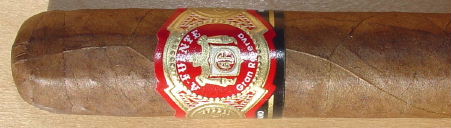
The Chateau Fuente is a robusto measuring 4.5 x 50. The binder and the filler are both from the Fuente family reserves grown and aged in the Dominican Republic. Both the Connecticut wrapped Chateaus and the Sun grown Chateaus come individually wrapped in a cedar sheath; the Connecticut line (natural and maduro) have green ribbon at the foot. The Sungrown has a black ribbon. The lower border on the band matches the color of the ribbon in either case.

This is a medium to full bodied spicy smoke. It starts up with a bite, but mellows while remaining quite spicy. This wrapper is a real treat. There’s a caramel like quality to it which blends with the spice very nicely. My wife came outside to keep me company for a moment and said she really liked the way this cigar smelled — as opposed to the “heavy” cigars she believes are my standard fare. Indeed, this cigar does have a pleasant aroma.

It burns fairly slowly; a good 45 minute smoke, during which I have to consciously slow myself down. Like all the Fuentes I have sampled these have excellent construction. (Pick up a Hemingway Short Story sometime to see how long a superbly crafted small cigar can last.)

At 4 USD this is a steal. The Sun Grown line is not easy to find, so snatch up a couple when you see them. You won’t be disappointed.

Fire Maduro Robusto

Cnv0129.jpg

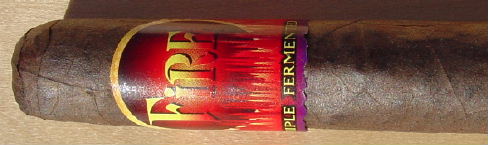
Made by Nestor Plasencia for Rocky Patel’s Indian Tabac in Honduras, Fire is a bargain bundle smoke with “triple fermented” tobaccos. (Though it looks like they’re now available in boxes.) Both the wrapper and the filler are “triple fermented,” but the band is just silly. It looks like it should be the cover art for a Bollywood DVD.

5 x 52

Wrapper: Costa Rica

Binder: Connecticut Broadleaf

Filler: Honduras and Nicaragua

The foot reveals a swirl of different colored tobaccos, and the wrapper is rough but slightly oily. Connecticut Broadleaf is an interesting choice as a binder since in most cases this would serve as the wrapper in a maduro.

But for me the star of the Fire Maduro is the Costa Rican wrapper. It burns unevenly, but with an aroma like this the burn is a minor fault. Toffee is the closest I can come to describing it. The Fire line is on the heavy side of medium bodied smokes, and there is a hint of harshness that comes and goes. With a name like “Fire” a nice bite should be expected. It’s a little one dimensional, but that one dimension is pretty good.

The ash is a mottled gray that held for two inches even while I chased the dogs around the back yard. The roll on all three samples I tried was solid and the draw was firm with plenty of smoke. I smoked about two thirds before the taste began to turn, which in my case made it a 30 minute cigar.

Bottom line: at 2 bucks a pop, you can’t go wrong. Though in the future I will probably opt for the petite corona — they offer a whole lot of flavor in a short smoke.

Punch Gran Puro Libertad

Cnv0128.jpg

5 x 52

Wrapper: Honduras (San Agustin Valley)

Binder: Honduras

Filler: Honduras

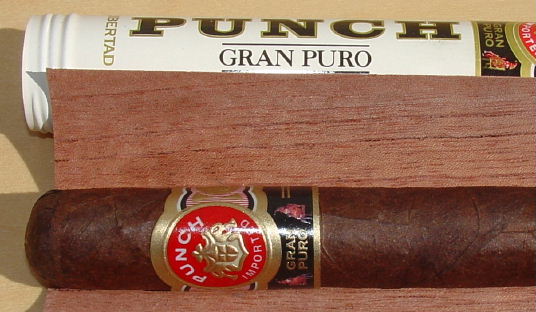
The Gran Puro line was introduced in 2003, but this frontmark arrived only late last year. The Punch brand has been exported to the U.S. since 1969 by the Villazon company. The Gran Puro is manufactured in Cofradia by Honduras American Tabaco SA., but the band pays homage to the original Cuban product with little images of the eponymous puppet.

The Libertad is a cedar lined tubo with an oily sun grown wrapper. Both the wrapper and the binder are sun grown, actually. I had expected this to be a more powerful smoke for this reason, but it seemed to be mellower than the other sizes in the Gran Puro line.

It’s a well balanced cigar that tastes to me like a maduro. A shimmering sweetness floats above the expected Honduran body. It’s robust and meaty, with a woody finish. Never sharp, never biting, and very well constructed. A long white ash accumulates and falls at the two inch mark. Perfect draw and an even burn. At less than 4 USD per stick, I couldn’t ask for anything more. Except more.