

This boy is no longer a boy. He’s a brave. He is little in body, but his heart is big. His name shall be “Little Big Man.”
–Calder Willingham
So let’s get this straight. The Tatuaje Havana VI series is a toned down version of Tatuaje, but the Verocu is the “Havana VI on steroids.” Not a big man, but not a small man either. A little big man.
Whatever it is, the Verocu is a little hard to find these days except in the stubby form of the No. 9. The first Verocu blends were regional releases — the 6 1/4 x 52 parejo dubbed No. 1 and sold west of the Mississippi, and the 5 1/2 x 54 No. 2 for those east of the river. Those releases are sold out, but the No. 9 is still available as an exclusive from Holt’s. I picked these up about six months when they were running a special, and I’m glad I did.
But I wasn’t so glad when I first got them. There aren’t too many cigars made by Don Pepin’s outfit that I haven’t been pleased with, but the Verocu No. 9 left a lot to be desired right off the truck. They were quite harsh, unbalanced, and burned terribly. Not what I expected from a Tat at all.
So I did what all hapless victims of the badly behaved box do: I attributed its faults to youth and put it away for a few months. And here I am, a few months later, with another good Nicaraguan puro to crow about.
The Verocu No. 9 is a short rothschild — at 4 1/2 inches long the cigar is almost eclipsed by its double bands, but its 49 ring gauge provides enough girth to keep it from petite corona status.
Construction Notes
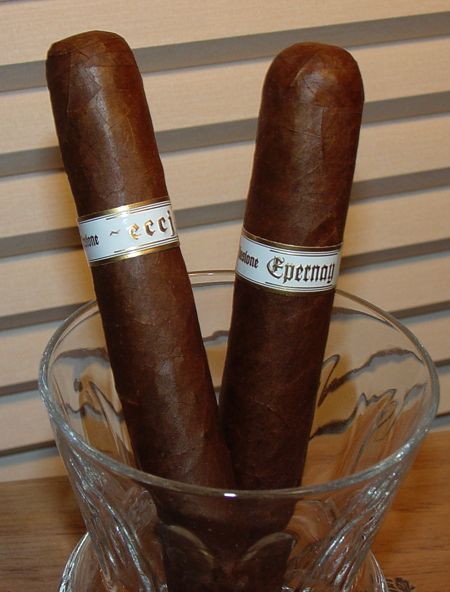
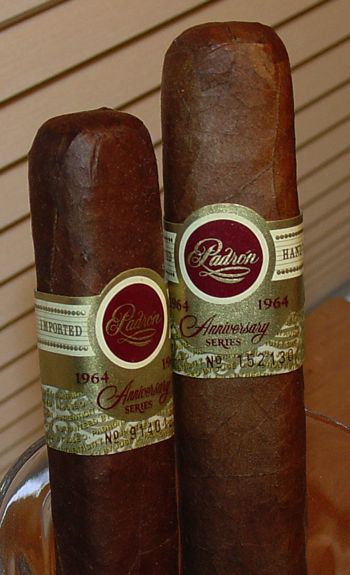
The first impression this cigar makes is that it is well made, but rustic. The wrapper has a dry leathery appearance with a lot of variation in shade — from a dark brown, maduro-like color, to a ruddy colorado. The roll is solid and the head is finished with a traditional triple-cap. It’s not a gorgeous cigar, but it has redeeming qualities to be found elsewhere.
The draw is excellent, but these bad boys still burn a little off kilter. They behave much better than the fresh ones I smoked last summer, but they haven’t been completely reformed.
Overall good construction, but it has a stubborn wrapper leaf.

Tasting Notes
The Verocu No. 9 opens with flavors that I usually associate with maduro wrappers — anise and chocolate. Of course it wouldn’t be a Tat without a little black pepper to liven things up, and the No. 9 does not disappoint in this regard. It’s not overpowering, but it spikes the palate in a friendly way. The underlying flavor seems to be leather, and this continues for the duration of the cigar.
The bold corojo heart of the No. 9 beats a little stronger in the mid section, adding some caramel-tinged sweetness to the aroma. It helps to slow down a little with this one to minimize the sharpness of the aftertaste. The resting smoke seems a little sweeter this way as well.
The last stage continues to serve up a base flavor of leather with delicious caramel tones, along with a more assertive spice on the tongue.
Conclusion
Tatuaje’s Verocu No. 9 is a cigar to be savored. It cannot be rushed or all kinds of things go wrong — the burn goes haywire, the flavors get muddied, and the aftertaste becomes burnt tasting. Taken slowly, the flavors are instead quite distinct and enjoyable and the burn is decent (but not great.) They do have a decent kick, but by Tatuaje standards these are still medium-bodied.
This cigar doesn’t really taste like the standard Havana VI (which I think I like a bit better) or any other Tatuaje exactly. It’s a blend unto its own, with its own merits and downfalls. I think any lover of Tatuaje or Pepin Garcia’s blends will find the Verocu No. 9 an enjoyable experience, though it might not rate among the best of them all.
The Verocu No. 9 is a Holt’s exclusive. Boxes of 20 retail for around 130 USD, though that price occasionally drops. I snagged a box for $100 last summer, and I’m not disappointed. The intervening months have done them a world of good, and if they continue on their current trajectory, these could turn out to be bigger little men than they already are right now.
 Final Score: 85 (but climbing)

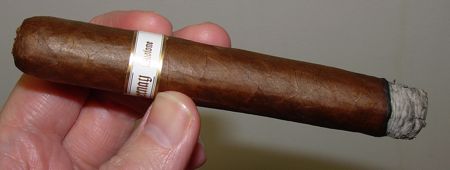


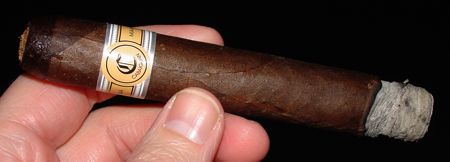
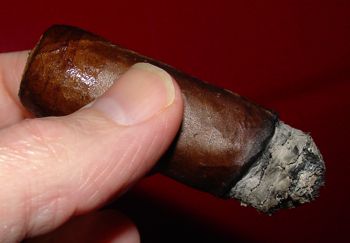
 Both sizes burn very well, though the robusto was not plumb-line even; it corrected itself over time and needed no assistance from me. The 46 was spot-on all the way. The ash is a solid light gray with a yellowish cast.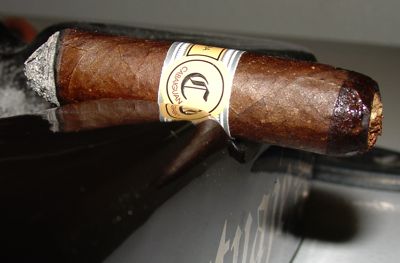
 The Maduro doesn’t stray too far from what you’d expect in a Dominican Maduro. The Brazilian wrapper is very toothy, in fact rough to the touch, and the draw is a little tight but it burns well with a straight and solid ash. The flavors are typical, but good: chocolate and nuts, with negligible finish or aftertaste. There is a touch of spice in the last third, but it won’t satisfy the power smoker — it’s really pretty smooth and mild for the most part. Light to medium in body. Quite pleasant as an everyday light maduro cigar.
 The Double Wrap is an impressively built cigar — I think I counted 4 or 5 wraps at the head of this thing. Unfortunately it was unsmokeable. I fought with it for the first inch or so, but the draw was just too tight and what flavors I could get were sharp and metallic. I had to pitch this one and move on to the next.
 is 100% “first-generation” Cuban-seed Corojo, and it was probably the most interesting smoke in the sampler. It starts up with a peppery bite and a nice caramel accent. The smoke seems a little thin, but the aroma is quite unusual — the only descriptor I could come up with was “gamey.” It burns slowly and is extremely well-behaved for a blend with so much ligero. The only issue I had was the thin smoke body, which is way over-matched by the power of the cigar. This stick has too much nicotine for me, but I did enjoy its distinctive aroma.
 ately spiced with black pepper and accompanied by some caramel sweetness on the nose, it’s nicely balanced. Chocolate flavors appear in the second half and it gets a bit rough on the throat. It’s not terribly complex, but there’s enough here to keep my interest for the duration of the cigar. A good medium-full bodied smoke.
 though the draw was again a little tight it was otherwise well constructed. In most ways it’s typical of Ecuadorian Connecticut — creamy with floral notes, but at one point I thought I could detect apple notes. That was unexpected. In the home stretch it’s mostly nuts and creamy shade-grown goodness. Another really decent smoke.
 Now, keeping in mind that this area is still in the rich area of Central America that includes both the Jalapa Valley of Nicaragua and the Jamastran of Honduras, the Nicaragua-Honduras distinction might be a little academic. Trojes is equidistant from both Esteli, the capital of Nicaraguan cigar production, and Danli, it’s Honduran equivalent. (More importantly, I wonder if people from Trojes call themselves “Trojens.” Try yelling that when USC comes to play.)
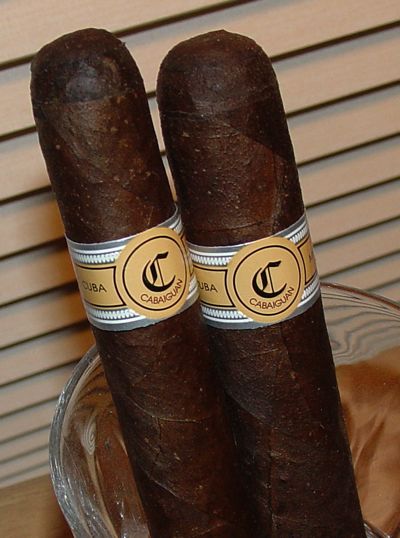
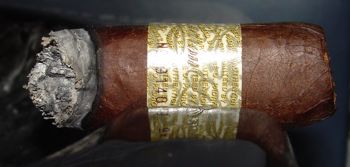
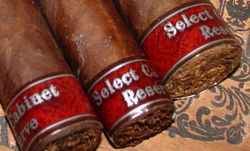 The huge band on this cigar, accompanied by its smaller foot band, might lead one to believe that this cigar has something to hide. And while it’s true that the dusky colorado maduro wrapper is a bit rough and veiny, it’s not so unattractive that it must be veiled from sight. Sometimes the foot band would slip off easily; other times I had to peel it, and as usual this meant chipping the wrapper at the foot. That is why I hate foot bands.


 Final Score: 94
 Nestor Plasencia Jr. produced the first organic cigar, the
 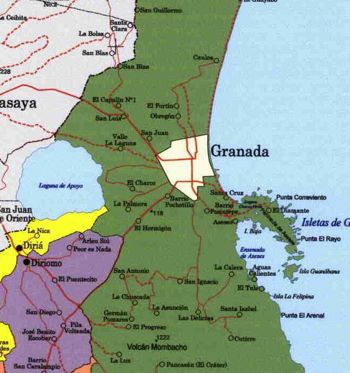 Before the land was cleared for planting it had never been used for any kind of agriculture, so it can truly be called “virgin soil.” This Nicaraguan grown Cuban-seed filler is the heart of the Verdadero Organic cigar, but it is completed with a binder from Sumatra (Indonesia) and a Connecticut seed wrapper from Ecuador. I have seen no claims that the binder and wrapper are organic, so maybe it should be called the Verdadero (Very Nearly) Organic?


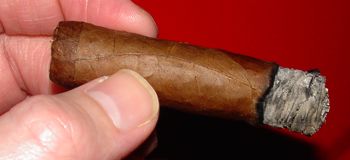

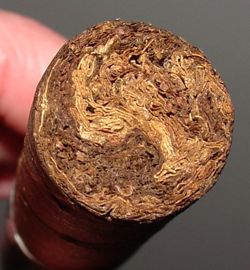
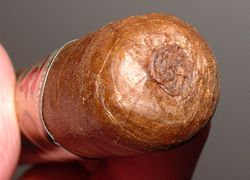 (The same technique is used to finish the Particulares cigar.) The triple cap is otherwise extremely well executed. The wrapper is dark, glossy and attractive, despite being a little rough. The corojo cover leaf seems to be very thin, allowing the texture of the rough binder leaf to show on the surface of the cigar. One sample arrived with a small v-shaped crack that posed only a cosmetic threat.
 One odd thing I noticed was that the ligero centered in the middle of the cigar seems to flame out as the cigar burns, creating the illusion that the cigar is tunneling, when it really isn’t. I would say it was my imagination, but it happened with both of the cigars I smoked.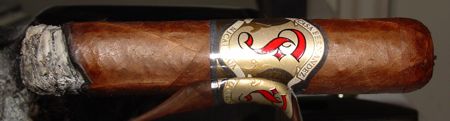
 Cigarfan.net