Particulares Robusto

Particulares

My original intention in trying more cigars from Tabacalera Tropical was to find a less expensive but comparable alternative to the Nicaraguan puros that I smoke on a regular basis.  The name Aganorsa kept popping up, and I thought that by following the trail of that grower’s tobacco I might find cigars of a similar style, possibly at a lesser price.

Since cigar makers like Pepin Garcia, Dion Giolito, and Ernesto Padilla have all at one time or another used Aganorsa leaf in their blends, I expected that Tropical’s blends would at least have a passing resemblance to smokes like DPG’s Cuban Classic, Illusione, etc.  Their JFR cigar certainly does.

I was a little disappointed to find that Lempira Fuerte and Condega didn’t live up to my expectations, though I still thought Condega was a very good blend. Particulares, on the other hand, is a great cigar, and it is the first in the series so far to really taste like it’s in the same category as the Big Nicaraguans I have been using as a benchmark.

Particulares is an old Cuban brand name (as well as a frontmark for the Cuban Hoyo de Monterrey “A” size) but the name was revived by Tropical as one of their first brands.  (Their very first brand was Solo Aromas, followed by Particulares, Cacique, and Maya.) And even though this appears to be the only formulation available it is listed with its royal appellation “Reserva Privada” in some online catalogs.

Not surprisingly, the Particulares (Reserva Privada) is a Nicaraguan puro. The wrapper is a Corojo leaf from 2006. Four sizes are currently in production:

  • Robusto – 5 x 50
  • Toro – 6 x 52
  • Torpedo – 6 1/4 x 52
  • Churchill – 7 x 48

Construction Notes

Particulares2I didn’t notice it immediately but it turns out these sticks have pig-tail caps. The tail is curled and pressed down into the head so it just looks like a small swirl. It can be easily prised up with a fingernail, though admittedly there isn’t much point. The rest of the head is wound perfectly into a fine triple cap. The wrapper is somewhat rough but consistent in color, a dark colorado maduro. The band features a lock-and-key motif that “locks” at the point where the band ends meet — a clever design, I think.

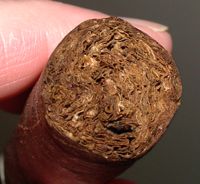
The draw is good and the  burn is slow and even. The ash flakes slightly, but not enough to matter. Overall excellent construction.Particulares3
Tasting Notes

The Particulares robusto starts up with a rich hickory-like aroma that is immediately recognizable. This is what I’ve been looking for. From the first puff this cigar tastes more like an Illusione or Padilla than the Lempira Fuerte or the Condega Corojo.  The flavor is a little charred, but not in the way that the Lempira was. The flavor is closer to grilled meat with some maple syrup-like sweetness.

The middle section continues in this vein but softens up a bit — it’s smooth with some fruity notes, almost brandy-like at times. It reminds me of the JFR cigar, but smoother and more refined.

Particulares4

The last third is spicier but still sweet. The finish lengthens, but it doesn’t settle in for the night like some cigars do after the mid-point. It stays clean and crisp and leaves in a reasonable amount of time, like a good guest.  The aftertaste gets a little tarry at the band, but by that time this cigar has said its piece.

Conclusion

The Particulares robusto is a tasty smoke that finally delivers on the flavor I was expecting from Tropical – Aganorsa.  The only hitch is that it isn’t much less expensive than Illusione or Padilla or others in that class. Prices range from 6 to 7 USD.  That’s not too much to ask for a cigar of this caliber, but I was hoping to tap a secret source of Nicaragua’s finest and save myself a bundle. But I really have no legitimate reason to be disappointed — it’s still a great smoke at a reasonable price.

Particulares5Final Score: 90

Condega Corojo 1999 Toro

Condega

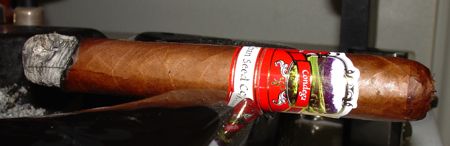
Next up in this series of cigars from Tabacalera Tropical (aka Casa Fernandez, aka Aganorsa) is the Condega Corojo 1999 (2006 Series.) For more information about Tabacalera Tropical and Aganorsa, see last week’s review of the Lempira Fuerte.

Since Condega is the least well known region of Nicaragua’s three primary growing regions, it’s nice to see it get some name recognition. The Condega Corojo is not only a Nicaraguan puro, it’s a Nicaraguan Corojo puro — a cigar composed entirely of corojo leaf from Condega, Jalapa, and Esteli, Nicaragua.

From what I hear, Condega has appeared in more than one formulation, but the Corojo 1999 was unveiled sometime in 2004. The version that I smoked for this review was the 2006 series.

For a long time I associated the term “corojo” with power — maybe that came from smoking Camacho’s Corojo blend — but the Condega cigar sets the record straight once and for all. Corojo is after all just a black tobacco varietal; a cigar primarily composed of corojo ligero is going to be a powerhouse. A more balanced blend of corojo volado and seco leaves will be a lighter cigar, which is actually what Condega is — a medium bodied cigar with fairly mild strength.

Condega “Cuban Seed Corojo 1999” is available in four sizes:

  • Robusto – 5 x 52
  • Toro – 6 x 52
  • Torpedo – 6 1/2 x 54
  • Churchill – 7 x 50

Condega2

Construction Notes

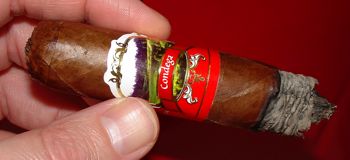
The Condega Corojo Toro is a nice looking stick, but I have to join the growing chorus of complaint about foot bands. If a company wants to use them, fine, but make sure they are applied in such a way that they can be easily removed or slipped off. These cigars have delicate wrappers, and both samples cracked when I removed the foot band. Once I got over that initial irritation, I really liked the look of this cigar. The wrapper is smooth and attractive, similar to Connecticut shade but darker and thinner. The triple cap is attractive, though it also cracked slightly when I cut the stick prior to smoking. Fortunately the crack didn’t grow beyond that, but there’s no doubt that this is a very finicky wrapper leaf. The draw was fine on both samples; the burn was even and the ash was solid.

Overall excellent construction. (Incidentally, reviews of this cigar have in the past zeroed in on faulty construction. Evidently the factory is employing better quality control these days.)

Tasting Notes

I think this might be the lightest Nicaraguan puro I’ve ever smoked — the smoke texture is medium-bodied, or becomes that way eventually, but this cigar has only the slightest kick to it. It starts out mild and smooth with an acidic twang typical of Nicaraguan cigars. There is caramel on the nose and a touch of cocoa on the palate.

The middle section of the cigar showcases a stellar aroma — soft woody spices that remind me of Pepin Garcia’s El Centurion cigar. The underlying flavor is toasty with a hint of leather, but the aroma is where the action is. This is a sweetheart of a cigar.

The last third gets a little more serious, but not by much. The acidic accent becomes more pronounced, accompanied by a hint of black pepper and some sweetness on the front palate. The body of the cigar peaks at about a medium, but this cigar never really flexes much muscle at all. This toro is all about finesse, not power.

Conclusion

The Condega Corojo 1999 shares many of the nuances of Don Pepin Garcia’s cigars, but none of the strength. This could be a good or a bad thing, depending on your preferences. While the overall experience is pretty mellow, the aroma is quite dramatic: mild to medium bodied smokers will enjoy this cigar a lot and others may find it a pleasant morning or mid-day smoke. Five to six dollars is a reasonable hit for this stick, but it is a little hard to find. If your local tobacconist carries Tropical products, definitely give it a shot.

Condega3

Final Score: 89

Lempira Fuerte Robusto

Lempira

When Pedro Martin stepped off his flight from Puerto Rico into the -17 degree cold of a Detroit winter he knew it was time to head south again. Soon after leaving Cuba in 1961 Martin found work with a business associate in Detroit, but it wasn’t long before he planted roots in Miami, working for various tobacco outfits until he finally started Tropical Tobacco in 1978.

One of the first cigar shops I patronized as a neophyte stogie chomper was a small discount cigarette shop that had a tiny humidor. I knew next to nothing about cigars, but I grew fond of a cigar they sold called Maya. It turns out that this is an old Tropical Tobacco blend. Later on I found a cheap smoke called V Centennial that I enjoyed as well (even though one bundle arrived with a bonus lesson in tobacco beetle containment.) Also a Tropical cigar, and a good one.

Since then I’ve enjoyed many of Tropical’s blends, as well as many of the other cigars that are made with Aganorsa leaf, so I thought I’d go straight to the source and survey the Tropical product line.  But first a little more about Aganorsa.

AGANORSA and Tabacalera Tropical

When the Sandinista government came to power in Nicaragua, they began the familiar and disturbing process of nationalizing private industry, including tobacco growing and processing. The Cuban government traded assistance in the form of native Cuban seed and expertise in exchange for foodstuffs and other items difficult to acquire under the U.S. embargo. At that time the tobacco industry was known as TAINSA and operated in many of the areas where Nicaragua’s best tobacco is grown. Unfortunately these were also areas beset by political unrest and violence.

Around the same time, Eduardo Fernandez and his brother built and presided over one of the largest fast food chains in Europe, a giant called Telepizza. Starting from a single pizza joint in Madrid, the company became the second largest fast food chain in Spain (after McDonalds), and then spread to other countries. When he sold his share in that company in the late 90’s, the Sandinistas were gone and Fernandez was in an excellent position to acquire some of these old TAINSA fields and start a new venture with Aganorsa.

Fernandez brought in agricultural and fermentation experts from Cuba to help get his project started. Eventually he would also acquire Tropical Tobacco from Pedro Martin, and with it another valuable asset — Pedro Martin himself. The result was an enormous bank of tobacco expertise, rich fields in Esteli and Jalapa, and old-fashioned Cuban methods of processing and rolling cigars. Tropical Tobacco later became Tabacalera Tropical, which is now subsumed by Casa Fernandez and is part of the Aganorsa Group as a whole. (The precise business affiliations are hard to pin down, but I think that’s how it goes.)

Aganorsa leaf is praised and highly sought after by makers of full bodied, Cuban style cigars — some of Aganorsa’s best known customers include El Rey de Los Habanos, Padilla, and Illusione. Though each of these cigar makers has a distinctive style, the similarity is unmistakeable. It’s Aganorsa.

Lempira

The lempira is the currency of Honduras, so naturally the Lempira cigar is entirely Nicaraguan. The discrepancy is probably due to the fact that this cigar has changed composition over the years. It’s one of the oldest brand names in the Tropical catalog, blended by Pedro Martin not long after he first formed Tropical Tobacco in 1978.

This incarnation of the Lempira is still blended by Pedro Martin, but it’s a slightly heftier blend that was introduced in 2004 as the Lempira Fuerte. The robustos I smoked for this review were from the 2006 vintage.

Lempira2

Construction Notes

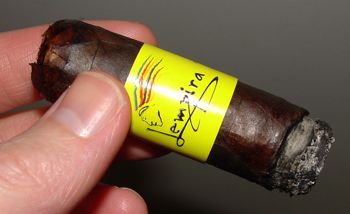
This is a seriously oily cigar. The maduro wrapper on the Lempira Fuerte is a very dark brown that verges on black near the seams. It’s quite striking. The roll is solid, but the cap exhibits none of the Cuban “finesse” that I was sort of expecting. It’s functional and applied well, but it’s none too pretty. Shearing off the cap I found the draw to be just right. And while the burn is a little erratic the ash is solid and doesn’t flake. I can also attest to this robusto’s durability: I accidentally dropped it in the sand while reaching for the ashtray and the only damage it sustained was to the ash (hence no first-inch ash pic.)

Overall very good construction.

Tasting notes

From the first puff I realized this cigar was going to be one of those very charry tasting maduros — the aroma is bittersweet and woodsy, with a flavor that graduates from fairly mild to rather strong at the smoke’s conclusion. The flavor is somewhat nondescript at first — a little earth, sweet chalk maybe, with a dry finish. The body of this cigar is also lighter than I expected, but it does eventually ramp it up to about a medium.

The middle section features dark roasted coffee — Vienna roast, verging on burnt — with peppery spice on the upper palate. I don’t retrohale most cigars, but this one gains entrance into my sinuses anyway. Intentional retrohaling would probably not be advised with this cigar. The flavors are increasingly bitter on the palate and the sweetness from the wrapper has a hard time maintaining the balance.

By the last section this cigar starts tasting more like a charcoal briquette than anything else. At times I thought I detected lighter fluid, but I think that was my imagination. There is a rich meaty aroma that I did enjoy, but it is completely overpowered by the bitter char taste up front. I had a hard time finishing this one.

Lempira3

Final Score: 79

Conclusion

The Lempira Fuerte isn’t a bad cigar, but the flavors here are a little too one-dimensional and bitter for me. I can see how someone who likes the dark bitter semi-sweet flavors of some maduro cigars might get a bang out of this one, but for me it was just too burnt tasting. It scores very well on construction and appearance, however. It’s just not for me.

Up next in this series of Tabacalera Tropical reviews: Condega 2006.


Romeo y Julieta Habana Reserve Robusto

RyJHabana

There seems to be no end to the number of different Romeo y Julieta cigars: the Anniversario and the Vintage Maduro are just a couple of recent additions that I’ve reviewed for KOTF.  But since the uncontrolled proliferation of cigar blends is not a phenomenon I wish to see curbed, I won’t complain, even though it did take me a long time to get around to this one.

The “Habana Reserve” was introduced about two years ago in half a dozen sizes. Today the range has been expanded to eight vitolas, including a perfecto and a short churchill. Four sizes are available in aluminum tubes, including the one I’m reviewing today. For some reason Altadis assigns different frontmarks to the tubed versions; e.g., the tubed version of the Toro is called “Titan,” and the tubed Robusto is called a “Rothchilde.”

The Habana Reserve is the only non-Cuban Romeo y Julieta not made in the Dominican Republic. And even though they are mostly composed of Nicaraguan tobacco, they are actually made in Honduras in the Flor de Copan factory. Both the wrapper and binder are Nicaraguan, and the filler is a Nicaraguan-Honduran blend.

I try to smoke at least two samples in a critical manner before reviewing a blend, which I accordingly did in this case but with a little twist: the same size in both cases, but one was tubed and the other was not. With a 54 ring gauge the Habana Reserve robusto is a little larger in diameter than most robustos, but retains the standard length of 5 inches. The tubed version is called a Rothchilde (not a Rothschild?) even though it has  the same dimensions as the robusto.

RyJHabana2

Construction Notes

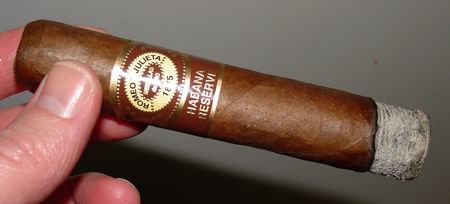
The Romeo y Julieta Habana Reserve Robusto is a svelte looking stick. A nicely wrapped flat head is finished with a clean double cap, and the slightly grainy wrapper shines in the light. In comparing the two cigars it is evident that there is a difference — the wrapper on the Rothchild is considerably lighter. Without the band you might think these were the same size, but different brands of cigars.

The robusto is quite firm to the touch and looking down the foot it appears to be very well packed. Not surprisingly, the draw is a little tough — it puts up more resistance than I prefer but it’s not too tight to smoke comfortably. The ash is solid and a consistent light gray in color. This cigar is cosmetically almost perfect.

The Rothchilde is more pliant, but it doesn’t burn as evenly. It drew better though, and the cigar’s overall performance was thereby improved.

Tasting Notes

The robusto starts out milder and thinner in body than I expected from this purportedly “heaviest” of Romeo y Julietas. Perhaps it is due to the tight roll, or maybe my definition of “heavy” has been weighted down with too many Nicaraguan puros of late. The flavor is in any case unremarkable — graphitic and a little salty. Despite this the aroma is very nice, so I chose to direct my attention to its pleasant cedar and floral notes instead.

The overall flavor improves after an inch or so, becoming smooth and woody with a touch of pepper and an earthy aftertaste. The smoke texture gains a little weight as well.  The highlight continues to be the aroma though — fresh cedar sawdust with a minty edge and a few brief hints of fresh bread.

Toward the band the flavor becomes one-dimensionally earthy and burnt, but the aroma is still quite nice, cedar giving way to some vanilla and what I think might have been coconut. Very unusual.

The Rothchilde exhibited most of the same characteristics as the Robusto, as would be expected, but it is immediately identifiable as a medium to full bodied cigar and opens up with a much bolder and better balanced flavor.  By the half-way point the cigars were performing at pretty much the same level.  The difference between the two was probably attributable to the Robusto’s tight bunch, but the aroma of the Roth also seemed to be less subtle. I’m not sure if the roll can account for that.

Conclusion

True to the “Habana” label, the Habana Reserve is an earthy, pungent smoke that may suffer from some construction inconsistencies. The flavors are good, though not superb, while the aroma is outstanding.

Even though I wasn’t exactly bowled over by these cigars, I’ll probably try them again, mostly because my experience with them was not terribly conclusive, but also because they’re priced so attractively — 3.50 to 5 USD. Not bad at all. Get ’em from Cigars Direct by the box (27) or grab a tester five-pack for 25 bucks.

RyJHabana3

Final Score: 84

J. Fuego “Casa Fuego” Belicoso

CasaFuego

Jesus Fuego is perhaps best known for his work with Rocky Patel’s 1990 and 1992 Vintage blends, but he has come into his own in the last couple of years with Tabacos S.A. and his “J. Fuego” line of cigars.

Like so many other premium cigar makers, Fuego’s family tree stretches back several generations to the fertile soil of Pinar del Rio, Cuba.  His family has been in the tobacco growing business since the 1870’s, in a part of Cuba that would eventually become known as “El Corojo.”  The Fuegos were mostly tobacco producers for the factories in Havana, but Jesus took it a little further along the production line to become an expert in post-harvest tobacco processing.corojo

Fuego holds a master’s degree in agronomy and wrote his thesis on tobacco fermentation after studying at Havana University and receiving training at the Fabrica de Tobacos Francisco Donatien, where he worked on the emerging new Cuban marca called Vegueros.

In the late 90’s he left Cuba and arrived in Honduras, where he went to work for Camacho’s Julio Eiroa.  Later on, while he was working for U.S. Tobacco, he impressed Rocky Patel, who at the time was in the development stages of the blends that would become known as the Vintage 1990 and 1992. Fuego eventually would become Rocky’s “right-hand man,” not only assisting in the blending of his cigars but also supervising many of his factories.  Along the way he would also help to blend my favorite RP blend, the Sun Grown, and the Olde World Reserve as well.

But in late 2006 Fuego decided to step out on his own. With the help of the ubiquitous Plasencia family (the Fuegos and the Plasencias have a long history as neighbors going back to the nineteenth century in Cuba) Fuego introduced his inaugural J. Fuego cigars: the Natural, and the Gran Reserva Corojo No. 1.

Since then he has lent a hand in several other blends, both for his own J. Fuego brand and others such as Defiance by Xikar, a house blend for Famous Smoke (Royal Nicaraguan), and this one for Cigars International: Casa Fuego.Corojo3

The Casa Fuego is made in Honduras with Nicaraguan tobaccos: the wrapper is Nicaraguan Habano, while the binder and filler are corojo. Fuego has a long history with corojo — in fact, his family’s farm in Cuba was called Corojo No. 1 — and the fact that his first employer in Honduras was the Eiroa family says something as well. This guy really knows corojo.

Casa Fuego is available in five sizes:

  • Corona (5.5 x 46)
  • Double Corona (7 x 50)
  • Robusto (5 x 50)
  • Toro (6.5 x 52)
  • Belicoso (6 x 52)

Construction Notes

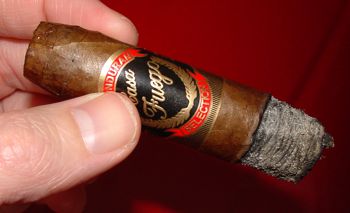
The Casa Fuego Belicoso features a slightly oily golden brown wrapper that shows a nice amount of fine tooth. The roll is a little bit spongy and irregular in places, particularly toward the head of the cigar, but once cut the draw and burn are perfect. These sticks are box pressed, but not square. After they have been in the humidor for a couple weeks the press is barely noticeable.

The ash is a solid dirty gray with lots of white speckles, a common occurrence with grainy wrapper leaf. The toothiness of this wrapper is quite reminiscent of Cameroon, as are some of the other smoking characteristics.

CasaFuego2

Tasting Notes

The Casa Fuego starts up with that typically tannic Nicaraguan flavor — woody, with a smattering of black pepper. The finish is dry and leaves an acidic tang on the tongue. The aroma contributes a sweet note of caramel and blends well with the drier flavors on the palate.

The sharp nature of the smoke softens up a bit after a couple inches. The pepper drops off and is replaced by cocoa or mild coffee, which combined with the residual tannins might come across as bittersweet chocolate. The aroma is spicier at this point, cedary with some mint, which strikes me as very Cameroonian.

The last third turns up the nicotine a couple notches, giving this medium-weight cigar a little more punch. The aroma is almost piney as the ash approaches the band. The aftertaste gets heavy and a bit tarry if rushed, so take it easy across the finish line.

Conclusion

Aside from the fact that the Casa Fuego is a very well made and pleasant cigar, what impresses me the most is the price. The retail price is around 5 USD, but these can be easily had for half that on Cigarbid, the auction arm of Cigars International. For less than three dollars this is a great everyday cigar. Even though it isn’t a spectacular smoke, dollar for dollar this is one of the better buys I’ve made this year.

CasaFuego3

Final Score: 85

Pinar del Rio Clasico Robusto

PDRClasicoRob

I had planned on reviewing the Pinar del Rio Oscuro Robusto this time around, but I must have pulled from a bad box because both of the cigars I had were underfilled and wouldn’t burn right. I’ve smoked this cigar before and I know this is a better cigar than that, so I decided to shelve the Oscuro review for now.

But I have really been enjoying the Habano Sun Grown robustos that I reviewed a few weeks back, so I was bound and determined to try another PDR this weekend. The Habano Sun Grown and the Oscuro are the flagship blends for PDR, but they have recently released a Connecticut wrapped stick called Clasico. It turned out that I had one of these Clasicos left from some sampler boxes I purchased a few months back. I opened the humidor, and I had the Clasico in my sights.

The Clasico gets no love (or even a mention) on the PDR website, but a recent review in Smoke Magazine offers the following anatomical description:

  • Wrapper: CT
  • Binder: Dom Rep
  • Filler: Dom Rep & Nicaragua

NewHavanaCigars.com lists the binder as Habano, so maybe we can guess that this is piloto cubano. There’s some pepper in this cigar and that may be where it’s coming from.

PDRClasico

Construction Notes

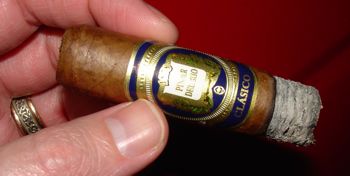
Just about perfect all the way around. The roll is solid, and looking down the business end of this stick it looks like it’s filled quite nicely. The wrapper is typical of shade grown leaf — pretty, with minimal veins and a nice creamy complexion. The head of the cigar is flat in the cuban style, and the seams of the cap are almost invisible. Pre-light this cigar has a dusty, hay-like scent with a touch of cedar.

Once lit, this stogie burns with steady precision — in addition to the creamy and floral qualities of Connecticut Shade, that is one of the nice things about this wrapper. It burns beautifully and builds a solid light gray ash. My only complaint here is that it seems to burn very quickly. I had to stretch this one out to make it last thirty minutes.

Tasting Notes

The Pinar del Rio Clasico opens up with an oaky flavor accented with black pepper on the tongue. The aroma is earthy with a touch of vanilla and the smoke coats the mouth. It’s fairly mild in strength but the smoke itself has a heavier texture, more of a medium body I’d say.  The aroma is not as floral as some Connecticut wrapped cigars — while still soft and creamy the smoke is toasty, like charred oak barrels. As the cigar progresses I don’t notice many new flavors in transition — it sticks to its opening theme for the most part, though the finish grows and becomes a little drier. By the band the aftertaste is predominately earthy with a light peppery seasoning.

The combination of Connecticut creaminess with black pepper had me thinking that this could be a much lighter variation on the 601 Black Label, or maybe La Aurora’s 1495 Connecticut. It’s a mild to medium bodied cigar, but one with lots of flavor. A great morning cigar, or given how quickly it burns, maybe even a nice lunchtime smoke at work.

The robusto rings up at around 4 USD per stick when buying by the box, which is a great price for a quality smoke.  Currently available from New Havana Cigars or you can buy singles from Silo for a few cents more.

Final Score: 87

PDRClasico2

Bering Puro Nicaraguan

BeringPuro

When I see the name Bering I think of two things: a very cold northern sea, and “It’s a Baby” cigars in pink and blue accented aluminum tubes. I’ve always thought of them as drugstore cigars (though on the premium side of the drugstore range) so I was intrigued when I saw the new Bering Nicaraguan Puro.  And as my B&M manager knows well enough, I’m a sucker for anything new and somewhat affordable.

At this time there is no information available about this cigar.  Bering used to be owned by Swisher, but apparently the brand has been pulled away by the gravitational power of the giant Altadis. Maybe that’s the reason for the new extension, but you’d think Altadis could afford a press release, or at least thrown up a page on their website to announce the new arrival.

So I picked this one up pretty much blind. It’s safe to assume that the filler, binder and wrapper are all Nicaraguan. That’s all the detail I have for now.

Construction Notes

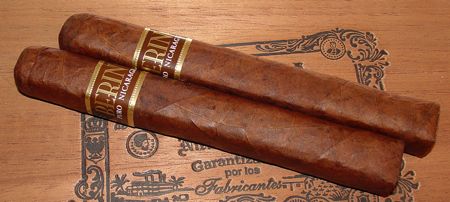
I must plead ignorance about the frontmark because I forgot to look at the box. These measure 6 x 50 — a traditional toro size — and they arrive square pressed.  They’re rustic in appearance, with a dark, mottled colorado maduro wrapper and a serviceable but unattractive double cap. The roll is a little soft.

The prelight scent is alluring, however:  ripe tobacco with a leathery layer.  It lights well though it burns a little unevenly (which is not uncommon for a box pressed smoke.)  Overall  good construction.

BeringPuro2

Tasting Notes

I’m always prepared for a spicy start when I light up a Nicaraguan puro, but the Bering Puro is very smooth by comparison. The flavor, on the other hand, is typical of Nicaraguan tobacco — earth with a touch of black pepper on the palate. The aroma is woody and quite pleasant.

After twenty minutes or so the flavor develops a little more bite, but in compensation offers auxiliary notes of coffee and mild cocoa. The aroma gets a little sweeter, remaining woodsy and pleasantly autumnal.

The last section sacrifices subtlety for strength as the flavors become more and more charred. The finish lengthens and the aftertaste intensifies. By the band the cigar is burning a little too hot and the aftertaste is overwhelmingly burnt.

Conclusion

About half-way through this cigar I found myself thinking, “Padron Lite.” It has some of the same characteristics, but not the same intensity as the standard Padron line. Unfortunately the Bering Puro also has a tendency to cross the finish line a little too early. The first two-thirds of the cigar were quite flavorful and easy to smoke; but the last section burned a little hot and seemed to carbonize between my fingers.

That said, this is still a cigar to try if you like medium to full-bodied Nicaraguan style cigars and are looking for something a little smoother than the Padron 3000 or 4000. Personally, I don’t think the Bering can top Padron for flavor or value (I found the Bering Puro for 5 USD in this size) but a comparison might prove worthwhile for the intrepid Nicaraguan aficionado.

Final Score: 85

BeringPuro3

Aging Report: Cubao No. 5

Cubao1yr

I have been aging cigars for a few years now and have come to the tentative conclusion that aging does not immeasurably enhance the quality of most non-Cuban cigars. Despite this I still have a few boxes put away for testing and comparison purposes.

I have all but given up on aging mild to medium-bodied cigars because the effects of aging seem to be a gradual diminishing of flavor. On the other hand, medium to full bodied cigars are able to withstand and possibly benefit from this moderation, especially when the cigar is a little too aggressive in its fresh state.

The Cubao No. 5 falls into this latter category: a medium-bodied smoke with a few rough edges that might smooth out with some age. After about a year in storage, it’s time to break them out and file a progress report.

My original assessment from September of last year ran as follows:

This toro starts up with that trademark Pepin pepper, but it’s not as powerful as a lot of his heavier blends. … After an inch I’m tasting cocoa and coffee with cream types of flavors, and the aroma from the foot is quite nice. …the way the sweet wood on the nose melds with the spiced cocoa on the palate.

There isn’t a lot of transition in the second half of the cigar, but I’m noticing a dry finish and a little scratch on the throat. Nothing a cold pale ale can’t take of. The intensity doesn’t pick up too much until I hit the band where the pepper ratchets up a bit. The flavor remains sweetly woody up front with cocoa notes in the margin. The pepper stays in the background and in the aftertaste, which is otherwise pretty clean.

Cubao cigars are brought to you by Espinosa y Ortega, makers of 601 and Mi Barrio cigars. They are manufactured by the Garcia family’s Tabacalera Cubana in Esteli, Nicaragua, with Nicaraguan filler and binder leaves and topped off with a dark Ecuadorian Sumatra wrapper. Six sizes are available. At 6 1/8  x 50, the No. 5 is their toro entry.

Cubao1yr2

Construction Notes

A year in the coolerador hasn’t done much for these cigars’ complexion, but of course that wasn’t expected to improve. The Cubao No. 5 is a masculine looking cigar — the wrapper is rough and mottled dark brown to almost black in places. The roll is a little soft, but that may be due to storage. Storage conditions were 60-65% relative humidity, and judging by the loose draw they might do better with a little higher RH. Despite this the stick burned perfectly and never got hot, so no points were lost on that count.

Overall very good construction.

Tasting Notes

I’m not sure why, but it always seems like aged cigars take a minute or two to wake up. The first few puffs of the Cubao are straightforward tobacco, nothing too interesting, but certainly not unpleasant either. After a minute the flavor gets grainier, like cereal with some natural sweetness and a dash of pepper.  The aroma from the smoldering wrapper carries the most interest here — it’s leathery, with a muskiness to it that is very nice.

After twenty or thirty minutes the heart of the cigar opens up and pours out its sad story. “I’ve been locked away for so long in that dark damp cooler and I’ve missed you so much, man.” It’s a familiar story, bittersweet with a dry finish. (A cold beverage is recommended at this point, and put some Hank Williams on while you’re at it.) Coffee and chocolate accents accompany the woody dry flavor, and the aroma continues its heartfelt refrain. “I’m so lonesome, I could cry…”

The last third is where the Cubao becomes most complex, and where the aging difference becomes most evident. The flavor doesn’t change dramatically, remaining sweet and woody for the most part, but the pepper intensifies and the body becomes almost wine-like. The smoke is very smooth and sippable, but still moderate in strength and medium in body. Chocolate notes are more pronounced in the fragrance, making this cigar almost like smoking mole. (As in mole poblano, not the rodent, wise guy.)

A small scratch at the back of the throat is the only real negative here, but it is not as severe as it was in its bolder, fresh state.

Conclusion

A year is not a long time in terms of serious cigar aging, but the effects are still apparent with the Cubao No. 5. In a year’s time these cigars have mellowed a little bit and are starting to show increased complexity. This is a very good cigar to start with, so it’s basically a matter of comparing subtleties. I detected a wider range of different flavors in the aged stock, including some things I didn’t pick up a year ago — notes of leather and musk, and more flavors in the transition after the mid-point. Combined with a slightly less aggressive attack on the back palate, I’m going to say the Cubao is a very good candidate for aging.

For now I will have to retract my conclusion about aging non-Cuban cigars — and revisit these in another year, if I can resist them that long.

Final Score: 90

Cubao1yr3

Padilla Signature 1932 — Old and New

Padilla32

Ernesto Padilla and Jose “Don Pepin” Garcia were like rice and beans for cigar smokers only a couple years ago. They were almost inseparable. But in 2008 they parted ways for a number of reasons: Garcia had too many clients and limited resources, while Padilla wanted more production control.  Insisting that this development would not affect the quality of his cigars, Padilla said, “I’m not looking to make something just as good — I’m looking to make something better.” But these cigars were so good that to make something just as good, let alone better, seemed an unlikely possibility.

But today that possiblility has become a reality, at least in my opinion.  Padilla is producing some stellar smokes in his new Miami factory, Fabrica de Tabacos Padilla. I’ve been enjoying the “new” Signature 1932 so much that I’d almost forgotten that I had a few of the old Pepin blends in storage. I decided to fire them up for this comparison review.

Both the old and the new 1932 cigars are Nicaraguan puros with similar compositions: corojo wrappers with criollo binder and filler blends.  It is important to note that the old and new blends both use tobacco from the same fields in Nicaragua, so there is bound to be a close similarity between them.

Padilla Signature 1932 Robusto — New Blend (2009)

Construction Notes

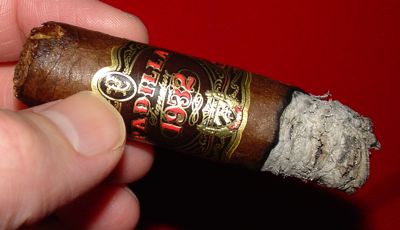
The wrapper on this robusto is rough and a little ruddier than the old version. A few nicks mar the surface here and there, but the roll is solid and the triple cap is just about perfect. After clipping the somewhat rounded head, the draw is very good. Once lit, the cigar burns slowly and deliberately, requiring some attention to keep it even and prevent it from going out. The salt and pepper ash is a little bit crumbly.

Overall good construction.

Padilla32New

Tasting Notes

I am immediately struck by the similarity between the new 1932 and the old one, but the new one doesn’t seem quite as bold. It’s smoother than the old blend, especially when the old blend was fresh. That characteristically earthy flavor is present in the opening salvo, along with complimentary bean flavors — sometimes coffee, sometimes cocoa.

The middle section is bright and woody, reminding me more of Illusione cigars than anything Pepin makes.

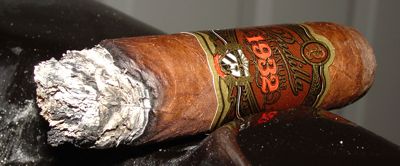
There is a little more kick to the last third, some pepper enters the fray and the sweet caramel-tinged aroma has me hanging on every puff. This why I love Nicaraguan corojo. The flavor picks up some char near the band and starts to get a bit sharp after that, but I hang on to it a little longer just to waft the resting smoke under my nose.

Final Score: 90
Padilla Signature 1932 Corona Gorda — Old Blend (2007)

Padilla32Old

Construction Notes

The wrapper on the old Pepin-made 1932 is a little smoother and slightly more attractive than the new version. The roll is dense and perfectly uniform, and the triple cap is predictably superb. As I clipped the cap on this one, my Xikar failed to evenly slice a tough little vein in the binder — a rare flaw that gave my tongue something to worry over as I proceeded to enjoy this cigar for the next hour and change.

The draw is very good and the burn is excellent. The ash is a solid and evenly shaded light gray. Having this one in storage for a couple years may have improved the combustion characteristics of this stick. Regardless of the reasons for this (and despite that annoying little vein) this was still one of the best constructed cigars I’ve smoked this year.

Overall Superb Construction.

Padilla32Old2

Tasting Notes

Aging this cigar for two years has moderated the flavor somewhat, but it still has plenty to offer. When fresh, this cigar had a lot more of the tannin that is typical of Pepin Garcia blends, and while that aspect is certainly front and center in the first third of the smoke, it is now relatively subdued. In addition to that mildly astringent quality, there is a delicious dose of cocoa and a smattering of white pepper.

The middle section of the cigar seems to be earthier, a little more Cubanesque, with a pleasantly spicy cedar aroma. The tannins have dropped off, but the finish is still quite dry.

The last third transitions to leathery flavors and pours on the peppery spice. The aftertaste is earthy and sharp. Towards the band the flavors muddy but the aroma never quits. I tried to keep this one going as long as I could just to enjoy the resting smoke.

Final Score: 93

Conclusion

Both of these cigars were excellent, two of the best blends I’ve smoked this year. They’re quite similar in style but I would be shocked if they were the exact same blend. The old version is typical of El Rey de Los Habanos — tannic, peppery, and complex — while the new version is brighter, and it has a sweet woody flavor that reminds me more of Illusione than anything Pepin makes. Taking into consideration the fact that I was comparing two different sizes — the new robusto versus the old corona gorda — plus the fact that the old one had two years of age, I would give the edge to the older ’32 based on construction alone.  My scorecard had them even in the taste department — the new blend scored one point higher for overall flavor, but the old one made up for that with a one point edge for balanced complexity. Where the old version pulled ahead was the burn, which was spot on perfect.

You can’t go wrong with either one of these if you dig medium-bodied Nicaraguan puros. The only sticking point with the Padilla 1932 is the price — sadly for us, cigars of this caliber won’t be found in the bargain bin. We’re looking at around 10 to 11 USD for the robusto in either version. If you can find the old blend, snap ’em up. If you can’t, you’ll have found a new friend anyway.

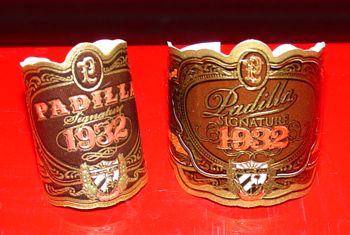
Just be careful to note the difference in the bands — the easiest way to distinguish between the old and new versions is the script. The old version has PADILLA in red block capitals over the 1932, whereas the new version has Padilla in gold script.  If purchasing online, be sure to ask first if the version in stock is the old or new one — or don’t, and enjoy the surprise. Either way you can’t lose.

Padilla32bands

Available from Fumée and Cigarsdirect.

Other Reviews of Note

Fire Up That Cigar compares the old and new Sig ’32s.

La Gloria Cubana Reserva Figurado Flechas

LGCFlechas

Here at Keepers of the Flame we support the preservation of formal cigar nomenclature, but occasionally a cigar comes with a designation that challenges our dedication. To restore the dignity of this cigar’s title from the abbreviation in the title above, allow me to present La Gloria Cubana Reserva Figurados Flechas Especiales Maduro. But since brevity is the soul of wit (or so I have been told) we’ll call it the LGC Flechas Maddie. In any case, this is a great blend, and one that almost always finds a place in Cigar Aficionado’s annual Top 25.

The big news for La Gloria Cubana is that Ernesto Perez-Carillo will no longer be the guiding force behind the brand.  LGC was first made in Miami by Ernesto’s father, a former Cuban Senator, starting in 1968, and it has been in the family ever since.  Ernesto Sr. nearly sold the brand at one point but decided to keep it when his son decided he wanted a part in the company. Now that son, Ernesto Jr., is leaving the brand behind for very similar reasons: to start a new cigar company with his son, Ernesto III.

That’s a lot of Ernestos to keep straight, but as long as they make cigars this good, I say keep the Ernestos coming.

The Reserva Figurados were first released in 2004 in only three sizes; a year later the number was increased to five. There was a suggestion that the lineup may be reduced again to 3, but so far all five sizes are still on the market:

  • Selectos de Lujos – 7 1/4 x 54  (previously reviewed here.)
  • Flechas Especiales – 6 1/2 x 49
  • Felicias – 4 5/8 x 49
  • Regalias Perfectos – 6 1/4 x 57
  • Piramides Clasicas –  7 1/4 x 56

The wrapper here is a well aged and fermented Connecticut Broadleaf. Beneath this is 4-year old Nicaraguan binder, and the filler is a Nicaraguan-Dominican blend. According to the General Cigar website, this line undergoes a special “cedar-aging” process whereby the cigar components are aged together in cedar bins for six months. They are then rolled by Grade 7 rollers and box aged for an additional three months before shipping.  “Flecha” by the way is Spanish for arrow, a fitting name for this figurado.

LGCFlechas2

Construction Notes

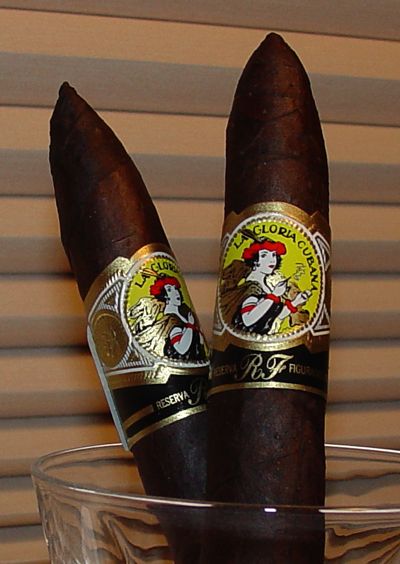
Despite the fact that this cigar is 6 1/2 inches long, it appears to be much smaller due to its proportions. This is a bouquet style perfecto, meaning it is tapered at both ends, but flared near the foot. The widest point is chosen as the measurement for the ring gauge, so it measures a 49 only at that one point. The remaining length of the barrel narrows, making this a smaller cigar than it appears to be on paper.

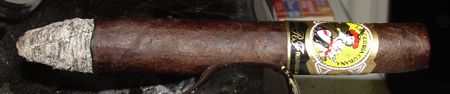
The wrapper is very dark, even for maduro, but not so black as to be suspicious. (In other words, it is certainly a naturally processed maduro leaf.) The pre-light aroma is of rich tobacco with a hint of cedar. The roll is solid all the way around, but one of my samples had a little crook in the head section. Maybe a level 6 roller was sitting in relief that day.

The burn on all of these has been absolutely perfect: straight as a plumb line, and leaving a solid gray ash to remember it by. The draw tends to be a bit tight until the point burns off, but after a few minutes it’s all good.

Overall excellent construction.

Tasting Notes

The Flechas Maduro took a few minutes to hit its stride due to a tight draw at the start. The first flavors are straight tobacco with a little char and it tends to taste a little papery. As soon as the foot opens up the flavors become richer as expected. Cedar makes an entrance and the aroma gets sweeter. There is a little licorice in the aftertaste.

The middle section features more cedar and throws in some roasted nuts. The licorice fades and the aftertaste becomes sweetly chalky. The smoke texture is medium to full in body, but at all times the smoke is full flavored.

The last section, up to the band, is where this cigar returns dividends. Here the aroma is at its most powerful — smoky cedar and sweet hickory in abundance. The flavor is almost meaty at times, but retains most of the previously mentioned attributes — nuts, earth, and rich tobacco. It’s a complex, but smoothly integrated brew.

Conclusion

The LGC Reserva Figurado line of cigars has been in my experience nothing short of excellent, in all sizes, in both natural Ecuadorian Sumatra as well as Maduro. The Flechas Maduro is representative of the line. This is a stellar example of a full-bodied cigar that has no harshness, an unfortunate rarity these days. There is enough complexity here to satisfy the most demanding palate, while remaining smooth enough for novices (assuming that a pretty good nicotine punch won’t spoil the experience.)

The Flechas Maduro carry a premium price of 8 to 9 USD per stick, but I do believe they are worth this asking price. My only hope is that General can maintain the quality of this cigar now that Ernesto Perez-Carrillo is no longer at the helm. And given his track record with LGC and El Rico Habano, it goes without saying that we await with baited cigar breath Ernesto’s new blends.

Final Score: 92

LGCFlechas3

Other Reviews of Note

Patrick A. gives the Flechas Maduro 4 out of 5 stogies for the Stogie Guys.

Cigar Jack finds the Regalias Maduro to be full flavored but less bold than the LGC Serie R.

Herfs up for the Cohiba Club as they give the Selectos de Lujos Maduro an 89.