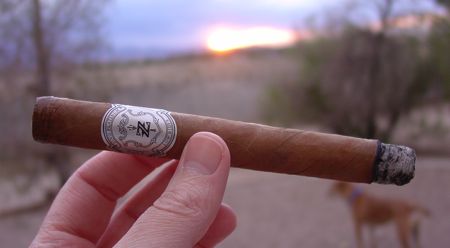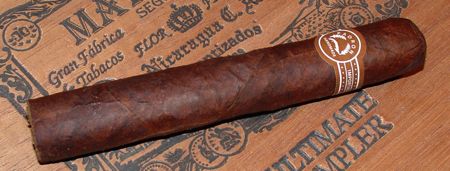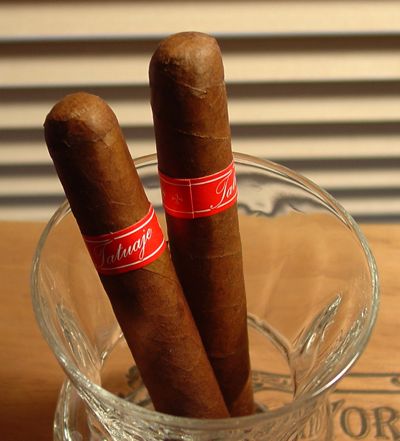
Tatuaje Havana VI Angeles

TatVIAngeles

I first reviewed the Tatuaje Havana at the end of 2006, not long after the blend was released as a medium-bodied alternative to the standard Tatuaje line.  Since then I’ve continued to enjoy this line as well as it’s more powerful mutation — the  Havana VI Verocu, which is also a good, but very different smoke.

Since I am routinely exiled to the back yard for my evening smoke and the temperature has been hovering around 105 degrees, I find myself reaching for smaller vitolas. That’s where the Angeles comes in.

There are six models of the Tat VI — the first letter of each size forms an anagram of the name of one of Pete Johnson’s dogs, “Havana.”

  • Hermosos – 5.625 x 46
  • Angeles – 4.625 x 42
  • Victorias – 6 x 38
  • Artistas – 6.125 x 52  (torpedo)
  • Nobles – 5 x 50
  • Almirante – 7 x 47

The Angeles is of course the  petite corona size.  Just the right size cigar for when the mercury drops below the century mark around 8 pm this time of year.

As is the case with most Tatuaje cigars, this one is a Nicaraguan puro and is made in Esteli by Tabacalera Cubana. The wrapper is Pepin’s familiar Corojo 99.
TatVIAngeles2

Construction Notes

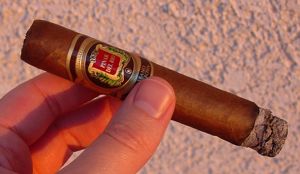
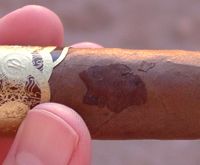
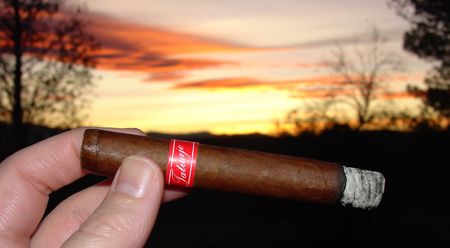
Almost every cigar to leave one of Don Pepin or Jaime Garcia’s factories is picture perfect, and this little corona is no exception. The wrapper is a slightly oily colorado maduro, almost rosado in the fading light, and the tight triple cap is the envy of the industry. The only flaw in this cigar is a prominent vein running down the back of the stick, straight as a stocking seam in one of those classic pin-ups.

The draw is good, and the burn is fine. All cigars should made as well as these.

Tasting Notes

The cigar makes its first impression with that trademark Pepin twang. I’d like to think that I could identify this flavor and aroma anywhere, because this Corojo 99 is just that distinct.  The aroma is slightly sweet, somewhat caramel-like, and this is counterbalanced by a mild woody tannic flavor on the palate. The overall effect is earthy at first and gradually becomes more leathery as the stick burns down.

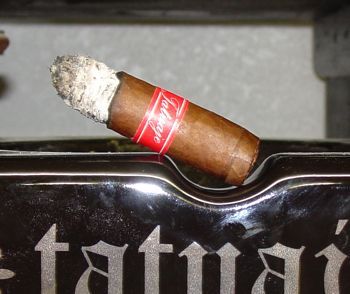
The peppery flavors I associate with Tatuaje are toned down in this blend, and they don’t make an appearance here until the second half of the smoke. This peppery note never really makes a solo appearance, but it does quietly simmer beneath the bitter-sweet melange above.  The last half-inch or so gets a little hot and starts to taste graphitic, but slow down and it can easily be enjoyed to a point well below the band.

Conclusion

Even in the triple-digit heat I find myself nubbing these little guys.  The Tatuaje Havana blend is a nice alternative for medium-bodied smokers, and I think this is my favorite vitola in the line. It’s all killer, no filler, as the kids say.

Once again though, the price is not ideal. These retail for around 5 or 6 dollars a stick. Not bad really, but not fantastic either. Still, if you’re in the market for a medium-bodied petite corona with real distinction, this is one you’ll have to consider.

Final Score: 90
TatVIAngeles3

Other Reviews of Note

Stinkie says the Angeles has it all on Cigar Beat

Rob (from PuffingCigars.com) finds the Angeles a clean, but less spicy smoke than others in the line.

Scott reviews the Almirante for Cigar Command and says EVERYONE should try this cigar at least once.

Patrick S. hedges his bet on the Nobles for The Stogie Guys.
Pinar del Rio Habano Sun Grown

PDRHSG

Pinar del Rio cigars are made in the Dominican Republic at  La Fabrica Don Leoncio, a small but growing factory in Tamboril. The gentlemen responsible for Pinar del Rio cigars have roots in the Dominican tobacco industry that go back generations.

The factory itself is named for the father of Juan Rodriguez. Along with his two brothers, Juan has played an active role in the Dominican cigar industry, including a stint with Davidoff. In addition to Pinar del Rio, Don Leoncio produces cigars for several other companies, including Devil’s Weed, Flor de Cesar, and the Dominican 4000 for Famous Smoke Shop.

Abe Flores comes from a family that has grown just about everything you can grow on the island, including tobacco for Leon Jimenez. (See Walt’s interview with Abe on StogieReview.com for the whole story. It’s a great interview, and Abe’s knowledge and passion for cigars really comes through.)

PDRHSG2

A couple years ago the two got together to develop a new cigar blend that eventually became the Pinar del Rio line. The original blends were the Habano Sun Grown and the Oscuro, but a Connecticut-wrapped Clasico is now available as well. (One other limited edition cigar is available only in the four-pack “Premium Collection” sampler.)

The Habano Sun Grown utilizes a habano seed leaf grown in the Dominican Republic for both filler and binder. The wrapper is, of course, sun grown. The filler is a blend of Nicaraguan leaf and Dominican corojo. As Abe explains in the StogieReview video, both he and Juan are sticklers for leaf quality, and big believers in proper aging. Most of the tobaccos in Pinar del Rio cigars are aged for four years or more.

Construction Notes

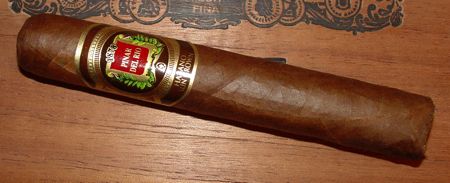
The Habano Sun Grown robusto is a nice looking cigar.PDRpatch The stick has a flat head similar to many Cuban cigars, and the wrapper is a smooth and consistent colorado claro (or maybe a shade darker.) The roll is supple, with a little give to it. Looking at the filler at the foot of the cigar I notice no stems, not even a thick vein.  Unfortunately there were a couple of perforations in the wrapper near the band on one of these. Instead of smoking this like James Galway playing a Mozart concerto, I patched it up with a wrapper scrap from another cigar.
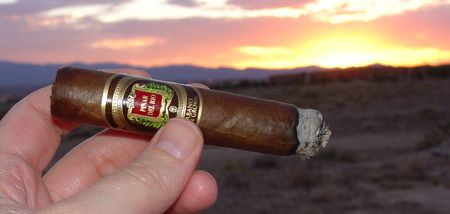
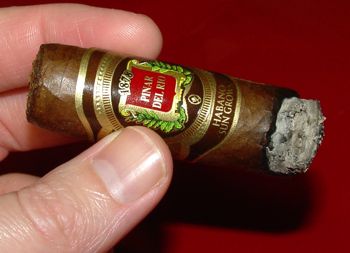
After clipping the cap I encountered a perfect draw. I had a little trouble lighting one of these robustos (the one with the perforations) and had to relight it a couple times to keep the wrapper smoldering in tune with the filler. Once properly ignited both sticks burned evenly, though there may be some combustion issues here. The ash is fairly solid, aside from the flaking that occurred relighting the stubborn one.

Overall good construction.

Tasting Notes

My first impression was that this could be a great candidate for a blind test if it were matched against a Cuban cigar. The flavors are not a perfect match, but the aroma of this cigar is eerily similar to what I get from some Cubans — that musky, earthy scent that at one time I thought was irreproducible. (Maybe it still is, but this one comes very close.) The initial flavors on the palate are a little stronger when compared to a Bolivar Royal Corona or Petite Corona; the Pinar del Rio is a little sharper and less creamy, but still very tasty indeed.

Red pepper in the nasal passages is how I’ll remember this one. What is really interesting about this is that it didn’t have the burning sensation at the back of the throat that I often get with peppery cigars. It’s spicy without the mild irritation that comes from many of the heavier Pepin Garcia blends.

PDRHSG3

I didn’t notice much transition in flavor, but the core characteristic of the PDR HSG is leather. There is also a sweet caramel companion that comes and goes throughout the smoke. All told, with the pepper on the upper palate, the fleeting sweet caramel flavors, and the musky leathery aroma, there is enough complexity in each puff that transition flavors are unnecessary, especially in a robusto size.

Conclusion

Aside from the burn issues that I had with one sample, which I think was a fluke, I thoroughly enjoyed this cigar. The nicotine hit me a little hard at the end, but the flavors were balanced and the aroma was outstanding.  This is one of the few legitimate examples of where the label “Cubanesque” really does apply to a non-Cuban cigar.

The Pinar del Rio Habano SG robusto is in the 5 to 6 USD range, a reasonable price given the quality of this cigar.

PDRHSG4

Final Score: 88

A. Fernandez Signature Maduro Lancero

A

Abdel Fernandez has been hailed as a “rising star” in the cigar world, and judging by the number of established cigar makers who now trust him with their blends, it is safe to assume that his star is still on the upswing. Among a few of his partners are Rocky Patel (RP Signature, Triple Fusion, ITC 10th Anniversary), Ernesto Padilla (Padilla Habano) and Oliva (Sol Cubano Cuban Cabinet.) If you pick up generally unrecognized brands from CI, there’s a good chance that you’ve smoked one of his cigars without knowing it — La Herencia Cubana, La Cuna, Man O’War, and the like. But name recognition is important for obvious reasons, so it’s no surprise that we are now seeing the name A. Fernandez on a cigar band.

Fernandez is based in Esteli, Nicaragua, and grows most of his own tobacco on farms near Esteli, Condega, and the Jalapa Valley. He is relatively new to Nicaragua, having arrived from Cuba only five years ago. Virtually everything ever written about Abdel mentions that he received an education in tobacco from the iconic Alejandro Robaina, so let me join the chorus and reiterate that fact once again.

AFernandezMad2

Construction Notes

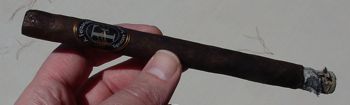
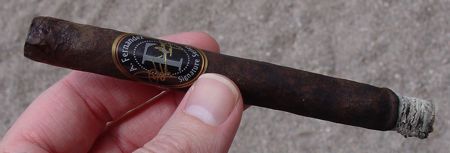
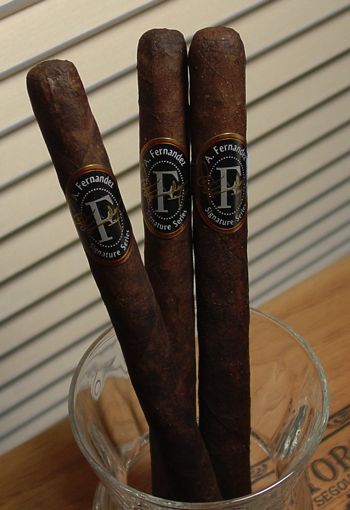
The Fernandez Maduro is a mean looking stick. Maduro wrapper in its natural, unadulterated form is a thick, rustic leaf, so there’s not much to praise here in the way of aesthetics. The equally utilitarian cap is roughly applied, but shears well. The roll is solid. But of course the true test of a lancero with its narrow ring gauge is the draw, and the ones I have sampled have all been perfect in that regard.

The wrapper’s prelight scent is rich and earthy, straight from the barnyard, indicating fine fermentation. Lighting a lancero is easy, and this one fires up without a hitch. The burn wavers a little bit, as maduro leaf tends to do, but it corrects itself eventually. The ash tends to flake during this correction, but otherwise it’s solid and holds fairly well.

AFernandezMad3

Tasting Notes

The aroma from this maduro wrapper takes center stage immediately and doesn’t make an exit until the band is peeled and the butt laid to rest. The wrapper on a lancero is bound to operate in this fashion due to the proportions of the stick, but make it a sweet and rich smelling maduro leaf and it’s guaranteed to be the star of the show. Right up front are the typical flavors of chocolate and char. An inch in and it gets a little spicier. Like a lot of lanceros this one gets a little hot if rushed, but I found that my unfortunate tendency to draw too often was greatly reduced by the prodigious amount of smoke this stick produces.

After the first third the cigar never really transitions to new flavors. There are some lighter woody notes along the way, but the basic theme of chocolate and char continues to the end. The flavors intensify in the last section, but don’t change too much. The finish lengthens and a mild aftertaste of pepper concludes the cigar.

Conclusion

This cigar reminds me a lot of the Padron standard series, in terms of both appearance and taste. It’s not complex, but it’s satisfying: a tasty, straight forward, no-nonsense maduro. The A. Fernandez Signature maduro is a little smoother and doesn’t pack the same punch as a Padron, but for a couple dollars less I think it’s comparable.

I got lucky and picked up these Fernandez lanceros for less than 2 dollars each, but the MSRP is still only 50 USD for a bundle of 20. I believe these are a Cigars International exclusive, and at the moment they appear to be sold out in this size, but hopefully we’ll see them back on the board soon. The bottom line is that this is a quality bargain smoke.

AFernandezMad4

Final Score: 85


Zino Platinum Scepter “Low Rider”

ZinoPlat

Zino Davidoff was an acknowledged master of the cigar business in almost every way: he was a premier tobacconist, the author of The Connoisseur’s Book of the Cigar, and he is reportedly the inventor of the desktop humidor. For forty years he operated Davidoff of Geneva, nurturing the family business from a neighborhood shop to an international enterprise. He is credited with the success of the Hoyo de Monterrey Chateau series of Cuban cigars, as well as his own eponymous line of Cuban cigars. In 1989, disgusted with the low quality and shoddy workmanship of his Cuban suppliers, he publicly incinerated over one hundred thousand of his company’s cigars. From these ashes would rise a new, better Davidoff made in the Dominican Republic. As Lord Buckley might say, Zino stomped on the terra.

But before the famous conflagration was the Zino cigar. It was created in 1975 especially for Americans — due to the embargo, the Cuban Davidoff was of course not sold in the States. The original Zino was made in Honduras, and the Mouton-Cadet and Connoisseur blends were its well known lines. But when Davidoff broke off with Cubatabaco in 1989 the Dominican Davidoff White Label became the prototypical black tie cigar. Subsequently the Zino line stepped back into the shadows.

With all of its rich history and style, Davidoff has garnered a somewhat stodgy reputation. The company is understandably unwilling to part from its well earned reputation, but at the same time with Zino Platinum it wants to appeal to a younger set, to cater to the “modern urban pop culture of today.”

Zino Platinum is comprised of two distinct lines of regal cigars, the Crown and the Scepter. The Crown series is marketed as a super-premium in the 30 to 40 USD price range. (That’s the damage per stick, not box.) The Scepter is a more “affordable”  premium at around 9 to 14 USD. I guess nine bucks for a Davidoff is a cheap date, relatively speaking.

The marketing department evidently spared no expense. The cigars are packaged in 12 or 16 count cans that are elegantly decorated with dogs dressed up in period costume. The Low Rider can features a schnauzer in an Elizabethan collar — the lace kind, not the plastic post-surgery kind most dogs are familiar with.

ZinoPlat2

Seven sizes are in production:

  • Chubby – 4 15/16 x 54  (zeppelin perfecto)
  • Grand Master – 5 1/2 x 52  (robusto)
  • Stout – 7 x 52  (torpedo)
  • Low Rider – 6 x 43  (lonsdale)
  • Shorty – 4 1/2 x 43  (petite corona)
  • Bullet 4 x 48  (zeppelin perfecto)
  • XS  4 x 30  (demitasse)

The Zino Scepter blend starts out with Dominican piloto and two distinct San Vicente leaves, combined with a native Peruvian leaf for filler. That is surrounded by a Connecticut Broadleaf binder and then the whole shebang is wrapped in an Ecuadorian Connecticut leaf that has been matured for two years.

Construction Notes

The wrapper on this lonsdale is typical of good Connecticut shade leaf: a nice golden brown color with few inconsistencies. The roll is a little bit soft and the cap is not perfect, but good enough. With the classy silver band, this is a nice looking stick.

The draw is perfect, and very consistent from cigar to cigar. Once clipped and lit, it burns steadily though maybe a bit more rapidly than I expected. The burn is even and the ash is firm but it cracks enough that you’ll want to keep the ashtray handy.  Overall fine construction.

Tasting Notes

The Zino Scepter is a smooth, but still very flavorful smoke. It starts with an earthy introduction and a dry finish which is quickly joined by a light aftertaste of pepper. The texture is buttery smooth, and the aroma is quintessential Ecuadorian Connecticut: creamy, with notes of vanilla and oak.

The pepper downshifts in the middle section for smooth easy smoking. The flavors remain mellow and earthy, and it’s easy to sit back and coast on the rich aroma alone.

That pleasant sweet perfume laced with spice wraps things up in the last section.  The aftertaste stays clean up to the band, but soon after that the flavors start to turn a little papery.

Conclusion

The Zino Platinum Scepter series is a mild bodied cigar that is ultimately quite satisfying due to its complexity. You get what’s expected from a high quality Connecticut Shade wrapper, but beneath that there is a nice layer of pepper and oak that makes the experience a little more interesting than what you’d expect from a plain good cigar. The price is questionable, but you do get a nice can with pictures of dogs dressed up like Louis XIV prancing back to Versailles. If you don’t mind throwing away a few bucks on snazzy (or silly) advertising, you won’t be disappointed.

ZinoPlat3

Final Score: 88

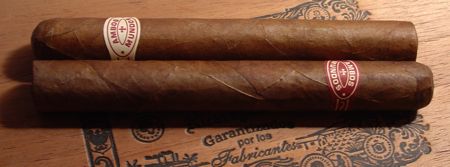
Ambos Mundos by Tatuaje

ambosmundos

There is no cigar cliché that gets under my skin more than the image of the fat cat lighting up his churchill with a hundred dollar bill. Aside from being moronic (rich people don’t get that way by burning money) it justifies in the minds of many non-smokers the marginalization of cigar enthusiasts and the taxing of cigars. The reality is that most of us checking out cigar reviews and eyeballing the auction sites are doing our best to manage a tight budget in a challenging economic environment.  It’s been a while since I saw any fat cats licking their paws around my neighborhood.

It wasn’t due to the stormy economy that Pete Johnson decided to blend a cigar with affordability in mind, but price control was definitely an objective in developing Ambos Mundos. Tatuaje has been a runaway success for “Tattoo” Pete, but like many Miami-rolled cigars, they’re pricey. By producing this cigar in Nicaragua with lower grade (but still high-quality) tobaccos, he is hoping to keep the price down and fill the bargain cigar niche for his label.

As Pete told Cigar Insider,

This value-priced cigar uses B and C – grade tobacco. In other words, it’s tobacco that was not used on Tatuaje, the premium brand,  which uses A – grade. It’s very good tobacco, but just needs more time to be processed and needs more fermentation, taking a little longer to get out all the impurities. These bales don’t cost as much, so it’s a way to pass on the savings using some really good tobacco.

Ambos Mundos differs a bit from Tatuaje’s other budget-priced cigar, the Tatuaje Serie P, in that the latter is a short filler cigar made from the scraps of the standard Tatuaje line. AmbosAdAmbos Mundos is a long filler cigar that uses tobacco that just didn’t make the cut for standard Tatuaje cigars.

Only two sizes are in production so far (a robusto and a toro) but they are available  in two different wrappers: Ecuadorian Sumatra (red label) and  Nicaraguan Habano (white label.)  They are rolled in Jaime Garcia’s Tabacalera Garcia factory in Esteli, Nicaragua.

Construction Notes

I smoked the Habano (white label) Ambos Mundos Toro first and found that it has just the quality construction you’d expect from Tatuaje and Tabacalera Cubana. A toothy wrapper tops off a solid roll, finished with Garcia’s trademark triple cap. Once lit, the Habano set to building a solid white ash. The burn was steady and even from start to finish. The draw was just a little bit firm, but that was the only demerit it received. Aside from that it was perfect.

The Sumatra (red label) version has a leathery looking wrapper, a little smoother and a little oilier than the Habano. The same good construction qualities were in evidence here, though the draw on these seemed to be a little better, while the burn was more erratic and required a couple touchups. The ash on the Sumatra was more variegated in color, but held just as well as the Habano.

ambos3

Tasting Notes

Both of these toro-sized cigars are lighter in body than the standard Tatuaje line, but the Sumatra seems a little bolder than the Habano version. Both cigars score well in terms of aroma — the Habano had a woody spiciness to it, while the Sumatra was a little meatier with notes of leather. Both versions have Pepin’s characteristic tartness, especially in the first inch or so, but also a sharpness and an irritating burn at the back of the throat, with the Sumatra being heavier, more peppery, and more aggressive in this regard. Some aging might temper this quality.

The white label Habano starts up with an earthy flavor and a good dose of tannin. The aroma is a pleasantly spicy, but for the first couple inches this is a simple and straightforward smoke. It transitions to aromas of hardwood with a touch of caramel and about an inch from the band picks up a good pinch of black pepper. The last third gets fairly sharp, but it’s smokeable. The Habano reminds me of some of Pepin’s milder offerings, but with less complexity.

ambos4

The red label Sumatra starts up where the white label leaves off — with lots of pepper. The difference between the two is immediately apparent. The Sumatra is a meaty and leathery smoke while the white label is woody. The tannins still make an appearance, but they seem to be overpowered by the wrapper’s rich flavor and aroma.  It’s slightly sweet with a dry finish. The last third increases in intensity until it unexpectly sours about a half inch from the band.

Conclusion

Both versions of the Ambos Mundos are good, but not great cigars. Personally I’d rather pony up the full price for an “A-grade” Tat than settle for a C-grade alternative that pales by comparison.  If this were a 2 dollar bundle stick I’d  be impressed, but it isn’t, and my opinion of this cigar suffers for it. For nearly the same price you could be smoking a DPG Black or an Illusione, better cigars that are similar in style as well as price.

Ambos Mundos is a long filler cigar set to retail around 5 USD per stick, or around $115 per box of 25. This stretches my definition of “bargain” a little bit, but it’s still a reasonable price for a premium cigar.  Just remember that there is a fair amount of competition in this price range.

Final Scores

Ambos Mundos White Label Habano: 85

Ambos Mundos Red Label Sumatra: 79

ambos5

Other Points of View

Her Humidor approves of Ambos Mundos as an everyday smoke.

The Great Torpedo thinks the Sumatra version is a decent smoke for its price.

Barry gives the Sumatra an edge over the Habano.

Resident Tatuaje expert Matt lets both wrappers have both barrels.

~cigarfan

National Nestor Miranda Cigar Day

NESTOR MIRANDA THIRD PR 004

It’s the 20th Anniversary of Miami Cigar and Co., and they’re celebrating by declaring Friday, June 12th National Nestor Miranda Cigar Day.

As we’ve noticed here previously, the Nestor Miranda Special Selection is one tasty smoke, and to honor Nestor Miranda as well as the cigar smoking community at large, Miami Cigar is making a gift of one Nestor Miranda Special Aniversario cigar (in the whopping 7 x 56 “Danno” size) to anyone who buys a cigar — any cigar, by any cigar maker — at one of the 500 Nestor Miranda Special Selection Authorized Dealers on Friday, June 12.

That’s right. Support your B&M by making a single purchase on Friday, June 12, and you get a Nestor Miranda Special Selection Aniversario as a gift. What a deal.

From the press release:

“All I ask,” said Nestor Miranda, “is that they smoke the ‘Danno’ that afternoon. Anyone who wishes to comment on the cigar, after smoking it, can e-mail me at Nestor@NestorMirandaCigars.com . I am very interested in hearing those comments.”

To locate your Authorized Dealer, go to http://www.nestormirandacigars.com and follow the instructions on the site.

Rocky Patel Decade Robusto

Decade

For a cigar maker as prolific as Rocky Patel, one anniversary celebration is simply not sufficient. Last week I looked the ITC Anniversary; this week I’m checking out the Decade, Rocky’s other Anniversary cigar. (And if that isn’t enough for you, Rocky just announced that he’s working on a blend for his fifteenth anniversary coming up in a year or two.)

Inside each box of Rocky Patel Decade cigars is printed a phrase that sums up the RP story: “Against All Odds.”  Of the hundreds of companies that started up during the cigar boom of the mid ’90’s, Rocky Patel’s is one of the few survivors. Hard work and a knack for creating tasty blends has paid off.

And it hasn’t hurt that he has friends like Nestor Plasencia. The Decade is made in Plasencia’s El Paraiso factory in Danli, Honduras, where they also make one of my other favorite cigars, the RP Sungrown.

As I explained (or tried to explain) in the ITC Anniversary post, the Decade blend is actually the blend originally created for the ITC. Rocky thought that blend was a little better than the one created for the Decade, so he switched labels.

The Decade has a dark Ecuadorian Sumatra wrapper and an undisclosed binder-filler blend (labeled “secret” on the Rocky Patel website) but in other places it is said to be Nicaraguan. Based on the flavor, I’d say Nicaraguan is a safe bet.

Four sizes are in production:

  • Robusto  5 x 50
  • Lonsdale  6 1/2 x 44
  • Toro  6 1/2 x 52
  • Torpedo  6 1/2 x 52
  • Emperor 6 x 60

Decade2

Construction Notes

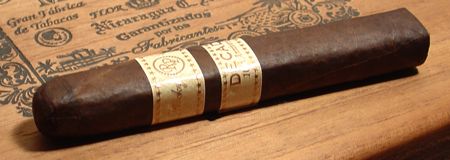
The Decade robusto has a smooth dark wrapper that is best described as maduro in color. The cigar is square pressed and is packed well. The cap is nothing special to look at, but it’s applied well and takes a guillotine slicing without complaint.  Remove the bands and you have what might look like a Padron 1926.

The draw on both samples I smoked was spot on perfect. It burned steadily but not too quickly, creating a medium-gray ash that had the temerity to drop off just as I was about to snap a picture.  Overall very good construction.

Tasting Notes

The Decade robusto starts up with a maduro-like char and a prominent bite. There are some cherry notes mingling with the char, and a bittersweet chocolate aftertaste. At this point it is reminiscent of some other Placencia-made cigars — the Mayorga “High Octane” and even the cheapo Nestor Reserve Maduro, but the Decade by comparison becomes much bolder and grows much more complex.

The center section features an acidic tang that I always associate with Nicaraguan tobacco. At this point I’m starting to feel the potency of this cigar and have to slow down a little, but the chocolate and cocoa flavors remind me a lot of the Olde World Reserve. As the stick burns down, the body grows heavier but smoother at the same time. The aroma is sweet and woody.

The last third continues along the same trajectory, rich and rife with bean flavors: chocolate, cocoa, and coffee. The bands are easily removed to give this robusto a thorough nubbing, though the nub itself does get a bit mushy by the end. The cigar ends with a last gasp of earthy char and some of the bite with which it started.

Conclusion

I don’t know if I can say that this is a better cigar than the ITC 10th Anniversary — they’re so constitutionally different. The ITC is milder, but a little more sophisticated, at least in the Salomon size that I’ve tried. The Decade is a more robust, full-figured cigar, more easily compared to the Olde World Reserve than the ITC 10th (though I think the OWR Maduro would take the edge in a pitched battle.) The Decade robusto is an excellent smoke in any case.

Priced at around 9 USD per stick, the Decade is not going to bankrupt anyone, but it won’t be an everyday smoke for most of us. I think in this price range I’d opt for an Olde World Reserve instead.

Final Score: 89

Decade3

~cigarfan

ITC 10th Anniversary Salomon

ITC10th

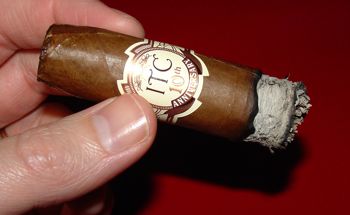
Rocky Patel is known as the hardest working man in the cigar business — he’s constantly on the road, hobnobbing with cigar execs and enthusiasts alike — and he still manages to find the time to create numerous new blends. The Indian Tabac label was his first (the Rocky Patel label wasn’t launched until 2002) and it is this, his entry into the world of cigar making, that he is celebrating with the ITC 10th Anniversary. Granted, I’m a little late to the party. Indian Tabac debuted in 1996, placing the 10th Anniversary in 2006. But since the cigar itself was late (it wasn’t released until 2007) and the Salomon is a recent addition, I’m going to make my late entrance without apology.

Rocky actually developed two “anniversary” cigars: this one, and the Rocky Patel Decade. Like the Indian Tabac label, the ITC Anni blend was developed first, though at the time it was supposed to be for the Decade. The blend for the ITC, in Rocky’s opinion, turned out to be more elegant and refined, so he switched labels. The original ITC blend became the Decade, and the later blend became the ITC. So what we have here is the original Decade, which is now the ITC 10th Anni. Got it?

The Salomon vitola is a large and unusual figurado that flares at the foot and tapers in the other direction to a torpedo head. The format is similar to Fuente’s Work of Art or Short Story, but much bigger — this one measures 7 1/8 inches in length and has a 58 ring gauge at its thickest point. Usually only a couple of rollers in each factory know how to roll a cigar with proportions as strange as these; in Cuba they are frequently rolled without molds, making the process even more challenging. Like most vitolas this one has a Cuban genealogy, though Salomones have recently become more popular in the Non-Cuban world.

The ITC 10th Anniversary is made in a small Esteli (Nicaragua) factory that Rocky describes as once being “an upstart factory that was making inexpensive bundle cigars.” That factory has obviously come a long way, in terms of skill as well as tobacco quality. In addition to the ITC 10th they also produce the Rocky Patel Summer Collection and other “very special limited projects.”

The Salomon is not easy to find, but the other sizes are readily available:

  • Lonsdale: 6.5 x 44
  • Robusto: 5 x 50
  • Toro: 6.5 x 52
  • Torpedo: 6.5 x 52

I was surprised to learn this is a Nicaraguan puro, because it doesn’t smoke like one. The wrapper is Nicaraguan corojo, and the filler and binder is a blend of tobaccos from Nicaragua’s premier growing regions: Esteli, Condega and the Jalapa Valley.

ITC10th2

Construction Notes

This is an impressive looking cigar. It takes a large leaf to wrap a cigar of this size, and this one is a smooth and even claro. The foot is nicely finished, though I noticed one small flaw, and the head is tightly wound. The cigar feels light in the hand, but the roll is solid with no soft spots. After clipping about half an inch from the point at the head I found the draw had just the right amount of resistance.

The burn was neither too slow nor too fast, and despite some inconsequential flaking the ash proved to be solid enough. The volume of smoke produced was nicely balanced with the body of the cigar.ITC10thAsh

Tasting Notes

The perfecto “nipple” at the foot of the 10th Anniversary Salamon fires up nicely on a single match and for the first few puffs produces a creamy sweet aroma. The steadily growing cinder quickly reaches the main shank of the stick and the flavor shifts to a light wood with mild tannins and a touch of black pepper.  The texture is very creamy and there are subtle spices of balsa or sandalwood on the nose. The finish is fleeting and there is a slightly dry aftertaste.

The middle section continues the woody theme, but is a little heavier than previously — think oak instead of balsa. The aroma continues to please, bringing an accent of honey and fresh cedar saw dust. The nicotine content here is very moderate; this could be a morning cigar for many (if you have an hour and half to spare after breakfast.)

The last third grows a little more somber. Wood gives way to roasted nuts for a few minutes, and then around the secondary band the flavors pick up some char and become earthier. The finish lengthens and the aftertaste gets dirty. Maybe I was smoking this one a little too fast, but it seemed to go downhill pretty quickly. (It’s easy to see why when you consider that the business end of this stick has been filtering smoke for almost an hour and a half. Some cigars are able to this better than others.)

Conclusion

The biggest surprise about this cigar is how smooth and mellow it is. From other reviews I was prepared for a harsher, more “Nicaraguan” experience. Not so with the Salomon — in fact it’s hard to believe that the wrapper here is really Nicaraguan corojo. I would guess Ecuadorian instead, but multiple reference sources point to Nicaragua.

The ITC 10th Anniversary Salomon scores high for construction and smoothness, though it does lack a certain complexity. That said, there was still enough mild woody spice here to keep me interested over the 90 minute haul.

I haven’t found a source for the Salomon online, but my B&M had these on the shelf for around 8 dollars each. Not a bad price for a cigar of this stature.

Final Score: 90

ITC10th3

Other Reviews of Note:

Jeff reviews the Robusto for Cigar Jack.

Barry gives the Toro an 86 for A Cigar Smoker’s Journal.

George from the Stogie Guys awards the Robusto 3 out of 5 stars.

Walt suspends judgement on the Robusto for the Stogie Review.

Lisa checks out the Toro for Her Humidor.

~cigarfan

Industry Announcement From General Cigar

partagas-black-label

Partagas Cigar Cave Contest

(Maybe this means I can finally get out of the garage… )

Richmond, VA—Beginning at high noon on May 26, 2009, Partagas®, the legendary brand of handcrafted Dominican cigars will team up with pro football defensive tackle and network TV football analyst Tony Siragusa to find the cigar smoker who demonstrates the greatest need for a place of their own to enjoy the pleasure of a fine cigar and award him or her with $10,000 to create the ultimate Partagas Cigar Cave right in their home.   

 In the contest’s website, Siragusa reaches out to cigar smokers who are relegated to enjoying their cigar in dark, dingy basements or forced out in the cold garage and makes them an offer they can’t refuse. In his call to entry, Siragusa connects with cigar smoking brethren by appealing to their need for their very own, in-home cigar cave.

Consumers of legal smoking age who purchase a special four-pack of best selling, full bodied Partagas Black Label cigars at cigar shops throughout the U.S. between May 26 and July 31, 2009 will receive a redemption code detailing how they can enter videos, photos and written descriptions of their domestic cigar smoking predicament to win the $10,000 prize allowing them to create a customized Partagas Cigar Cave for their home. Consumers can also enter by visiting http://www.partagascigarcave.com. The winner will be selected on or before August 21, 2009.

Consumers will be encouraged to vote on contest entries which will be posted on partagascigarcave.com.

Aging Report: Padron 2000 Maduro

Padron2000M

Last summer we reviewed, with help from our friends, the entire range of the standard Padron series.  This was a great exercise in “vertical” comparison, and we had a heap o’ fun doing it.  I squirrelled away a few cigars from that test and last night seemed like a good time to see how they’re coming along. The Padron 2000 fit my time slot just right: about 45 minutes around sundown.

Some cigar makers are able to combine flavor, quality workmanship, and aesthetic appeal all in one sweet cylinder of tobacco. Padron is not one of those cigar makers. The flavor and construction of these Nicaraguan puros is not to be denied, but Padron’s reputation is based on consistency and taste, not good looks. This is honestly one of the ugliest cigars I’ve seen in a long time.

Were it not for the Padron band, this cigar would most likely languish on the retailer’s shelf until the owner was forced to give it away or smoke it himself. Calling it butt ugly is being kind to this stick (aside from the fact that as a cigar smoker I do have a certain affection for butts.)

The wrapper leaf is a rich dark brown color — a little lighter than most maduro cigars —  and it has a rough texture. Padron2000MpatchGlue spillage gives it a crusty appearance in places. The cap looks like it was glued on by a three year old, and this particular cigar features a poorly applied patch a little smaller than my thumbnail. The roll is firm, but dented in a couple places. It sort of looks like this cigar was made by a committee of crafty Nicaraguan school children. Or more likely, by a torcedor on Friday afternoon with one eye on the clock.
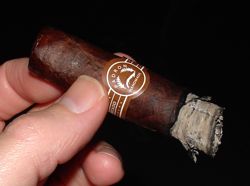
But the draw is good and the burn is fine. And what would you prefer — a gorgeous cigar with deal-breaking construction flaws, or an ugly duckling that performs? Me? I’ll take the duckie.

The aging of this cigar shows in the flavor, which right out of the gate is classic Padron — woody with a touch of black pepper — but it has toned down a little from a year ago.  There’s a hint of that sweet pecan flavor I find occasionally in some Padron maduros, and later on some leather and burnt coffee bean. The finish grows substantially at the midway point, and close to the band the aftertaste takes on a strong taste of char.

Padron2000M2

But all of these flavors seem to be less profound than they were when this cigar was relatively fresh — on the other hand, the smoke is also less aggressive. Compared to the freshies, the aged Padron 2000 maduro is much smoother. I still wouldn’t qualify it as smooth per se, but by comparison it is a much less boisterous smoke.

The burn wavers a little at times, but it corrects itself without prompting from the lighter. Other than that, the construction of this cigar was very good. (It goes without saying that it never got better looking.)

At around 3 USD and change this little maduro is still hard to beat as an everyday smoke, but I think I prefer the boldness of the fresh ones over the slightly more refined character of the more mature stick.

Padron2000M3

Final Score: 85

~cigarfan