Sancho Panza Extra Fuerte Pamplona

cnv0311.jpg

Wrapper: Honduras (Sun Grown “Havana Seed”)

Binder: Honduras

Filler: Honduras

Made in the HATSA factory in Cofradia, Honduras and introduced in 2004, the Sancho Panza Extra Fuerte is a Honduran puro, according to the manufacturer’s website. Other sites mention some Nicaraguan leaf in the filler. (If anyone has Estelo Padron’s cell number, give him a ring and ask him what’s up with the conflicting info. He’s the wizard of Villazon and the blender of this line.)

The Pamplona is a stubby square-pressed robusto at 4 1/2 inches long and a 50 ring gauge. It exhibits excellent construction throughout. A nice burn, an easy draw that elicits lots of smoke, and no worries at all.

It starts out with a nice woody bang and a pungent aroma, like being next to a camp fire. The flavor is slightly sweet and quite woody with very little aftertaste.

Gradually this little robusto descends into a smooth, mild mannered but somewhat boring cigar. The strength intensifies somewhat in the last third of the cigar, but the flavors stay strictly in the middle of the road.

“Extra Fuerte” must be a marketing tool — the flavors here are different than the standard line Sancho Panza, and it may be a touch stronger in the nicotine department, but fuerte is not a term I would associate with this cigar. I know others will differ — in fact, a glance at the ratings on Top25Cigars.com show that they do. But after the first third I just couldn’t find much flavor here, and my first impression of this cigar was similar about a year ago:

Spicy and strong at first light, but quickly mellows into a billowing smoke that is not particularly fuerte. (Extra Fuerte Madrid, Jan 6, 2006)

Starts out spicy and then mellows into a strong, but not overpowering smoke with woody elements. This could be the unruly younger brother of a Padron 1964 — not as sophisticated, not as smooth, but similar (and a helluva lot cheaper.) (Extra Fuerte Cordoba, Nov 18, 2005)

Obviously I thought more of the Cordoba size at that time; and as for the Padron 1964 comparison…my notes don’t include what I was drinking. But the woodsy flavor is probably what inspired that comment — the Padron is woody like the SP Extra, but it also has greater complexity and depth of flavor. Needless to say, it also digs deeper into your wallet.

At around 3 bucks a pop at the local stogie emporium, the Sancho Panza Extra Fuerte is definitely worth a look. A reliable everyday kind of smoke.
 

Oliva Master Blends 3 Robusto

cnv0309.jpg

Oliva Cigars have seen some changes in the last few months — the “O” Classic has become the Serie O, the Grand Cameroon has become Serie G, and a couple of new blends are out as well: the Serie S (with a sungrown Ecuadorian wrapper) and this one, the third release in the Master Blends series. I’ve seen it dubbed “Master Blends 3 Liga Maestra” in a few places. It sounds nice, but since liga maestra means “master blend” in Spanish it’s also a little redundant.

I wonder sometimes if there could be a statistical correlation between the length of the name of a cigar and the price…

The Master Blends are small batch cigars using leaf that is grown in limited quantities. Often a tobacco grower will want to experiment with a new seed or a new soil and grow a small crop under untested circumstances to see what results. The crop isn’t large enough to create a full blown production line of cigars, but if the result is good it might wind up in a small batch cigar like this one.

So each release of Oliva’s Master Blends is an entirely different blend. I was lucky enough to sample the MB 2 last year and rendered my somewhat lukewarm opinion in a KOTF post at that time. The MB 3 is a totally different cigar.

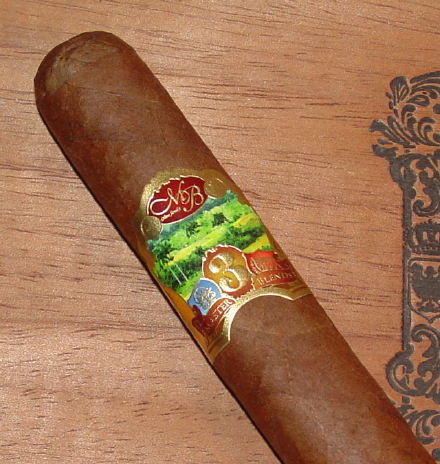
Made by Tabacalera Oliva in Nicaragua with a binder and filler from Nicaragua and a sungrown Connecticut Broadleaf wrapper, the robusto is pressed and presented in the classic 5 x 50 size. There is also a slightly fatter double robusto with a 54 ring gauge. In appearance the MB3 looks quite similar to its previous incarnation, except it is missing the laser etching below the band. (That was a classy touch, but maybe a little too much.)

The wrapper used here is a very even shade of brown with no prominent veins. It has a smooth velvety texture as opposed to the oily character I often find with high end cigars. The cap cuts cleanly and the draw proves just about perfect. It lights up easily and burns perfectly straight all the way: excellent construction in all respects.

The MB3 robusto starts out with a nice volume of smooth chocolatey smoke with a spicy but short finish. I was expecting a little more sweetness from the broadleaf wrapper, but it’s surprisingly vegetal. There is just a touch of sugar here, but not what I expect from broadleaf. (Admittedly, most broadleaf is fermented to a maduro state, which brings out more sugar. This is plainly a much less processed wrapper.)

It strikes me as medium bodied, but it’s played at full volume. With the assistance of superb construction this stick produces huge clouds of smooth smoke. The second third of the cigar slides into woody territory and becomes a bit rough on the tongue and the back of the throat. At the same time, the finish becomes unaccountably less spicy.

By the beginning of the third and last act I’m detecting coffee flavors and a slight return to the chocolate and cocoa that started this story. As the denouement unfolds, a few shreds of paper are littered about and the curtain falls with a slightly sourish wave goodbye.

Overall, I think this third “Liga Maestra” is superior to the second version. Its chocolate and coffee flavor profile reminds me a little of the Carlos Torano Signature line, but the Master Blends 3 has an edge in the complexity department. At a suggested retail price of 9.00 USD, however, I’m going to pass judgement in favor of the Signature. At this price, the MB3 is just a little out of my Liga.

Havana Soul Limited Edition Super Toro

cnv0306.jpg

Last summer I picked up this limited edition Havana Soul at the Cigar King in Scottsdale. It was created by Don Pepin Garcia for a special event at the store (if I recall correctly) but there were a few left over after the event, so in addition to a couple smaller sized Havana Soul cigars I picked up this “Super Toro.”

The blends that Don Pepin makes for Cigar King are based on the classic Habanos that Pepin made in Cuba for many years. The Havana Soul takes as its patron the rich smooth flavor and medium body of the Montecristo line. I am certainly no expert on Cuban cigars, but in my modest opinion this is one of the most “cubanesque” cigars available for sale in the U.S.

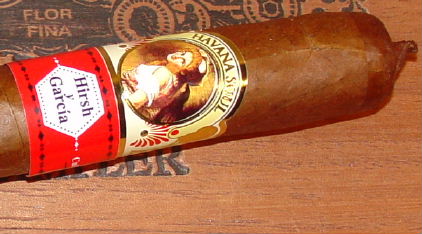
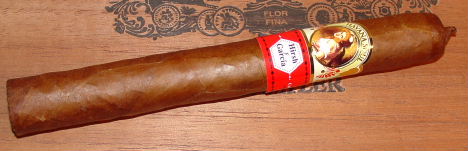
This is a limited edition super-sized toro at 6 1/2 inches long with a 52 ring gauge. There are two bands on the cigar, which at first glance looks like a mistake of some kind. Is it a Havana Soul, or is it a Hirsh y Garcia? The wrapper used on the Havana Soul is Pepin’s Corojo 99, a hybrid version of the original Cuban corojo, in this case grown in Nicaragua. The filler and binder are Nicaraguan as well, a combination of corojo and criollo blended to achieve a flavor that is truly unique.

Like all of the cigars from El Rey de Los Habanos, this one bears the classic Cuban triple cap, which in this case is curled into a short point. The wrapper practically glows with oil, and I have to admit that I hesitated before cutting and lighting this one up. It’s one of those cigars that is almost too pretty to torch. But cigars aren’t created to hang on the wall and be admired by the passing crowd. They’re cigars, meant to be smoked by heartless thugs like me. So I headed for the garage with my cigar, my lighter, and my evil intentions.

I was a little concerned about the cut at first, remembering caps with tails in the past that have unraveled on me. This one was solid though, and stayed that way. Looking at the foot of the cigar before lighting I noticed the wild swirls that are characteristic of the entubado method of cigar rolling. A quick prelight pull on the cigar revealed a perfect draw, and the time was right for lighting.

It starts up with a touch of green wood that disappears almost before I can recognize it. A peppery finish is present from the start and will make several return appearances before the final act. Very quickly the flavor becomes smooth and nutty, with just a hint of youthfulness. The aroma is, for lack of a better word, “twangy.” It’s a sweet, caramel laced nutty aroma that is very reminiscent of Habanos — I’m thinking of the Bolivar petite corona in particular, maybe because of the peppery flavor profile that these cigars share.

The construction is spot on perfect, with the exception of a wavering burn line that causes no issues, but isn’t perfect. The ash is a solid light gray with a somewhat flaky appearance. It looks like it should fall apart when I ash it, but it doesn’t. At a couple inches into the smoke I’m finding it to be medium bodied, but fairly powerful. I had a full meal before lighting this one up, and I’m glad I did.

The second third picks up some cocoa on the nose and the finish gets stronger and spicier. There’s a slight burn on the tongue, but I may have been oversmoking at this point. I forced myself to slow down and let the cigar cool off a little. Five minutes into the final third found the flavors traveling from solidly nutty country into smooth buttery territory, still accompanied by a sharp peppery finish.

This is a wonderful and very complex cigar. The larger sized limited edition is a bit more complex than the other sizes I have sampled, but certainly bears the same marks. My only criticism is a slightly green flavor that is present more acutely for the first inch of the cigar and gradually dissipates but never entirely disappears. But rather than a damning flaw, I’m going to take this as an indication of how well this cigar will age.

I’ve been contemplating buying a box of Havana Soul for aging purposes, and the Super Toro has just about nudged me over the tipping point. They’re not cheap at $150 – 200 per box but if you’re a Pepin fan it’s well worth the investment.

Right now, this is a great cigar. With a few years of age, I think it will be spectacular.

cnv0308.jpg

CAO Black Bengal

cnv0305.jpg

CAO made news recently when it was acquired by the ST Cigar Group, a Dutch company and one of the largest cigar companies in Europe. Cigar companies live precarious lives, it seems. The big fish are always looking to swallow up the little ones, and the bigger fish are getting fatter all the time. We are lucky though that the competition remains the same, and overall quality in the cigar market remains very high. This CAO Black is no exception.

This is the original, the one and only CAO Black label, the first CAO to carry those initials. At first it was not a success for Cano Ozgener, founder of CAO. It fell by the wayside and the CAO Maduro became CAO’s first hit cigar. But the Black label was not entirely forgotten, and in 2002 it was reintroduced at the suggestion of Cigars International.

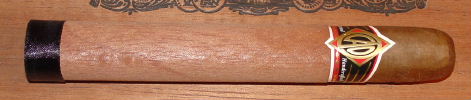
The wrapper is an Ecuadorian grown Connecticut seed leaf, accompanied by a Honduran binder, and filler from Nicaragua, Honduras and Mexico. The Bengal is a toro sized 6 x 50. The Black label cigars are presented in cedar sheaths with black ribbon at the foot, very similar to the Arturo Fuente Sun Grown Chateaus.

The wrapper is an attractively even cafe color with a touch of leathery roughness. The cap is neatly applied and appears to be double wrapped. It cuts cleanly away and reveals a generous but firm draw.

The burn is uneven from the start, but the flavors are very nice — a slight bite of spice at first, followed by lots of cedar. After an inch the smoke becomes quite creamy. I’ve heard this cigar called mild, but my experience is that it’s more of a medium in body.

Then there’s some more cedar, followed by cedar with an earthy touch. Here and there is a dash of pepper thrown in as an accent to the solid flavor of cedar. I found the CAO Black to be a fine cigar, if somewhat one dimensional. With a price point around $4.oo a stick, I can see how this could be a goto everyday kind of cigar for a lot of people.

Did I mention the cedar?

Bering Corona Royale

cnv0304.jpg

There was a time when an American cigar smoker didn’t experiment with new brands and blends. He chose a brand that he liked and he pretty much stuck with that for as long as he chose to smoke cigars. This was a time when the cigar factories of Ybor City flourished and produced thousands of “clear havana” cigars made with tobacco imported from Cuba. The “premium” market of that day was for authentic Havana rolled cigars, but the average American working stiff was quite content with “two for a nickel” King Edward cigars or the like.

Today, most cigar enthusiasts cast a wary eye on King Edward and his drugstore brethren, but it’s worth remembering that Swisher International, the maker of King Edward, La Primadora, and of course Swisher Sweets, is the world’s second largest cigar company by revenue (trailing only Altadis.)

A Swisher executive once said, “There are two kinds of cigars in the world: those that sell and those that don’t.” While that explains Swisher’s business philosophy (and perhaps the secret to their success) it doesn’t explain why they entered the premium cigar market with Bering, a long filler hand-rolled that sells for around 2 dollars. A blue-collar two-dollar cigar.

Bering cigars were at first a long-filler machine-made cigar manufactured by Corral, Wodiska y Ca., starting in 1905. Their Ybor City factory no longer produces cigars (in fact this historic building has been converted to an office complex) but the Bering brand lives on, having been purchased by Swisher in 1985. Swisher eventually moved Bering production to Honduras and made it a 100% handmade cigar, a turning point for Swisher and the Bering line.

The Bering Corona Royale is a tubo, as pictured above. On the other side of the tube it reads “Very Mild Exquisite Cigar.” This is a long corona at 6 inches with a 41 ring gauge and comes equipped with a Connecticut seed wrapper shade grown in Honduras, a binder from Honduras, and filler from Honduras, Mexico, Nicaragua and the Dominican Republic.

This particular specimen has been lounging in my cheapodor for about four months, which I think is probably longer than necessary. I fired it up in the garage and roasted some coffee just to give the cigar some competition in the aroma arena. It starts up with a nice even burn and a straightforward tobacco flavor. I wouldn’t say it was either exquisite or excessively mild at this point, but it certainly wasn’t objectionable.

The aroma is probably the nicest thing about this cigar — a mildly sweet, slightly woody fragrance that blended very well with the Sumatra smoking in the I-Roast. The flavor is simple, everyday cigar tobacco. By the midway point the flavor intensifies somewhat and becomes a little tart. It’s still fairly mild in body, but stronger in flavor.

As it continues the flavor takes on a little cardboard, and then takes a shortcut to bitter paper bag. I wasn’t sure if this was an accurate description, so I cut up some Trader Joe’s paper bags and had a chew… I’m a professional, kids. Do not try this at home.

A cigar that reduces me to chewing on grocery sacks might not have much to recommend itself, but to be honest the cigar was actually better than the bags. Faint praise, I know. If you’re into that astringent flavor that Mexican and some Indonesian cigars have, this one might float your boat. Mine sank.

Bottom Line: This isn’t a half bad yard gar, but I can think of half a dozen yard gars for around the same price that I’d rather smoke.

Camacho Select Robusto

cnv0302.jpg

The Camacho Select is the brainchild of Julio Eiroa, the patriarch of Camacho Cigars. Julio is also the father of Christian Eiroa, president of Camacho Cigars. As often happens between fathers and sons, there are differences in taste and personality, and this cigar is an example of this. Developed by Julio to fit his personal taste, the Select series was designed to be somewhat milder in body and tone than Christian’s Corojo series. Evidently there is even a contest between the two to see whose cigar will sell best.

Camacho is known for strong full bodied cigars like the Camacho Havana and the Camacho Corojo, so I was looking forward to something more medium bodied, which is usually what I smoke. I was anxious to try the Select since its release last summer but had trouble locating any locally, so I finally sprang for a fiver online in the robusto size and let them relax in the humidor for a month or two before firing up a couple to review.

The wrapper on the Select is Cameroon, but according to the information on the Camacho website the nature of the binder and filler are “undisclosed.” Some vendor and review sites list the filler and binder leaves as Honduran, which makes sense since Camacho’s Rancho Jamastran is in Honduras, but the precise constitution of this cigar cannot be officially confirmed at this time.

The wrapper is just slightly oily with average tooth for a cameroon. One of the five cigars had been patched, but this didn’t affect the way it smoked. They all had great construction — even burn, good draw, so no complaints in that department.

The Select robusto starts out with a burst of spice, a burn on the tongue and throat that borders on harsh. After an inch or so the spice mellows down though, and I’m able to enjoy the smoke. It continues to get smoother as the cigar progresses, moving from cayenne to a spicy cedar flavor to a sweet wood for a moment before entering salty territory. This cigar has very definite flavor transitions.

True to its advertised description, this is a medium bodied cigar, but it packs a hefty nicotine punch. (I actually couldn’t finish the first one because I wasn’t prepared for it — on subsequent occasions I made sure I had a full stomach and a drink on hand. ) The aroma is not typical of cameroon until you get past the strongly spicy prelude; after that comes the expected gentle spice and incense, followed by softer notes of juniper smoke.

The aftertaste also goes through a transition from mild with a short finish to quite salty, eventually becoming bitter.The last third of the Select becomes increasingly salty and really pours on the nicotine. I can’t say I really cared for this.

Up to the two-thirds point I’d say this is a great cigar, especially the middle third. But the last third really goes in a strange direction and delivers an unexpected payload. In the contest between Camacho Corojo and Camacho Select, I have to throw my vote to Corojo. With all due respect to Julio… Congratulations Christian!

Sancho Panza “Valiente”

cnv0301.jpg

From Estelo Padron, the master cigar maker of brands like El Rey del Mundo and Hoyo de Monterrey, comes this Honduran made Sancho Panza. The original was (and still is) a Havana label that began production in 1852. The Honduran Sancho Panza debuted in 2000 and since then has spawned acouple of extensions — the Double Maduro (in 2002) and the Extra Fuerte (in 2004.)

This is the original variety with a dark Connecticut Shade wrapper. I was surprised to learn that this is a shade wrapper because it isn’t the golden brown color that I would normally expect from this wrapper — it’s more of a colorado claro than a claro. The binder is more Connecticut, but this time broadleaf, and the filler is a blend of piloto cubano from the Dominican Republic and two other leaves from Honduras and Nicaragua.

Sancho Panza is of course Don Quixote’s sidekick in Cervantes’ story — the stout realist who comes to Quixote’s aid when the Don’s fantasies run away with him. Sancho is transformed in Don Quixote’s mind from a humble and obedient servant to a valiant squire. These delusions of grandeur must be the inspiration for the names of the cigars in this line: Glorioso, Primeroso, and this one, the Valiente, which at 5 1/4 x 50 is the line’s robusto model.

This robusto is slightly pressed and the wrapper is somewhat dry, with just a touch of oily sheen. The cap is applied well and cuts cleanly. I found no construction issues at all — nice draw, good even burn, and a solid ash from start to finish. It’s not a beeyooteefull cigar, but it performs well.

It starts up with a nice volume of mild bodied smoke that has a pleasant cocoa element. After a few minutes what is really striking here is the aroma — it’s quite sweet, almost candy-like, but not cloying like a flavored cigar. The finish is very short and there is almost no aftertaste. About half way through a smattering of pepper comes through on the palate and the taste becomes just a bit tannic, a little cardboard-y. And by the end what I’m getting is a mild-to-medium easygoing straightforward tobacco flavor.

The highlight of this smoke is the aroma — the dark shade grown wrapper leaf really shines through the mildness of this cigar. The standard line Sancho Panza would make a good mid-day or morning cigar, or a good change of pace for fans of mild bodied cigars — if you’re into Macanudo or Don Diego or any mild bodied cigar with a Connecticut Shade wrapper, this one is definitely worth a shot. You may find the Panza a little bit fuller in body than those, but certainly not heavy. At around 45 dollars a box, they’re also very affordable companions on your trek across La Mancha.

sanpanza.gif

Beck Gran Cameroon by Cuban Crafters

cnv0300.jpg

C. E. Beck y Compania was originally a Cuban label manufactured in the mid nineteenth century. Today the label has been co-opted by Cuban Crafters for one of their cameroon wrapped Nicaraguan cigars. I received a couple of Cuban Crafters samplers last summer (a great deal by the way) and have finally gotten around to this Beck selection, the toro sized “Buckaroo.”

Beck cigars are available in all the standard formats but run a bit on the large size — the churchill, robusto and toro all have a 52 ring gauge, and there is also a “super toro” with a 60 ring gauge. A bit much for me, but the super large format has its following. The Buckaroo included in the sampler is the standard toro size at 6 by 52.

This cigar has a Cameroon wrapper, of course, and a Nicaraguan binder and filler from Kiki Berger’s Tabacalera Esteli. Not to be undersold, the ad copy on the Cuban Crafters site describes the filler as “virgin sun grown Cuban-seed habano tobacco that was fermented 5 times.” Obviously a lot of time and care go into the making of these smokes.

The wrapper is dry and just slightly toothy. The prelight scent is very plain tobacco. Nothing to get too excited about.

But once lit this proves to be a solid medium bodied cigar. It starts out with a nice cocoa flavor over a subdued base of cedar. There’s a spicy tingle at the back of the throat and in the sinuses, but not enough to be called a bite exactly. The burn is even and trouble free and builds a solid ash. There is a hint of cameroon in the aroma — some mild kitchen spices, a smattering of cinammon in the cocoa maybe.

At about the middle of the cigar the subtle flavors lose prominence and are overpowered by the spicy aspects of the smoke. Still a good flavor at this point, but definitely spicier and less complex. Inching toward the last third and finale of this cigar is more of the same, until the last bit which turns slightly sour. I may have been smoking a little too fast, but I wasn’t getting anything at this point that warranted my slowing down. And besides, it was 25 degrees outside and my knuckles were starting to turn blue.

Overall I think the Beck Cameroon is a fine medium bodied cigar, especially the first half. It went a little downhill after that, but some cigars are just like that. Kind of like the friend who is interesting and fun to be around until he gets a few too many drinks in him and starts dwelling on his failed marriage…or something. Nice guy and all, but a little tiresome at the end of the evening.

These sell for around five bucks a stick, or you can pick up a sampler of all 6 sizes from Cuban Crafters for 20 bucks, which seems like a pretty good deal to me.

And if you figure out what these horses are doing, please let me know.

beck-logo.jpg

Alec Bradley Medalist Churchill

cnv0299.jpg

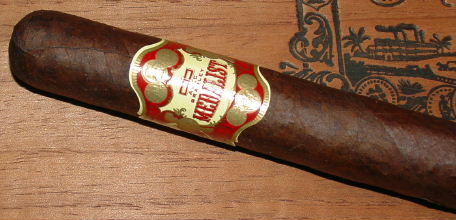
At 7 inches long and a 50 ring gauge, this churchill is actually a double corona. It’s a big feller alright, but it smokes well. The Costa Rican wrapper is oily and somewhat rough, and imparts a maple tinged sweetness to this medium bodied cigar. The construction of this stick is very good, burning evenly and leaving a nice gray ring with every draw, like a beautiful pint of draught Guinness. (Which now that I think of it would be a great companion to the Medalist.)

These are made in Danli, Honduras with a Connecticut broadleaf binder and filler from three regions: Jalapa, Nicaragua; Esteli, Nicaragua; and the Jamastran valley in Honduras. Those areas are all pretty close to each other geographically, but they produce distinct types of tobacco that great blenders use like painters use color. To my palate, the blend here is dominated by the wrapper and the binder to create a fine and mellow maduro cigar.

By the midway point the sweetness has ceded to light cedar and the body has grown from a fairly light to a solid medium in body. The finish is lengthy and pleasant with an aftertaste of anisette. The aroma is laced with floral elements, and the ash is a wavy light and dark gray on the outside with a dirty yellowish filling.

The Alec Bradley Medalists first appeared on the market in 2005 and are also available in a robusto format. The churchills smoke a little smoother, I think, but it’s not everyday that you can devote an hour to a double corona. But that great sweet Costa Rican flavor comes through quite well in the robusto size as well.

Famous Smoke has been running sales on these recently, so keep your eyes peeled. The churchills are packaged 10 to a box, and if you time it right you can snag these for under four bucks a stick. That’s a pretty good deal if you’re hankering for a well constructed and flavorful maduro to chomp on for an hour.

The Best Cigars of 2006

burnsatela.jpg

It was about a year ago when I first started posting reviews on this blog, so it’s a good time to look back and remember the great cigars of 2006. But first a couple words about the reviews that have appeared here for the last year or so…

The reason why my reviews are straight narrative without a number or grade rating is that I have a really hard time committing to a number. I just can’t smoke a Punch Gran Puro and say, hmmm… you are an 89. Or maybe I can, but I know that in a week or two, under different conditions, I’m going to say about the same cigar, hmmm… you are an 85, or you are a 91. And more often than not, it isn’t because the cigar is inconsistent. It’s because I am inconsistent.

But that doesn’t mean that I don’t keep records for myself. I actually do assign a number to the cigars I rate, but I keep it private for the above stated reason. I also tend to rate cigars low for some reason, which might lead someone to the wrong conclusion. Only one cigar made it above a 90 this year, and that was a Bolivar Royal Corona from the Island That Dare Not Speak Its Name. (Which scored a 92, incidentally. Man, that’s a great cigar.) But I’ve kept this blog to cigars available in the United States, and I plan to keep it that way.

So in the spirit of “Auld Lang Syne” I have gone through the ratings in my cigar journal and with some difficulty I have narrowed down the top ten cigars of 2006. Again, I find this sort of thing capricious at best, but it’s New Year’s Eve, so what the hell. Here goes.

10. Camacho Corojo Monarca

9. Rocky Patel Sungrown Petite Corona

8. La Aurora Cien Años Corona

7. Torano 1916 Cameroon Robusto

6. Havana Soul El Mundo

5. Ashton Virgin Sungrown Belicoso

4. Punch Gran Puro Libertad

3. Sancti Spiritus Toro

2. Ashton Heritage Puro Sol Robusto

and finally, the Number One Cigar of 2006…

1. Padron 1964 Anniversary Imperial

I haven’t reviewed the Havana Soul yet, but you can be sure that at some point I will. (The rest in the list have been linked to the reviews.)

And now for a prediction: 2007. What will it be for the stogie fanatic? Where will the new year take us? I can see a glimmer on the horizon, a twinkling beacon that is calling out the name of Jose “Don Pepin” Garcia. I predict great things this year for Don Pepin. If the quality of his cigars can withstand his growing popularity, if quality isn’t sacrificed for quantity, I think some of the best cigars available in the U.S. will be coming from El Rey de los Habanos.

Happy New Year Everyone!!

cnv0298.jpg