

Skip the fluff and jump straight to the review!
Cigar Stats
Brand Owner: Padron Cigars, Inc. – Miami, FL (website)
(distributor operates under the name Piloto Cigars, Inc.)
Factory: Tabacos Cubanica, S.A. – Esteli, Nicaragua
Factory: Tabacos Centroamericanos, S.A. – Danli, Honduras
Model/Vitola: Padron Series 4000 (Natural and Maduro)
Size: 6.5 x 54 (corona gorda)
Wrapper: Nicaragua
Filler & Binder: Nicaragua
Body: Medium to Full
Strength: Medium to Full
Average Retail: $6.77 USD
Cigar Insider/Aficionado Ratings: Low 90s
Fourteen other vitola sizes are available in the traditional Padron Series along with one which was recently discontinued.
|
Frontmark |
Length x Ring |
Shape |
|
2000 |
5.0 x 50 |
robusto |
|
3000 |
5.5 x 52 |
robusto |
|
4000 |
6.5 x 54 |
toro |
|
5000 |
5.5 x 56 |
robusto |
|
6000 |
5.5 x 52 |
torpedo |
|
7000 |
6.25 x 60 |
toro |
|
Ambassador |
6.875 x 42 |
lonsdale |
|
Chicos |
5.5 x 36 |
discontinued |
|
Churchill |
6.875 x 46 |
churchill |
|
Corticos |
4.25 x 35 |
short panatela |
|
Delicias |
4.875 x 46 |
corona extra |
|
Executive |
7.5 x 50 |
double corona |
|
Londres |
5.5 x 42 |
corona |
|
Magnum |
9.0 x 50 |
giant |
|
Palmas |
6.25 x 42 |
long corona |
|
Panetela |
6.875 x 36 |
panetela |
All sizes come in lacquered cedar boxes of 26, packaged with cellophane sleeves on individual cigars. Many vendors list a box size of 25. I am not entirely sure why that is. It may be that Padron changed the box count since the initial release. The Corticos are the exception packaged in boxes of 30 or tins of 6.
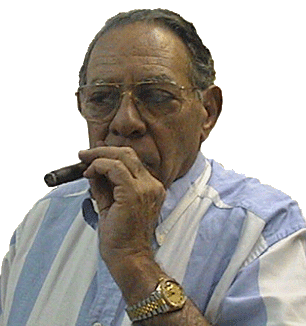
“We deliver only the finest, handmade, complex cigars with the flavor of the Cuban heritage out of which the Padron recipe was born. Our primary mission is the exceptional quality of our product, not the quantity produced. As a vertically integrated, family-owned company, we pay personal attention to every detail throughout all steps of our tobacco growing and cigar manufacturing process. Because we strive to give you, the smoker, the confidence that each cigar is the same … perfect.”
If you are interested in more KOTF info on the Padron Story, you can read it here.
The Keepers of the Flame Padron Series Roundup
This comparison review is one in a series on the original Padron line of cigars. When we have completed reviews on the entire line, a vertical tasting for each wrapper will be published. Each review will be an amalgam opinion of cigarfan and lucky7 along with that of the guest reviewer(s). Our guest reviewers for this vitola are:


Padron Series 4000 – Natural and Maduro
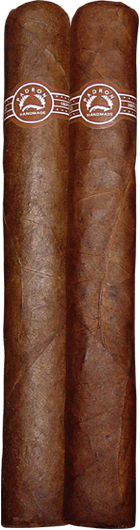 The first vitola roped in for the Padron Roundup was the mammoth 7000 toro, so it seems fitting that the last is the slightly smaller 4000 toro. In terms of cylinder volume, the 7000 is the largest in the line, followed by the Magnum (which is almost equal to the 7000) and then the 4000.
At 6.5 inches by a 54 ring gauge, the 4000 is a hefty stick that takes between 90 minutes to two hours to smoke at a leisurely pace. As George E. says, “You might wonder at first whether it came out of a humidor or a box of Lincoln Logs… this Nicaraguan puro is not just a smoke, it’s a commitment.”
Natural
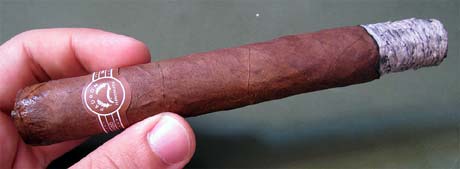
The Padron 4000 Natural has a dark, relatively consistent milk chocolate brown wrapper that is barely distinguishable from the Maduro 4000. There are a few small veins, but by comparison with other natural wrappers in the line, this one is more refined. The roll is a little lumpy. The single caps are applied well in a flat “Cuban” manner. Some samples showed the ghost of a box press, while others were completely round.

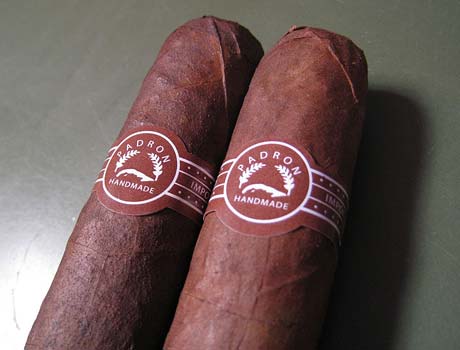
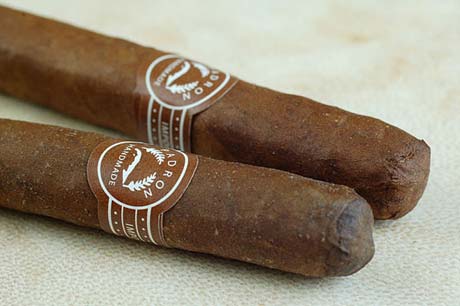
Two of our reviewers had comments about the band, something we haven’t really touched on during the course of the Roundup. The band Padron uses for the classic line is a very simple, fairly small, two toned image of the island of Cuba embraced by two branches or leaves, over which is the name Padron. Inspector describes it as “ a minimalistic band that makes me think of Montecristos.” And George points out an additional attribute:
A small point, perhaps, but one that I think speaks to Padron’s attention to detail is that the band popped easily off the cigar — a pleasantly common occurrence with Padrons.
George noted that the prelight scent on the wrapper of this cigar was “a mouth-watering and inviting mint,” while lucky7 reported “very light barnyard” on the wrapper and “slightly sweet tobacco” on the foot.
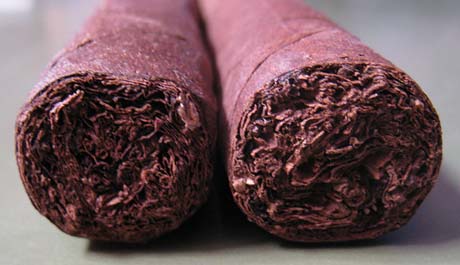
Inspector remarked that it took “a real physical effort” to cut this cigar. Cigarfan experienced this as well when he botched the cut — he had to cut his first cigar twice when the first cut was too shallow.  This resulted in the wrapper at the head unraveling a bit after 20 minutes of smoking. He employed a punch on the second stick with much better results.
The draw on these varied from perfect (according to three reviewers) to loose on one sample.
Our reviewers were greeted by a spicy initial kick with a little harshness on the throat upon lighting up the 4000. Inspector noticed a “tingling sensation on the lips” while cigarfan and lucky7 found the familiar peppery flavors settling after a half-inch or so into earthy tobacco, toasted wood, and the first indications of cocoa. The aroma is woody with a touch of caramel. Inspector related that the first third included “considerable amounts of spice, mixed with tobacco flavors, cork oak, and strong tannins.” The finish at this point is short and dry.
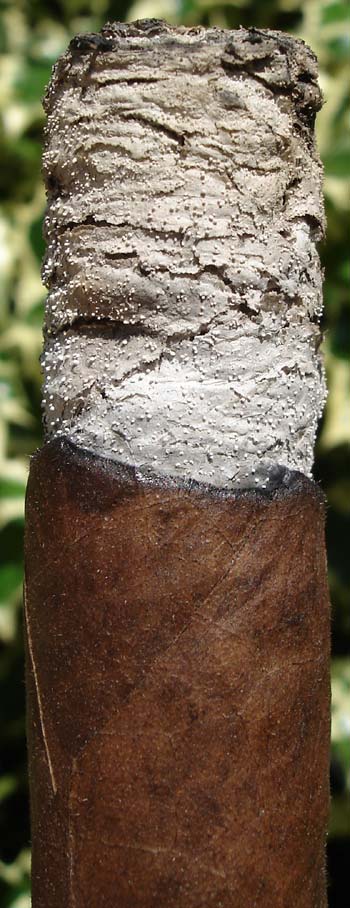
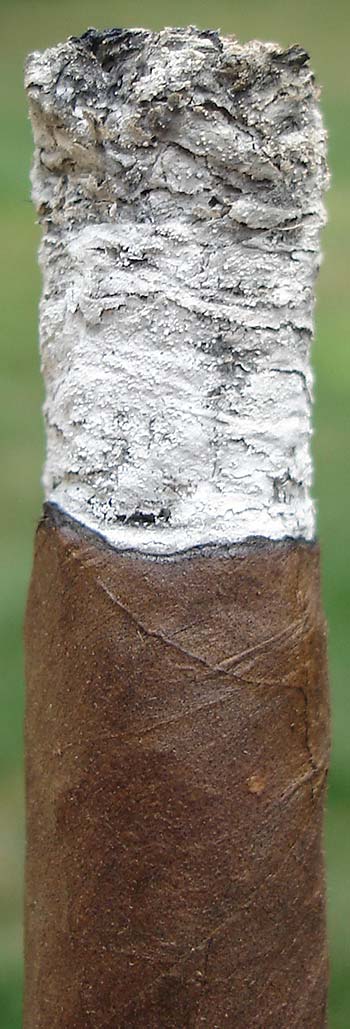
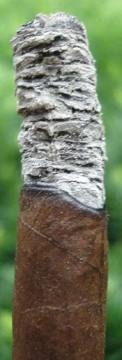
The burn is pretty good; it wavers a little bit, but never strays too far from home. The 4000 produces a large volume of thick white smoke and a gray ash with black flecks. George credits the torcedor who rolled the cigar for the conical cinder it creates:
When I knocked the ash off I noticed a nice cone burn, which I often take as a sign of the torcedor placing tobacco correctly while rolling the cigar. The burning cone was consistent from beginning to end.
Both Inspector and cigarfan noticed that the flavor starts to sharpen up a bit after the first third, but then evens out again. In Inspectors words, “the flavor first becomes very astringent then smoothes out.” After that, he tasted roasted coffee bean and a few sugary notes; lucky7 and cigarfan independently verified the coffee flavors.
Into the last third, the flavors get toastier and finally move into leathery territory. Lucky7 found that there was little transition here. In his words, the last third was “uneventful, unchanging,” while 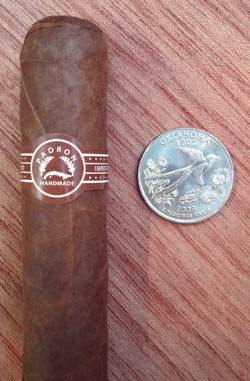 Inspector found increasing intensity of leathery flavors. Cigarfan thought the last section was inelegant and strong, but unmuddied.
George concludes:
Overall, I would say this was a strong cigar with relatively straightforward taste, primarily that of nice consistent tobacco. Though that was occasionally mixed with some light leather and wood, it was not a complex cigar. There was little change from start to finish, though it did seem to smooth out a bit in the final third.
Maduro
The appearance of the Maduro 4000 is almost identical to the Natural. The wrapper might be a little oilier and slightly rougher, but that’s all. The Maduro seems to be more tightly packed than the Natural, and our reviewers found that the draw was consequently a little tighter, but not problematic.
George and lucky7 reported prelight scents that are if not unusual, at least unexpected. Lucky7 found barnyard on the wrapper, but “fishy tobacco” on the foot. (And it’s not the first time: he found the same scent on the 5000 maduro. Which reminds me, I gotta tell lucky7 to stop storing his cigars in the tackle box.) And in George’s words,
The most remarkable — and consistent — feature of this mildly dark cigar was peanuts. I smelled them when I ran the wrapper beneath my nose, I noticed them on my tongue when I tested the prelight draw and I tasted them throughout the length smoke.
Of course, that’s how the song goes, isn’t it? “…Buy me some Padrons and Cracker Jacks / I don’t care if I never get back.”
Inspector held his cards close and simply said that the prelight aroma was “sweeter and more pronounced” than the Natural. After fifteen vitolas in natural and fifteen more in maduro, cigarfan said he was tired of sniffing cigars and lit up his 4000 Maduro blind.
Like the majority of cigars in the classic Padron Series, this one starts up with a little bite and quickly settles after half an inch or so. Inspector said it was a “similar and perhaps a little bit more powerful beginning.” Cigarfan found an initial earthy flavor, followed by leather and pepper, but thought it was “not very maduro-like for the first inch.” Lucky7 remarked that there was “not quite as much sweetness on the nose as some of the other Padron Series Maduros, but it’s smooth with a small twang.”
After the initial bite, the 4000 settles into toasted wood and coffee flavors. Lucky7 also reported “notes of fruit (there are those raisins again)” and sweetened cocoa on the short, crisp finish.
Not to be outdone by reviewers with extraordinary olfactory discoveries, cigarfan noted a cereal-like tobacco flavor at the start of the second third. Flavor intensity increases at this point and brings with it earthy flavors and, as Inspector notes, a “typical maduro flavor profile with a lot of sweet, spicy and coffee aromas.”
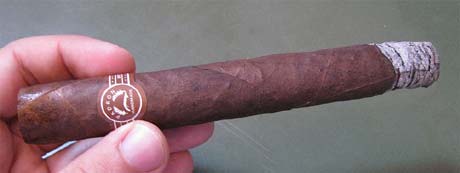
Everyone seemed to agree that the Maduro did not burn as well as the Natural. Cigarfan found he had to correct the Maduro early on, as did lucky7; Inspector reported no problems with his, but George added that “the burn line also was not as sharp on the Maduro.” Otherwise, George continued,
…the burn displayed a similar cone to the Natural, but it flattened out at about the halfway point and remained that way to the end… Smoke production was full and thick, a great complement to the flavors that shifted throughout. The aroma as it swirled around my head was pleasant as well. I would rate the Maduro a medium-to-full bodied smoke, a tad lighter than its Natural sibling.
The final section of the 4000 Maduro is quite strong tasting, bringing bittersweet chocolate, char, and finally pepper to the table. Cigarfan thought it tasted like Connecticut broadleaf more than Nicaraguan Habano, while Inspector said that it was “definitely full-bodied. The spice dissipated to give way to cocoa undertones.” Lucky7 reported “plain tobacco with undertones of dark chocolate” and bitterness at the nub.

And to conclude, let’s check with George in the peanut gallery:
The first few puffs generated a spicy undertone to the peanuts, with leather taking over about an inch into the cigar. The spice came back stronger and lasted another inch or so when I detected some cedar and leather again There was some bitterness — the unpleasant back-of-the-throat kind rather than the sometimes intriguing flat bitter taste — for a little while about halfway down. But that subsided as the peanuts returned. All in all, the cigar repaid attention with subtlety and intricacy.
Conclusion
Once again, our reviewers split down the line in terms of preference: everyone had complimentary things to say about both versions, but George and lucky7 favored the Maduro slightly, while Inspector and cigarfan chose the Natural.
In one corner, wearing brown trunks, the Natural scored points for balance and smoothness. In the opposite corner, also wearing brown trunks (with some darker streaks), the Maduro got votes for complexity and flavor. Inspector opined: “I prefer the Natural version, probably because it is more balanced and elegant than the Maduro which just tastes too ‘raw’.” George countered that “the taste of the Maduro was, for me, more satisfying than that of the Natural. It was generally smooth and complex.”
Cigarfan agreed with both of those statements, but found that the sheer brawn of the Maduro after the first half overpowered the flavor dividends it disbursed. The Natural, while not as complex as the Maduro, maintained its balance throughout the smoke and dispensed enough flavor to keep the party going for an hour and a half.
Lucky7 wraps it up:
One of the aspects of cigar smoking that I really enjoy and use as a discriminator is aroma (or nose as I like to call it.) Not the aroma in the room but rather my olfactory senses. These two cigars have got it. That wonderful aroma that I enjoy while smoking and think about when I’m not. Each vitola was easy going after the initial bite subsides and scrumptious for the first two-thirds. For slightly more than $4.00, I say you can’t go wrong.
I give a very slight edge to the Maduro in terms of preference but actually, I liked both quite a bit and will be spending time with the 4000 many times in the future.
Thanks to Inspector and, once again, to George E. for contributing their considered opinions to the Padron Roundup. Inspector is the founder and chief architect of Cigar Inspector, and George reports the news and writes reviews for The Stogie Guys.
And a final note of thanks to all of the fine folks from the blogs and forums who took part in the Padron Roundup. Your participation made this a truly balanced and — we hope — sincere evaluation. Coming up in a few weeks will be our vertical review of the entire Padron Series. We hope you’ll come back and let us know your thoughts.
“Don’t even talk about life without cigars.”
–José Orlando Padrón
… cigarfan & lucky7


 and usually a well regulated burn. In the past year or so we’ve seen a nostalgic swing back to the thin cigar, but the market is still dominated by robustos, toros, torpedoes, and the like.
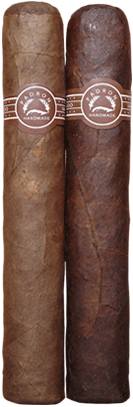
 It should be no surprise to hear that the Padron 2000 Maduro is lacking in the aesthetic department. Rugged, dark, veiny, and downright ugly were some of the adjectives employed to describe this popular favorite. The wrapper is oilier than the natural but less grainy than many of the other maduros in the line. Once again, some of the caps were loose and one sample appeared to be underfilled at the foot. The cigar is slightly box pressed (what lucky7 calls “squash pressed,” where the press is evident front to back only oriented by the band) and is firmly rolled.

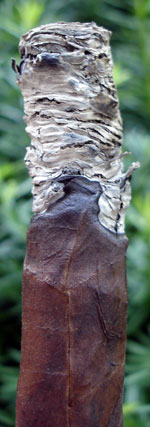 In the last section we noticed the flavors decline a bit into charred wood, leather, and at the end, burnt coffee. The finish lengthens into a peppery conclusion that finally capitulates with a bitter aftertaste.
 and richer in flavor than the natural, while the natural is milder with a far more subtle presentation.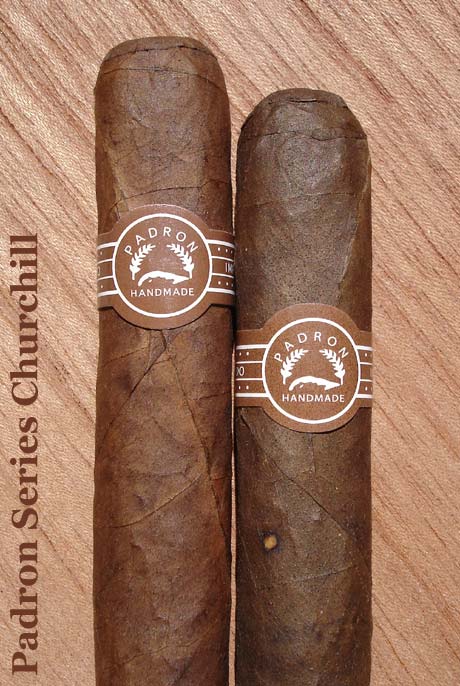

 The Churchill as a vitola did not originate with the famous prime minister of England; legend has it that before Winston came to prominence the size was in fact named for a different prime minister: Georges Clemenceau of France. As a tribute to his work on the Treaty of Versailles, the cigar that would be Churchill was named the “Clemenceau.” Two decades and one world war later, the Romeo y Julieta factory in Havana produced an unlimited number of cigars for Winston Churchill’s pleasure, and it just happened that his favorite size was the Clemenceau. Finally, after Churchill visited the plant in 1947, the 7 x 47 Romeo y Julieta was renamed in his honor. When the vitola was picked up by other marcas, the vitola itself became known as the “Churchill.”

 Initial flavors include wood, leather, and a touch of spice. After an inch or so some cocoa flavors settle in and are accompanied by a short and dry finish. At this point there is an aroma of “sweet toasted wood and caramel with the familiar Padron twang,” lucky7 notes, “and it seems incredibly mild for a Padron.” At the conclusion of the first third, McCharlie found “a very nice earthy nut flavor.”




 Thin ring gauge cigars are enjoying a renaissance in popularity recently, due in part to the outstanding wrapper leaf currently grown in Nicaragua. (It is interesting to note that the majority of lanceros in production for the American market are using Nicaraguan Habano wrapper leaf: Don Pepin Garcia, Illusione, Gran Habano Corojo, La Flor Dominicana Coronado and Oliva Serie V are a few that come to mind.)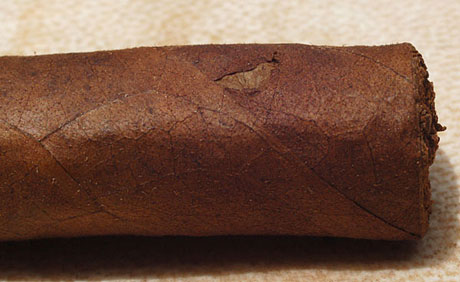
 This thin cigar is lightly box pressed and the standard size bands tend to overlap themselves. As lucky7 remarks, “it looks like some young boy trying to wear his daddy’s belt.” (Maybe Padron should use the smaller Corticos style bands on these?)

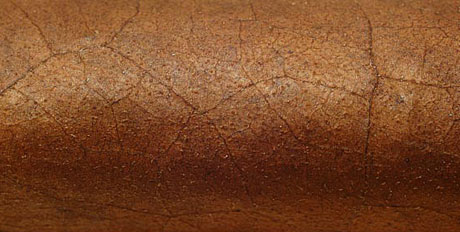
 The draw on these tended to be a little firmer than the natural, but they also seemed to burn a little better.

 The extra fermentation gives the maduro an added dimension that is lacking in the natural, but at the same time can create an unbalanced smoke if the blend isn’t just perfect.
 On the other hand, cigarfan agreed with Kevin in his assessment that the natural was a more balanced cigar. As Kevin puts it,


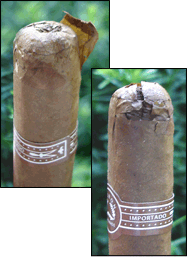
 Construction values were inconsistent throughout the review samples: some cigars were rolled a little too loosely and displayed the slapdash cap we’ve become accustomed to, and other cigars had perfect draws and surprisingly neat heads. Small holes near the cap, a light patch that almost looks like a glue smear, and a disintegrating wrapper that exposed the binder might have spelled disaster for lucky7, but he wisely decapitated his Executive at the quarter-inch mark after assessing the situation. Cigarfan’s sample was nearly perfect, including a well formed single cap, and Jeff’s cigar was a combination of aesthetic flaws and a good roll:
 Other pre-light traits were typical of the line — barnyard and hay scents on the wrapper — though lucky7 found a “chocolate tobacco” note on the foot, which is somewhat unusual. The cold taste was of familiar sweet tobacco.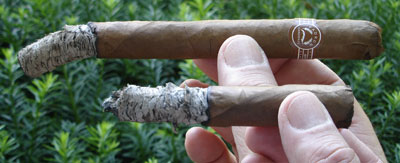
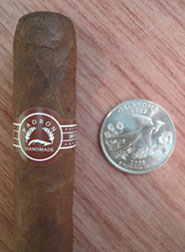 The Executive maduro opens up without the bite common to Padron maduros, but at the same time it doesn’t forego the pepper and spice flavors to which we are accustomed. Cigarfan found the base flavor to be woody, with accents of coffee and a raisin-like sweetness on the nose. To this lucky7 added some leathery notes, and Jeff found earthy flavors in the background.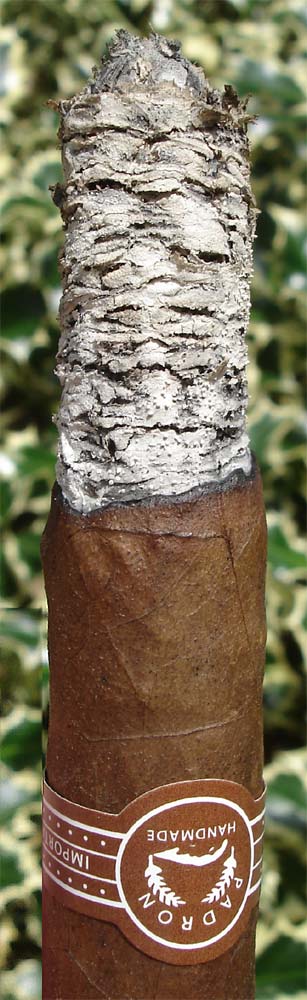




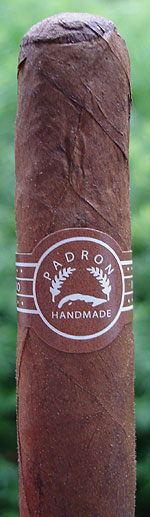
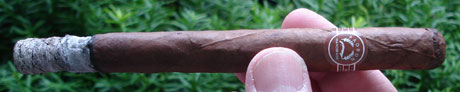


 Both lucky7 and cigarfan were impressed by the natural Ambassador, but they were blown away by the maduro. It’s hard to believe a cigar this good is available at such a reasonable price. Matt, on the other hand, preferred the natural wrapper:


 It still falls within the general dimensions of the “robusto” range, but it’s definitely on the wide side.

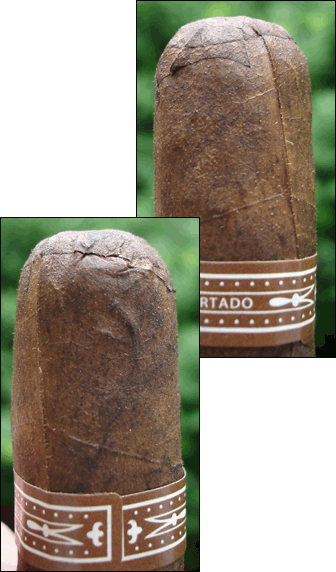

 We can’t reasonably conclude that there are quality control issues at play because both reviewers who had negative reactions went out and bought extra cigars to test them independently, and both came away with the same opinion after smoking cigars from these different boxes. If it isn’t inconsistency, what is it? Operator error, perhaps?

 The natural Corticos is easily distinguished from the maduro — the wrapper is a much lighter shade, milk chocolate in color with a yellowish hue. The wrapper itself is fairly smooth and uniform in color; the only defect is the cap, which is applied a bit carelessly and leaves the head appearing wrinkled. The prelight scent is typical of the Padron series — earthy, sweet tobacco.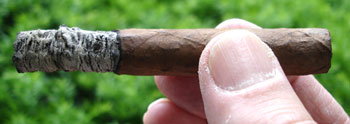
 The core flavors are similar to the natural version: wood and leather (especially on the nose) but the maduro is accompanied by a wonderful sweet char.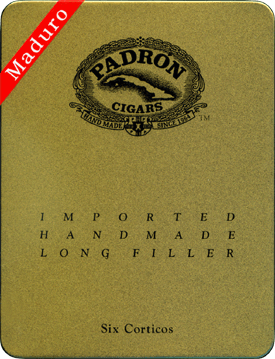
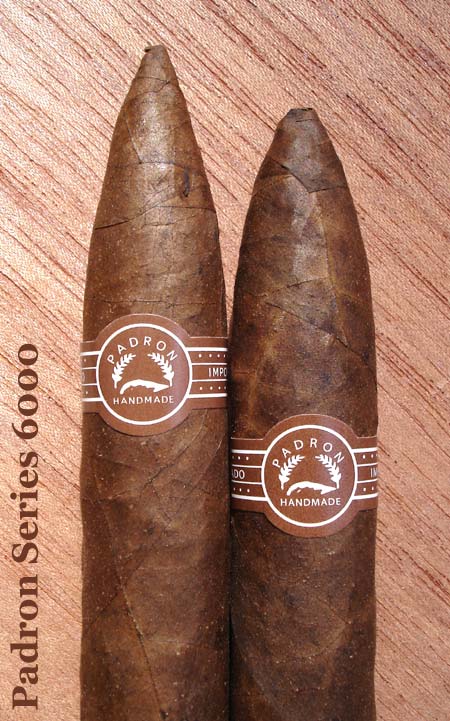

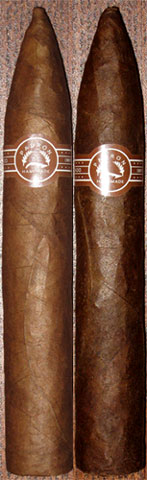 The Padron 6000 is the sole figurado produced for the classic Padron Series. Upon its release in 2004 it was hailed as an outstanding addition, garnering scores of 90 for the natural and 91 for the maduro from Cigar Insider. Patrick notes that “some cigar enthusiasts consider the the 6000 to be the elite vitola of the main line Padrons.” So it was with some excitement that we readied our cutters and prepared to examine the 6000 for ourselves.
 Like all torpedos this is a cigar that graduates in size from a point at the head to a sizable surface area at the foot — in this case a 52 ring gauge that takes some time to light properly. It opens up with the peppery spice we’ve come to expect from this series, but within a few minutes this calms and presents an easygoing, medium-bodied smoke with a woody foundation. Patrick reported some saltiness as well:

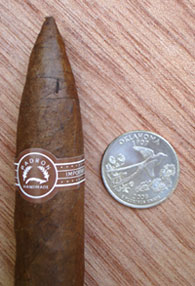 The beautifully-constructed head clips neatly to reveal a clear pre-light draw. I found plenty of sweet cocoa flavors off the foot — very similar to the aroma of Swiss Miss. There are a few veins, some noticeable seams, and a less-than-perfectly packed cross section at the foot, but this nonetheless has the feel of a finely-built cigar.


 hoped for some positive developments. But at about the two-inch mark I gave up, my taste buds overwhelmed by the bitter taste and disappointment.
 Cigarfan.net