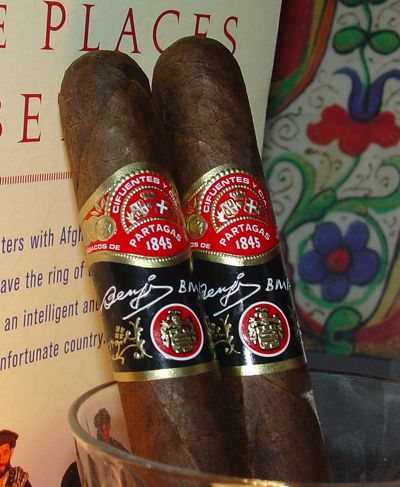
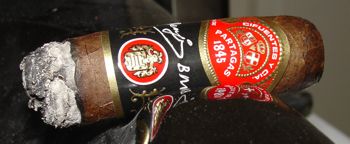
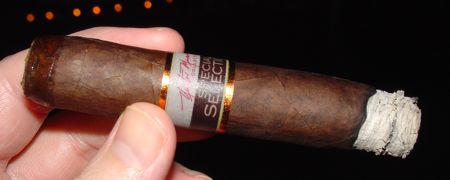
Nestor Miranda Special Selection “Coffee Break”

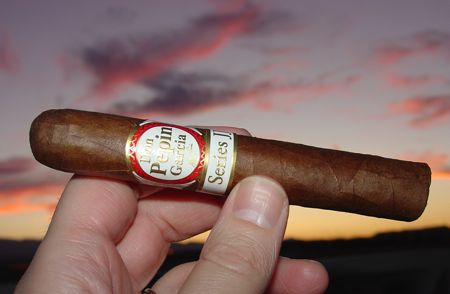
Every spring as the temperatures rise I set out on my annual hunt for hot weather smokes, and this year as I was paging through Cigar Aficionado’s Top 25 one caught my eye in particular: the Nestor Miranda Special Selection “Coffee Break,” which was awarded last place in the standings. At 4 1/2 x 50 it looked like it might just qualify as a Triple Digit Quick Smoke. In the past I’ve gone to Rocky Patel Sungrown Petite Coronas or Pepin Garcia Black Perlas, but I thought I should probably check this one out as a possible contender.

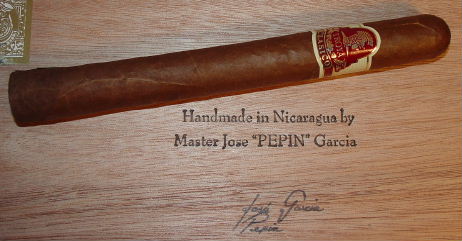
In the spring of 2008, when I first reviewed the Nestor Miranda Special Selection, I had some trouble pinpointing information on the brand. I had to settle for smoking a quite decent cigar without the background information. Poor me. In 2009 all the mystery surrounding the cigar was dispelled by Jose “Don Pepin” Garcia, who was charged with reblending the Special Selection and is now producing them in his Esteli, Nicaragua factory.

The wrapper is Nicaraguan Habano, both the natural Rosado and the maduro-toned Oscuro. It isn’t clear if this is the same leaf with a different level of processing, or if each version employs a different Nicaraguan Habano leaf altogether. Different, I would guess, but I don’t know for sure. The binder is Nicaraguan, and the filler is a three country blend from Nicaragua, Honduras, and the DR.

Despite the fact that this cigar has been reblended, the two original sizes are still listed in the roster on the Miami Cigar & Company website. They are made conspicuous by having no frontmarks assigned to them, though some retailers are using the frontmarks from the original blend for these vitolas… it makes me wonder if boxes of the original blend might still be floating around out there somewhere.

The sizes as listed on the Miami Cigar & Co. website:

  • Lancero:  7.5 x 40
  • Unnamed: 5.5 x 54 (the old  “robusto grande”)
  • Unnamed: 6 x 60 (the old “super toro”)
  • Ruky: 5 5/8 x 48 x 52 (figurado)
  • Coffee Break: 4 ½ x 50

There is also a limited 20th Anniversary edition, the 7 x 56 “Danno”, that some of you probably remember from the promotion last year.
Construction Notes

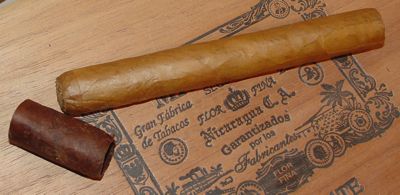
Both the natural Rosado and the Oscuro versions are well made sticks, though they both suffer from a bot burn after the mid-point. The Rosado wrapper exhibits a few small veins, but it glistens with oil and is quite appealing. The Oscuro is drier and more rustic in appearance, which is typical of finely aged maduro leaf.

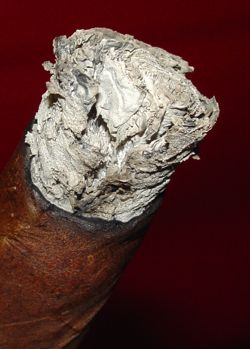
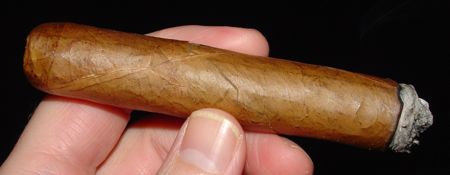
Both versions are consistently rolled and bear the tight triple cap we’ve come to expect from Don Pepin’s factories. The Rosado burns perfectly and builds a solid ash; the Oscuro wavers a bit more, the ash is flakier, and the column tends to crack after an inch or so. (These are also traits typical of maduro.)

Both versions of the Special Selection Coffee Break draw easily and consistently, but they also tend to heat up at the mid-point. I may be smoking these a little too quickly, or it may be the dimensions of the cigar – or both – but I haven’t yet been able to remedy this problem by slowing my pace.

Tasting Notes

Like many cigars with the same interior blend but different wrappers, the Rosado version is quite distinct from the Oscuro. The Rosado starts out with a mild, woody flavor that puckers the cheek lining with tannin. The Oscuro, on the other hand, opens up with a rich chocolate flavor. After a few puffs both of these initial flavors step back, mellow a little, and concentrate on a smooth woody flavor.

The aroma of the Rosado is lighter than the Oscuro, but with its notes of cedar and honey it is slightly more nuanced as well. The Oscuro centers on a sweet cocoa to chocolate scent.

The second half of both of these small robustos is more intense, but neither goes beyond medium in body. The Rosado turns to a smooth nutty flavor with a smattering of pepper toward the band, while the Oscuro serves up the espresso with the same smattering of pepper, finishing with some char in the last act.

Conclusion

Both the Rosado and Oscuro versions of the Coffee Break are fine short smokes, but with their tendency to heat up in the second leg they might require more time than the typical coffee break allows. That aside, I found the Oscuro to be more complex and slightly more enjoyable than the Rosado.

5 to 6 USD per stick seems a bit pricey for a short robusto, but it’s not outrageous considering the quality of the cigar. The question for me is whether the Special Selection Coffee Break will be reselected as next year’s Triple Digit Quick Smoke. The answer: probably not.

Final Scores:

Rosado: 85

Oscuro: 87

Famous 70th Anniversary by Plasencia

To celebrate 70 years of continued success in the cigar business, Famous Smoke Shop enlisted ten of the industry’s key players to each create a 70th Anniversary blend. I managed to lowball a box of the Plasencia version on the Famous auction site, and since Plasencia makes some decent econo-smokes I was willing to take a blind shot at them.

Unfortunately, four of the five reviews of this cigar on the Famous website are scathing, calling it, among other things, terrible, very poor, and “worst cigar I have bought.”  Three of the negative reviews complain about its lack of flavor, comparing it to the Perdomo and Pepin Garcia versions.  Needless to say, these reviews gave me a moment’s pause about my winning bid. On the other hand, I must give Famous Smoke Shop a tremendous amount of credit for letting anonymous reviewers publicly slam their merchandise on the very same page they are using to sell it.

But those reviews ring hollow. To me, complaining about a light-medium bodied cigar because it’s not full-bodied enough is like going to an Italian restaurant and complaining because they don’t have sashimi.

Which is not to say that a cigar can’t live up to your expectations, assuming that there is enough information available to base an expectation on. In the case of the Famous 70th Anniversary series, there is little to go on except information from Famous.  Nestor Plasencia is one of the largest, if not the largest tobacco grower in Central America, but he keeps a pretty low profile.

Plasencia’s 70th Anniversary blend for Famous is primarily Nicaraguan, but it incorporates no ligero in the blend. This information is front and center in the catalog description for good reason: no cigar is going to make the heavyweight division without some ligero, some medio tiempo, or at least a sungrown wrapper.

The wrapper and binder are both Nicaraguan Habano, though the wrapper is a little finer and receives the designation “Rosado.” The filler is a blend of Nicaraguan and Honduran leaf, and since I can’t conceive of Plasencia having to buy tobacco from anyone I will venture that all of this is grown on the Plasencia farms in Nicaragua and Honduras.

Three sizes are available:

  • Churchill – 7 x 50
  • Robusto – 5 x 50
  • Toro – 6 x 50

Construction Notes

I’ve smoked five of the toros so far, and all of them have burned perfectly: an even burn requiring no attention, a solid ash, and an easy draw. And they’re attractive as well — not Don Pepin attractive, but still easy on the eyes. The wrapper is described as “rosado” but I think I’d settle on colorado claro;  in any case it’s a smooth looking smoke.

Overall construction: excellent.

Tasting Notes

This is an extremely approachable and  mild tasting cigar from start to finish. It opens with a cedary aroma and a mild tingle on the tongue — it’s not a brawny cigar, but it’s still Nicaraguan. The smoke texture is medium in body, creamy and smooth but not thick. The aftertaste is earthy, maybe even a bit chalky. I can see how some might not appreciate that, but I don’t mind it too much.

The aroma of this cigar is intriguing, especially in the mid-section where it gets quite sweet. It moves from a base note of cedar to a chocolatey pecan type of flavor. It remains smooth with a fleeting finish of earth.

The last third gets a little spicier, but only by comparison to the rest of the cigar. The strength builds a little bit, but it still barely scratches the palate.  The chocolate and sweetness fades close to the band, leaving a dash of pepper and some earthiness on the palate.

Conclusion

The Famous 70th Anniversary by Plasencia isn’t a bad cigar at all, certainly undeserving of the harsh critiques it receives on the seller’s website. But it isn’t a cigar for everyone either —  this is a demure smoke with a mild disposition and an attractive aroma. It is best smoked earlier in the day or by fans of milder cigars. Approached in this frame of mind I think it is quite enjoyable.

The retail price for the Toro is around 5 USD per stick, but deals may be had on Cigarauctioneer.com

Final Score: 87

Por Larranaga Cabinet Seleccion Toro

The “Edicion Limitada” program has been such a hit for Habanos S.A. that its expansion continues, despite some rather lukewarm reviews.  Other cigar makers have followed suit, sometimes in hilarious fashion, but with all good intentions. Or at least one good intention: to sell more cigars.

Altadis USA was not to be left out of this, of course, so in 2007 they inaugurated a Cabinet Selección program incorporating four of their major brands: Montecristo, H. Upmann, Romeo y Julieta, and Por Larrañaga. The first three are all produced in the massive Tabacalera Garcia in the Dominican Republic. The last one, Por Larrañaga, is the odd man out. It is made in the Flor de Copán facility in Santa Rosa de Copan, Honduras.

Cabinet Selección series cigars are packed in practical cedar cabinets and are extremely well priced for limited edition smokes. Originally this line was to be available from brick-and-mortar retail shops exclusively, but it appears that the internet embargo has been lifted. (Like some other embargoes, the internet embargo has proven rather leaky.) I purchased these at a local shop anyway.  The Altadis rep was there, looking a little forlorn as I reached over his shoulder for some Casa Magnas, so I bought some of his cigars and let him tell me the history of Por Larrañaga.

The Por Larrañaga entry in this series is a Nicaraguan puro with a wrapper that has a checkered reputation — Habano 2000. It’s been a while since I’ve seen this notoriously flameproof wrapper used, so I hoped that it might have been reformed over time. My hopes were soon to be dashed.

Five sizes are in production:

  • Toro – 6 x 56
  • Robusto – 5 x 54
  • Belicoso – 6 1/8 x 52
  • Corona – 5 5/8 x 45
  • No. 4 – 5 x 40

Construction Notes

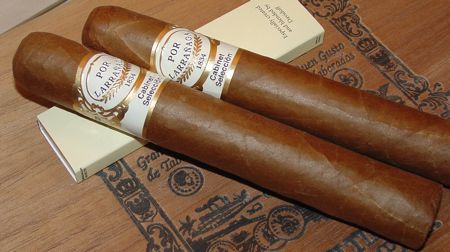
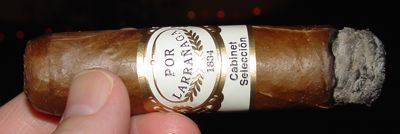
The first detail that jumps up, out and off this cigar is a typographical error on the band. Yes, I am a geek, but it bugs me. Instead of an acute accent over the o in Selección there is a tilde, which looks stupid.  Aside from that it’s a nice looking band, but the typo is egregious.

Having recovered from that affront I was able to appreciate the smooth claro wrapper on this toro. The head is well formed and the cap is finished with two or three clean seams. The roll is solid and the cigar clips nicely to reveal an open draw with good resistance.

But once lit, the troubles commence. It felt very strange to have to relight not once, but repeatedly, a cigar with such a light wrapper leaf. It’s not unusual to have this happen with maduro cigars, but it was a little unnerving to watch the burn on this blondie swerve all over the place. When this happens the question is always whether the flavor and aroma make up for the annoyance of the  burn.

Tasting Notes

The first thing this cigar does is unleash the cedar, so much that it’s almost overwhelming. It’s similar to the way that some cigars start out with a blast of pepper, except with the Por Larrañaga Cabinet it’s bright spicy cedar.

After adjusting to the forest fire under my nose I noticed the smoothness of the smoke. It’s creamy like Connecticut shade, but without the nuttiness typical of Connecticut blends. This is another great example of a cigar with a fairly heavy smoke texture — what I call body — but a flavor and strength that is mild by comparison.

In the mid-section some finer subleties emerge — a woody flavor that is less sharp than the cedar pouring from the foot. It’s toastier, maybe something like oak. There’s also a little vanilla. With the other flavors here it makes me think of a barrel-aged chardonnay.

The flavors concentrate a bit in the final third — the woody flavors get a little darker, a little bit charred, and the spice thins out a little. The smoke remains smooth though, and this cigar is definitely nubbable if after an hour and a half you still haven’t had enough.

Conclusion

The Por Larrañaga Cabinet Selección is a beautiful mild to medium bodied cigar with a powerful aroma that is only weighed down by the curse of Habano 2000. It needs to be touched up, relit, and generally just babied for the duration of the smoke.  On the other hand, the flavor is everything you’d want in a morning or mid-day smoke. As long as you like cedar.

Factor in the retail price — around 5 USD per stick — and this one is a winner.

Final Score: 89

Reyes Family Vintage Robusto

Back in 2008, when the Puros Indios cigar company underwent a metamorphosis to become Reyes Family Cigars, the Reyes Family Vintage was slated to replace the Puros Indios Viejo blend.  It wasn’t going to be a new cigar though — the only thing that was going to change was the brand name and its associated bands and boxes.

But sometime last year Rolando Reyes, Sr. decided to preserve the Puros Indios and Cuba Aliados names, which has created some temporary confusion in how these cigars are presented.  At the moment the Reyes Vintage and the Puros Indios Viejo are two distinct, though similar blends.

True to its name, the highlight of the Reyes Vintage line is an aged wrapper — a swarthy Sumatra-seed leaf grown in Ecuador and aged for eight years. (The Viejo has a Ecuadoran Sumatra wrapper that is two years older yet.) The binder is Ecuadoran as well, and the filler is a three country blend from Brazil, Nicaragua, and Ecuador yet again.

At this time the Reyes Family Vintage is available in four sizes:

  • Corona Extra – 5 1/2 x 45
  • Robusto – 5 x 50
  • Toro – 6 x 53
  • Churchill –  7 1/2 x 47

Construction Notes

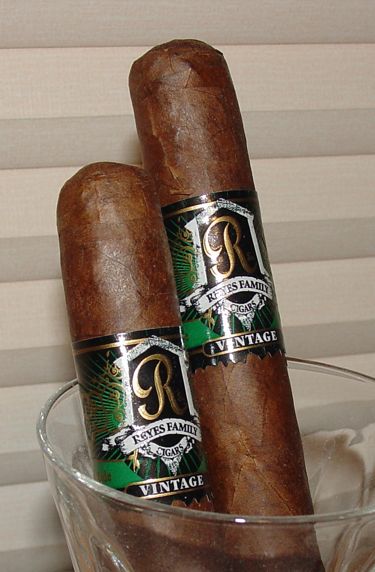
The wrapper on the Reyes Family Vintage is appropriately rough and weathered in appearance. It’s dark, a little dry, and rustic. This is set off by the head of the cigar, which is beautifully finished with a triple or quadruple seam.  The roll is firm and the draw is easy. My only complaint is that the burn was a little bit off at times, and the ash was extremely flaky. This is not one to smoke in a stiff breeze, unless you’re doing your best impression of Eyjafjallajokull.  (I’m waiting for someone to name a cigar Eyjafjallajokull — then maybe I’ll learn how to pronounce it.)

Overall construction: Very good.

Tasting Notes

This is one of the smoothest cigars I’ve smoked in a long time. It starts up with a light woody flavor with a touch of cinnamon or nutmeg and is light to medium in body. I like the woodsy aroma of this cigar — it reminds me a little of the Cienfuegos line, which is made by the same company.

The body builds in strength as it moves into the mid-section, but it stays silky smooth. I notice at this point that the aroma from the wrapper has grown a bit sweeter with floral accents, which is a little unusual considering how dark the wrapper is. (Floral notes are common in shade wrappers, and you could argue that Ecuadoran wrappers are shade-grown, but I find it a little unusual anyway. )

The only criticism I can make about the flavor is that it doesn’t change too much through the duration of the smoke. The Reyes Vintage sidles into its last act with the same tune — smooth and woody, only charring a bit at the very end. It’s not a grand finale, but it’s certainly pleasant.

Conclusion

The aged Sumatra wrapper on the Reyes Vintage robusto  is superb and it contributes to the exceptional smoothness of the cigar. Construction qualities, aside from a loose flaky ash, were also very good. On the other hand,  the cigar suffers from a lack of complexity. In my mind, however, the sweet woodsy aroma of the cigar and its easygoing nature outweigh its simplicity. And what’s wrong  with simplicity anyway?

Reyes Vintage cigars are packed 15 to the box, which run around 90 USD, or about 6 bucks a stick. If you’re looking for a smooth and woodsy medium-bodied smoke with a stellar bouquet, this is one to try.

Final Score: 88

La Gloria Cubana Artesanos de Tabaqueros

A few weeks ago La Joya de Nicaragua’s Cabinetta surprised me by demonstrating that not all dual-wrapper cigars are trumped-up fashion plates. In that case both wrappers have distinct and useful functions, and I am finding that again with La Gloria Cubana’s new Artesanos de Tabaqueros.

In 2008 La Gloria Cubana announced a new direction with its release of the Artesanos de Miami — a small production blend made in Miami by a team of 10 rollers. The Artesanos de Tabaqueros is an extension of that concept, but this time the team is a little bit bigger (18 rollers instead of 10) and the factory is a small division in the Dominican El Credito facility.

The cigar is the concept of Rick Rodriguez with guidance from master blender Benji Menendez and their pick of General Cigar’s vast “library” of aged tobaccos. The filler and binder is of Dominican and Honduran origin, but the main attraction is of course the wrapper. Or wrappers, I should say.

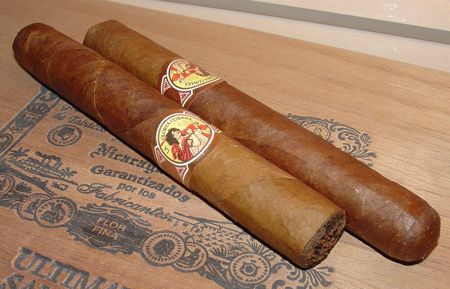
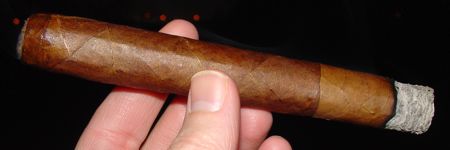
At the foot of the cigar, and extending for the first third, is a Connecticut Shade leaf. From that point to the cap, a much darker Ecuadorian Sumatra leaf takes over.  The marketing director for LGC likens the intial shade portion to an appetizer before the “porterhouse” of the Sumatra takes over.

The Artesanos de Tabaqueros is produced in three sizes, each of which seems to have the same measure of Shade leaf. I would expect that initial section to be proportional to the whole, but I guess a bigger steak does not net you a bigger appetizer. For the review I lit up the 650 toro size.

  • 650 – 6 x 50 (toro)
  • 652 – 6 x 52 (belicoso)
  • 750 – 7 x 50 (double corona)

Construction Notes

This cigar is very distinctive and attractive with its striking two-tone design. The band rides low on the cigar, covering the juncture where the claro and maduro-colored wrappers meet. The roll is solid and the draw is just right as well.

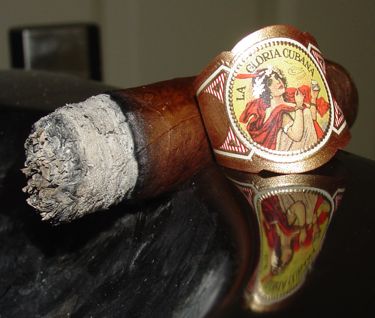
Connecticut shade burns extremely well, making it easy to blend a cigar that burns evenly.  The Artesanos de Tabaqueros takes full advantage of this wrapper’s superior burning qualities, and true to form it burns level straight.  I was expecting the burn to suffer once it hit the Sumatra leaf, but it follows through perfectly. Even the ash remains solid, though the Sumatra burns a slightly darker shade of gray.

Overall excellent construction.

Tasting Notes

The Connecticut shade portion is fairly typical of the breed — smooth, mild, and creamy. The flavor is a little nutty, and the aroma carries with it a pleasing and mild scent of cedar. The smoke texture is about medium in body, with no bite whatsoever. There is a touch of sweetness and an acidic tang on the finish.

The transition into Sumatra territory is obvious. If you were smoking this cigar in the dark you might think someone switched cigars on you. (There are several good reasons not to smoke in the dark. Having your cigar shanghai’d is just one of them.)

The flavor of the Sumatra wrapper is so different, it’s like starting a new cigar. By contrast with the Connecticut, the flavor is heavier, with a foundation of bittersweet chocolate. The aroma is woodier — more like hardwood than cedar, and it’s not as complex as the Connecticut section. The focus in this part is on the palate, where the chocolate flavor develops a tannic pinch and the finish is dry. The final inch, around the place where a band would normally sit, is marked by a coffee flavor that tastes a bit scorched as the cigar winds down.  This section of the cigar reminds me of the Punch Upper Cut, another General cigar with an Ecuadorian Sumatra wrapper.

Conclusion

Smoking La Gloria Cubana’s Artesanos de Tabaqueros is an interesting experience, and in addition to the two-wrapper novelty it is a very well made cigar. Both the first Connecticut and the second Sumatra sections are fine smokes in themselves, though they might not be the most interesting cigars taken separately.

The question is whether you are the type of smoker who wants to smoke two cigars back-to-back like this.  Personally, when I want to smoke a mild Connecticut shade cigar, I don’t want to mix it up with a heavier smoke. And when I feel like a medium or heavier bodied cigar, I don’t want to sit through a mild overture beforehand. That said, the Artesanos de Tabaqueros is still a very high quality cigar. At around 8 USD per stick, it’s definitely worth the experience.

Final Score: 89

Aging Report: Troya Clasico LXIII

One of the exciting things about being a cigar smoker is that there’s always something new on the shelf, and cigar makers take full advantage of our excitable nature. It doesn’t matter to me if a cigar has been hailed as the Second Coming or panned like a Uwe Boll movie — if Pepin Garcia made it, I’m buying it. At least once.

But this phenomenon is not without its drawbacks. There is a commercial law of conservation at work here that says for every new blend that hits the shelves, an older one must go. Shop keepers struggle to find shelf space, and consumers have only so much money in their wallets. At the end of the day it’s a popularity contest. The winners are restocked and the losers go to the discount warehouses.

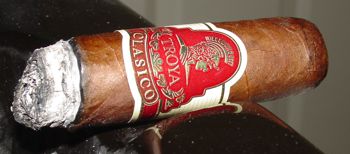
It’s disappointing to see the sun set on a great blend, but Pepin Garcia’s Troya Clasico is about to disappear into the glare. The company that distributed the blend was acquired by Britain’s Imperial Tobacco, which acquired Altadis, which is why there are still Troya brands in circulation — but they’re not Pepin’s blend. The newest Troya is the Clasico Limited Edition, blended by the late great Frank Llaneza. It’s probably a good smoke, but it’s not the same cigar.

It looks like the remaining Pepin Clasicos were picked up by one of the usual suspects (JR Cigar) and have been on the chopping block for a few months now. Late last year I picked up a couple boxes of the churchills at a cut rate price, and I may have to double up on that soon, before they’re gone forever.

But before I wash away in a tide of nostalgia I thought I should muster up an aging report on this great cigar. I broke a few of these out of long-term storage to see what three years has done for them.

Construction Notes

The wrapper on this cigar is not quite as supple as it used to be, but I’d put that down to less than optimal storage conditions. My vinotemp does a pretty good job, but it’s not a locker at Alfred Dunhill.  The roll is solid and it clips cleanly. The draw is perfect, the burn is straight, and the ash is built like a dowel rod. My only complaint, if I have to have one, is that it burns a little quickly. But even at the band it doesn’t get hot.

Overall construction: Excellent.

Tasting Notes

After three years this cigar retains most of its identifying characteristics — primarily wood with a sweet, beany aroma, something like caramel and coffee. The Troya Clasico hasn’t undergone any radical transformations, but the bitterness is completely gone. Fresh Pepin blends almost always have a tannic edge to them, and although this cigar wasn’t over the top in that regard, it was still a touch bitter. The years have taken that edge off completely.

In the second and last thirds the flavor turns to leather, but the sweetness and mild-mannered nature of the cigar continues on. It’s smooth as butter, about medium in body, and easy on the nicotine. The flavor starts to muddy at the band, but that is after 60 minutes of pure pleasure.

Conclusion

My opinion of the Troya Clasico hasn’t really changed too much — I picked it as the second best cigar of 2007, and I don’t regret that ranking.

For me, a new Pepin Garcia blend is like a new Francis Ford Coppola movie. I don’t always like the movie, but my respect for his talent dictates that I will get in line on opening night and watch whatever it is that he’s decided to do. I feel the same way about Pepin. A lot of what he blends is too strong for my taste, but for me the Troya Clasico hits all the right notes, and it doesn’t play them too loud.

It’s one of the nicer cigars I’ve smoked this year, and it’s sad to see it go.

Final Score: 93

Joya de Nicaragua Cabinetta No. 7

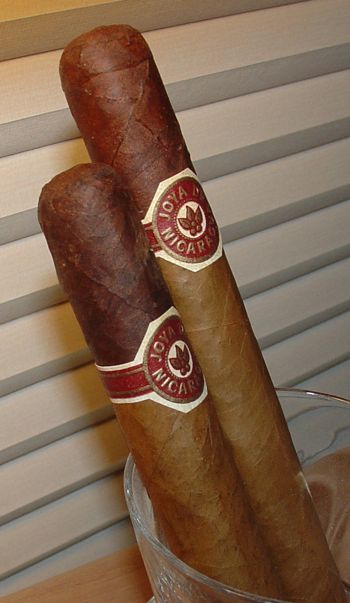
Joya de Nicaragua is the oldest cigar maker in Nicaragua, founded long before the country became known as the premier tobacco-growing region in Central America.  In recent years the brand has gained a following among fans of heavy-duty, big-boned Nicaraguan puros (like the brawny Antaño 1970) but that isn’t all they do. Despite the prominence of their ligero-laden sluggers, Joya de Nicaragua still produces lighter bodied fare for those of us who appreciate the subtle things in life.

The Cabinetta is similar to Joya’s much milder and more subtle Celebracion. The Cabinetta also uses a criollo-wrapper, in part, but its appearance is clearly distinct from the Celebracion.

The Cabinetta features two wrappers — the primary leaf is an Ecuadorian Connecticut shade wrapper that runs the length of the cigar; the much darker secondary leaf, a Nicaraguan Criollo, envelops the head of the cigar only. The theory, at least according to the company press release, is that the criollo adds a spicy flavor on the tongue to the overall smooth and creamy Connecticut shade character of the cigar. The binder and filler leaves are from the Jalapa region of Nicaragua. Four sizes are currently available (in slide lid boxes, ergo Cabinetta):

  • Cabinetta No. 2 – 6 x 54
  • Cabinetta No. 4 – 5 x 52
  • Cabinetta No. 7 – 6 x 50
  • Cabinetta No. 11 – 5 1/4 x 46

I have to admit that I initially had the same benign suspicion of the Cabinetta that I have of other “dos capas” cigars. Is this a gimmick? Is it an aesthetic flourish designed more for visual appeal than flavor? Possibly.

On the other hand, I thought, maybe there’s a way to resolve this suspicion by putting it to the test. So with my trusty exacto knife and a steady hand (don’t try this at home, kids) I carefully removed the dark criollo leaf from the head of one of my Cabinettas. It wasn’t a perfect job, but the criollo peeled away nicely, leaving the blond shade wrapper with only a few scratches. Since this particular cigar was smoked in a modified state I didn’t factor it into my review, but in the Conclusion below I will tell you if my suspicions about the criollo cap were confirmed.

Construction Notes

The Cabinetta toro has a thin claro shade wrapper that reveals the bumpiness of the binder beneath. The color and consistency is typical of Connecticut shade leaf, and the contrast provided by the maduro-colored criollo is a nice touch. It gives a first impression that the cigar has a cedar sheath, which of course it does not.

The criollo end of the cigar (the head) is rough by comparison to the silky Connecticut shade, but the cap is formed well and the cigar draws beautifully. The roll is solid and it burns cool and evenly.

Overall excellent construction.

Tasting Notes

The Joya de Nicaragua Cabinetta is a mild to medium bodied cigar with the best of two worlds — it incorporates the creamy qualities of Connecticut shade while stealing a few savory flavors from the Nicaraguan spice cabinet.

The first third is mild and creamy, with an acidic accent and some mild spice. Red bell pepper maybe. The aroma is hay-like, sweet with some roasted nuts, and the finish is slightly dry.

The middle section unveils a nice surprise — cocoa. The prominently woody flavor is no surprise, but I can’t think of the last time I got cocoa from a shade wrapped cigar. The aroma is a tad sweeter in the middle third, with a touch of cedar. The smoke texture is creamy smooth.

In the last section the cocoa strengthens a bit, edging into milk chocolate. The aroma is less sweet at this point and more nutty, but aside from that there isn’t too much flavor transition here. The aftertaste gets a little dirty as the ash approaches the criollo/band line.

Conclusion

The idea behind the dark criollo wrapping around the head of the cigar is that the spicier flavor of this Nicaraguan tobacco will accentuate the underlying creaminess of the Ecuadorian Connecticut. I was sceptical of this at first, but I found by removing the criollo and comparing the naked Cabinetta with the standard issue cigar that there is in fact a difference in flavor. Stripped its little skirt of Nicaraguan criollo, the Cabinetta loses a lot of its distinction — in essense, it’s just another decent mild Connecticut.  The flavor is primarily of sweet hay with a dry finish.  It’s still quite good, for a mild cigar, but not all that interesting.

The criollo adds visual appeal, but it does much more, even though it isn’t part of the burning mixture. It really does add flavor to the cigar — in fact, the cocoa element that I thought was so unusual is coming from this little scrap of leaf and nowhere else!

Verdict: Not a gimmick.

If you’re in the mood for a mild smoke with some Nicaraguan flair, the Joya de Nicaragua Cabinetta will set you back only seven dollars or so. Give it a shot. Leave the criollo ON.

Final Score: 88

Oliva Connecticut Reserve Robusto

I know a guy who smokes Flor de Oliva Gold and only Flor de Oliva Gold. No matter how I try, the guy will not give up his FOGs. He’ll gladly accept a cigar from me, say an Ashton Cabinet (he’s a good man, he deserves it) and when he’s done he’ll say, “Yeah, that was a good cigar.” And then he’ll pull a Flor de Oliva Gold from his pocket and grin at me as he lights it up.

The Oliva Cigar Company has been in the forefront of the industry for the past couple of years, introducing its smash hit, the Serie V, and experiencing more growth than would be expected during a global recession. Part of their success lies in providing quality cigars at a reasonable price; but part of it also lies in innovation and reaching out to new smokers.

So in 2008 the company took a walk on the mild side and began development of a  new cigar that would appeal to newer smokers and fans of milder-bodied smokes. Up to this point, Oliva had no Connecticut-shade blends in its premium portfolio — broadleaf, yes, but not shade.

One other difficulty had to be surmounted: Oliva works with primarily Nicaraguan leaf. Nicaragua is known for full-bodied, full-flavored, powerhouse tobacco — pick up an Oliva Serie V and you’ll see what I’m talking about. For a milder bodied cigar, the Olivas would have to leave the ligero out of the mix and still come up with a tasty blend using viso and seco leaves only.

In early 2009 the Oliva Connecticut Reserve, Oliva’s only boxed cigar with a Connecticut shade wrapper, was finally ready for release. The wrapper is Connecticut shade grown in Ecuador, and the binder and filler are Nicaraguan. Five sizes are currently in production:

  • Robusto – 5 x 50
  • Toro – 6 x 50
  • Double Corona – 7 x 50
  • Torpedo – 6 1/2 x 52
  • Lonsdale – 6 1/2 x 44

Construction Notes

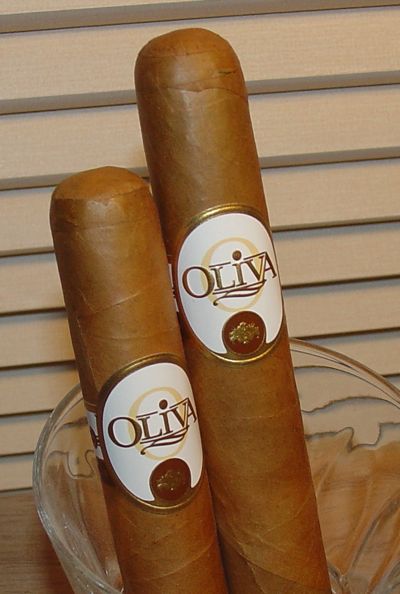
The Oliva Connecticut Reserve is a debonair cigar with a creamy golden-brown wrapper that has a yellowish cast to it. There is a rare shade wrapper called amarillo, (Spanish for yellow) and while this Ecuadorian Connecticut is not quite that yellow, it is reminiscent of that variety.

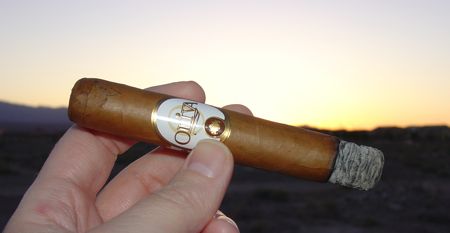
This robusto is light in the hand, but it has a firm roll which results in a slow burn. The cap is not an aesthetic marvel, but it is functional and clips easily. One of the great things about Connecticut Shade is how well it burns, and the Oliva Connecticut is no exception, burning level-straight and building a solid dirty-gray ash.

Overall excellent construction.

Tasting Notes

Oliva’s Connecticut Reserve is a little bolder than many other mild Connecticut Shade cigars in the same class — it’s still smooth and aromatic, as you would expect, but the Nicaraguan filler gives it a zing that other (usually Dominican) shade smokes don’t have. It doesn’t seem quite as nutty either, though that familiar roasty flavor is still in evidence.

The latter half of this stick is woody and has a much longer finish that I would expect from a mild-to-medium shade blend. The smoke texture is still creamy though, with a salty note that blends well with the other seasonings. The aroma is sweet and nutty. The concluding inch, just into the band area, is woody with more cracked pepper and a touch of char.

Conclusion

This is an unusual cigar — it’s not quite mild enough to recommend to a confirmed Macanudo smoker, and yet it has enough flavor to interest some medium-to-full body cigar fans (especially as a morning smoke.)  It might serve well as a transition cigar for newer smokers who are ready to move on from the lightweights to bigger flavors. The only caveat here is that it does have a lengthy finish and aftertaste — it’s nothing to compare to most medium-full cigars, but it’s more than some mild cigar smokers might like.

The going rate for the Oliva Connecticut is 5 USD retail. This cigar is worthy of that based on its excellent construction alone, but I still don’t think I’ll be able to convince my friend to switch out his Flor de Olivas for the Connecticut Reserve.  Maybe I can interest him in doing a comparison review. I’m sure it will be short and go something like this: “Yeah, that cigar is pretty good, but I can buy two of these for the same price.” And then he’ll pull a Flor de Oliva Gold from his shirt pocket. And I won’t argue with him.

Final Score: 87

Other Reviews of Note

Walt digs the Robusto for the Stogie Review

Barry gives the Toro a 90 for A Cigar Smoker’s Journal

Richard Bui approves of the Toro for Cigar Inspector

The Stogie Guys take on the Lonsdale

The Toasted Foot recommends the Robusto for all smokers, regardless of strength preference

Benji Menendez Partagas Master Series

Benji Menendez is one of those living legends of the cigar business, a cigar maker who is still blending tobaccos and passing on the tradition years after most mere mortals would be enjoying their retirement. Menendez has an entire lifetime of experience to draw on. In fact, when you see the M & G insignia on a Montecristo cigar band, that M stands for Menendez.

As an heir to Cuba’s largest cigar factory, H. Upmann, and the Menendez y Garcia tobacco concern, young Benjamin had a lot to look forward to as he grew up in an upper-class Havana neighborhood. Despite his privileged position as the son of the company’s majority owner, he still had to learn the industry from the bottom up, starting with packing cigars, and then working his way through the departments to a management position.

In 1960 the factory was seized and from there the Menendez story takes an all too familiar turn. A new start in America was about to begin, starting in Miami and soon moving to the Canary Islands, where Mendendez created the blockbuster Montecruz brand. Many years later he became the head of premium cigar operations for General Cigar. Fifteen years after that, during the cigar boom of the late 90’s, Menendez joined the Spanish giant Tabacalera, which eventually merged with SEITA to form Altadis. Now he is back again with General, where the powers that be have in all their wisdom tasked him with the creation of this limited edition Partagas.

Only 5000 boxes of the Partagas Master Series were made, and in only one size, a 6 x 46 Grand Corona dubbed Majestuoso. Like the Montecruz of the 60’s, this one has an attractive Cameroon wrapper. The rest of the blend is more unusual: a Habano binder grown in Connecticut, filler from the Dominican Republic (piloto cubano) and two different regions in Nicaragua (Esteli ligero and Ometepe.) On paper this sounds like a thunderous cigar. In practice it’s actually quite smooth, but very expressive at the same time.

Construction Notes

The roll is rock solid, but it draws with even and easy tension. The wrapper is dark with fine veins and appears slightly toothy. The head is rounded with a cap that is so well integrated the seams are difficult to detect. It burns evenly and builds a solid, firm, and neat long ash.

Overall excellent — near perfect — construction.

Tasting Notes

The Partagas Master Series Majestuoso is a medium to full bodied cigar with lots of flavor. Taken slowly it’s smooth and easy to smoke, but it can develop a bite if rushed.

From the first pull it’s evident that this blend is heavier than the standard (Non-Cuban) Partagas line. The flavor is a complex of cedar, spice, leather and coffee in varying combination as the stick burns through the first third. There is a touch of black pepper which will return again in the last section.

An acidic edge cuts through the chocolate and cinnamon in the middle third, leaving a tea-like tang on the tongue. The body of the cigar is light enough not to overpower this subtle touch, but heavy enough to coat the palate with an array of flavors. The aroma is rich with cedar and coffee, while leather spiked with pepper lingers on the finish.

The strength of the cigar comes through at the finale, hitting me in the gut but not knocking me over. The aroma becomes piney and the aftertaste grows a little bit salty. Some char appears near the band.

Conclusion

Benji Menendez’s Master Series blend is an accomplishment worthy of a man who has dedicated his entire life to the art of the cigar.  It’s flavorful, complex, smooth, and balanced. It’s expressive without being aggressive. It’s just a really fine cigar on all fronts.

It’s also priced within reason, especially for a limited edition release of such high quality. Ten American greenbacks is about all this one will set you back. But get them while they’re still around, because they won’t be for long.

Final Score: 91