
Skip the fluff and jump straight to the review!
Cigar Stats
Brand Owner: Padron Cigars, Inc. – Miami, FL (website)
(distributor operates under the name Piloto Cigars, Inc.)
Factory: Tabacos Cubanica, S.A. – Esteli, Nicaragua
Factory: Tabacos Centroamericanos, S.A. – Danli, Honduras
Model/Vitola: Padron Series 6000 (Natural and Maduro)
Size: 5.5 x 52 (torpedo)
Wrapper: Nicaragua
Filler & Binder: Nicaragua
Body: Medium to Full
Strength: Medium to Full
Average Retail: $7.23 USD
Cigar Insider/Aficionado Ratings: Low 90s
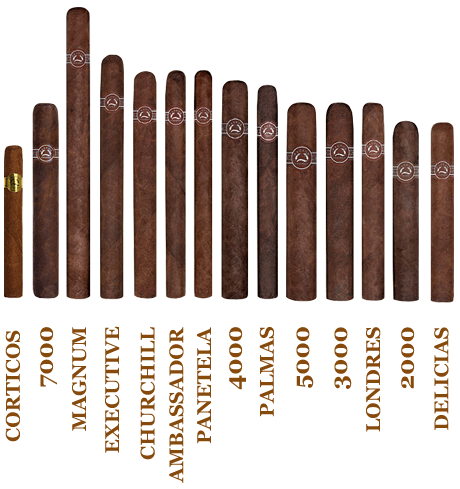
Fourteen other vitola sizes are available in the traditional Padron Series along with one which was recently discontinued.
|
Frontmark |
Length x Ring |
Shape |
|
2000 |
5.0 x 50 |
robusto |
|
3000 |
5.5 x 52 |
robusto |
|
4000 |
6.5 x 54 |
toro |
|
5000 |
5.5 x 56 |
robusto |
|
6000 |
5.5 x 52 |
torpedo |
|
7000 |
6.25 x 60 |
toro |
|
Ambassador |
6.875 x 42 |
lonsdale |
|
Chicos |
5.5 x 36 |
discontinued |
|
Churchill |
6.875 x 46 |
churchill |
|
Corticos |
4.25 x 35 |
short panatela |
|
Delicias |
4.875 x 46 |
corona extra |
|
Executive |
7.5 x 50 |
double corona |
|
Londres |
5.5 x 42 |
corona |
|
Magnum |
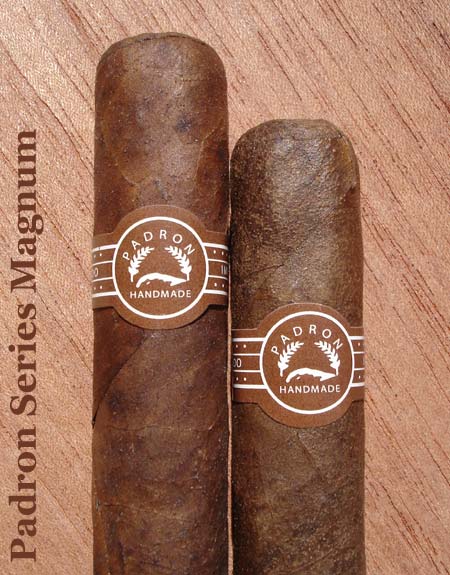
9.0 x 50 |
giant |
|
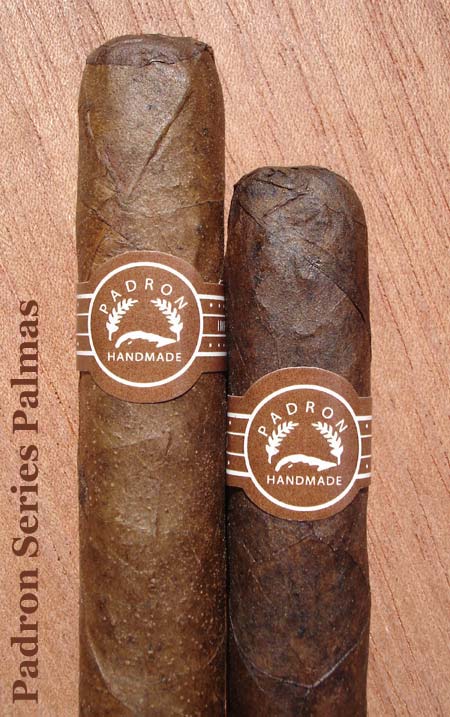
Palmas |
6.25 x 42 |
long corona |
|
Panetela |
6.875 x 36 |
panetela |
All sizes come in lacquered cedar boxes of 26, packaged with cellophane sleeves on individual cigars. Many vendors list a box size of 25. I am not entirely sure why that is. It may be that Padron changed the box count since the initial release. The Corticos are the exception packaged in boxes of 30 or tins of 6.

“We deliver only the finest, handmade, complex cigars with the flavor of the Cuban heritage out of which the Padron recipe was born. Our primary mission is the exceptional quality of our product, not the quantity produced. As a vertically integrated, family-owned company, we pay personal attention to every detail throughout all steps of our tobacco growing and cigar manufacturing process. Because we strive to give you, the smoker, the confidence that each cigar is the same ….. perfect.”
If you are interested in more KOTF info on the Padron Story, you can read it here.
The Keepers of the Flame Padron Series Roundup

This comparison review is one in a series on the original Padron line of cigars. When we have completed reviews on the entire line, a vertical tasting for each wrapper will be published. Each review will be an amalgam opinion of cigarfan and lucky7 along with that of the guest reviewer(s). Our guest reviewer for this vitola is:

Padron Series 6000 – Natural and Maduro
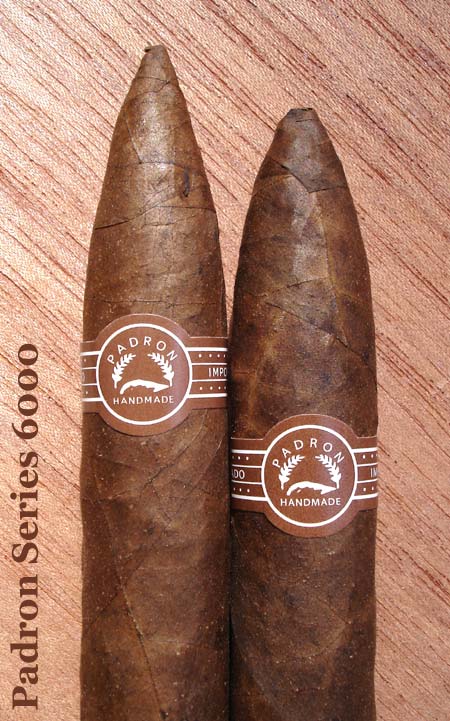
 The Padron 6000 is the sole figurado produced for the classic Padron Series. Upon its release in 2004 it was hailed as an outstanding addition, garnering scores of 90 for the natural and 91 for the maduro from Cigar Insider. Patrick notes that “some cigar enthusiasts consider the the 6000 to be the elite vitola of the main line Padrons.” So it was with some excitement that we readied our cutters and prepared to examine the 6000 for ourselves.
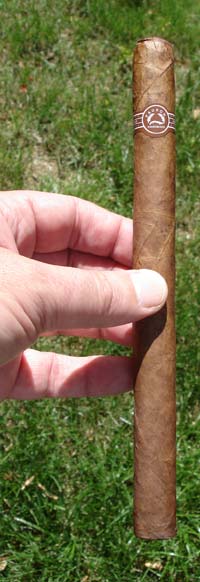
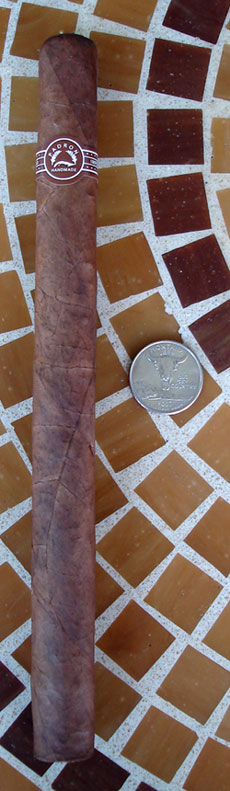
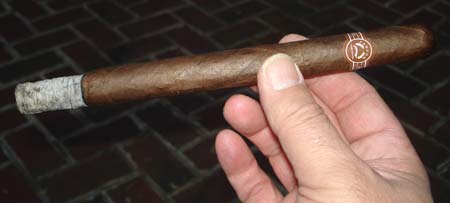
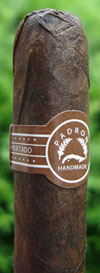
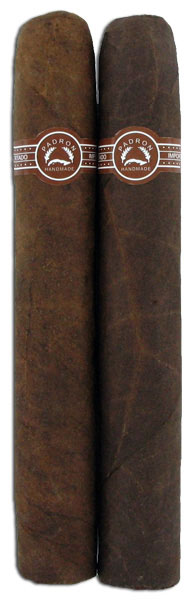
Both of these cigars have impressively pointed torpedo heads. As lucky7 says, “put a little crook in it and add a brim, voila… the sorting hat from Harry Potter.” And again the wrapper colors are almost indistinguishable — sitting side by side the natural is just a few shades lighter than the maduro, and the maduro glistens with a bit more oil.
Natural
Both of these cigars seem to be constructed more carefully than others in the line. The wrappers are cleaner and more uniform in color. In the case of the natural, there a few protruding veins but they are fairly discreet. The roll is firm and even with a slight box press.

The prelight characteristics are similar to other naturals in the line: an earthy hay-like scent from the wrapper and sweet tobacco with a hint of fruit from the foot. Cigarfan detected a touch of ammonia from one sample.
 Like all torpedos this is a cigar that graduates in size from a point at the head to a sizable surface area at the foot — in this case a 52 ring gauge that takes some time to light properly. It opens up with the peppery spice we’ve come to expect from this series, but within a few minutes this calms and presents an easygoing, medium-bodied smoke with a woody foundation. Patrick reported some saltiness as well:
The flavor is a bit spicy at the outset with an arid, woodsy body. Where the Maduro has sweetness, the Natural has salt — a biting dryness that increases with the frequency of each puff. Careful smokers will notice a backdrop of cinnamon.
As the 6000 gathers speed it presents more flavors of cocoa and coffee. Cigarfan welcomed the return of an acidic tang that was present in the 7000 and Magnum naturals (but curiously not the 3000 or the smaller vitolas.) The woody foundation persists and the aroma is distinctly leathery.

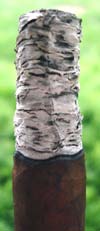
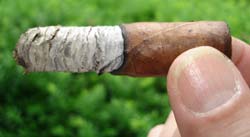
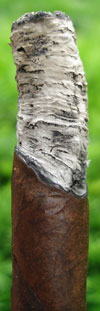
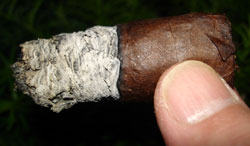
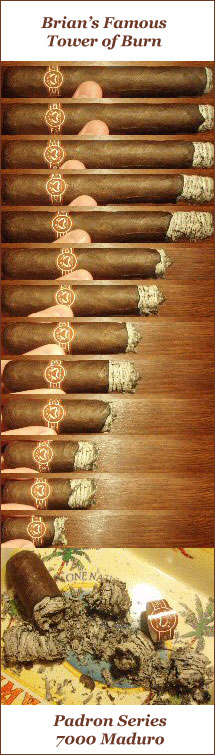
As the barrel of the cigar shortens it leaves behind a somewhat mushy, slightly flaky ash, though as Patrick notes, “it wasn’t an encumbrance (even though I expect better for the price.)” He also remarks on an uneven burn that requires corrections and “a tendency for the burn to extinguish itself” down the final stretch.
The end game of the 6000 Natural is intensified by the structure of the torpedo: the flavors become concentrated as the ring gauge narrows. In this case, there are some notes of caramel, but they are brief and scattered as the flavors turn ashy and bitter.

Cigarfan wraps his day with a 6000 Natural as
California wildfires blaze in the distance
Maduro
The maduro 6000 is equally well constructed and is unusually attractive for the classic Padron series. As Patrick tells it,
The beautifully-constructed head clips neatly to reveal a clear pre-light draw. I found plenty of sweet cocoa flavors off the foot — very similar to the aroma of Swiss Miss. There are a few veins, some noticeable seams, and a less-than-perfectly packed cross section at the foot, but this nonetheless has the feel of a finely-built cigar.
The maduro smokes a little more aggressively than the natural, jumping off with a peppery bite. After an inch or so this settles and a familiar base of leather and toasted wood comes to the fore. The aroma is sweet and slightly musty.
The peppery overtones persist into the middle section as the finish grows moderately. The aroma loses some its earthiness and takes on a beanier character, chocolate or cocoa, while the basic flavor of the cigar remains woody. At this point the smoke is quite creamy and the texture rates a solid medium.

The last stage is marked by increased bitterness, but kept in balance until the end, as Patrick explains:
The first inch is stronger than I expected with heavy, earthy notes of leather and a little black pepper. The pre-light sweetness creeps in shortly thereafter, though, balancing out the flavor. This is where the cigar is at its best. A pleasant sweet vs. bitter interaction characterizes the second third, and the flavor is most enjoyable when bitter isn’t winning out. Look for an increase in sourness is the final third.
Conclusion
While lucky7 preferred the maduro 6000 just slightly over the natural, Patrick came down decisively for the maddie:
Even though both displayed construction flaws that would be better left to cheaper smokes, I enjoyed each experience. There’s no question in my mind, however, that the Maduro is the finer cigar. Its taste is fuller and more complex, with a lingering sweetness that I will certainly seek out again.
Bucking the trend was cigarfan, who appreciated the smoother, slightly more suave character of the natural over the sweetness of the maduro.
A final point is worth making regarding the price of the 6000, which is a bit higher than the rest of the line. While this is a quality cigar — in whichever wrapper you prefer — it’s not wildly different from the rest of the line, but it is considerably more expensive (especially if you’re buying by the stick.)
Lucky7’s take:
The 6000 is a very nice smoking cigar but given the price differential between the 3000 and the 6000, I would go for the 3000 every time…it’s so much cheaper and basically the same smoke. For the torpedo nut, I wouldn’t hesitate to recommend it. For the penny conscious, stick with the 3000.
Thanks to Patrick A for taking the time to participate in the Padron Roundup. Make sure to visit StogieGuys.com for the latest news and reviews from Patrick and the rest of the Stogie Guys. Somehow they manage to publish something new every single day!
… cigarfan & lucky7



 hoped for some positive developments. But at about the two-inch mark I gave up, my taste buds overwhelmed by the bitter taste and disappointment.



 Padron’s “Thousands” series of cigars are all robusto or robusto-plus sized cigars. The 3000 is a slightly larger than average robusto; at 5 1/2 x 52 it has just a little more girth and half an inch in length on the standard 5 x 50 robusto.
 Hurdling over these flaws, what we have is typical of the Padron Series Natural: a rough, somewhat veiny wrapper with a consistently textured milk chocolate color, a passable roll with a slight box press, and a good draw. The prelight scent is that familiar horsey Old McDonald smell — Jesse describes it as leather, while Matt notes hay and earth. Sounds like the barnyard all right.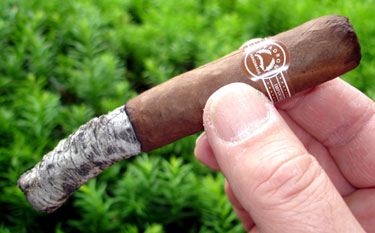
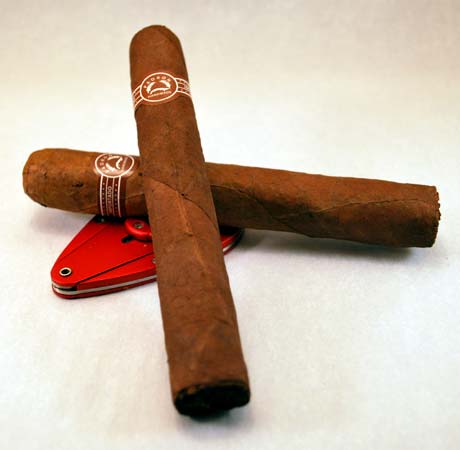
 In other ways the maduro is quite similar to the natural, including the rough wrapper and sloppy cap. As Matt says, it’s “just as ugly as the natural.” There are lumps and veins and wrinkles and the occasional soft spot — once again, this cigar will not elicit sighs of admiration based on its presentation.
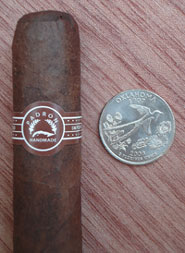 The flavors turn to wood in the middle section, along with the sweet char typical of maduro wrapper leaf. At this point the body builds up to a solid medium and the cigar gathers a little strength. The finish is short but gets a little sharp if you’re puffing too vigorously. Jesse wondered at this point if his stick “might be a bit off or my taste is off. I remember past ones to be sweeter — more chocolate.” In agreement with this, George noted “burnt coffee.” There are definitely bittersweet overtones at this point.

 The wrapper on this cigar is remarkably swarthy for a “natural.” The wrapper’s edges look more ripened than the rest of the leaf, giving it a foxed appearance. The head is nicely formed and finished with a flat cap. The roll of the cigar varied from firm to very spongy, but the draw was consistently free. Jon described it as ” bumpy, lumpy, a bit lopsided, and full of tooth,” an observation we all agreed with. Clearly this stick is not a natural beauty, but as Jon went on to say,
 The Delicias opens up with the eye-opening blast of pepper well known by fans of Nicaraguan tobacco. It quickly settles down to a woody base with a sweet leathery aroma. It burns a bit recklessly, but doesn’t require correction, meanwhile producing a light gray ash with black accents.
 The last section is marked by increasing intensity. The flavor becomes earthier, and the pepper returns with a vengeance. Lucky7 described this section as “very strong tobacco” while cigarfan experienced a strong peppery flavor bordering on harsh and noted a hot burn and a bitter aftertaste.
 The maduro Delicias is just a couple shades darker than the natural version, but it’s just as rough hewn in appearance. The roll is firm with a slight square press. Once again, we can’t resist Jon’s description of this bad boy: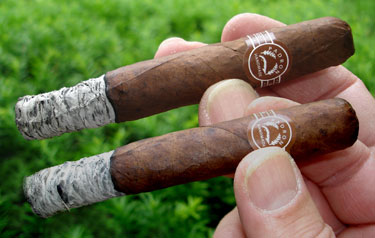


 Also known as a gran corona, the “A” size has Cuban roots in cigars such as the Sancho Panza Sancho and most famously, the Montecristo A. Large format cigars like the double corona and the “A” require very large wrapper leaves of superior quality, a commodity which is in high demand depending on the success of the season’s harvest and the manufacturer’s back stock.
 reserved four hours and still felt a bit rushed. His smoking time came in just over three hours; we all agreed that this cigar smokes more quickly than we expected. Lucky7’s smoking time came in at two hours; cigarfan’s about two and a half.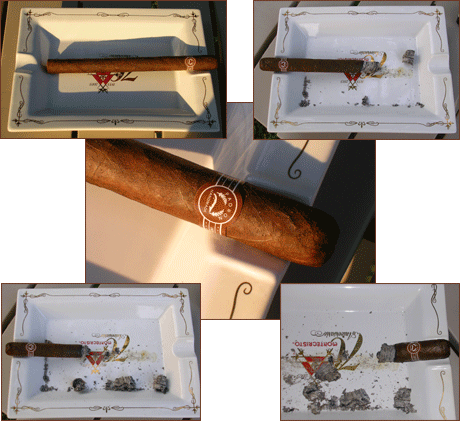

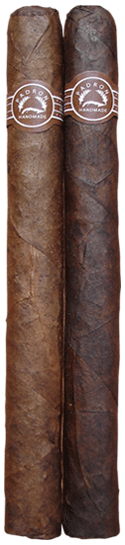 Those of us who have been around for a while know that the names manufacturers choose for their cigars do not always follow standard nomenclature. We all remember our first trips into the humidor, gazing starry-eyed at the assortment of cigars and wondering what all the different terms mean. Eventually our confusion is compounded when we find out that what one cigar maker calls a “toro” another one calls a “corona gorda” and another one calls a “robusto extra,” and so forth.
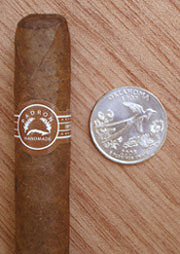 In addition to its slovenly appearance, the Palmas Natural features soft spots, a loose roll, and a draw that is a bit on the loose side. Maybe this one is best smoked in the dark.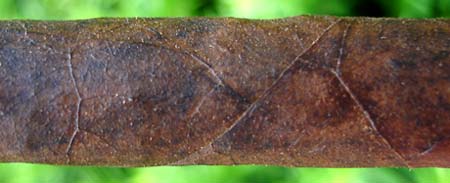
 Lisa noted a hint of “sun dried prunes” in her pre-light inspection. This is interesting in light of the prunes and raisins that Lucky7 and Brian found in the 7000 maduro.
 cocoa or java aftertaste, and cigarfan experienced burnt coffee and char in the last third.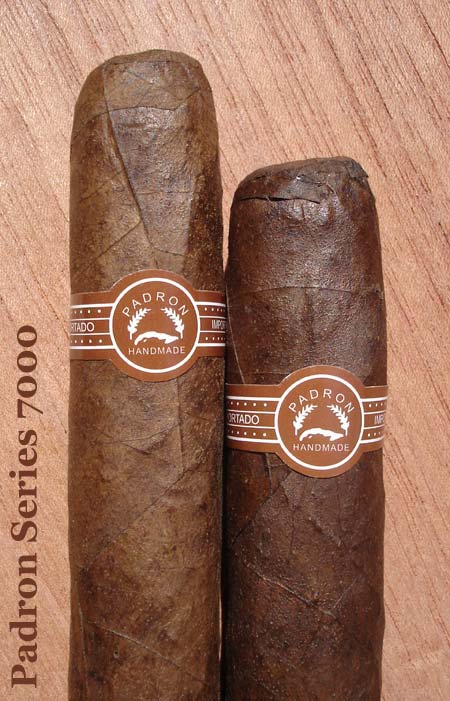


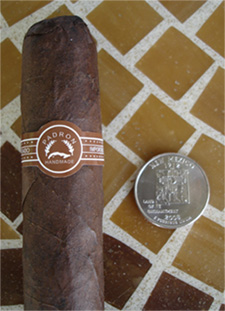 90 minutes on average. Our reviewers noted that despite the size of the cigar it still feels balanced, and two of us attributed the generous volume and coolness of the smoke to the large bore of the barrel.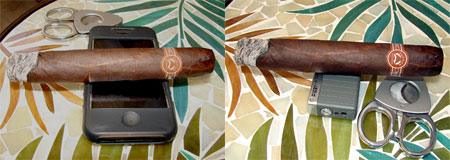
 The mid section of the cigar continues to provide plenty of rich sweet tobacco flavors, with notes of nuts and leather backing up the chocolate and coffee that continues from the first third. The body of this cigar is medium at this point, but it gradually approaches the full end of the spectrum. Lucky7 admired the way this stogie smoldered at this point with “blueish smoke from the foot mingling with the white smoke from the punched cap as together they waft up and out of sight.”
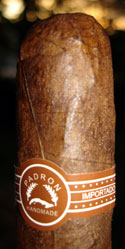 Brian’s sample even featured a dime-sized patch near the head of the cigar. On the other hand, Doc gave this stick a little latitude when he described the wrapper as leathery, with a brushed velvet appearance, and cigarfan noted the grainy texture of the leaf.
 Conclusion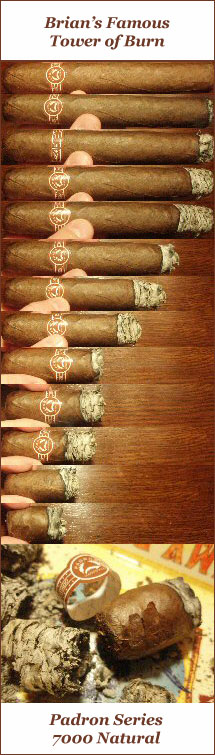













 Cigarfan.net