Best Cigars of 2008

best-cigars-08

As always, choosing the ten best cigars from a cast of thousands is not easy, and my humidors are chock full of smokes that I love that didn’t make the cut this year  (not to mention the new blends I haven’t had a chance to smoke yet.)  Top Ten lists are always a little capricious anyway, and this one is no different. Better pour yourself another cocktail.

This year I’m separating the best cigars of ’08 by body: full, medium and mild, keeping in mind that this categorization is itself a subjective one. (New Year’s resolution: fix that subjectivity thing.) Some are new cigars, some have been around for years, but I certainly hope all of them survive the economic turmoil we can expect in 2009.

Best Mild Cigars

Mild cigars get short shrift amongst aficionados, but they most definitely have a place in my collection. My top three mild smokes this year have been (in order of bestness):

  1. Fundacion Ancestral Vuelta Abajo – corona $$$
  2. Bravo Columbian Gold – toro $$
  3. La Tradicion Cubana – robusto (Deluxe Anniversary if you can find them.) $

Best Medium Bodied Cigars

Medium body is where I live. I could make a list of ten scrumptious medium-bodied cigars alone, but that’s not the deal this year. This was hard, but here they are:

  1. Illusione f9 – lonsdale $$
  2. Cubao No. 5 – toro $$
  3. Padron Ambassador Maduro – lonsdale $

Best Full Bodied Cigars

Some hard core cigar smokers claim full bodied cigars are the only ones worth smoking. I disagree, but even a pinot sipping middleweight like myself needs a good belt once in a while. My top full-bodied cigars of 2008:

  1. Oliva Serie V – lancero $
  2. Arturo Fuente Añejo No. 48 – churchill $$$
  3. Rocky Patel Sungrown – torpedo $$

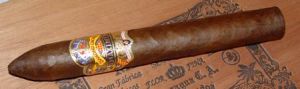
And finally, one standout that transcends boundaries, a cigar that sends me over the edge every time I smoke it, and for me the Numero Uno of 2008:
dcmax

Diamond Crown MAXIMUS  – Double Belicoso $$$


$ 5 USD or under $$ 5 to 10 USD $$$ Over 10 USD

Outlook 2009

The big concern for 2009 is the SCHIP tobacco tax and how it will affect the market for fine cigars. There is no doubt that retailers and consumers alike will feel the pinch, but it is unknown how the manufacturers will respond. In any case, the outlook is rather grim since passage of the tax appears inevitable.

In the meantime, light up a stick from your premium stash, remain vigilant, and hope for the best.

Stay tuned for Lucky7’s top cigars of the year… when he returns from his duty in Afghanistan I’m sure he’ll want to weigh in on the subject.

Have a safe and happy New Year everyone!

-cigarfan


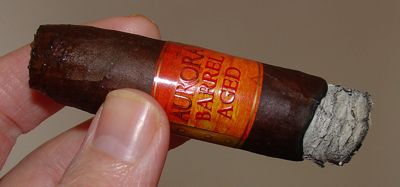
Aurora Barrel Aged Belicoso

barrelaged

First things first. This is not a flavored cigar, despite the fact that “barrel aged” brings to mind rum, which conjures up those treacly sweet gas station cigars. (Or maybe that’s just my mind, under the influence of the season and an eggnog or two.)

José Blanco and the folks at La Aurora decided to seal the tobacco for this cigar in old oak casks (that once did in fact contain Dominican rum) not to “infuse” the tobacco, but to age it in a completely sealed environment. The result is a beautiful dark oscuro leaf. La Aurora is not new to barrel aging — much of the tobacco for its Preferidos, 1495, and vaunted 100 Años cigar is aged in barrels — but this is the first time wrappers have received this process.

The Barrel Aged utilizes a Dominican corojo wrapper viva la capa dominicana!) as well as a Dominican binder, and filler from Nicaragua and the Dominican Republic. Four sizes are widely available:

  • No. 4 — 43 x 5.75
  • Robusto — 50 x 5
  • Churchill — 50 x 7.5
  • Belicoso — 52 x 6.25

The wrapper on this belicoso is an attractive and uniform shade of dark brown — it could easily be mistaken for maduro, but the leaf seems to be thinner, a little less oily, and much more attractive than maduro — broadleaf maduro, anyway. On the other hand, it isn’t pitch black, like some cigars that are marketed as “oscuro.”  (True maduro requires a thick leaf like broadleaf that can withstand the intense fermentation process, whereas oscuro leaves have undergone a normal fermentation and are usually dark because of the priming and maturation process, not intense fermentation.)

The scent of the pre-light cigar is sweet and woody; despite the fact that these tobaccos have been aged several years, the cigar still has a fresh smell to it. The roll is solid and feels balanced in the hand. My only criticism of this stick so far is the slightly garish band, but that is easily ignored and even more easily removed.

barrelaged2

The draw is perfect on this belicoso and it lights up quickly. After a quarter inch or so my first impression is that this is a very smooth smoking, mild to medium bodied cigar.

The initial flavors are sweet and earthy, complemented by a pleasantly woody aroma. There is just a touch of tannin at the back of the tongue, otherwise there is no bite whatsoever and a very mild aftertaste of earth and wood. The aroma carries a little sweetness, but it’s not the cocoa-caramel sweetness that I associate with corojo. In fact, I don’t think I would have guessed this was corojo at all — I might have guessed Ecuador Sumatra, even though it doesn’t look like it.

Into the middle section of the cigar the finish lengthens and the aftertaste becomes woodier and a little dry. The tannic element intensifies a little and the flavor gets a little spicier, just a little pepper in there somewhere. The cigar burns mostly even (one touchup required) and builds a solid ash with a bright white exterior.

The last third brings a little more strength, but not much, and it closes with some earthy bean flavors — coffee or chocolate, I couldn’t decide which. The sweet woody aroma from the wrapper contributes to the mix, making me think chocolate, but there’s some roastiness to it that makes me think coffee.  Either way there’s a lot of complexity to this cigar — from its mild earthy beginning to a roasty medium-bodied conclusion, this is a smooth sailing smoke. Very nice.

MSRP is around 7 to 8 USD per stick (box price) which seems fair. I was prepared to say that was a little too much, but after smoking a couple of these I think the price is warranted. But I have to say that they really do deserve a better looking band.

barrelaged3

Other choice reviews of the Aurora Barrel Aged:

Walt reviews the No. 4 for Stogie Review

Doc smokes a pre-released version with José Blanco in Santiago for Stogie Fresh

Aging Report: 601 Oscuro Tronco

United Tobacco’s 601 series manufactured by Pepin Garcia has been a smashing success, and the Green Label is one of my favorites in the line. It hasn’t been easy to resist the siren’s call over the past year, but I still have a few of these left from the 2007 box that made it to the top ten list for the year.

This is a heavy cigar by design, and I was really curious to see how it would age. Many of the cigars I’ve chosen for “Aging Reports” have not benefited from their extended naps, but the ones that have are the sluggers like this one. I’m coming to the conclusion that as tobacco ages its strength and body attenuate, but in return more subtle nuances appear. So depending on the cigar, and the cigar smoker, this can be either a good or a bad thing.

I gravitate toward medium-bodied blends, with occasional forays into full-bodied and mild territory, so I was sort of looking forward to this one settling down a little. But only sort of, because the flavor is dynamite even if it’s not really in my weight class. So I still found myself picking at the box over the past year, handing a few out with both warnings and accolades, and now I have only a few left. But the year is up. Time for a visit from the ghost of Green Label past.

The first thing I noticed about the aged 601 Oscuro is that it doesn’t start up with the blast of pepper I was expecting — it’s certainly spicy, especially for the first half inch or so, but age has pacified the beast. The next thing I notice is that it burns very slowly, so slowly in fact that the time I allotted to smoke this robusto wasn’t enough to finish the cigar. But this being the 601 Green, two-thirds was enough. I’ve seen how this movie ends.

Despite the slow burn (and somewhat erratic burn line) the Green produces plenty of smoke. There is a sweet char on the nose that gradually becomes more chocolatey. On the palate I get wood with a nice black licorice accent, accompanied by a lingering but not overpowering aftertaste of chocolate and char. Ignoring the spicy overture, this is a medium bodied cigar that quickly becomes full bodied with a good nicotine hit, but it’s not the monster it was a year ago.

The bottom line is that the boldness of this cigar has faded somewhat. There’s plenty of flavor left for smokers of medium to full-bodied cigars, but if you love the explosion of pepper and tannin that a lot of Pepin blends offer when fresh, you’ll want to smoke these within a year of packing. But even after a year the Green Label is still a fantastic cigar, especially if you prefer a mellower profile. It looks like it’s time for me to restock.

601green

Some recent reviews of the 601 Oscuro Tronco:

Linus gives it a 7.5 out of 10 for Cigar Newbie.

Beezer goes toe to toe with the Tronco and learns his lesson.

El Titan de Bronze Redemption Belicoso

titanred

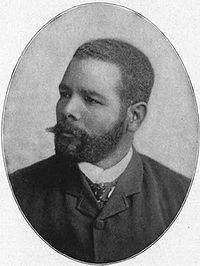
Antonio Maceo y Grajales was “El Titan de Bronce,” the Bronze Titan. Second in command of the Cuban Liberation Army, he led a comparatively small force of Cuban rebels against the formidable Spanish army during the Cuban War for Independence, slowly bleeding the Spanish of almost a quarter of a million soldiers until he himself fell in battle in 1896.  Due to his ferocity –and his Afro-Cuban complexion– he was called the Bronze Titan.antonio_maceo

El Titan de Bronze is also a small cigar manufacturer based in Little Havana’s famous “Calle Oche” neighborhood, obviously named in honor of the famous Lieutenant General. Established in 1995, the factory is owned by Carlos Cobas, and until a short time ago his cigars could be purchased only at the store.  Level 9 cigar rollers with experience in Havana’s major factories — Partagas, Romeo y Julieta, etc. — make up the front line staff, and Pablo Romay (of La Tradicion Cubana fame) is the master blender for the shop.

Currently Titan de Bronze is producing four lines of cigars — the Gold, Maduro, Cameroon, and this one, the Redemption, which is the fullest bodied of the lot. For the Redemption, Romay wanted to create a cigar with a “medium to full body, no bitterness, and a sweet aftertaste.” To do this he utilizes a Nicaraguan blend for binder and filler coupled with an Ecuadorian Sun Grown Habano wrapper.

The Redemption line is available in four sizes in addition to the Belicoso:

  • Churchill – 7 x 50
  • Toro – 6 x 52
  • Robusto – 5 x 50
  • Coronita – 5.5 x 44

titanred1Since El Titan’s torcedors are all veterans of the Cuban cigar industry, it’s no surprise that they employ Cuban-style rolling and bunching in their cigars — “entubado” bunching to ensure a good draw, and triple caps on the parejo sizes.  The result is an attractive and consistently performing smoke.

The belicoso is a squat 4.5 x 54 cigar with a firm roll and an attractively leathery wrapper. The head is perfectly formed and wrapped. The prelight smell is of grass and cedar, with some richer earthy qualities from the foot.titanred2

Lighting up the 54 ring gauge foot takes some patience, but once lit it smolders nicely. The first couple of puffs are earthy and sweet, similar to Gran Habano’s Corojo #5, and a good jolt of pepper follows. After half an inch this mellows and cedar takes over from the pepper. The ash is flaky and disintegrates when I tap it into the ashtray after an inch or so.

There is a nice amount of complexity to this cigar, with woody and caramel flavors making an appearance after the mid-point. The sweet aftertaste that the blender was seeking is definitely in evidence here, and it combines with the cedary flavors very well. The last section of the cigar gets increasingly spicy, but never biting or bitter.

The Redemption Belicoso smokes like a lighter Nicaraguan style cigar with a sweet edge to it. I didn’t find the cocoa or coffee flavors that often crop up in Nicaraguan cigars, but there’s plenty here to keep your interest for a good 45 minutes. If you’re smoking a cigar from a smaller manufacturer, it’s probably because you’re looking for something new — and the Titan de Bronze Redemption is a refreshing change from the what the big industry players are offering. And to seal the deal: MSRP runs around 5 USD for the belicoso. Very competitive for a Miami-rolled cigar.

Other reviews of El Titan de Bronze Redemption:

Walt smokes the Redemption robusto for The Stogie Review.

Lisa tries the Coronita for Her Humidor.

Jesse’s take on the Belicoso for Cigar Jack.

Zen and the Art of Cigars checks out the Robusto.

titanred3

My duties to country and my own political convictions are above all human effort; with these I shall reach the pedestal of freedom or I shall perish fighting for my country’s redemption.

— Antonio de la Caridad Maceo y Grajales

Diamond Crown MAXIMUS Double Belicoso

dcmax

I’ve smoked more than a few MAXIMUS pyramids over the years but in this case more than a few is not nearly enough. When I first reviewed the Pyramid No. 3 in 2006 I was very much impressed, and my opinion since then has only grown. One of the keys to this cigar, as with many Newman-Fuente cigars, is the Oliva grown wrapper. I don’t know what they’re doing on the El Bajo farm in Ecuador, but I hope they never stop.

ecuadEcuador is a country of extremes — from the lush heights of the Andean volcano region down to the coast, the “cloud forest” and unique watershed creates a very fertile environment for growing shade tobacco.  The El Bajo farm is located in the Rio Macul river valley, part of the Guayas river basin system that branches west from the mountains and empties into the Pacific.

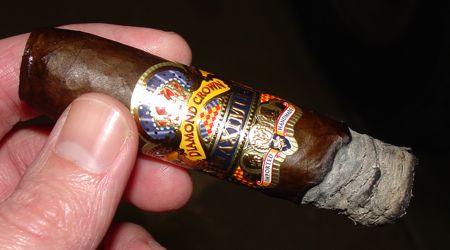
This Ecuadorian Sumatra wrapper leaf is dark and moderately oily, sungrown under cloud cover. Since this is a Fuente product the binder and filler are both Dominican, and the construction is superb. The band is a work of art in itself.

guayamapThe Double Belicoso is a relatively recent addition to the MAXIMUS line — introduced at the 2007 RTDA, it adds about half an inch in length and a few ticks on the ring gauge to the No. 3 pyramid shape. For whatever reason both the Pyramid and the Double Belicoso seem more complex to me than the robusto, though I must admit that I haven’t smoked them side by side.  (I’m just waiting for the perfect moment to conduct that experiment, with a tumbler of Lagavulin 21 after dinner at Picasso.)

The wrap on the Double Belicoso is aesthetically flawless and the draw is perfect. After an easy light it begins to burn with a waver here and there, but for the most part it is even and needs no correction. The ash is solid. Typical premium Fuente construction.

The first couple of inches are dominated by a smooth coffee flavor and a cedary aroma rife with mild spices. The smoke is creamy and very smooth. The smoke texture is full in body but not overly powerful. Relaxing is what I’d call it, like the perfect cup of rich crema-topped coffee.

dcmax21

The next section switches gears a little and becomes a little more leathery while retaining the same spicy aroma. There is a touch of sweetness on the palate. I’m still picking up some woody notes as well. The overall effect is complex but very well balanced.

The last section gets a little heavier as the complexity gives way to darker, more peppery spices and the woody notes become more oaky than cedary. The aroma has flattened out a little at this point, the olfactory details a bit overwhelmed by the crescendo on the palate. Finally, well into the band area, the flavors start to muddy and I bid my MAXIMUS a fond farewell.

The complexity of this cigar is only matched by its smooth easy smoking nature. Some folks will find the DC MAXIMUS to be a little on the light side, but I think everyone can appreciate the delicacy it brings to the table. It’s truly one to be experienced.

But here’s the rub: these beauties run around 15 USD a pop. If I could afford to smoke these everyday I would be spoiled for all other cigars, and you’d hear no complaints about diversity being the spice of life. This smoke has just about everything I’m looking for in a cigar: flavor, complexity, smoothness, and a moderate nicotine payload.

So there’s no need to read between the lines. The DC MAX Double Beli is one of the treasures of my humidor, and it’s certainly one of the best I’ve smoked this year.

dcmax3

Romeo y Julieta Vintage Maduro Corona

ryjvm

Romeo y Julieta is a many-headed beast, with at least seven different blends currently in distribution by Altadis USA. Lest you lay awake at night wondering how many extensions one brand name can possibly support, allow me to enumerate:

  1. Romeo y Julieta 1875. The first Dominican made R y J, originally made by Matasa for Hollco-Rohr in the 1980s.
  2. Romeo y Julieta Vintage. Debuted in 1993. A mainstream “super-premium,” mild and delicious.
  3. Romeo y Julieta Reserva Real. Introduced in 2003 with an Ecuadorian wrapper.
  4. Romeo y Julieta Reserve Maduro. Came out the same year as the Reserva Real. “Blackened” Connecticut broadleaf wrapper over a distinctive Nicaraguan, Peruvian and Dominican filler blend.
  5. Romeo y Julieta Aniversario. Another from the class of 2003. A little heavier than the rest of the family. Released for the brand name’s 130th Anniversary.
  6. Romeo y Julieta Habana Reserve. The Honduran Romeo, full bodied with a Nicaraguan wrapper.
  7. Romeo y Julieta Vintage Maduro.

And then there are strange offspring like Cigar International’s Romeo y Julieta Viejo, as well as more legitimate but rarely seen Cabinet Editions, etc. The elasticity of the name is remarkable.

The Vintage Maduro blend I’m reviewing today is an interesting inversion of the Aniversario: the Ecuadorian Sumatra is used on the inside as a binder, and the broadleaf is the wrapper. Actually, it’s “blackened” broadleaf, whatever that means. The same term is used for the wrapper on the Reserve Maduro, but I’m not exactly sure what this “blackening” process is, or how it differs from the standard maduro process. (Presumably Sir Marksalot was not involved.)

Individual vitolas in the Vintage line are labeled I – VII, with the exception of the tubed cigars, the corona and the toro. The corona is a little bit fatter than normal — a 44 ring gauge rather than the standard 42, but otherwise a typical 5 1/2 inches in length.

The packaging is tasteful. Tubed cigars are always nice to give as gifts, particularly to dissolute friends as you pack them off after the holiday party. A tube will provide stability and a minimal level of defense against the shocks and blows of the journey home, but it won’t preserve the cigar indefinitely, so as your departing partygoers stagger off into the night remind them about proper humidification.

I approach this cigar with some hesitation. It’s been out for a while now but I’ve steered clear of it because it combines one of my favorite Altadis cigars — the RyJ Vintage — with a cigar I wouldn’t give my dog — the Reserve Maduro. I rarely rag on cigars here because it’s just not my style, but back in the early days of this blog I said the Reserve Maduro had an “excremental element.” That’s me being nice.

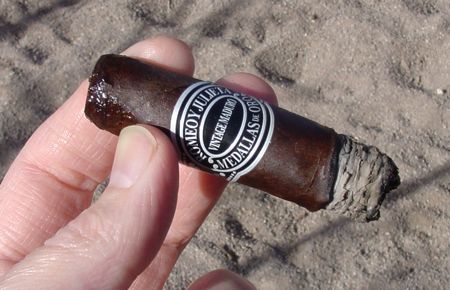
The wrapper is an oily and smooth dark maduro with some inconsistency in color. This is a good thing, since a perfectly uniform color often indicates artificial processing. The roll is firm but the draw is just right. It lights up easily and begins a slow smolder.

The Vintage Maduro is similar to the standard Vintage in body and style — mild and creamy smoke with a pronounced aroma and zero bite. In fact, for the first third there isn’t much taste on the palate at all — it’s all in the nose: sweet cedar and a touch of sugar. The burn is a little off kilter, but for a maduro it’s far above average.

The middle third offers up bittersweet chocolate and coffee flavors and the finish grows considerably. The aftertaste is still rather mild, but the flavors on the palate build as the body grows to a solid medium. The last section returns to the woody flavors with which it opened, but rather than fresh cedar it comes across as a sweet earthy char.

This little maduro turns out to be a fairly complex smoke that charts a course from sweet, mild and aromatic to a final destination of rich earth and charred wood. Ports of call include chocolate and coffee flavors, and the transition is aided by a slow and even burn. All told, this maduro version of the Vintage is worthy of the name, and definitely worth the retail price of 5 to 6 USD per stick. I’ll be on the lookout for more when I’m in the mood for a slow cruise across the dark sea of Maduro.

ryjvm2

Aging Report: Saint Luis Rey Cazadore

slrcaz

This mysterious cigar, first reviewed in April 2006, is from a 2005 box that has an uncertain history.  When I first purchased these from JR Cigars I could find no listing for St. Luis Rey Cazadores anywhere except JR, and nothing has changed since then. (They are unlisted by the manufacturer, Altadis USA, though JR still lists them as “Out of Stock.”) The current SLR is a medium-bodied multinational blend with a Nicaraguan wrapper, while this one is still a full-blooded full-bodied Honduran.

The “Cazadores” is a traditional Cuban production vitola — the Cuban Romeo y Julieta is probably the best known example — but this double corona sized cigar doesn’t even come close to meeting the traditional 6 7/16 x 44 Cuban format.

So why this cigar is called a “Cazadore” is as confounding as the fact that it no longer exists, because it’s a nice full-bodied cigar that so far is aging beautifully.

Aesthetically this old SLR is gorgeous — a smooth leathery colorado wrapper that has few veins and almost no imperfections. The roll is perfectly consistent and the head is flawlessly shaped and wrapped. The one surprise is the lack of a triple cap — with a roll this perfect I’ve come to expect one, even if here it really isn’t necessary.

I was prepared for this cigar to have lost some weight over three years in storage, but it seems to be as brawny as ever. It starts up with the same bullish glower that I remember so well — pepper with a leathery aroma and a good kick from the git-go. The draw is good but the thick juicy wrapper requires a correction almost immediately, within the first inch and half. (Since this was the last correction needed, I’m calling operator error… toast that foot evenly.)

The middle third is meaty and rich — just what I’m looking for from a Honduran cigar. The aroma takes on a woodier aspect at this point with a dash of cinnamon. I didn’t note this in the earlier review, and digging through the cluttered humidor of Smokes Past I’m not finding any memories of such subtleties.

The last third returns to darker peppery flavors and leather, getting stronger by the inch. I was hoping that this cigar would have mellowed a little in this regard, but after three years it’s still in fighting form.

My experience with aging cigars has so far shown that after a year or two the most noticeable change is in potency — I’ve seen this with the Camacho Havana (6 years) and the Angel 100 (2 years) and with several other brands over shorter periods of time. Strength diminishes and subtler qualities emerge. For the most part the Saint Luis Rey Cazadore is an exception to this, at least so far. I still have half a dozen of these put away, so we’ll have to see if the weight of the years can eventually tame down these unruly Hondurans.

Fuente Don Carlos Vertical Review (Pt. 1)

afdoncarlospres

Arturo Fuente Don Carlos Presidente

The Don Carlos line is one of Arturo Fuente’s “super-premium” brands, a step up from the Hemingway Series, but not quite as exalted as the Opus X. The highlight of the blend is an aged Cameroon wrapper, underneath which is a Dominican blend from the Fuente farms.

I’ve always liked this blend, but I don’t smoke it much because of the price (in the $10 -12 range).  The robusto has always been my goto Don Carlos, when my wallet has been sufficiently lined, but our friends at CigarsDirect.com were kind enough to send a sampler pack my way so I could try a few of the sizes I’ve never smoked.

Last year Lucky7 posted what I think is the definitive Arturo Fuente Don Carlos Double Robusto review –check it out for more information about the blend and the story behind it. I’m not going to try to top that review but I’m going to try my hand at a few of the other sizes in a vertical review to see how they compare with each other. First up, the No. 3 corona versus the toro-sized Presidente.

Arturo Fuente Don Carlos No. 3

Arturo Fuente Don Carlos No. 3

The No. 3 is a typical corona: 44 x 5.5 inches long. The wrapper is attractive but marred by a mucilaginous smear, a strangely common defect in the Don Carlos line. The corona cuts cleanly and has a satisfyingly firm draw. It lights up easily, burns evenly, and builds a long and solid light gray ash.

The flavor starts out smooth and full, nutty with a minty veneer typical of Cameroon. Unlike some other Cameroon blends, afdoncarloscamthe wrapper here seems better integrated with the rest of the blend: it adds an element of spice but maintains its neutrality.

The Don Carlos corona definitely has a sweet spot in the middle third where the flavor becomes a little richer, moving from nuts to leather, and the aroma is sweet and mildly spicy. The final third heats up a bit, so you’ll have to slow down to maintain the balance and keep the taste from getting bitter.

This is a great little cigar — one of the best in its size, I think — but there may be some consistency problems, as Lisa found in her review for Her Humidor.

The Presidente, a 6.5 x 50 toro, is the largest (or at least the longest) size in the line. It displays the same construction characteristics as the Corona, including a distinctive glue smear half way down the barrel, and a neat triple cap. It lights easily on a match or two and burns without a hitch.

afdoncarlospres2

AF Don Carlos Presidente

By contrast with the corona, the Presidente has a little more kick and by the end a lot less nuance than the smaller cigar. This toro opens up with a dose of peppery tobacco — piloto cubano, perhaps — and a barely noticeable touch of Cameroon spice.

After an inch the pepper wears off and the flavors glide down into nuts and leather, but it never achieves the same smoothness as the corona. It’s not harsh by any means, but there is a spicy vibrancy here that the corona does not possess. And while the corona is a solidly medium-bodied smoke, the Presidente reaches well into the full range.

The cedary sweetness from the Cameroon rises up when the pepper dies down and stakes its claim in the middle third of the Presidente, followed by a peppery reprise from the final third to the band. In the last couple of inches the pepper gradually builds and eventually overpowers the more subtle spices, leaving a lengthy and powerful finish on the palate.

Obviously there are similarities between the Don Carlos No. 3 and the Presidente — the way the wrapper blends with the core of the cigar, adding an element of spice without being obtrusive, is common to them both. Aside from that, they smoke quite differently and might very well appeal to different kinds of smokers. The No. 3 is smooth and medium bodied with finer notes of leather and mint, whereas the Presidente is medium to full and offers lots of pepper at the start and again at the conclusion of the cigar.

Both are quality cigars, but they are as different as the youngest and oldest brothers in a large family. Sure, they resemble each other, but one might be your best friend. The other might just be your best friend’s brother.

Thanks again to CigarsDirect.com for allowing me to meet the family! Stay tuned for the next installment of the Don Carlos Vertical Review, this time featuring the Robusto and the Double Robusto.

doncarlosband

Fundacion Ancestral Pinar del Rio 1941

From Tabacos de la Cordillera in Costa Rica comes another Fundación Ancestral — this time the Pinar del Rio 1941, the heaviest of the three blends currently available. I say blends, but these are actually puros blended from different primings of the same strain of tobacco.

Like the Vuelta Abajo 1940, this cigar is rolled using “genetically pure” pre-Castro Cuban seed tobacco grown in the mountains of Costa Rica. A few weeks ago I reviewed the Vuelta Abajo and found it to be an exceptionally smooth cigar with a truly unique flavor.

One of the outstanding characteristics of this line is its crisp and clean flavor profile. This may be due to the purity of the genetic strain, but the soil and growing technique may be equally responsible. In the last review I discussed the history of John Vogel’s project and his dedication to maintaining the integrity of the pre-embargo Cuban seed bank. It’s important to note that this tobacco is also grown in an entirely organic fashion, meaning all fertilization and pest control is accomplished without the use of industrial chemicals.

The soil is prepared using only natural organic fertilizers and nutrients, levels of which are tailored to each specific type of tobacco. All of the work is done by hand — other than hand tools, very little farm equipment is used. Traditional organic methods of pest deterrence, including the cultivation of pest-resistant varieties, are used instead of chemical pesticides.  The result is a virtually chemical-free cigar. (More details about the organic growing process are available on the Tabacos de la Cordillera website.)

The only other non-Cuban cigar I’m aware of that can lay claim to being totally organic is Plasencia’s Reserva Organica. Incidentally, the PRO is also a very clean-tasting cigar, so I have to wonder if there really isn’t something to all this organic stuff.

The Fundación Ancestral Pinar del Rio is an attractively rolled stick. The wrapper is a tawny claro with evenly spaced veins and a slightly oily appearance. The surface texture is a little bumpy from the binder beneath, but nothing you’d notice without close examination. The head of the cigar is rounded, “Cullman” style, and finished neatly. It cuts simply and lights with a single match.

I really liked the Vuelta Abajo cigar, but any resemblance between that cigar and regular production Cuban cigars escaped me. With the Pinar del Rio it’s a different story. Almost immediately upon lighting up the Pinar I was greeted with that Cuban “twang,” a sweet bready aroma that I’ve come to think of as exclusive to Havana cigars.

The first half of this corona brings a complex brew of wood, earth and gentle spice that is truly delicious. The draw is easy, but firm, and the burn wavers only slightly. The ash is dark and flaky, but holds. The finish is short and the aftertaste minimal at this point — the effect is crisp and clean, much like the Vuelta Abajo. The flavors are distinct and pronounced while the smoke lingers on the palate, and then they quickly dissipate, leaving only a trace of wood and nuts.

This is a solidly medium-bodied smoke, heavier than the Vuelta Abajo, but without the gravity or the bite of the Nicaraguans I’ve been smoking lately. The subtlety of the smoky wood flavors continues into the second half of the cigar, but an inch before the band a dose of pepper enters the fray and gives the blend a little boost as things wind down. The finish at the end is stronger and lasts a little longer, but it remains crisp and clean.

Hardcore cigar enthusiasts seem to be overwhelmingly partial to full-bodied cigars, and while there’s no arguing with taste I find that I frequently disagree, and I’m happy to say I’m not alone. There is much to be said for the subtleties of milder cigars like the Fundación Ancestral (which is mild only by comparison) and there is an eloquence to this cigar that high-powered ligero-laden blends can’t match.

If giant-killers like Opus X or Camacho Diplomas are what get you going, you probably won’t find this cigar too impressive. But if you enjoy the subtle nuance that mild to medium bodied cigars can bring, particularly that mildly spicy bakery aroma that distinguishes some Cuban cigars, I think it will be worth your while to seek this one out. They’re not easy to find, and they’re pricey — I paid around $12 retail — but I’m not disappointed with my purchase. (I’m just disappointed that I can’t afford to buy more.)