

Skip the fluff and jump straight to the review!
Cigar Stats
Brand Owner: Padron Cigars, Inc. – Miami, FL (website)
(distributor operates under the name Piloto Cigars, Inc.)
Factory: Tabacos Cubanica, S.A. – Esteli, Nicaragua
Factory: Tabacos Centroamericanos, S.A. – Danli, Honduras
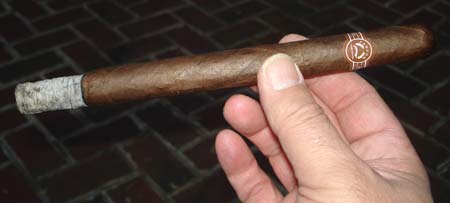
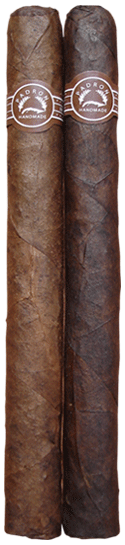
Model/Vitola: Padron Series Londres (Natural and Maduro)
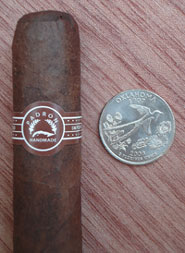
Size: 5.5 x 42 (corona)
Wrapper: Nicaragua
Filler & Binder: Nicaragua
Body: Medium to Full
Strength: Medium to Full
Average Retail: $2.65 USD
Cigar Insider/Aficionado Ratings: Consistently high 80s
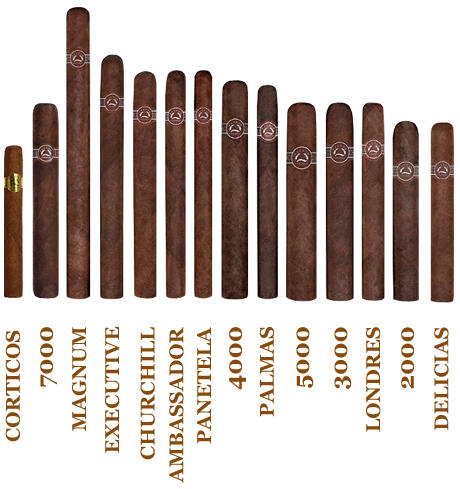
Fourteen other vitola sizes are available in the traditional Padron Series along with one which was recently discontinued.
|
Frontmark |
Length x Ring |
Shape |
|
2000 |
5.0 x 50 |
robusto |
|
3000 |
5.5 x 52 |
robusto |
|
4000 |
6.5 x 54 |
toro |
|
5000 |
5.5 x 56 |
robusto |
|
6000 |
5.5 x 52 |
torpedo |
|
7000 |
6.25 x 60 |
toro |
|
Ambassador |
6.875 x 42 |
lonsdale |
|
Chicos |
5.5 x 36 |
discontinued |
|
Churchill |
6.875 x 46 |
churchill |
|
Corticos |
4.25 x 35 |
short panatela |
|
Delicias |
4.875 x 46 |
corona extra |
|
Executive |
7.5 x 50 |
double corona |
|
Londres |
5.5 x 42 |
corona |
|
Magnum |
9.0 x 50 |
giant |
|
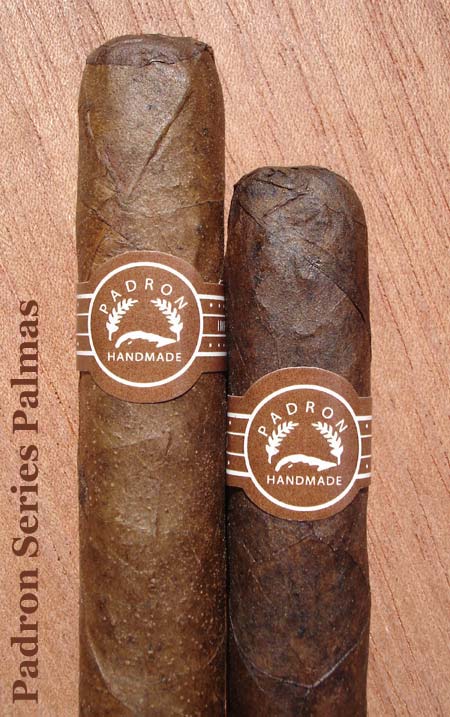
Palmas |
6.25 x 42 |
long corona |
|
Panetela |
6.875 x 36 |
panetela |
All sizes come in lacquered cedar boxes of 26, packaged with cellophane sleeves on individual cigars. Many vendors list a box size of 25. I am not entirely sure why that is. It may be that Padron changed the box count since the initial release. The Corticos are the exception packaged in boxes of 30 or tins of 6.

“We deliver only the finest, handmade, complex cigars with the flavor of the Cuban heritage out of which the Padron recipe was born. Our primary mission is the exceptional quality of our product, not the quantity produced. As a vertically integrated, family-owned company, we pay personal attention to every detail throughout all steps of our tobacco growing and cigar manufacturing process. Because we strive to give you, the smoker, the confidence that each cigar is the same ….. perfect.”
If you are interested in more KOTF info on the Padron Story, you can read it here.
The Keepers of the Flame Padron Series Roundup

This comparison review is one in a series on the original Padron line of cigars. When we have completed reviews on the entire line, a vertical tasting for each wrapper will be published. Each review will be an amalgam opinion of cigarfan and lucky7 along with that of the guest reviewer(s). Our guest reviewer for this vitola is:

Padron Series Londres – Natural and Maduro
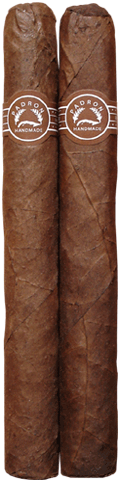 The Londres is the third corona in the classic Padron series, but unlike the others this one is a true corona. While the Palmas is long and slightly underweight and the Delicias is stubby and a little chubby, the Londres fits the corona standard exactly.
Cuba’s La Corona factory was the largest of its kind in the late nineteenth century, and it has been suggested that the name corona was first made popular by the La Corona Coronas made there. As time wore on, the term corona became central to the industry, spawning gran coronas, petit coronas, double coronas, etc., and eventually became the standard against which other vitolas were compared.
The appellation “Londres” can only mean that the corona was as popular in London as it was everywhere else. Maybe this was the perfect size to smoke in the drizzle under the gas lamps of old London, but is it the perfect size in the Padron series for our smokers today?
As our panel found out, maybe not.
Natural
The Natural wrapper imparts a familiar rustic appearance to this cigar: it’s ruddy, bumpy and wrinkled with a slightly grainy texture. George noted an uneven cap that threatened to unravel the cigar upon cutting (he was surprised when it didn’t) and a wrapper “marred by numerous small tears.”

Lucky7 smoked a sample with a special new design feature: a vein spiking through the wrapper right on the edge of the head. Maybe that allows the smoker to gain a tighter purchase on the cigar in a strong wind.
On the bright side, the roll is firm and the draw is free. It produces a nice volume of smoke with ease and exhibits no burn problems. The prelight scent and cold flavors are typical of the line: grassy tobacco with a hint of the pasture.
The Natural Londres fires up quickly and offers a grumpy greeting: lucky7 called the first inch “raspy”, while cigarfan noted a mild bite. The aroma is sweet and somewhat nutty; lucky7 compared it to “strong sweet tea with a twang.” After the peppery and slightly harsh prelude, there are notes of cocoa, coffee, and leather. There is a touch of sweetness on the palate.
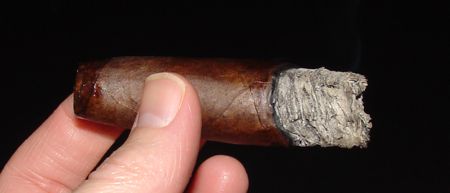
The mid-section marks a turning point. The flavors begin to intensify and turn from slightly sweet to slightly bitter. The nose twang starts to wane. It is solidly medium-bodied with a moderately long finish and slightly ashy flavor. It is imperative to smoke this cigar slowly or it will burn hot and get mean.
The final stage of this cigar is bitter and strong and was not met with applause by any of us, least of all George. Cigarfan and lucky7 found some merit in the first two-thirds of the Londres, even if they were not terribly impressed by cigar overall, but George’s opinion speaks for itself:
From the start, the Londres natural was not enjoyable. It was hot, no matter how much time I allowed between puffs. I’m a fairly slow smoker generally and with both of these I made an extra effort to slow down even more. It seemed to make little difference, with the natural burning particularly rapidly.
And while it produced copious amounts of smoke, the taste was acrid and the finish long and sharp… Unlike the maduro, the natural got harsher as I continued to smoke. I continued smoking, occasionally tapping off the gray black ash, and
hoped for some positive developments. But at about the two-inch mark I gave up, my taste buds overwhelmed by the bitter taste and disappointment.
Maduro
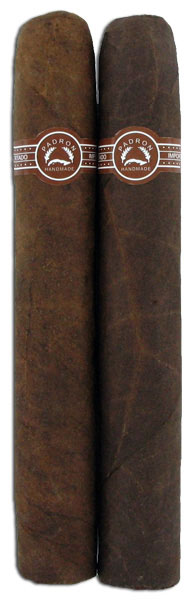
The maduro Londres rated a little bit above average in appearance for this line. While still roughshod in general, the caps were applied well (with one exception), the roll was firm and without soft spots, and there were no protruding veins. As with the other sizes, the maduro Londres is only a few shades darker than the natural.
The prelight characteristics are similar to the natural version: straightforward tobacco; additionally, George reported a minty prelight scent in both natural and maduro wrappers.
The flavors and smoking characteristics of the maduro were very similar to the natural: a spicy and somewhat harsh introduction followed by a medium-bodied smoke with a foundation of leather and toasted wood. Substitute a slightly heavier dose of chocolate for the natural’s cocoa and it could be the same cigar.

Once again, the Londres tends to get bitter and smoke hot starting in the second third. The aroma is pleasant and the flavor begins to intensify, though perhaps in a way that isn’t entirely laudable.
The last third continues down this precarious road to an inhospitable conclusion: hot and finally acrid. George sums it up:
There was a little spice in the beginning that dropped off after about a half-inch as the bitterness increased. Although I didn’t find the finish particularly dry, I did notice that when I drank a lot of water after about the first third the bitterness seemed to subside somewhat. At that point, the cigar devolved into just a sort of bland, boring smoke with some unpleasant tones.
Of the two, I preferred the maduro Londres, if for no other reason than the bitterness and harsh finish subsided before the end of the cigar.
Conclusion
There is a moment for the Londres after the initial harshness subsides and the subsequent bitterness begins when this is a flavorful corona with all of the traits we expect in a Padron cigar: a rich woody flavor with hints of leather and cocoa or chocolate that goes exactly where you’d expect a Padron to go. The problem with the Londres is that this flavor is only momentary.
Like the Delicias, this cigar can be enjoyed up to a point. As lucky7 puts it,
This is a very straight forward little corona which has some nice flavors in the first half, then turns mediocre over the second. There is some unpleasant bitterness associated with the final third which will definitely turn some folks off. Even with the low price point, I do not consider the Londres the best value.
George concludes with suspicions about the quality standards employed in rolling this cigar:
Though there were many similarities in the natural and maduro, both were sharp and harsh, presenting almost no complexity. Even the taste of the tobacco was unpleasant. It’s hard not to assume Padron rolls this line from leaves that didn’t measure up to the quality standards for any of its other cigars.
As a Padron fan, I find it hard to be so negative about any of their cigars. but having had, probably, six or eight Londres over the past few years, these two reinforced the reactions I’d had before.
We all agreed on one point: while this is an inexpensive cigar, there are better options to choose from in this line.
Thanks to GeorgeE for his candid contribution. To be cruel is to be kind, in this case to our readers and to the cigar consumer at large. Be sure to check in to the Stogie Guys for daily cigar news and George’s always frank and incisive reviews.
… cigarfan & lucky7



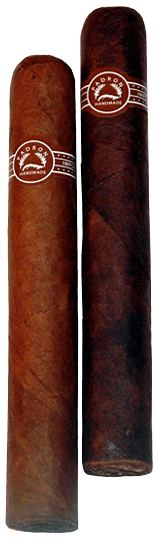 Padron’s “Thousands” series of cigars are all robusto or robusto-plus sized cigars. The 3000 is a slightly larger than average robusto; at 5 1/2 x 52 it has just a little more girth and half an inch in length on the standard 5 x 50 robusto.
 Hurdling over these flaws, what we have is typical of the Padron Series Natural: a rough, somewhat veiny wrapper with a consistently textured milk chocolate color, a passable roll with a slight box press, and a good draw. The prelight scent is that familiar horsey Old McDonald smell — Jesse describes it as leather, while Matt notes hay and earth. Sounds like the barnyard all right.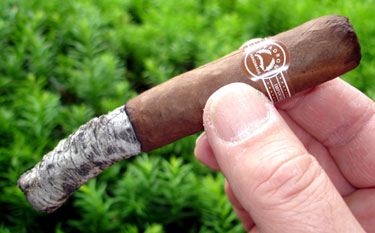
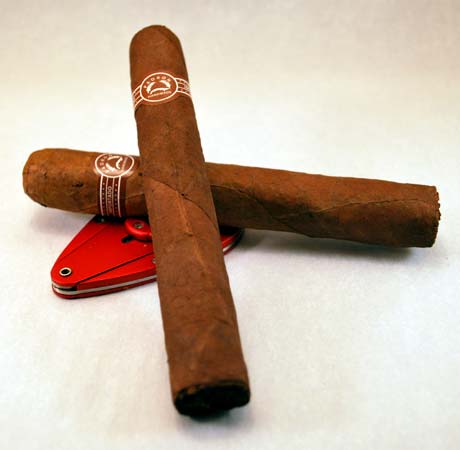
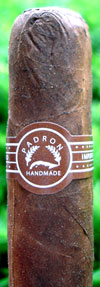 In other ways the maduro is quite similar to the natural, including the rough wrapper and sloppy cap. As Matt says, it’s “just as ugly as the natural.” There are lumps and veins and wrinkles and the occasional soft spot — once again, this cigar will not elicit sighs of admiration based on its presentation.
 The flavors turn to wood in the middle section, along with the sweet char typical of maduro wrapper leaf. At this point the body builds up to a solid medium and the cigar gathers a little strength. The finish is short but gets a little sharp if you’re puffing too vigorously. Jesse wondered at this point if his stick “might be a bit off or my taste is off. I remember past ones to be sweeter — more chocolate.” In agreement with this, George noted “burnt coffee.” There are definitely bittersweet overtones at this point.

 The wrapper on this cigar is remarkably swarthy for a “natural.” The wrapper’s edges look more ripened than the rest of the leaf, giving it a foxed appearance. The head is nicely formed and finished with a flat cap. The roll of the cigar varied from firm to very spongy, but the draw was consistently free. Jon described it as ” bumpy, lumpy, a bit lopsided, and full of tooth,” an observation we all agreed with. Clearly this stick is not a natural beauty, but as Jon went on to say,
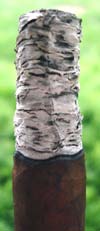 The Delicias opens up with the eye-opening blast of pepper well known by fans of Nicaraguan tobacco. It quickly settles down to a woody base with a sweet leathery aroma. It burns a bit recklessly, but doesn’t require correction, meanwhile producing a light gray ash with black accents.
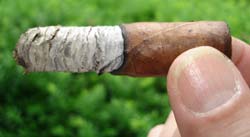 The last section is marked by increasing intensity. The flavor becomes earthier, and the pepper returns with a vengeance. Lucky7 described this section as “very strong tobacco” while cigarfan experienced a strong peppery flavor bordering on harsh and noted a hot burn and a bitter aftertaste.
 The maduro Delicias is just a couple shades darker than the natural version, but it’s just as rough hewn in appearance. The roll is firm with a slight square press. Once again, we can’t resist Jon’s description of this bad boy: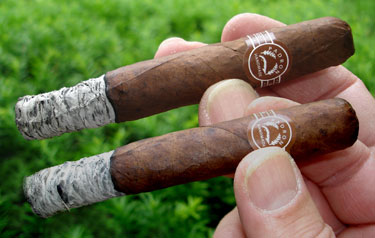

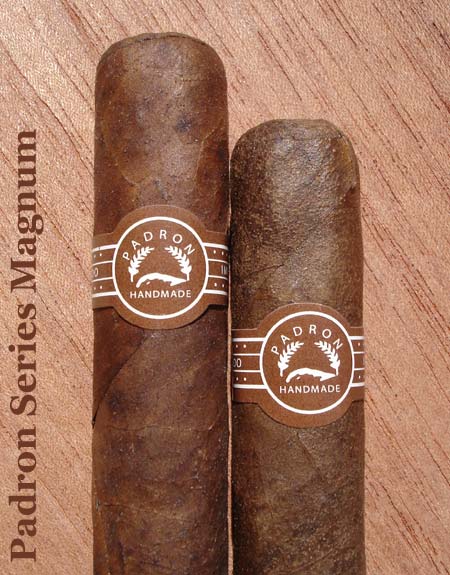

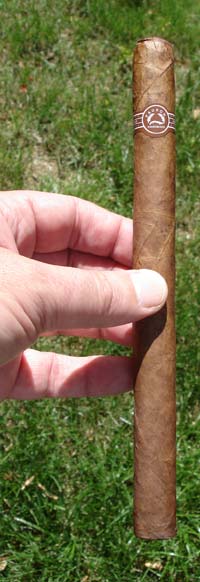 Also known as a gran corona, the “A” size has Cuban roots in cigars such as the Sancho Panza Sancho and most famously, the Montecristo A. Large format cigars like the double corona and the “A” require very large wrapper leaves of superior quality, a commodity which is in high demand depending on the success of the season’s harvest and the manufacturer’s back stock.
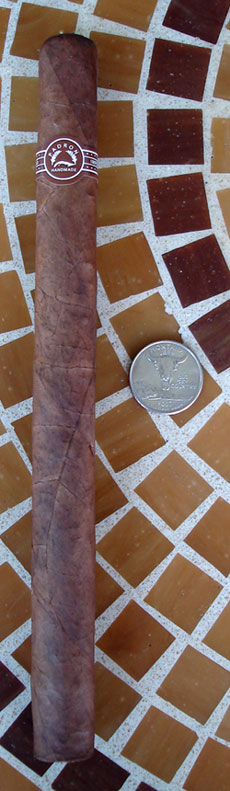 reserved four hours and still felt a bit rushed. His smoking time came in just over three hours; we all agreed that this cigar smokes more quickly than we expected. Lucky7’s smoking time came in at two hours; cigarfan’s about two and a half.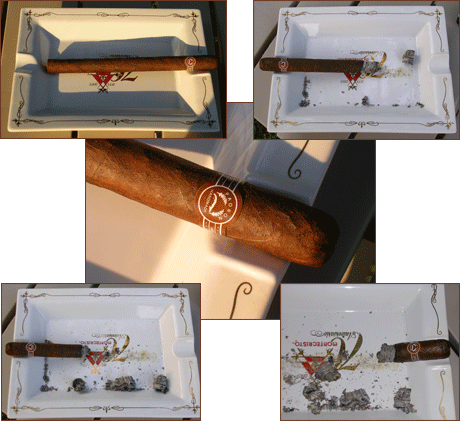

 Those of us who have been around for a while know that the names manufacturers choose for their cigars do not always follow standard nomenclature. We all remember our first trips into the humidor, gazing starry-eyed at the assortment of cigars and wondering what all the different terms mean. Eventually our confusion is compounded when we find out that what one cigar maker calls a “toro” another one calls a “corona gorda” and another one calls a “robusto extra,” and so forth.
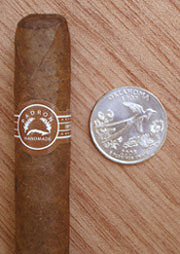 In addition to its slovenly appearance, the Palmas Natural features soft spots, a loose roll, and a draw that is a bit on the loose side. Maybe this one is best smoked in the dark.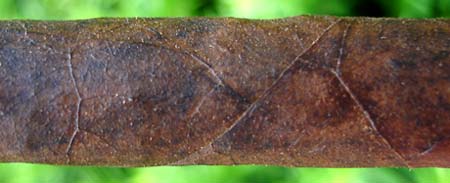
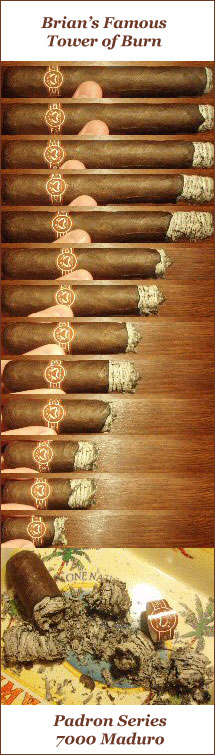
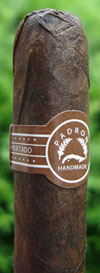 Lisa noted a hint of “sun dried prunes” in her pre-light inspection. This is interesting in light of the prunes and raisins that Lucky7 and Brian found in the 7000 maduro.
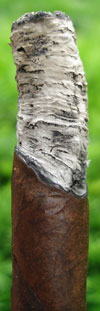 cocoa or java aftertaste, and cigarfan experienced burnt coffee and char in the last third.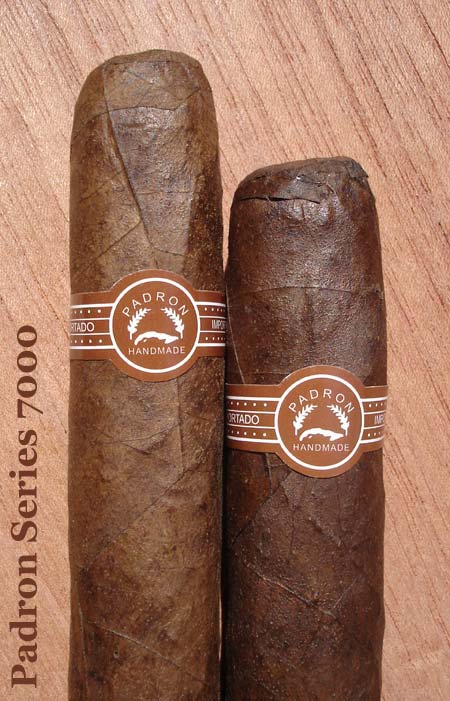


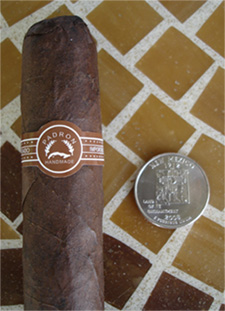 90 minutes on average. Our reviewers noted that despite the size of the cigar it still feels balanced, and two of us attributed the generous volume and coolness of the smoke to the large bore of the barrel.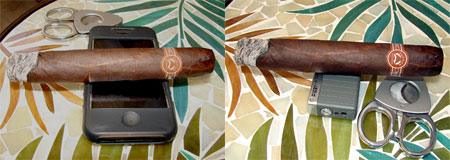
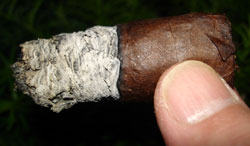 The mid section of the cigar continues to provide plenty of rich sweet tobacco flavors, with notes of nuts and leather backing up the chocolate and coffee that continues from the first third. The body of this cigar is medium at this point, but it gradually approaches the full end of the spectrum. Lucky7 admired the way this stogie smoldered at this point with “blueish smoke from the foot mingling with the white smoke from the punched cap as together they waft up and out of sight.”
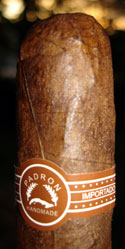 Brian’s sample even featured a dime-sized patch near the head of the cigar. On the other hand, Doc gave this stick a little latitude when he described the wrapper as leathery, with a brushed velvet appearance, and cigarfan noted the grainy texture of the leaf.
 Conclusion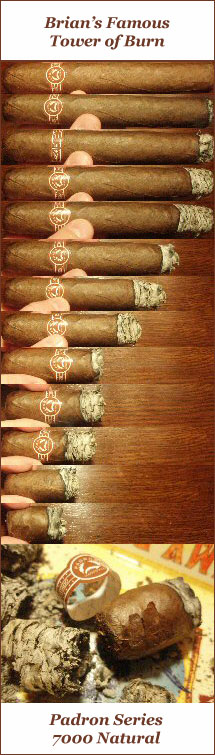













 Cigarfan.net