Pueblo Dominicano Series I

cnv0276.jpg

It’s Election Day in the U.S., which gives us the opportunity to celebrate two great things: democracy, and an end to the most obnoxious campaign commercials I think we’ve ever seen. Baritone voiceovers saying stuff like “Senator X eats small children for breakfast…” (Cue grainy black and white picture of Senator X at a lunch counter.) “And Senator X is hungry…” But despite the political division that exists in this country, there is something we can all agree on: we’re glad the electioneering is OVER!

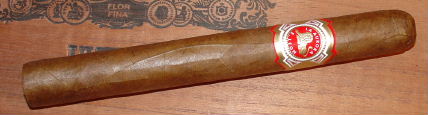
Surviving the midterm elections calls for a honkin’ big stogie, so I hauled out a Pueblo Dominicano. Like the last four or five cigars reviewed here, this also is a La Aurora production. Available in two sizes: a large torpedo, and a giant double corona. I happen to have both on hand, although the torpedoes have several more months humidor time and I think are a little bit better. Whether it’s the size or the aging that gives them the edge, I’m not sure.

A new series of Pueblo Dominicano has just been introduced with an entirely new blend, so it’s important to note that these are from the first series. There isn’t too much information available about these. They are distributed by Cigars International, and perhaps a few other outlets. They don’t appear to be exclusive to CI, as is the 5 Vegas Limitada, but they do have this in common with the Limitada: a very nice but somewhat rough Ecuadorian Sun Grown wrapper. Aside from this, the only information forthcoming from CI is that it employs a “six country blend.” Which countries? Ireland maybe? New Guinea? Luxembourg? Take your pick, because no one’s telling.

The PD Series I is a pretty mild but flavorful smoke. The wrapper is very similar to the 5 Vegas Limitada, which isn’t too surprising since it’s the same type of leaf. (It actually wouldn’t surprise me if this were the same blend as the 2005 Limitada as well. There are more than a few similarities.) It’s not a tremendously attractive wrapper, but the tale is in the tasting, and it tastes pretty good. There’s some sweetness here with just a touch of spice. The draw is good, and the burn is not perfect, but acceptable.

The base flavor is leathery, and there are some overtones of cedar. As time goes by this stick picks up a little more strength, but it’s basically mild and perhaps at its peak a medium in body. The smoke texture is smooth, approaching creamy. Overall this is a very relaxing and easygoing cigar.

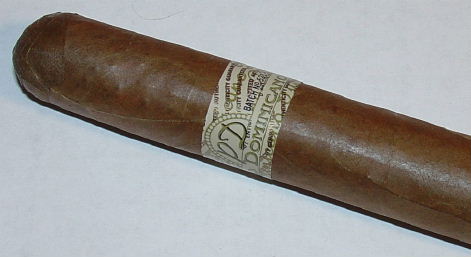
The band on the Pueblo Dominicano has a faux watermark pattern reminiscent of the secondary authenticity band on the Padron Anniversary line, complete with a “serial number,” here called a batch number. It’s a funny thing though that the batch number on the torpedoes I bought last April is the same as the same batch number on the double coronas I bought in October. That’s either a very large batch, or it’s a mystery worth pondering before the fire with a glass of cognac and the latest issue of Advertising Age.

With 95% of precincts reporting, we are prepared to announce Pueblo Dominicano a winner in today’s race. But don’t pay the $8.00 retail price for this guy. These can be found for half this or less on Cigarbid. Good luck bidding and God Bless America!

La Aurora 1495 Corona

cnv0275.jpg

La Aurora’s 1495 line was created to celebrate the founding of the city of Santiago de los Caballeros in the Dominican Republic, and it is the first cigar from La Aurora that has been an instant hit.

Sales Director and master blender Jose Blanco brought together five types of leaf from four different countries to create a complex cigar. “I’m a great believer in blending,” Blanco said in an interview with Cigar Aficionado, “I don’t care how good a cigar is, if it’s good and it’s one-dimensional, it’s just a good boring smoke. I like cigars that are complex and that change a lot.”

Starting with the skin and moving to the core, we have an Ecuadorian Sumatra sun-grown wrapper, underneath which is a Dominican corojo binder. The filler is a blend of Dominican piloto cubano and Nicaraguan and Peruvian ligero leaves. These are all powerful choices, but Blanco believes that the elements that stand out are the wrapper and the Peruvian filler leaf.

The Corona measures 5 1/4 inches with a 43 ring gauge. It seems a little small for a corona, but on the other hand it’s a tad too large to be called a petite corona. The scent of the silky smooth wrapper is earthy with plenty of barnyard. The cap clips easily and the prelight draw is good. It lights up and starts an even and carefree burn. The ash is a dirty gray.

Sun grown Ecuadorian leaf has a leathery, somewhat spicy aroma, and this cigar has it in spades. This little stick introduces itself with lots of black pepper and a lengthy finish. At first I am not terribly impressed with the flavor — it’s not harsh, but with so much pepper it comes off as very sharp. After a few more draws the aroma of the wrapper adds a complementary note that evens things out and calms down the spice.

By the middle of the cigar the complexity becomes more evident. There is a definite transition from the peppery introduction to a more balanced flavor at this point. This balance does not, however, lessen the strength of the smoke pouring from this little feller. The ligero and the piloto cubano keep the flavor strong and the finish long.

With about two inches left I’m quite satisfied with this corona and ready to call it a day. A strong drink is a welcome companion to the Aurora 1495 — an Imperial stout went well for me, though scotch or bourbon would do the trick just as well. While not overpowering, this is definitely an after dinner cigar due to its aggressive flavor and finish. The way the ESG wrapper blends in with the richness of the other tobaccos is really worth the five or six clams you’ll have to shell out for this cigar. It’s a little too heavy on the pepper for my taste, but if you enjoy the Joya de Nicaragua Antano or the Partagas Serie D, you should definitely check this one out.

La Aurora Bristol Especiales

cnv0273.jpg

I’m feeling much better now thanks to the fine folks at Proctor & Gamble (who distill that nectar of the gods called Nyquil.) But I thought I’d get back into the swing of things with something mild, so I bring you La Aurora, the label that started it all for Eduardo Leon.

The original La Aurora cigar was a true perfecto, tapered at both ends, similar to the Preferidos produced by La Aurora today for what I would guess is now about a hundred times the original price. Today’s standard La Aurora cigar is an economical everyday good smoke retailing at around 3 or 4 USD. The Bristol Especiales are what seem to be a non-standard size. They have a 48 ring gauge so they’re a little emaciated for a toro, but with a length of 6 3/8 inches you could also call it a truncated churchill.

This stick isn’t going to win any beauty contests, but its fine construction makes up for any aesthetic flaws. The Cameroon wrapper is dark and dry but is nicely toothed. There are a couple of prominent veins and the wrapper is easily chipped, but that’s typical for Cameroon. It burns smoothly and evenly from the first touch of the torch and it never requires touch-ups. The ash is a uniform gray that needs tapping only occasionally.

The binder and filler are both Dominican, as is only fitting for the DR’s longest lived cigar company. The body of this smoke can only be described as mild. The foundation flavor is woody, but the aroma of the cameroon wrapper adds an elegant spice that pretty much takes over the spotlight. There is a slightly earthy twang that makes an appearance at the half-way point and by smoke’s end gets a tad bitter, but I have to admit this may have been a result of my oversmoking. I tend to hotbox mild cigars because I get a little impatient. The best way for someone like me to smoke a cigar like this is with something else to do while I’m smoking — watching a game on the tube or reading something.

There really isn’t much depth or complexity here, but that’s not unusual for mild cigars so I can’t criticize it too much in that regard. The finish on this cigar is fairly short, and there is only a hint of aftertaste. The woodsy spicy aroma lingers pleasantly on my moustache. That is the point of having a moustache, is it not?

Smokers who favor medium to full bodied cigars will most likely find the traditional La Aurora to be on the boring side, but it’s a quality mild cigar with a fine wrapper that is eminently affordable. It was also a great way to break in my palate after a week on the wagon.

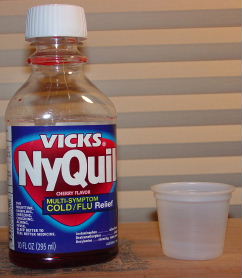
Vick’s Nyquil Cherry Flavor

A slight departure from our regular fare here at Keepers of the Flame…

cnv0272.jpg

On the nose, Nyquil Cherry is a bountiful cascade of rich Washington cherry flavors. Despite having a somewhat impaired olfactory organ I am able to sense the richness of the Lambert, the delicate nuance of the Rainier, and the Bada of the Bing in this heady concoction. I’m taken back by a wave of nostalgia to my younger years in the Midwest where we would often snatch these tasty morsels directly from the tree and wash them down with flagons of Boone’s.

On the tongue, Vick’s Nyquil leaps like a moose into the river of my throat. (For you stogie chompers out there who wouldn’t know a verse from a vise, that’s called poetry.) It enters with a bombastic flourish of sweetness, followed by an alcohol tang. With some dismay I must add, however, that an obtrusively metallic, somewhat mentholated note strikes deep within the first swallow of this sweet liqueur. And while certainly expected, I can’t say I entirely appreciated the lengthy and unpleasantly medicinal finish.

This year’s vintage is not among the best, I must say. And yet it’s a vast improvement over the disastrous 1998. Pair this with a nice souffle or cough au vin.

cnv0271.jpg

Salud!

(Needless to say… the cigar reviews are on hold for a while.)

5 Vegas Limitada 2005 Belicoso

cnv0258.jpg

The 2005 5 Vegas Limitada looks very similar to the 2006 version, with bright veins and an otherwise smooth texture. It appears to be a bit darker and not quite as oily as the 2006, and the wrap at the head is finished a little bit better.

It is roughly the same size as the 2006: maybe a quarter of an inch longer but the same ring gauge. The bigger differences lie within: here the binder is Brazilian, instead of “cuban seed” (whatever that means) and the filler is Nicaraguan and Peruvian. Interesting that there is no Dominican leaf in the older 5 Vegas Limitada.

The roll is perfectly solid prior to lighting up, and the scent of the fresh wrapper is rich and earthy. The tip clips off neatly and the prelight draw is spot on, not too tight, not too loose. The unlit taste is earthy with a little sweetness to it.

The construction of this stick is every bit as good as the 2006 version. It holds a long gray ash and needs no maintenance whatsoever. The draw is perfect, the burn is straight, and it produces a wealth of smoke with each puff.

The 2005 Limitada is overall much milder than the 2006 production. It starts out very mild with an earthy base and a pleasantly sweet aroma. The smoke is very smooth and the finish short, almost nonexistent actually. While there’s very little strength at this point, it’s still tasty, but a light taste, like an hors d’oeuvre. To be honest I was a little dissapointed. I was expecting a meal, not a snack!

Luckily the transition that occurs at around the half-way point is the opposite of what I found with the 2006 — instead of bottoming out, the 2005 picks up speed. The earthy flavor takes on a little more character, a little more body, becoming creamier. Then notes of cedar begin to float above the earth and eventually overtake it. And finally, some spicier flavors, a dash of pepper added to the woody element.

The 2005 Belicoso never becomes a truly full bodied cigar, but it certainly develops from its very mild beginning into something close to medium. The transition here was very nice, and I’d be happy to keep a box of these around as a morning pick-me-up or a leisurely afternoon cigar. They would also make an elegant introduction to the world of premiums for the new cigar smoker. Sungrown Ecuadorian Sumatra leaf has a distinctive spice that most smokers appreciate, and all cigar fans should experience. The 5 Vegas Limitada 2005 is an excellent example of this because the relative mildness of the blend lets the wrapper shine through.

Unfortunately, the 2005 line is sold out. If you happen to have a few squirreled away, consider yourself lucky. If, like me, you’ve reduced your last 2005 Limitada to ashes, well… there’s always 2007 to look forward to.

5 Vegas Limitada 2006 Belicoso

cnv0264.jpg

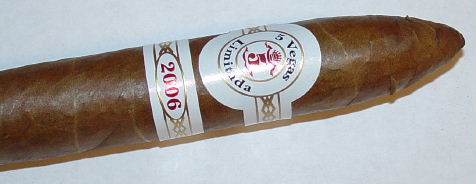
The 5 Vegas Limitada sports a nice looking Ecuadorian Sumatra wrapper with bright but smooth veins. The head of this cigar is a little rough, but it cut cleanly and never carried out on its threats to unravel. (Threats implied only by the wrapper edges that caused me a little concern.) Overall the construction of this stick was very good. After an easy light and a few pulls I noticed smoke tendrils rising from the head of the cigar. That’s always a nice effect, and a result of superior craftsmanship.

The data on this cigar comes from Cigars International, the only distributor of this cigar. The 2006 model is 6.25 inches in length with a 52 ring gauge. The binder is identified as “cuban seed” which is pretty vague. I’m going to hazard a guess that since these are made in the Aurora factory the binder is Dominican. The filler is a blend of Brazilian, Nicaraguan, and Dominican “piloto cubano.”

It starts out with a burst of pepper and a strong finish. Based on this I expected a powerhouse cigar to follow, but in this I was wrong. For the first third, in addition to the pepper and spice, there are some leathery flavors and a pleasant aroma. The ash builds into a solid cylinder that drops after a good two inches. It probably could go longer but I gracefully tapped it into the ashtray.

The 2006 Limitada turns out to be a fairly mild cigar, despite the way it begins. After the two thirds mark it really mellows out and takes on a very easygoing creamy character. But gradually the flavor evaporates. I found this very odd, and suspected it might be my palate taking a peremptory vacation. But on two separate nights I experienced the same thing — at the half way point this cigar just sort of peters out. Not in an unpleasant way exactly — it remains a perfectly acceptable smoke, but the flavors just drop out, as if a sudden wind came up and took away all the flavor.

I found this to be a puzzling cigar. It starts with great promise and for the first half the flavor transitions are interesting and enjoyable. Factor into this the perfect construction, and I’d say this cigar from La Aurora is a real winner, if only it continued its performance into the second half. Like the Cardinals losing to the Bears on Monday night, this cigar is strangely able to snatch defeat from the jaws of victory.

La Aurora, S.A.

aurora.jpg

I thought I’d try something a little different this week by profiling a few different lines from one cigar maker. La Aurora has enjoyed a resurgence in popularity during the past few years, earning plaudits from pundits and neophytes alike. But the company itself has been around for years — over 100 years as a matter of fact — and has grown and diversified into a Dominican corporate giant called the Leon Jimenes Group that dwarfs its original cigar rolling concern.

The seeds of La Aurora were first planted in the tobacco fields of Antonio Leon in the late 19th century. His son, Eduardo Leon Jimenes, would use some of this tobacco for the first La Aurora cigars, perfectos called “preferidos” that were rolled and sold to the Dominican public.

In the early twentieth century the Dominican Republic was a very poor country struggling to maintain its independence, despite an American military occupation and the anarchy of warlord rule. In 1930 the dictator Rafael Trujillo came to power and established rule of law — his law — and while this lent some stability to the country it also stifled a free market. The Leon family wished to expand into the more profitable cigarette business but was prevented by the dictator. It seems that Trujillo owned the leading cigarette company and did not welcome the competition.

But all bad things must come to an end, so in 1961 Trujillo was assassinated. This allowed La Aurora to expand, as it had always wanted to, into the cigarette and beer industries. As the Leon Jimenes Group, it now dominates both of those markets in the Dominican Republic, producing the ubiquitous Presidente brew and Marlboro cigarettes for Philip Morris. Recently they have also added a banking concern to their portfolio, and are now recognized as the largest company in the country.

Cigar production is now a very small part of what the Leon Jimenes Group does, but as recent years have shown, it is still very important to them. When Fernando Leon Asensio was asked in a Cigar Aficionado interview if he would ever sell La Aurora, his response was, “No. How can you sell a son?”

La Aurora continues to receive the attention it deserves, not only from its parent company but from the cigar world as well. The Cien Años line celebrating the 100th anniversary of the company has been held in the same high regard as Fuente’s Opus X as a super premium cigar, and La Aurora has followed on this success with the 1495 line. Meanwhile it continues to produce its traditional La Aurora line with a Cameroon wrapper and the mild and genteel Leon Jimenes. Additionally it produces 5 Vegas and Pueblo Dominicana for Cigars International, and CAO’s flavoured small cigars.

I looked in the humidor over the weekend and discovered I have quite a few cigars that I didn’t realize until now are made by La Aurora. (Yes, I have been spending a little too much time on Cigarbid.) In the next couple weeks I’ll be reviewing some of these cigars to see how they compare, starting with 5 Vegas Limitada torpedos from 2005 and 2006. Time for me to get out the notebook and start smokin!

Cusano 18 Paired Maduro Robusto

cnv0263.jpg
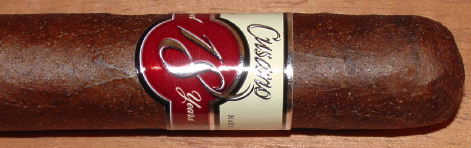
The Cusano 18 line takes its name from the 1985 Dominican oro leaf used as its filler — at this cigar’s conception in 2003 this tobacco was 18 years old. By its very nature this must be a limited edition cigar because there obviously isn’t an endless supply of this particular leaf. But the popularity and very reasonable price of this line have inspired Cusano to continue production, with or without the inclusion of the extra-aged oro. The 18 may even refer to the unusual number of cigars packed in each box for this line. Yes, you guessed it. 18.

The Paired Maduro is a little different than some other “Double Maduro” cigars in that the maduro leaf is actually in the filler rather than the binder. The wrapper is an oily Connecticut broadleaf with a rough, pimply texture, and according to the Cusano website the binder is “San Vicente Olor.” (San Vicente and Olor are two different varieties of tobacco grown in the Dominican Republic. Perhaps this binder leaf is a hybrid of the two??) And finally, the filler is a Dominican blend that includes some Brazilian Mata Fina maduro leaf (and maybe some of that really old Oro that is also in the Double Connecticut.)

The construction on this robusto is very good. A slow toast of the foot starts a slow and even burn that lasts to the final puff.

The first of several flavors to arrive on scene is wood with a sweet maple tinge. It doesn’t taste like a garden variety maduro — the sweet char that I expect from a maduro is there, but it’s accompanied by an unexpected depth of character; the mapley flavor is a surprising attribute. Quickly following this light maple syrup accent is the more common chocolate and coffee combination, carried along by the woody foundation. This chocolate edge takes over and continues to about the one-third to half way point, when the sweetness starts to recede. At this juncture a good dose of pepper enters and keeps things moving, exciting my sinuses and inducing a couple of good sneezes. (Isn’t there something cathartic about a good sneeze?) After two thirds of the stick has turned to a solid white ash the taste turns a little bitter, signalling the final destination and the last act.

I was really pleased with this 18, and I think it’s my favorite of the Cusano cigars I’ve tried so far. They’re all good, but this one is the tops. It’s a medium to full bodied smoke with tons of flavor and a middling finish. The aftertaste is present but not persistent. If you like maduro cigars, you really ought to give this one a shot. I used to smoke Honduran El Rey del Mundos like they were the last cigars on earth, but I think the Cusano 18 Paired Maddie, while different, is better. At a retail price of 5 USD it’s a foregone conclusion. Yum.

But don’t take MY word for it. Cigar Envy has an insightful and informative review of the Paired Maduro, and Walt at the Stogie Review has posted a nice review as well. We all agree on one thing: this is a great smoke. Take heed Maduro lovers!

Santa Damiana Tubulares Grandes

cnv0262.jpg
Santa Damiana is produced by Tabacalera de Garcia in La Romana, Dominican Republic. This is the huge Altadis-owned factory operated by Jose Seijas, who is also responsible for Santa Damiana’s “sister” brands Montecristo and Playboy by Don Diego. This is the only cigar in the Santa Damiana line that does not have a Connecticut shade wrapper — all the rest are very similar to the classic yellow-boxed Montecristo cigars and I’ve really enjoyed them in the past.

In doing a little online research about Santa Damiana I found that this brands sells pretty well in Europe. For European cigar smokers looking for a mild bodied Dominican-style cigar with the flavor of Connecticut shade, the Dominican Montecristo can’t be beat. But there’s a problem. The Dominican Montecristo cannot be sold in countries where the Cuban Montecristos are sold due to trademark laws. A cigar that tastes very similar to the Dominican Monte, however, could fill that niche in the market. And that cigar may just be Santa Damiana.

There appear to be two lines of Santa Damiana: the original blue-labeled Connecticut shade line, and a Habana 2000 line with a red band. I have yet to find the H2000 line available in the U.S. It may have been phased out here along with many other H2000 wrapped cigars. But this is how the British cigar trade magazine Cigarbuyer describes the blue label torpedo:

Light, chunky, sweet, mellow, Cuban figurado with yellowish wrapper. One for the ladies, perhaps. Score: 9.1

That is a pretty good description of the CT shade version. But the Tubulares Grandes is an oddball. Why the Connecticut Broadleaf instead of the classic Connecticut Shade? This size is not listed in the Altadis lineup on their website; has it been discontinued? Or exiled to Europe with the H2000? Who knows…

In any case, this tubo has a rough looking blotchy wrapper. The prelight draw is extremely easy (too easy perhaps?) and the tobacco is very spicy on the tongue.

It lights up fine, but burns down one side. I had to touch up this stogie almost immediately. The draw offers no resistance. Undoubtedly the very loose roll contributes to the bad burn. It starts out spongy and gets progressively mushier.

The flavor isn’t much better than the construction here. The wrapper has a nice spicy element to it, when it burns well enough to detect it, but the flavor is, umm … have you ever been stuck behind one of those tar trailers that roofers tow, the ones with the pitch still smoking as they go down the road? This cigar tastes a little like the way that smells.  Not exactly what I’m looking for from a premium cigar. I smoked only half of this dog rocket and gladly threw the rest away.

This cigar is unfortunately nothing like the standard line Santa Damiana. It is indeed a heavier cigar, but it lacks all the finesse and flavor of the regular Connecticut shade Santa Damiana. This stogie rates lower than a decent yard gar, and given the name on the label it’s a real shame.

Nacionales W El Mundo by Don Pepin Garcia

cnv0261.jpg

Jose “Don Pepin” Garcia has garnered a lot of attention in the last few years as a manufacturer of cigars like Tatuaje and Padilla 8/11. So much so that El Rey de Los Habanos, his Miami factory in Little Havana, has become too small and he has begun operations in Nicaragua as well. The reviews have been uniformly excellent for all of Don Pepin’s cigars, even though they are admittedly not for everyone.

We are accustomed to hearing the stories of Cuban exiles who along with their families became the stars of cigar production in the Carribbean and Central America — Torano, Fuente, Oliva, Padron, to name only a few. Years later, we have these men to thank for developing a new cigar industry completely removed from the “Island South of Miami.” So it’s a little bewildering to think that Don Pepin has been working outside of Cuba for only four years, even if his experience is extremely considerable. His influence on the major Habanos blends is documented, and over the years he earned numerous accolades for his blending abilities and achieved the highest ranking as a cigar roller in Cuba. But in 2002 he left all that behind to try his hand as an independent operator in the free market, first in Nicaragua and soon after that in Miami.

Don Pepin’s blends are modeled on traditional Cuban cigars and exclusively made with Nicaraguan tobaccos because he feels that these render the flavor closest to the Habanos he has in mind. Mitchel Hirsh at the Cigar King in Scottsdale pointed out to me the various Pepin brands and what their Cuban counterparts might be:

Havana Soul — Montecristo

Habana Leon — Partagas

Nacionales W — Romeo y Julieta

Hirsh y Garcia — Cohiba

Another similarity to Habanos, and a practice I wish all premium cigar makers would follow, is that each box of Don Pepin’s production is date stamped. This is invaluable information for collectors and aficionados since age can be as critical to the quality of a cigar as the condition in which it has been kept.

The “Nation” in the Nacionales W is that of the cigar rollers, because reportedly the flavor and body of this cigar are what Cuban cigar rollers prefer. The smoke of choice among the best cigar rollers of the best cigars in the world… sounds good enough for me!

Nacionales W are made with all Nicaraguan tobacco and are furnished with a Corojo 99 wrapper. The El Mundo size is a long robusto at 5.5 inches by a 52 ring gauge. The head is triple capped in the Cuban fashion and finished off with a very small twist. The prelight draw is generous and the scent somewhat grassy.

The construction of this cigar is very good. It burns well with a good draw and builds a solid but flaky ash.

It starts out with a lot of pepper and a bite that grabs hold and doesn’t let up. The smoke is smooth but assertive. It has a pleasant aroma reminiscent of many other corojo cigars, leathery with some floral accents. The prelight impression carried through to the flavor of the cigar once lit — grassy, woody, and fairly tannic. It’s on the heavy side of medium in body, with a lengthy finish. This tastes like a young cigar that will most probably mature into something even better. It reminds me of a strong but young cabernet sauvignon. It needs some time to even out the tannins and let the true character of the cigar come to light. What I liked most about the Nacionales W is the aroma — the corojo 99 used here is sweet and expressive. And make sure you have something to eat before lighting these up. They pack a good punch, and this is one of Pepin’s lighter smokes.

As I said earlier, these cigars may not be for everyone. All of Don Pepin’s cigars are on the full bodied side, and there is a reason the boxes are dated. Smoke them now if you like a full flavored tannic cigar. Otherwise, put em away and revisit them when they’ve had some time to work out the tannins. Like full bodied Cuban cigars, I think these will be something different altogether after a year or two.