Padron Series 3000 (Comparison Review)

Padron Series 3000 - Natural and Maduro

Skip the fluff and jump straight to the review!

Cigar Stats
Brand Owner: Padron Cigars, Inc. – Miami, FL (website)
(distributor operates under the name Piloto Cigars, Inc.)
Factory: Tabacos Cubanica, S.A. – Esteli, Nicaragua
Factory: Tabacos Centroamericanos, S.A. – Danli, Honduras
Model/Vitola: Padron Series 3000 (Natural and Maduro)
Size: 5.5 x 52 (robusto)
Wrapper: Nicaragua
Filler & Binder: Nicaragua
Body: Medium to Full
Strength: Medium to Full
Average Retail: $5.38 USD
Cigar Insider/Aficionado Ratings: Consistently high 80s to low 90s

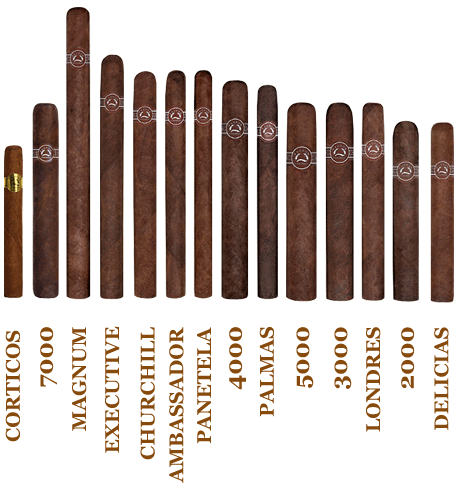
Fourteen other vitola sizes are available in the traditional Padron Series along with one which was recently discontinued.

Frontmark

Length x Ring

Shape

2000

5.0 x 50

robusto

3000

5.5 x 52

robusto

4000

6.5 x 54

toro

5000

5.5 x 56

robusto

6000

5.5 x 52

torpedo

7000

6.25 x 60

toro

Ambassador

6.875 x 42

lonsdale

Chicos

5.5 x 36

discontinued

Churchill

6.875 x 46

churchill

Corticos

4.25 x 35

short panatela

Delicias

4.875 x 46

corona extra

Executive

7.5 x 50

double corona

Londres

5.5 x 42

corona

Magnum

9.0 x 50

giant

Palmas

6.25 x 42

long corona

Panetela

6.875 x 36

panetela

All sizes come in lacquered cedar boxes of 26, packaged with cellophane sleeves on individual cigars. Many vendors list a box size of 25. I am not entirely sure why that is. It may be that Padron changed the box count since the initial release. The Corticos are the exception packaged in boxes of 30 or tins of 6.
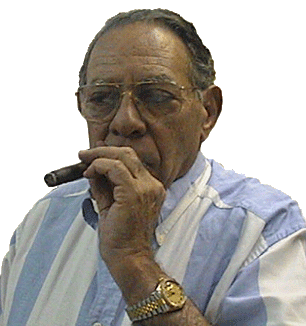
From the Padron website …..Jose Padron, Sr.

“We deliver only the finest, handmade, complex cigars with the flavor of the Cuban heritage out of which the Padron recipe was born. Our primary mission is the exceptional quality of our product, not the quantity produced. As a vertically integrated, family-owned company, we pay personal attention to every detail throughout all steps of our tobacco growing and cigar manufacturing process. Because we strive to give you, the smoker, the confidence that each cigar is the same ….. perfect.”

If you are interested in more KOTF info on the Padron Story, you can read it here.

The Keepers of the Flame Padron Series Roundup

Cigarfan & Lucky7

This comparison review is one in a series on the original Padron line of cigars. When we have completed reviews on the entire line, a vertical tasting for each wrapper will be published. Each review will be an amalgam opinion of cigarfan and lucky7 along with that of the guest reviewer(s). Our guest reviewers for this vitola are:


Matt - Matt's Cigar Journal

Jesse - Cigar Jack

Padron Series 3000 – Natural and Maduro
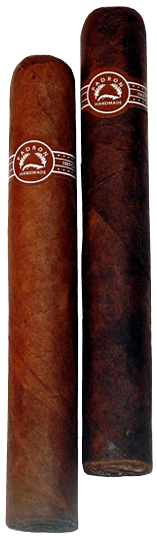
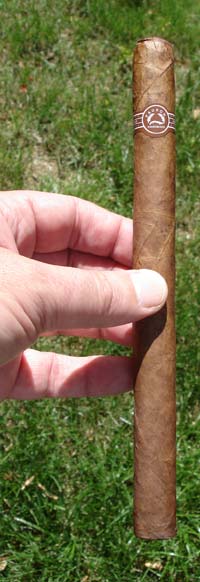
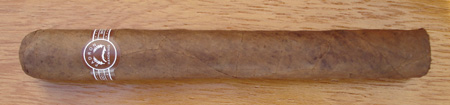
Matt's Review Pair - Actual SizePadron’s “Thousands” series of cigars are all robusto or robusto-plus sized cigars. The 3000 is a slightly larger than average robusto; at 5 1/2 x 52 it has just a little more girth and half an inch in length on the standard 5 x 50 robusto.

Based on our reviewers’ impressions, it’s safe to say that the 3000 does not depart from the rusticity that characterizes the rest of the Padron Series we’ve examined so far. If there’s one consistent element here, it’s a rough and ready blue-collar exterior.

Natural

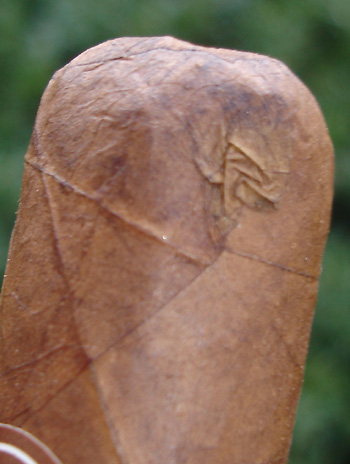
The most impressive aesthetic feature of the 3000 Natural is its well formed and flattened head. Like the triple-cap, the flat head has traditionally been a hallmark of Cuban craftsmanship and quite a few non-Cuban manufacturers have appropriated the style. Unfortunately for the 3000 natural, this otherwise attractive element is defeated by a haphazard application of the cap. The caps seemed to be uniformly sloppy; in one case the cap was loose and made cutting the cigar a challenge — just tear off the cap flapping loose in the breeze, or cut further down?

3000 Natural - Wrinkled HeadHurdling over these flaws, what we have is typical of the Padron Series Natural: a rough, somewhat veiny wrapper with a consistently textured milk chocolate color, a passable roll with a slight box press, and a good draw. The prelight scent is that familiar horsey Old McDonald smell — Jesse describes it as leather, while Matt notes hay and earth. Sounds like the barnyard all right.

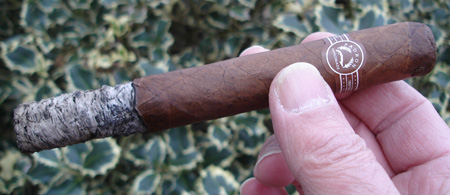
The natural lights up easily and introduces itself with a smattering of pepper that quickly gives way to leather. All four reviewers noted leather as a main ingredient here, three of us found a woody element as well, and Jesse tasted some coffee. The finish is very short and a tad salty.

The middle section continues in the same vein but gets creamier and adds a small shot of sweetness. Cigarfan picked up a little cocoa; Jesse stayed with his coffee; Matt noted some subtle spiciness on top of the base of wood and leather, and Lucky7 contented himself with blowing rings with the thick creamy smoke.
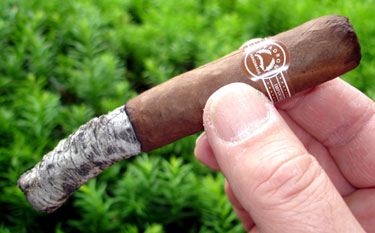
Lucky7's 3000 Natural - 1st Ash

The body of the cigar grows to a solid medium-plus in the last section. (Matt thought it was lighter than this, but in reading his reviews you’ll find that he is partial to some thundering smokes.) As always, gauging the body and strength of a cigar is very subjective. What we all agreed on was this: leather. Leather with nuts, leather with coffee, and leather with wood. For dessert, the 3000 natural serves up a few crusts of toasty bread and a touch of caramel.

Matt sums it up:

Even though it has an ugly appearance it is a very well constructed cigar. The ash held firm and was well formed with a good burn and excellent draw. The flavors, although a little one dimensional, are very good, making for a good easy going and enjoyable smoke. I’d rate this a good everyday kind of smoke.
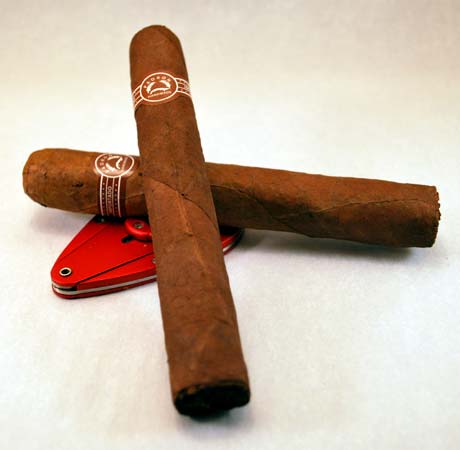
Jesse's Review Pair (the Maduro's on top)


Maduro

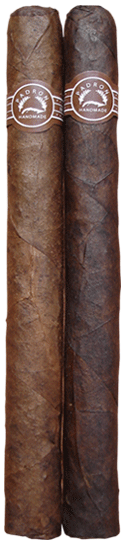
Padron’s natural cigars are much darker than the average “natural” due to the sungrown Habano leaf that is used. The processing of maduro leaf provides additional fermentation, but in this case it results in a wrapper that is only slightly darker than the natural. This is evident across many of the different vitolas, and this is the case with the 3000. Viewed separately it is quite difficult to differentiate between the natural and the maduro 3000s. (Which is why it’s always a good idea to label these cigars if you are placing them in the same humidor compartments.)
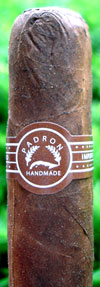
3000 Maduro - Wrinkled HeadIn other ways the maduro is quite similar to the natural, including the rough wrapper and sloppy cap. As Matt says, it’s “just as ugly as the natural.” There are lumps and veins and wrinkles and the occasional soft spot — once again, this cigar will not elicit sighs of admiration based on its presentation.

George E. from the Stogie Guys weighed in on the 3000 as well, noting a prelight minty scent that follows through to the taste on a cold draw. Cigarfan was a little surprised to find the faint scent of ammonia on one sample, but a simple sweet tobacco scent on the rest.

All of our reviewers found sweet bean flavors in the first third, though some identified this as coffee and others as cocoa. Lucky7 found a hint of cinnamon and vanilla, while cigarfan caught just a glimpse of that coconut/hazelnut he’s been finding in the maduros in this series. The burning qualities were reported by everyone to be very good, with an even burn line and a solid, though somewhat flaky ash.
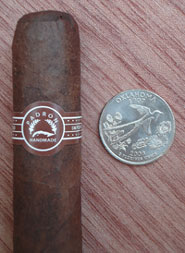
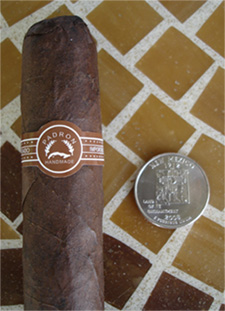
3000 Maduro with quarter for comparisonThe flavors turn to wood in the middle section, along with the sweet char typical of maduro wrapper leaf. At this point the body builds up to a solid medium and the cigar gathers a little strength. The finish is short but gets a little sharp if you’re puffing too vigorously. Jesse wondered at this point if his stick “might be a bit off or my taste is off. I remember past ones to be sweeter — more chocolate.” In agreement with this, George noted “burnt coffee.” There are definitely bittersweet overtones at this point.

The flavors grow a little darker in the last third. Some peppery flavors come into play and the finish lengthens. The aroma is still quite nice at this point, smoldering a sweet hickory charcoal scent. The last inch and half gets hot and produces an unpleasant bite, signaling the end stage of this cigar.

Conclusion

Jesse noticed some inconsistency with the maduro version of this cigar, so cigarfan felt compelled to grab a couple at his local shop for comparison purposes. There does seem to be some inconsistency here — it isn’t severe, but as Jesse points out in his review of the Padron 6000 at Cigar Jack there may be some quality control issues to look out for. On the other hand, this is not a super-premium smoke — for most people cigars in this series are considered quality “everyday” cigars. But the caveat is out there.

These are straightforward cigars that don’t exhibit a lot of complexity or remarkable development. They’re medium bodied smokes that are characteristic of the Padron Series — a lot of bean flavors, with an added bittersweet char in the maduro.

Matt’s summary says it all:

These cigars are a prime illustration of how a wrapper can affect the overall experience of a blend. The maduro is very different from the natural: it is a bit more complex. The natural is a good cigar, but I feel the maduro is the superior of the two. Lots of flavor, but still a very accessible easy going smoke. It is a good cigar for beginners and still has plenty to offer the more experienced.

Thanks to Matt, Jesse and GeorgeE for their comments. Be sure to check out Matt’s Cigar Journal, especially if you’re a fan of Don Pepin Garcia and heavier bodied fare, and Cigar Jack, who seems to be on top of the cigar news faster than the AP wire. Thanks to all for taking part in this round of the Padron Roundup!

… cigarfan & lucky7

Padron Series Delicias (Comparison Review)

Padron Series Delicias - Natural & Maduro

Skip the fluff and jump straight to the review!

Cigar Stats
Brand Owner: Padron Cigars, Inc. – Miami, FL (website)
(distributor operates under the name Piloto Cigars, Inc.)
Factory: Tabacos Cubanica, S.A. – Esteli, Nicaragua
Factory: Tabacos Centroamericanos, S.A. – Danli, Honduras
Model/Vitola: Padron Series Delicias (Natural and Maduro)
Size: 4.875 x 46 (corona extra)
Wrapper: Nicaragua
Filler & Binder: Nicaragua
Body: Medium to Full
Strength: Medium to Full
Average Retail: $3.46 USD
Cigar Insider/Aficionado Ratings: Consistently high 80s

Fourteen other vitola sizes are available in the traditional Padron Series along with one which was recently discontinued.

Frontmark

Length x Ring

Shape

2000

5.0 x 50

robusto

3000

5.5 x 52

robusto

4000

6.5 x 54

toro

5000

5.5 x 56

robusto

6000

5.5 x 52

torpedo

7000

6.25 x 60

toro

Ambassador

6.875 x 42

lonsdale

Chicos

5.5 x 36

discontinued

Churchill

6.875 x 46

churchill

Corticos

4.25 x 35

short panatela

Delicias

4.875 x 46

corona extra

Executive

7.5 x 50

double corona

Londres

5.5 x 42

corona

Magnum

9.0 x 50

giant

Palmas

6.25 x 42

long corona

Panetela

6.875 x 36

panetela

All sizes come in lacquered cedar boxes of 26, packaged with cellophane sleeves on individual cigars. Many vendors list a box size of 25. I am not entirely sure why that is. It may be that Padron changed the box count since the initial release. The Corticos are the exception packaged in boxes of 30 or tins of 6.

From the Padron website …..Jose Padron, Sr.

“We deliver only the finest, handmade, complex cigars with the flavor of the Cuban heritage out of which the Padron recipe was born. Our primary mission is the exceptional quality of our product, not the quantity produced. As a vertically integrated, family-owned company, we pay personal attention to every detail throughout all steps of our tobacco growing and cigar manufacturing process. Because we strive to give you, the smoker, the confidence that each cigar is the same ….. perfect.”

If you are interested in more KOTF info on the Padron Story, you can read it here.

The Keepers of the Flame Padron Series Roundup

Cigarfan & Lucky7

This comparison review is one in a series on the original Padron line of cigars. When we have completed reviews on the entire line, a vertical tasting for each wrapper will be published. Each review will be an amalgam opinion of cigarfan and lucky7 along with that of the guest reviewer(s). Our guest reviewer for this vitola is:

JonN - The Stogie Guys

Padron Series Delicias – Natural and Maduro

“Delicias” is a commercial vitola with no standard dimensions. The best known Delicias is the one made in Cuba for Fonseca — ironically, the factory vitola for Fonseca’s Delicias is called “Standard.” That cigar measures 4 15/16 inches by a 40 ring gauge. Other Delicias are much larger, such as Don Pepin’s 7 x 50 churchill, or smaller, like the 30 gauge mini Cubita Delicias. All of which have no relation to Padron’s fat corona in our sights today.

Both the natural and maduro versions of Padron’s Delicias look like they’ve just come in from a hard day on the range, an attribute common to the classic Padron Series. And they smoke a lot like they look — they dispense with the formalities and get down to business right away.

Natural

Delicias Natural FootThe wrapper on this cigar is remarkably swarthy for a “natural.” The wrapper’s edges look more ripened than the rest of the leaf, giving it a foxed appearance. The head is nicely formed and finished with a flat cap. The roll of the cigar varied from firm to very spongy, but the draw was consistently free. Jon described it as ” bumpy, lumpy, a bit lopsided, and full of tooth,” an observation we all agreed with. Clearly this stick is not a natural beauty, but as Jon went on to say,
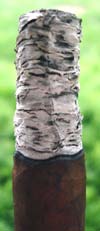
…the rusticity of the Delicias is endearing. When I look at this cigar, warts and all, I imagine what cigars must have looked like hundreds of years ago: rough, bumpy, and raw. I kind of dig it.

Delicias Natural AshThe Delicias opens up with the eye-opening blast of pepper well known by fans of Nicaraguan tobacco. It quickly settles down to a woody base with a sweet leathery aroma. It burns a bit recklessly, but doesn’t require correction, meanwhile producing a light gray ash with black accents.
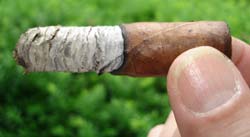
Bean flavors take the spotlight in the second third, though Jon noticed these in the first third as well. Up front there are cocoa, coffee and a gentler spiciness as the cigar seems to be taking a break at this point. Toasted wood lingers in the background, and the aroma remains basically leathery. Cigarfan noted some hickory aspects to the aroma and found the aftertaste quite tangy.

Lucky7's Delicias Natural NubThe last section is marked by increasing intensity. The flavor becomes earthier, and the pepper returns with a vengeance. Lucky7 described this section as “very strong tobacco” while cigarfan experienced a strong peppery flavor bordering on harsh and noted a hot burn and a bitter aftertaste.

Jon concluded with an apt metaphor:

The Delicias picks up where it left off in the home stretch: regaining its initial strength, and building up a steady backbone of pepper. If this cigar were a symphony, the first movement would be blustery and full of vigor; the second movement would be light and airy; the third would be a thundering crescendo.

Maduro

Delicias Maduro with quarter for comparisonThe maduro Delicias is just a couple shades darker than the natural version, but it’s just as rough hewn in appearance. The roll is firm with a slight square press. Once again, we can’t resist Jon’s description of this bad boy:
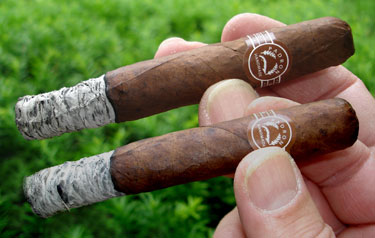
Like its natural cousin, the Delicias maduro is quite rustic in appearance. It’s toothy, its seams are defiantly visible, and its gnarled, slightly box-pressed shape will not win any beauty contests. Nevertheless, there is an enjoyable machismo on display here. This little cigar has a bit of a Napoleon complex: it’s short, but it’s rugged and ready to rumble. If this cigar has a personality, it’s that of a turn-of-the-century, bareknuckle prizefighter.

After an initially raspy burst of spice this cigar mellows into a surprisingly complex brew of earthy tobacco, coffee and sweet maduro flavors, though lucky7 thought the sweetness slightly reduced in comparison with the others we’ve reviewed for the Roundup so far. Cigarfan noticed a recurring flavor that is becoming for him the signature of Padron maduros: a sweet coconut or hazelnut flavor, but like lucky7 he found it to be a little less pronounced here. Jon described this flavor as “hazelnut, honey, and occasional notes of clove. Additionally, there’s a delightful honey-graham aroma to the smoke that is intoxicating.”

Lucky7's Delicias 1st Ash (Natural on top)

In the second stage the smoke becomes creamy smooth and the flavors subside a bit. There’s a little bit of pepper, but it’s not as powerful as the natural and the finish is much shorter. It is similarly medium-bodied, and all other construction qualities are Gentleman Jim Corbetton par with the natural — not perfect in terms of burn, but good enough for Gentleman Jim Corbett.

The last third revisits some of the earlier peppery notes from the first section and the aroma picks up more char. Jon experienced more complexity at this point than the other reviewers did, marking coffee and cedar, while cigarfan and lucky7 found mostly strong and straightforward tobacco flavors. Once again the last third spirals down into bitterness, but less dramatically than the natural.

Conclusion

The Padron Delicias is not the trifle that its name would suggest — it’s a fairly potent forthright cigar that provides an hour of serious smoking. The maduro and the natural versions of this cigar have their own distinct personalities, but they share a feisty disposition. That said, our reviewers agreed that the maduro took an edge over the natural in terms of complexity, smoothness, and overall performance. Lucky7 sums it up well when he says that he “would recommend this vitola to experienced smokers who can handle full power at the nub or the medium-bodied smoker who wants to quit two-thirds of the way through.” The Delicias is no bon bon.

Thanks to JonN for contributing his insightful comments and some great prose to this comparison review. Be sure to check out his articles at StogieGuys.com — we think they’re some of the best written pieces in the business.

… cigarfan & lucky7

Padron Series Magnum (Comparison Review)

Padron Series Magnum - Natural & Maduro

Skip the fluff and jump straight to the review!

Cigar Stats
Brand Owner: Padron Cigars, Inc. – Miami, FL (website)
(distributor operates under the name Piloto Cigars, Inc.)
Factory: Tabacos Cubanica, S.A. – Esteli, Nicaragua
Factory: Tabacos Centroamericanos, S.A. – Danli, Honduras
Model/Vitola: Padron Series Magnum (Natural and Maduro)
Size: 9.0 x 50 (toro)
Wrapper: Nicaragua
Filler & Binder: Nicaragua
Body: Medium to Full
Strength: Medium to Full
Average Retail: $9.04 USD
Cigar Insider/Aficionado Ratings: Consistently low to mid 90s

Fourteen other vitola sizes are available in the traditional Padron Series along with one which was recently discontinued.

Frontmark

Length x Ring

Shape

2000

5.0 x 50

robusto

3000

5.5 x 52

robusto

4000

6.5 x 54

toro

5000

5.5 x 56

robusto

6000

5.5 x 52

torpedo

7000

6.25 x 60

toro

Ambassador

6.875 x 42

lonsdale

Chicos

5.5 x 36

discontinued

Churchill

6.875 x 46

churchill

Corticos

4.25 x 35

short panatela

Delicias

4.875 x 46

corona extra

Executive

7.5 x 50

double corona

Londres

5.5 x 42

corona

Magnum

9.0 x 50

giant

Palmas

6.25 x 42

long corona

Panetela

6.875 x 36

panetela

All sizes come in lacquered cedar boxes of 26, packaged with cellophane sleeves on individual cigars. Many vendors list a box size of 25. I am not entirely sure why that is. It may be that Padron changed the box count since the initial release. The Corticos are the exception packaged in boxes of 30 or tins of 6.

From the Padron website …..Jose Padron, Sr.

“We deliver only the finest, handmade, complex cigars with the flavor of the Cuban heritage out of which the Padron recipe was born. Our primary mission is the exceptional quality of our product, not the quantity produced. As a vertically integrated, family-owned company, we pay personal attention to every detail throughout all steps of our tobacco growing and cigar manufacturing process. Because we strive to give you, the smoker, the confidence that each cigar is the same ….. perfect.”

If you are interested in more KOTF info on the Padron Story, you can read it here.

The Keepers of the Flame Padron Series Roundup

Cigarfan & Lucky7

This comparison review is one in a series on the original Padron line of cigars. When we have completed reviews on the entire line, a vertical tasting for each wrapper will be published. Each review will be an amalgam opinion of cigarfan and lucky7 along with that of the guest reviewer(s). Our guest reviewer for this vitola is:

Walt - Stogie Review

Padron Series Magnum – Natural and Maduro

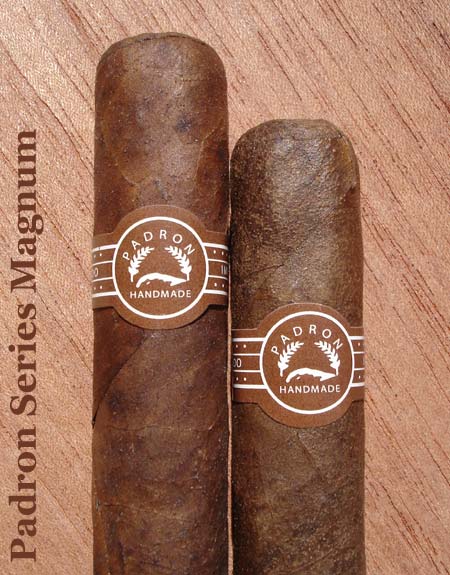
Padron Series Magnum - One Mamoth CigarAlso known as a gran corona, the “A” size has Cuban roots in cigars such as the Sancho Panza Sancho and most famously, the Montecristo A. Large format cigars like the double corona and the “A” require very large wrapper leaves of superior quality, a commodity which is in high demand depending on the success of the season’s harvest and the manufacturer’s back stock.
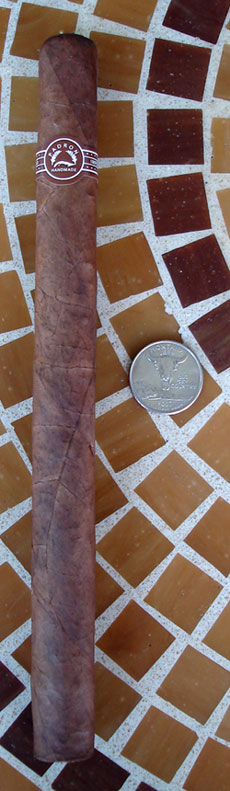
The Padron Magnum is technically not an “A” size cigar, but at 9 inches long by a 50 ring gauge, it certainly falls into the same family of “giant” cigars. If not the largest, it is at least the longest cigar made by the Padron family.

As Walt says, this cigar is “comically large” and all of our reviewers found it rather unwieldy. It’s not comfortable to hold in the mouth (though doing so allows one the opportunity to imitate Sid Caesar) and Lucky7 found that he had to search for a fulcrum point to keep it balanced in the hand.

Walt noted that the sheer size of the Magnum requires four wraps of the leaf to encompass the bunch, rather than the typical three. The size of the leaf required may also be responsible for its smooth and consistent texture — the natural Magnum in particular is one of the more attractive cigars in the classic Padron Series.

Natural

The Magnum’s natural claro wrapper is a pleasant milk chocolate tone with contrasting darker splotches. The roll is fairly soft and has a slight square press. The prelight scent is of compost, the proverbial “barnyard,” and the draw is free. Walt noted a taste of mild toffee on the cold draw.

We were all a little concerned about the amount of time required to smoke this monster. Walt is notorious for his slow methodical enjoyment of even normal sized cigars, so he Magnum Natural with Quarter for comparisonreserved four hours and still felt a bit rushed. His smoking time came in just over three hours; we all agreed that this cigar smokes more quickly than we expected. Lucky7’s smoking time came in at two hours; cigarfan’s about two and a half.
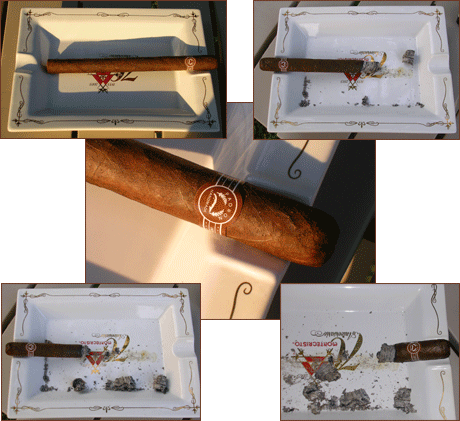
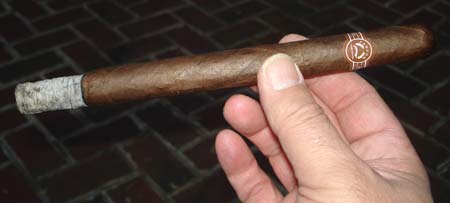
The Magnum burns well, though it does waver from time to time. The extensive barrel results in a cool smoke, and it forms a conical crown. Walt noticed a blistering effect at the burn line for the first half of the cigar.

A cigar of this size could easily be divided into quarters rather than thirds for flavor assessment purposes, but the flavor transitions it goes through are not dramatic enough to warrant that. The first third is marked by a straightforward flavor of leather and earth with a bright acidic tang. It’s a little dry, and Walt found some “muted coffee with a mild fruit like sweetness.” It appears to be about medium in both body and strength.

Our reviewers glowingly endorsed the second third as “lackluster” and “more of the same.” A little more leather, some earthy cocoa flavors, and the tang seems to fade a little. Walt bided his time by passing the smoke through his sinuses and found some pepper and spice that aren’t apparent on the palate.

Into the last section the smoke gets creamier in body and the aroma picks up a caramel-nutty flavor. The body moves toward full and the smoke gets a little more aggressive. Walt picked up leather, toast, wood and dry earth as main components, with a “mild fruit like sweetness, pepper and spice” in the background. By the end, the tang has been replaced by pepper, and the flavors wash out into a dirty, somewhat tarry conclusion. Nubbing this giant rewards the brave smoker with a harsh and bitter tasting dose of pepper.

Maduro

The maduro wrapper is similar to the natural in consistency but is of course darker, oilier, and it has an attractively grainy texture. The caps are well formed, but the heads of these cigars seem a little fragile. In one a crack near the head caused the wrapper to tear off with the cap when it was removed, exposing the binder leaf beneath. Walt’s sample had a small hole that he noticed after clipping the cap.

But the roll is good — it’s a little firmer than the natural, similarly square pressed, and the resulting draw is free with just the right amount of resistance. The wrapper has a mild prelight scent and minimal taste on a cold draw.

Walt's Magnum Maduro

Walt found the maduro Magnum to be a slow starter — after 20 minutes he was still looking for the flavors he normally enjoys from Padron maduros. He found some dull flavors of earth with mild coffee overtones, while Lucky7 noted an “aroma of strong sweet tea with a small twang.” In addition to the coffee that Walt noticed, cigarfan detected a touch of leather. For the first third the flavor is fairly constant and there isn’t much development.

This maduro finally started to open up for Walt about half-way through the smoke, 90 minutes after ignition. The body and strength have stepped it up a notch to a medium level and the smoke has become rich and creamy. The flavors here are of earth and coffee, with a dash of pepper. There are notes of cocoa and sweet char on the nose.

Lucky7's Magnum Maduro - 1st Ash

The last third features some bittersweet chocolate and brings back the leather from the first section. Walt found an interesting “off and on dark fruity flavor, sort of wine like,” and at long last the maduro flavors he was expecting from the start stand up and add character to the smoke. The finish lengthens and exits with a peppery aftertaste.

Conclusion

Even though this cigar clocked in at less than the three or four hours we were expecting, it still turned into an endurance contest. Maybe there is a hidden art to smoking the giant cigar, but we were all less than completely impressed with the Magnum. As Walt says, there’s just “too much waiting for the flavors to come into their own.” It’s like sitting through two hours of average opening acts to hear your favorite band play. The openers may put on a decent show, but it’s not what you paid to hear.

On the other hand, this is a decent cigar for a great price. Very large cigars are not easy to make and require massive leaves that are often difficult to acquire, one reason why the Cuban Montecristo A is one of the world’s most expensive regular production cigars. The Padron Magnum might not be the tastiest or most exciting cigar in the Padron Series, but in light of its basic materials and construction it is certainly a good value.

Our thanks to Walt for running the gauntlet with us! It’s been a pleasure, and as always we look forward to his reviews on Stogiereview.com.

… cigarfan & lucky7

Padron Series Palmas (Comparison Review)

Padron Palmas - Natural & Maduro

Skip the fluff and jump straight to the review!

Cigar Stats
Brand Owner: Padron Cigars, Inc. – Miami, FL (website)
(distributor operates under the name Piloto Cigars, Inc.)
Factory: Tabacos Cubanica, S.A. – Esteli, Nicaragua
Factory: Tabacos Centroamericanos, S.A. – Danli, Honduras
Model/Vitola: Padron Series Palmas (Natural and Maduro)
Size: 6.25 x 42 (long corona)
Wrapper: Nicaragua
Filler & Binder: Nicaragua
Body: Medium to Full
Strength: Medium to Full
Average Retail: $3.50 USD
Cigar Insider/Aficionado Ratings: Consistently high 80s to low 90s

Fourteen other vitola sizes are available in the traditional Padron Series along with one which was recently discontinued.

Frontmark

Length x Ring

Shape

2000

5.0 x 50

robusto

3000

5.5 x 52

robusto

4000

6.5 x 54

toro

5000

5.5 x 56

robusto

6000

5.5 x 52

torpedo

7000

6.25 x 60

toro

Ambassador

6.875 x 42

lonsdale

Chicos

5.5 x 36

discontinued

Churchill

6.875 x 46

churchill

Corticos

4.25 x 35

short panatela

Delicias

4.875 x 46

corona extra

Executive

7.5 x 50

double corona

Londres

5.5 x 42

corona

Magnum

9.0 x 50

giant

Palmas

6.25 x 42

long corona

Panetela

6.875 x 36

panetela

All sizes come in lacquered cedar boxes of 26, packaged with cellophane sleeves on individual cigars. Many vendors list a box size of 25. I am not entirely sure why that is. It may be that Padron changed the box count since the initial release. The Corticos are the exception packaged in boxes of 30 or tins of 6.

From the Padron website …..Jose Padron, Sr.

“We deliver only the finest, handmade, complex cigars with the flavor of the Cuban heritage out of which the Padron recipe was born. Our primary mission is the exceptional quality of our product, not the quantity produced. As a vertically integrated, family-owned company, we pay personal attention to every detail throughout all steps of our tobacco growing and cigar manufacturing process. Because we strive to give you, the smoker, the confidence that each cigar is the same ….. perfect.”

If you are interested in more KOTF info on the Padron Story, you can read it here.

The Keepers of the Flame Padron Series Roundup

Cigarfan & Lucky7

This comparison review is one in a series on the original Padron line of cigars. When we have completed reviews on the entire line, a vertical tasting for each wrapper will be published. Each review will be an amalgam opinion of cigarfan and lucky7 along with that of the guest reviewer(s). Our guest reviewer for this vitola is:

Lisa - Her Humidor

Padron Series Palmas – Natural and Maduro

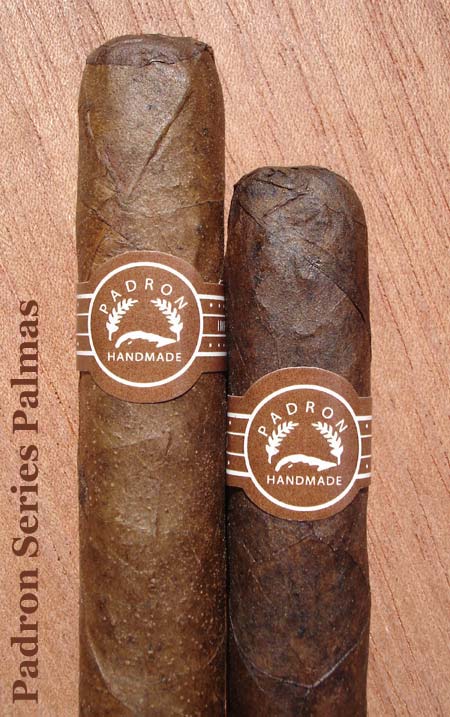
Padron Palmas - Actual SizeThose of us who have been around for a while know that the names manufacturers choose for their cigars do not always follow standard nomenclature. We all remember our first trips into the humidor, gazing starry-eyed at the assortment of cigars and wondering what all the different terms mean. Eventually our confusion is compounded when we find out that what one cigar maker calls a “toro” another one calls a “corona gorda” and another one calls a “robusto extra,” and so forth.
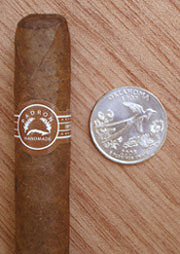
In the same spirit, the term “Palmas” is a little misleading here. The Padron Palmas is a little too large to be a traditional palmas, which is a slim panatela with a 33 ring gauge. What we have here is something closer to a lonsdale, or a long corona.

Natural

If you were to remove the band from this cigar and offer it to an experienced cigar smoker, you might get a piercing glare, or at least a hearty guffaw for your trouble. This is not a pretty stick. Our reviewers described it as bumpy, misshapen, and most forgivingly, rustic. One sample was cracked at the head and required a bit of magic mending tape to render it smokable. (Yet another example of the fearless ingenuity of the dedicated cigar smoker.)

Palmas Natural with QuarterIn addition to its slovenly appearance, the Palmas Natural features soft spots, a loose roll, and a draw that is a bit on the loose side. Maybe this one is best smoked in the dark.
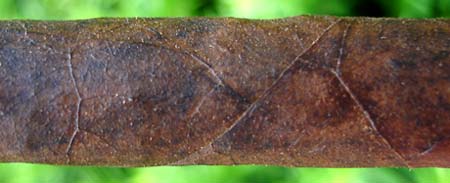
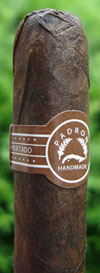
Fortunately it gets better from here. A cold draw presents a “chocolatey tobacco” flavor and the wrapper scent is earthy with a little leather.

The Palmas Natural opens with a touch of harshness that abates after an inch or so and then becomes smooth and medium-bodied with a slightly citric tang. All three reviewers agree that the predominant flavor at this point is coffee; outlying flavors include cocoa, dark chocolate, and Lisa detected a hint of cloves.

Cigarfan and Lisa noted identical overtones in the middle section: cedar, leather, and a peppery taste that grows from this point onward. Despite the early indications of construction problems, there are no burn or draw issues aside from a slightly weak “zebra-colored” ash.

The flavors intensify into the last third, gathering leather and pepper together with a long earthy finish.

Maduro

The dark and oily wrapper on the maduro immediately gives it an edge over the natural. It’s still not a perfect beauty, but the rough and tough appearance of a maduro wrapper often seems to hide aesthetic flaws. In this case that is a very good thing, because again our reviewers hurled unflattering descriptors at the Palmas: “rough and wrinkled,” “large veins,” and “a little sloppy.” But Lucky7 remarked on the fine grain of the wrapper, and cigarfan found the dull oily sheen rather appealing.

Padron Palmas Maduro Wrapper

And where the natural version suffered from a loose roll, the maduro goes in the opposite direction. Our samples were firm to very tight; in one case the cigar was plugged. As always, we remind ourselves that cigars are handmade products and not every one is perfect. A plugged stick is certainly an anomaly for Padron, and this is the first one we’ve come across in recent memory.

Palmas Maduro - Sloppy Head ConstructionLisa noted a hint of “sun dried prunes” in her pre-light inspection. This is interesting in light of the prunes and raisins that Lucky7 and Brian found in the 7000 maduro.
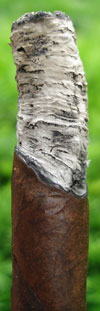
The Palmas maduro starts up with a little harshness on the throat that gradually mellows after an inch or two. A woody flavor predominates, accented by notes of leather and a nutty sweetness, almost like hazelnut or coconut. Lucky7 described a “healthy nose twang” that slowly dissipates through the middle part of the cigar.

The middle section is creamier, smoother, and brings more flavors of coffee, leather and chocolate.

This long corona finishes up with “chewier flavors,” as Lisa says: roasted nuts, leather, vanilla, and pepper. Lucky7 found “toastier flavors” with a Palmas Maduro - Tilted Burn Linecocoa or java aftertaste, and cigarfan experienced burnt coffee and char in the last third.

Conclusion

While there was more agreement about the flavor characteristics of the natural Palmas than the maduro, all reviewers did agree on one thing: we preferred the maduro to the natural in this size. Both wrappers have their own distinctive tastes, as well as their own aesthetic flaws, but the maduro wins out for its earthy core and sweet molasses overtones.

Lisa added that this size in particular appeals to her:

“The Palmas vitola is quickly becoming my personal favorite to smoke. I feel like you get a nice concentration of flavors and an appreciation of learning to smoke slowly due its limited draw. Also, I feel women could feel really comfortable smoking this size and not feel like a fool. Long and slender really strikes an elegant profile.”

And there’s one thing nobody will argue about: the price. They’re straightforward smokes with a working class disposition, but they’re a great value and provide a smooth and even tempered smoking experience.

We certainly enjoyed working with Lisa on this review and wish her well with all things “Her Humidor”.

… cigarfan & lucky7

Padron Series 7000 (Comparison Review)

Padron Series 7000 Natural/Maduro

Skip the fluff and jump straight to the review!

Cigar Stats
Brand Owner: Padron Cigars, Inc. – Miami, FL (website)
(distributor operates under the name Piloto Cigars, Inc.)
Factory: Tabacos Cubanica, S.A. – Esteli, Nicaragua
Factory: Tabacos Centroamericanos, S.A. – Danli, Honduras
Model/Vitola: Padron Series 7000 (Natural and Maduro)
Size: 6.25 x 60 (toro)
Wrapper: Nicaragua
Filler & Binder: Nicaragua
Body: Medium to Full
Strength: Medium to Full
Average Retail: $6.31 USD
Cigar Insider/Aficionado Ratings: Consistently high 80s to low 90s

Fourteen other vitola sizes are available in the traditional Padron Series along with one which was recently discontinued.

Frontmark

Length x Ring

Shape

2000

5.0 x 50

robusto

3000

5.5 x 52

robusto

4000

6.5 x 54

toro

5000

5.5 x 56

robusto

6000

5.5 x 52

torpedo

7000

6.25 x 60

toro

Ambassador

6.875 x 42

lonsdale

Chicos

5.5 x 36

discontinued

Churchill

6.875 x 46

churchill

Corticos

4.25 x 35

short panatela

Delicias

4.875 x 46

corona extra

Executive

7.5 x 50

double corona

Londres

5.5 x 42

corona

Magnum

9.0 x 50

giant

Palmas

6.25 x 42

long corona

Panetela

6.875 x 36

panetela

All sizes come in laquered cedar boxes of 26, packaged with cellophane sleeves on individual cigars. Many vendors list a box size of 25. I am not entirely sure why that is. It may be that Padron changed the box count since the initial release. The Corticos are the exception packaged in boxes of 30 or tins of 6.

From the Padron website …..Jose Padron, Sr.

“We deliver only the finest, handmade, complex cigars with the flavor of the Cuban heritage out of which the Padron recipe was born. Our primary mission is the exceptional quality of our product, not the quantity produced. As a vertically integrated, family-owned company, we pay personal attention to every detail throughout all steps of our tobacco growing and cigar manufacturing process. Because we strive to give you, the smoker, the confidence that each cigar is the same ….. perfect.”

If you are interested in more KOTF info on the Padron Story, you can read it here.

The Keepers of the Flame Padron Series Roundup

Cigarfan & Lucky7

This comparison review is one in a series on the original Padron line of cigars. When we have completed reviews on the entire line, a vertical tasting for each wrapper will be published. Each review will be an amalgam opinion of cigarfan and lucky7 along with that of the guest reviewer(s). Our guest reviewers for this vitola are:

Brian - Stogie Review

Doc - Stogie Fresh

Padron Series 7000 – Natural and Maduro

The 60 ring gauge 7000 is the most recent addition to the classic Padron Series. It was released in the summer of 2007 at the RTDA in Houston, presumably in response to the trend toward large ring gauge cigars that started a few years back.

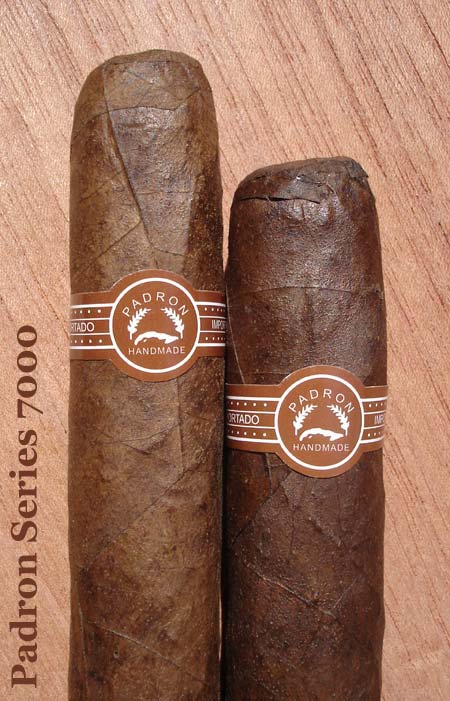
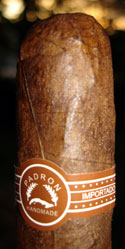
This is indeed a whopper of a smoke, and it can be expected to last for around 7000 with quarter for comparison90 minutes on average. Our reviewers noted that despite the size of the cigar it still feels balanced, and two of us attributed the generous volume and coolness of the smoke to the large bore of the barrel.
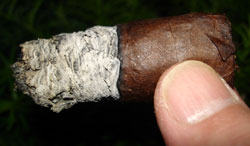
Maduro

The wrapper on the Maduro 7000 is rough with veins and a dull sheen of oil gives it a “matte” black appearance. The roll is a bit lumpy, but firm. The draw is very loose, perhaps excessively so. Lucky7 remedied this by punching the cap, but he found that halfway through the smoke he had to clip it with his Xikar to keep the smoke flowing smoothly. While not a deal-breaker, the loose draw may be responsible for some later burning and flavor issues.

The pre-light scent of the wrapper is classic barnyard or compost, and the cold taste is earthy. (Brian picked up some prunes in there, which is interesting because Lucky7 later tasted raisins. Cigarfan found some cereal grains in the natural version, so maybe if we put them all together we can call the 7000 a wholesome breakfast.)

An interesting sidenote about the wrapper on this cigar is the grain. The maduro wrapper on the 7000 is rough with small dots or bumps which are often called tooth, but in this case they aren’t. Grain is often confused with “tooth” because both are forms of stippling that occur in the texture of the wrapper. What we have here is grain that is caused by an overabundance of magnesium and potash in the soil from which the plant grew. For further explanation, allow us to refer you to Doc’s short treatise on the subject at Stogiefresh.com.

Doc's Review Stogies
Doc’s Review Stogies

The burn on the 7000 maddie is a bit bumpy at times, but for the most part it is self-correcting. The loose draw and large ring gauge may be partially responsible for it going out on two of the reviewers at the mid-way point; that aside, the burn was well behaved.

This maduro comes out of the gate with a playful bite that quickly mellows. Bean flavors are the predominating flavor here, though we didn’t all acknowledge the same bean: in the first third, reviewers reported variations of chocolate, cocoa, and coffee. The sugars in this wrapper add a level of sweetness that later in the stick become slightly carbonized and show up more char and toasty flavors.

Lucky7 nubbed the MaduroThe mid section of the cigar continues to provide plenty of rich sweet tobacco flavors, with notes of nuts and leather backing up the chocolate and coffee that continues from the first third. The body of this cigar is medium at this point, but it gradually approaches the full end of the spectrum. Lucky7 admired the way this stogie smoldered at this point with “blueish smoke from the foot mingling with the white smoke from the punched cap as together they waft up and out of sight.”
Leather takes over in the last third, with a strong sweet aroma reminiscent of the barbecue. Bean flavors are still prominent, but as the burn line approaches the nub these flavors darken and intensify. By the last inch and a half this cigar has given its all.

Natural

The general appearance of the Natural 7000 is similar to the maduro; in fact, the shade of the wrapper is only a few degrees lighter. Most of the adjectives used to describe the natural are not terribly flattering: lumpy, veiny, and mottled in color. Lumpy head on the NaturalBrian’s sample even featured a dime-sized patch near the head of the cigar. On the other hand, Doc gave this stick a little latitude when he described the wrapper as leathery, with a brushed velvet appearance, and cigarfan noted the grainy texture of the leaf.
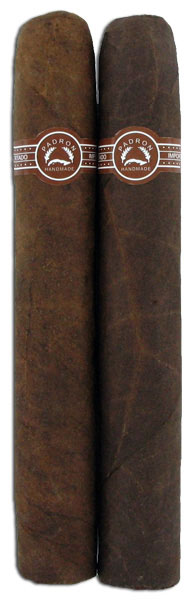
In combination with the soft, almost mushy, roll of this stick, the 7000 natural is probably going to take a hit in the aesthetic department. But as Brian noted in reference to the simplicity of the band, this suggests that Padron is simply more concerned with quality than aesthetics.

The draw is a bit firmer than the maduro, but still quite free. As with the maduro, the burn wavers a little but is self-correcting. The ash is light gray, somewhat flaky, and shows small white dots of grain.

The natural opens with a initial burst of spice — one reviewer called it “raspy for the first half inch,” but then it backs off and mellows into cocoa, mocha coffee, and nuts. Cigarfan noted a grainy flavor as well, like cereal or raw fresh oats when you chew them up into a gum. There is a spicy tang on the tongue and some white pepper on the nose, but the overall texture of the smoke is still quite creamy.

The middle section of the cigar is smooth and pleasant. Descriptors here include buttery wood, earthy tobacco, toasted wood, and cocoa.

Into the last third, the body slowly builds and the nicotine powers up quite a bit. The spicy tang from early on morphs into pepper in the same regions of the palate while the cocoa turns to a light char. Other flavors make an exit at the nub and give way to lots of pepper and a bitter, dry aftertaste. And with that the last ash drops.

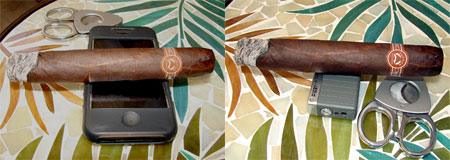
Full Size Padron Series 7000 (courtesy of Doc)Conclusion

The general consensus among our reviewers was that the Padron 7000 is a high quality, but not exemplary cigar. Some of us found the large ring gauge to be cumbersome at first, but the 7000 still smokes very well and burns more quickly than expected. That said, this is still a huge stick, and it requires a good hour and a half to do it justice.

Most reviewers preferred the maduro wrapper, which is in line with the general preference toward the maduro selections in this series. While published ratings show no overall performance difference, the ratings at Top25Cigar.com are higher for maduros than they are for the corresponding natural wrapper in almost every size.

Both the maduro and the natural Padron 7000 are fine smokes, but the maduro takes a slight edge. That little extra sweetness and helping of chocolate really made an impression on our panel, though most would prefer these flavors in a slightly smaller package.

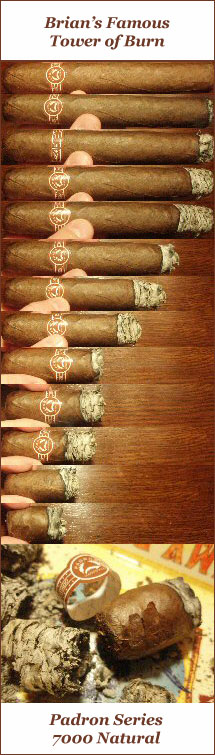
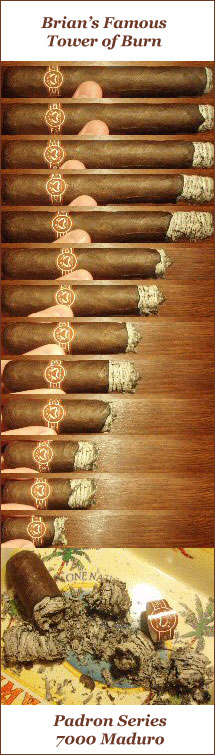
Lastly, and for your viewing pleasure we include something no review including Brian’s handiwork should be without. We are happy to present, the first ever “twin” towers of burn. Our sincere thanks to Brian and Doc for assisting us with this first review in the Padron Series Roundup.

Padron Series 7000 Natural - Tower of BurnPadron Series 7000 Maduro - Tower of Burn

The Padron Series Roundup

Padron Series Band

Cigar Stats
Brand Owner: Padron Cigars, Inc. – Miami, FL (website)
(distributor operates under the name Piloto Cigars, Inc.)
Factory: Tabacos Cubanica, S.A. – Esteli, Nicaragua
Factory: Tabacos Centroamericanos, S.A. – Danli, Honduras
Line: Padron Series (the original line)
Wrapper: Natural and Maduro – Nicaragua
Filler & Binder: Nicaragua
Body: Medium to Medium Plus
Strength: Medium to Full
Cigar Insider/Aficionado Ratings: Consistently high 80s to low 90s

Fifteen sizes available in the Padron Series along with the Chicos which was recently discontinued.

Frontmark

Length x Ring

Shape

2000

5.0 x 50

robusto

3000

5.5 x 52

robusto

4000

6.5 x 54

toro

5000

5.5 x 56

robusto

6000

5.5 x 52

torpedo

7000

6.25 x 60

toro

Ambassador

6.875 x 42

lonsdale

Chicos

5.5 x 36

discontinued

Churchill

6.875 x 46

churchill

Corticos

4.25 x 35

short panatela

Delicias

4.875 x 46

corona extra

Executive

7.5 x 50

double corona

Londres

5.5 x 42

corona

Magnum

9.0 x 50

giant

Palmas

6.25 x 42

long corona

Panetela

6.875 x 36

panetela

All sizes come in laquered cedar boxes of 26, packaged with cellophane sleeves on individual cigars. Many vendors list a box size of 25. Not entirely sure why that is. It may be that Padron changed the box count since the initial release (or it may be select vendors have lost a cog “up there” somewhere). The Corticos are the exception packaged in boxes of 30 or tins of 6.

The Padron Series

As the Padron’s describe it … founded in 1964 and evolving throughout company history, the Padron Series today consists of sixteen medium-to full-bodied, long-filler cigars ranging from cigarillo to the large “A” size. All tobacco in this line is sun-grown habano aged a minimum of two-and-one-half years. Each vitola is available in a natural or maduro wrapper. The Padron Series offers exceptional quality and value.

Padron Series cigars are handmade, in one of two factories, with Cuban seed tobaccos grown entirely in Nicaragua. A true classic and unique-tasting cigar whose outstanding quality absolutely defies its affordable price. These perfectly balanced puros brim with flavor. Their consistency is family tradition which they are committed to maintaining it even if it means limiting production numbers.

The blend in each cigar is the same. The difference is in the size and shape which interestingly yield some distinctly different flavors. Just a note of caution. The Natural and Maduro versions of this line are quite difficult to tell apart visually. Be sure and mark them or store them separately otherwise you may just have to smoke ’em to tell which is which.

The Keepers of the Flame Padron RoundupJose Padron, Sr.

In the interest of providing a good roadmap to this extensive line of cigars, we are gearing up for what promises to be a challenging project. We have enlisted some of the best reviewers available in the cigar community and, in the coming months, will post a comparison review of the natural and maduro wrapper editions of each vitola in the list above based on a concensus of opinion. When that is done, we will publish a vertical tasting for each wrapper giving cigar shoppers a valuable resource for cigar selection decisions.

Although cigar reviews are very much subjective and based on personal opinion and palates, what better way to level the playing field than to have multiple experts weigh in. We have assembled a cadre of guest reviewers, from the blogroll here on Keepers of the Flame, to assist us in this mammoth project. For each vitola listed above, cigarfan, lucky7 and select guests will sample the smoke and offer their observations. A consolidation of those views will be presented in a consensus review here on Keepers of the Flame. In addition, we will link each review to the vitola listing above for central access.

An impressive list of reviewing talent by anyone’s standard.

Cigar Command
Ricky & Scott

Cigar Inspector
Inspector

Cigar Jack
Alex, Jeff & Jessie

Her Humidor
Lisa

Club Stogie
McCharlie & TXMatt

Matt's Cigar Journal
Matt

Stogie Review
Doc

Stogie Review
Brian & Walt

The Box Press
Kevin


GeorgeE, JonN & PatrickA

The Velvet Cigar
Ironmeden & Elvis

We are still gathering and distributing the raw materials for the project but look for the comparison reviews to begin in a few weeks. Until then … Disfrute de los Padrons!

Update — 5 June 2008: The fun has begun! As each vitola review is posted it is linked to the corresponding Frontmark in the table toward the top of this post.

Update — 29 July 2008: The comparison reviews are now complete. Look for our vertical tasting reports in a few weeks.

… cigarfan & lucky7

Padron 4000 Natural

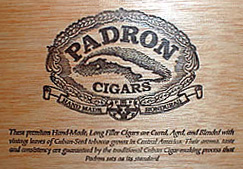
Padron 4000 on Box

Skip the fluff and jump straight to the review!

Cigar Stats
Brand Owner: Padron Cigars, Inc. (also operates under the name Piloto Cigars, Inc.) – Miami, FL
Factory: Tabacos Cubanica, S.A. – Esteli, Nicaragua
Factory: Tabacos Centroamericanos, S.A. – Danli, Honduras
Model/Vitola: Padron 4000 Natural
Size: 6.5 x 54 (Corona Gorda)
Wrapper: Nicaragua
Filler & Binder: Nicaragua
Body: Medium to Medium Plus
MSRP: $6.75 USD
Cigar Insider/Aficionado Ratings:

    90 – April 2000
    87 – November 2001 & June 2007
Padron 4000 Open Box

Fourteen other vitolas available in the traditional Padron line

  • Corticos 4.25 x 35 (short panatela)
  • Delicias 4.875 x 46 (corona extra)
  • 2000 5.0 x 50 (robusto)
  • Londres 5.5 x 42 (corona)
  • 3000 5.5 x 52 (robusto)
  • 6000 5.5 x 52 (torpedo)
  • 5000 5.5 x 56 (robusto)
  • Palmas 6.25 x 42 (long corona)
  • 7000 6.25 x 60 (toro)
  • Panetela 6.875 x 36
  • Ambassador 6.875 x 42 (lonsdale)
  • Churchill 6.875 x 46
  • Executive 7.5 x 50 (double corona)
  • Magnum 9.0 x 50 (giant)

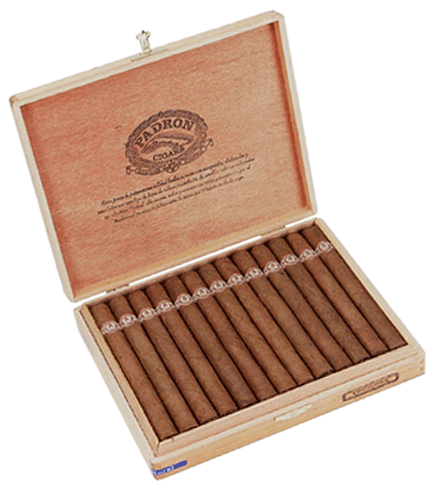
All sizes come in lacquered cedar boxes of 26, packaged with cellophane sleeves on individual cigars. Many vendors list a box size of 25. I am not entirely sure why that is. It may be that Padron changed the box count since the initial release. The Corticos are the only exception packaged in boxes of 30
or tins of 6.

The Padron Story

Sometimes a cigar is just a cigar. That should never be said of a Padron. Jose Orlando Padron has put so much into the cigars that bear his name that both have earned the highest respect from those who know them. Both are Cuban to the core as evidenced by the Padron mantra:

Cuba has no boundaries, barriers or politics. At least not the Cuba we know and love. Cuba is in our hearts. It’s a state of mind. The sun on your face. The smoke that tells your nostrils you are home once again. Cuba is Padron Cigars. Wherever you smoke them.

Jose Orlando Padron

Hand-rolled Padron cigars, like the man they’re named after, have roots that reach all the way back to 15th-century Spain. Spanish explorers discovered the Central American tradition of smoking string-tied rolls of select tobacco leaves. In fact, the Spanish word cigarro, from which “cigar” is derived, was probably an adaptation of sik’ar – the Mayan term for smoking. The tobacco and the tradition these explorers subsequently introduced to Spain became widely adopted throughout Europe two centuries later. Cigars found their way to North America with the Connecticut settlement in 1633.

Jose Padron’s personal story ranks up there with some of the great American success stories of all time. The Padron family has been involved in the tobacco industry since the late 1800s, when Jose Orlando’s grandfather, Damaso Padron, emigrated from the Canary Islands to Cuba and began growing tobacco in a small agricultural town called Las Ovas in the province of Piñar del Rio. Born and raised there, Jose was trained at an early age in the ways of tobacco cultivation and the fine art of hand rolling cigars. Just like his father and grandfathers before him.

The political tensions in Cuba following Fidel Castro’s rise and the confiscation of the family’s tobacco plantation in 1961 forced Jose to flee with his wife and young children in tow to the land of his ancestors in Spain. Less than a year later, they came to the U.S. through New York and finally settled in Miami, penniless but full of desire to rebuild their lives and to live in freedom.

Jose and Jorge Padron in a tobacco field

For over two and a half years, Jose worked an assortment of odd jobs – anything to keep his family fed. One of those jobs was carpentry. You can read an interesting story in the February 2008 edition of Cigar Aficionado about the “little hammer” gifted to Jose and put to very good use in those early days. He managed to set aside a little cash over time, and on September 8, 1964 he launched Padron Cigars with a meager $600 in savings. Jose put everything he owned into his dream: planting the tobacco seeds he managed to secret away from Cuba. Renting a small warehouse in Little Havana, he and a single employee began producing cigars by day, which Jose then sold at night. In 1965, they sold 66,000 cigars. Today, Padron sells more than that every week. Meanwhile, the Padron grandchildren are being trained in the ways of tobacco cultivation and the fine art of hand rolling cigars. Just like the generations of Padrons before them.

Jose Orlando Padron is the Chairman of Padron Cigars, Inc. and Jorge Luis Padron is the President of the company. They operate two production facilities in Central America. Tabacos Cubanica, S.A. in Esteli, Nicaragua, and Tabacos Centroamericanos, S.A. in Danli, Honduras. The difference between the two factories is size and the functions they perform. The Honduran facility functions strictly as a production plant. The Nicaraguan facilities serve many purposes such as warehousing of raw material, sorting and deveining, and fermentation as well as production. There was a rumor circulating early in 2007 that the Danli operation was closing but I have been unable to corroborate that as fact.

Padron 4000 Box Top

Padron Cigars is one among a handful of companies that control every aspect of the manufacturing process from seed to smoke. Emphasis on quality rather than quantity, is one of the keys to the company’s longevity. Jose says, “We’ve never fallen on the trap like other manufacturers that produce, produce and produce to respond to the growing demand, as if we were making churros.” Production is modest, some four million cigars a year, and Jose has no intention of growing into a cigar giant. He says, “We will follow our family traditions and remain faithful to the course we set years ago, continuing to focus all of our efforts on producing quality and not quantity.” Jorge is quoted as saying, “Our philosophy has always been that it takes years and years to build a strong loyal customer base but it only takes a few bad cigars to lose it. With this in mind, we do not lose sight of what it is that has made Padron successful… our products… not a fancy marketing campaign or story.”

From the Padron website …..
We deliver only the finest, handmade, complex cigars with the flavor of the Cuban heritage out of which the Padron recipe was born. Our primary mission is the exceptional quality of our product, not the quantity produced. As a vertically integrated, family-owned company, we pay personal attention to every detail throughout all steps of our tobacco growing and cigar manufacturing process. Because we strive to give you, the smoker, the confidence that each cigar is the same ….. perfect.

Battling Counterfeits

As with many popular products, counterfeiting for the Padron’s has been an issue. More so with the Anniversary and 1926 lines but they deal with it across the board. In June 1999, the first fake Padron Anniversary cigars surfaced in Nicaragua. In January 2000, police seized more than 3,000 counterfeit Anniversary cigars and 5,000 fake bands from a Los Angeles warehouse. Two months later, a seizure in Miami forced the Padrons to send a letter to retailers warning about the surge in counterfeiting. Undercover agents seized more than $60,000 of fake cigars in a September 2000 raid that took place in New York City.

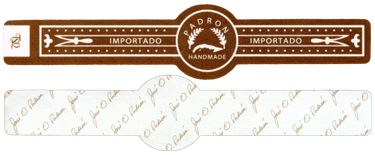
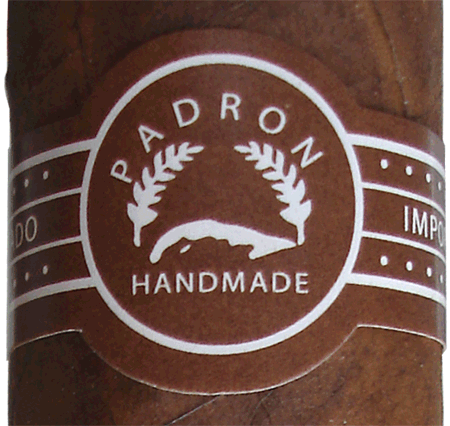
Padron 4000 Cigar Band

“We have to make it as hard as possible for someone to counterfeit our cigars,” says Jose. “We’ve been working on new ways to make the band more difficult to counterfeit and to make consumers feel more secure that they are getting a genuine Padron.” The company has modified its Anniversary boxes with special engraving on the hinges and tey have added an additional numbered band. Padron representatives inform us there was a system to the numbering to help track possible fakes, but it won’t be revealed to the public. Additional measures to hinder counterfeiters are anticipated. For the traditional Padron line, the signature of Jose O. Padron was added, running at a diagonal across the backside of the cigar band.

Cigar Aficionado has published several articles on the Padron’s troubles with counterfeit cigars. They take counterfeiting very seriously and are doing all they can to combat the problem.

Padron 4000 Cigar Band

The Padron 4000

The Nicaraguan blend in all of the traditional Padron line is the same. The difference is in the size and shape which interestingly yield some distinctly different flavors. All are available in both Natural and Maduro covers. The Padron’s listen carefully to their retailers and consumers. As I understand it, the 4000 (and the 5000) released late in 2000 was due directly to customer feedback and requests for larger ring gauge cigars and the 6000 in answer to requests for a torpedo shape. All tobacco used in the line is sun-grown habano, aged for a minimum of two and one-half years.

Just a note of caution. The Natural and Maduro versions of the 4000 are quite difficult to tell apart visually. I have to put them in separate humidors so I don’t get them confused (not that confusing me is so difficult to do).

Bottom line up front …..
For a line of cigars that gets such little attention, the traditional Padron is a quality cigar at quite the affordable price. Rich and flavorful, it makes for an easy smoke anytime. This is regular “everyday” rotation stuff for me! As George E from the Stogie Guys says, “If your Padron smoking experiences haven’t included this line, you should change that. Soon.”

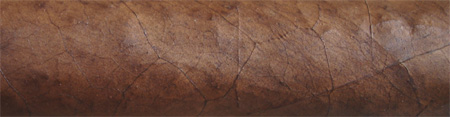
Padron 4000 Wrapper

Pre-light
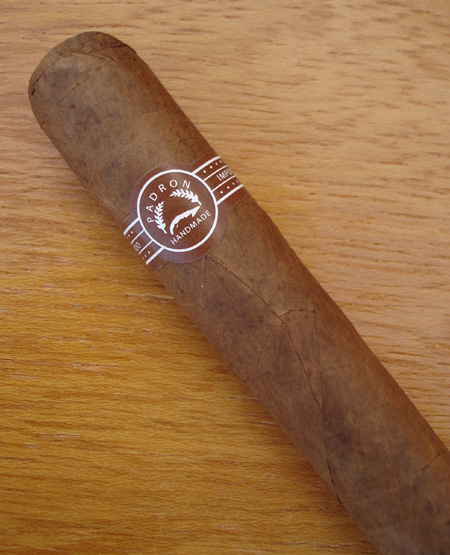
The 4000 feels quite fat in the hand but nicely balanced. It is well packed with no soft spots but just a bit lumpy. The Colorado brown wrapper has a very dull sheen and a few darker brown spots mottled in. There are a few minor veins but they are pretty small. Aroma from the wrap is a very faint barnyard and from the foot, sweet tobacco. The head is slightly flattened with a single cap which I found unusual since they are hyped as “the heritage of Cuba.” Isn’t that where the triple-cap is tradition?

Padron 4000 Head Anomaly

The Padrons claim to fame is quality and consistency but on the smokes I had for this review, one had a double cap and the other two had single caps. Not really consistent or Cubanesque IMO. One had a spot where the wrapper was not very well smoothed at the head (pictured above). None of these things caused anything but visual distraction.

After the clip, a very nice pre-light draw leaves a touch of sweetness on the lips. Now I’m ready!

Padron 4000

The Smoking Experience
The toasting and light come off without a hitch. Very nice aroma for standers by. First couple pulls are a bit raspy, then settles in to a smooth raisiny tobacco flavor with a little twang on the nose. As the stick warms, the core of earthy sweet tobacco continues and yields notes of toasted cedar, leather and spice. Not allot of pepper here. Not allot of flavor complexity either but there is enough rich flavor and aroma to keep me puffing. At the halfway mark, flavors take on a little darker complexion of the same core with the addition of some light coffee bean. The aroma is not unlike the flavor profile and has a slight “twang” to it all the way to the nub.

The 4000 carries a moderate finish with a sweet raisiny edge. Maybe gets a little longer in the last third.

Padron 4000 Ash

Ash is medium gray and held to about 2 inches. Burn is good with no corrections required. Draw was fantastic throughout. Smoke is cool and lots of it.

Although the first couple tugs may have you wondering, what have I got myself into, I’d say this cigar starts in the medium column and only edges past medium-plus right at the nub. No real nicotine kick that I could detect.

Smoketime was about 80 minutes.

My take …..
Consistently tasty and aromatic at an affordable price. Fits me like a glove. I like these gars and plan to experiment with the other sizes to see what they are like. I am a “robusto” kinda guy and the 4000 is a pretty big stick for me!

MSRP is $6.75 per stick. Online they run between $4.75-$6.00 a stick when you purchase a box. Best online price at the moment is the members price at Little Anthony’s Cigar Store. They run 108.45/26 or $4.17 per stick. An incredible price for this premium cigar. You cannot get the members price until you have an order from the site under your belt. They send you the members login (user/pswd) with your first order. I can vouch for the vendor. Quite the conscientious group down there at LA’s.

Smoke Til You're Green Like it … Yes
Smoke Til You're Green Buy it again … Yes
Smoke Til You're Green Recommend it … Yes

What others are saying about the traditional Padron line …..

3 June 1999 thru 31 December 2007
Famous Smoke Shop Reviews – Padron

28 August 2000
7 reviewers – Cigar Weekly Magazine
CW Review: Padron 2000

22 November 2005
fletchman – Cigarzilla
Padron 3000 Maduro

5 January 2006
Matt’s Cigar Journal
Padron #5000 Maduro

23 April 2006
cigarfan – Keepers of the Flame
Padron 5000

18 June 2006
Walt – Stogie Review
Padron – Delicias

9 December 2006
Walt – Stogie Review
Padron Londres

21 December 2006
Kyle Hammond – Club Stogie
Padron 4000

23 March 2007
cigarfan – Keepers of the Flame
Padron Panatela

8 June 2007
Brian – Stogie Review
Padron Londres Maduro

17 August thru 28 October 2007
Cigar Inspector
Padron

3 January 2008
George E – The Stogie Guys
Padron 5000 Maduro

As of 4 January 2008
Top 25 Cigar Ratings (26 reviews)
Padron 4000 Natural
Average Rating 7.72 out of 10

Top 25 Cigar Ratings (41 reviews)
Padron 4000 Maduro
Average Rating 8.46 out of 10

Date Unknown
ProCigars
Padron Cigar Reviews
(a good baseline for all traditional Padron vitolas)

Publications

July/August 1997
Jim Daniels – Cigar Aficionado
The Padron Family: A Nicaraguan Legacy
Seeds of Survival
Despite Wars in Nicaragua and Bombings in Miami, Jose Padron Has Built a Thriving Cigar Business

7 June 1999
David Savona – Cigar Aficionado
Fake Padrons Spotted in Nicaragua

5 September 2000
David Savona – Cigar Aficionado
Fake Padrons Seized In New York

2 March 2001
Mike Marsh – Cigar Aficionado
Padron Adds Second Band To Anniversary Line

April 2001
Top25Cigar Interviews
Jorge and Orlando Padron Interview with Top25Cigar

10 December 2001
Jordan Russin – Cigar Aficionado
Padron Cigar Counterfeiters Sued for $146,000

November/December 2002
CA Staff – Cigar Aficionado
Movers and Shakers II

12 March 2003
Rob Shibata – Top25Cigar.com
Saturday Morning with the Padrons

1 June 2004
David Savona – Cigar Aficionado
Q&A: An Interview With Jorge Padron

13 December 2004
Daniel Shoer-Roth of the Miami Herald – Havana Journal
Little Havana Padron Cigar History
(Padron’s Little Havana Factory is Bombed!)

27 October 2005
Rob Shibata – Top25Cigar.com
Visit The New Padron Cigar Offices

Winter 2005
thecigarWRAPPER.com
Padron Cigars

15 February 2006
James Suckling – Cigar Aficionado
An Interview With Jose Orlando Padron, Chairman, Padron Cigars, Inc.

18 October 2007
David Savona – Cigar Aficionado
Smoking a New Padron (Padron Reserva de la Famila No. 44)
(only available at special Padron cigar dinners – &!@#^&*^$!@#)

RTDA 2007
Video – 0:40 seconds
Jorge Padron
(I think he was really taken with the lady interviewer; watch his eyes; wonder if they hooked up?)

Date Unknown
Cigar Nexus
An Interview with Jose Padron Sr., Padron Cigars – Part 1

Date Unknown
Cigar Nexus
An Interview with Jose Padron Sr., Padron Cigars – Part 2

Why even Rush Limbaugh recommends Padron Cigars!


… lucky7

“It has always been my rule never to smoke when asleep,
and never to refrain when awake.” (Mark Twain)

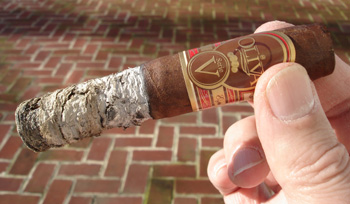
Oliva Serie V Torpedo

 Oliva Serie V Torpedo

Skip the fluff and jump straight to the review!

Cigar Stats
Brand Owner: Oliva Cigar Company – Miami, FL
Factory: Tabacalera Oliva S. A. (Tabolisa) – Esteli, Nicaragua
Model/Vitola: Oliva Serie V (Ligero Especial) Torpedo
Size: 6.0 x 56
Wrapper: Nicaragua (Habano Sun Grown)
Filler & Binder: Nicaragua (only specially fermented Jalapa Valley ligero)
Body: Medium to Full
MSRP: $6.75 USD
Cigar Insider Rating: 94 (September 2007)
Cigar Aficionado Rating: 94 (December 2007)
Cigar Aficionado Rating: 93 (2007 Top 25 List – January 2008)

Six other vitola sizes available

  • Double Robusto 5.0 x 54 (robusto grande)
  • Belicoso 5.0 x 54
  • Double Toro 6.0 x 60 (toro grande)
  • Special V Figurado 6.0 x 60
  • Lancero 7.0 x 38
  • Churchill Extra 7.0 x 52

All sizes come in dark lacquered cedar boxes of 24, packaged naked with no cellophane sleeves. The Lancero is the exception packaged in boxes of 36. Although I have not seen one, Cigar Insider states the Serie V also comes in a culebra size available exclusively at special events.

The Olivas

The Oliva Family has been growing tobacco for a little over 120 years. Melanio Oliva first grew tobacco in Pinar Del Rio, Cuba beginning in 1886. His growing operations were suspended while he fought in Cuba’s War of Independence. On his return, Melanio resumed his operations and in the early 1920’s his son Hipolito took over. Hipolito cultivated the Oliva family fields for several decades but as Cuba became over-run by communists, the tobacco landscape changed. Hipolito’s son, Gilberto Sr., was born literally across the street from Cuba’s Hoyo de Monterrey factory and following in his fathers footsteps, that is where he first worked in Cuba’s tobacco industry. When Gilberto, Sr. took over the family’s business he shifted from growing to brokering tobacco. In the early 1960’s the pressure in Cuba became unbearable and Gilberto, Sr. left in search of growing conditions that would produce that distinct Cuban taste. His travels took him to Honduras, Panama, Mexico and even the Philippines before he finally found his desired fertile ground in Nicaragua and today the Oliva Family is Nicaragua’s second largest grower of Cuban-seed tobacco.

In 1984 Gilberto, Sr. decided it was time to expand into cigar making for other brands and in 1994 began to produce the first Oliva Family cigar line. After success with their frontmarks in the USA, last year the Oliva’s began selling their cigars in Europe and today Oliva lines are enjoyed around the world. Business is booming!

Oliva Family Members
The Oliva Family.
(From left to right, Jeannie, Carlos, Gilberto, Sr., Jose and Gilberto, Jr.)

Management of Oliva Cigar Company activities is still very much a family affair with Gilberto Sr. overseeing growing, curing, and fermenting operations and Gilberto, Jr. deeply entrenched in blending. Cigar rolling falls under the direction of Carlos. Jeannie and Jose manage marketing, customer relations and distribution operations from the Miami office.

The Oliva Serie V

The Oliva’s have been listening to their customers asking, “Where’s the beef? Love the quality of your cigars but we need more power!” Finally their answer is ready. With a soft-release in June 2007 and official release at the 2007 RTDA the buzz on the Serie V has been high volume. Vice President of Operations, Jose Oliva describes development of the Serie V blend as the most challenging undertaking the company has ever embarked upon. In his opinion, a cigar smoker should feel the strength of a cigar in the stomach and head, not in the throat. Striking the right balance of potency with ultimate smoothness was the goal.

With all of the tobacco for the Serie V grown on Oliva Family Farms in Nicaragua it is the strongest cigar they have released to-date. With maximum production anticipated at 750K per year due to limited availability of tobaccos, they will be quickly be at that level and following a Cigar Aficionado rating of 94, it will be a challenge to stay up with demand. I can see the price on these puppies going through the roof.

Cigar.com claims, in order to be an authorized Serie V dealer, tobacconists must undergo special training from Oliva representatives aimed at providing insight to the sheer power of the blend. This cigar only contains ligero leaf (the strongest variety of tobacco), but is blended so the initial taste doesn’t overwhelm the enthusiast with in your face power. In other words, the Serie V is very strong but can still be enjoyed by individuals who prefer medium bodied cigars. Upon lighting, many may believe the Serie V is medium in body, but as Jose Oliva himself has explained, if you exhale through the nose you will realize the true strength of the Serie V.

Oliva Serie V Cigar Band

Cigar Insider released a vertical tasting of the entire line in September 2007 with the average rating weighing in at a whopping 89.7 points. The Torpedo led the pack with an individual rating of 94 points. CI claims, “The Torpedo was an outstanding cigar, with aesthetics, strength, complexity and many flavors that kept the cigar interesting and balanced.”

Cigar Aficionado ranks the Oliva Serie V Torpedo as #4 on the list of the top 25 smokes of 2007. Impressive!

From the website …..

 Oliva Serie V Website Photo

Serie V is a complex blend of Nicaraguan long filler tobaccos. Blended with specially fermented Jalapa Valley ligero, and finished with a high priming Habano Sun Grown Wrapper (high priming being closer to the top of the tobacco plant and therefore soaking up more sun). It is blended to deliver full body taste while maintaining an unparalleled smoothness. This flavorful blend exhibits complex tobacco with rich coffee and dark chocolate tones. A subtle and well balanced spice is present throughout.

Bottom line up front …..
Although not the powerhouse I was expecting, the Serie V is a beauty to behold and a premium quality full flavored smoke with balance and finesse sure to become a favorite for many cigar smokers. Definitely the richest and strongest Oliva Family cigar on the market today! My only concern is if the Oliva’s can keep up with demand and thereby maintain the reasonable price-point. As of this writing they are very hard to find in-stock.

Pre-light
The Serie V sports a silky smooth colorado maduro wrapper with no veins to speak of and a small tooth evident over its length. The chubby torpedo is a very solid, tightly packed 56 ring with the conical cap packed too tight IMO. Handsome to look at, the stick feels very nice in the hand. Scent from the wrap is very mild tobacco except toward the foot where there was a slight touch of barnyard. A good whiff of the foot tingled the olfactory and caused a tobacco sneeze. The bunching at the foot shows a healthy amount of dark ligero as advertised (about now the drooling has begun!).

Oliva Serie V Bunch

One of the three cigars smoked for this review had a lengthwise crack in the wrap about one and one half inches long located about a half inch from the foot. It caused no burn problems but was unsightly and worrisome. Not sure the stick was properly cared for prior to coming into my possession. This always concerns me when a review is in the offing. I would rather smoke the best sticks and offer a review on the merits. That is part of the reason I smoked three Serie V cigars prior to writing the review. The other part is I just love smoking cigars and probably would have smoked five if they were around.

The clip took some hand strength as I had anticipated. On the first stick I removed about a half inch (half of the torpedo cone) and the draw was very tight. Flavor in the pre-light draw was interesting with a light sweet grass and nuts on the palate. After lighting, the first few pulls on the draw were still too much work so I clipped a bit more (toward the cap end just below the shoulder of the cone) and the draw opened up to perfect. Don’t be shy when clipping this one and you will be rewarded with a fine draw. Remove most of the torpedo cone.

The Smoking Experience
The aroma from the toasting foot is exquisite. Due to the amount of ligero in this cigar, the lighting takes a little more effort. Toast the foot really well before beginning to pull for the light. Initial pulls were very smooth and creamy. So much so I found myself thinking, where’s the bang associated with ligero. No worries. It was coming. I just had to exhibit a little patience. Like the pre-light draw, initial flavors were of sweet grass and nuts with a little pepper on the tongue. About a quarter inch in the ligero twang on the nose arrived in force. At the one inch mark the blend smoothes out to a base of creamy toasted hardwood and earthy leather with slightly sweet notes of vanilla/caramel with some spicy nuances. Over the first 2 thirds the flavor is consistent and then builds in intensity with the entrance of some cocoa and espresso flavors. The finish starts crisply short but builds over the length of the cigar to a long one with distinct flavors of dark, unsweetened chocolate and black coffee.

The ash is light gray and very smooth. Stack of quarters effect is barely visible. It held for me to about two and a half inches and took several solid taps before it fell. Interestingly, the ash is the same color for the wrap and the filler indicating well fermented tobaccos.

Oliva Serie V Ash

The burn is slow and cool with a few bumps developing in the burn line but no torch corrections necessary. This cigar is a dream for smoke rings as the volume of smoke is incredible.

In addition to the wrapper anomaly discussed above, I had other wrapper splits and unraveling in all three cigars for this review. Amazing to me, none of the problems caused the burn to waver but they did detract a bit from the smoking experience. I’m not sure this isn’t a phenomena typical to habano wrappers in general. I’ve had several treat me this way. Just a very sensitive and fragile wrapper leaf.

Oliva Serie V Wrapper Split

Smoketime ~85 minutes.

My take …..
I find Oliva Family cigars are generally mild to medium and a little less potent than I prefer. Although the Serie V is most definitely stronger, it was not the monster I was expecting with all the hype and the “Ligero Especial” moniker. I would call it medium to full bodied but for $5, a fine flavorful smoke. I enjoyed it very much. The $5 price tag must have carried allot of weight in CI 94 rating which was a little high IMHO. Most definitely a quality smoke for the price and I can see it becoming very popular in regular rotations if the Oliva’s production can match demand. It will be interesting to see how that plays out.

MSRP is $6.75 per stick. Best online price at the moment is Cigar Place at $119.95/24 or $5.00 per stick but as of this writing they are out-of-stock as is the case most everywhere. This is a fine cigar and with the high CA/CI rating don’t hesitate to pull the trigger if you find them available.

I had an online vendor call me and say “We don’t know how your order for these snuck through since we are currently out-of-stock. You must have pressed the submit button just before we updated the website.” @*&#*^^^!%@$$#!!

Smoke Til You're Green Like it … Yes
Smoke Til You're Green Buy it again … As long as the price remains reasonable
Smoke Til You're Green Recommend it … Yes

What others are saying about the Oliva Serie V …..

20 May 2007
Walt – Stogie Review
(Video Review) Pre-release Oliva Serie V Ligero Especial

1 June 2007
Topshelf14 – Topshelf Cigar Review
Oliva Serie V – 6 x 60

4 July 2007
Jesse – Cigar Jack
Oliva Serie V Figurado Cigar Review

24 July 2007
Brian – CigarBeat
V For Vigoroso: The Oliva Serie V Ligero Especial Review

17 September 2007
Walt – Stogie Review
Oliva Serie V Ligero Especial – Lancero

3 November 2007
Matt’s Cigar Journal
Oliva Serie V Double Robusto

5 November 2007
Multiple Reviewers – Cigar Review
Oliva Serie V Lancero

3 December 2007
Jesse – Cigar Jack
Oliva Serie V Lancero Cigar Review

Multiple Reviews – Dates Vary
Famous Smoke Shop
Oliva Serie V Ligero Cigar Reviews

Cigar Aficionado Forum on Oliva Serie V

Date Unknown
Dr. Mitch Fadem – About.com
Review of Oliva Serie V Ligero Especial Cigars

Top 25 Cigar – As of 7 January 2008
Oliva Series V Cigars Torpedo
11 reviews
8.18 out of 10

Publications

5 November 2007
David Savona – Cigar Aficionado
Sharing a Smoke with Jose Oliva
(Nice short video with Jose Oliva at the bottom of the article)


… lucky7

“It has always been my rule never to smoke when asleep,
and never to refrain when awake.” (Mark Twain)

Cabaiguan Guapo

Cabaiguan Guapo on Box

Cigar Stats
Brand Owner:
Peter Hassell Johnson – West Hollywood, CA
Factory: Tabacalera Cubana, S. A. (TACUBA) – Esteli, Nicaragua
Factory: Quality Control – El Rey de los Habanos – Miami, FL
Model/Vitola: Cabaiguan Guapo – Limited Edition
Size: 5.625 x 54 (robusto grande)
Wrapper: Ecuador Connecticut – Sun Grown
Filler & Binder: Nicaragua

Original Cabaiguan vitola sizes available:

  • Petite Cabaiguan 4.5 x 32 (small panatela)
  • Robustos Extra 5.25 x 50 (robusto)
  • Belicosos Finos 5.5 x 52 (torpedo)
  • Coronas Extra 5.625 x 46 (grand corona)
  • Imperiales 7.0 x 47 (churchill)

The Guapo is the only “Sun Grown” size offered. It comes in cedar boxes of 20 without cellophane sleeves in a bunch surrounded by a grey satin ribbon and then wrapped in wax paper. The original Cabaiguans are packaged 24 to a box except the Petite which comes in boxes of 50.

Guapo Box Top

The Guapo Experiment

I believe all Pepin fans are quite amazed at the number of cigars he is involved with either directly, as the brand owner himself or for other brand owners. Especially since he has only been at it for about 5 years after leaving Cuba. Pepin’s initial operation established in Miami has been quickly outgrown (discussed in the Serie JJ review) and as Pepin’s business partner and tobacco supplier, Eduardo Fernandez, hails from Nicaragua, it was only natural to set up the next facility there.The success of Tatuaje and Cabaiguan had a major impact on the decision to branch out. Consistency and quality are paramount to any real cigar success and I’m sure Pete Johnson, owner of those brands, enjoyed the control a small operation affords. But then there is the continuing need to create new and exciting products. To facilitate expansion, Pete and Don Pepin decided some production must move to Tabacalera Cubana, S.A. (TACUBA) but it would be necessary to test quality and consistency. Thus the Cabaiguan Guapo experiment was initiated. A limited-edition run of 50,000 cigars “totalamente hecho en TACUBA” and with quality control conducted at El Rey de los Habanos (ERDLH) in Miami. The Cabaiguan Guapo was the chosen guinea pig.

Cabaiguan Guapo (kah-bei-gWAHN goo-ah-poe)

The Cabaiguan brand is named after the purported Cuban home town of Maestro Tobaquero Don “Pepin” Garcia. Cabaiguan is the capital city in the municipality, of the same name, within the province of Sancti Spiritus, Cuba. The Guapo — Spanish for “handsome” — is a regular Cabaiguan on the inside with an Ecuadorian Sun Grown wrapper on the outside. Larger in ring gauge (54) than the others yielding some blending room. Unlike the original, it was rolled with a pigtail cap. It was pre-released to the market in September just before RTDA 2007.

Cabaiguan Location

Both Cigarfan and Lucky7 have sampled the Cabaiguan Guapo and the following review represents a combination of our observations.

Bottom line up front …..
The Guapo is definitely a little stronger than the original Cabaiguan but not by much. Probably a little strong for a breakfast cigar but certainly good any other time of day. Medium body with interesting flavor development through the first half and great aroma. Good construction yielding a beauty to look at as well as good draw and burn. Just a little pricey at $11 but a very good smoke.

Pre-light
This cigar is quite the looker. It sports a smooth milk chocolate brown wrapper with a few veins and an abbreviated pigtail triple-cap just begging to be clipped. Construction is solid with no soft spots and it feels very nice in the hand. Aroma from the wrap is almost non-existent and the foot a grassy tobacco. Pre-light draw was fantastic with just the slightest resistance and a sweet tobacco taste. The aroma from the toasting foot really gets the juices flowing. Lucky7 tried both straight cut with a Xikar and a punch. The punch seemed to limit the ensuing heat towards the nub a little better.

The Smoking Experience
Starts with a little bite then smoothes out quickly to a creamy base of toasty wood and bread with some spice and pepper on the nose. The wrapper imparts more spice than the regular Cabaiguan. Some notes of caramel and vanilla are evident in the first half. Second third ushers in a slight coffee flavor and the peppery edge on the nose subsides. Flavors leveled off at the halfway mark to a creamy sweet tobacco and remained that way to the nub without much additional development. Still a very pleasant smoke.The draw remained fantastic throughout. Burn line was a little bumpy at times but didn’t require the torch. Moderate volumes of smoke remain cool until the last third where it begins to heat up a bit. The ash is a medium gray and holds very well but flakes a bit. Initial ash nearly made the halfway mark and the rest made the nub. As an experiment Lucky7 tried ashing a Guapo every inch or so which seemed to improve flavor development.

Cabaiguan Guapo Ash

Finish is medium in length with a light grassy aftertaste and it gets a little more toasty in the last third. Not much of a nicotine kick evident in this stick. Very easy going. Smoking time ran about an hour 15 minutes.

Our take …..
Lucky7:
A very nice easy going smoke. It made for a successful experiment IMO. Quality and consistency were very good. Think it is probably a little too expensive at $11. Pepin makes some $6-$7 medium-bodied sticks that I would select over this one.

Cigarfan: The Tatuaje family resemblance is clearly evident in this Cabaiguan, but it’s also very distinct from its cousins. Not as powerful, but still very distinguished. To start with, it’s a beautifully constructed stick: solid with a velvety texture, though the wrapper looks light for a sungrown leaf. The burn throughout was good; overall this cigar exhibits very good construction. The flavors and aroma are everything we expect from Pepin and Tatuaje: lots of complexity, starting with his signature spicy opening. Later on we are treated to some interesting citrus flavors (which I always read about but rarely experience in a cigar) and varying shades of cocoa. I found a nice sweet maltiness in the last third. The underlying flavor is a mild woodiness that keeps an even steady beat without ever taking over, preferring to let the accents play the tune. Blending a mildish Ecuador Connecticut Shade with a toned-down version of the Tatuaje blend is an intriguing experiment. My suggestion is for everyone to sign up for guinea pig status. ASAP.

MSRP is $11 per stick. Best online price at the moment is Smoke Inn at $179.95/20 or $9 per stick. At Jack Schwartz Importers you can also buy singles for $10.25. This is a limited edition cigar so if you want to try one and can find them. Now’s the time.

Smoke Til You're Green Like it … Yes
Smoke Til You're Green Buy it again … Probably not
Smoke Til You're Green Recommend it … At least for a try

What others are saying about the Cabaiguan Guapo …..

17 August 2007
Club Stogie Thread
Cabaiguan Guapo

19 September 2007
Moglman – Brothers of the Leaf
(you have to scroll down some)

23 September 2007
Doc – Stogie Fresh
Episode 83: Cabaiguan Guapo

Publications

Tatuaje – Cabaiguan Cigar Selection


… cigarfan & lucky7

“It has always been my rule never to smoke when asleep,and never to refrain when awake.” (Mark Twain)

    Comparison of the Rosado/Maduro     Don Pepin Garcia Serie JJ Belicoso (White Label)

DPG Serie JJ Belicosos 

Cigar Stats
Brand Owner: El Rey de los Habanos, Inc. – Miami, FL
Factory: Rosado Corojo – El Rey de los Habanos – Miami, FL
Factory: Maduro Corojo – Tabacalera Cubana de Garcia y Fernandez, S. A. (TACUBA) – Esteli, Nicaragua
Model/Vitola: Don Pepin Garcia Serie JJ (White Label) Belicoso
Size: 5.75 x 52 (torpedo)
Wrapper: Nicaraguan Corojo (Rosado & Maduro)
Binder: Nicaraguan Criollo
Filler: Nicaraguan Corojo & Criollo

Other vitola sizes available
Rosado

  • Selectos 5.0 x 50 (robusto)
  • Sublime 6.0 x 54 (toro)
  • Salomon 7.25 x 57 (perfecto)

Maduro

  • Selectos 5.0 x 50 (robusto)
  • Sublime 6.0 x 54 (toro)

All sizes are offered in cedar boxes of 24 with the exception of the Salomon which comes in boxes of 5 – Rosado Corojo wrapped cigars are shipped naked and the Maduro with cellophane sleeves

El Rey de los Habanos (ERDLH) in Miami and Estelí

Being a lover of Pepin Garcia’s cigars, I follow events surrounding their production with great interest and, like many others, have a little concern about the volume of labels this man is producing. Not that I have experienced any degradation in quality but at some point, common sense would tell you something’s gotta’ give. There was some negative buzz surrounding new production at Pepin’s Tabacalera Cubana de Garcia y Fernandez, S.A. (TACUBA – co-owned by Garcia and Eduardo Fernandez) in Estelí, Nicaragua, which opened mid-2006. Most aficionados were concerned about maintenance of production quality and the availability of tobaccos but honestly, as a consumer, I have not detected any problems. Products are readily available (relatively speaking) and the quality seems to be improving IMHO. TACUBA will pump out 2 million-plus cigars in 2007 and the Miami facility, will achieve ~700,000. Jaime says, “The company will grow, but not at the expense of quality.” I believe him.

Some of the cigars produced at TACUBA

Don Pepín García Serie JJ (White Label) Maduro
Don Pepín García Cuban Classic (Black Label)
El Centurion by Don Pepín García
EO Brands 601 (United Tobacco)
Tatuaje Havana VI (Pete Johnson)
Tatuaje Havana VI – Exclusivo Verocu (Pete Johnson)
Tatuaje Series P (Pete Johnson)
Old Henry (Holt’s)
Fumadores (Holt’s)
Holt’s Connoisseur Selection
Padilla Edicion Especial Achilles (Cigars International)
Legends Pepín García – Yellow Label (Cigars International)
Troya Clasico
Cigar.com Corojo Label
Ashton San Cristobal
5 Vegas Miami (yes this is made in Nicaragua)

Tabacalera Cubana Factory in Esteli, Nicaragua
Video
10:56 minutes

A side note — Please do not confuse Tabacalera Cubana de Garcia y Fernandez, S. A. (TACUBA) owned by Garcia/Fernandez with Tabacalera Cubana Corp. (a cigar manufacturer) and Tabacalera Popular Cubana, Inc. (a cigar retailer) both of which are owned by Pedro Gomez and his sons Edel and Joel. Back in 2003, Altadis won a law suit against the Gomez family for violating Altadis trademarks by selling “Cuban replica” Montecristo, H. Upmann and Romeo y Julieta cigars. A federal judge ruled the Gomez’s were personally liable for the damages and awarded Altadis $900K. An expensive mistake. In addition, there is another factory in Estelí, Tabacalera Cubana Nicaraguense, S. A. (TACUNISA) also totally unrelated.

Pepin has been rolling cigars since the age of 12 and aside from 2-years in the military, has not stopped. He received the rank of Tabequero Maestro while rolling and blending cigars in Cuba. He can make just about anything out of tobacco leaves. He personally specializes in those extremely difficult large figurados called diademas or salomons. A torpedo head and supple curves as you get toward the foot, which has a big bulb then a small nipple. It takes a lot of cuts to make that work, and Pepin makes it look simple. He always seems to smile as he rolls. Watching him, you can tell he really enjoys what he’s doing. He trained rollers in Cuba, and now he’s training them in Miami and in Estelí.

Video - DPG Rolling Demonstration at RTDA 2007

Don Pepín García Cigar Rolling Demo @ RTDA 2007
Video — 2:27 minutes

Video - El Rey de los Habanos at RTDA 2007

El Rey de los Habanos Booth @ RTDA 2007
Video — 1:52 minutes

When Pepin Garcia left Cuba for Nicaragua, he worked with Fernandez in the Jalapa region, and then opened El Rey de los Habanos (Little Havana) in 2003. High ratings in Cigar Aficionado soon followed. But the Garcia’s could only do so much in Miami. Given the tiny factory had a total of 12 rollers, expansion was inevitable and I believe the addition of 36 pairs of rollers in the TACUBA factory learning from Pepin is a boon for cigar smokers everywhere. There are differences in rolling approach at the 2 factories. In Miami, the cigars are made by one person, who bunches and wraps. In Estelí, the bunching is done by one worker, the wrapping by another, thus the “pairing” of rollers.

To help bring TACUBA up to speed Pepin’s son, Jaime, now spends much of his time there: one month in Nicaragua, followed by a few weeks in Miami, then back to Nicaragua. His father does a similar rotation to ensure that one of them is at the Estelí factory on most days.

It’s amazing to think that, with so many cigar making operations out there collectively employing tens of thousands of rollers, probably 50-60% of the cigars I regularly smoke are made by the same 12 rollers in one tiny little factory in Miami and 72 rollers in one slightly bigger factory in Estelí. That’s right, I am a Pepin whore and proud of it!

Don Pepín’s Dream Cigar

In an interview Pepin was asked what tobaccos he would use to make his finest cigar. Would it be all Cuban? All Nicaraguan? He replied, “The wrapper would be Cuban. The binder would come from Nicaragua, as would two leaves of ligero filler. The seco and viso filler would come from Cuba. That cigar,” he says with confidence, talking about his dream smoke, “would score perfectly in anyone’s rating system.” Jaime Garcia claims, “Cuban tobacco is the best in the world, when worked properly. Nicaraguan tobacco is very close to the quality of the best tobacco in Cuba.” I think the Garcia’s tried to create that incredible “dream cigar” when they blended the Serie JJ, or come as close to it as possible sans the Cuban tobaccos.

It is arguable that Don Pepin is currently making some of the best smokes in the world today. His secret family recipe for blending and fermentation has been handed down generation to generation since his family’s beginnings in old Cuba. I for one am oh so glad he left the island. Thanks Jose for all these fantastic smokes. Keep em’ comin’ big guy!

Don Pepín García Serie JJ (White Label)

The Don Pepin Garcia Serie JJ, a medium to full-bodied Nicaraguan puro, was blended by Jose in collaboration with his son and protégé, Jaime—thus the name “JJ”. It debuted in 2005. The tobaccos are rich Nicaraguan leaf that rivals the flavor, character and experience of the finest Cuban cigars. Exquisitely made with the careful construction that has become a DPG hallmark. This amazing cigar, which Pepin proudly called “his masterpiece”, was one of the highest rated and top selling cigars of 2006/2007. Because it is so popular, he has blessed the cigar world with a delicious Maduro version of this world-class blend, released at this years RTDA in August. Although it is not the first Maduro created by Don Pepin, it is the first with his name on it.

Also a medium to full-bodied smoke (ERDLH calls it 3/4 to full); the Serie JJ Maduro is an exquisite cigar sporting a luscious Nicaraguan Maduro Corojo wrapper leaf. It is a smooth smoke building in complexity as it is enjoyed and the aromas are truly mouth-watering. I have mentioned to several buds that I think the Serie JJ Maduro could be serious competition for the PAM. Not quite as strong but has all the other attributes one looks for in a special occasion cigar and comes in at less than half the price.

Both Cigarfan and I have sampled the Serie JJ and the following review represents a combination of both of our observations.

Bottom line up front …..
Both the Rosado and Maduro versions of the Serie JJ are not to be missed for anyone who enjoys complex full-bodied smokes. These are some serious good smokin’. The core blend is clearly evident in both while the different wrappers impart a unique experience. Son magníficas y deliciosos!

The Serie JJ is said to be one of Don Pepin’s favorite smokes. It ranks up there for me as well!

Pre-light
Both the Rosado and Maduro appear a bit ruddy with a few veins but the construction is solid with no soft spots. The belicoso’s are beautifully triple-capped in a large swirl. There is a very small tooth over the entire wrap. Pre-light draw is excellent with perfect resistance and the belicoso feels balanced in the hand, like it belongs there.

DPG Serie JJ - Foot Swirl

Rosado
The wrapper is a light-brown Rosado Corojo which is not as dark as regular Corojo and is a bit creamier on the palate. There is very little pre-light aroma from the wrap though the pepper did tingle my nose, even unlit.

Maduro
A thick, oily dark-brown wrapper with a deep red hue in the background envelopes this stogie. The aroma from the unlit wrap is hay with a touch of barnyard. The pre-light draw leaves an ever so slight sweet taste on the lips.

The Smoking Experience
Both versions of the JJ toast and light very easily for a large ring gauge and draw is superb end to end. Both burned well with the burn line getting a little bumpy but self correcting.

Both exhibit lite bite for the first half inch and then hold medium strength until the halfway mark where they begin to ramp up. The last third of each fit squarely in the full strength category. Doesn’t make you dizzy though. The nicotine is not overpowering. Just enough to let you know that you have smoked a fine cigar!

Both had a good volume of cool smoke and time to nub was around an hour fifteen minutes. Each provides a long smooth finish with a pleasant aftertaste of dark coffee or mocha.

DPG Serie JJ - Ash

Ash on both is a light to medium gray and holds well. First ash for me would hold until about the halfway mark. The Maduro ash did a little flaking but nothing obtrusive. I did find it interesting that both cigars seemed to have better flavor if I kept the ash short. Unusual.

Rosado
Starts with a little pepper on the back of the throat and some sharp pepper on the nose. That lasts about 1/2 inch, and then warms to a creamy and smooth core of toasty wood and leather with very distinct notes of vanilla, cherry and cinnamon. Some hints of coffee and toasted nuts (maybe roasted cashews) in the second half. Aroma is of sweet tobacco and has a “Corojo twang of pepper” pretty much through the entire cigar.

Maduro
Start is similar to the Rosado but has a little sweet edge to it I attribute to the Maduro wrap. It settles into a darker earthy core flavor of sweet wood and bittersweet chocolate with notes of espresso and cinnamon. The flavor and aroma is so buttery you might think you were in the theater for a movie. The aroma from the Maduro wrap is remarkably strong—that’s one serious leaf. You may want to have a handkerchief close by for the aftermath. What starts as a little pepper on the tongue and the back of the throat continue through the entire cigar. Pepper really ramps up in the last third.

My take …..
I read that Don Pepin Garcia feels cigar aging is not necessary, in fact, he says Cuban cigar makers pitch product if it hangs around the humidor too long (love to dumpster dive in that neighborhood). I find that intriguing since I am sitting on about 350 Pepin sticks that just seem to get better and better the older they get!

Both Serie JJ varieties are top notch and near the top of my favorite cigar list. You won’t find me without some these in the humi unless I’m pushing up daisies and my wife has thrown them away or, perish the thought, Pepin stops making them.

Both Cigarfan and I are hoping a little age will temper the pepper in the Maduro version. I like a little pepper, but in moderation.

MSRP on the Corojo wrap is $210.00/24 or $8.75 per stick. MSRP on the Maduro wrap is $238.00/24 or $9.92 per stick. Best online price at the moment is Cigar Place at $149.99/24 or $6.25 per stick. A steal for this kind of quality. These cigars compare to stogies that cost 3 times as much in some cases.

Smoke Til You're Green  Like it … Love them
Smoke Til You're Green  Buy it again … As many as I can afford
Smoke Til You're Green  Recommend it … Strongly

What others are saying about Don Pepin Garcia Serie JJ (White Label) …..

29 May 2007
cabaiguan – Cigar Live
Don Pepin Garcia SERIE JJ ROBUSTO

29 May 2007
Jerry – Stogie Review
Don Pepin Garcia (Series JJ)

27 September 2007
Jerry – Stogie Review
Serie JJ Maduro by Don Pepin Garcia

Top 25 Cigar – As of 1 November 2007
Don Pepin Serie JJ Cigars (Rosado)
9 reviews
7.96 out of 10

Publications

Rich Perelman – Author of Cigar Cyclopedia
A New Star In The Sky (Don Pepin Garcia)

Wikipedia on the Don Pepin Garcia (cigar brand)

El rey de los Habanos, Inc. – Don Pepin Garcia Cigar Selection


… lucky7

“It has always been my rule never to smoke when asleep,
and never to refrain when awake.” (Mark Twain)