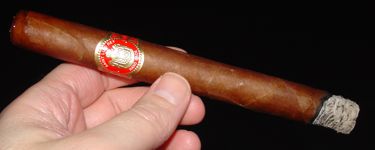
Nosotros Robusto

By now most have heard that the Nosotros cigar, a joint product of Illusione and Drew Estates, is no more. There were production issues from the start, and evidently they didn’t improve. But that’s no reason not to complain.

I’ve never met an Illusione cigar I didn’t like, so I was expecting great things from Nosotros. What I found was a cigar that may have some serious consistency problems.

A mostly Nicaraguan blend with an Aganorsa wrapper leaf, a true Connecticut Habano binder, and Oliva ASP filler, Nosotros is (or was) made in the Drew Estates factory in Nicaragua. While somewhat notorious for their flavored ACID cigars, Drew Estates is now doing quite well with traditional blends, so the collaboration with Illusione was not completely out of left field.

I was told by several people that the new release was a bit green and could use some extra time in the box, so I let the few robustos that I acquired in the spring relax over the summer for a big fall debut.

The first robusto that I fired up was a maddening experience. It started out with a tough draw, but one I felt I could fight through. The smoke was flavorful, woody with some sharp spices, but the wrapper wouldn’t burn. After about half an inch the flavor turned sharp and thin, and after staring quizzically down the business end of the cigar I realized it was tunneling.

The only remedy I’ve been able to find for tunneling is to let the cigar extinguish itself, cool off a bit, and then amputate the offending extremity. Then, starting over with a fresh stump, hope for the best. When I cut the cigar I could see that the tobacco around the binder was booked, and the center core looked loose, as if a leaf were missing. Clearly this was a bad bunch. I tried to smoke it again, but what I got was sharp, hot, and sour.

Disgusted and disappointed, I returned to the humidor and found a Rocky Patel Sungrown to soothe my frayed nerves.

One cigar does not make or break a blend in my book, so several days later I decided to give the Nosotros another go. This one was much better.

Construction Notes

The wrapper is grainy and the cap is unusual. It looks like a single wrap with a circular slice of the leaf fixed on top. The draw on both samples was a bit tight, but not to the point of despair. And aside from the obvious burn problems with the faulty stick, the good one was still problematic — without frequent puffing, which is not my style, it went out entirely and had to be re-lit.

Overall construction values: Not very good.

Tasting Notes

The best qualities of this cigar are very similar to the best qualities of Illusione.  It has a woody foundation, but it’s not the typical cedar flavor found in so many cigars — it’s more like hardwood than cedar or pine. The aroma enhances this flavor with something like sweet hickory.

Black pepper makes an appearance in the first stage, along with some cereal type flavors and straightforward bright virginia-style tobacco. The cigar gradually gets smoother, offering up balanced flavor and a medium body.

Nosotros isn’t as crisp and clean tasting as Illusione, but there is an additional dimension to the blend that makes it very distinct. There is another bass note in there somewhere which makes this cigar a little more complex.

I was finishing this cigar without any further construction problems when I lurched from my chair and discovered a serious, but silent, nicotine payload. This is a fairly potent cigar but it doesn’t have the swagger of one. That I like.

Conclusion

I am ambivalent about this cigar, which is okay I guess because it is no longer being made. Of the two I smoked, one was a complete disaster, and the other demonstrated middling construction. But the flavors, when I could get them, were interesting, balanced, and quite pleasant.

Bottom line: I liked the blend, but not the construction, and one fails without the other. At around USD 9 per single cigar, I think I’ll pass on Nosotros.

Final Score: 78
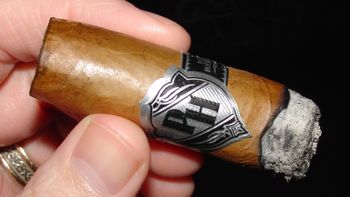
Puros Huerfanos 52X

I recently smoked a cigar from Drew Estates that was so surprisingly bad that I had to go out and buy a few more just to ensure that my first impression wasn’t a sign of premature senility.  (Or maybe the fact that I went out and bought more is the sign itself.)

That review has been put on hold until my senses recover from my flirtation with disaster.  In the meantime, I thought I’d give Drew Estates another opportunity with Puros Huerfanos, a Famous Smoke exclusive which is described as an “ultra premium first overrun.” I’m not sure if that description is internally consistent, but the price was right on a sampler pack so I snapped up a few.

The story on these cigars is that they were somehow “orphaned,” as if they were left by a skittish teenager at the convent door. I’m not sure if this story is meant to inspire pity or suspicion. Maybe both.

These “ultra premiums” are available in four sizes — robusto, toro, corona, and belicoso — and are a blend of Brazilian, Dominican and Nicaraguan long leaf tobaccos in an Ecuadorian Connecticut wrapper. Sometimes I wonder if a reputable cigar maker could wrap sawdust and carpet trimmings in an Ecuadorian Connecticut wrapper and get away with it. There seems to be no better way to dress up a cigar than with a golden buttery shade wrapper. (For the record, the very attractive PH 52X is entirely free of sawdust and carpet fibers.)

Construction Notes

Pro: In addition to its general aesthetic appeal, the Puros Huerfanos 52X is a well rolled cigar. All of the samples I’ve smoked so far have exhibited a fine draw and an even burn, though some of them seem to burn rather quickly.

Con: The ash is a little crumbly and they burn a little hot in the last third.

Overall very good construction.

Tasting Notes

The opening notes of the Puros Huerfanos 52 are dry and papery with an earthy aftertaste. Dirt might be an acquired taste, but I’ve come across some wonderfully earthy smokes in my time. Combining those flavors with paper and tannin might not suit everyone though, I admit.

In any case, the earthiness is quickly replaced by a smooth nutty flavor. The smoke texture is creamy and the strength is mild enough that this cigar could make decent breakfast material. The middle section of the stick is less tannic and sweeter. The aroma is typical of good Connecticut shade wrapper — sweet and floral, with some woody characteristics. The finish lengthens and the dry aftertaste lingers.

There isn’t much of a transition into the last third, as there rarely is with mild cigars. The flavors seem to settle on dry wood with a sweet floral component, balanced by a slightly dry bitterness on the tongue. My only concern is that the smoke gets too warm in the last lap. Smoking this cigar past the band is not recommended, or in my case, even possible.

Conclusion

Right now it looks like the robustos are selling for around 70 USD per box of 25, and the belicosos for around 80. That’s a reasonable price for this smoke. It’s well made, tastes okay (if dry and a bit greenish are okay), and it’s relatively cheap. It won’t knock your socks off, but if you’re in the market for a mild morning smoke it might be worth a shot.

If you can, try a few before you buy a box.

Final Score: 84

Saint Luis Rey Maduro vs. Serie G Maduro

This week’s journey into the humidor is a tale of two maduros, cigars that have different compositions but share a common name: Saint Luis Rey. They are both products of the mammoth Altadis USA, the largest producer of cigars in the US. When they aren’t suing smaller companies for trademark infringement they have been known, on occasion, to roll out a decent stick.

Saint Luis Rey is an old Cuban brand name, and in accordance with the rule that all cigars with traditional Cuban cigar names must have an American counterpart, the non-Cuban SLR emerged from the Big Bang of the Cigar Boom in the mid 1990’s. This “original” SLR has done well, having spawned eight vitolas — some in tubes, cabs of 50, and even pequenos. It is available in both natural and maduro wrappers, but the maduro employed here is Mexican San Andres, which is complemented by a Nicaraguan binder and fillers from Honduras, Nicaragua, and Peru.

The “new” SLR is the Serie G. It was first introduced in 2006, when various cigar blenders engaged the novel concept of the double maduro blend — in this case both binder and wrapper are Connecticut Broadleaf. The filler is Nicaraguan. A year later the Serie G Natural, with a Nicaraguan Habano wrapper, was added to the menu.

Bearing the same name might be the cause of some confusion between these two cigars, and whether this is deliberate or not (I have my theories) I hope to clarify the matter by obscuring the air with smoke.

St. Luis Rey Reserva Especial Maduro

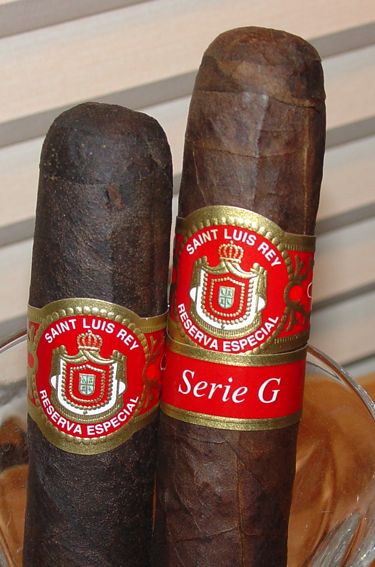
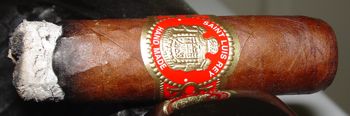
The standard Saint Luis Rey — the “Reserva Especial” — is quite distinguishable from the Serie G. Aside from a slightly smaller ring gauge, the wrapper on the Reserva is a flat, almost matte black color. I was a little worried that it might be dyed, but aside from color there was no evidence of that. The roll is solid, and the cap is ugly, but serviceable. Most of it came off when I clipped the head, leaving a clean cut anyway.

The burn is mostly even (no mean feat for any maduro cigar) but the ash is weak and flaky. (This was the first ash I’ve had fall in my lap in quite a while.) The draw, on the other hand, is perfect, producing billowing clouds of smooth smoke.

After a pleasantly peppery introduction, the core flavors are sweet wood and dark chocolate. It isn’t remarkably complex, but the blend is smooth as it gradually transitions in the last section to a sweet char. Aromatic isn’t exactly the word for this cigar — it’s pungent and quite powerful, more of a bonfire kind of cigar with it’s rich smell of tar and pine resin. A good room-clearing stogie if ever the need should arise.

St. Luis Rey Serie G Maduro

There are far fewer sizes to choose from in the Serie G formulation, but the rotund rothchilde has been a favorite of mine for years.  All of the vitolas in this line have over-sized waistlines; at a 54 ring gauge the rothchilde and the belicoso are the thinnest ones.

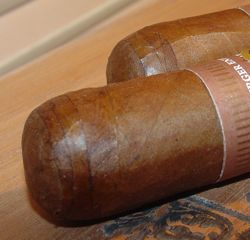
The Serie G is a little bit richer, a little bit smoother, and not quite as sweet as the regular SLR Maduro. This cigar is lighter in appearance (though still dark) and more natural looking, with its mottled and leathery wrapper. The roll is solid — sometimes a little too solid — and very well packed. From time to time I’ve had a tight draw with the rothchilde, but it burns well. The ash is a little stronger than the standard line SLR, but it still flakes a bit.

The core flavors are a piney wood with sweet char. There isn’t any pepper here until the last third of the cigar, and even then it stays pretty smooth. In the mid-section there are notes of leather and earth, but what I mostly find are the straightforward classic maduro flavors — wood, sweet char, and a touch of chocolate. It’s not heavy on the sweetness or the coffee/cocoa flavors, but it’s quite smooth. Like the regular SLR Maduro, the Serie G creates a pungent resting smoke.

Conclusion

Both of these cigars are fine everyday smokes, especially the Serie G, which is a bit more complex than the standard line. What sets them both apart is the price — the Serie G is just over 3 bucks a stick, and the regular line is well under that. One online retailer is selling the regular SLR for 55 USD per box of 25, and that officially makes this a bargain cigar.  Keep an eye out for these if your financial advisor (or your spouse, who are often one and the same) is getting cranky about your discretionary spending.

Final Scores:

Saint Luis Rey Reserva Especial Maduro: 86

Saint Luis Rey Serie G Maduro: 88

Mi Barrio El Puro

The business side of the cigar world is a rapidly changing affair. This has been especially evident with a worldwide recession and the steady barrage of draconian government tax policies. The net effect is easily seen here: what used to be EO Cigars is now EO Brands, after an early summer split with Miami Cigar and a merger with Rocky Patel. The reason given for the new arrangement is that EO wants to lower prices — a laudable  objective, but not one that bodes well for the industry at large.  A few months after these developments I started seeing Mi Barrio cigars selling at reduced prices on one of the big online retail outlets. That is not usually a good sign, but in this case it seems to be a result of the business environment rather than production quality.

So I’m not sure whether I should put this review in the present or the past tense. Mi Barrio was originally designed as a limited edition cigar anyway, but at this time it is still on the market. I’ll be optimistic and hope for the best.

Mi Barrio is produced by EO Brands and manufactured by Pepin Garcia’s My Father Cigars in Esteli, Nicaragua. The first size that was introduced is the one I’m smoking today, the one called “El Puro,” a fat double corona made in July 2008 and released later that year at the IPCPR. (Or was it the RTDA?)

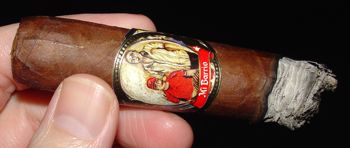
Only 1000 boxes in each of four sizes were slated for production. The toro was released in the fall of 2008, and the churchill and torpedo were unleashed in the summer of 2009. The bands and boxes feature art by Cuban artist Edin Gutierrez — a different design for each size. The band for El Puro, the double corona, shows Orestes Espinosa, Sr. (the father of EO Brands’ Erik Espinosa) and Pepin Garcia.

Like most of Pepin Garcia’s cigars, this one is a Nicaraguan puro.

  • El Puro – 7 x 52 (double corona)
  • El Acere – 6 x 50 (toro)
  • El Forro – 7 x 48 (churchill)
  • El Billetero – 5 1/2 x 52 (torpedo)

I’ve had a few of these double coronas put away since early 2009, and this is my last one. I have really enjoyed this cigar because it has all of the qualities that I really enjoy in a Nicaraguan puro without any of the harshness. They’re smoking so well right now that I just couldn’t hold off on them any longer.

Construction Notes

At 7 inches long and with a 52 ring gauge, the “El Puro” double corona is an imposing stick. The wrapper is leathery, but somewhat dry in appearance. A few veins are apparent but not obtrusive. The overall effect is leathery. The roll and the cap are just about perfect, as is to be expected from My Father Cigars.

The draw on this cigar is effortless, and smoke wafts gently from the head after each puff. Inside or on a still day, this cigar is almost as much a pleasure to view as it is to smoke.

The only criticisms I can make are that the burn is uneven at times and the ash is a bit flaky. But these minor flaws are completely outweighed by its finer qualities.

Overall excellent construction.

Tasting Notes

Mi Barrio’s double corona is a medium-bodied cigar — by EO/Pepin standards I almost want to call it mild. It is certainly milder than any of the 601 or Don Pepin cigars (Blue, Black, and White labels.) Instead of high octane tobacco and an explosion of black pepper what Mi Barrio offers is a more even tempered, but still flavorful experience.

The smoke in the first third is remarkably creamy, and though there is a touch of pepper in the first half-inch the primary flavors are of earth and cocoa. It is surprisingly mild and a bit dry.

In the mid-section the flavors turn sweeter with caramel accents and a hint of vanilla. The flavors remind me a little of Vegas Cubana, but more substantial and complex.

The pepper returns in the last third, but in a complementary rather than a dominant way. I’m reminded of charred oak barrels and at one point thought I tasted bourbon. (Not that bourbon would be the best companion for this cigar, unless you like it weak, which means I am not letting you near my bourbon.) But most importantly, this cigar stays smooth to the band.

Conclusion

Mi Barrio in this large format is a smooth and cocoa-laden smoke that any fan of medium-bodied cigars will enjoy.  It isn’t tremendously complex, but it is certainly satisfying. And coming from My Father Cigars in Esteli, the construction is as perfect as you’ll get in a Nicaraguan puro. The only hitch might be the price — around ten bucks a throw. But with the turbulence in the market and EO Brands’ commitment to lower prices, that ten dollar mark might fall.

Or Mi Barrio may just ride into the sunset. Or become gentrified. Whatever happens to barrios these days… In that case, I’m glad I had the chance to smoke a few before they’re gone.

Final Score: 90

Esencia Corona Gorda

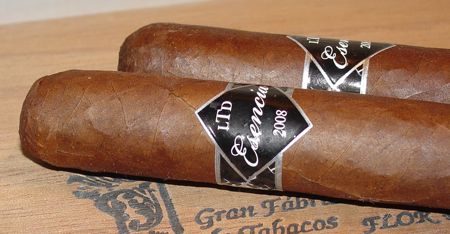
Esencia cigars were introduced in 2008 by Brothers of the Leaf, LLC, the same people who produce the fantastic Palio line of cigar cutters.

A cursory search for information about this cigar produced only a few basic facts: it is a Nicaraguan puro made in Honduras. The blend is composed of Nicaraguan criollo and corojo. According to one website, the wrapper is Nicaraguan corojo; official sources can’t confirm that, but it sounds about right.

The Esencia website shows four sizes in production — the churchill appears to be a recent addition:

Robusto – 4 7/8 x 50
Petite Corona – 5 1/8 x 42
Belicoso – 5 1/2 x 52
Corona Gorda – 5 5/8 x 46
Churchill – 7 x 47

Construction Notes

The Esencia Corona Gorda is quite dark, weathered, and almost maduro in color. A discreet sheen of oil gives it a glint of seriousness. The roll is solid and the cap is well integrated, though not perfectly wound. Both samples drew well with a burn that was a bit jagged at times, but acceptable. The ash is a dirty gray-black, very similar to what you get with an Illusione or many Padilla cigars.

Overall very good construction.

Tasting Notes

This swarthy Esencia cigar fires up woody and sweet, developing a rich flavor of hickory and pecan with some pepper on the tongue. The aroma is heavy, reminding me a little of resinous pine and cloves.

The peppery element is toned down a little in the middle section and the woody flavors lose some of their sweetness on the palate. The smoke continues its sweet serenade on the nose, however, producing sensations of caramel and molasses. The flavor on the palate is slightly tannic, which balances nicely against the aroma.

The final section of the Corona Gorda closes the circle and recapitulates its initial impressions of pepper and sharp spice. Towards the band the smoke becomes fairly aggressive, but taken slowly the smoke is still smooth and enjoyable. This is a medium-to-full bodied cigar, but fans of full bodied smokes will particularly enjoy the last section.

Conclusion

Based on the flavor of the cigar, I would guess that there is some Aganorsa leaf in this blend, and if I had to guess where it’s made I would guess the Raices Cubanas factory. There is a definite resemblance to Illusione, Padilla, and Particulares (as well as other Casa Fernandez blends.) I may well be wrong, but that’s what my taste buds are telling me.

If you enjoy that style of Nicaraguan smoke — crisp, spicy, and fairly complex — you will assuredly find this one enjoyable as well. If anything, the Esencia is a little bit smoother.  Unfortunately, the price is well over the century mark for a box — around USD 8.00 per stick for the corona gorda. Not the price I was hoping for, but certainly not unreasonable either, and in any case it’s money well spent.

Final Score: 90

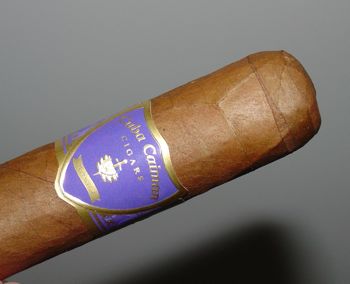
Cuba Caiman Cigars

Cuba Caiman is a relatively low-profile cigar company, at least by comparison with the larger outfits that dominate the market. The company is headquartered in North Miami Beach and their production facility is in Danli, Honduras. In addition to their premium Cuba Caiman blend, they produce naked bundled cigars and are able to provide custom banding through their “Label Your Cigar” division. It sounds a little fly-by-night, but they have been in business for over ten years — which in this business is an achievement in itself.

I asked their media contact about the name “Cuba Caiman” and it turns out the Caiman is actually the island of Cuba itself. The geographic shape of Cuba resembles a crocodile. (I’m not sure if there is a political statement in there as well, but it wouldn’t surprise me.)

Tabacalera Danan in Danli is operated by Pedro Estevez, a Cuban native who learned the trade as it was passed down from his family. Today Estevez produces the Cuba Caiman Premium blend, Pedro Estevez “Naked Bundles,” which is the blend available with custom banding, and other blends for private customers.

Each line is available in four styles — Connecticut, Habano, Maduro, and Barber Pole — and all four styles are produced in nearly all the standard sizes. The Cuba Caiman blend and the “Naked Bundle” blends are very similar to each other in performance and flavor, but they are not identical in composition.

The Cuba Caiman Connecticut has an Ecuadorian “Cajuca” wrapper, a Nicaraguan Habano binder, and filler from Nicaragua and Honduras. The wrapper on the Pedro Estevez “Naked Bundle” cigar is also an Ecuadorian Connecticut seed leaf, but with its Honduran habano binder and slightly different fillers it tastes a bit different.

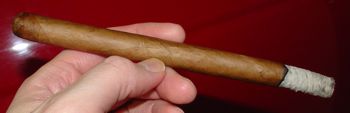
The Cuba Caiman Connecticut robusto is smooth and earthy with a creamy texture. It’s medium in body, but mild and floral in the way that most Connecticut-wrapped cigars are. The unbanded Pedro Estevez lancero was quite distinct — leathery with a sandalwood spice on the nose. The texture and strength were on par with the Cuba Caiman, but otherwise it was completely out of character for a Connecticut stick. With its woody aftertaste and mildly tannic, peppery finish I was surprised to learn that this was a Connecticut and not a Habano wrapper. Both of these were excellent smokes, but I was surprised at how different they were.

The delegates from the Maduro division were much more similar to each other, probably because they have a similar makeup: both feature Mexican wrappers from the San Andres Valley and Sumatran binders. Both the banded torpedo and the unbanded churchill were very mild, easy smoking cigars with a touch of chocolate sweetness and a bit of char over a woody base. This would be an excellent cigar to hand out to new smokers. First, because this blend is mild and effortless to smoke, and second because it’s a perfect example of how a big black brute of a stogie can smoke like a sweetheart.

And finally, the Habanos. With binders from Sumatra and slightly different Nicaraguan/Honduran filler blends, these had a similar flavor, but the two cigars I had were so different in shape that they still showed different personalities. The Cuba Caiman churchill was musky with some caramel sweetness on the nose and gathered strength as it burned, by the end becoming fairly spicy with a peppery finish. The 6 x 60 unbanded Pedro Estevez was rolled a little bit too loosely, but the flavor was excellent: leathery but smooth, with plenty of Nicaraguan acidity and some of the sandalwood spice that I found in the unbanded Connecticut lancero.

Construction qualities were very good throughout the sample selection — with the exception of the Cuba Caiman Habano churchill, which needed a touchup now and then, these cigars are maintenance-free. I was a little surprised at how fine the naked bundle smokes turned out to be — the lancero in particular was quite attractive. The roll was a little soft, but that didn’t show up in the draw or the burn. (So who cares?)

Conclusion

I have to say that I was impressed by the Cuba Caiman, and surprised by the high quality of the Pedro Estevez bundled cigars. The Maduro was a little too mild for my taste, but I wouldn’t hesitate to choose these economically priced cigars for a special event, especially if cigar novices were expected to attend. Since I’ve only smoked one of each cigar I won’t rate them, but of the bunch I’ll say that the Connecticuts were my favorites — the Cuba Caiman robusto and the unbanded lancero.

Full pricing details are available at the Cuba Caiman website, but as representative examples, the Cuba Caiman robusto is available by the box for $95 or the bundle for $75, and the Pedro Estevez naked lancero is priced at $35 per bundle of 25. Given the quality of this cigar, that’s a steal.  And if you’re thinking about customized banding for a special event, their Label Your Cigar division can dress up those naked smokes in the tuxedo of your choice (for a nominal fee, of course.) It might be the next best thing to having a cigar roller at your event.

Thanks to Cuba Caiman for offering these samples. I think I’m going to get in line for some of those lanceros quite soon.

St. Luis Rey Cazadore — Aging Report

This is one of the last of a box of Saint Luis Rey Cazadores that I bought in late 2005 to conduct an aging experiment.  Soon after this the Cazadores vitola went out of production.  The manufacturer toned down the blend for the other sizes in the line, but this is the original Honduran blend. After reading so much about how well Cuban cigars age, I wanted to see how a full-bodied Non-Cuban cigar would hold up over a few years. After acquiring some aged Camacho Havanas that had become extremely mild over the years I wanted to compare different styles of non-Cuban cigars after a few years of aging.

When I first cracked the box I found the Cazadores to be aggressive, but tasty — woody and spicy with a peppery bite. Two years in long-term parking mellowed the smoke significantly, allowing more distinct flavors of leather and cinnamon to emerge, while still retaining some of the original bite.

It has now been almost five years since I purchased this box, most likely more than five years since they were produced, so it’s time to give them a final assessment.

Construction Notes

The St. Luis Rey Cazadore has not suffered at all from its long cedar nap. The wrapper is just as pretty as it was on opening the box in 2005, and the roll is solid with just a bit of give. One improvement made over time is the burn — these senior smokes are burning righteously, though the ash is still a mite flakey.

Overall construction: Very Good.

Tasting Notes

The first few puffs on the Cazadore are reminiscent of the young cigar — a touch of spice on the tongue — but this sensation quickly dissipates and is replaced by a smooth, almost creamy smoke. The smoke texture is still full in body and has a decent kick, but this feisty Honduran of 2005 has finally matured into a respectable citizen of the world.

When new this cigar’s aroma was almost undetectable amidst the hammering that it gave the palate, but five years later it reveals an enjoyable and subtle spice over an earthy foundation.

The mid-section of the cigar is still hearty, but its spirit has waned over the years. More than anything I enjoy the cedar and light spice on the nose — cinnamon or nutmeg I think — and the smooth earthy flavor. The final section gets a little more serious as the black pepper kicks in again, but the flavor loses complexity and eventually flatlines.

Conclusion

I think these cigars are probably a little past their peak at this point. The flavor isn’t completely washed away yet (as happened with the Camacho Havana after six years) but the complexity of the cigar is waning. The toasty, earthy flavor of this 5 year-old blend is still very enjoyable though, and the soft subtle spices that have emerged in the aroma are a nice surprise.

Aging this now -extinct SLR blend has produced a pronounced change in flavor as well as performance, and each stage of its maturation has revealed a different set of characteristics. That’s what makes aging cigars fun. Leave a comment if you have any suggestions for other blends — especially Non-Cuban cigars — that you think age really well.

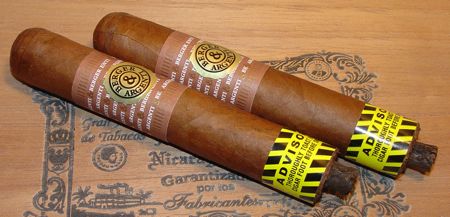
Berger & Argenti Entubar Robusto

Berger and Argenti’s Entubar. It sort of sounds like a dicey place to get a flat fixed in Ensenada. But of course it isn’t, so allow me to parse the name a bit.

Berger and Argenti are the combined forces of Kiki Berger, the man behind Cuban Crafters Cigars, and the Argenti brothers, who brought us brand extensions such as Por Larranaga Cuban Grade and El Rey del Mundo Olvidados through their Cuban Imports company. In 2009 Berger and the Argentis together developed a new cigar that incorporates the traditional entubar method of rolling cigars, with a proprietary twist.

Entubar refers to the method whereby individual filler leaves are rolled into themselves to create very small “tubes” which are then bunched together in the standard manner. This is an old Cuban bunching style which is said to promote oxygen delivery, resulting in a more productive draw and an even burn. This method is not new, but it is not often employed because it’s very time consuming for the roller and calls for greater skill. But it boosts the quality of the cigar (and unfortunately, also the price.)

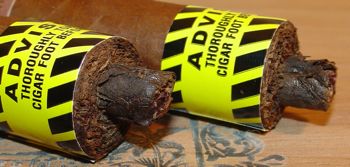
The twist in Berger and Argenti’s Entubar is the center ligero bunch that protrudes from the the foot for 3/8ths of an inch. This is actually bunched separately from the rest of the filler and is perfectly centered. This center “fuse” is composed of oily ligero from the the top of the tobacco plant — ligero provides power and concentrated flavor, but it does not burn well, which is why it is so important that it be correctly centered. This separate bunching process ensures that the cigar will burn evenly and develop a conical cinder.

The standard Entubar is wrapped in an Ecuadorian Connecticut leaf called “Desflorado,” a leaf that is used in some other Cuban Crafters cigars as well.  The rest of the cigar, filler and binder, is Nicaraguan in origin, and the cigar is produced in Berger’s Tabacalera Esteli in Nicaragua. (A brand new box-pressed maduro version called “Entubar Quad Maduro” was just released at IPCPR a few weeks ago.)

Construction Notes

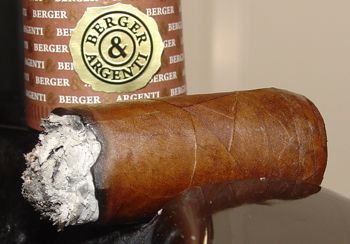
The Entubar robusto looks sharp with a slightly oily colorado claro wrapper and it makes a solid impression in the hand. The shoulders are clean, the head is well integrated, and the cap is nicely triple-wound. The draw is easy to pull but not airy at all.

It burns evenly and at moderate speed; it may have been a little too fast, or I may have been enjoying this cigar a little too much. These things are all relative, you know.  The only place I could fault the robusto is the ash, which was a little bit flaky on the perimeter. Otherwise the construction here was about as close to perfect as you can get. I think there may be something to this entubar technique after all.

Overall construction: Superb.

Tasting Notes

Carefully heeding the advice on the foot band, I thoroughly toasted the entire foot of the cigar as well as the protruding fuse, and was soon met with a mouthful of silky smooth smoke. The smoke texture is full in body, but with a docile temperament. The flavor is mild to medium in the first third, somewhat cedary, and a bit dry. The aroma is floral, but in a muted way that blends well with the woody component on the palate.

After an inch or two the flavor gets a little sweeter while remaining soft with a touch of earth or gunpowder. There is a hint of caramel on the nose, and the flavors are very well balanced.

The final stage tastes more typically Nicaraguan to me — it’s more intense with hard wood and a dash of black pepper. The caramel is joined by a powdering of cocoa. The flavor is good to the last inch or so, way past the point where I usually put down a cigar.

Conclusion

Berger and Argenti’s Entubar is one of the better cigars I’ve picked up this year, and after crunching the numbers it looks like it has every other cigar beat hands down in the construction department. An almost perfect construction score and a very respectable tasting score has it in the running for the year’s top ten best cigar list.

The only bad news about this cigar is that sometimes you get what you pay for, and in this case what you get to pay is around 9 USD per stick. In that price range I’d normally be looking for a heavier, more expressive cigar, but in this case smooth flavor and impeccable construction is worth the extra consideration.

Final Score: 92

Mi Dominicana Robusto

Not too long ago the conventional wisdom was that cigar wrapper leaf could not be grown in the Dominican Republic. This skepticism was in large part due to the fact that it hadn’t been done before, and nobody was willing to take a chance on a difficult venture. Fuente was the first to prove definitively that Dominican wrapper could be a success, and in 1995 the proof was presented in the form of the Opus X.

For the Fuentes the bet paid off in spades, and other manufacturers soon followed suit: La Flor Dominicana and La Aurora came along a few years later, and today even smaller boutique companies like La Tradicion Cubana and Cusano have Dominican puros in their lineups. Even Davidoff just released one, the Puro d’Oro.

So it was a little surprising that it took as long as it did for the giant of Dominican cigar production to develop a Dominican puro, but in late 2008 Altadis USA released Mi Dominicana, blended by Tabacalera de Garcia’s general manager, Jose Seijas.

My favorite Dominican puro has always been La Aurora’s Cien Años, but I remember the excitement that surrounded the release of Opus X. So anytime a cigar manufacturer announces a new blend with Dominican wrapper, it gets my attention. Which doesn’t explain why it’s taken me so long to review this cigar, but anyway…

Mi Dominicana is available in 8 sizes:

  • 7 1/2 x 40 -Lancero (ranked #20 in Cigar Aficionado’s Top 25 Cigars for 2009)
  • 7 x 54 – Churchill
  • 6 1/8 x 52 – Belicoso
  • 6 x 54 – Toro
  • 5 3/4 x 52 – Figurado
  • 5 1/2 x 44 – Corona
  • 5 x 54 – Robusto
  • 4 1/4 x 46 – Short Figurado

Construction Notes

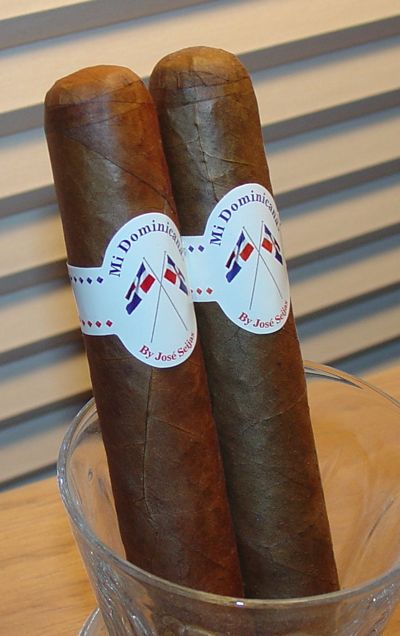
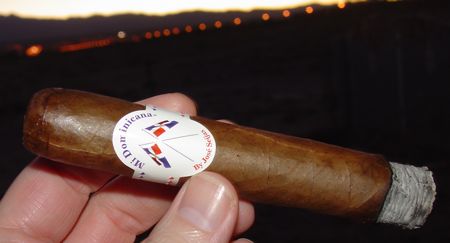
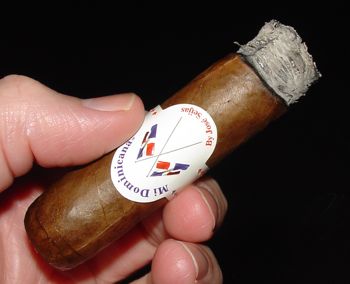
Mi Dominicana is a suave looking cigar with a slightly oily, smooth colorado claro wrapper. The head is triple wound, though not perfectly, and the cap is a bit wrinkled. These minor aesthetic considerations aside, the cigar is rolled well but softens a little too much as it burns. The draw is a little too open, which contributes to a hot burn at the cigar’s conclusion. Surprisingly, the loose draw does not affect this cigar’s burn time — it patiently smolders away at a leisurely pace. The ash is firm and the burn is even.

Overall construction: Good, but could be better.

Tasting Notes

The robusto opens with a smooth, mildly woody flavor. After a few puffs I notice a salty earthiness on the palate that almost reminds me of being by the ocean, so maybe Seijas is right when he says, “Everything that is beautiful about the Dominican Republic has gone into this cigar.”  The smoke texture is medium in body, at times almost creamy. The finish is slightly dry.

For me the highlight of Mi Dominicana is the aroma, but I find it to be very subtle and difficult to describe. It’s similar to the floral scents that I find in Connecticut shade wrapper, but understated and less sweet. The flavor on the palate becomes nuttier in the mid-section of the cigar, but the aftertaste continues to be earthy and dry with a salty edge.

There is a whiff of black pepper in the final section of the smoke and it grows a touch bitter at the very end, but the aroma continues to impress me. The loose draw also contributes to a somewhat heated last inch.

Conclusion

Mi Dominicana is a medium-bodied cigar with a mild disposition that will appeal to smokers who appreciate subtlety. The flavor on the palate is not tremendously complex, but the aroma is. It won’t wow lovers of big Nicaraguan blends, but if you’re a fan of nutty Dominican smokes you might find this one intriguing.

And for a Dominican puro, the price is on the mark: around 7 or 8 USD for the robusto. I don’t find that price point terribly attractive for the cigar in general, but for a Dominican puro it’s not bad.

Final Score: 87

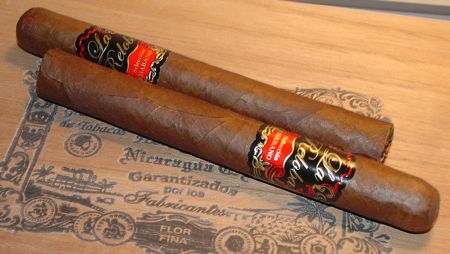
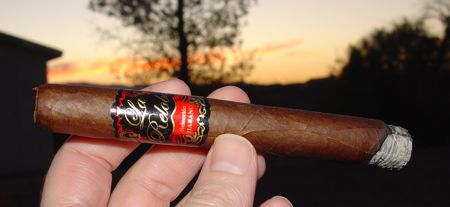
La Reloba Habano

In Cuba, La Reloba is a well known “peso” cigar, which is what the locals smoke. Peso cigars are more or less like bundled cigars: they are economical unbanded cigars sold in mazos, and they cost around one Cuban peso each. Hence, peso cigar. Cigars for export are generally too expensive for the average Cuban citizen. Come to think of it, Cuban cigars are too expensive for the average American these days as well, which is perhaps what gave My Father Cigars the inspiration to release this economical blend.

Released to little fanfare in April of this year, La Reloba is a Nicaraguan puro available in both Habano and Sumatra wrappers. The press on this cigar has been minimal. I think I saw one paragraph in CA that said, in essence, “Pepin releases cheap smoke” and that’s about it. If nothing else, the diffidence of the mainstream media is nice for the legion of cigar bloggers and our brothers and sisters on the cigar boards who will thereby exercise greater influence on the market. (Think positive, guys.)

Four sizes are available:

  • 5 5/8 x 46 – Corona
  • 5 x 50 – Robusto
  • 6 1/4 x 52 – Toro
  • 6 1/8 x 52 – Torpedo

Construction Notes

La Reloba is a nice looking stick, as one would expect from My Father Cigars. The wrapper is a smooth colorado maduro with a slight sheen, otherwise marred only by a few unobtrusive veins. The roll is solid and the caps are of course triple-wound. The draw is firm, but not tight, and the burn is even. The coronas I’ve been smoking build a long and handsome ash.

Overall excellent construction.

Tasting Notes

The corona opens up with a woody flavor and that trademark Pepin overture — lip smacking tannin and a blast of black pepper. It’s actually pretty restrained compared to higher end smokes from My Father Cigars, but there’s still no mistaking that you’re smoking a Nicaraguan puro.

After an inch or so the spice backs off and the flavor becomes a little more basic: cedar, toasted tobacco flavors, and a touch of cocoa on the nose. The aroma is not as complex as you’d find in the Black Label or the Series JJ, but it’s nothing to sneeze at either.

After mellowing in the mid-section, the final third turns up the heat, stoking the fires with hard wood and another dose of pepper. It gets a little aggressive at the band, but again, not in the way Pepin’s heavy hitters do.

Conclusion

When I feel like a medium-bodied Nicaraguan puro in the Pepin style I usually reach for a Vegas Cubanas or a Tatuaje Havana, and I think either of those would surpass La Reloba in a blind taste test.  But one of the most attractive details about La Reloba is the price: the coronas retail for around $4.50 a pop and the torpedos top out around $6.50. That’s outstanding for this level of quality, so the price can not be left out of the equation.

La Reloba is an extremely well constructed cigar available at an excellent price. And while it’s a fine cigar, it’s not as complex as higher-end brands from the same outfit. I think most of us have a balance in our collection between higher priced, complex, gourmet cigars and everyday, affordable, decent smokes. This is one to consider for the everyday job.

Final Score: 87