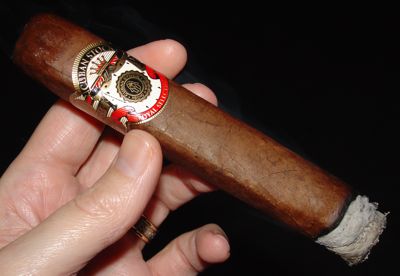
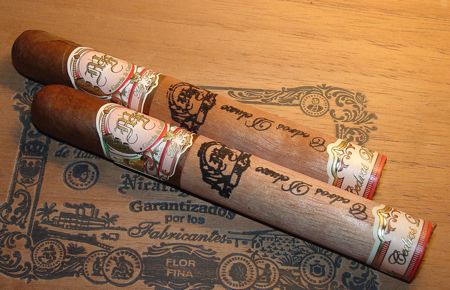
Cuban Stock Royal Selection Toro

One afternoon as I was perusing the shelves in the cigar shop I noticed an unfamiliar brand: Cuban Stock. With all of the “Cuban” appellations assigned to brands on American shelves it’s hard to tell one from another, but it was a nice looking stick. I was expecting to learn that this was a new blend made by an established cigar company, but the clerk at the desk told me that it is an independent brand.

After a little research, I found that “Cuban Stock” is owned by Crown David, which is a name that sounds vaguely familar from a long time ago. It turns out that Crown David changed its working name to take advantage of the product recognition that Cuban Stock, their premier line, has received over the years. I think I prefer “Crown David.” There should be more cigars with Biblical themes.

The Crown David factory was established in 1995 in Santiago, Dominican Republic. The Cuban Stock portfolio includes over a dozen different blends, including the “Chubbys” line, one of the first 60-ring cigars on the market. The Royal Selection employs Dominican binder and filler which has been aged for six years in wine barrels, and it is covered with a leaf from Ecuador. Habano? Sumatra? Who knows, but it looks sun grown and carefully processed.

  • Churchill – 7.25 x 52
  • Torpedo – 6.25 x 52
  • Toro – 6 x 50
  • Robusto – 5 x50
  • RS 660 – 6 x 60
  • Long Perfecto – 7 x 48
  • Short Perfecto – 4.5 x 48

Construction Notes

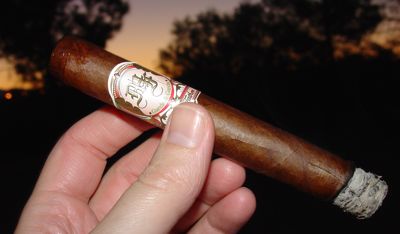
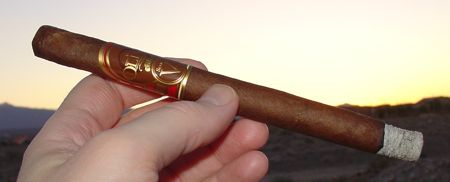
As I peel off the foot band of this toro I suddenly realize that I may have bitten off more than I can chew when I chose this vitola. This is a slugger of a stogie. The wrapper is a ruddy and attractive colorado maduro with fine veins. The cigar is square pressed, which might make it look even larger than it is, but it fits well in the hand, and is less of a gobstopper than I expected. The roll (or do I say the press?) is solid, and the draw is fine. The cap is functional and shears off nicely.

Unfortunately, the cigar does not produce as much smoke as I had hoped or expected from a cigar of such hefty dimensions. It burns well, but I found myself pulling twice or thrice on occasion to generate a reasonably sized cloud of smoke. This in turn caused the cinder to overheat a little, though that didn’t seem to affect the taste. Nevertheless, I found the cigar a bit laborious to smoke.

Overall Construction: Good

Tasting Notes

The difficulty I had with the smoke volume carried over to the flavor of the cigar, but it didn’t affect the aroma, which is rich and expressive. Leather and cedar are the major components, with hints of pepper and cinnamon appearing at various points.

The smoke is quite smooth, and the flavors are consistent but not terribly interesting. I would expect a cigar this big to offer flavor transitions along the way, but the flavors on the palate are simple and, well, a little boring. A little dry wood, a touch of leather. After 60 minutes of pulling and working this stick, tedium set in. Were it not for the hope that change would arrive at any moment (don’t forget to vote, my fellow Americans) I would have tired of this toro at the half.

Conclusion

At around $6 USD the price for this cigar is reasonable, but if I have the opportunity to smoke the Royal Selection again I will choose a smaller size. The toro is a nice looking cigar with a fantastic aroma, but the flavors were simple and one dimensional. It’s not a bad cigar by any stretch, but I expect more depth from a cigar that takes an hour or more to smoke.

Final Score: 84

CAO Concert “Roadie”

The CAO cigar brand has changed hands, moved headquarters, and reinvented itself, but the label’s new directors haven’t forgotten where CAO started: Music City, USA. The CAO Concert was blended by Rick Rodriguez as a tribute to Nashville, Tennessee, CAO’s original home town.

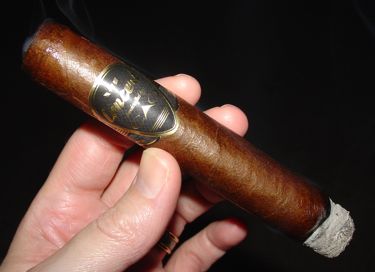
The music theme of the Concert brand is apparent in almost every way: the box resembles a Marshall amp, the bands are designed to look like guitar picks from the front, the upper parts of a Fender Strat on the sides, and fretboards meeting in the back. (Wouldn’t a Telecaster have been better for Nashville?) The frontmarks are concert-related, and the cigar was even given a sneak preview release at the Country Music Association’s Music Festival last summer.

I will make an attempt to restrain myself from abusing the music theme in this review. I will not not hammer on harmony or refer to the cigar’s opening act. I will not speak of overtures, or codas, or cadences. Not a note of it, I swear.

The wrapper is an habano rosado leaf grown in Ecuador, the binder is Connecticut broadleaf, and four different leaves from Nicaragua and Honduras comprise the filler. The cigar is made in four sizes, all 5 1/2 inches in length:

  • Solo – 5 1/2 x 50
  • Stage – 5 1/2 x 60
  • Amp – 5 1/2 x 46
  • Roadie – 5 1/2 x 54

Construction Notes

The wrapper on the CAO Concert is dark, glossy, and almost veinless. Unfortunately, it is also very thin and prone to cracking. The head of the cigar is flat with wide shoulders. With a ring gauge of 54 this cigar is built like a fire plug. The draw ranged from easy to firm, and the burn was slow and even.

It’s an attractive cigar until the wrapper starts to crack at the back. The humidity where I live hovers around 10-15%, so desert shock might be the culprit, though that’s rarely a problem with other cigars. Like all of my other cigars, I stored these at 65%, but maybe the Concert requires a more tropical residence.

Overall construction very good, discounting for possible storage errors on my part.

Tasting Notes

The Roadie is a bit wide for my taste, but the flavors are smooth and well balanced. The cigar opens with cedar sweetness and a dusting of cayenne which quickly dissipates, leaving a medium-bodied base of coffee and some soft baking spices — cinnamon, mild clove, or maybe even sandalwood.

The second half of the cigar builds on the coffee base and adds a touch of musk. The aroma grows sharper, a bit spicier, but retains a lot of its sweetness. The Roadie stays balanced throughout, even while it transitions from light and sweet to darker and muskier flavors. It’s medium in body and easy to smoke. I didn’t notice any harshness at all and the cigar didn’t bitter at all until the very end, well after the second encore. (Damn. Almost made it.)

Conclusion

Conscientious and critical cigar smokers rarely get excited about medium-bodied cigars, but this is one that I would urge everyone to try. I was surprised at the complexity of this new CAO blend, and with its smooth demeanor and suave appearance, I highly recommend it. The Roadie is good for almost 90 minutes of tasty smoking, for which the $6.00 entry fee is a pittance.

I hope that the wrapper cracking was an environmental issue that won’t occur to many other smokers, because in every other respect it performed beautifully. The only thing that I would like to see changed is the design of the band. The little Stratocaster tips are easily bent and quickly become annoying. Maybe they’ll take up my suggestion and change it to a Telecaster, so there will be only one tip to tear off. Aside from that small complaint, this is a wang dang doodle of a cigar.

Final Score: 91

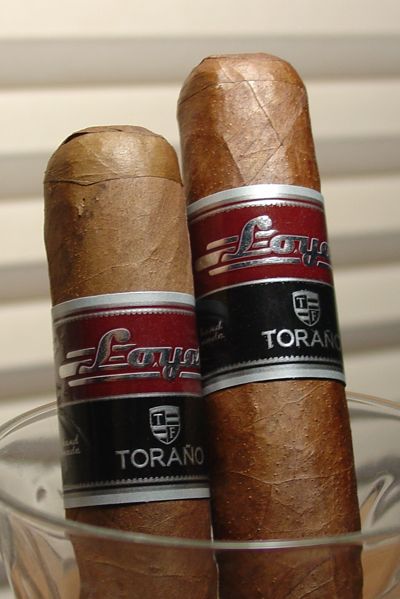
Torano Loyal Robusto

Cigar marketing is almost always directed at smokers who go for a certain style. The broad categories are well know — there are the mild-to-medium bodied cigars that appeal to a certain group, the heavy-duty ligero bombs that appeal to another group, and then there’s the boutique crowd.  There is some cross-over, and a lot of advertising flim-flam, but achieving real distinction within a certain style can’t be easy for a new brand or line.

The group that Toraño’s Loyal is aimed at is my group: the value crowd. Toraño is an established name with an excellent reputation for producing fine smokes, and most of them are priced quite reasonably. And a nice price point is nearly as compelling as an ad featuring pretty girls in bikinis. (Nearly. I said nearly.)

Toraño’s Loyal blend was introduced in 2011 as a way of “providing outstanding value to cigar lovers.” Most cigars made by Toraño have a high quality-to-price ratio anyway, so I was interested to see what they would come up with when the bottom line was the bottom dollar.

The Loyal is a three-country blend: the core is composed of Dominican and Nicaraguan tobaccos, which are then wrapped up in a Nicaraguan binder, and the cover leaf is a Sumatra-seed leaf from Ecuador. The cigar is available in four sizes:

  • Robusto – 5 x 56
  • Torpedo – 6 1/8 x 52
  • Churchill – 7 x 47
  • BFC – 6 x 60

Construction Notes

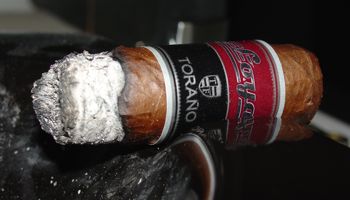
The wrapper on the Loyal Robusto is a dark and mottled colorado leaf with considerable tooth. It’s also very thin and prone to cracking, but the two sticks I smoked for the review survived mostly intact despite some fine wrapper splits. The cigar has a flat head and the cap is cleanly finished. The draw is a bit loose, but since that didn’t affect the temperature of the smoke I didn’t count it a serious flaw. The burn, in fact, is even and slow and mostly on the level. The ash is a little flaky due to the thin wrapper, but it’s solid and holds well.

Overall very good construction.

Tasting Notes

The Toraño Loyal Robusto is a smooth and easy smoking cigar. The first half is characterized by caramel and graham cracker flavors, and the fragile wrapper contributes a sweet and complex aroma. There is just a touch of dryness on the palate. The smoke is medium in texture, but fairly mild in strength. The second half brings out more cocoa and coffee flavors while the aroma remains soft and sweet.

There is a gentle transition from the first half to the second of this robusto, but it goes easy on the drama. The subtle complexities of the aroma could easily be overpowered by stronger tasting filler leaves, but that doesn’t happen here. This blend’s primary virtue is balance.

Final Score: 90

Conclusion

Toraño’s Loyal was designed with value in mind, and value it certainly delivers. It’s not exactly a “bargain” cigar, but the MSRP is around $5 USD for the robusto; add two bits for the larger sizes. Value aside, the Loyal is also a fantastic cigar to pair with a cup of coffee.

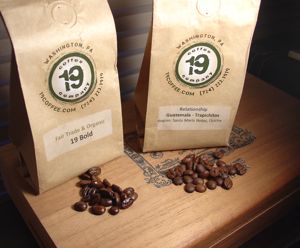
Lately I’ve been brewing coffees from Washington, Pennsylvania’s 19 Coffee Company. I’ve sampled three different offerings from 19, and they have all been remarkably smooth. Even their Bold blend, which is a rich and full-bodied french roast style coffee, is also as smooth as a china cup. Their Centrals have been extremely well balanced for light-roasted coffees. My wife is especially fond of the Guatemalan Trapichitos, in which she finds a caramel note that she really likes. Any of these coffees would be a great companion for Toraño’s Loyal.

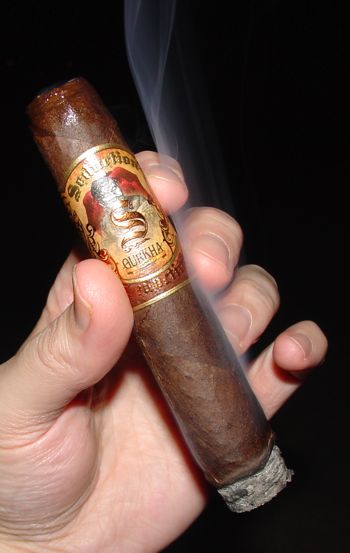
Gurkha Seduction Robusto

Recently I’ve noticed how often people misuse the word “notoriety.” As in the following, from advertising for a construction company:  “Erecting the steel on each these projects in a safe and efficient manner brought them notoriety on a national level.”  I certainly hope not. Notoriety is specifically negative attention. Notorious construction usually leads to protracted litigation, and that’s not the kind of attention you want to bring to your enterprise.

Which brings me to the subject of Gurkha cigars, a brand of great “notoriety.” Utter the word “Gurkha” in a room of seasoned cigar smokers and inevitably the muffled laughter and condescending remarks will follow. When a company sells a single cigar for $825 (the cognac-infused Gurkha HMR) this is to be expected. But Gurkha as a company has in fact been enormously successful and has continuously increased production. The company recently expanded its corporate headquarters, moving them from Miami to Ft. Lauderdale, and currently produces cigars in five factories in Nicaragua and the Dominican Republic.

If that’s “notoriety,” I guess they’ll take it.

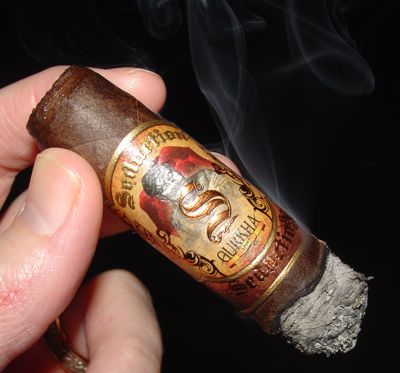
Gurkha’s Seduction blend was released last year, along side the company’s other newcomers, Cellar Reserve and Royal Challenge. Seduction is made at the Cuevas factory in the Dominican Republic, and features an unusual three country blend. The wrapper is a dark Ecuadorian Habano, beneath which is a Dominican Olor binder. The filler is entirely Colombian Corojo.

As is customary with Gurkha, the box and the cigar bands are the brand’s best advertising tool. The Seduction box has a black velvet texture, almost like suede, and is hinged on both sides of the box so it can unfold in the middle. The bronze and parchment-colored bands stand out against the dark shade of the cigars. Four sizes are in production:

  • Robusto 5 x 55
  • Toro 6 x 55
  • Churchill 7 x 55
  • XO 6 x 60

Construction Notes

The Seduction is not a maduro cigar, but the Ecuadorian Habano leaf that covers the cigar is consistently maduro in color. The wrapper is rough and slightly dry, and it smells like an abandoned barn. The roll is solid, and the cap is rounded and cuts cleanly. I’ve smoked a handful of these now and every one has been packed well and has drawn perfectly. The burn is mostly even. A couple cigars have shown rebellious tendencies, but these have been easily corrected.

Overall construction: Excellent.

Tasting Notes

I have smoked a dozen of these robustos over the past 9 months, and I’ve noticed that the flavor spectrum changes over time. When fresh, the cigar is bright and sassy. (I would expect that a cigar named Seduction should always be smoked fresh, and should always be bright and sassy. Otherwise it might be called Dirty Old Man in the Park. And given the cavalier way in which cigars are named these days, I’m expecting to see a DOMP on the shelves any day now.)

But the aged Seduction is a much mellower cigar, opening with rich billows of chocolate and muted cedar. The smoke is aromatic, but too heavy to convey much subtlety. The cigar produces a prodigious amount of smoke and burns slowly. I put the cigar down for about ten minutes to do something in the house and fully expected having to re-light on my return. But the half-smoked Seduction was still smoldering.

There is still a touch of spice in the middle third, but this gradually diminishes until the flavors are more or less leathery with sweet chocolate overtones. There is a fruity note which adds some complexity. The combination of chocolate and jammy fruit makes it a great dessert cigar, especially when paired with a full-bodied coffee like 19 Bold from the 19 Coffee Company. (More on 19 in an upcoming post.)

By the mid-point of the cigar the flavors meld into a pleasant but mundane blend of dry wood and coffee, and from there it’s a casual coast to the finish line.

Conclusion

Gurkha may not have hit the ball out of the park with this one, but it’s a solid double. I really enjoy the fact that this is a full-bodied cigar that is only mild to medium in strength, so it can be smoked at pretty much any time of day. The cigar is also veritable smoke machine. You could probably smoke a gopher out of its hole with this one, except the gopher might steal your cigar.

Going price is around $7.00, and this is a retail exclusive. Try one now, and put one away for a few months.

Final Score: 88

Illusione Maduro cg:4

It doesn’t seem possible that the Illusione cg:4 could be improved upon, but that’s no excuse for not trying. Last year, Dion Giolito went back into the lab and emerged with a new species. By replacing the inimitable corojo wrapper on the “original document” with a maduro leaf from Mexico’s San Andres valley he has essentially re-engineered the cigar.  But can the younger sibling can escape the shadow of its glorious brother? Maybe… if it can do something that Big Brother cannot.

Like all the other Illusione (with the exception of the Singulare) they are made at the Raices Cubanas factory in Honduras.

The Maduro line does not cover the entire spectrum of sizes, but most of the classic vitolas are covered:

~hl~ lancero 7 1/2 x 40
~88~ robusto 5 x 52
~cg:4~ corona gorda 5 5/8 x 46
~888~ churchill 7 1/2 x 48
~mj12~ toro gordo 6 x 54

Construction Notes

The maduro wrapper on the cg:4 is not much darker than the natural, but the fermentation and aging process results in the leaf appearing much more mottled. The oily texture of the cigar is still quite appealing, but maybe this impression is the result of experience more than aesthetics.

The roll is firm, the cap is picture perfect, and the draw is right in the zone. It burns beautifully (even for a maduro) and leaves a long dirty gray ash. Pretty typical for Illusione.

Overall construction: excellent.

Tasting Notes

The maduro cg:4 starts in much the same way that the natural does: it’s bright and zingy, establishing the flavors that the “original document” made familiar many years ago. The difference with the maduro is the hallmark of San Andres maduro leaf: the distinct flavor and scent of chocolate and dark-roasted coffee.

The core of the cigar is earthy with some cedar notes sneaking in between the coffee and cocoa bean flavors. The sharp acidic and woody flavors with which the cigar opens gradually fade without disappearing altogether. The maduro incarnation of this blend seems to be a little smoother than the natural while remaining in the medium-to-full bodied range.

The last third of the cigar is spicier and comes with a sneaky punch.  It feels like being the last one at the bar. (I know this feeling from reading only the best dimestore detective novels.) It’s last call and the doors are swinging shut. Even the regulars have stumbled out into the misty early morning. Your glass is dry, your wallet is empty, and the bartender is giving you the evil eye. The sweetness of the maduro has made a hasty escape and now it’s time for you to do the same.

Conclusion

The Maduro version of the cg:4 is an immensely satisfying cigar, but the question that always arises is the one that nobody really wants to answer: is it better than the natural? It’s like choosing who is the favorite of your children. You don’t want to do it, but in the deep recesses of your crooked little heart you do it anyway.

I guess for me it’s still the natural. The Maduro is priced the same as the natural, around 8 USD per stick. Not an everyday cigar for me, but not out of reach either. In any case, the price to value ratio is about right. It’s an excellent smoke.

Final Score: 90

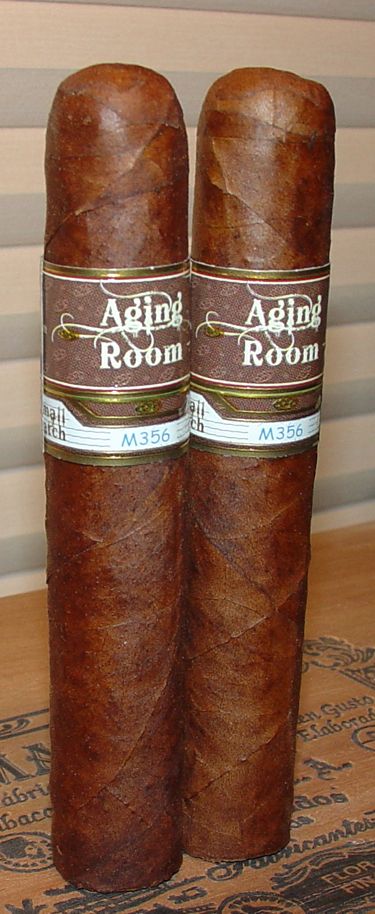
Aging Room M356 Presto

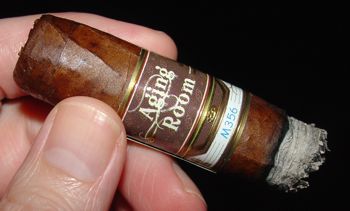
Made by Jochi Blanco at Tabacalera La Palma in Tamboril, DR, this Dominican puro has garnered rave reviews and a spot on CA’s “25 Best Cigars of 2011” list. The Aging Room brand is owned by Rafael Nodal, who also owns the Oliveros and Swag brands.

Aging Room cigars are designed to be limited release, small batch blends that utilize high quality tobaccos in short supply. This blend, designated M356, is made with an habano ligero wrapper, but other blends are now in the works — Aging Room Quattro will be a square pressed cigar with an Indonesian wrapper, and Aging Room Havao will have a Connecticut wrapper grown in Ecuador.

Rafael Nodal is a classically trained musician who came to the United States from Cuba during the Mariel boatlift. But Miami at the time was not exactly a bastion of classical music, so Nodal eventually worked his way from the symphony to the cigar business. This should explain the reason for the frontmarks:

  • Major: 6 1/2 x 60
  • Mezzo: 6 x 54
  • Presto: 4 1/2 x 48
  • Rondo: 5 x 50

Construction Notes

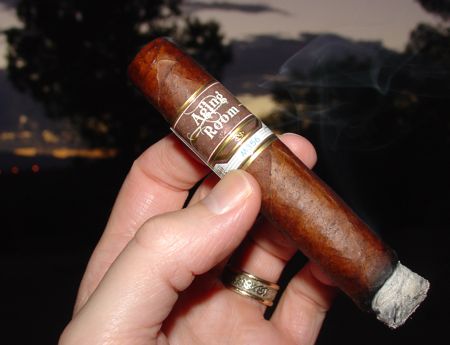
The Aging Room Presto is a small robusto with a rough-hewn colorado maduro wrapper. The band has a dated, almost 70s-style typeface, which is both unattractive and perhaps a portent of things to come. Of the two that I bought and smoked for this review, one of them was underfilled and tunnelled badly. The other was firm and had a respectably conservative draw, but it still got quite hot and bitter at the close.

Overall construction: Needs improvement.

Tasting Notes

The wrapper on this cigar is tasty and aromatic. Rich notes of oak and vanilla waft from the foot as the cigar is lit. The base note on the palate is black pepper, which eases up after a half-inch or so, leaving an earthy taste with grassy highlights.

But about half way through the cigar the flavors bottom out and become ashy, and finally they turn bitter. The first cigar that I smoked was clearly defective, so I attributed the acrid flavor to tunnelling. But even though the second cigar burned better, the taste was not vastly improved.

After a few minutes of furrowing my brow and staring quizzically at the cigar did not effect any improvement, I pitched it.

Conclusion

I generally do not review cigars that perform this poorly, but I decided to go ahead with with this one for a couple reasons. The first is that the wrapper on the Aging Room is quite nice, and I would love to try it on a different cigar. The second is that CA reviewed this blend so highly that I was somewhat shocked to have a radically different experience.

It’s possible that I may have drawn from a bad box, and I hesitate to slam a blend after smoking only two representatives of the brand. These limitations aside, I think I am inclined to gratitude for the limited nature of this release.

Vallejuelo Robusto

Vallejuelo is best known for its nomination as one of Cigar Aficionado’s Best Bargain cigars of 2010. The Robusto Gordo scored 93 points, along with CAO’s La Traviata Divino and La Aroma de Cuba Robusto. I do not subscribe wholeheartedly to CA’s opinion, but I respect it like any other opinion, and I’m always interested in a bargain. So I began my quest for Vallejuelo.

So I searched and searched in my local shops, made inquiries, but finally came up empty handed. Eventually I got distracted by other developments in the cigar world and the brand fell off my horizon.

A few weeks ago I was reminded by a reader about the Vallejuelo brand and while placing an order for some other things saw that Atlantic Cigar now carries them. They’re not expensive, and they fit in my shopping basket nicely.

Vallejuelo is made by Intercigar, a Dominican company established by Dutch cigar impresario Maurice Antonius Koks. Intercigar also makes a budget brand called Antonius, and judging from their website they also make private label cigars for independent retailers. Vallejuelo was originally designed for the Swiss market as a less expensive alternative to Cuban cigars. They are certainly less expensive. In other respects it’s setting the bar very high, but we’ll just have to see if they stand up to the Behike.

Vallejuelo features a Nicaraguan and Dominican blend of fillers, a Dominican binder, and an Habano wrapper grown in Ecuador. There appear to be four sizes in production:

  • Robusto – 5 x 50
  • Robusto Gordo – 5 x 54
  • Gran Toro – 6 x 54
  • Gordo – 6 x 60

The name “Vallejuelo” means small valley.

Construction Notes

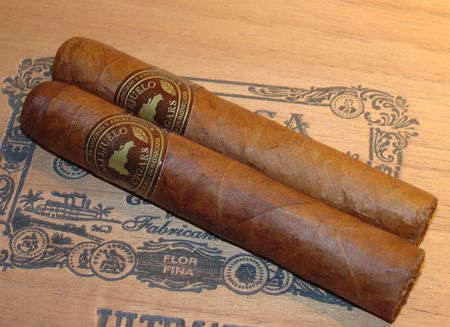
Take the band off a Vallejuelo robusto and it might be confused for half a dozen other high-quality smokes featuring triple-wrapped heads. The wrapper is a dark golden brown with a nice sheen. Pressing the cigar reveals a hard pack with almost no give, but the draw is open and the cigar burns at a leisurely pace. The ash is slightly flaky, but it holds.

Overall very good construction.

Tasting Notes

This is a very much a Nicaraguan style cigar. It opens with a brash dose of black pepper and then mellows into an earthy, but somewhat sharp smoke.

After the initial spice of the Vallejuelo wears away, the mid-section slides into a potent mixture of earth and wood. The wrapper adds a note of cocoa and a touch of sweetness to the mix.

The finale of the cigar is a return to the first third as the pepper makes a brief comeback and the smoke gets down and dirty. I’d classify this cigar as medium in body but full in strength. It’s one of those cigars that throws me back in my chair like the guy in that old Maxell ad. Just sub in a lawn chair and put him in the back yard.

Conclusion

Vallejuelo is a tasty Nicaraguan-style cigar with a good thump. The robusto is a strong and earthy smoke with a subtle aroma, and that’s not easy to find in this price range. Its only flaw is some harshness that might fade a bit with age.

Is Vallejuelo a reasonable alternative to Cuban cigars? Not exactly. But at $4.00 a stick it’s a less expensive alternative to many of the high-end cigars coming out of Nicaragua these days. I’ll be looking for this one in a couple other sizes to see if I can get the same flavor at a slightly lower voltage level.

Final Score: 89

Partagas 1845

I have been eagerly awaiting the second coming of the Benji Menendez Partagas Master Series, but my patience has yet to be rewarded. While my vigil continues, General has kept Benji busy on another Partagas project, one with a view to the future. Benji’s role in the creation of the Partagas 1845 was more as a mentor than a blender, but this may be even more important than the creation of a new cigar.

The fine art of cigar blending is not exactly endangered, but with all of the dark forces arrayed against the cigar industry I am happy to see the elder craftsmen passing the torch lighter. Benji puts it simply: the goal is “to help the next generation of cigar masters create new cigars and grow in the business. If I can plant a seed in their minds so they can grow a tree, I am happy.”

The Partagas 1845 was designed to sit in between the classic Partagas blend with the Cameroon wrapper and the full-bodied Partagas Black. Not too soft, not too hard. It’s the Goldilocks blend. (…cigarfan is available for brand name and marketing advice. Also children’s parties.)

The blend is sophisticated and unusual. Starting with the core of the cigar, there is Dominican piloto cubano and tobaccos from three different areas of Nicaragua. Some of these leaves have been aged in Dominican rum barrels, and about half-way through the cigar I found this really shows. The binder is a Habano strain grown in Connecticut, and the cigar is topped off with another Habano leaf, a Viso grade leaf grown in Ecuador.

The 1845 made its debut a couple months ago in the following sizes:

  •  Corona Extra  – 4.5” x 46
  •  Robusto – 5.5” x 49
  •  Gigante – 6” x 60
  •  Double Corona 7.25” x 54
Construction Notes

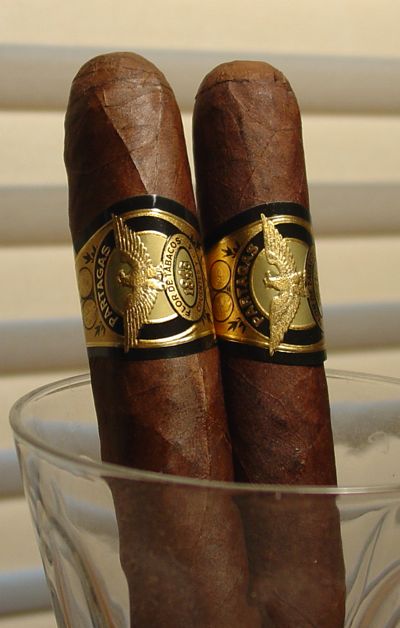
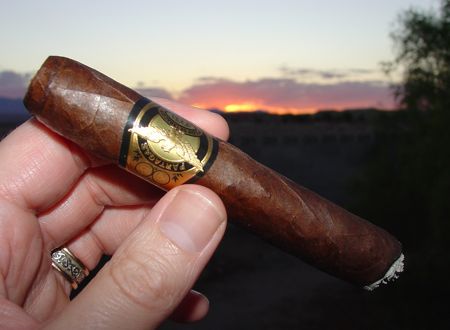
The Ecuadorian wrapper on the 1845 is dark, veiny, and somewhat ruddy, but it’s oily enough to give it a rich rather than a rustic appearance.  The wrapper is also quite thin, revealing the binder and giving the stick a bumpy appearance. The roll is a bit soft, but the draw is excellent and the burn is even for the most part. I had to touch up the burn occasionally for cosmetic reasons, but that probably wasn’t necessary. The head is finished with an eye to functionality, as is generally the case with General Cigars. The ash is dark but solid.

Overall construction very good.

Tasting Notes

I sampled this blend in all four sizes and found the smaller ones to be more concentrated in flavor, though not quite as smooth as the larger ones. The core flavors were the same, though they seemed to emerge at different stages depending on the size of the cigar.

The primary flavor of the Partagas 1845 is of sweet tangy wood, a flavor that reminded me at times of barbeque. This flavor becomes evident almost immediately in the Corona Extra, but it is a later development in the larger formats.

The larger sizes open with a mildly earthy, grass-like sweetness, whereas the smaller ones began with a woodier flavor. The smoke is somewhat dry and carries an acidic quality that I associate with Nicaraguan tobaccos. There is a touch of pepper, but it is employed here the way spices should be — as accents rather than entrees.

By the mid-point the 1845 picks up some leathery hints but the sweetness lingers on the nose. At this point there is a mildly liqeuer-ish, fruity quality to the flavor that might be a result of the the rum-barrel aging. I noticed this flavor in all four sizes (though at different stages) so it’s either a very consistent figment of my imagination or it’s there by the blender’s design.

The flavors darken a bit in the last third, charring at the band. The body remains in the medium range and even at the end the cigar is only moderately powerful. It has more heft than the Cameroon-wrapped “yellow box” Partagas, but it is also lighter (and much better, in my opinion) than the Partagas Black. But the flavor and style of the 1845 bear no similarity to its brand brothers, so the comparison is rather fruitless.

Conclusion

The Partagas 1845 is a fine medium-bodied cigar with a delicious aroma, but it suffers a bit from a lack of complexity. I preferred the runt of the litter here — the Corona Extra — for its concentration of flavors, even if it did get slightly abrasive in the last third.

Standard retail price for this line runs from $6.00 for the corona up to $7.50 for the double corona. If that’s in your everyday price range, this could be your everyday smoke.

Final Score: 88

Special thanks to General Cigar for providing samples. 

My Father Cedros Deluxe Cervantes

My Father Cigars reports that they have 700 employees, but there is nary a typist among them. Okay, I’m speculating about that last bit. Perhaps there is another reason why their website is so attractive and yet barren of content, but I’m fond of the notion that it is due to a paucity of secretarial skills in the workforce.

Those 7000 dextrous digits are kept away from all keyboards and directed instead to the rolling gallery of the Garcia Family Industrial Park, where they are producing some of Nicaragua’s finest smokes.

Soon after the My Father line of cigars was introduced in 2008, the Cedros Deluxe line was added in the lonsdale and corona gorda sizes, called Cervantes and Eminentes respectively. At first glance it’s difficult to see why the cedar is necessary because the regular My Father line is an impressively rich cigar to begin with. I guess cedar is like cowbell — more is better.

Due to the lack of information on this cigar I’m going to hazard a guess that the composition is the same as the standard My Father line — a blend of Nicaraguan fillers and binder (grown on the Garcias’ La Estrella farm in Esteli) and a Habano-Criollo hybrid wrapper from the Oliva Tobacco company in Ecuador.

Construction Notes

The stamped cedar sleeve on the My Father Cedros is an attractive aesthetic feature as well as a flavor enhancer, and the fact that it slides off so easily is pleasing as well. The wrapper is a ruddy colorado maduro with some fine veins and a touch of oil. As expected, the roll and the finishing touches at the head of the cigar are precise and refined.

The Cedros version seemed to burn a little bit faster than the No. 1, but it also seemed lighter to me, so maybe the proportion of ligero to lighter more combustible leaf is a bit different here. The Cervantes burned beautifully and exhibited in all other respects excellent construction, even exceeding the high quality of the the No. 1.

Overall construction excellent.

Tasting Notes

Anticipating my experience with the My Father No. 1, I was expecting the Cedros Deluxe to open with lashings of black pepper, but the Cervantes turns out to be a much more congenial cigar. Pepper is still front and center, but it’s balanced by other flavors and takes a civilized approach (as opposed to the hooligan mentality of the DPG Blue or the like.)

The cedar lends a sweet character to the smoke that blends well with an earthy and tannic flavor on the palate. A caramel-like quality shows up after an inch or two as the pepper relaxes.

The second half of the cigar develops more complexity as leathery flavors overtake the earthy ones. The smoke remains quite smooth and easy going, about medium in body and strength. The sweet cedary notes turn a bit darker. At one point I detected coconut, which might be attributed to environmental factors, like smoking in the waning hours of a summer day that pushed the mercury to 114 degrees. At the band the flavors start to char a bit and I’m ready to seek psychiatric assistance, or at least to go inside and cool off.

Conclusion

The My Father Cedros Cervantes is a slightly milder and more aromatic version of the My Father blend. I’m not sure if that is due to the size or if the blend has been tweaked for the Cedros Deluxe, but either way it suits me fine. It’s smooth and laden with cedar sweetness in balance with leather and earth.

Though perhaps not quite as complex as the No. 1, it’s well worth smoking as a medium-bodied alternative. Pricing is about the same, unfortunately — around $8-9 per stick. But in this case it’s worth the expense.

Final Score: 91

Aging Report: Oliva Serie V Lancero 2008

A few years ago I went to my one and only cigar event, a Cigar Aficionado Big Smoke evening at the Venetian Resort on the Las Vegas strip. I waited in the lines, met a few cigar stars, and went home with my swag. It was a good time, but not anything I’d go out of my way to do again. Crowds and noise are just not my thing.

But I do have one outstanding memory from that nicotine-powered, liquor-soaked evening: in the stygian gloom created by hundreds of cigar smokers a stout gentleman walked by me as I was waiting in line (a mob, really) at the La Aurora booth. He was smoking something so distinct and powerful that the aroma found a way through the thick cloud in the room to my nose, which was tickled and might have even twitched. I followed him around the corner and when he stopped to chat with someone I discreetly peered at the cigar in his left hand: an Oliva Serie V.

And I thought, Wow. That’s one I’m going to have to try.

In the four years or five years since then, the Oliva Serie V has become a staple in my humidor. I’m wary of its potency, which is a little outside my comfort zone, but I’m willing to smoke them slowly and carefully in exchange for the intensity of their flavor.

One way to mellow a powerful cigar is to stash it away. And though I have come to the conclusion that most cigars do not benefit greatly from aging, there are a few exceptions, and those exceptional sticks are all fairly strong blends. So when I opened the humidor and spotted an Oliva V Lancero with yellow cello and a 2008 sticker on it, I had to give it a go.

Construction Notes

We found some problems with cracking wrappers in our original review of the Serie V, but I have never experienced that with the lancero. In fact, I have experienced no construction issues with the lancero at any time, not even the occasional tight draw to which cigars with narrow ring gauges are prone. And this one was no different.

Overall excellent construction.

Tasting Notes

Four years in hibernation have mellowed this cigar to an appreciable degree, but the blend is robust enough by design that it is  “mellow” only by comparison with the original article. It begins with a cool and creamy demeanor, gradually heating up as the familiar flavors start rolling in: sweet smoky hardwood and leather in balanced proportions.

The mid-section adds a dose of cocoa which slowly turns darker and more roasted in flavor, eventually coming to resemble espresso or dark roasted coffee.

The last stage is peppery, but it’s not quite as explosive as it once was. There is also an unusual aftertaste to this cigar that I always enjoy — it’s earthy, but slightly herbal, almost like basil.

Conclusion

This slight-looking parejo still makes me a little weak in the knees when the cinder meets the band. The years have slowed the Oliva Serie V lancero down a bit, but not all that much. It’s still a brilliant cigar, and a great candidate for aging.

By an odd coincidence, Oliva just announced a new extension of the Oliva Serie V — the Oliva Serie V Melanio, which will feature a Sumatra seed wrapper grown by the Olivas in Ecuador. The only thing I’m not looking forward to is the price — $8 to 14, their most expensive offering to date. Time to raid the piggy bank again.

Final Score: 90