Montecristo Platinum Petite Belicoso

Cnv0070.jpg

4 x 42

Wrapper: Mexico (San Andres)

Binder: Nicaragua

Filler: Dominican, Nicaraguan, and Peruvian

I think this is a discontinued size, since Altadis USA does not list it. I think it may have also been called the “Petite No. 2.” It’s a tasty little treat when you’re pressed for time or just in the mood for a short smoke.

It fires up nicely and burns well with no construction issues. The wrapper is exceptional, a Mexican grown Cuban seed leaf — I’ve had bad luck with Mexican produced cigars, so maybe this is a good sign.

The flavor profile is toasty, with some nuts with a bit of spice. Since this is such a small cigar there isn’t much time for development. It pretty much ends where it started. I’ve noticed an unpleasant metallic tinge on other Platinums (and no, it’s not word association) but nothing like that on this little guy. If you can find these cheap, which you might because it looks like they’re closing them out, grab a few. Tins of four are their usual mode of transport.

Camacho Corojo Monarca

Cnv0068.jpg

5 x 50

Wrapper: First Generation Corojo (Honduras)

Binder: First Generation Corojo (Honduras)

Filler: First Generation Corojo (Honduras)

The corojo leaf is the original Cuban wrapper leaf. At one time corojo leaf was the standard wrapper for Cuban cigars, and the criollo variety was the standard filler. They are both, however, very sensitive to blue mold and other maladies, so the genetically pure forms are no longer grown in Cuba. Hybrids have instead been developed that are resistant to tobacco diseases.

The makers of Camacho, the Eiroa family, have revived the original pure corojo strain on their farms in the Jamastran valley of Honduras. The plant evidently thrives there, even though it is still susceptible to the same problems in Honduras as it is in Cuba. The Eiroas obtained the seeds from the grandson of the farmer who first developed the corojo plant on a vega in the Vuelta Abajo called Santa Ines del Corojo.

The Camacho Corojo line is a little different than the traditional Cuban blend — it is pure corojo. Not just the wrapper. The whole shebang. With a band that looks like the classic brown and white labels of the oldest Cuban brands, you might reasonably expect this cigar to rival the best of Cubans.

Don’t confuse this line with some other cigars that include the name “Corojo” — the Punch Rare Corojo comes to mind, since it doesn’t even contain the corojo leaf. The Camacho line is something entirely different.

The Monarca is a fantastic robusto. Excellent construction with a firm draw and perfectly even burn. The ash drops with a thump on the ground when tapped after an inch or so. A full bodied cigar with an intriguing aroma — it starts out earthy, with a really nice floral element, and builds up to a smooth leathery taste. A serious cigar, but one with subtleties as well.
Probably not a beginner’s cigar, but not a steamroller either. For a steamroller try the Camacho Corojo Diploma. For a great after dinner smoke, paired with a single malt or a Guinness, the Monarca does it for me.

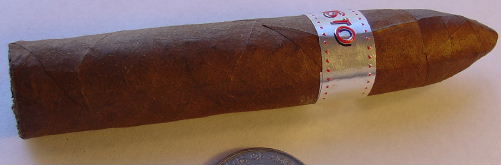
La Gloria Cubana Serie R Maduro No. 4

Cnv0067.jpg

4 7/8 x 52

Wrapper: CT Broadleaf

Binder: Nicaragua

Filler: Nicaragua and Dominican

The La Gloria Cubana brand has been around for a long time. (The original Cuban brand was established in 1885.) Ernesto Perez-Carrillo, Sr. began making cigars in Cuba in 1948. Like so many other great cigar makers, he had to leave Cuba in the late fifties. He settled in Miami, owned a bar for a while, worked for other cigar makers, and finally bought El Credito cigar factory in 1968. The company's first long-filler cigar was El Rico Habano, a brand which has since been revived.

Perez-Carrillo's son, an aspiring jazz musician, took over the business at the last minute as his father was about to sell the company. Ernesto Perez-Carrillo, Jr. then began work on La Gloria Cubana. He changed the box lithography and cigar band to closely resemble the original Cuban brand's artwork, and modeled a new blend on the Cuban Davidoff of 1982. (I think this was the original Cohiba blend distributed by Davidoff, before Cubatabaco put the Cohiba brand directly on the market in 1983.)

In 1996 the El Credito factory moved to the Dominican Republic, though some LGCs are still made in Miami. By the late 90's Perez-Carrillo Jr. began developing another line of La Gloria Cubana with a heavier body. The line he came up with became the Serie R — R for robusto, since they all have large ring gauges.

The Serie R maduros I've sampled are indeed rich, hearty cigars. I was prepared to be blown away, but was pleasantly surprised by their smoothness. There is a solid woody element with a touch of sweetness on the nose. The construction and burn were perfect, which is not an easy feat with a maduro wrapper as luscious as this one. For some reason Connecticut broadleaf fermented to this hue with all its oils does not want to burn as readily as the rest of the cigar, but in this case that proved to not be true.

Slow down at the midway point to avoid a tarry aftertaste. This one does not want to be rushed. A great 30 to 45 minute smoke, and in my opinion the best LGC yet.

Legends Series White — Camacho

Cnv0066.jpg

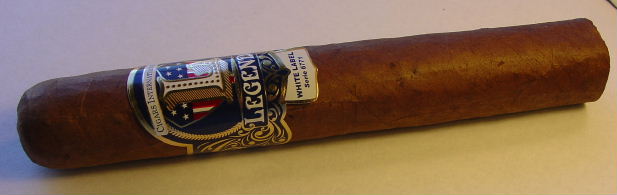
The Legends Series is a line distributed by Cigars International. There are now six different manufacturers represented, and this one is Camacho’s entry. As a fan of Camacho, I had to try it.

My first impression is that it isn’t quite as good as Camacho’s standard brands, but it’s still a fine smoke. The draw is fairly loose, but it burns well. The Havana seed wrapper reminds me a lot of the Camacho Havana line — slightly leathery with some vanilla overtones. Maybe it’s the same leaf.

On the other hand, the Legend White is not as powerful as the Havana, especially after the midway point when the flavor sort of peters out. It starts out peppery and quickly becomes smoother, but maintains a full body until that midway point when it becomes a little bland.
For the money, especially if you can grab a box on Cigarbid, it’s a great everyday cigar.

The other lines in the Legends series are reportedly of lesser body, but if this one is any indication they’re worth checking out. They’re all the same size– 5.75 x 54, so they’re a mouthful. A sampler pack of all six — Puros Indios, Graycliff, Perdomo, Matasa, and Patel, in addition to Camacho — would be a wonderful way to compare the styles of these cigar makers.

Felipe II Reserva “N”

Cnv0064.jpg

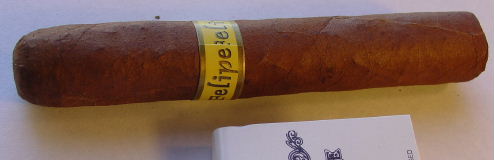
The Felipe II Reserva “N” is a petite corona with a lot of heart. Made in Felipe Gregorio’s Nicaraguan factory with filler from the Condega and Jalapa regions, a binder from Esteli, and a shade grown Habana 92 wrapper, this is a mighty little smoke.

Especially nice at this time of year for those of us who are relegated to smoking in the great outdoors– big flavor in a ten to fifteen minute smoke. Long enough to enjoy the cigar, but not enough to succumb to hypothermia.

You might say that I have no grounds for complaint, seeing that I reside in the Mojave desert. And you would be right. I am in no danger of frostbite as I walk down Las Vegas Boulevard. But the nights can still drive the mercury down, sometimes as low as 35 degrees.
Okay, it’s not the battle of Stalingrad. But I do remember years ago when I lived in rural Minnesota — so I do know what real cold is. And if I had to pick a quick smoke to puff in the garage for ten minutes, this little 4.5 x 44 beauty is what I’d grab:

Cnv0065.jpg
It’s a smooth, rich smoke with a nutty, creamy base and some coffee notes. No harshness to speak of, but if you get greedy it will in turn get a little bitter. Take your time and resist the urge to huff it. And to gild the lily, it’s reasonably priced.

Stay warm and fire one up!

Cusano 18 Double Connecticut Robusto

Cusano 18

The filler in the Cusano 18 line is reportedly 18 year old Dominican Oro. It was originally grown on an experimental basis by Hendrik Kelner, producer for Davidoff and many others, in an attempt to develop a Dominican wrapper leaf. Evidently that didn’t work out– according to an interview with Michael Chiusano in Smoke magazine they couldn’t roll a cigar longer than four inches with the resulting product. So after many years it found its way into the filler for the Cusano 18.

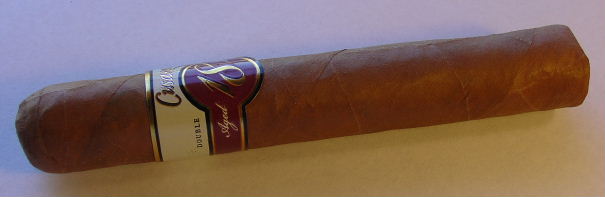
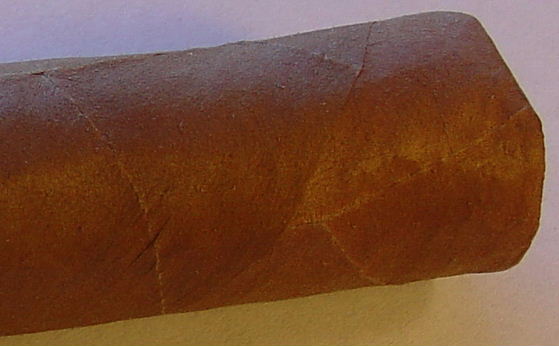
Both the binder and the wrapper are Connecticut Shade, and it’s a handsome wrapper, as you can see here:

Cnv0063.jpg

There are spots of green which I wasn’t able to pick up with my camera (still working on that lighting thing.) Aside from that, it’s a truly gorgeous cigar.

It was given a very respectable 91 by Cigar Insider, and at around 3.00 US it’s also eminently affordable. I wouldn’t rate it as high as that, I’m afraid.
It starts out a little rough, and it has an aftertaste I don’t particularly care for. For a mild to medium bodied smoke the nicotine content is quite high. On the plus side, it burns evenly with a lovely aroma. Woody with a caramel overtone, and a little vanilla. There’s also a nice spice here. For three bucks it’s definitely worth a shot.

It sounds stupid to say these might improve with age, seeing that they’re made with 18 year old filler, but they still seemed a little young to me. I might put a few away as an experiment, mad scientist that I am…emphasis on the mad. If I can find a Paired Maduro version I’ll be a maduro scientist!

Bwaa haa haa!!!

… here comes my wife with the fire extinguisher again. Gotta run.

Felipe Dominicana Serie Especial T

Cnv0060.jpg

Special T — for Torpedo, obviously.

Philip G. Wynne went from selling helicopters in the Middle East to making cigars in Honduras and Nicaragua, under the tutelage of Don Jorge Bueso and Don Julio Eiroa. Somewhere along the way he was asked to make a signature cigar for Frank Sinatra. And who could refuse the Chairman?

The requirement for Sinatra was that the cigar had to be made in the Dominican Republic. When Wynne said he had no factory in the DR, Sinatra's people told him to build one. So he did, and the Sinatra My Way cigar was born. After Sinatra died some legal issues came up with his estate and the My Way went His Way, but the factory remained. (Though apparently there is a very mild cigar still made by Felipe Gregorio called "Felipe My Way.")

This a mild and relaxing smoke with a really nice Ecuador Connecticut shade wrapper. The binder and filler are both Havana seed — piloto cubano — and lend this cigar some body. It's a creamy, toasty smoke with an earthy aftertaste, and the light spice typical of a high quality Connecticut shade wrapper.

I won a box at auction and when it arrived I eagerly opened the box and lit one up. It burned down the side, tasted rank, and needless to say I was disappointed. I put them in the humidor for three weeks, hoping they just needed to settle. I guessed right — they were transformed — no construction issues. Fine mild smokes.

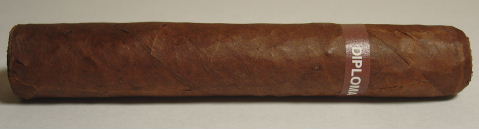
Camacho Corojo Diploma

Camacho Diploma

From the Jamastran valley in Honduras comes Camacho cigars, and this particular specimen is special to the line. In an interview for Cigar Aficionado magazine Christian Eiroa says that he developed this vitola for himself, because it’s what he likes to smoke–stronger cigars.

The Corojo line is just that– solid corojo, and the Diploma is made from the corona leaf–ligero– which at the top of the tobacco plant receives the most sunlight, absorbs the most nutrients, and is the strongest leaf on the plant. Maybe the strongest leaf on the planet.

So I knew what to expect when I introduced flame to the foot of this stout fellow– and I wasn’t disappointed. This is a thunderous smoke. The band is elegant in it’s understatement– I think the diploma is for a degree in industrial demolition.

Which isn’t to say that there’s nothing more to this cigar– there is a deep richness, and an interesting cereal element. The aroma is actually fairly delicate. But unless you’re a fan of heavyweight cigars, these subtleties will be overpowered.

I’m a fan of Camacho, especially the Havana line. The Corojo Diploma is a special smoke, but in the 7 to 8 dollar range I’ll be reserving them for when I’m craving a powerhouse cigar.

Padron Serie 1926 Maduro Belicoso

The first post warrants a super premium cigar, which is exactly what this one is. Some preparation is required for this Nicaraguan puro– a substantial meal, for starters. This is a powerful smoke.

It’s pressed and absolutely solid. There was a slight imperfection in the wrapper near the head, but nothing to worry about. (This was a gift. Had I picked it myself I might have selected a different stick from the box.) Having snipped the tip, I applied the torch.

Starts out a little peppery, but quickly calms down to what seems a fairly typical Padron. Now this was a little disappointing– typical is not what I expected from a Serie 1926. But about a third of the way in the flavor began to rise, and by halfway I had ascended to the seventh heaven, where the cigar gods live and look down, laughing at we poor mortals. Yea, through the valley of the shadow of Vueltabajo… Yes, this is the kind of euphoric reverie this cigar can inspire.

The 1926 serie is composed of all sun-grown tobacco, which makes it a rich and powerful smoke. The maduro has an exotic sweetness that rides on top of the strength, lending an additional element to the complexity of the blend. The flavor profile will be familiar to fans of Padron, but it’s a powerhouse. Much stronger than any Padron I’ve had the good fortune to sample.

The only downside to this dark brown bomb of delight is the price. Made in a very limited quantity, and marketed to upscale folks — Robb Report readers, for example– Padron can afford to ask top dollar.
Is it worth it?

I don’t know. I might have to sample a few more to find out. Christmas is only eleven months away…